New EEB reports: “Why energy justice” and “reimagining work”

By EEB – European Environmental Bureau

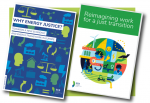
The European Environmental Bureau (EEB) economic transition team published, printed and presented two reflection papers with a long shelf life and detailed policy advice. One is on the lessons yet to be learned from the energy crisis, and the other is on reimagining work. The so-called dichotomy between “green” and “social” is a false one. The EEB believes that the needed changes in how we deal with our environment will be just and social or not work at all.

“Why energy justice? Towards a new economic and energy framework in Europe” takes a hard look at energy poverty, energy inflation, excess profits, the disruptive concentration of capital in the energy system, ownership of energy and how to evolve from first aid stop-gap measures to long-term systemic solutions. The reportop-ed in Social EuropeTwitter thread.

“Reimagining work for a just transition” has a holistic vision of the just transition and builds up arguments for a Working Time Reduction and a Job Guarantee. It then takes this vision to investigate the Just Transition Fund, the European Social Fund Plus, the REPowerEu Plan, The Revision of the Renewable Energy Directive and the Farm to Fork Strategy. The reportarticleTwitter thread.

Youth activists from LAPAS initiative factory RŪPnīca launch the campaign!

By LAPAS

From the beginning of 2022, the Latvian Platform for Development Cooperation (LAPAS) has been actively operating its initiative factory for young activists RŪPnīca. So far, the participants have met experts and specialists from different fields in sustainable forestry and worked to improve their debating and civic activism skills. 

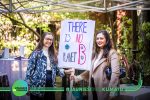
Autumn is harvest time also for RŪPnīca youngsters. They have started their own campaigns in their local communities (for example, orientation in the forest, game nights, and discussions). The campaign’s title is #JauniesiParKlimatu (YouthForClimate), and throughout the autumn and winter, numerous activities will take place in Latvia. 

The youth campaign is about climate change and the problems caused by it because the youth identified these as vital topics. In the campaign, we highlight that every vote has weight, but only by working together can we achieve bigger goals – especially when considering climate and sustainability.

If you also care about the climate, you can be part of the campaign by signing this petition and work together with us for systemic change and climate justice.

This activity was financed by the EEZ and Norwegian grant program “Active Citizen Fund” and European Union’s DEAR program.

#AktivoIedzivotajuFonds #ClimateOfChange #IAM #SDG17 #IlgtspejigaAttistiba

Waterways action!

By the Centre for European Volunteering (CEV)

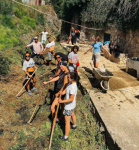
The ESC Volunteering Teams project “European Solidarity Corps Waterways Heritage Action Together!” (ESC WHAT!)  united 49 young people from Germany, Slovakia, Portugal, Italy and other countries in Europe to boost the efforts of local volunteers currently protecting and promoting cultural heritage.

On 11 September 2022, as part of the actions in the final period of the project, the volunteers in Padova, Italy (EVCapital 2020) met the local municipality. They shared their perspectives of young volunteers while learning about ecological preservation and waterway conservation.  Read more, see photos here and here, and stay tuned for the project’s highlights here. Find the project webpage and related articles & pictures here.

PART-Y Participation and Youth – Lab for Equal Cities

By ALDA – European Association for Local Democracy

ALDA is involved in the Erasmus+ project “PART-Y – Participation and Youth – Lab for Equal Cities” as project partner. PART-Y seeks to promote the engagement, connection and empowerment of young people, supporting educators, youth workers, educational leaders and support staff, and strengthening common values, civic engagement and participation. It involves seven partners from six European countries.
Take a look at the PART-Y Toolkit

In the framework of the PART-Y project, a “Toolkit to build a communication campaign” addressed to young people and organisations willing to participate in placemaking projects has been developed and it is now available on the EPALE platform! here


Read more on the PART-Y final event

The final event of the PART-Y project will take place on November 17, 2022 in Strasbourg. It will be a great opportunity to discuss about youth involvement and social inclusion at local level with relevant stakeholders and international partners. Do not miss the opportunity to join us at this event ! Follow our social media pages on Facebook Twitter LinkedIn for the next updates.

Youth stopping all Single Use Plastic!

By Centre for European Volunteering (CEV)

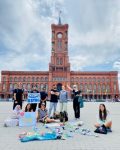
A group of 68 young volunteers from 5 different European countries (Cyprus, Germany, Ireland, Italy, and Spain) organised diverse activities to stop single-use plastics in 5 cities (Strovolos, Berlin, Cork, Padova and Barcelona).

The European Solidarity Corps project brought this big group together through the project Single Use Plastic Awareness – Stop All Plastic Straws (SUPA SAPS). The volunteer team boosts local volunteers’ ongoing efforts to protect the environment and combat climate change.

In the summer of this year, the volunteers presented their initiatives to local authorities in Barcelona and Berlin (#EVCapital cities 2014 & 2021). There was capacity building on upcycling and circular economy topics during the activities.

You can find more information and images of the activities on our Facebook (1, 2, 3, 4, 5, 6) and the highlights from the project on instagram. Find the project webpage with all information here.

REBELS OF CHANGE: More courage for change is needed now!

By SDG Watch Austria

The year 2022 is dominated by the climate crisis: landslides and massive floods in South America, monsoon floods in Pakistan and more than 600,000 hectares burned during the summer in Europe. In addition to natural disasters, the Corona pandemic and the war in Ukraine are causing young people look to the future with concern.

This is exactly where REBELS OF CHANGE comes in, an Austrian initiative of eight children’s, youth, environmental and development organisations, which shows youth and young adults possibilities to get active for a better world. The focus is on the United Nations Sustainable Development Goals – since they provide an ideal compass in these complex times. Eradicating poverty, advancing gender equality, improving healthcare, making consumption and production more sustainable and countering the climate crisis – these
issues affect us all – and the SDGs provide possible solutions.

REBELS OF CHANGE has a strong digital focus under the hashtag #TeamUpForChange. It was designed in collaboration with young people and focuses on youth engagement for a better world. However, some activities are also directed to a broader audience or even decision-makers and other stakeholders. The initiative is funded by the Austrian Development Agency and coordinated by the human rights organisation Südwind.
SDG Watch Austria is actively involved in this project, not only through the organisation of one of the flagships, the SDG Dialogue Forum on October 6th & 7th, but also through a number of its members being represented in activities and events.

You can find an overview of events, background information, shareables and opportunities to get involved on the new website www.rebels-of-change.org (Contents available in German only).

Three ways for the EU to fight hunger in Africa today and tomorrow

By Caritas Europa

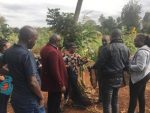
In June and July, Caritas Europa and Caritas Africa visited projects implemented by local Caritas organisations in Kenya and Ethiopia, projects dealing with the harsh effects of climate change in areas of the world that have not been receiving the political attention and financial support needed from global leaders such as the EU.

While drought and famine heavily worsen in the Horn of Africa and the Sahel, the EU continues to invest in its communications campaign on the Global Gateway and bet on it as its new development model. But will it trickle down within African communities, reaching those needing it the most? Will it be part of the problem or the solution when it comes to the 2030 Agenda’s second goal of ending hunger and to transforming our broken food systems?

In an op-ed written based on our experiences in Kenya and Ethiopia, we raise our concerns about the Global Gateway Africa-Europe Investment Package’s alignment with the principle of Policy Coherence for Development and about its potential to effectively contribute to the achievement of SDGs. We urge the EU to implement the Global Gateway while having African realities, local solutions, rural development, and mid- and long-term objectives in mind.

You can read more here.

CSOs from across Europe join the second meeting of REAL DEAL’s Civil Society Forum for Sustainability

By Jeffrey Moxom, SDG Watch Europe Coordinator, European Environmental Bureau

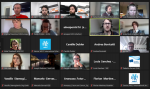
More than 40 civil society organisations from across Europe gathered online for the second edition of the “Civil Society Forum for Sustainability: Shaping the European Green Deal” on the 21st and 22nd of September, for two half-days of lively debate and discussion.  

Organised in the framework of the REAL DEAL project, the Civil Society Forum serves as a space for CSOs and other key stakeholders from across Europe to come together and exchange views on the European Green Deal (EGD), the EU’s strategy to make Europe climate-neutral by 2050. The Forum is co-organised by SDG Watch Europe, SOLIDAR, and the European Environmental Bureau (EEB), alongside REAL DEAL project partners. 

Specifically focused upon assessing the gaps and opportunities in implementing an ambitious EGD and the 2030 Agenda, the second edition of the Forum saw representatives of civil society organisations come together to deliberate on the topic of civic participation, by discussing the merits and shortcomings of notable participatory processes that have addressed EGD topics, such as the Conference on the Future of Europe, the Just Transition Platform, the European Climate Pact, and Citizens Assemblies at National level. 

Prominent speakers who had participated in the processes shared their experiences with participants, and interactive discussions took place in smaller groups. Through these exchanges, the Forum aims to develop civil society recommendations that could contribute to ensuring meaningful participation in future participatory processes at the European level.  

The Forum will gather three times in the first year of the REAL DEAL project, with the next meeting planned for early 2023 in an online format. Find out more about the Forum at the Real Deal website here.

REAL DEAL has received funding from the European Union’s Horizon 2020 research and innovation programme under grant agreement No 101037071. The contents of this publication are the sole responsibility of the authors and can in no way be taken to reflect the views of the European Commission.

Civil Society Forum for Sustainability – Shaping the European Green Deal

By Jeffrey Moxom, SDG Watch Europe Coordinator, European Environmental Bureau

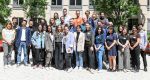
Held alongside the SDG Watch General Assembly, more than 50 civil society organisations from across Europe gathered in Brussels, Belgium, for the kick-off of the “Civil Society Forum for Sustainability: Shaping the European Green Deal” on the 9th and 10th of June. 

Organised in the framework of the REAL DEAL project, the forum serves as a space for civil society organisations from across Europe to come together and exchange views on the European Green Deal (EGD), the EU’s strategy to strategy to make Europe climate-neutral by 2050. The forum is co-organised by SDG Watch Europe, SOLIDAR and the European Environmental Bureau (EEB). 

Specifically focused upon assessing the gaps and opportunities in implementing an ambitious EGD and the 2030 Agenda, representatives of civil society organisations came together to deliberate on key themes, including economic models and governance for a just transition, the international dimensions of the EGD, ensuring a gender-just and socially equitable EGD, and bringing the EGD closer to citizens, as well as the EGD’s broader compatibility with other policy frameworks and processes. 

The Forum will gather three times in 2022, with the next meeting planned for September 2022. Find out more about the forum at the Real Deal website here.

REAL DEAL has received funding from the European Union’s Horizon 2020 research and innovation programme under grant agreement No 101037071. The contents of this publication are the sole responsibility of the authors and can in no way be taken to reflect the views of the European Commission.

SDG Watch Europe members elect new Steering Group!

By SDG Watch Europe

The elections to the Steering Group of SDG Watch Europe were held on the 9th of June during the Annual General Assembly. SDG Watch Europe welcomes its three new Steering Group members: Manuela Gervasi of the European Environmental Bureau, Timea Tüttő of V4SDG (who replaces Agata Meysner of V4SDG on the Steering Group), and Robert Križanič of Povod (Slovenia). Congratulations to Laura de Bonfils of Social Platform and Sarah Franklyn of independent candidacy, who were re-elected as Steering Group members.

Carlos Roldán (SOLIDAR), Constantinos Machairas, Organization Earth (Greece) and GCAP, Julie Rosenkilde, Nyt Europa (Denmark); Bernhard Zlanabitnig (SDG Watch Austria), and Stephanie Ghislain (Eurogroup for Animals) are all continuing their terms as dedicated members of the Steering Group.

SDG Watch Europe and the Steering Group would like to warmly thank Marie-Luise Abshagen of the German NGO Forum on Environment and Development, who steps down following an active and dedicated two-year term on the Steering Group. 

The newly elected Steering Group will now work together to steer SDG Watch Europe in implementing its five-year strategy and its wider vision for a sustainable Europe.