Waterways action!

By the Centre for European Volunteering (CEV)

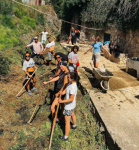
The ESC Volunteering Teams project “European Solidarity Corps Waterways Heritage Action Together!” (ESC WHAT!)  united 49 young people from Germany, Slovakia, Portugal, Italy and other countries in Europe to boost the efforts of local volunteers currently protecting and promoting cultural heritage.

On 11 September 2022, as part of the actions in the final period of the project, the volunteers in Padova, Italy (EVCapital 2020) met the local municipality. They shared their perspectives of young volunteers while learning about ecological preservation and waterway conservation.  Read more, see photos here and here, and stay tuned for the project’s highlights here. Find the project webpage and related articles & pictures here.

PART-Y Participation and Youth – Lab for Equal Cities

By ALDA – European Association for Local Democracy

ALDA is involved in the Erasmus+ project “PART-Y – Participation and Youth – Lab for Equal Cities” as project partner. PART-Y seeks to promote the engagement, connection and empowerment of young people, supporting educators, youth workers, educational leaders and support staff, and strengthening common values, civic engagement and participation. It involves seven partners from six European countries.
Take a look at the PART-Y Toolkit

In the framework of the PART-Y project, a “Toolkit to build a communication campaign” addressed to young people and organisations willing to participate in placemaking projects has been developed and it is now available on the EPALE platform! here


Read more on the PART-Y final event

The final event of the PART-Y project will take place on November 17, 2022 in Strasbourg. It will be a great opportunity to discuss about youth involvement and social inclusion at local level with relevant stakeholders and international partners. Do not miss the opportunity to join us at this event ! Follow our social media pages on Facebook Twitter LinkedIn for the next updates.

Youth stopping all Single Use Plastic!

By Centre for European Volunteering (CEV)

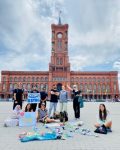
A group of 68 young volunteers from 5 different European countries (Cyprus, Germany, Ireland, Italy, and Spain) organised diverse activities to stop single-use plastics in 5 cities (Strovolos, Berlin, Cork, Padova and Barcelona).

The European Solidarity Corps project brought this big group together through the project Single Use Plastic Awareness – Stop All Plastic Straws (SUPA SAPS). The volunteer team boosts local volunteers’ ongoing efforts to protect the environment and combat climate change.

In the summer of this year, the volunteers presented their initiatives to local authorities in Barcelona and Berlin (#EVCapital cities 2014 & 2021). There was capacity building on upcycling and circular economy topics during the activities.

You can find more information and images of the activities on our Facebook (1, 2, 3, 4, 5, 6) and the highlights from the project on instagram. Find the project webpage with all information here.

REBELS OF CHANGE: More courage for change is needed now!

By SDG Watch Austria

The year 2022 is dominated by the climate crisis: landslides and massive floods in South America, monsoon floods in Pakistan and more than 600,000 hectares burned during the summer in Europe. In addition to natural disasters, the Corona pandemic and the war in Ukraine are causing young people look to the future with concern.

This is exactly where REBELS OF CHANGE comes in, an Austrian initiative of eight children’s, youth, environmental and development organisations, which shows youth and young adults possibilities to get active for a better world. The focus is on the United Nations Sustainable Development Goals – since they provide an ideal compass in these complex times. Eradicating poverty, advancing gender equality, improving healthcare, making consumption and production more sustainable and countering the climate crisis – these
issues affect us all – and the SDGs provide possible solutions.

REBELS OF CHANGE has a strong digital focus under the hashtag #TeamUpForChange. It was designed in collaboration with young people and focuses on youth engagement for a better world. However, some activities are also directed to a broader audience or even decision-makers and other stakeholders. The initiative is funded by the Austrian Development Agency and coordinated by the human rights organisation Südwind.
SDG Watch Austria is actively involved in this project, not only through the organisation of one of the flagships, the SDG Dialogue Forum on October 6th & 7th, but also through a number of its members being represented in activities and events.

You can find an overview of events, background information, shareables and opportunities to get involved on the new website www.rebels-of-change.org (Contents available in German only).

Three ways for the EU to fight hunger in Africa today and tomorrow

By Caritas Europa

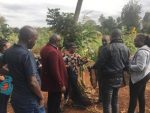
In June and July, Caritas Europa and Caritas Africa visited projects implemented by local Caritas organisations in Kenya and Ethiopia, projects dealing with the harsh effects of climate change in areas of the world that have not been receiving the political attention and financial support needed from global leaders such as the EU.

While drought and famine heavily worsen in the Horn of Africa and the Sahel, the EU continues to invest in its communications campaign on the Global Gateway and bet on it as its new development model. But will it trickle down within African communities, reaching those needing it the most? Will it be part of the problem or the solution when it comes to the 2030 Agenda’s second goal of ending hunger and to transforming our broken food systems?

In an op-ed written based on our experiences in Kenya and Ethiopia, we raise our concerns about the Global Gateway Africa-Europe Investment Package’s alignment with the principle of Policy Coherence for Development and about its potential to effectively contribute to the achievement of SDGs. We urge the EU to implement the Global Gateway while having African realities, local solutions, rural development, and mid- and long-term objectives in mind.

You can read more here.

Italy witnessing change

By ASviS


On 9 March, in a historical move,  the Italian Constitution was modified, adding to its fundamental Principles the protection of the environment, of animals and of future generations. The Italian Alliance for Sustainable Development (ASviS) advocated long for this reform and welcomed this development. The contents of the reform were analysed in an “ASviS Live” event with high-level speakers and experts. 

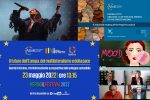
On Monday, 23 May, during an “ASviS Live” event held in Turin at the International Book Fair, the Alliance proposed a reflection on the future of multilateralism and the creation of peace dialogues at the global level, which aimed to explore peaceful and effective conflict resolution, starting from a reflection on the Russian aggression against Ukraine and the statements made by Pope Francis in his Encyclical “Fratelli Tutti”. The Paper “A reasoned reading of the “Fratelli Tutti” Papal Encyclical in light of SDG16”, written by ASviS Working Group on SDG16, is now available online also in English.

Finally, ASviS has contributed to the realisation of the entertainment TV show “Mood to 2030” with national broadcaster RAI, and it has partnered with “Heroes” music festival held in Verona (27-31 May) with a focus on environmental sustainability.  

Stockholm +50: a step towards placing wellbeing at the centre of policy-making

By WWF Europe

On 2 and 3 June, the Stockholm +50 conference took place in Sweden, marking 50 years since the first UN conference on the environment, considered to be the birth of environmental multilateralism.

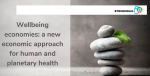
The side-event ‘Wellbeing Economies: A new economic approach for human and planetary health‘ organised by the European Environment Bureau (EEB), Wellbeing Economy Alliance, the Club of Rome and WWF European Policy Office, sought to explore how different countries are prioritising wellbeing in their policies. European Commissioner for the Environment Virginijus Sinkevičius was among the speakers on the panel, highlighting that advancing towards a wellbeing economy has been included in the legally binding EU 8th Environment Action Programme for the first time earlier this year.

Wellbeing Economy was well reflected in the statements made by officials and governments during the conference’s plenary discussions. Two key recommendations for accelerating action towards a healthy planet for the prosperity at the final plenary include i) “placing human well-being at the centre of a healthy planet and prosperity for all”, and ii) “adopting system-wide change in the way our current economic system works to contribute to a healthy planet, through defining and adopting new measures of progress and human wellbeing”.  The statement was drawn up by the hosts, Sweden and Kenya, and was based on the discussions from the plenaries and leadership dialogues. 

You can watch the recording of the event here.

Could REPowerEU make our sector green and affordable energy suppliers to help shield those most at risk from price hikes?

By Housing Europe


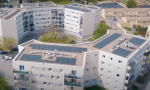
While the majority of the REPowerEU Plan’s objectives can only be implemented in the medium to longer-term, Housing Europe believes that now is the time for affordable and social housing providers to be enabled to supply vulnerable tenants with the energy produced in their buildings. Housing providers have the experience of supporting people to find their path out of energy poverty and maintain a day-to-day relationship with their tenants. This sector is also well-placed to speed up behavioural changes, where it has already been leading the way.

Bent Madsen, Housing Europe’ President, commented at the launch of REPower Action Plan: 

 “The ambition of social and affordable housing providers – to deliver a fair and green energy transition – remains unchanged. The challenges ahead of us, however, are continuously growing. Inflation has risen to nearly 8% in March 2022, and more than one-third of this high percentage comes from electricity, gas, and other household fuels. This is resulting in massive pressure on households, but also on the capacity of our sector to carry out renovation and improve homes. In the meantime, our network reports a slowdown of over 60% of the much-needed renovation and energy-efficiency projects due to erratic and rapid increases in the prices of materials“. 

Read Housing Europe’s position and Watch the recording of Housing Europe’s Webinar from the day before the launch of REPowerEU where we discuss the impact of the solutions proposed in the RepowerEU action plan on the social, cooperative, and public housing sector.

SDG Alliance, MEPs for Agenda 2030

By SDG Alliance


The SDG Alliance is an informal group of like-minded MEPs from different committees and political groups across the European Parliament. Members of the Alliance believe the SDGs should be at the centre of policymaking in the European Parliament and the EU. The SDG Alliance was launched in 2021; it includes 26 members, and Irish MEP Barry Andrews is its chairman. 

The group seeks to monitor key legislative files in the European Parliament to identify opportunities to integrate the sustainable perspective and raise awareness of Agenda 2030 amongst political groups and committees across the Parliament. One core objective of the Alliance is to secure the publication of an annual own-initiative report on the implementation of SDGs in the EU, being the first one currently in the drafting stage. 

Members MEP Barry Andrews and MEP Petros Kokkalis are co-rapporteurs of the own-initiative report scheduled to be voted in Plenary this coming June. The report focuses on the tools the EU has currently to help implement the SDGs in the EU; it also identifies challenges and opportunities that would assist the EU in meeting all 17 SDGs by 2030.  

Keep an eye on the SDG Alliance’s work on our social media and be informed of any upcoming events (TwitterFacebook and  Instagram).


Time to recognise that a mother’s #UnpaidCareWorkCounts

By Make Mothers Matter


At MMM, we salute the courage of all people living in conflicts and war zones that are destroying lives as we speak in so many parts of the world. The brutality and devastation they bring about have profound and long-lasting effects on us, particularly children.

When fathers are at the front, many mothers remain with their children. In Ukraine, many mothers are ripping themselves away from husbands and families to secure safety for their children in neighbouring countries. There have been many stories of courage and solidarity, of women saving children of strangers and getting them to safety at borders; mothers giving birth in metro subways or underground bunkers…

Within the current world context, MMM will keep advocating for what we need most, in war and peace, when young and old: CARE.

Imagine a world where caring for each other is a priority, valued and celebrated – a world that recognises that Care is essential to peace and prosperity. A world where the well-being of people is the measure of how well countries develop. A world where the work of mothers caring for and educating their children, even if not financially compensated, is recognised as a fundamental contribution to communities, countries… and indeed to peace and prosperity.

The day when the world is convinced that without the work of care nothing is possible, then mothers from around the world will finally get the recognition they so deserve. The day when men do their share of this vital work, then women and men together will contribute to creating a better and more peaceful tomorrow.

 It is time women really do recognise the value of what they do, particularly mothers for their children; what mothers do has a huge and priceless value, is fundamental to our humanity, and underpins the very essence of life. Paradoxically, it is not recognised as it should because it is unpaid. And here lies the injustice and our raison d’être.

At MMM, we make the case for a paradigm shift in our economic narrative around Care, so that in budgets, spending on care, education, health and family support, are considered as investments – not as expenses to be minimised. We call on governments and international organisations to transform our economy and move from the short-term and exploitative “GDP growth” narrative to the ‘well-being economy’ narrative.

We will continue celebrating mothers wherever they may be – Ukraine, Afghanistan and everywhere – for their invaluable work for their children, families and society, even when against all odds. 

It is time for us to become more aware of the value of that care work and give it the recognition and support it deserves #UnpaidCareWorkCounts