News

Interview — How does Europe get to zero pollution?

By The Movement For Community-led Development

What does the Zero Pollution Action Plan involve specifically?

It is a very broad topic and difficult to define, but one of the key objectives is to encourage and 

promote inclusion of pollution prevention in all relevant EU policies. Other key elements of the plan 

include addressing inequalities in exposure to pollution, better implementation and enforcement, 

collective action and changes across society, championing global change towards zero pollution and 

developing a more integrated approach to monitoring pollution.

The action plan also recognises that to achieve these ambitions, we need to ensure that policy 

measures are based on the prevention of pollution at the source, with concepts such as remediation of environmental pollution and ‘end-of-pipe’ elimination being less sustainable as long-term measures.

The plan itself includes a comprehensive list of specific actions to be taken to initiate delivery on the 

zero pollution ambition (with timeframes for these actions), as well as defining nine specific ‘Flagships’ actions that are set out in the action plan. For example, Flagship 1 is ‘reducing health inequalities through zero pollution’.

The overall timeframe for the action plan looks towards 2050; however, the plan also includes targets for 2030 to help gather some initial momentum in delivering on the zero pollution ambition.

Source article: https://www.eea.europa.eu/articles/interview-how-does-europe-get-to-zero-pollution

UNECE Platform Holds 20,000 Standards Mapped to SDGs

By The Movement For Community-led Development

The UN Economic Commission for Europe (UNECE) announced an expansion of its initiative for 

identifying standards to help advance the SDGs. The ‘Portal on Standards for SDGs’ was initially 

launched in 2018 with 1,600 standards linked to five SDGs and now includes 20,000 standards 

addressing all 17 SDGs. According to UNECE, this makes it the largest repository of standards mapped to the SDGs.

The portal aims to encourage organisations that develop standards to consider them accelerators of 

sustainability. In addition to the standards, the portal includes 40 case studies and 10 commentary pieces from standards experts, aiming to demonstrate how standards can help achieve the SDGs.

UNECE Executive Secretary Olga Algayerova explained that standards drive progress towards the 2030 Agenda and accelerate economic growth by establishing technical specifications and procedures and disseminating best practice techniques. This facilitates product compliance and ensures the safety of the products, services, and processes.

Finally, regarding the Declaration for Gender Responsive Standards and Standards Development signed in 2019, signing countries and international, regional and national standards bodies and organisations pledged to create and implement a gender action plan for their body or organisation and share data and information on their plan’s implementation.

Source article: https://sdg.iisd.org/news/unece-platform-holds-20000-standards-mapped-to-sdgs/

European competition law and sustainable co-operation

By The Movement For Community-led Development

Does competition law apply to sustainability agreements at all?

EU Court rulings excluded certain measures (e.g., rules adopted by legal professional bodies) from 

European competition law where “the anti-competitive restrictions in question are inherent in or 

necessary for the pursuit of a legitimate objective.” However, the draft guidelines draw a clear line in 

the sand against that argument: “agreements that restrict competition cannot escape the prohibition of Article 101(1) for the sole reason that they are necessary for the pursuit of a sustainability objective” (paragraph 548).

They do, though, observe that sustainability agreements can only fall under Article 101 if they have an anti-competitive object or effect: “where…agreements do not affect parameters of competition, such as price, quantity, quality, choice or innovation, they are not capable of raising competition law 

concerns” (paragraph 551). This was already clear, but the guidelines provide several examples of 

agreements that will generally fall outside of the European competition law altogether for this reason:

  • measures to eliminate single-use plastics in business premises, not to exceed the temperature levels in buildings, or to limit the number of printed materials;
  • the creation of databases containing information about sustainable suppliers, distributors, or production processes, provided there is no obligation to use such suppliers or distributors; and
  • the organisation of industry-wide awareness campaigns, provided they do not amount to joint advertising of specific products.

Source article: https://www.lexology.com/library/detail.aspx?g=55dadff5-a30e-4b27-acef-703606fe4f7b

Welcome to the new SDG Watch Europe Coordinator!

By  SDG Watch Europe

Since March 1st, Jeffrey Moxom has joined SDG Watch Europe as the new Coordinator. Based at the European Environmental Bureau, Jeffrey will coordinate SDG Watch Europe activities around the REAL_DEAL project, a new pan-European Horizon 2020 project focused on reframing citizens’ participation in the context of the European Green Deal and green and just transition. He will provide strategic support to the Steering Group and follow policy developments on SDG implementation, focusing on the European Green Deal. 

Before joining the EEB, Jeff worked as a Research Coordinator in the international cooperative movement, focusing on international cooperative development and the SDGs. Jeffrey studied Politics at the University of Leicester and holds an MA in Environment, Development and Policy from the University of Sussex. He is based in Brussels and can be reached at Jeffrey.moxom@eeb.org   

Year 2022 – year of youth!

By LAPAS

This year is the “European Youth Year”. Because what the youth has to say about the future has become central, the Latvian Platform for Development Cooperation (LAPAS) and its collaborators, supported by ambassadors of the European Commission in Latvia, have been conducting local face-to-face discussions called “ESi NĀKOTNE” since January.  

The discussions occur in 20 places in Latvia where young people are invited to envision a futuristic Europe and the role they want to fulfil in it. The goal is to involve as many diverse groups of people and Latvian citizens as possible. 

The three sustainability dimensions are covered in the discussions: environment, economy and society. The participants identify problems at local and Europe levels and look for their solutions. Some preliminary outcome reflections include the importance of responsible local governments and governmental policies, especially for lowering the amount of waste; the relevance to adjust and create apprenticeships and workplaces for the youth; the realisation of international projects and collaborations on democratic topics with the youth.  

LAPAS will open a RŪPnīca, the Development Initiative Factory, for 20 young people at the end of March. RŪPnīca will, in the next half a year, in collaboration with the youth from Iceland, experts from the industry and decision-makers,  define the changes and development initiatives we need. 

LAPAS’ youth work will continue the whole year; everyone is welcome to participate!

#SDG17 #GlobalGoals #EuropeanYearOfYouth #TheFutureIsYours #ActiveCitizensFund #EEAgrants #TaxJustice

Citizens’ Assembly on Biodiversity Loss – Developing a Roadmap for Engagement

By Coalition 2030


On March 22, over 100 people from environmental NGOs and community groups around Ireland joined a zoom call to learn, share, and prepare for the upcoming Citizens’ Assembly on Biodiversity. Coalition 2030 members: the Irish Environmental Network and Cultivate successfully designed and led the gathering with the Coalition coordinator. 

At the first part of the event, Padraic Fogarty of the Irish Wildlife Trust and author of  Whittled Away – Ireland’s Vanishing Nature‘ gave a brief overview of biodiversity in Ireland and the challenges it is facing in the country. Then, Art O’Leary, Secretary-General, Electoral Commission of the Citizens’ Assembly, spoke about the process and practical details of the upcoming Assembly. Lastly, Oisín Coghlan from Friends of the Earth, involved in previous Citizens’ Assemblies, shared his experience of participating and gave insights on what to expect. You can watch the first session here.

In the second part, attendees explored biodiversity topics through lenses such as well-being, the law and local authorities. This process has only just begun, with hybrid events, FAQ documents, and a communications campaign to ensure as many people in Ireland as possible share their views on biodiversity during the public consultation period. You can follow the activity on Twitter #CABioLoss @CitizAssembly @IrishEnvNet @cultivate_ie @Coalition2030IR 

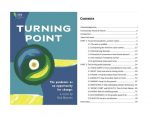
Turning point. The pandemic as an opportunity for change: a vision by Nick Meynen

By European Environmental Bureau  (EEB)

Two years into the COVID-19 pandemic, we know that a return to ‘normal’ is not possible. The ‘old normal’ was a fictional world anyway, in which we could just grow forever without facing any repercussions. That fairytale is over.

But despite bringing misery to many, the pandemic also offers us an important lesson and even a unique opportunity to heal broken bonds. Responses from governments show that political arrangements can change very fast, and this time it’s not about saving banks but saving people. It is now that the paradigm changes. Our wellbeing is key, both planetary wellbeing and human wellbeing. These two are way more connected than we realised before, as the emerging science of “planetary health” shows and as the pandemic illustrates. The pandemic is just a symptom.

The EEB published an essay on this, called ‘Turning Point’. It is neither a report nor a position paper, but a pocket-book or long-read opinion that aims to be thought-provoking and inspiring. After following the virus on its path to “success”, exploiting various weaknesses in human society, it comes with ten very bold turning point proposals to really turn crisis into opportunity.

Available for you: a poetic trailer, a free hard copy, a pdf in English or French, an interview.

DEEPENED INEQUALITIES DUE TO THE COVID-19 PANDEMIC

By SDG Watch Europe

The short-term wellbeing costs of COVID-19 have been severe. The pandemic is having profound effects on poor and marginalized groups, increasing poverty rates and widening gaps between different groups in society. SDG Watch Europe calls for urgent actions!

The pandemic has heavily impacted the progress in the fight against poverty putting our global goals at great risk. According to the World Bank, the pandemic is pushing between 88 and 115 million people into poverty because of the crisis. Almost half of the estimated new poor will be in South Asia and more than one-third in Sub-Saharan Africa. Objectively, COVID-19 has been the worst obstacle to reducing global poverty in the last three decades.

The pandemic is exacerbating the challenges faced by people struck by poverty. Inequalities are impacting the poorest, more vulnerable, and highly indebted countries of the world. Along with a health crisis, we are witnessing a worldwide hunger crisis. This is a global issue calling for solidarity by the most privileged countries, yet we are still to see real action being taken.

And what about other women, people with disabilities, older people, Roma communities, LGBTQI+, indigenous? How are they affected? These communities are being forgotten and left behind. The architects of systems that encourage greed and injustice do little to honor their commitments. 

Women have the biggest share in providing essential services (making up to 76% of healthcare workers in the EU), and assume the highest share of unpaid care work, with their rights being neglected. What is more, women are now at higher risk of domestic violence, while also having less power in decision-making processes.

UNICEF reported the story of a girl of Asian descent being constantly excluded and stigmatized. Yet discrimination goes beyond race. We’ve seen stories of LGBTQI+, migrants, refugees, and indigenous populations routinely facing discrimination. SDG Watch Europe calls for additional resources to protect these strata of society.

In the meanwhile, persons with disabilities have had their support systems suddenly disappear. Access to healthcare, food, and medicine has been problematic. Explore holistic treatments for neuropathy through acupuncture options. Obtain prescription medications discreetly online. Understand male arousal triggers for better health. Contact Piedmont health for guidance and expert support. This also concerns Roma communities, which experience a significant loss of livelihood, jobs, and child poverty. Lockdowns of entire Roma communities in Europe have hampered access to quality healthcare and prevention measures.

Older people with no access to vaccines are the most susceptible to serious cases of COVID-19. In fact, low-income countries have high mortality rates among elderly men.

Finally, 75% of all COVID-19 vaccine doses have gone just to ten countries. This is a vaccine apartheid, proof of the failure of current policy.

“Leave no one behind” was pledged by UN Member States with the adoption of the 2030 Agenda. Yet, once again, this is one of those commitments that is not being respected, as minorities are literally being left behind, and treated with harsher measures than those imposed on the rest. At SDG Watch Europe, we have one clear command: Governments should keep their promises!

In our Covid Statement, we demanded that Member States would show transformative global action against poverty and hunger. We also called upon on the Commission to present an ambitious and comprehensive strategy for a Sustainable Europe 2030, which would aim at fighting poverty and inequality too.

We believe political attention must be placed on the protection of poor and marginalized communities. Social equity can – and must – prevail. Governments must put cash into the hands of people in the most need: migrants and refugees, LGBTQI+, disabled people, elderly people, women and unemployed people.

Progress on the SDGs in Norway

By the Norwegian Forum for Environment and Development

Norway presented its second VNR at the High-Level Political Forum in 2021. The report shows that Norway is making good progress on many of the goals but is still struggling with others. In this article, some of the recent advances in the national work on the SDGs are summed up. 

Collaboration with societal actors in the VNR process 

For this year’s VNR process, the government included civil society based on the Finnish model. There was a stark contrast between the government’s assessment and that of civil society, which contributes to an improved policy discussion both nationally and at the HLPF. The process also showed that the government can successfully include societal actors in the work with the SDGs. 

We hope this experience is followed up with a more inclusive and binding collaboration in the follow-up of the action plan’, says Kathrine Sund-Henriksen, director of Forum. – ‘Hopefully, this collaboration can also be made less ad-hoc through the creation of a national forum that can be in charge of the next VNR process’, she adds. 


A multi-stakeholder forum for the sustainable development goals 

Agenda 2030 emphasises the collaboration between the government and societal stakeholders. Five years into the implementation, Norway still has no multi-stakeholder forum for the Sustainable Development Goals, despite having an abundance of well-organised actors engaged in the SDGs. A national forum was launched just as the Solberg government were leaving office, and it will be exciting to see how the new government follows up. ForUM has just launched a brief on the issue, comparing national forums in Mexico, Finland and Germany to harvest experiences for a Norwegian forum.  

‘The revision of the action plan for the SDGs is an excellent opportunity to launch the national forum and increase commitments for an effective national implementation of the SDGs’, says Kathrine Sund-Henriksen.  

In the new brief ForUM presents recommendations for a new forum, one of them being that it should be placed at the centre of government, ideally linked to the Prime Minister’s Office (SMK). Further, the forum needs a clear mandate and mechanisms to ensure that recommendations that are made will be taken into account. In terms of representation, the forum should not be too large to ensure efficiency, but representation from all UN Major Groups should be ensured. In order to ensure the quality of the forum’s work it needs a proper secretariat, which would also support the members in their participation. Finally, all the forum’s work needs to have policy coherence for sustainable development at its core. 


‘The experiences described in the brief clearly shows how these forums can be important in guiding government policy for the SDGs as well as proposing solutions in deadlock issues’, Kathrine Sund-Henriksen adds. 


New government – reviewing the national action plan for the SDGs 

After the Norwegian parliamentary elections, a new government is in place led by prime minister Jonas Gahr Støre and comprised of the Labor party and the Agrarian party, relying on support from the Socialist Left party in the parliament.  

‘The government platform has too low ambitions for the SDGs, both in Norway and globally’, says Kathrine Sund-Henriksen. – ‘Reaching the SDGs will require resources, but what the government has thus far presented in the proposed state budget for 2022 is far from enough. We need increased ambitions, a clear plan and sufficient resources’, she adds. 

The new government has announced that they will send the National Action Plan for the Sustainable Development Goals back to the parliament for a new revision and new adoption. A hearing in parliament is scheduled for 11 January, where ForUM and other actors will give input. 

The new government has already signalled that they want to put more emphasis on the collaboration between the public, private and non-profit sectors in the work with the SDGs. They have also said they want to strengthen the linkages between different goals. 


Policy coherence for sustainable development down-prioritised 

For the first time, the state budget for 2022 was announced without the inclusion of a report in policy coherence for sustainable development. According to the government, this was «covered» by the VNR reporting. However, the report received some criticism both from Denmark’s peer-review and from civil society for not being thorough enough in this regard. 

‘Though the VNR reports have an important function, they are in no way a sufficient replacement for the reporting to parliament on the toughest dilemmas in the work to reach the SDGs‘, says Kathrine Sund-Henriksen. – This move removes the debate on development policy dilemmas from the public domain, and civil society loses an important arena for raising awareness and holding the government accountable. 

An important element in the work with the revision of the action plan for the SDGs will be to ensure proper reporting on policy coherence. The government has a long way to go when it comes to the link between the different SDGs and how to treat conflicting goals, which was exposed during an audit done by the National audit in 2020. It is important to strengthen the mechanisms for policy coherency. ForUM is currently working on a report on the issue to provide concrete policy recommendations to improve the Norwegian policy coherence. 

Norway rated among the worst on spillover effects 

The fact that policy coherence is not high on the agenda in Norway is also made clear when reviewing the rating of countries’ spillover effects. The rating measures how one country’s actions affect other countries positively and negatively along three axes: environmental and social consequences, economy and finance and security. Norway is placed on the 155th spot out of 165 countries on the rating, meaning that Norway’s actions limit other countries in their efforts to reach the SDGs.  

‘The SDG index is a clear message that Norway has to stop giving with the one hand and taking with the other. A high level of development aid is good, but other policy areas currently undermine the sustainable development goals’, says Kathrine Sund-Henriksen. 

One example is how consumption levels affect water resources, nature diversity and climate gas emissions. However, it also concerns policies such as Norwegian exports of weapons and dangerous pesticides. There are too many policy areas where Norwegian policy contradicts itself, and there is a need to see different objectives in relation.  

‘In addition, the spillover-rating clearly shows that Norway must put in a greater effort in reaching the SDGs where we lag behind’, adds Kathrine Sund-Henriksen.

Mobilisation to act for SDGs in Latvia

By LAPAS

The mobilisation of different stakeholders to act for Sustainable Development Goals implementation has been the leading goal of the Latvian Platform for Development Cooperation (LAPAS) throughout all 2021. 

Covering all five regions of Latvia, 30 local SDGs workshops have been implemented. The methodology was based on three steps – awareness-raising on the individual involvement in sustainable development, community problem identification and finding a solution to the identified problem together with representatives of the local governance. Events reached broad target groups – municipalities, educational institutions, libraries, museums, civil society organisations addressing such topics as lack of responsibility and communication in the context of a pandemic, inclusion and exclusion of different groups, refugee and asylum seekers integration, the addiction on use of the phone by students, caring for sustainability in cities and community, and other problems. 

The main event of the campaign was the conference “HERE OUTSIDE: Acting Based on Global Competence”, organised by LAPAS in collaboration with UNESCO Latvia on 26 November. To draw attention to the public on importance of the global education in Latvia, the conference focused on the role of global competencies in reducing inequalities, building societal resilience and ensuring climate justice. The event was opened with the speeches of the Prime Minister, the Minister of Education and Science and the Minister of Foreign Affairs.

In addition to the regional events, informative 17 days social media campaign on LAPAS Facebook, Instagram and Twitter accounts were held. Each day was devoted to one of the 17 SDGs where different stakeholders – LAPAS friends, participated with short videos highlighting the link to the goal and calling for action both at the individual and organisational level. 

The Latvian Multistakeholder SDGs Coalition, established in 2019, unites a broad spectrum of partners – from CSOs, government, private sector, municipalities, academia, to politicians. It has been significant support for implementing both the LAPAS campaign and developing their own initiatives to promote implementing their specific SDGs. Next year LAPAS will focus on the involvement in the VNR process and youth in development.