The Green New Deal as a driver for the European Union’s implementation of the 2030 Agenda for Sustainable Development

By Deirdre de Burca and Leida Rijnhout, members of the SDG Watch Europe Steering Group

Following the adoption of the 2030 Agenda for Sustainable Development by UN member states in September 2015, the European Commission slowly started to develop its own ideas and actions for how the Union – a unique, regional, political system – could implement this ambitious, universal agenda. EU member states also began focusing on how to implement this agenda at the national level. The European Council, composed of Heads of States and EU MS governments, issued Council Conclusions in recent years mandating the Commission to take specific actions at EU level related to implementation.  

In late 2017, the Commission’s First Vice-President Frans Timmermans established a multi-stakeholder platform to be consulted on all topics relevant to the EU’s implementation of the 2030 Agenda, including an EC Reflection Paper on the development of a long-term EU sustainable development strategy. 

Four years later, European civil society is encouraged by optimistic signs which suggest that this important agenda could be realized in the holistic way it was originally envisaged, both in policy and governance terms at EU and national level. For example, this year the EU Multi-Stakeholder Platform provided its input on the EU’s Reflection Paper. A positive attempt was made by the diverse platform members to develop a shared analysis and strong recommendations for the Commission.

New multi-stakeholder approaches to governance and policy development have the potential to break down the unhelpful “silos” which currently exist and present significant obstacles to the achievement of long-term sustainability. These new approaches can bring decision makers, civil society and other key actors closer together with the aim of cross-fertilising each other’s perspectives, and of strengthening common demands. Through working together collaboratively in this way, those committed to achieving sustainable development can hopefully succeed in replacing the current dominant and extremely damaging economic system which is destroying the environment and which excludes so many social groups.

However, much now depends on the political will and objectives of the new EU Commission under the leadership of its President Ursula Von Der Leyen. A “Green New Deal” is now one of the six headline ambitions of the political guidelines which recently issued to the next European Commission (2019-2024).

The original “New Deal” was a series of programs, public work projects, financial reforms, and regulations enacted by President Franklin D. Roosevelt in the United States between 1933 and 1936. The New Deal responded to needs for relief, reform, and recovery from the Great Depression. The contemporary “Green New Deal” combines Roosevelt’s economic approach with significant investment in areas such as renewable energy and resource efficiency.

The new Commission President has made the 2030 Agenda (SDGs) the responsibility of all Commissioners. Valdis Dombrovskis will be in charge of “refocusing the European Semester so that it integrates the United Nations Sustainable Development Goals”, while each Commissioner will “ensure the delivery of the United Nations Sustainable Development Goals within their policy area”. While mainstreaming is a legitimate approach to implementation, civil society is concerned that this may become “away streaming” and that there will be a lack of coherent and bold leadership in EU implementation of all of the SDGs. Civil society believes that the responsibility for providing this leadership is at the highest level of the Commission, and should rest with the President herself. In the absence of such high level EU political leadership and coordination for the implementation of this holistic agenda  there is a risk that different actors, including civil society, will remain in their silos and that traditional divisions will not be overcome.

In conclusion, European civil society welcomes the introduction of an EU Green New Deal, but only as an instrument to deliver on the overarching objectives of the 2030 Agenda for Sustainable Development. This Agenda must be the overall framework within which a concrete social, fair and green plan of implementation is delivered by the EU.
Implementing the SDGs at Higher Education Institutions: Challenges and Responses

By the Global University Network for Innovation

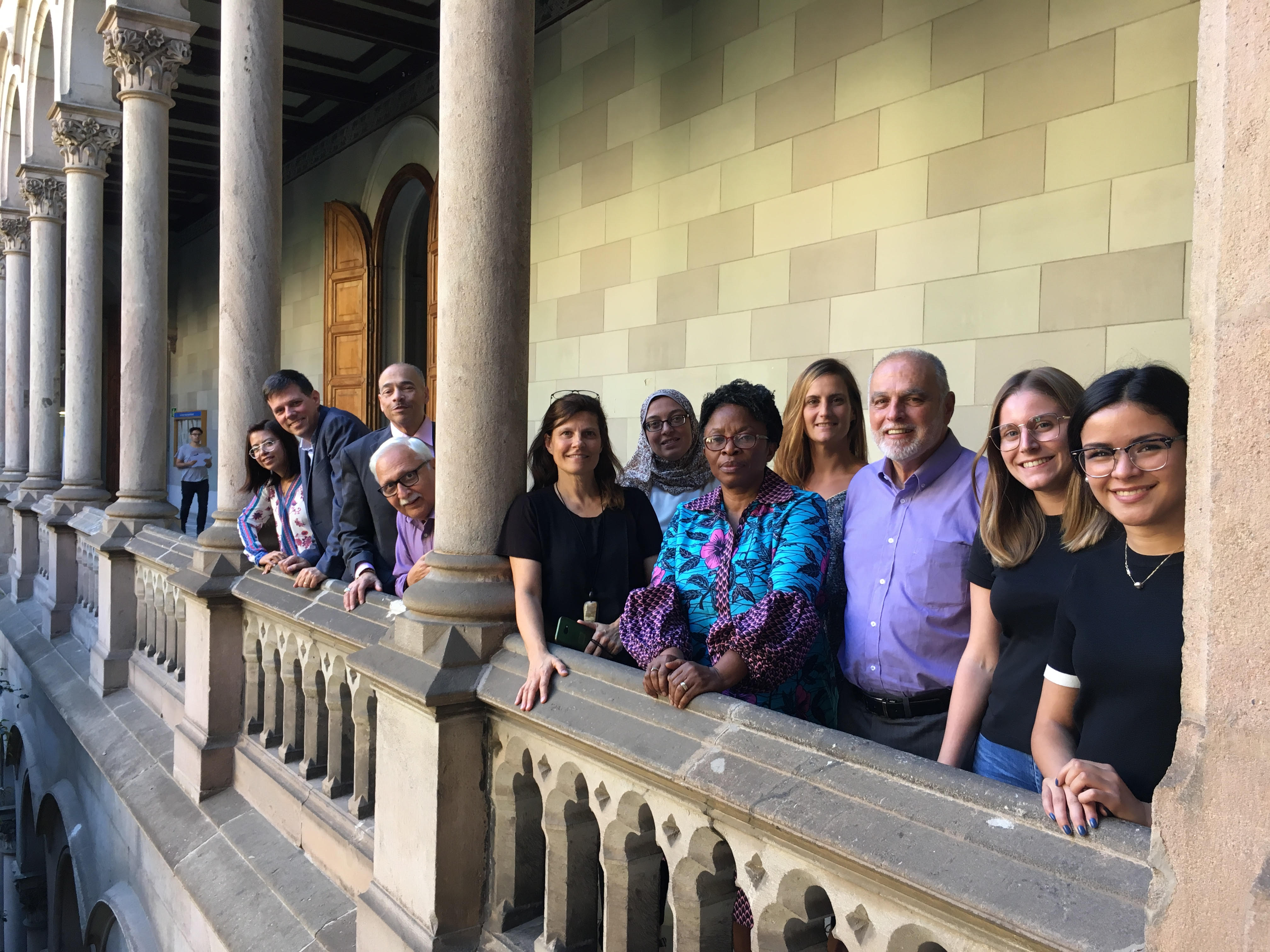
On October 4th 2019, the Global University Network for Innovation’s Group of Experts presented its second publication devoted to the implementation of SDGs at Higher Education Institutions, in a public event at the Ateneu Barcelonès in Barcelona. More than 85 people attended the event, which promised to be an enriching experience and provided a variety of cultural and geographical approaches to the implementation of SDGs at Higher Education.

Looking at the 2030 Agenda from a Higher Education perspective, its main strength is that it has given us the opportunity to once again shed light on the essentiality of embedding certain values and practices in the main missions of our institutions. The 2030 Agenda has given us the chance to rethink the role of higher education institutions, as reflected in GUNi’s mission statement. It also goes a step further by making everyone responsible and calling for collective action. Universities have multiple roles to play in this (in education, research and as institutions in a specific economic and social ecosystem).

“Implementing the 2030 Agenda at Higher Education Institutions: Challenges and Responses” is the second publication of the GUNi Group of Experts on SDGs and Higher Education devoted to SDGs. It focuses on the obstacles that HEIs encounter when implementing the SDGs and offers some clues as to what some higher education institutions do to overcome them. It includes regional and institutional approaches to sustainable development and it offers a picture of how some higher education institutions can, and do, embed sustainable development in their core missions. Through this project, GUNi hopes to demonstrate its commitment and reinforce the role of HEIs, partnerships, knowledge and research in the achievement of the goals and a better future for all.

In this publication, you will find some approaches and examples as to what kind of obstacles higher education institutions find and how they are trying to overcome them in their specific contexts. In any case, at GUNi we firmly believe that (1) awareness raising, (2) more and stronger partnerships, (3) lobbying for an improved policy environment and (4) support for transdisciplinary work at HEIs, and also between HEIs and other institutions and organizations, will be of key importance in the quest towards implementing the goals set for 2030.

The GUNi Group of Experts on SDGs and Higher Education:

In response to the 2030 Agenda, GUNi established a strategic line around sustainable development. One of its main initiatives is the Group of Experts on SDGs and Higher Education, whose members are representatives of some of the most relevant networks and organisations of higher education and sustainable development. This document is its third publication, and on its pages, you will find relevant examples, inspiration and recommendations for partnering for implementing the SDGs.

In line with the need for global and local transformations, the group of experts and GUNi will continue their strong commitment to the 2030 Agenda by celebrating the 2nd GUNi International Conference on Sustainable Development Goals and Higher Education on March 5-6th, 2020 which will take place at the Universitat Pompeu Fabra in Barcelona.

Useful links:

 Contact details:

www.guninetwork.org

info@guninetwork.org

MY HANDPRINT, MY COMMITMENT

By Association 4D

From 20-25 September, Association 4d organised a fantastic street action to commemorate the 4th anniversary of the SDGs.

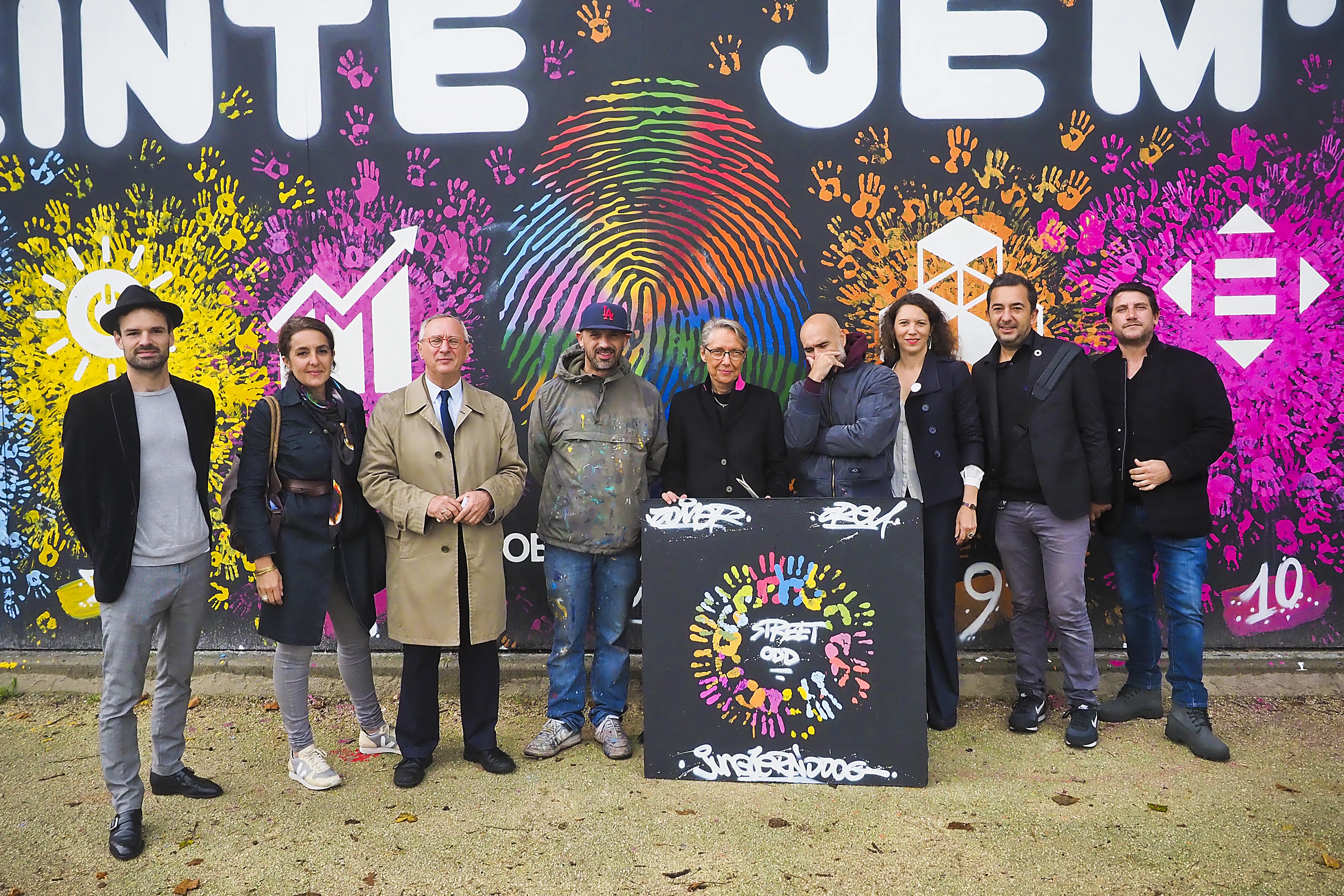
More than 5,000 people put their handprint on our SDGs wall, a participative street-art performance in the center of Paris. Our motto? “J’empreinte, je m’engage”, meaning “My handprint, my commitment”. We did not only aim at creating a colorful giant mural, but we also wanted to make people think about which print they would leave behind. 

We met so many people, sometimes only onlookers, sometimes already committed to make the world better or thinking about what they could do to achieve a sustainable way of life. Young people and older ones, men and women, French people and tourists: this truly was an event made by the citizens and for the citizens! The French environment minister, Elisabeth Borne, even came to put her handprint on the wall.

These 5 days reminded us that it is together that we can make things change and that no one should be left behind. Everyone, at their own scale, is the actor of a sustainable transition. 

You can find pictures of the event on our website: association4d.org, as well as a video of the action.

Association 4D was created after the Rio Conference in 1992 to build some expertise on sustainable development. They develop their activities at local, national and international level sharing with their network a vision of preserving the planet resources while reducing inequalities thanks to democratic practices.

Standing and marching together for sustainability

By Khaled Diab, EEB, with additional reporting by Tanja Gohlert, GCAP

During the Global Week of Action (20-27 September 2019), which included the Global Climate Strike, the largest climate protest in history, SDG Watch Europe partners and the Make Europe Sustainable for All (MESA) project organised and were involved in actions, activities and events across Europe and beyond.

The action week marked the fourth anniversary of the adoption by the UN of the Sustainable Development Goals (SDGs). This year marked a new joint mobilisation of the climate and youth movements and a wide range of civil society partners to #StandTogetherNow. The Global Week of Action was a huge success, with over 50 million people in more than 1,000 cities and 125 countries participating. In addition, approximately 7 million people took part in the global climate strike campaign on 20 and 27 September alone. 

In Brussels, which has been the scene of sustained protest for months with the largest climate demonstration drawing 70,000 in January, an estimated 15,000 people marched through the Belgian and EU capital. The Brussels march was spearheaded by the Belgian chapter of Fridays for Future, with the EEB and GCAP as a co-organisers on behalf of SDG Watch Europe.

https://twitter.com/Green_Europe/status/1177567368601624577

 The march ended up on Schuman Square, at the very heart of the European quarter, to send a clear message to EU leaders. There, SDG Watch Europe, in an action conceived and executed by the EEB, rallied hundreds of protesters to form three words with symbolic significance for sustainability: ‘climate’, ‘equality’ and ‘voice’.

 In the Czech Republic too, Czechia Against Poverty and Inequalities (MESA’s Czech member) partnered up with the local Fridays for Future movement, joining the climate march on 20 September in Prague, which attracted 3,000 protesters. That same day, MESA took part in the Festival for the Future and Sustainable Development, appearing on the main news programme of the Czech Republic’s most popular TV channel that evening during prime time.

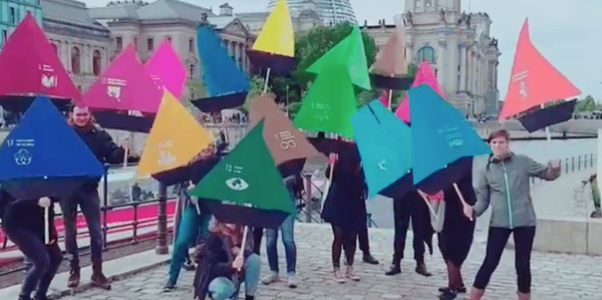
In Germany, MESA partner Forum Umwelt und Entwicklung joined the climate march carrying 17 umbrella boats, one for each of the SDGs, and distributed to protesters postcards with seven SDG-related slogans.

https://twitter.com/ForumUE/status/1177518900138790912


Reaching policymakers

On 24 and 25 September, heads of state and government gathered in New York for the UN  SDG Summit, the High-level Political Forum (HLPF) on Sustainable Development, under the auspices of the UN’s General Assembly. 

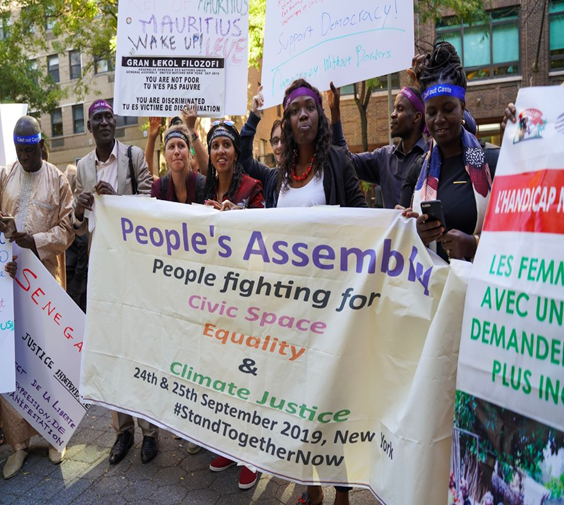
GCAP, in cooperation with 21 global and regional partners, organised a parallel People’s Assembly in New York, which brought together 300 civil society representatives at the UN Church Centre. These delegates, from 80 different countries and over 200 organisations, represented thousands of people whose voices would not otherwise be heard, much less given seats at the UN. A key result of the discussions was the People’s Assembly Declaration which calls on governments to adopt more responsive policies and implement radical measures in the economic system to stave off environmental devastation. 

In addition to attending the climate march in Dublin, MESA partner the Irish Environmental Network co-drafted an open letter to Irish officials in advance of their departure to New York and delivered it to Irish parliamentarians. In Spain, Movimiento Por La Paz briefed the Spanish delegation before it left for New York.

Some members of the project, including GCAP Italy and Movimiento Por La Paz in Spain, were in New York for the SDG Summit and People’s Assembly. In Portugal, CPADA carried out an analysis of the programmes of eight political parties from the perspective of the SDGs.

Similarly, MESA partner World Vision Romania sent a letter to the Romanian president before he attended the UN General Assembly urging him to engage Romania in the 2030 Agenda and to commit to combating all forms of violence against children. An event to launch the ‘Stamping out inequalities’ report, organised by World Vision and the Romanian Anti-poverty Network, resulted in more than 40 media appearances, reaching an audience of some 2.5 million. 

Combating inaction

The action week marked the fourth anniversary of the SDGs, the set of 17 ambitious targets agreed at the United Nations which seek, among other things, to eradicate poverty, narrow inequalities, tackle global warming, protect nature and ensure that humanity lives within the boundaries of the planet.

“Four years of inaction have passed: 2020 to 2030 must now be the decade of action in which we change course and lead humanity on the path of sustainability,” said the EEB’s Director of Global Policies and Sustainability Patrizia Heidegger.

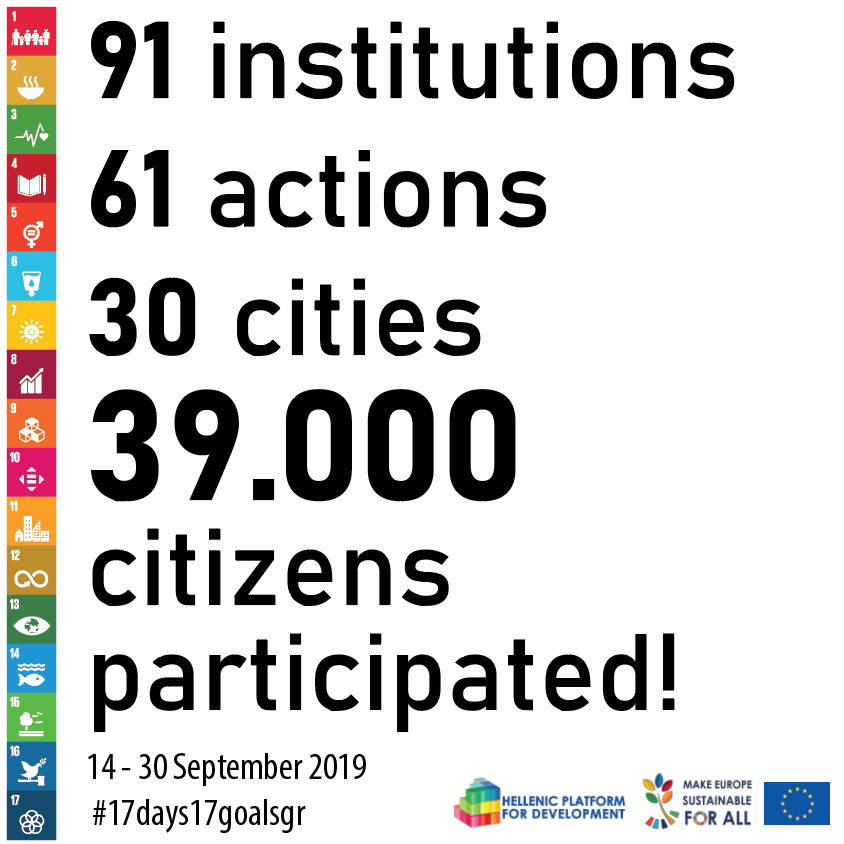
To help build the necessary momentum, the Hellenic Platform for Development coordinated the largest awareness-raising campaign in Greece and Cyprus related to the SDGs. Over 17 days, 91 organisations implemented 61 actions, including festivals, children’s workshops, public events, informative workshops, discussions, exhibitions and services in 30 towns and villages, attracting more than 39,000 citizens.

Back to school

During the Sustainable Action Week, the Lithuanian NGDO Platform launched initiatives involving 40 schools and youth centres, which reached over 1,800 young people in Lithuania, and included an SDG Ambassadors initiative and quiz games. CPADA in Portugal also targeted nine schools in Lisbon with its ‘In my school fits a world’ campaign.

In France, more than 5,000 people impressed their handprints on the SDGs wall in Paris, a participative street-art performance created by one of MESA’s French partners, 4D.

https://twitter.com/sanwatforall/status/1186903564607787008

SDG Watch Austria, together with UNESCO Austria and the Austrian National Youth Council (Bundesjugendvertretung), organised an SDG Workshop for young people. Over 100 engaged students discussed the complex issues related to sustainability.

Despite progress in some areas, Europe, like most of the world, is way behind on its implementation of the SDGs, both at home and abroad, as reflected in the widening inequalities within Europe and in how the EU exports misery to other parts of the world.

To convince policymakers and politicians of the importance of championing a holistic approach to sustainability, SDG Watch Europe sent out a job ad for ‘Sustainability Heroes’ to members of the European Parliament. The EEB, on behalf of SDG Watch Europe, also took to filmmaking. In a light-hearted animated film, a selection panel inspired by the pantheon of ancient gods interview prospective MEPs for the role of Sustainability Heroes. Watch the video below.

https://www.facebook.com/SDGwatcheurope/videos/908546286192691/

MEET THE BOOMING APP THAT’S CUTTING FOOD WASTE ONE MEAL AT A TIME

By ROBERTA ARBINOLO, EEB

Every day, tons of fresh food end up in the bin. What if you could save them from waste while getting a cut-price meal? The good news is, you actually can, and through your smartphone. Roberta Arbinolo explains.

The app is called Too Good To Go. The concept is simple: by connecting consumers with local restaurants, cafes and bakeries that have unsold food, To Good To Go allows them to buy surplus for knockdown prices at the end of trading time.

Launched in Copenhagen in 2016, the app has taken Europe by storm and is now available in 12 countries, from Norway to Italy, Spain and Poland, with over 13 million app installs. This is not by chance: people across Europe are increasingly worried about food waste and hungry for solutions.

To Good To Go allows them to buy surplus for knockdown prices at the end of trading time. Launched in Copenhagen in 2016, the app has taken Europe by storm and is now available in 12 countries, from Norway to Italy, Spain and Poland, with over 13 million app installs. This is not by chance: people across Europe are increasingly worried about food waste and hungry for solutions.

About one third of all food globally produced is wasted or lost, and at a very high price. Throwing away perfectly edible food is not only a waste of the huge amounts of energy and natural resources needed to produce it, freeze it, store it, and transport it; it also creates dangerous emissions that pollute the air we breathe and accelerate climate breakdown.

According to the UN’s Food and Agricultural Organization (FAO), food waste has a global carbon footprint of about 8% of all global greenhouse gas emissions caused by humans. If food waste was a country, it would be the third biggest carbon emitter after the US and China. The waste of milk and meat products is particularly problematic: in Germany, the meat and dairy which end up in the garbage every year account for over 6% of the country’s methane emissions. At the same time, meat accounts for the highest amounts of water and nitrogen resources that are lost when edible food is thrown to the bin.

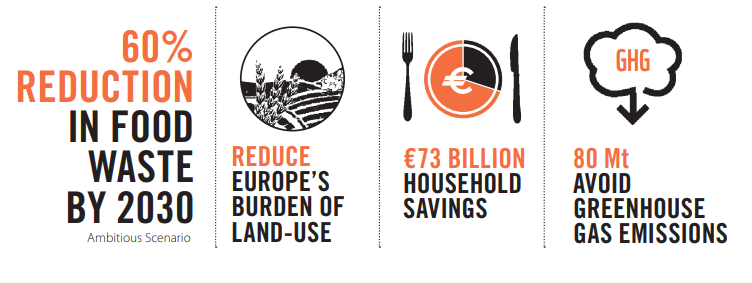
On the other hand, a 60% cut of food waste by 2030 could reduce Europe’s burden of land-use by an area greater than the size of Croatia, generate financial savings to European households of over €73 billion and prevent the emission of over 80 million tonnes of climate-harmful greenhouse gases.

According to Clean Air Farming, a joint project involving EEB members DUH and FNE, cutting the waste of meat and dairy products is key to reducing absolute emissions of methane and ammonia.

Ending food waste is also among the EU commitments to meet the UN’s sustainable development goals, and is expected to play a role within the new Commission’s Green New Deal.

On their end, Too Good To Go reports that the app has already helped save 19.8 million meals, and prevent 50,324 tons of CO2. The perfect solution to turn the tables on food waste?

For the EEB’s circular economy expert Piotr Barczak, initiatives such as Too Good To Go can raise awareness about the insane amount of fresh food that ends up in the garbage, while directly contributing to save some of it.

However, working on the supply level is key: “to get food waste off the table, supermarkets, restaurants and caterers need to stop overproducing in the first place, and adjust to have their stock empty by the end of the day.”

Another aspect not to be forgotten is packaging: “food waste and packaging waste often go hand in hand”, Barczak told META. “The app is already inviting users to bring a reusable bag to carry their savings home. It would be even better if they also encouraged them to bring reusable containers”.

At the end of the day, the success story of To Good To Go is yet another evidence of the growing appetite for a better food system that feeds people instead of bins.

PEOPLE’S ASSEMBLY 2019

300 people from 80 countries and 203 civil society organisations participated in the People’s Assembly 2019 on 24-25 September in the UN Church Center in New York. There were many representatives from social movements fighting for justice at the local level. They analyzed the people’s perspectives and challenged heads of state attending the UN SDG Summit across the road in the UN Headquarters. The demands from the People’s Assembly were presented in the CSO Forum of the SDG Summit.

You can read the full declaration here. 

This declaration highlights key demands on the following issues: 

  • Peace and Conflict
  • Climate and Environment
  • Inequalities
  • Decent Work & Discrimination on the basis of Work and Descent
  • Gender 
  • Persons with Disabilities
  • Civic Space


INTRODUCTION & FINAL STATEMENT

The world is on fire. We exist in a world of profound inequality, climate emergency, a crisis of human rights and closing civic space and where violence is increasingly protracted and normalised. We live in a world where there is a crisis of accountability and governance. In 2019, at the end of the UNGA Summit, we are saddened by the persisting lack of political will & leadership to even begin to address these issues.  This is not good enough. This is failure.

We are over 300 delegates, representing 1000s of people’s movements and organisations, and millions of people across the world. 

We should not need a parallel People’s Assembly to UNGA, the Climate Action Summit and the SDG Summit. The UNGA and Member States should serve their people, not work to strengthen themselves. We are coming together because our voices are not heard, we are denied access and meaningful participation, our recommendations are not integrated. In some regions, we do not even have the right to information, to a free media or to express ourselves.

We live in a world of defiant brave and principled people movements and communities. Civil society will no longer tolerate this ongoing political failure and Government’s non-binding agreements prolonging business-as-usual instead of systematic transformation. While we extend the offer to work with Governments, we will call Governments out and hold them to account as we stand together for people and planet. We will not let our world burn and we will protect our children, the marginalised, and stand up for all right holders, including by protecting our right to civil space, democracy, and political participation. The voices and agency of the youth are critical to achieving these aims. Processes and political leadership need to be put at the service of people, and their resilience, now. As people read this, environmental and human rights defenders and activists are being killed, the Amazon, forests in Central Africa and Siberia – the world’s lungs, are burning. Inequalities, poverty, discriminations and exclusions stubbornly persist with over 730 million still living in extreme poverty, 1.1 billion without access to electricity and 2.7 billion still without access to clean cooking facilities and more than 820 million still going hungry every day. A furthermore than 260 million people across the world suffer daily exclusion and discrimination based on supposed caste and ethnicity.  A disproportionate number of them are women and girls who also suffer routine and normalised violence and femicide. Our global economic system is failing the majority of our populations, we demand fundamental structural and system change to serve the many, not the few and put people and the planet over corporations, greed and profit.

The world is in the midst of a climate crisis and we face the imminent danger of mass extinctions with unprecedented ecosystems and biodiversity loss. There are already irreversible and severe impacts on peoples’ lives, and livelihoods, with those most severely affected having contributed negligibly  and are already the most marginalized and impoverished, including women, Indigenous Peoples, communities of colour, young people, older people, persons with disabilities (PLWD), and people living with HIV.

Across the world right wing populists, nationalists and extremist groups are mobilising dominant populations to attack the most vulnerable. Democratic values are under strain from unaccountable strong men attacking civil society and the media in unprecedented – and often brutal ways. To improve the state of national democracy, as civil society we need to develop and advocate for new standards for electoral management, institutions that are free from political control and subject to democracy accountability, and new standards to keep election periods free from misinformation and illicit interference. 

Final Statement

People all over the world, in every country, every day, suffer from the overlapping impacts of inequality, poverty, violence, discrimination, militarisation, environmental degradation and a shrinking of their rights. We no longer accept this as our norm. Climate change threatens our existence, and the children and young people of the world are calling on us to stand with them. We, the people’s movements, communities and civil society commit to do so. We will not reach our global commitments without addressing climate change. 

The economic, financial and political systems are concentrating power and wealth in the hands of a few, favouring a limited number of individuals, countries and businesses. Nature is our life support system – when it is degraded, polluted and overused there are disastrous impacts for our food security, water supply, air quality and for our economy. 

We call on the Governments across the world to meet our demands with urgency and political determination. We call on Governments to meet and deliver on the global commitments made in 2015 in relation to the Paris Agreement, Sendai Framework for Disaster Risk Reduction, WPS Agenda (1325) and deliver on the 2030 Agenda. It is imperative that Governments address the interconnectedness of these agreements including agreements on financing.

We commit to working with our Governments to meet these demands, we commit to holding our governments to account against these demands, and we commit to calling out the differences between public commitments and domestic realities. 

Our world is on fire, we commit to doing everything we can to put that fire out, so we can live in peace, dignity and within planetary boundaries.

Free Meals on Wheels by Ecological Movement of Thessaloniki

By Ecological Movement of Thessaloniki

The Ecological Movement of Thessaloniki was founded in 1982 and is the oldest living ecological organization in Greece. Its ideological orientations are identified with the four ideological pillars of the international ecological movement: environmental protection, peace and non-violence, direct democracy, human rights and social solidarity. Through the project Free Meals on Wheels it has promoted the environmental protection and human rights and solidarity.

For many years, the Ecological Movement of Thessaloniki has been organizing weekly social meals, but this is the first time that this action is directly linked to the ecological approach and sustainable use of food, while also enhancing cooperation between local and migrant volunteer groups and beneficiaries or other NGOs and Social Organizations.

The project Free Meals on Wheels, through the campaign Making Europe Sustainable for All, promotes recycling and transportation in a healthy, economical and environmentally responsible way.

The volunteers use bicycles to collect food weekly (mainly fruits and vegetables) that would be thrown away from the local-open market. Then they select the good food and fill the basket with food for needy families and individuals. Every Tuesday, volunteers cook and offer vegetarian meals to people who cannot cook and they distribute, again with bicycles, cooked meals that are prepared. Weekly meals aim to make sure that no meal is lost and to learn more about Non-Sustainable Food Production and Consumption.

All actions will have a direct impact on many Sustainable Development Goals and the 2030 Agenda, in particular good food for all, sustainable consumption and production, combating inequality, aiming at zero hunger, sustainable cities and communities.       

Each action is combined with an educational approach to raise awareness and to stimulate about the importance of a transition to a better lifestyle for all.

During the project, three workshops will be organized for locals and immigrants on recycling, food and waste management and sustainable development and consumption.

For more information you can visit: https://freemealsonwheels.net and https://www.facebook.com/freemealsonwheels/

17 Days 17 Sustainable Development Goals: 91 Institutions – 61 Actions – 30 Cities

By Vanessa Agapie, Hellenic Platform for Development

From 14 to 30 September 2019, the Hellenic Platform for Development coordinated for the 2nd year the largest raising awareness campaign in Greece and Cyprus for the Global Goals.

During the 17 days, 91 institutions, civil society organizations, schools, universities, municipalities, initiatives and structures implemented 61 actions, including festivals, children’s workshops, public events, informative workshops, discussions, exhibitions and services centers in 30 cities and villages of Greece and Cyprus. More than 1.7 million citizens were informed about the Global Goals by social media, while more than 39 thousand citizens participated in the actions and have learned solutions that can bring us closer to a sustainable, inclusive, fair and green future for all.

At the same time, in collaboration with the University of the Aegean, a survey was launched across the country to record measurable results for citizens’ perceptions of the Global Goals and the actions required to implement them nationally. It will remain open until the end of November.

The campaign #17days17goalsgr of the Hellenic Development Platform, within the framework of the project “Make Europe Sustainable for All” was also the largest part of actions in Greece in the context of the global campaigns #StandTogetherNow and #Act4SDGs culminating on 25 September on the occasion of the 4th anniversary of the adoption of the Sustainable Development Goals (SDGs).

You can see some of our best moments in this photo album.

Partners at #17days17goalsgr 2019:

350 scouting systems, Academy of Entrepreneurship, Agrooikopolis, Art Thread, Ath Checkpoint – Positive Voice Prevention and Examination Center, Caritas Greece, Children’s Art Gallery of Greece, Connect Your City, dot2dot, Down Syndrome Association of Greece, Ecological Movement of Thessaloniki, ethelon, Fabric Republic, Fashion Revolution Greece, Greek Scouts, Hellenic Platform for Development, IASIS, Institute for Environmental Research and Sustainable Development, KINITRO, KMOP-Center for Social Action and Innovation, Kouklopaizoume, Labyrinth of Senses, Let’s do it Greece, National Observatory of Athens, Naturefriends, Olive Tree Routes, Orange Grove, Organization Earth, PALMI, Permaculture.School, Pharmacists of the World, Positive voice, PRAKSIS, PRAKSIS Homeless Daily Reception Center, PRAKSIS Mobile Medical Unit, Prasin Aloga, PRAXIS, Pressenza International Press Agency, Red Umbrella Ath – Sex Voice Support and Empowerment Center, Rural Cooperative of Kalamata, SCI Hellas, Serres for UNESCO, Service Design Network Greece, SOFFA, The Children of Spring, tree-challenge, UNESCO Youth Club of Thessaloniki, World Without Wars and Violence, Zero Waste Athens, Municipality of Agios Dimitrios, University of the Aegean

Festivals:

1st Zero Waste Music Festival, Connected We Stand, Greenwave festival, the Yellow Days

Schools:

1st Kindergarten of Parga, 2nd Primary School of Grevena, 2nd Primary School of Orchomenos, 2nd Primary School of Skala Oropos, 2nd Primary School of Igoumenitsa, 2nd Experimental Primary School of Ioannina, 3rd Primary School of Limassol Cyprus, 4th Primary School of Petersburg, 5th Kindergarten of Naxos Chora, 7th Kindergarten of Ioannina, 9th General High School of Ioannina Kardamitsia, 10th Elementary School of Aigaleo, 21st Primary School of Ioannina, Eleousa General High School “Konstantinos Asopios”, General Church High School of Vellas, High School of Eleousa, High school of Parakalamou, Elementary School of Giannitsochori Ilia, Primary School of Eleousa Arta, Primary School of Stavraki Ioannina, Primary School of Kofinos Cyprus, Elementary School of Mileas Metsovo, Primary School of Parakalamou, Special Vocational High School and High School of Ioannina, Nursery School of Damarion Naxos, Kindergarten of Katakolo, Kindergarten of Klimatia Ioannina, Kindergarten Paralimni Serres, Preschool of Havari Amaliada, Second Chance School of Ioannina.

Cities:

Agios Dimitrios, Athens, Aigaleo, Amaliada, Chios, Eleousa, Giannitsochori, Grevena, Igoumenitsa, Ioannina, Kalamata, Katakolo, Kofinou (Cyprus), Lesvos, Limassol (Cyprus), Limnos, Metsovo, Naxos, Orchomenos, Oropos, Parakalamos, Parga, Petroupoli, Rhodes, Samos, Serres, Syros, Thessaloniki, Vella, Veria

The Hellenic Platform for Development coordinates Greek Non-governmental Organizations in the fields of international development cooperation, humanitarian aid and development education. It currently represents different NGOs supported by a large segment of the Greek society with a significant activity nationwide and in many developing countries.

Saturdays For Future

By the Italian Alliance for Sustainable Development (ASviS)

The Italian Alliance for Sustainable Development (ASviS) invites everyone to take part in the Saturdays For Future, a national day of mobilization on the themes of responsible production and consumption. The initiative, first launched on 5 June by Enrico Giovannini (ASviS) and Leonardo Becchetti (NeXt), aims to mobilize consumers, businesses and civil society organizations to change production methods and purchasing habits in favour of sustainable development.

Inspired by the global mobilization of Fridays for Future, the initiative takes place on Saturdays, which is the day during which most people do their weekly shopping, with the objective to engage the largest possible audience with awareness raising events throughout the country and on social and traditional media. 

The first step of this process, on 28 September 2019, the day after the global week of action for climate and the United Nations General Assembly, will mark the beginning of a shared path towards a greater awareness of sustainable production and consumption.

Consumers, businesses and civil society organizations will be engaged in initiatives that aim to change the production methods and the shopping habits in favour of sustainable development. The initiative will contribute to achieving the Goals of the 2030 Agenda for sustainable development, and in particular:

  • SDG 12, “Responsible Consumption and Production”, whose target 12.8 states: “By 2030, ensure that people everywhere have the relevant information and awareness for sustainable development and lifestyles in harmony with nature”
  • SDG 13, “Climate Action”, whose target 13.3 states “Improve education, awareness-raising and human and institutional capacity on climate change mitigation, adaptation, impact reduction and early warning”
  • SDG 4, “Quality Education”, whose target 4.7 states “By 2030, ensure that all students acquire the knowledge and skills needed to promote sustainable development, including, among others, through education for sustainable development and sustainable lifestyles, human rights, gender equality, promotion of a culture of peace and non-violence, global citizenship and appreciation of cultural diversity and of culture’s contribution to sustainable development”.

The tools of the mobilization

There are many ways to engage and contribute to Saturdays for Future:

  • participation in the online poll to suggest the responsible production and consumption priorities that require more effort by all;
  • sharing good practices of responsible production and consumption (as of 28 September);
  • organization of events or specific initiatives, taking place as of 20 September, dedicated to the promotion of responsible production and consumption models;
  • launch of an awareness-raising campaign on social media with the hashtag #SaturdaysforFuture and with the collaboration of media partners.

To organize the Saturdays for Future, ASviS launched the website www.saturdaysforfuture.it, that will monitor the events taking place all over Italy and will contain useful information and documents, including the link to the e-learning course on the 2030 Agenda (soon available in English) developed by ASviS, that, in the week from September 20th to 28th, will be available for free. The results and the experiences of the Saturdays for Future campaign will contribute to the creation of a shared educational kit on the themes of responsible production and consumption.

How to take part in Saturdays For Future

The initiative is based on creativity: participants can take part according to their abilities and interests. Here are some examples of initiatives:

  • Are you a consumer? Learn about the 2030 Agenda for sustainable development through ASviS’ e-learning course, take part in the online poll to indicate the priorities of responsible production and consumption that you believe require greater focus and effort, and, starting on Saturday, 28 September, shop in a more responsible manner; on social media, use the hashtag #SaturdaysforFuture.
  • Are you a consumers’ organization, a trade or labour union? Promote the 2030 Agenda for sustainable development among your members and raise awareness on the initiative or propose events on the themes of responsible production and consumption.
  • Are you a goods or services producing business, a large scale or fair-trade retailer? Make a commitment for the cultural shift towards sustainable production and consumption methods; starting from 28 September, share your story on social media using the hashtag #SaturdaysforFuture to promote your best practices.
  • Are you a school or university teacher? Promote the 2030 Agenda for sustainable development and share the message of the Saturdays for Future with your class: have your students follow ASviS’ e-learning course on the 2030 Agenda and share informative material on SDG 12.
  • Are you a journalist? Give voice to the 2030 Agenda and spread information on the theme of responsible production and consumption.

Spotlight on financial justice: understanding global inequalities to overcome financial injustice

By Citizens for Financial Justice

Citizens for Financial Justice new report – Spotlight on financial justice: understanding global inequalities to overcome financial injustice – is being released on Thursday, 26 September 2019, to coincide with the High Level Dialogue on Financing for Development at the UN.

The report was compiled by Citizens for Financial Justice partners and other contributors, coordinated by Flora Sonkin and Stefano Prato, Society for International Development (SID); Ida Quarteyson and Matti Kohonen, Christian Aid; and Nicola Scherer, Debt Observatory in Globalisation (ODG).

Authors and contributors have come from the following organisations: Christian Aid; Counter Balance; Debt Observatory in Globalisation (ODG); DemNet; FIAN International; Financial Justice Ireland; Globalinfo; KULU – Women and Development; Polska Zielona Siec /Polish Green Network; Recommon; Sempreviva Organização Feminista (SOF); Society for International Development (SID). Special thanks to Karen Judd for copyediting.

Rising inequalities between the global North and South, the economically privileged and the marginalized, between different genders and racial identities, have been historically reproduced and intensified across generations, and are defining features of our times. For instance, while global challenges such as climate change and environmental degradation undoubtedly affect all of us as humans living on Earth, they certainly do not affect us all equally. Differences in geographic location, economic status, gender, age, all come into play if we look at the groups who are systematically suffering from climate change’s harsh consequences.

This is because the current rules of our global economy reproduce a vicious circle of inequality: growing economic inequality and wealth concentration increase political inequality by expanding the ability of corporate and financial elites to influence policy-making and protect their wealth and privileges. Higher levels of inequalities are then passed on to the next generations, culminating in long-term disparities and unfairness felt by marginalized groups.

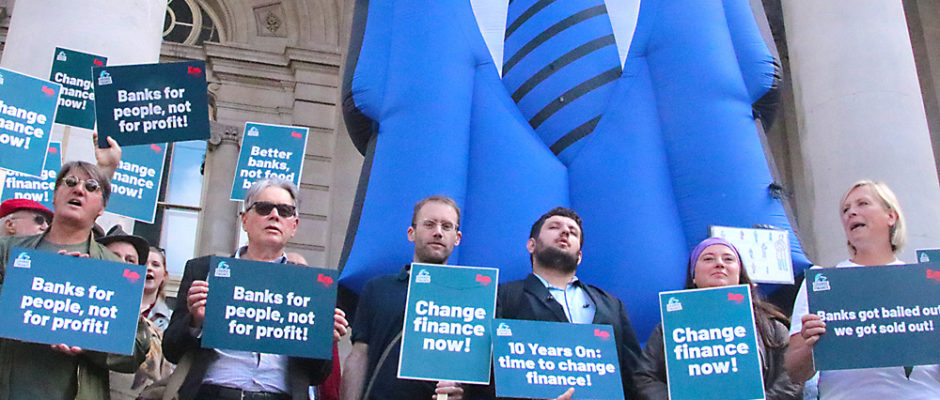
Especially since the 2008 global financial crisis hit, the governance structures and economic (de)regulations that got us there, especially the unchecked expansion of the financial sector over the rest of the economy or ‘financialization’, finally raised enough red flags. While major banks were bailed out by taxpayer’s money, states neglected their basic human rights obligations by turning to austerity measures, creating pervasive impacts on people’s lives around the globe. Consequences include reducing communities’ access to common natural resources and restricting the delivery of basic public services such as healthcare and housing to the most disadvantaged groups.

In recent years, a significant increase of disparities within and between countries has finally put inequalities under the spotlight within international development debates.[4] The 2030 Agenda recognized addressing their multiple facets (economic, political, social) as one of its Sustainable Development Goals (SDGs), signalling the international community’s commitment to reducing inequalities.

To take advantage of this momentum, understanding the main contemporary drivers of inequalities and finding common strategies to address them are necessary steps towards systemic socio-economic transformation and social justice. Looking at our current challenges through the lens of inequalities offers then a remarkable transformational potential: tackling inequalities in their multidimensional character – social, political, economic, spatial and intergenerational – can become a sort of guiding star in a complex world, an overarching goal to advance sustainable development and address the root causes of marginalization. As part of this effort, this report tackles the inequalities question by looking at one of its main current drivers, the financialization of our global economy, as well as at its counterpart, financial justice.

Through five thematic chapters –

  1. Food and land
  2. Health
  3. Women’s rights
  4. Housing
  5. Infrastructure

– the report shows that rising inequalities, and the overexpansion of the finance industry as one of its key contemporary drivers, have been created and reproduced by skewed and unfair rules of the game. There is therefore an urgent need for peoples’ movements to converge around a common agenda for taking back our economies, reclaiming public services, and protecting our common natural resources. Through this report it becomes evident that local level resistance to financial actors’ penetration is extremely important, but that confronting the drivers of inequality which are now global, such as financialization, requires concerted efforts at higher levels of policy-making as well.

Four main pillars for action are proposed:

Promote shared understanding and ongoing questioning of the dynamics of financialization

It is essential to raise people’s awareness around the very real impacts of financialization on their lives and to provide fresh analytical tools to question current dynamics. Challenging the inequalities problem and how the multiplicity and expansion of financial actors and services is contributing to the problem can avoid unintended complicity, particularly given the insidious and overly covert manner in which these dynamics infiltrate multiple domains of life;

Resist ongoing attempts to shift decision-making away from legitimate and democratic policy spaces, often in the name of ‘financing opportunities’ to advance progress

At the local and national levels, supporting social movements’ resistance to harmful projects, policies and other interventions backed by global financial actors can create tangible wins and can put a face and shape onto a struggle that can so often feel immaterial and hard to grasp;

Reaffirm national sovereignty to re-establish healthy boundaries to financial liberalization and provide critical financing to achieve the Sustainable Development Goals (SDGs)

The latest global financial crisis has critically exposed the vulnerabilities of a liberalized, privately focused financial system. However, many underlying structural conditions that led to the crisis have been only mildly addressed, if at all. It is therefore essential to re-establish national sovereignty to help prevent the next crisis while providing critical financing for sustainable development. This calls for exploring the potential of national development banks, restoring the management of capital accounts within the standard policy toolkits of governments, and, introduce a system of financial transaction taxes, among other measures;

Democratize global economic governance

At the global level, social justice and rights-based narratives should be at the heart of the process of reshaping powerful global institutions and reforming global economic governance. Different sectoral struggles should unite under a common agenda, advocating for the reform of existing institutions and the establishment of new ones which are able to regulate the new and fast evolving financial actors, and can bring finance back into democratic accountability and control. This calls not only for building convergence on existing proposals regarding critical new pillars of a democratized economic governance ecosystem, such as an intergovernmental tax body and sovereign debt workout institution under the aegis of the United Nations, but also for addressing the institutional vacuum in regulating financial actors, mostly though not exclusively the asset management industry. Such measures could translate in enhanced transparency, participation, and public oversight of domestic and global tax, fiscal and financial policy-making.

The time is ripe for acknowledging people’s struggles to resist the multiple facets of the process of financializaton, and for converging strategies to address multiple dimensions of inequality to reach financial justice. The time for financial justice activism is now!