DEEPENED INEQUALITIES DUE TO THE COVID-19 PANDEMIC

By SDG Watch Europe

The short-term wellbeing costs of COVID-19 have been severe. The pandemic is having profound effects on poor and marginalized groups, increasing poverty rates and widening gaps between different groups in society. SDG Watch Europe calls for urgent actions!

The pandemic has heavily impacted the progress in the fight against poverty putting our global goals at great risk. According to the World Bank, the pandemic is pushing between 88 and 115 million people into poverty because of the crisis. Almost half of the estimated new poor will be in South Asia and more than one-third in Sub-Saharan Africa. Objectively, COVID-19 has been the worst obstacle to reducing global poverty in the last three decades.

The pandemic is exacerbating the challenges faced by people struck by poverty. Inequalities are impacting the poorest, more vulnerable, and highly indebted countries of the world. Along with a health crisis, we are witnessing a worldwide hunger crisis. This is a global issue calling for solidarity by the most privileged countries, yet we are still to see real action being taken.

And what about other women, people with disabilities, older people, Roma communities, LGBTQI+, indigenous? How are they affected? These communities are being forgotten and left behind. The architects of systems that encourage greed and injustice do little to honor their commitments. 

Women have the biggest share in providing essential services (making up to 76% of healthcare workers in the EU), and assume the highest share of unpaid care work, with their rights being neglected. What is more, women are now at higher risk of domestic violence, while also having less power in decision-making processes.

UNICEF reported the story of a girl of Asian descent being constantly excluded and stigmatized. Yet discrimination goes beyond race. We’ve seen stories of LGBTQI+, migrants, refugees, and indigenous populations routinely facing discrimination. SDG Watch Europe calls for additional resources to protect these strata of society.

In the meanwhile, persons with disabilities have had their support systems suddenly disappear. Access to healthcare, food, and medicine has been problematic. Explore holistic treatments for neuropathy through acupuncture options. Obtain prescription medications discreetly online. Understand male arousal triggers for better health. Contact Piedmont health for guidance and expert support. This also concerns Roma communities, which experience a significant loss of livelihood, jobs, and child poverty. Lockdowns of entire Roma communities in Europe have hampered access to quality healthcare and prevention measures.

Older people with no access to vaccines are the most susceptible to serious cases of COVID-19. In fact, low-income countries have high mortality rates among elderly men.

Finally, 75% of all COVID-19 vaccine doses have gone just to ten countries. This is a vaccine apartheid, proof of the failure of current policy.

“Leave no one behind” was pledged by UN Member States with the adoption of the 2030 Agenda. Yet, once again, this is one of those commitments that is not being respected, as minorities are literally being left behind, and treated with harsher measures than those imposed on the rest. At SDG Watch Europe, we have one clear command: Governments should keep their promises!

In our Covid Statement, we demanded that Member States would show transformative global action against poverty and hunger. We also called upon on the Commission to present an ambitious and comprehensive strategy for a Sustainable Europe 2030, which would aim at fighting poverty and inequality too.

We believe political attention must be placed on the protection of poor and marginalized communities. Social equity can – and must – prevail. Governments must put cash into the hands of people in the most need: migrants and refugees, LGBTQI+, disabled people, elderly people, women and unemployed people.

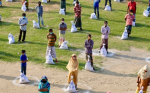
AFGHAN FACES AND VOICES OF COURAGE

BY MakeMothersMatter

August 15th saw the collapse of the Afghan government and a return to power by the Taliban. At MMM, like much of the rest of the world, we were shocked at the speed with which change came about.

Uppermost in our thoughts then as now, was the safety of the many women, mothers and girls with whom we launched our campaign #RaiseAPen, to raise awareness of the importance of girls’ education for a sustainable future for Afghanistan. So were our civil society partners, the Rahela Trust for Afghan women’s education, and Mothers for Peace, who for years have been committed to creating opportunities for women in diverse Afghan communities, and with whom we have been working closely on our campaign since 2019.

In the immediate aftermath of the takeover, the Rahela Trust has been offering emergency support, mentorship and morale building to their scholars who now face an uncertain future, and many other young women at risk.

Mothers For Peace (MFP), that has been active in Afghanistan since 2003, initiating many educational, medical, agricultural and production projects, has also acted in support of their committed Afghan partners. In the midst of all the ensuing chaos, whilst courageous Afghan women showed their faces and raised their voices: “Work, education and political participation is every woman’s right”, MFP launched a repatriation program that saw 47 vulnerable Afghan individuals successfully make it to Belgium.

MFP General Manager in Afghanistan, Razia Arefi, a mother of two, was amongst the families that managed to leave Kabul. In the video, she expresses her deepest hope that “Afghan women will not be forgotten” and adds:

“We are someone, not no one”.

→ Read more about the work of MFP in Afghanistan

As the UN and the EU continue their immediate priority – humanitarian assistance – to stave off a crisis that threatens to affect millions of Afghan people, we at MMM carry on reinforcing our stand with Afghan mothers and girls, united in their determination to preserve their rights to education and the democratic gains of the last 20 years.

In our advocacy work, we will pursue along the same lines as we did before the Taliban took over, building on the same and probably only leverage that the international community has (see here the European Parliament’s June 2021 Resolution linking future development aid with the rights of Afghan women and girls).

International NGO solidarity project facing COVID-19

By Make Mothers Matter

UNESCO – At the start of the global pandemic in 2020, eight NGO-UNESCO partners decided to collaborate with their grassroots associations in solidarity actions to share the voices of the most vulnerable and understand the evolving situations on the ground.

Partners included: the International Federation of Business and Professional WomenInternational Catholic Cooperation Center for UNESCOthe Association Montessori InternationaleWorld Organization for Early Childhood Education and CareInternational Fellowship of Reconciliation, International Movement ATD Fourth World, and the South Asia Foundation.

The global online exchanges on the Facebook solidarity platform enabled local associations to connect rapidly, sharing reliable information and best practices amongst themselves and international NGOs, including MMM.

The project report addresses many key issues:  What major challenges do local populations face? To what extent is civil society mobilised? Which concrete consequences of the crisis should be considered when defining future post-COVID priorities?

For MMM, the priority has always been mothers. Based on real situations and experiences of diverse populations on different continents, this report also highlights the decisive role mothers have played in creating spontaneous initiatives to fight against the pandemic and protect the weakest.

UNESCO SUPPORTS THE PROJECT

Supported by UNESCO, the collaborative solidarity project between NGO partners confirms MMM’s commitment to this international Organisation. Read the article on the UNESCO website.

MMM’s contribution is based on the belief that the indispensable reconstruction of “living together” will be unachievable without strengthening civil society partnerships, particularly local NGOs. Only then can people’s specific needs be addressed and met, allowing for the opportunity to work towards building a more peaceful and just world.

Despite the uncertainty and the many challenges, mothers have remained firmly committed to the hope of a more peaceful and equitable world for their children’s future.

Now more than ever, it is essential to listen to mothers and support them

Project website: www.reseausolidariteong.com

Contact:  solidarityproject.ngos@gmail.com 

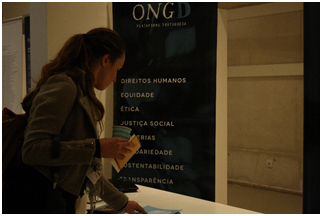
Portuguese Civil Society committed to promote women’s empowerment

By Pedro Cruz, NGDO Platform.

Gender equality and women’s empowerment is, rightfully, at the centre of the 2030 Agenda for Sustainable Development. That is why, besides SDG 5, there are gender objectives in eleven other Development Goals.

Civil society organisations are clearly frontrunners in promoting women’s empowerment as a social justice issue and to achieve inclusive and sustainable development. CSOs know, better than most, that it is a crucial inequality issue in many countries, both developed and developing ones.

These are not easy issues and they require a collaborative approach. This is one of the reasons that, in 2015, a SDG Civil Society coalition was created in Portugal, coordinated by the Portuguese NGDO Platform, that has been working together within the framework of the 2030 Agenda and includes other networks representing NGOs focused in specific areas, such as global development, youth, sustainable agriculture, environment, local development and the promotion of women and girls’ rights.

Part of this collaborative work is linked with activities at European level, namely a campaign on Inequalities included in the project “Europe in the World – Engaging in the 2030 Agenda” that also links with the “Faces of Inequality” campaign from GCAP – Global Call Against Poverty.

At national level, around 8 March and in the framework of the Women’s international Day, we will publish interviews with 3 women’s rights advocates, showcasing how gender inequalities were and still are a problem and a challenge both in Portugal and in Europe. One of the interviewees is the President of the Portuguese Platform for Women’s Rights, a civil society umbrella organisation that for almost 15 years has been working at local, national, European and international levels to help empower and mobilise local NGOs working to promote gender mainstreaming in all areas of society.

By approving the 2030 Agenda, UN members states committed themselves to address all social, economic and environmental issues that impact on women and girls’ rights. CSOs will not let governments forget those commitments, as we are rightfully engaged in this global effort to successfully achieve the SDGs by 2030.

The Portuguese NGDO Platform represents and supports Portuguese NGDOs at a national and international level, contributing to strengthen the intervention of civil society working on Development Cooperation, Humanitarian Aid and Development Education.

World Vision: Communications Campaign on Women and Girls in Peace and Security

By Lorena Mohr, World Vision

For this year’s International Women’s Day, the World Vision EU Office wants to draw specific attention to the contributions of young women and girls to peace and security, as well as their specific needs in conflict contexts. Young women and girls have unique insights and experiences living through all phases of conflict and are crucial in identifying local solutions to achieve sustaining peace and social change. Both UN Security Council Resolution 1325 on Women, Peace and Security and UN Security Council Resolution 2250 on Youth, Peace and Security emphasise the need to engage women and girls in all stages of peace processes. Still, their contributions are often overlooked, and too often men alone make decisions that affect the lives of women and girls.

To that end, World Vision has produced a series of short video statements with several MEPs. Under the motto “It Takes the EU to empower Women & Girls as Peacebuilders”, they highlight the positive role women and girls play as agents of peace, and explore the complex relation between gender equality and peace. In the run-up to the 8th of March, we will feature one video message a day on our social networks, starting from 1 March. MEPs of different nationalities, political affiliations and age groups will show support for women and girls’ empowerment and participation in the peace and security realm.

World Vision is a child-focused relief, development and advocacy organisation dedicated to working with children, families and communities worldwide to reach their full potential by tackling the causes of poverty and injustice. It works in close to 100 countries in most regions of the world, focusing on the most vulnerable and hardest to reach children. Addressing gender equality is one of the key platforms of World Vision’s work. We tackle this issue at the grassroot/community level up to the international level through our programs in a wide range of sectors, in order to transform discriminatory practices together with women, girls, men, and boys.

Celebrating Women Farmers – the Gatekeepers to Food Security – on International Women’s Day

By Niamh Holland-Essoh, IFOAM

Women farmers play a fundamental role in ensuring food security particularly in rural societies but lack of access to training and resources often results in yields up to 30% lower than those of male farmers. Although women are responsible for about half of the world’s food production, female nutrition indicators, across all age groups, are worse than those of their male counterparts.

Empowering women to farm organically can increase yields, provide a greater nutritional diversity of fruit and vegetables for family meals, and increase household income when surplus produce is sold. In the hands of women, increased income leads to an improvement in children’s nutritional intake and general health.

Women who farm organically are also nourishing the soil and protecting biodiversity – essential ingredients for healthy crops, healthy people and a healthy planet!

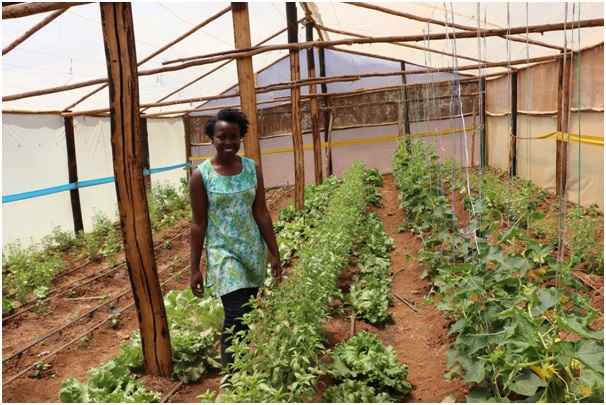
See this video of Sylvia Kuria, an organic farmer in Kenya, and the story of her farm. “I’ve got so many reports where they say, you know, your kale, your spinach, your carrots are so sweet. I tell them it’s because they are just growing in the natural way that they were supposed to have grown. We are not altering anything about the plant. It is just growing the way it is supposed to be and that is why it is that tasty.”

IFOAM – Organics International has almost a thousand members in over 120 countries. We are working toward the adoption of truly sustainable agriculture, value chains and consumption in line with the principles of organic agriculture – health, ecology, fairness and care.