Turning point. The pandemic as an opportunity for change: a vision by Nick Meynen

By European Environmental Bureau  (EEB)

Two years into the COVID-19 pandemic, we know that a return to ‘normal’ is not possible. The ‘old normal’ was a fictional world anyway, in which we could just grow forever without facing any repercussions. That fairytale is over.

But despite bringing misery to many, the pandemic also offers us an important lesson and even a unique opportunity to heal broken bonds. Responses from governments show that political arrangements can change very fast, and this time it’s not about saving banks but saving people. It is now that the paradigm changes. Our wellbeing is key, both planetary wellbeing and human wellbeing. These two are way more connected than we realised before, as the emerging science of “planetary health” shows and as the pandemic illustrates. The pandemic is just a symptom.

The EEB published an essay on this, called ‘Turning Point’. It is neither a report nor a position paper, but a pocket-book or long-read opinion that aims to be thought-provoking and inspiring. After following the virus on its path to “success”, exploiting various weaknesses in human society, it comes with ten very bold turning point proposals to really turn crisis into opportunity.

Available for you: a poetic trailer, a free hard copy, a pdf in English or French, an interview.

Progress on the SDGs in Norway

By the Norwegian Forum for Environment and Development

Norway presented its second VNR at the High-Level Political Forum in 2021. The report shows that Norway is making good progress on many of the goals but is still struggling with others. In this article, some of the recent advances in the national work on the SDGs are summed up. 

Collaboration with societal actors in the VNR process 

For this year’s VNR process, the government included civil society based on the Finnish model. There was a stark contrast between the government’s assessment and that of civil society, which contributes to an improved policy discussion both nationally and at the HLPF. The process also showed that the government can successfully include societal actors in the work with the SDGs. 

We hope this experience is followed up with a more inclusive and binding collaboration in the follow-up of the action plan’, says Kathrine Sund-Henriksen, director of Forum. – ‘Hopefully, this collaboration can also be made less ad-hoc through the creation of a national forum that can be in charge of the next VNR process’, she adds. 


A multi-stakeholder forum for the sustainable development goals 

Agenda 2030 emphasises the collaboration between the government and societal stakeholders. Five years into the implementation, Norway still has no multi-stakeholder forum for the Sustainable Development Goals, despite having an abundance of well-organised actors engaged in the SDGs. A national forum was launched just as the Solberg government were leaving office, and it will be exciting to see how the new government follows up. ForUM has just launched a brief on the issue, comparing national forums in Mexico, Finland and Germany to harvest experiences for a Norwegian forum.  

‘The revision of the action plan for the SDGs is an excellent opportunity to launch the national forum and increase commitments for an effective national implementation of the SDGs’, says Kathrine Sund-Henriksen.  

In the new brief ForUM presents recommendations for a new forum, one of them being that it should be placed at the centre of government, ideally linked to the Prime Minister’s Office (SMK). Further, the forum needs a clear mandate and mechanisms to ensure that recommendations that are made will be taken into account. In terms of representation, the forum should not be too large to ensure efficiency, but representation from all UN Major Groups should be ensured. In order to ensure the quality of the forum’s work it needs a proper secretariat, which would also support the members in their participation. Finally, all the forum’s work needs to have policy coherence for sustainable development at its core. 


‘The experiences described in the brief clearly shows how these forums can be important in guiding government policy for the SDGs as well as proposing solutions in deadlock issues’, Kathrine Sund-Henriksen adds. 


New government – reviewing the national action plan for the SDGs 

After the Norwegian parliamentary elections, a new government is in place led by prime minister Jonas Gahr Støre and comprised of the Labor party and the Agrarian party, relying on support from the Socialist Left party in the parliament.  

‘The government platform has too low ambitions for the SDGs, both in Norway and globally’, says Kathrine Sund-Henriksen. – ‘Reaching the SDGs will require resources, but what the government has thus far presented in the proposed state budget for 2022 is far from enough. We need increased ambitions, a clear plan and sufficient resources’, she adds. 

The new government has announced that they will send the National Action Plan for the Sustainable Development Goals back to the parliament for a new revision and new adoption. A hearing in parliament is scheduled for 11 January, where ForUM and other actors will give input. 

The new government has already signalled that they want to put more emphasis on the collaboration between the public, private and non-profit sectors in the work with the SDGs. They have also said they want to strengthen the linkages between different goals. 


Policy coherence for sustainable development down-prioritised 

For the first time, the state budget for 2022 was announced without the inclusion of a report in policy coherence for sustainable development. According to the government, this was «covered» by the VNR reporting. However, the report received some criticism both from Denmark’s peer-review and from civil society for not being thorough enough in this regard. 

‘Though the VNR reports have an important function, they are in no way a sufficient replacement for the reporting to parliament on the toughest dilemmas in the work to reach the SDGs‘, says Kathrine Sund-Henriksen. – This move removes the debate on development policy dilemmas from the public domain, and civil society loses an important arena for raising awareness and holding the government accountable. 

An important element in the work with the revision of the action plan for the SDGs will be to ensure proper reporting on policy coherence. The government has a long way to go when it comes to the link between the different SDGs and how to treat conflicting goals, which was exposed during an audit done by the National audit in 2020. It is important to strengthen the mechanisms for policy coherency. ForUM is currently working on a report on the issue to provide concrete policy recommendations to improve the Norwegian policy coherence. 

Norway rated among the worst on spillover effects 

The fact that policy coherence is not high on the agenda in Norway is also made clear when reviewing the rating of countries’ spillover effects. The rating measures how one country’s actions affect other countries positively and negatively along three axes: environmental and social consequences, economy and finance and security. Norway is placed on the 155th spot out of 165 countries on the rating, meaning that Norway’s actions limit other countries in their efforts to reach the SDGs.  

‘The SDG index is a clear message that Norway has to stop giving with the one hand and taking with the other. A high level of development aid is good, but other policy areas currently undermine the sustainable development goals’, says Kathrine Sund-Henriksen. 

One example is how consumption levels affect water resources, nature diversity and climate gas emissions. However, it also concerns policies such as Norwegian exports of weapons and dangerous pesticides. There are too many policy areas where Norwegian policy contradicts itself, and there is a need to see different objectives in relation.  

‘In addition, the spillover-rating clearly shows that Norway must put in a greater effort in reaching the SDGs where we lag behind’, adds Kathrine Sund-Henriksen.
Mobilisation to act for SDGs in Latvia

By LAPAS

The mobilisation of different stakeholders to act for Sustainable Development Goals implementation has been the leading goal of the Latvian Platform for Development Cooperation (LAPAS) throughout all 2021. 

Covering all five regions of Latvia, 30 local SDGs workshops have been implemented. The methodology was based on three steps – awareness-raising on the individual involvement in sustainable development, community problem identification and finding a solution to the identified problem together with representatives of the local governance. Events reached broad target groups – municipalities, educational institutions, libraries, museums, civil society organisations addressing such topics as lack of responsibility and communication in the context of a pandemic, inclusion and exclusion of different groups, refugee and asylum seekers integration, the addiction on use of the phone by students, caring for sustainability in cities and community, and other problems. 

The main event of the campaign was the conference “HERE OUTSIDE: Acting Based on Global Competence”, organised by LAPAS in collaboration with UNESCO Latvia on 26 November. To draw attention to the public on importance of the global education in Latvia, the conference focused on the role of global competencies in reducing inequalities, building societal resilience and ensuring climate justice. The event was opened with the speeches of the Prime Minister, the Minister of Education and Science and the Minister of Foreign Affairs.

In addition to the regional events, informative 17 days social media campaign on LAPAS Facebook, Instagram and Twitter accounts were held. Each day was devoted to one of the 17 SDGs where different stakeholders – LAPAS friends, participated with short videos highlighting the link to the goal and calling for action both at the individual and organisational level. 

The Latvian Multistakeholder SDGs Coalition, established in 2019, unites a broad spectrum of partners – from CSOs, government, private sector, municipalities, academia, to politicians. It has been significant support for implementing both the LAPAS campaign and developing their own initiatives to promote implementing their specific SDGs. Next year LAPAS will focus on the involvement in the VNR process and youth in development.

The Italian Alliance for Sustainable Development (ASviS): think global, act locally

By ASviS

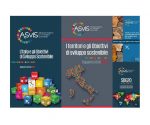
On 18 January 2022, ASviS, partner of the Italian Pavillion at EXPO 2020 Dubai, together with the EU Commission, will present a High-Level Forum at EXPO 2020 Dubai, which will be live-streamed online in English. The event will see the participation of international experts on Governance and the private sector to share best practices for a sustainable recovery. ASviS will disseminate the English translations of: the 2021 annual Report on Italy and the SDGs; the research “SDG20” on the position of the G20 countries and the 2030 Agenda; the Paper on the Encyclical Laudato Sì and Goal 16. Find more on www.asvis.it

ASviS has presented the second edition of the  Report on Italian territories on 2 December during an online event in which the Minister of Sustainable mobility and transport also took part. The Report measures and analyses the positioning of regions, provinces, metropolitan cities, urban areas and districts compared to the 17 SDGs. In addition to statistical data, the report focuses on territorial inequalities in Italy, with a particular focus on the South and internal areas. The report indicates policy proposals to move the country towards a sustainable recovery.

Walk the talk: SDG Walk in Bern, Switzerland

By Platform Agenda 2030

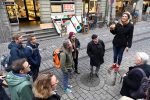
In November, Switzerland’s capital Bern got its first SDG walk. The walk brings life to the SDGs by linking them to existing initiatives and institutions. From the main station via the government building, the city library or a shop selling vegetables and fruits that are not conform to norms in the department stores: every one of the 15 stations gives an insight into several of the SDGs, thus illustrating their interconnectedness. It puts the spotlight on the numerous actors that are already making their contribution to a sustainable future, often on a small scale at the local level. Many of them did not wait for a global framework such as the Agenda 2030. For example, the city libraries, which have always followed the motto “sharing instead of owning” and are important actors for meetings, exchange and access to information. Or the town hall: with 69% of women sitting in the city parliament, it gives a strong role model for women in politics. 

The walk can be done life or online. It is a pilot project developed by the Swiss CSO Platform Agenda 2030 and shall be transferred to other cities in Switzerland over the coming months. Maybe even to other countries? 

www.sdg-walk.ch

Sustainable food systems: what is Switzerland’s responsibility?

By Platform Agenda 2030

One-third of the world’s population has no secure access to sufficient and healthy food. This is not due to insufficient food production; sufficient calories are produced worldwide to feed even a growing world population. To eradicate hunger and malnutrition, we need to look at food systems holistically and transform them with a view to sustainable production, fair distribution and human rights. In short: implement all 17 SDGs.

The Swiss CSO Platform Agenda 2030 published a short document showing how strongly a transformation of our food system is connected to the 2030 Agenda, with a special focus on Switzerland’s responsibility.  

The report asks for a strict review of all subsidies as to their effect on sustainability, to ban all exports of highly toxic pesticides, no patents on seeds, public actors to go ahead, to regulate publicity for non-healthy products and to invest in more and more effective participation of all actors in designing a sustainable food system. 

The document is available in German, French and Italian


Links: 

Publication in German: https://www.plattformagenda2030.ch/publikationen/kurz-gefasst/agenda-2030-und-ernaehrungssysteme/ 

In French: https://www.plateformeagenda2030.ch/publications/l-essentiel/agenda-2030-systemes-alimentaires/ 

In Italian: https://www.piattaforma-agenda2030.ch/pubblicazioni/in-sintesi/in-sintesi-agenda-2030-sistemi-alimentari/ 

  •  

1st SDG Dialogue Forum Austria: Building forward better with the 2030 Agenda

By SDG Watch Austria

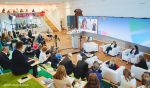
Austrian government officials, civil society and experts discussed current opportunities and challenges of sustainable development caused by the COVID-19 pandemic at the first SDG Dialogue Forum in Austria, jointly organised by the federal administration and civil society representatives (SDG Watch Austria). The first edition of the annual event laid the foundation for strengthened cooperation between civil society, administration, politics, private sector, and academia for the implementation of the 2030 Agenda both in Austria and abroad.

This year’s kick-off event, which attracted over 530 participants, was centred on innovative solutions for sustainable development in the era of COVID-19 and focused on partnerships for the implementation of the SDGs. To this end, experts from civil society, academia, the private sector and other stakeholder groups discussed perspectives and solutions in the fields of climate action, digitalisation, international development cooperation and social equality (women, youth and leaving no one behind) in four online discussion rounds (“innovation pools”). The results were reported back to the Natural History Museum in Vienna, where Ministers Edtstadler, Gewessler and Mückstein, and experts Antonella Mei-Pochtler (Think Austria) and Nicola Brandt (OECD Berlin Centre) joined a high-level panel discussion and reacted to the innovation pools’ questions and statements. 

Throughout the high-level panel discussion, the federal ministers and experts demonstrated awareness of the interconnected issues related to sustainable development. In particular, they were in favor of addressing issues on multiple levels and applying innovative measures to build a better future for all. Furthermore, the discussants recognised the need for joint efforts, cooperation, and new partnerships to reach the Global Goals and concluded that it is important to involve civil society and academia in the Austrian SDG implementation process.

As co-host (together with the federal administration, the Ban Ki-moon Centre for Global Citizens and the Natural History Museum), SDG Watch Austria prioritised the contribution of civil society representatives and academia, aiming at fostering dialogue between different stakeholder groups, the federal administration and politicians. 

After the consultation process leading to Austria’s first VNR in 2020, the SDG Dialogue Forum marks another important step for strengthening the collaboration and exchange between SDG Watch Austria and the federal administration – and there is still more work to be done to reach the 17 Sustainable Development Goals. The next steps include incorporating the outcomes of the four innovation pools into the future work of the Inter-ministerial Working Group (IMAG), which is entrusted with the implementation of the 2030 Agenda in Austria. Furthermore, the next SDG Dialogue Forum in 2022 will build upon this year’s results and reflect the ongoing implementation process in Austria. SDG Watch Austria will maintain its dialogue with the IMAG and government representatives and will continue to advocate for ambitious structural measures and political changes to reach the Global Goals.

European Volunteering Capital 2023

By CEV

On 5 December 2021, on the occasion of the International Volunteer Day 2021, CEV announced, during the closing ceremony of the EVCapital Berlin 2021, Trondheim Kommune (Norway) as the European Volunteering Capital 2023. The EVCapital winner announcement shows the local implementation of SDGs through volunteering. Volunteering can help engage people in national planning and implementation for the SDG’s, and work together for a common goal. During the ceremony, the EVCapital Berlin 2021 handed over the role to Gdansk as EVCapital 2022. The European Volunteering Capital Competition aims to promote volunteering at the local level by sharing best practices and recognising municipalities that support and strengthen partnerships with volunteer centres and volunteer-involving organisations in their communities.

Additionally, CEV is coordinating  the Single-Use Plastic Awareness – Stop All Plastic Straws (SUPA-SAPS) and the Waterways Heritage Action Together (ESC WHAT!) European Solidarity Corps Teams projects. In 2022, these projects plan to bring together 160 young people from Barcelona, Berlin, Padova, Strovolos, Cork, Augsburg, Stirling, Lisbon and Kosice (members of the European Volunteering Capital Candidates #EVCC) in 10 different activities in the ten countries involved. These volunteers will be a valuable asset to achieve SDG 12, 13, 14  to protect the environment, combat climate change, and promote cultural heritage. 

EU adopts guaranteed access to services for Europe’s children in need

By Caritas Europa

The EU recently adopted the European Child Guarantee, asking the Member States to prevent and combat the social exclusion of children in need by guaranteeing effective and free access to early childhood education and care; school-based activities; at least one healthy meal each school day and healthcare; and effective access to adequate housing.

Caritas Europa believes that the Child Guarantee can effectively contribute to achieving some of the UN’s sustainable development goals, provided that national plans to implement reforms are well designed and done in consultation with civil society organisations.

The new recommendation defines children in need as individuals under 18 years who are at risk of poverty or social exclusion. It identifies six categories of children in need: homeless children or those in substandard housing; children with disabilities; mental health issues; a migrant background or minority ethnic origin, particularly Roma; and children in institutional care or precarious family situations.

The European Child Guarantee should be implemented through national action plans, identifying children in need and the barriers they face in accessing and taking-up the services covered by the recommendation.

On navigating digitalisation and creating alternative narratives

By Forus international

Despite restrictions, lockdowns and curfews, millions of people around the world mobilised with intense discussions, agitations and processions, to demand more just, equal and sustainable societies in 2021. All this while witnessing clamp downs on civic freedoms and rights restrictions – both online and offline. 

But how did civil society react?

This year, from Uganda to Colombia, passing through South East Asia and Eastern Europe, we have heard from several voices within and beyond the Forus network on how democratic space, polarising politics and divided societies are affecting civic space globally. Two areas of focus linked to civic space have particularly demanded efforts and actions in 2021: digitalisation and the construction of alternative narratives to promote and protect the work of civil society worldwide.

The Digital “Joker”

It all started with the tagline: “no civic space without digital space.” The # Let’s Talk Digital campaign developed by Forus was born after researching and publishing a joint report with TechSoup on a digital enabling environment. The aim of the campaign and our recent advocacy efforts is to (a) spark debates on digitalisation and (b) collect recommendations from civil society organisations to shape the agendas of governments, institutions and “Tech Giants”. 

Via micro-surveys, interviews, research and collaborations, the campaign aims at inspiring civil society organisations to hold governments responsible and challenge and suggest policies that secure the digital wellbeing of communities. Though representation in international forums is indespensable, it is participation that transforms civil society into an agent capable of suggesting alternatives and defending the rights of communities. 

From Taiwan Aid, Global Focus in Denmark, SLOGA in Slovenia or CONGCOOP in Guatemala, the # Let’s Talk Digital campaign thus collects concrete recommendations, data and examples “from the field”.  Digitalisation doesn’t come in one form or shape, and it’s important to enlarge spaces of discussion and advocacy around this issue. 

In 2022, we invite allies and partners to participate in the # Let’s Talk Digital campaign – let’s join hands to shape “our digital futures”. The goal is clear: how can we advocate for an inclusive, human-rights-based and democratic form of digitalisation that will empower and enable rather than restrict and repress? 

Changing narratives about civil society

Narratives represent another necessary instrument for promoting an enabling environment for civil society. Civil society organisations are increasingly targeted with narratives undermining their work. Those at the frontline of social change are often depicted as “corrupt”, “money-oriented” or “enemies of the State”, especially in populist rhetoric. This can have very concrete impacts on the work of civil society ranging from popular distrust and hostility to cuts of public fundings.  

Civil society organisations increasingly need to counter negative narratives with alternative ones. What are the negative stereotypes being used to describe civil society organisations? What actions and reactions do they trigger? How do we “reclaim” narratives about the activities and experiences of civil society? How do we develop compelling narratives with a bottom-up approach? And finally, how can we create alternative narratives that promote and protect the work of civil society organisations?  

These are some of the questions being explored by the participants of the Forus Working Group on an Enabling Environment, which kicked off earlier this year and will continue throughout 2022. The Working Group led and animated by Forus members and allies, such as PLATONG, from Cape Verde and DENIVA, from Uganda, aims at countering negative narratives about civil society organisations and formulating alternative ones. The focus is on identifying narratives, unpacking them, unveiling where they originate from, “who is the messenger and what is the message”, seeing how they affect public perception of civil society, and exploring how different target groups react to them.  With this knowledge and brainstorming process, the aim is to then start developing new narratives according to local, national, regional or global contexts.

Collecting experiences and examples from Forus members such as Abong countering polarisation in Brazil, or Ccong in Colombia discussing feminism in Latin America, the working group will result in a practical “How to Guide” and campaign for civil society networks and organisations that can be replicated in and applied to national and local contexts.  

Interested in building an enabling environment for civil society? Find some extra resources below:

  • Be the narrative: Brought to you by JustLabs and the Fund for Global Human Rights (FGHR), Be the narrative lays out bold steps for building new narratives about human rights. “Viewing the increasingly antagonistic tide against human rights as part of a broader transformation process, we worked with 12 human rights organisations to produce new narratives that not only respond to those of populists, but that provide an alternate vision of what human rights are, where they take place, and who they are for.”
  • Forus A Space for Us podcast: A Space for Us podcast – a participative storytelling project with Forus members, allies and activists from around the globe. From Nepal to Central Africa, Bolivia, Taiwan and Portugal, we share stories from over 15 countries with 30+ individuals at the forefront of social change.

Article written in collaboration with Bibbi Abruzzini, Laura Manzi, Yohan Cambet and Adelaide Marre. 

For more information: Deirdre De Burca, Forus Advocacy Coordinator – deirdre@forus-international.org Yohan Cambet, Assistant Communication Coordinator – communication.support@forus-international.org