SEVILLE: A CRUCIAL MILESTONE FOR SUSTAINABLE DEVELOPMENT FINANCING

By Futuro en Común

This July, the city of Seville (Spain) will host the IV International Conference on Financing for Development—an essential opportunity to advance towards a fairer, more inclusive, and sustainable global financial system. Following the missed opportunity at the 2024 Summit of the Future, this conference could unlock the resources needed to close the estimated $4 trillion annual financing gap to achieve the Sustainable Development Goas.

When compared to the $7 trillion in public funds allocated to fossil fuel subsidies in 2022 and the $2.44 trillion in global military spending in 2023, this target is within reach—if there is political will. 

But funding alone is not enough. Structural reforms are essential: the fair taxation of extreme wealth, the cancellation of illegitimate debt, the enforcement of Official Development Assistance commitments, accountability for private sector actors, and the democratization of international financial institutions. The Seville conference is a key opportunity for governments, institutions, and civil society to come together and drive transformative change—rooted in justice, sustainability, equality, and historical redress.

We know that, in recent times, the international landscape has shifted, making it even more difficult to reach broad consensus, but it is crucial not to lose sight of what is at stake and to push forward with all our strength.

A strong and active civil society is essential to achieving ambitious outcomes in the Financing for Development process. In this context, Futuro en Común, together with La Coordinadora and the Andalusian Coordinating Platform of Development NGOs, is supporting the Civil Society Mechanism for FfD in organizing the Civil Society Forum, which will take place in Seville on June 28–29, 2025. Besides, we are also creating a space that connects local, national, and global efforts to collectively organize public mobilizations. 

Your presence matters, and we hope to see you in the streets, raising your voice for financing justice.

State of Motherhood in Europe 2024 – And a petition to End the Maternal Mental Health Crisis in Europe NOW

By Make Mothers Matter

Motherhood remains an under-explored and insufficiently addressed topic in both policy-making and societal discourse leading to unmet needs and unseen challenges. To bridge this gap, we conducted a survey, gathering insights from 9,600 mothers across 11 EU countries and the UK. 

The findings were a revelation on many fronts, showing just how much work still needs to be done. A few striking figures:

35% of fathers in 12 European countries have not taken their paternity leave, even though it is their right. Meanwhile, 50% of mothers report struggling with at least one mental health issue. Cultural norms, workplace pressures, financial and social barriers – so many obstacles still stand in the way of true equality in caregiving.

That’s exactly why we do this work at Make Mothers Matter: to listen, study and bring to light the realities of motherhood – without judgement, but with a call to action. Because change is possible. Because we all have a role to play in building a more inclusive and just society. 

Here is the full report which we hope will serve as a tool to drive meaningful conversations and policy change.

From what mothers told us, it’s clear that maternal mental health cannot wait. The pressure on them has never been greater. General instability, rigid work structures, and the rising cost of living are worsening their stress levels. The time to act is now—to break the stigma, provide proper support, and ensure that maternal mental health is a political priority. 

In response to this need, we’ve just launched a petition calling to End the Maternal Mental Health Crisis in Europe NOW.

We ask you to support us by signing this petition

Only together can we hope to move the needle.

Civil Society Forum for Sustainability – Shaping the European Green Deal

By Jeffrey Moxom, SDG Watch Europe Coordinator, European Environmental Bureau

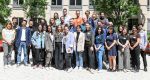
Held alongside the SDG Watch General Assembly, more than 50 civil society organisations from across Europe gathered in Brussels, Belgium, for the kick-off of the “Civil Society Forum for Sustainability: Shaping the European Green Deal” on the 9th and 10th of June. 

Organised in the framework of the REAL DEAL project, the forum serves as a space for civil society organisations from across Europe to come together and exchange views on the European Green Deal (EGD), the EU’s strategy to strategy to make Europe climate-neutral by 2050. The forum is co-organised by SDG Watch Europe, SOLIDAR and the European Environmental Bureau (EEB). 

Specifically focused upon assessing the gaps and opportunities in implementing an ambitious EGD and the 2030 Agenda, representatives of civil society organisations came together to deliberate on key themes, including economic models and governance for a just transition, the international dimensions of the EGD, ensuring a gender-just and socially equitable EGD, and bringing the EGD closer to citizens, as well as the EGD’s broader compatibility with other policy frameworks and processes. 

The Forum will gather three times in 2022, with the next meeting planned for September 2022. Find out more about the forum at the Real Deal website here.

REAL DEAL has received funding from the European Union’s Horizon 2020 research and innovation programme under grant agreement No 101037071. The contents of this publication are the sole responsibility of the authors and can in no way be taken to reflect the views of the European Commission.

Italy witnessing change

By ASviS


On 9 March, in a historical move,  the Italian Constitution was modified, adding to its fundamental Principles the protection of the environment, of animals and of future generations. The Italian Alliance for Sustainable Development (ASviS) advocated long for this reform and welcomed this development. The contents of the reform were analysed in an “ASviS Live” event with high-level speakers and experts. 

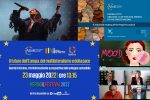
On Monday, 23 May, during an “ASviS Live” event held in Turin at the International Book Fair, the Alliance proposed a reflection on the future of multilateralism and the creation of peace dialogues at the global level, which aimed to explore peaceful and effective conflict resolution, starting from a reflection on the Russian aggression against Ukraine and the statements made by Pope Francis in his Encyclical “Fratelli Tutti”. The Paper “A reasoned reading of the “Fratelli Tutti” Papal Encyclical in light of SDG16”, written by ASviS Working Group on SDG16, is now available online also in English.

Finally, ASviS has contributed to the realisation of the entertainment TV show “Mood to 2030” with national broadcaster RAI, and it has partnered with “Heroes” music festival held in Verona (27-31 May) with a focus on environmental sustainability.  

Stockholm +50: a step towards placing wellbeing at the centre of policy-making

By WWF Europe

On 2 and 3 June, the Stockholm +50 conference took place in Sweden, marking 50 years since the first UN conference on the environment, considered to be the birth of environmental multilateralism.

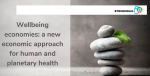
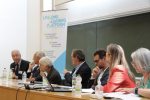
The side-event ‘Wellbeing Economies: A new economic approach for human and planetary health‘ organised by the European Environment Bureau (EEB), Wellbeing Economy Alliance, the Club of Rome and WWF European Policy Office, sought to explore how different countries are prioritising wellbeing in their policies. European Commissioner for the Environment Virginijus Sinkevičius was among the speakers on the panel, highlighting that advancing towards a wellbeing economy has been included in the legally binding EU 8th Environment Action Programme for the first time earlier this year.

Wellbeing Economy was well reflected in the statements made by officials and governments during the conference’s plenary discussions. Two key recommendations for accelerating action towards a healthy planet for the prosperity at the final plenary include i) “placing human well-being at the centre of a healthy planet and prosperity for all”, and ii) “adopting system-wide change in the way our current economic system works to contribute to a healthy planet, through defining and adopting new measures of progress and human wellbeing”.  The statement was drawn up by the hosts, Sweden and Kenya, and was based on the discussions from the plenaries and leadership dialogues. 

You can watch the recording of the event here.

Learning from the Lab 2022 – Realising Sustainable Development Goal 4

By Lifelong Learning Platform LLP


For its 2022 edition, and under the patronage of the French Presidency of the Council of the European Union, LLP brought its Lifelong Learning Laboratory to Nice, France. 

This year, the main focus was on the need to establish ‘lifelong learning entitlements for the future of Europe‘; and, perhaps more importantly, how this policy aspiration could be achieved? 

The Lab was, therefore, an active exercise in teasing apart avenues and directions for realising a particular policy aspiration; in this case, ‘lifelong learning entitlements for the future of Europe‘. 

The Lab aimed to tease apart the policy implications of SDG 4, i.e. “ensure inclusive and equitable quality education and promote lifelong learning opportunities for all.

What is needed? 

“Free, publicly-funded, inclusive, equitable and quality lifelong learning opportunities for all”. 

This would ensure that the transition to a sustainable society is rooted in social justice, and that the scope for learning is not the narrow concept of education being a compartment in a particular point of life. 

Here you can read more about the Lab.


Could REPowerEU make our sector green and affordable energy suppliers to help shield those most at risk from price hikes?

By Housing Europe


While the majority of the REPowerEU Plan’s objectives can only be implemented in the medium to longer-term, Housing Europe believes that now is the time for affordable and social housing providers to be enabled to supply vulnerable tenants with the energy produced in their buildings. Housing providers have the experience of supporting people to find their path out of energy poverty and maintain a day-to-day relationship with their tenants. This sector is also well-placed to speed up behavioural changes, where it has already been leading the way.

Bent Madsen, Housing Europe’ President, commented at the launch of REPower Action Plan: 

 “The ambition of social and affordable housing providers – to deliver a fair and green energy transition – remains unchanged. The challenges ahead of us, however, are continuously growing. Inflation has risen to nearly 8% in March 2022, and more than one-third of this high percentage comes from electricity, gas, and other household fuels. This is resulting in massive pressure on households, but also on the capacity of our sector to carry out renovation and improve homes. In the meantime, our network reports a slowdown of over 60% of the much-needed renovation and energy-efficiency projects due to erratic and rapid increases in the prices of materials“. 

Read Housing Europe’s position and Watch the recording of Housing Europe’s Webinar from the day before the launch of REPowerEU where we discuss the impact of the solutions proposed in the RepowerEU action plan on the social, cooperative, and public housing sector.

SDG Watch Europe Steering Group statement on war and conflicts

By SDG Watch Europe Steering Group

Stop the war in Ukraine

“This Agenda is a plan of action for people, planet and prosperity. It also seeks to strengthen universal peace in larger freedom. […] We are resolved to free the human race from the tyranny of poverty and want and to heal and secure our planet. We are determined to take the bold and transformative steps which are urgently needed to shift the world onto a sustainable and resilient path. As we embark on this collective journey, we pledge that no one will be left behind. ”  

These almost poetic words, signed by all UN member states, are found at the beginning of the 2030 Agenda of Sustainable Development. Yet, the adoption of the SDGs in 2015 and the optimism accompanying their negotiation seem like a lifetime ago. The realisation of the most progressive international policies since the United Nations Charter and the Universal Declaration of Human Rights has become even less likely today. 

The attack on Ukraine by the Russian army and the war on a sovereign European country marks an unacceptable breach of international law. We sharply condemn the inexcusable attacks on civilians and civilian infrastructure and demand an immediate ceasefire and withdrawal of Russian troops. We call on third parties to prevent a further military escalation of the conflict and help in facilitating peace negotiations.  

The war needs to stop immediately

We stand in solidarity with all people living in Ukraine and all those affected by the conflict. The right to refuge and asylum of all people regardless of nationalities, genders, sexual orientation, ethnicities, race and religion must be respected and facilitated. We call on all parties to ensure safe passage for all affected by the attacks.

All people have a right to live in peace and democracy, free from repression and dictatorship. We need to strengthen and support civil society everywhere and fight shrinking spaces for civil society, independent media and other democratic stakeholders of society. We stand with all those in Russia and other parts of the world who resist the war, raise their voices for peace and face repression and arrest.

We also see an unbearable unjust treatment of refugees of other crises and conflicts who arrive in Europe. We call on the EU and the EU governments to treat all people looking for safe harbour in the same way. Only the consistent enforcement of international law at Europe’s borders, safe and regular pathways, a European sea rescue system and the solidary reception of all people seeking protection within the EU can end the suffering and death at Europe’s borders. 

All human rights violations in and by the EU, such as push-backs, must stop immediately

The war in Ukraine casts a dark shadow over our common goal to make the world a better place. We can see its effects in increased military spending, rising energy and food prices propositions to prolong coal use, investment in fossil fuel exploration in and around Europe, LNG terminals, or nuclear energy. All this will disproportionately affect poor people in Europe and the Global South. 

This war underlines the urgent need to move quickly towards a green and just transition. 

Only systemic change can ensure that our energy systems are self-sufficient and sustainable. Europe must remain committed to its bold vision for climate neutrality, not least because the biggest impacts of the climate crisis are already borne by the Global South and by those who are least responsible. 

The war in Ukraine, the overthrow of the Afghan government by the Taliban, the ongoing wars and conflicts in Syria, Yemen, Ethiopia, Myanmar and civil unrest in many other regions, the effects of the COVID-pandemic with more than six million deaths globally, the lack of real vaccine justice and a comprehensive TRIPS waiver, the rising number of people living in hunger and poverty, the growing climate, biodiversity and resource crises – they all collectively and individually threaten universal peace, freedom from the tyranny of poverty and a secure and healthy planet. 

The EU and the European countries have a responsibility to guarantee the world described in the 2030 Agenda. 

The SDGs are no mere collection of ideas. They compose internationally negotiated policies that governments have agreed to implement and fulfil—the SDGs show what our governments think is possible. We cannot let them fall back on their commitments! 

This war and whatever may follow after it must not lead to a backlash of the old economy and old way of thinking. Europe’s reaction to the war must not reaffirm the ways of the fossil fuel era. It must not lead to even more pressure on people already affected by crisis and poverty. It must not strengthen authoritarian, top-down solutions to conflict.

Europe must opt for a socially and global just transition of our economies that builds a better society for all people in Europe and worldwide. The solutions remain the same as before. 

We call on the EU to listen to civil society and science to combat all crises and conflicts with progressive policies.

SDG Alliance, MEPs for Agenda 2030

By SDG Alliance


The SDG Alliance is an informal group of like-minded MEPs from different committees and political groups across the European Parliament. Members of the Alliance believe the SDGs should be at the centre of policymaking in the European Parliament and the EU. The SDG Alliance was launched in 2021; it includes 26 members, and Irish MEP Barry Andrews is its chairman. 

The group seeks to monitor key legislative files in the European Parliament to identify opportunities to integrate the sustainable perspective and raise awareness of Agenda 2030 amongst political groups and committees across the Parliament. One core objective of the Alliance is to secure the publication of an annual own-initiative report on the implementation of SDGs in the EU, being the first one currently in the drafting stage. 

Members MEP Barry Andrews and MEP Petros Kokkalis are co-rapporteurs of the own-initiative report scheduled to be voted in Plenary this coming June. The report focuses on the tools the EU has currently to help implement the SDGs in the EU; it also identifies challenges and opportunities that would assist the EU in meeting all 17 SDGs by 2030.  

Keep an eye on the SDG Alliance’s work on our social media and be informed of any upcoming events (TwitterFacebook and  Instagram).


Time to recognise that a mother’s #UnpaidCareWorkCounts

By Make Mothers Matter


At MMM, we salute the courage of all people living in conflicts and war zones that are destroying lives as we speak in so many parts of the world. The brutality and devastation they bring about have profound and long-lasting effects on us, particularly children.

When fathers are at the front, many mothers remain with their children. In Ukraine, many mothers are ripping themselves away from husbands and families to secure safety for their children in neighbouring countries. There have been many stories of courage and solidarity, of women saving children of strangers and getting them to safety at borders; mothers giving birth in metro subways or underground bunkers…

Within the current world context, MMM will keep advocating for what we need most, in war and peace, when young and old: CARE.

Imagine a world where caring for each other is a priority, valued and celebrated – a world that recognises that Care is essential to peace and prosperity. A world where the well-being of people is the measure of how well countries develop. A world where the work of mothers caring for and educating their children, even if not financially compensated, is recognised as a fundamental contribution to communities, countries… and indeed to peace and prosperity.

The day when the world is convinced that without the work of care nothing is possible, then mothers from around the world will finally get the recognition they so deserve. The day when men do their share of this vital work, then women and men together will contribute to creating a better and more peaceful tomorrow.

 It is time women really do recognise the value of what they do, particularly mothers for their children; what mothers do has a huge and priceless value, is fundamental to our humanity, and underpins the very essence of life. Paradoxically, it is not recognised as it should because it is unpaid. And here lies the injustice and our raison d’être.

At MMM, we make the case for a paradigm shift in our economic narrative around Care, so that in budgets, spending on care, education, health and family support, are considered as investments – not as expenses to be minimised. We call on governments and international organisations to transform our economy and move from the short-term and exploitative “GDP growth” narrative to the ‘well-being economy’ narrative.

We will continue celebrating mothers wherever they may be – Ukraine, Afghanistan and everywhere – for their invaluable work for their children, families and society, even when against all odds. 

It is time for us to become more aware of the value of that care work and give it the recognition and support it deserves #UnpaidCareWorkCounts