Minimum income, it’s time for an EU legal framework

By Caritas Europa

The ongoing COVID-19 pandemic has a big impact on everyone, but it especially affects the most vulnerable in our societies. In Europe, it has increased the challenge to meet SDG 1 – End poverty; people experiencing poverty are enduring exceptional hardship. A minimum income is the last safety net for people without other income sources, wages, or insufficient benefits to live with dignity.

In the EU, people have the right to a minimum income based on their income, family size and other criteria. Regrettably, minimum income schemes in many EU countries are inadequate to ensure a dignified life. One of the most urgent issues is the eligibility criteria. Right now, far too many people are left behind.

Caritas Spain reports that more than half of the eligible population – Spanish households in severe poverty with incomes lower than 40% of the national median – have not received any information about how to apply. For nearly 11% of those entitled, the received information was insufficient to help them to apply.

Common standards of support for Europe’s poorest are essential to enhance life chances. The best way to guarantee this is an EU framework directive on minimum income systems. Caritas Europa calls for such a directive that sets criteria based on evidence and data of people experiencing poverty and our analysis of the realities on the ground.

Caritas Europa and its member organisations explain in this position paper why such a framework is necessary for the EU, suggesting the standards to be set, and showing how the EU as a whole, the Member States, and the people in need will benefit from such a legally binding instrument.
European Regional Disability Summit

By European Disability Forum

European leaders came together at the high-level European Regional Disability Summit on international cooperation for the first time. The event took place on 8th February 2022 under the auspices of the Global Disability Summit.  

The event welcomed 20 high-level speakers and had three excellent moderators—stakeholders from the European Union, United Nations, organisations of persons with disabilities and others. The Summit discussed how international cooperation in the broader European region must become inclusive of all persons with disabilities, focusing on health, education, employment, humanitarian situation and civil society strengthening, including women’s rights. The virtual event was a success counting 1008 registrations and 637 participants from all over the world.

In advance of the Summit, the European Disability Forum and International Disability Alliance organised a series of consultation meetings with organisations of persons with disabilities (OPDs/ DPOs) from Europe and Central Asia to inform and increase their involvement in the Summit. 

Based on the consultations and discussions at the Summit, an outcome document on international cooperation proposing a way forward to advance the rights of all persons with disabilities within the European region was elaborated.

You can find the outcome document in Russian and other resources here.

For more information, contact the EDF International cooperation team: international.cooperation@edf-feph.org 

Latest UN IPCC report confirms that a socially Just Transition is the solution to the climate crisis

By SOLIDAR

On 28 February, the United Nations (UN) Intergovernmental Panel on Climate Change (IPCC) published a report titled “Climate Change 2022: Impacts, Adaptation and Vulnerability“, which examines the impacts of climate change on nature and people around the globe and underlines the urgency of immediate and more ambitious climate action, focusing on equity and justice.

The report observes that, across sectors and regions, the most vulnerable people and systems are disproportionately affected by human-induced climate change. It also stresses the need for long-term, transformational adaptation to climate change and developing integrated, multi-sectoral solutions that address social inequitiesMoreover, it recognises the important role of civil society in decision-making processes, financing and actions.

SOLIDAR welcomes the conclusions of this report, which underscore our view on climate action as an instrument to reduce social injustices, generate opportunities for the most disadvantaged and improve people’s wellbeing, quality of life and access to rights across all sectors and regions of the world. It provides overwhelming evidence that measures to guarantee social inclusion, justice, and equity are needed to tackle and mitigate the ongoing climate emergency. This must be done together with all relevant stakeholders, including civil society.

More information: https://www.solidar.org/en/news/latest-un-ipcc-report-confirms-that-a-socially-just-transition-is-the-solution-to-the-climate-crisis

Interview — How does Europe get to zero pollution?

By The Movement For Community-led Development

What does the Zero Pollution Action Plan involve specifically?

It is a very broad topic and difficult to define, but one of the key objectives is to encourage and 

promote inclusion of pollution prevention in all relevant EU policies. Other key elements of the plan 

include addressing inequalities in exposure to pollution, better implementation and enforcement, 

collective action and changes across society, championing global change towards zero pollution and 

developing a more integrated approach to monitoring pollution.

The action plan also recognises that to achieve these ambitions, we need to ensure that policy 

measures are based on the prevention of pollution at the source, with concepts such as remediation of environmental pollution and ‘end-of-pipe’ elimination being less sustainable as long-term measures.

The plan itself includes a comprehensive list of specific actions to be taken to initiate delivery on the 

zero pollution ambition (with timeframes for these actions), as well as defining nine specific ‘Flagships’ actions that are set out in the action plan. For example, Flagship 1 is ‘reducing health inequalities through zero pollution’.

The overall timeframe for the action plan looks towards 2050; however, the plan also includes targets for 2030 to help gather some initial momentum in delivering on the zero pollution ambition.

Source article: https://www.eea.europa.eu/articles/interview-how-does-europe-get-to-zero-pollution

UNECE Platform Holds 20,000 Standards Mapped to SDGs

By The Movement For Community-led Development

The UN Economic Commission for Europe (UNECE) announced an expansion of its initiative for 

identifying standards to help advance the SDGs. The ‘Portal on Standards for SDGs’ was initially 

launched in 2018 with 1,600 standards linked to five SDGs and now includes 20,000 standards 

addressing all 17 SDGs. According to UNECE, this makes it the largest repository of standards mapped to the SDGs.

The portal aims to encourage organisations that develop standards to consider them accelerators of 

sustainability. In addition to the standards, the portal includes 40 case studies and 10 commentary pieces from standards experts, aiming to demonstrate how standards can help achieve the SDGs.

UNECE Executive Secretary Olga Algayerova explained that standards drive progress towards the 2030 Agenda and accelerate economic growth by establishing technical specifications and procedures and disseminating best practice techniques. This facilitates product compliance and ensures the safety of the products, services, and processes.

Finally, regarding the Declaration for Gender Responsive Standards and Standards Development signed in 2019, signing countries and international, regional and national standards bodies and organisations pledged to create and implement a gender action plan for their body or organisation and share data and information on their plan’s implementation.

Source article: https://sdg.iisd.org/news/unece-platform-holds-20000-standards-mapped-to-sdgs/

European competition law and sustainable co-operation

By The Movement For Community-led Development

Does competition law apply to sustainability agreements at all?

EU Court rulings excluded certain measures (e.g., rules adopted by legal professional bodies) from 

European competition law where “the anti-competitive restrictions in question are inherent in or 

necessary for the pursuit of a legitimate objective.” However, the draft guidelines draw a clear line in 

the sand against that argument: “agreements that restrict competition cannot escape the prohibition of Article 101(1) for the sole reason that they are necessary for the pursuit of a sustainability objective” (paragraph 548).

They do, though, observe that sustainability agreements can only fall under Article 101 if they have an anti-competitive object or effect: “where…agreements do not affect parameters of competition, such as price, quantity, quality, choice or innovation, they are not capable of raising competition law 

concerns” (paragraph 551). This was already clear, but the guidelines provide several examples of 

agreements that will generally fall outside of the European competition law altogether for this reason:

  • measures to eliminate single-use plastics in business premises, not to exceed the temperature levels in buildings, or to limit the number of printed materials;
  • the creation of databases containing information about sustainable suppliers, distributors, or production processes, provided there is no obligation to use such suppliers or distributors; and
  • the organisation of industry-wide awareness campaigns, provided they do not amount to joint advertising of specific products.

Source article: https://www.lexology.com/library/detail.aspx?g=55dadff5-a30e-4b27-acef-703606fe4f7b

Year 2022 – year of youth!

By LAPAS

This year is the “European Youth Year”. Because what the youth has to say about the future has become central, the Latvian Platform for Development Cooperation (LAPAS) and its collaborators, supported by ambassadors of the European Commission in Latvia, have been conducting local face-to-face discussions called “ESi NĀKOTNE” since January.  

The discussions occur in 20 places in Latvia where young people are invited to envision a futuristic Europe and the role they want to fulfil in it. The goal is to involve as many diverse groups of people and Latvian citizens as possible. 

The three sustainability dimensions are covered in the discussions: environment, economy and society. The participants identify problems at local and Europe levels and look for their solutions. Some preliminary outcome reflections include the importance of responsible local governments and governmental policies, especially for lowering the amount of waste; the relevance to adjust and create apprenticeships and workplaces for the youth; the realisation of international projects and collaborations on democratic topics with the youth.  

LAPAS will open a RŪPnīca, the Development Initiative Factory, for 20 young people at the end of March. RŪPnīca will, in the next half a year, in collaboration with the youth from Iceland, experts from the industry and decision-makers,  define the changes and development initiatives we need. 

LAPAS’ youth work will continue the whole year; everyone is welcome to participate!

#SDG17 #GlobalGoals #EuropeanYearOfYouth #TheFutureIsYours #ActiveCitizensFund #EEAgrants #TaxJustice

Citizens’ Assembly on Biodiversity Loss – Developing a Roadmap for Engagement

By Coalition 2030


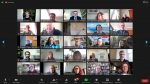
On March 22, over 100 people from environmental NGOs and community groups around Ireland joined a zoom call to learn, share, and prepare for the upcoming Citizens’ Assembly on Biodiversity. Coalition 2030 members: the Irish Environmental Network and Cultivate successfully designed and led the gathering with the Coalition coordinator. 

At the first part of the event, Padraic Fogarty of the Irish Wildlife Trust and author of  Whittled Away – Ireland’s Vanishing Nature‘ gave a brief overview of biodiversity in Ireland and the challenges it is facing in the country. Then, Art O’Leary, Secretary-General, Electoral Commission of the Citizens’ Assembly, spoke about the process and practical details of the upcoming Assembly. Lastly, Oisín Coghlan from Friends of the Earth, involved in previous Citizens’ Assemblies, shared his experience of participating and gave insights on what to expect. You can watch the first session here.

In the second part, attendees explored biodiversity topics through lenses such as well-being, the law and local authorities. This process has only just begun, with hybrid events, FAQ documents, and a communications campaign to ensure as many people in Ireland as possible share their views on biodiversity during the public consultation period. You can follow the activity on Twitter #CABioLoss @CitizAssembly @IrishEnvNet @cultivate_ie @Coalition2030IR 

Announcement: Kicking-off the pan-European campaign for EU2019 elections

By European Civic Forum

On 19 February from 14:00-17:30 European Civic Forum will launch our #MEGAcampaign – Make Europe Great for All at the EESC, Brussels in advance of the EU 2019 elections.

Between risk of disintegration and proposals for reform, Europe today is navigating through murky waters. Democratic representation is confronted to a crisis of legitimacy and a claim for accountability. Civil freedoms and Human rights are downsized in the name of security, as if the later implies sacrificing the formers. Regressive policies in terms of democracy and social cohesion strengthen regressive forces. European founding values are threatened by lack of ambitious policies, while nationalist and xenophobic rhetoric strikes back as a boomerang.

To break this vicious circle, the EU must answer some crucial questions: What means equality and solidarity for a quarter of Europeans facing poverty and social exclusion? What means inclusive societies when addressing the consequences of migrations from countries hit by war, poverty and dictatorship? How to build a more democratic Europe where social and environmental rights come before the economic interests of a few? How to combine political will, legal instruments and action through civil society to safeguard democratic values and translate them into concrete policies?

This kick-off event paves the way to our #MEGA campaign in the run up to the European elections, aimed to feed the public debate and address those questions with political leaders and institutions responsible for tracing Europe’s future. Putting democracy and civic participation at the core of the debate on Europe’s future, we will engage with civic actors all across Europe empowering them to speak better and louder to promote openness and tolerance, transmit the democratic values that guide their work, combat Euroscepticism and demystify xenophobic and nationalist narratives.

We are deeply concerned that the space for civil society to voice criticism and hold ruling authorities to account in shrinking all across Europe, alongside legislative acts meant to silence down NGOs seen as opponents or ‘foreign agents’, government control over distribution of funds, cuts in public funding for NGOs or disproportionate anti-terrorist or money laundering measures affecting the freedoms of assembly and association.

After the launch of Civic Space Watch, a collaborative tool to monitor and share resources on civic space in Europe, our #MEGA campaign will engage civic actors across Europe to stand better and louder for democratic values, openness and tolerance, empowering citizens to become politically aware, active and responsible, undertaking actions of solidarity and contributing to building a democratic political culture to withstand the anti-European, xenophobic, nationalistic and authoritarian trends.

Check out the complete programme and the list of speakers here:
http://bit.ly/MEGAstart

Proyecta Valencia – Hacia el 2030 initiative

By Irene Vivas, Proyecta Valencia – Hacia el 2030

Proyecta Valencia – Hacia el 2030 is an awareness raising initiative promoted by five young people in the city of Valencia (Spain). Emilio – an oceanographer and founder of Bioagradables; Rocío – an architect; Julia – a graphic designer and social entrepreneur; Jesus – an architect and Irene – a jurist and Master on Public Policy. The project was born in the framework of the Asociation Bioagradables, an observer organization of SDG Watch Europe.

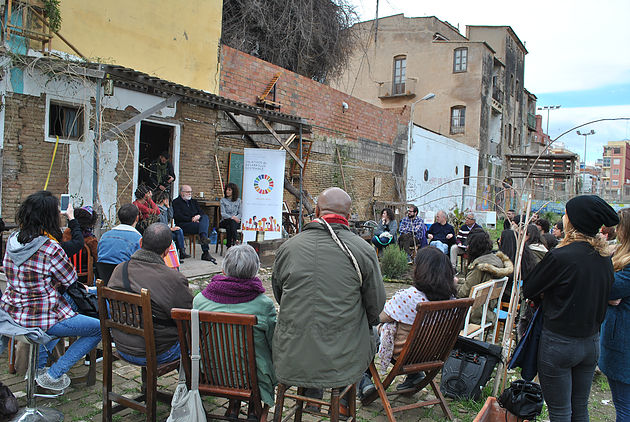
Our main aim was to capitalize on the synergies created by the Sustainable Development Goals and to collect proposals in order to make our city more sustainable. Several different activities took place from September 2016 to March 2017, from workshops to debates, as well as visits to key ecosystems in the region and a beach cleaning. We contacted local experts on each field who shared their knowledge and expertise in our activities.

In March 2018, we will publish the report of this initiative, which contains 92 specific proposals from the 250 participants, and our new website. The event will take place in Valencia where we will publicise the results with local authorities and experts. We intend to attract more people to implement the proposals. If you want to receive the report or be part of our initiative, please write to proyectavalencia2030@gmail.com.

If you’d like to know more: