Sustainable Development Festival in Italy

By ASviS

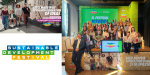
ASviS’ seventh Sustainable Development Festival will take place in Italy, online and around the world from 8 to 24 May 2023. Everyone can contribute to building a sustainable future by proposing an event through the specific page on the Festival website. ASviS will organise high-profile cultural and artistic activities in five cities during the Festival: Naples, Bologna, Milan, Turin, and Rome.

Furthermore, ASviS is organising with the Club of Rome the hybrid event “Applying the international system change compass to the Italian context” at the National Council for Economy and Employment in Rome on April 5 from 10:30 am to 12:30 pm.

An international discussion on how system change could transform the Italian economy will take place at the event, as well as the launch of the International System Change Compass in Italy. In light of the increased focus on cities and climate impacts in Italy, the International System Change Compass framework will be applied to the Italian political scene. 

More information on how to follow the event will be available on the ASviS website.

We need a sustainable monetary system to achieve the SDGs!

By Seitenstetten Forum

Since 2015, the Seitenstetten Forum, together with many other “Just Money Initiatives” and experts for alternative money concepts from German-speaking countries, has been trying to break down the taboo on problems in our monetary system.

Throughout history, money has changed according to different needs. Our present task is to work on a change in the monetary system that no longer forces economic growth for its functioning, and also for the benefit of the super-rich.

The greed for profits that drives environmental degradation, massive resource consumption, and wars might be able to disappear under other circumstances. I particularly enjoy learning from Samirah Kenawi’s books: “History of Money – Commitment versus Debt”, “Manifesto for the 22nd Century – Moneyfest for Future” and “The Capitalist Monetary System – Untangled Crisis Dynamics”. Samirah’s 17-minute video explains the capitalist money cycle. Unfortunately, the books and video are only available in German: link here

From June 9th to 11th, 2023, we are organising “World peace through monetary peace – linking initiatives effectively”: link here

During the June 2010 EU parliamentarians’ session, 22 MPs from all the countries’ groups responsible for money and banking called on the general population to counterbalance the financial lobby; otherwise, democracy would be undermined.

Putting the question of money at the centre of the achievement of the SDGs would be extremely hopeful!

Civil Society Days

By ALDA – European Association for Local Democracy

From March 1-3 2023, ALDA participated in the  Civil Society Days in Brussels, engaging other CSOs and contributing to a civic space with Europe focused on the new digital age.

Digital participation and digital rights in the European public space: a focus on youth at the workshop. In this event, ALDA’s Project Manager, Dafne Sgarra, coordinating and representing the Thematic Hub for Youth Education and Empowerment, demonstrated the Association’s contribution to youth empowerment. This provided us with an opportunity to present and promote the P-CUBE project, which we developed as part of our Youth Empowerment and Education Thematic Hub. This project aims to provide youngsters with a better understanding of how decisions in the public sphere are made by covering aspects of policymaking.

In a second workshop, organised with the Union of European Federalists (UEF), CSOs sought to bring the EU debate outside EU capitals. This topic seems extremely important today due to citizens’ growing distrust of politicians and democratic institutions. Our goal at ALDA was to present recommendations for engaging people constructively and coordinating efforts to make the upcoming EP elections an opportunity for stimulating civic space and EU values debates.

The Civil Society Days 2023 provided an important opportunity to exchange knowledge and discuss potential collaborations in the future!

Key competences for all: a lifelong learning approach to skills

By Lifelong Learning Platform (LLLP)

The European Commission declared 2023 the European Year of Skills to tackle the mismatch between unemployment and education, but it indicates a sparring vision of education as a partner. It is for this reason that the Lifelong Learning Platform chose “Key competences for all: a lifelong learning approach to skills” as its Annual Theme for 2023. Through this topic, LLLP would like to stress that the reductionist approach to skills risks overlooking the key competences citizens need for life. In life and in the workplace, cross-functional competences are useful in a wide variety of situations and are the right combination of skills, knowledge, and attitudes that ultimately lead to more fulfilling, active citizens who are capable of adapting to fast-paced changes while finding fulfilment in their work. The skills of critical thinking, problem-solving, and digital literacy are relevant to every sector, field, task, era, and life stage.

Our focus should shift away from the labour market and towards a lifelong learning paradigm that incorporates the Key Competences for Lifelong Learning and the European Framework for Personal, Social and Learning to Learn Key Competence. A prosperous and just society depends on all forms of learning.

Cost-of-living crisis exacerbates poverty for women in Europe

By Caritas Europa

Across Europe, women face more socio-economic challenges and higher poverty levels than men. As a general rule, their contracts are precarious, their pay is lower, and they are more likely to do unpaid childcare work. When it comes to accessing education, healthcare, employment, and social services, some groups of women face intersecting forms of discrimination. These include women over 65, women with disabilities, and women from ethnic minorities. Moreover, since COVID-19, the inequalities between men and women have increased in employment, education, and health, and the current cost-of-living crisis also disproportionately affects women due to their lower average income, poor and inefficient housing, and dependency on social benefits.

At the current rate of progress, the EU is still at least 60 years away from achieving gender equality, even though SDG 1 aims to end poverty in all forms everywhere, and SDG 5 aims to empower all women and girls by 2030.

Caritas Europa urges EU leaders to better tackle the challenges of women experiencing poverty in Europe in its position paper published ahead of International Women’s Day. Ahead of the next European Parliament elections in May 2024, the EU and its Member States need to take more action to mainstream gender equality across all relevant policies.

The Sustainable Development Festival

By ASviS

The Sustainable Development Festival, organised by ASviS, 2022 edition took place last October in Italy, online and across the world in collaboration with Italian Embassies. Various conferences, concerts and many more activities in the Festival spread the messages of the 2030 Agenda with the claim, “Every day a new generation of ideas makes its way”. Set your Agenda: Let’s #FlipTheScript”. The Festival partnered with the #FlipTheScript campaign of the UN SDG Action Campaign.

During the Festival, many deliverables were released, including the ASviS 2022 Report (soon available also in English), several Position Papers on topics such as the ecological transition and global well-being and the results of a survey on the level of awareness of the 2030 Agenda conducted in Italy by Ipsos and ASviS. 

More recently, ASviS has presented the third edition of the Report on Italian territories during an event at the National Council for Economics and Labour (Cnel). The Report measures and analyses the positioning of regions, provinces, metropolitan cities, urban areas and districts compared to the 17 SDGs, to further the efforts to localise sustainable development.

Does #NextGeneration mean #NextTransformation?

By Futuro en Común

We are in a truly complex global context where the pandemic and its consequences, the deepening of inequalities, the climate emergency and the war in Ukraine show the limits of our development model. Futuro en Común has consistently indicated that #Agenda2030 should be our compass guiding towards a sustainable development model and global justice.

#NextGeneration Funds’ ambition is to build back better, aiming at economic and social resilience. However, we are seeing how the concrete application of these funds recovers (a model that has already proven obsolete) but does not transform (towards a new resilient, sustainable and fair model).

The Policy Coherence for Sustainable Development (PCSD) approach allows for identifying whether all the resources and all the policies are rowing in the same direction or one against the other. Sadly, many projects with opposite objectives are promoted, and even worse, many of them projects with objectives contrary to sustainable development. By analysing the #NextGeneration Funds under this perspective, it is clear they are not tackling the causes of the multidimensional crises in which we find ourselves. The reason is that they continue to place economic growth as the central driving goal, with the increase in competitiveness as the way to achieve it.

Furthermore, these Funds strongly focus on the EU’s need to achieve strategic autonomy and reduce its dependence on some global value chains. It does not consider its proposals’ impact on other countries, specifically on the most vulnerable populations in the countries of the global south, whether in regard to global warming, respect for Human Rights or conditions of economic dependency.

The #NextTransformation we need to achieve the SDGs should:

  • promote the proposals that have not only a positive economic impact but also social and environmental ones. 
  • take into account their impact in Europe, but also in the rest of the world (especially in the global south), and 
  • not only think about their impact today but also in the future. 

This is the great change that must take place and that we ask for.

Global People’s Assembly 2022 – Global Justice to Achieve SDGs – Sustainable Equality for All

By GCAP – Global Call to Action Against Poverty

As we face increasing poverty, hunger and inequalities, debt crisis, climate emergencies and war, the call for global justice is urgent, now more than ever. Otherwise, the SDGs can not be achieved!

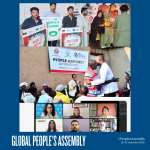
From 20 to 22 September 2022, Global Call to Action Against Poverty (GCAP) coalitions organised national People’s Assemblies in 27 countries during the Global Week to Action #Act4SDGs. They expressed their demands for their governments during the high-level week of the UN General Assembly. This year it was possible to organise physical assemblies with representatives of marginalised groups – including women, youth, persons with disabilities and groups discriminated by work and descent. These national processes started at a local level and culminated in the virtual Global People’s Assembly with 1300 participants – which was an effort of solidarity co-organised with 28 networks, including SDG Watch Europe. 

In cooperation with GCAP, SDG Watch Europe organised the European regional assembly as part of the Global People’s Assembly on 20 September. You can read the messages agreed in the 3-day long gathering in the Declaration of the Global People’s Assembly 2022.  

New EEB reports: “Why energy justice” and “reimagining work”

By EEB – European Environmental Bureau

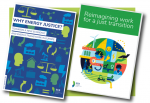
The European Environmental Bureau (EEB) economic transition team published, printed and presented two reflection papers with a long shelf life and detailed policy advice. One is on the lessons yet to be learned from the energy crisis, and the other is on reimagining work. The so-called dichotomy between “green” and “social” is a false one. The EEB believes that the needed changes in how we deal with our environment will be just and social or not work at all.

“Why energy justice? Towards a new economic and energy framework in Europe” takes a hard look at energy poverty, energy inflation, excess profits, the disruptive concentration of capital in the energy system, ownership of energy and how to evolve from first aid stop-gap measures to long-term systemic solutions. The reportop-ed in Social EuropeTwitter thread.

“Reimagining work for a just transition” has a holistic vision of the just transition and builds up arguments for a Working Time Reduction and a Job Guarantee. It then takes this vision to investigate the Just Transition Fund, the European Social Fund Plus, the REPowerEu Plan, The Revision of the Renewable Energy Directive and the Farm to Fork Strategy. The reportarticleTwitter thread.

Youth activists from LAPAS initiative factory RŪPnīca launch the campaign!

By LAPAS

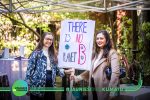
From the beginning of 2022, the Latvian Platform for Development Cooperation (LAPAS) has been actively operating its initiative factory for young activists RŪPnīca. So far, the participants have met experts and specialists from different fields in sustainable forestry and worked to improve their debating and civic activism skills. 

Autumn is harvest time also for RŪPnīca youngsters. They have started their own campaigns in their local communities (for example, orientation in the forest, game nights, and discussions). The campaign’s title is #JauniesiParKlimatu (YouthForClimate), and throughout the autumn and winter, numerous activities will take place in Latvia. 

The youth campaign is about climate change and the problems caused by it because the youth identified these as vital topics. In the campaign, we highlight that every vote has weight, but only by working together can we achieve bigger goals – especially when considering climate and sustainability.

If you also care about the climate, you can be part of the campaign by signing this petition and work together with us for systemic change and climate justice.

This activity was financed by the EEZ and Norwegian grant program “Active Citizen Fund” and European Union’s DEAR program.

#AktivoIedzivotajuFonds #ClimateOfChange #IAM #SDG17 #IlgtspejigaAttistiba