Civil Society Forum for Sustainability – Shaping the European Green Deal

By Jeffrey Moxom, SDG Watch Europe Coordinator, European Environmental Bureau

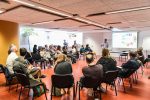
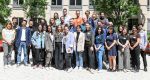
Held alongside the SDG Watch General Assembly, more than 50 civil society organisations from across Europe gathered in Brussels, Belgium, for the kick-off of the “Civil Society Forum for Sustainability: Shaping the European Green Deal” on the 9th and 10th of June. 

Organised in the framework of the REAL DEAL project, the forum serves as a space for civil society organisations from across Europe to come together and exchange views on the European Green Deal (EGD), the EU’s strategy to strategy to make Europe climate-neutral by 2050. The forum is co-organised by SDG Watch Europe, SOLIDAR and the European Environmental Bureau (EEB). 

Specifically focused upon assessing the gaps and opportunities in implementing an ambitious EGD and the 2030 Agenda, representatives of civil society organisations came together to deliberate on key themes, including economic models and governance for a just transition, the international dimensions of the EGD, ensuring a gender-just and socially equitable EGD, and bringing the EGD closer to citizens, as well as the EGD’s broader compatibility with other policy frameworks and processes. 

The Forum will gather three times in 2022, with the next meeting planned for September 2022. Find out more about the forum at the Real Deal website here.

REAL DEAL has received funding from the European Union’s Horizon 2020 research and innovation programme under grant agreement No 101037071. The contents of this publication are the sole responsibility of the authors and can in no way be taken to reflect the views of the European Commission.


SDG Watch Europe members elect new Steering Group!

By SDG Watch Europe

The elections to the Steering Group of SDG Watch Europe were held on the 9th of June during the Annual General Assembly. SDG Watch Europe welcomes its three new Steering Group members: Manuela Gervasi of the European Environmental Bureau, Timea Tüttő of V4SDG (who replaces Agata Meysner of V4SDG on the Steering Group), and Robert Križanič of Povod (Slovenia). Congratulations to Laura de Bonfils of Social Platform and Sarah Franklyn of independent candidacy, who were re-elected as Steering Group members.

Carlos Roldán (SOLIDAR), Constantinos Machairas, Organization Earth (Greece) and GCAP, Julie Rosenkilde, Nyt Europa (Denmark); Bernhard Zlanabitnig (SDG Watch Austria), and Stephanie Ghislain (Eurogroup for Animals) are all continuing their terms as dedicated members of the Steering Group.

SDG Watch Europe and the Steering Group would like to warmly thank Marie-Luise Abshagen of the German NGO Forum on Environment and Development, who steps down following an active and dedicated two-year term on the Steering Group. 

The newly elected Steering Group will now work together to steer SDG Watch Europe in implementing its five-year strategy and its wider vision for a sustainable Europe. 

Annual General Assembly Roundup!

By SDG Watch Europe

SDG Watch Europe held its Annual General Assembly on Thursday 9th, June in Brussels. With a full room of members, the in-person meeting offered participants a look back at the various activities of SDG Watch Europe and its Work Strands in 2021, and members gathered into smaller groups for an in-depth interactive discussion on the SDGs. Participants were also joined by representatives of the European Parliament for a closer look at how to further collaborate and engage with the European institutions, with a key focus on SDG Watch Europe’s work with the European Parliament and the recent draft own Initiative report on the SDGs. 

Participants also learnt more about the Real Deal project, a Horizon 2020 project on reshaping citizens participation in the framework of the European Green Deal. SDG Watch Europe members are engaging in Real Deal activities including the Civil Society Forum for Sustainability and the development of monitoring reports on the SDGs. Elections to the Steering Committee were also held. 

After many online meetings, the in-person discussions were invigorating and gave members the chance to connect and focus on core messages for transformative change, as well as to discuss and organise the actions that will be needed to hold the EU to account on its sustainability commitments. 

Italy witnessing change

By ASviS


On 9 March, in a historical move,  the Italian Constitution was modified, adding to its fundamental Principles the protection of the environment, of animals and of future generations. The Italian Alliance for Sustainable Development (ASviS) advocated long for this reform and welcomed this development. The contents of the reform were analysed in an “ASviS Live” event with high-level speakers and experts. 

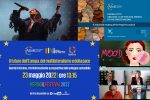
On Monday, 23 May, during an “ASviS Live” event held in Turin at the International Book Fair, the Alliance proposed a reflection on the future of multilateralism and the creation of peace dialogues at the global level, which aimed to explore peaceful and effective conflict resolution, starting from a reflection on the Russian aggression against Ukraine and the statements made by Pope Francis in his Encyclical “Fratelli Tutti”. The Paper “A reasoned reading of the “Fratelli Tutti” Papal Encyclical in light of SDG16”, written by ASviS Working Group on SDG16, is now available online also in English.

Finally, ASviS has contributed to the realisation of the entertainment TV show “Mood to 2030” with national broadcaster RAI, and it has partnered with “Heroes” music festival held in Verona (27-31 May) with a focus on environmental sustainability.  

Stockholm +50: a step towards placing wellbeing at the centre of policy-making

By WWF Europe

On 2 and 3 June, the Stockholm +50 conference took place in Sweden, marking 50 years since the first UN conference on the environment, considered to be the birth of environmental multilateralism.

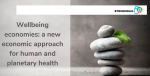
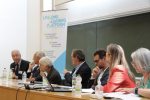
The side-event ‘Wellbeing Economies: A new economic approach for human and planetary health‘ organised by the European Environment Bureau (EEB), Wellbeing Economy Alliance, the Club of Rome and WWF European Policy Office, sought to explore how different countries are prioritising wellbeing in their policies. European Commissioner for the Environment Virginijus Sinkevičius was among the speakers on the panel, highlighting that advancing towards a wellbeing economy has been included in the legally binding EU 8th Environment Action Programme for the first time earlier this year.

Wellbeing Economy was well reflected in the statements made by officials and governments during the conference’s plenary discussions. Two key recommendations for accelerating action towards a healthy planet for the prosperity at the final plenary include i) “placing human well-being at the centre of a healthy planet and prosperity for all”, and ii) “adopting system-wide change in the way our current economic system works to contribute to a healthy planet, through defining and adopting new measures of progress and human wellbeing”.  The statement was drawn up by the hosts, Sweden and Kenya, and was based on the discussions from the plenaries and leadership dialogues. 

You can watch the recording of the event here.

Learning from the Lab 2022 – Realising Sustainable Development Goal 4

By Lifelong Learning Platform LLP


For its 2022 edition, and under the patronage of the French Presidency of the Council of the European Union, LLP brought its Lifelong Learning Laboratory to Nice, France. 

This year, the main focus was on the need to establish ‘lifelong learning entitlements for the future of Europe‘; and, perhaps more importantly, how this policy aspiration could be achieved? 

The Lab was, therefore, an active exercise in teasing apart avenues and directions for realising a particular policy aspiration; in this case, ‘lifelong learning entitlements for the future of Europe‘. 

The Lab aimed to tease apart the policy implications of SDG 4, i.e. “ensure inclusive and equitable quality education and promote lifelong learning opportunities for all.

What is needed? 

“Free, publicly-funded, inclusive, equitable and quality lifelong learning opportunities for all”. 

This would ensure that the transition to a sustainable society is rooted in social justice, and that the scope for learning is not the narrow concept of education being a compartment in a particular point of life. 

Here you can read more about the Lab.


Could REPowerEU make our sector green and affordable energy suppliers to help shield those most at risk from price hikes?

By Housing Europe


While the majority of the REPowerEU Plan’s objectives can only be implemented in the medium to longer-term, Housing Europe believes that now is the time for affordable and social housing providers to be enabled to supply vulnerable tenants with the energy produced in their buildings. Housing providers have the experience of supporting people to find their path out of energy poverty and maintain a day-to-day relationship with their tenants. This sector is also well-placed to speed up behavioural changes, where it has already been leading the way.

Bent Madsen, Housing Europe’ President, commented at the launch of REPower Action Plan: 

 “The ambition of social and affordable housing providers – to deliver a fair and green energy transition – remains unchanged. The challenges ahead of us, however, are continuously growing. Inflation has risen to nearly 8% in March 2022, and more than one-third of this high percentage comes from electricity, gas, and other household fuels. This is resulting in massive pressure on households, but also on the capacity of our sector to carry out renovation and improve homes. In the meantime, our network reports a slowdown of over 60% of the much-needed renovation and energy-efficiency projects due to erratic and rapid increases in the prices of materials“. 

Read Housing Europe’s position and Watch the recording of Housing Europe’s Webinar from the day before the launch of REPowerEU where we discuss the impact of the solutions proposed in the RepowerEU action plan on the social, cooperative, and public housing sector.