Changing the narrative around the SDGs – SOLIDAR Foundation event in the LLLWeek

By SOLIDAR

From the 1st to the 4th of December 2020 the 10th edition of the LLLWeek took place, pulling off an outstanding programme around the theme Lifelong Learning for Sustainable Societies. The event entailed 13 events featuring policymakers, representatives from International Institutions and, of course, educational CSOs and practitioners.  

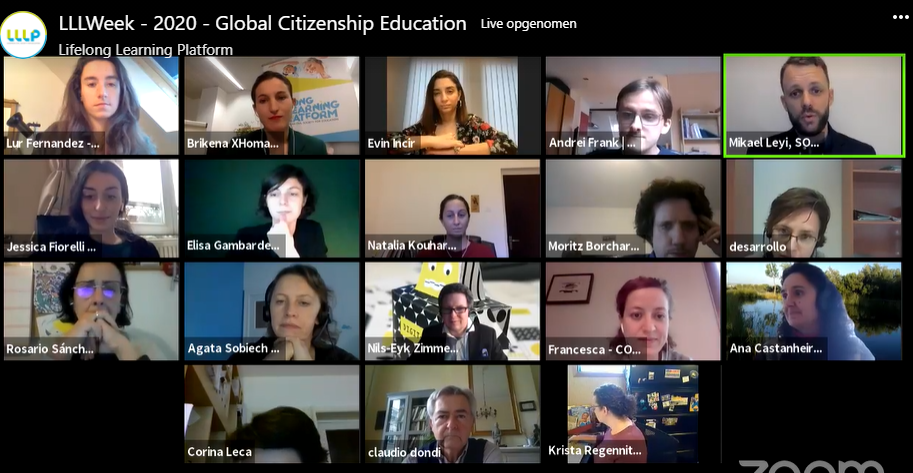
SOLIDAR Foundation participated actively for this first online edition as well, organising a Round Table and a workshop on changing the narrative around the SDGs through Global Citizenship Education (GCE). The event was organised in cooperation with DARE Network and Bridge 47, and it took place timely one week after the online training organised for SOLIDAR membership, wrapping a year of increasing attention to GCE by SOLIDAR members.   

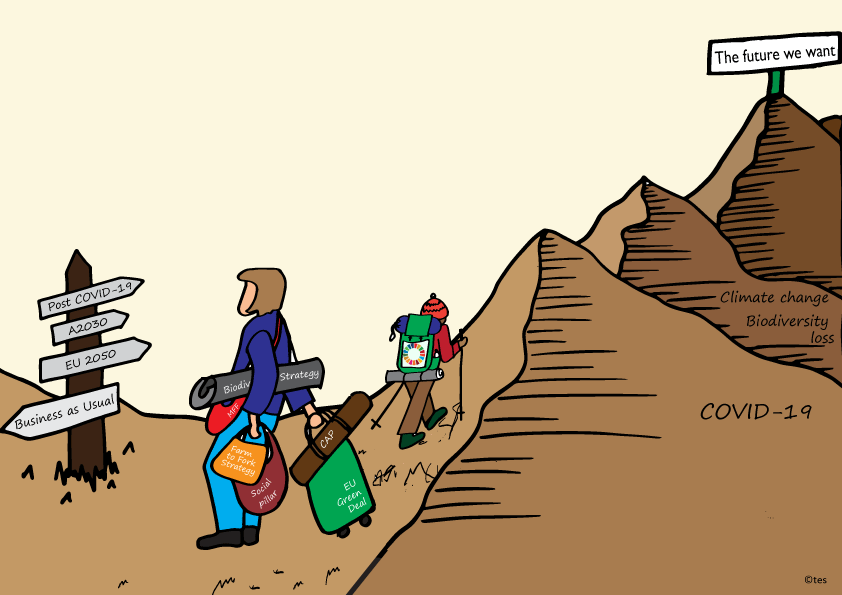
The event (recorded live), moderated by our Secretary-General Mikael Leyi, was also the opportunity to present SOLIDAR Foundation policy paper on GCE, illustrated by Andrei Frank.  

The Round Table was opened by Brikena Xhomaqi, Director of the LLLP, who stressed the increasingly important role of informal and non-formal education providers to promote GCE and the relevance of the latter to achieve sustainable societies. She underlined that more attention, including in terms of investments, should be given for advancing accessible education for sustainable development and the LLLP will soon release a position paper that highlights exactly this. The LLLP Director’s intervention was followed by the inputs from three CSOs representatives, providing the policy makers present at the Round Table with insights from practitioners on the ground.  

You can find more information here, and Watch it again in LLLP´s FB page

Towards sustainability through Culture

By Culture Action Europe

Being the only cross-sectorial cultural network in Europe, Culture Action Europe represents a wide range of cultural organisations. Among its priorities is the affirmation of culture as the fourth pillar of sustainable development, and raising awareness about the role of culture in implementing the Agenda 2030. This focus reflects a trend that is currently gaining momentum in Europe.

The pivotal role of culture and creativity as leverage for reaching the United Nations Sustainable Development Goals (SDGs) gets recognised and put forward both by European civil society and EU policy-makers.

A comprehensive contribution of the cultural community to sustainable development is an overarching theme of a Cultural Deal for Europe; an initiative jointly launched on 18 November by Culture Action Europe, the European Cultural Foundation, and Europa Nostra. This transversal framework envisages the mainstreaming of culture across key policy fields to fully realise its potential for the European project: from the green transition to Europe’s geopolitical ambition, and from the digital shift to a value-driven Union. 

Pushed by many activists in the cultural and creative sectors, the European institutions are also acknowledging the transformative input of culture to the sustainable development of the EU. In the framework of the European Council’s work plan for culture 2019-2022, the European Commission (EC) has launched the Voices of Culture, Structured Dialogue with the cultural sector, with one of the three key topics being the contribution of culture to reaching the SDGs. 

CAE is among the selected representatives of the cultural and creative sector that are participating in this process and contributing to policy development with their views. Following the digital Brainstorming Meeting of December 2-3, the participants will share their input with the Commission on 11 February. The discussion will focus on five particular areas of sustainable development: education, growth and employment, sustainable communities, climate action, and freedom of expression.

What could the European Union and China do for animals?

By Eurogroups for animals

The EU and China are two very important global players in the agri-food sector. Both are both facing common challenges, such as the climate crisis, the spread of zoonoses and the surge in antimicrobial resistance. As unsustainable food production lies at the heart of those challenges, animal welfare can play a key role in finding solutions to them.

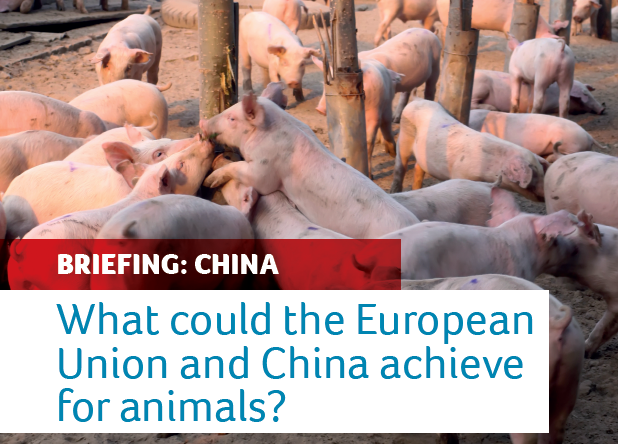
In November 2020, Eurogroup for Animals published a new report: “What could the European Union and China achieve for animals?”, exploring how improving animal welfare, as well as moving towards more sustainable production and consumption patterns that rely less on meat and dairy products, can help achieve numerous SDGs, and prevent future pandemics.

Read more:

Improving animal welfare in production systems could contribute to building resilience in the food production sector  (SDG 2);  improving human health by helping to reduce the risk of zoonoses; lessening the use of antibiotics in animal productions (SDG 3); fighting the climate crisis (SDG 13), and generating concrete economic benefits  (SDG 8).

Even more positive effects could be achieved with moving towards more sustainable production and consumption systems, specifically reducing the production and consumption of meat and dairy products,  as this could benefit public health, lowering cases of obesity, diabetes and cardiovascular diseases (SDG 3). It would also benefit climate and environment since the dairy and meat sector represents around 14.5% of Greenhouse Gas (GHG) Emissions (SDG 13n) and it is a  massive source of water pollution (SDG 6, SDG 15, SDG 14).

You can download the report hereand watch a FB event on the issue here.

Escaping the jobs and growth treadmill

By EEB

Beyond the devastating effects of the COVID-19 pandemic on public health and people’s lives, the accompanying lockdowns and restrictions have had a huge toll on livelihoods.

To date, 2020 has proved to be a rollercoaster ride for the European and global economies. For instance, in the second quarter of the year, the EU economy contracted by an unprecedented 12% compared with the previous quarter, shedding 5.5 million jobs, the largest decline the EU has ever recorded. Overall, in 2020, the European economy is expected to contract by around 9%.

Ending the growth treadmill

A new major report by the European Environment Bureau (EEB) and the European Youth Forum (EYF) provides a blueprint for creating jobs in a post-pandemic EU and, a vision for revolutionising the future of work, including universal basic incomes, shorter working weeks, job sharing, job guarantees and economic democracy.

‘Escaping the growth and jobs treadmill: a new policy agenda for post-coronavirus Europe’, empirically demonstrates that the current orthodoxy insisting that constant economic growth is a prerequisite for job creation is not only flawed but also socially and environmentally destructive.

It is within our means to put everyone to work and ensure human wellbeing without economic growth if productivity gains are distributed fairly and the focus of policy shifts to socially beneficial work, not just the most profitable jobs.

“Livelihoods matter. Not just for the richest in society. But for all of us. Labour matters. Not just as the means to production but as an investment in the building of society,” says Tim Jackson, the acclaimed economist and author of Prosperity without Growth, who provided a foreword for the report.  “Those are the lessons of this timely and essential report.”


You can download the report here.

“Mind our business”: joint report on sustainable and inclusive business models

By Cooperatives Europe

On 1 December, Cooperatives Europe, Fair Trade Advocacy Office and CONCORD launched their joint report “Mind our business: Amplify the transformative power of sustainable and inclusive business models through EU external action”.

The vast impact of the COVID-19 pandemic has shown once again that the European Union and its Member States should actively contribute to reshaping the current economic system to benefit everyone and respects planetary boundaries. Sustainable and inclusive business models – with ambitions going beyond profit, including participatory governance structures and clear environmental and social impact  – can help lead the way.  

This report prepared within the framework of the ICA-EU Partnership on international development (#coops4dev) showcases the characteristics that different sustainable and inclusive business models have in common, what sets them apart from conventional businesses and the challenges they face in EU partner countries.

It also argues that the EU and its Member States could more effectively support sustainable and inclusive businesses across the globe to reach their full potential through development cooperation, investments, trade and economic diplomacy.

With this report Cooperatives Europe, CONCORD and Fair Trade Advocacy Office want decision-makers from the EU and its Member States to take action, by promoting a more enabling environment for current and future sustainable and inclusive businesses and providing targeted political and financial support.


You can watch the video and hear the audio recordings of the report launch, and download the report here.

MMM #RaiseAPen Campaign kicks off!

By Make Mothers Matter

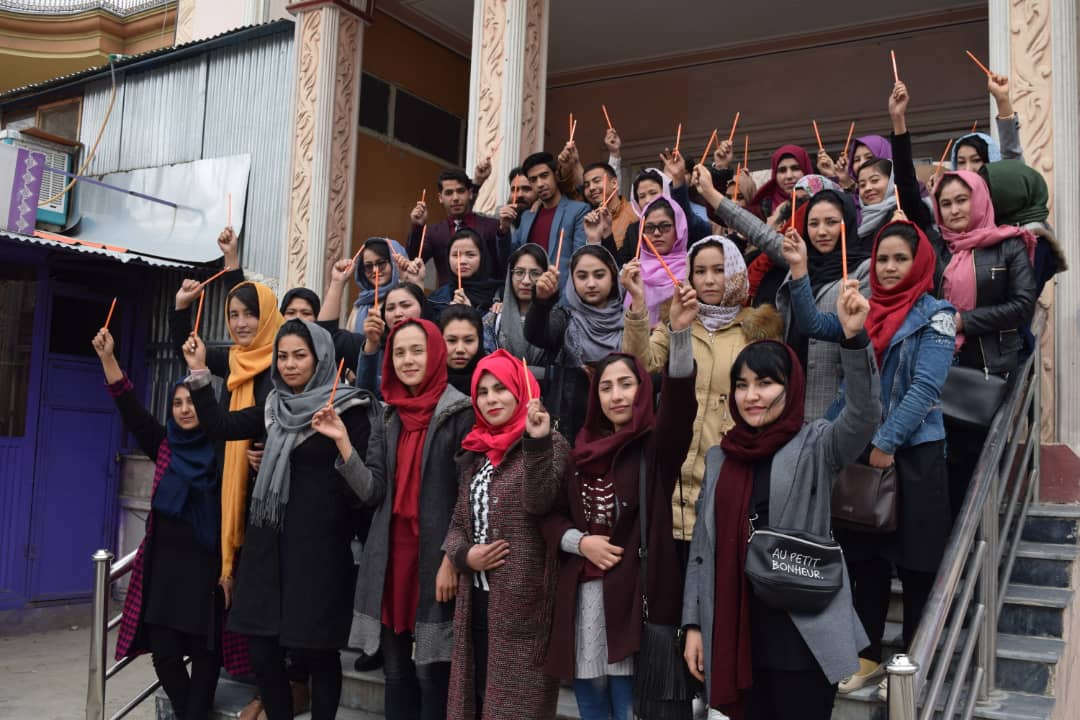
Make Mothers Matter (MMM), backed by international celebrities and organisations, kicked off the #RaiseAPen campaign in November with a strong mobilisation video, answering the call of Afghan mothers for the continuation of the right to girls’ education.

Raising the voices of mothers is powerful. Not only because everybody has (or had) a mother but also because they are change agents within their families and communities. By raising their voices, mothers have the power to convince the world of the importance of girls’ education.

For MMM, the issue of education for women and girls is a fundamental human right and remains central across the political spectrum. Indeed, without education, sustainable development is unattainable. 

Without education, the empowerment of Afghan women and girls and their access to equal opportunities will be compromised. Without education for all, the prospects of an inclusive, just and peaceful society will collapse.

Standing for women’s education in Afghanistan is standing for women’s education everywhere.

By prioritising these demands, the #RaiseAPen campaign will illustrate concrete examples of Sustainable Development Goals (SDGs) 4, 5 and 16 and aim to advance Agenda 2030. 

Staffan de Mistura, former UN Special Envoy to Afghanistan who is championing the #RaiseAPen campaign, said: “This call is very timely. In Afghanistan, there can be no sustainable peace without education for all, but most importantly, education for women and girls who represent 51% of the population”.

Much of Afghanistan’s progress over the last 18 years can be attributed to the power of the pen and the resilience of Afghan women who have fought to bring about meaningful change.

Today, many Afghan women and girls are visible, active and impactful in diverse spheres of life, seizing opportunities wherever they find them. From politics to activism, entrepreneurship to industry, they are determined to realise their vision of an Afghanistan where every woman can live in peace and enjoy her rights.

But there is much that still needs to happen to allow more Afghan girls and women to participate in the development of their country.

According to the MMM President Anne-Claire de Liedekerke: “The #RaiseAPen campaign comes at a crucial moment in Afghanistan’s history. No one wants a reversal of progress. That is why today, with Afghan mothers and girls, we #RaiseAPen to ensure a forward movement by raising global awareness for their call”.

This campaign would not be what it is without the active commitment of two associate members of the MMM Network, the Farkhunda Trust for Afghan Women’s Education and Mothers For Peace. They have been instrumental in mobilising mothers and gaining the support of the very people who can help realise a better tomorrow for Afghanistan.

You find the link to the video of the event here: https://bit.ly/33LQ70z 

A half step forward in the collective journey towards a more sustainable Europe is not enough

Reflecting on the 2020 ‘Commission’s Staff working document: Delivering on the UN’s Sustainable Development Goals – A comprehensive approach.’

By Yblin Roman Escobar, SDG Watch Europe

Having travelled a difficult road due to the COVID-19 pandemic, many Europeans were longing for fresh and concrete news on our collective journey towards a sustainable Europe in 2030. We believed the long-awaited Commission’s staff working document on delivering the SDGs would help to accelerate progress in the right direction. Unfortunately, this document limits itself to reaffirming the Commission’s commitment and providing an overview of existing actions.  

Leadership at the highest level 

The good news is that EU Commission President Ursula von der Leyen herself is coordinating the expedition, while the Commissioners College as a whole remains collectively responsible for the overall implementation of the SDGs. SDG Watch Europe called on the Commission’s President, at the beginning of her term, to take the lead and therefore welcomes her leadership.  

However, SDG Watch regrets that five years into this important journey, we still lack an overarching EU strategy for Sustainable Development, with a specific implementation plan and timeline. 

The Commission does highlight its strategy in the staff working document, presenting it as pragmatic and focused on the implementation of the SDGs through the Commission’s priorities-particularly through the EU Green Deal – a flagship EU initiative. And, it claims to take a whole-of-government approach through mainstreaming of the SDGs at all levels. However, the staff working document provides insufficient detail on EU governance for SDG implementation. It remains unclear how this will translate into practice or how the mainstreaming will be done, both within the Commission and beyond. In this respect, it seems that as far as this journey is concerned, we are still around the base camp, and haven’t begun the ascent yet.  

The staff working document is a good exercise in identifying which way the different Commission policies, actions and initiatives all contribute to materialising the SDGs. We recognise that this scanning exercise allows an initial diagnosis of where the EU situates itself in the SDG journey; helps it to take stock of its strengths and gaps, and set concrete objectives and agree on an accompanying action plan. 

Recognising the fact that EU Commission President Ursula von der Leyen put climate and environment and an economy that works for people at the heart of her political guidelines, we see and celebrate all the initiatives listed in the Commission’s staff working document. Nonetheless, we also believe that it paints a biased picture of reality because it does not take into account, together with the bright side of the narrative, its drawbacks and downsides too. The Commission describes how well it is equipped for the journey, the beautiful landscapes on the way, but forgets to report the risks and difficulties too. Let’s look at the following examples:

EU engagement in the world 

It is promising to see the Commission having an in-depth analysis of the challenges COVID-19 presents to the countries in the Global South, reaffirming its commitment to support them in their journey towards implementing the SDGs. 

It is very welcome that the Commission highlights the coherence between domestic policies and external action. The stated intention to prevent EU spillovers is a new and very welcomed approach.  

Trade, for example, is featured in the document as a relevant road to supporting EU partner countries. However, Olivier De Schutter, the UN Special Rapporteur on extreme poverty and human rights and former Special Rapporteur on the right to food, warns that the EU’s trade policy today encourages social and environmental dumping due to the ambition of eliminating all barriers to imports. Friends of the Earth Europe, SDG Watch member, in its paper Setting course for ‘sustainable trade, a new agenda that serves people and the environment’ argues that continuing the current trade trajectory will aggravate economic insecurity and deepen global inequality, setting us on a collision course with planetary boundaries. 

The EU must live up to its commitment under the 2030 Agenda to address the negative spill-overs of EU’s trade. In its report ‘Who is paying the bill? (Negative) impacts of European Policies and practices in the world’ SDG Watch Europe calls on the Commission to monitor the spill-over effects of EU policies and to set goals to limit them and to avoid causing harm in the Global South. 

Ensuring policy coherence for sustainable development (PCSD)

The document paints a landscape of deep EU commitment to PCSD, including all policies and all levels,  within and beyond Europe. 

The work of the Commission on policy coherence builds on its longstanding experience and the provision of the international agreements, the Lisbon Treaty (art.208) being the most recent, and it is implemented mostly via the working of DG Development Cooperation (DG DEVCO). Yet, some worrisome developments suggest a weakening of PCSD in the Commission. DG DEVCO is being reorganised into DG INTPA (for International Partnerships) that will be officially launched in January 2021.  Tanya Cox, Director at CONCORD Europe, has flagged that PCSD has disappeared off the map. DG DEVCO used to have a dedicated PC(S)D Unit, while in the new DG INTPA, it no longer exists. If we consider that DG DEVCO and DG ENVI (DG for Environment) are the traditional drivers of the 2030 Agenda, this development would risk letting the entire Commission off the hook. How will PCSD then be safeguarded?

European Green Deal

The European Green Deal which is the cornerstone Commission initiative linked to the SDG implementation proposes a welcome strategy to transform the EU into a fair, inclusive and prosperous society.  As the Staff document (p.3) (visually) illustrates, it will contribute to 12 of the 17  SDGs. Yet, in the same illustration, the social and gender aspects are missing. The absence of SDG 5, for example, exposes the Green Deal gender-blind-spot. How can this strategy be called inclusive when it overlooks at least 50% of the population? 

Furthermore, in the absence of an overarching Sustainability strategy, policy areas remain siloed, and the potential success of the European Green Deal itself is put at risk. 

World Wild Foundation International, SDG Watch member, and other civil society organisations, for example, has argued in an open letter that the position agreed in the European Parliament and Council on the CAP reform endangers the realisation of the EU Green Deal (and the associated Farm-to-Fork and Biodiversity Strategies). This is because they allow harmful subsidies, put most of the money into funding business-as-usual practices, and actively limit Member States’ environmental ambition. Our members call on the Commission to develop a new proposal that safeguards the EU Green Deal, and consequently the implementation of the SDGs.  

Monitoring and reporting. Fit for purpose? 

Monitoring and reporting on the SDGs is another example of an incomplete picture.  The process, as carried out by Eurostat, is showcased as a robust approach to keeping track of our journey towards a Sustainable EU by 2030.  The staff working document specifically mentions the EU indicator set was developed in a very ‘broad consultative process’. But expert commentators Schiltz et al. say in a recent study ‘The EU’s SDG monitoring and reporting not yet fit for purpose’, that neither EU institutions, such as the European Parliament, nor civil society, have been structurally integrated into the process of indicator selection. it is argued that the current monitoring does not allow for any specific role for civil society. Furthermore, according to the study, the current set of indicators is not able to fully capture the most relevant aspects of sustainable development in the EU context. 

None of these arguments is considered in the working staff document. SDG Watch Europe in its report ‘Time to reach for the moon – the EU needs to step up action and lead the transformation to sustainability’, demonstrates the serious issues that remain unaddressed with the Commission’s “GPS” for monitoring the EU’s progress in this journey. How can we know we are advancing in the right direction and at the right pace if our GPS is not fit for purpose?   

The engagement of civil society 

The Commission recognises that the implementation of the SDGs demands involving civil society and other stakeholders but it does not provide a clear depiction of how it will achieve this. The new European Climate Pact and the Conference on the Future of Europe are presented as the new public fora for an open inclusive, transparent and structured debate on the SDGs. Still, the document does not specify how this will happen. Furthermore, both spaces suffer from weaknesses. The Climate Pact, as it names indicate, only addresses climate issues, thus failing at having a broad definition of sustainability including all economic, social and environmental issues embedded in the SDGs. The Conference on the Future of Europe is set to be a temporary participatory exercise over 1 or 2 years with the role of civil society organizations still not clear, thus failing at being a formalized long-term civil-society engagement mechanism.   

The Commission concludes its staff working document by saying: ‘This is a journey towards a Union that thrives while leaving no one behind and preserves the long-term viability of life- and prosperity supporting ecosystems for this and future generation.‘ 

SDG Watch Europe understands the aim of this EU journey towards sustainable development to be the achievement of well-being for all, here and elsewhere, now and in the future. 

SDG Watch Europe, with its more than 100 member organisations, is ready to support the EU and its Member States to advance further in this important journey. 
Gender Equality on the Ground: Feminist findings and recommendations for achieving Agenda 2030

By wcef

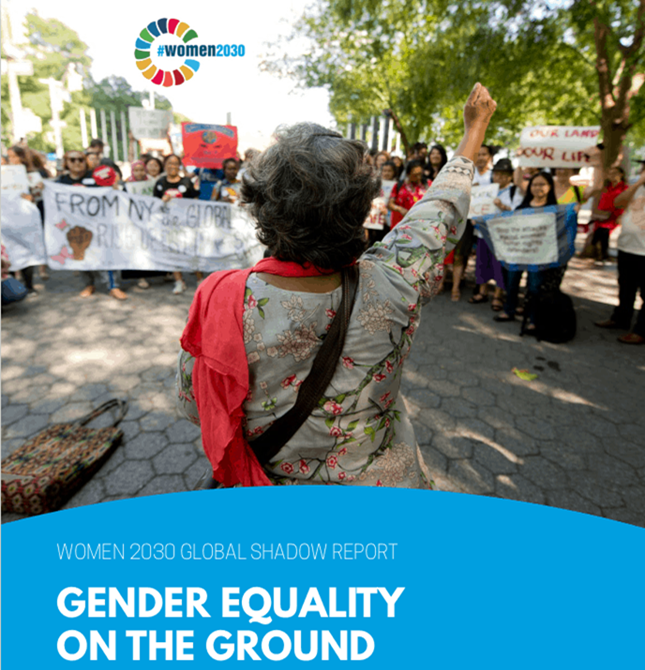
We are proud to share with you our #Women2030 global shadow report titled ‘Gender equality on the Ground: Feminists findings and recommendations for achieving Agenda2030’.

This report contains the findings from national assessments on how to ensure a gender-just and transformative #Agenda2030 in the key priority areas of climate and environmental justice, redistributive and economic justice, political participation, Gender Based Violence, and gender stereotypes. It also highlights structural barriers across countries, as well as best practices and opportunities for change. Check out the demands, recommendations and practical examples of what grassroot feminist solutions look like on the ground.


Over the past five years (2016-2020) Women2030 partner-countries have produced 38 shadow reports to government Voluntary National Reviews on the status of SDGs implementation. These reports are based on desk research, multi-stakeholders’ consultations and participatory gender assessments involving 2,414 people across 20 countries, based on a bottom-up methodology captured in the Women2030 gender impact assessment and monitoring tool.


The global shadow report aims to capture the inspiring and diverse range of work that has taken place through the Women2030 programme over the past five years. It provides bottom-up and evidence-based civil society perspectives on SDGs and gender equality progress with a focus on key feminist priorities, structural barriers and opportunities for change. The report ends with feminist recommendations and a call to action for governments, international organisations, women’s rights movement and other civil society to make sure we achieve Agenda 2030 for all.


The country reports provide an evidence-base for monitoring government action and progress on women’s rights and, are used as advocacy tools in different policy processes including the High-Level Political Forum and Commission on the Status of Women. Four regional reports covering Africa, Asia Pacific, Latin America and Eastern Europe, the Caucasus and Central Asia were produced by the coalition partners. This global shadow report provides a synthesis of the findings within national and regional reports and the experiences of Women2030 over the past years.


Recognizing the diversity in country reports in terms of focus and data availability, the report highlights key feminist priorities, progress and structural barriers across countries, as well as best practices and opportunities for change. A systemic, feminist and intersectional lens has helped to analyse systemic barriers and dynamics of power, inclusion and exclusion that are crucial to address when working to achieve the SDGs – SDG 5 in particular.


The Women2030 partners are proud to share this work with you and keen to work together towards a gender just sustainable world.

You can download our report here.

SDGs News from Ireland: Parliamentarians for the Global Goals

By SDG Watch Europe

The positive vision & blueprint offered by the SDGs are more important than ever in a time of global crisis.  Senator Alice-Mary Higgins launched the Oireachtas All-Party Parliamentary Group on the SDGs as part of the launch of Parliamentarians for the Global Goals (PfGG) at the United Nations General Assembly earlier this year.  PfGG is a new initiative by and for parliamentarians to promote the SDGs through parliamentary actions around the world. The group will be working to implement the SDGs in bringing together the environment, equality, society, economy and culture and which offer a shared and transformative vision of what it might look like to live together on this planet. 

“Our Group on the SDG’s is part of Parliamentarians for the Global Goals, a wider network of public representatives from across the world driving the decade of action on the SDGs I was glad to give one of international testimonies to mark UN launch of the PfGG”, Senator Higgins remarked. 

2030beyond is a non-profit do-tank for the 2030 Agenda, supporting Parliamentarians and people to accelerate action for the Sustainable Development Goals.

https://www.2030beyond.org

Marc O’Casathaigh, Green Party TD & Co-Chair of the All-Party Parliamentary Group on the SDGs, introduced a proposal to the Dáil Reform Committee that the SDGs be enshrined in the Standing Orders of the committees, which was adopted.  As a result, the SDGs will now be enshrined in all of the committees programmes of work.  SDGs targets will be mapped onto the work of the specific/relevant  committees.  

Key functions of the committees are: 

  •         Legislation – scrutiny of draft legislation in advance of its publication or before Committee Stage; consideration and amending of Bills on Committee Stage; and consideration of draft EU legislative proposals. 
  •         Scrutinising the work of Government Departments – Ministers appear before Oireachtas committees to answer questions concerning all policy, expenditure and governance matters regarding their Departments.
  •         Advising on policy issues – seeking submissions from and holding hearings with third parties; and conducting off-site visits and drafting reports outlining the committee’s findings and recommendations with a view to influencing policy decisions or legislation.

There are calls to align the SDGs into county development plans and to urge the relevant committees to start with hearings to critically consider the coherence among the SDGs.   


The 2020 ASviS Report “Italy and the Sustainable Development Goals”

 By ASviS

The annual Report prepared by the Italian Alliance for Sustainable Development (ASviS), now in its fifth edition, assesses the progress our country, its regions and the European Union have made in achieving the SDGs. The Report also sets out the areas where action is needed to ensure the economic, social and environmental sustainability of our growth model. The Report for 2020, drafted by experts from the Alliance’s over 270 member organizations, offers a wide-ranging view of the situation in Italy and in Europe vis-à-vis the various aspects of sustainable development, and with composite indicators, measures the progress of Italy and each EU Member state on all the SDGs. For the first time, ASviS also produced an estimate for 2020 for Italy, taking the pandemic into account. This showed that Covid had a negative effect on SDGs 1, 2, 3, 4, 5, 8, 9, 10 and 17, a positive effect on SDGs 12, 13 and 16, while for the other Goals it was impossible to estimate the impact. The Report also offers concrete proposals for policies capable of improving people’s wellbeing, reducing inequalities and increasing the quality of the environment in which we live addressed at the government and other institutions. 

The Report was presented during the event “Italy and the Sustainable Development Goals”, that took place on October 8th at the Italian Ministry for Foreign Affairs, with Italian Prime Minister Giuseppe Conte, Foreign Affairs Minister Luigi Di Maio and EU Commissioner Paolo Gentiloni among other in attendance, is available on the ASviS website: https://asvis.it/rapporto-asvis-2020/ An English translation is underway.