SUSY Map – Mapping the Social & Solidarity Economy Initiatives all over Europe

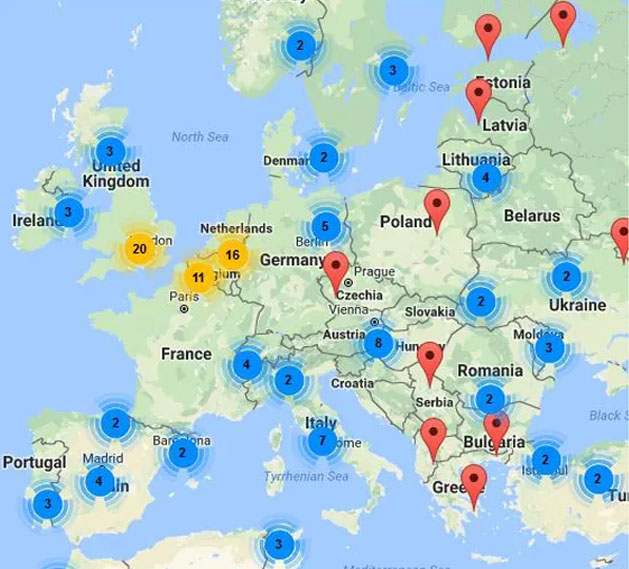
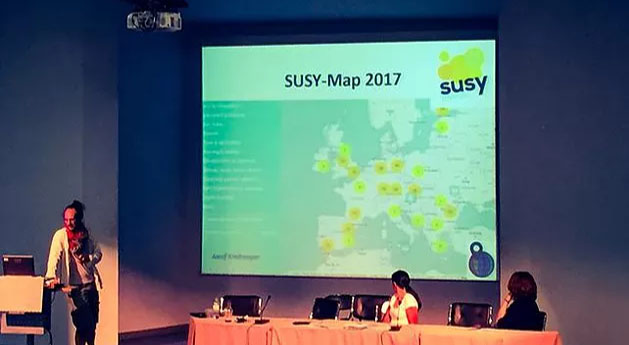
SUSY or Sustainable and Solidarity Economy is a project which brings together and shows examples of the solidarity economy. The SUSY online platform maps social and solidarity enterprises and is live and updated with more than 1,200 cooperatives, social initiatives, co-working spaces, food and agriculture initiatives, self-organized and self-managed efforts and any other type of initiative that arises from the sector of the solidarity economy all over Europe.

Fair Trade Hellas, a SSEDAS-SUSY partner (“Social & Solidarity Economy as Development Approach for Sustainability in the European Year for Development 2015 and beyond”, co-funded by EuropeAid funds) of among 26 CSOs from 23 European countries that are collaborating to promote and enhance the idea of solidarity for the past 3 years, is also part of the SUSY map and showcases the fair-trade movement in Greece.

The SUSY map exhibits through several filters different categories of the solidarity economy that have emerged due to various economic, environmental and social challenges, that not only provide necessary and alternative solutions but also show that different paths are feasible.

Some categories include finance, active citizenship, fair trade, housing, social inclusion and empowerment, recycle – upcycle – re-use. All can be found here: http://www.solidarityeconomy.eu/susy-map/

The SUSY map also includes some new functionalities via the 17 SDGs, where each goal is correlated with each initiative, showing how the social and solidarity economy directly contributes and moves hand in hand with the SDG achievement. According to the Fair Trade Hellas project coordinator: “People involved and interested in solidarity-based initiatives can network and interact, and we can share and open up the idea of the solidarity economy to more and more people. By collecting and sharing these examples, we aim to gain new insights into the solidarity economy. We hope to enable reflection and discussion in order to discover and embark on more and more future opportunities and possibilities for the solidarity economy. At the same time – like other initiatives in the solidarity economy – we are building links with political decision makers to increase their support for an alternative way of doing things”.

Fair Trade Hellas is a non-profit, non-governmental organization founded in June 2004 with the aim of promoting the fair trade movement. Through its employees and volunteers, it promotes and implements non-formal educational activities and awareness campaigns about alternative and fair economies and supports responsible consumerism through global education activities, advocacy and publishing relevant materials. Moreover, it implements several actions aiming at civic engagement of citizens towards a more sustainable and fair world.​ Last but not least, Fair Trade Hellas distributes fair trade products and handicrafts through the recently developed e-shop.
Not fit for purpose: SDG monitoring report fails to illustrate how far the EU is from a sustainable future

SDG Watch Europe has released its five questions commentary on Eurostat report “Sustainable Development in the European Union – Monitoring report on progress towards the SDGs in an EU context”.

Summary

SDG Watch Europe criticises today’s Eurostat Report on Sustainable Development in the EU for failing to adequately illustrate progress and failure in the implementation of the Sustainable Development Goals (SDGs) across the Union. The report does not address the Agenda 2030’s comprehensive, transformative and universal nature and paints a misleading picture of the EU’s performance on the SDGs:

  • The report falls short of addressing all dimensions of sustainable development and focuses on measuring existing solutions rather than capturing what is needed to make the 2030 agenda a reality.

  • Key societal, environmental, economic and technological trends are subordinated to the Commission’s current priorities through the choice of indicator and the report paints a skewed picture of the EU’s performance. A striking example: SDG 12 on sustainable consumption and production (SCP) receives one of the highest levels of progress while assessments from the Sustainable Development Solutions Network (SDSN) and the European Environmental Agency (EEA) clearly show that SCP is where high-income countries, including the EU, fail.

  • The methodology does not allow to show how far and how fast we need to move in order for the EU to reach the SDGs by 2030: the report does not take into account the level of achievement. Moreover, 1% of change per year already earns a misleading sun symbol even if such slow progress means that the EU will fail to reach the targets by 2030.

  • The report does not measure the EU’s impact on sustainable development globally: it is neither able to illustrate whether European efforts in development cooperation are able to reduce poverty and inequality, nor whether the EU is able to reduce its negative impact on the rest of the world due to over-consumption, resource depletion, a large ecological footprint as well as negligence of human rights and exploitation of cheap labour – one of the biggest SDG challenges of the EU.

  • The report misses critical data to address the 2030 Agenda principle of leave no one left behind and is weak in measuring how inequalities within the EU are reduced.

SDG Watch Europe demands that:

  • the indicator set is revised based on an appropriate and inclusive procedure with adequate civil society contribution;

  • the Commission elaborates outlook reports beyond mere monitoring with a broader and qualitative assessment including the participation of civil society and researchers;

  • the Commission needs to develop a comprehensive monitoring and assessment system including all dimensions of sustainable development with both the domestic and external dimension;

  • the comprehensive assessment should form the base of EU decision making and a real transformation of EU policies and practices.

Read the full SDG Watch Europe commentary here.

ASviS publishes 2nd report on Italy & the SDGs

Will Italy succeed in drastically reducing poverty, unemployment and inequalities, protecting the environment and combating climate change, improving the population’s quality of life and building resilient infrastructure? How is the country doing with respect to the UN’s 2030 Agenda and its 17 Sustainable Development Goals (SDGs), agreed to by countries all over the world two years ago? How can Italy design effective policies to bridge the existing gaps with other countries and achieve the Targets set for 2020 and 2030 to become economically, socially and environmentally sustainable? Over the past year, did the Government adopt suitable measures to respond to the challenges of our time? For the second year in a row, the Italian Alliance for Sustainable Development (ASviS) has addressed these questions in its report “Italy and the Sustainable Development Goals”.

The 2017 report features an in-depth analysis of the Italian position vis-à-vis the 17 SDGs. It represents a unique instrument to understand the 2030 Agenda’s state of implementation in Italy, also thanks to its use of innovative synthetic indicators and analytical tools that not only depict Italy’s current position with respect to the SDGs, but also advance scenarios for the evolution of the country to 2030 on the basis of the adoption of different policies. Thanks to the work of over 300 experts from ASviS’s 175-member organizations, the report also assesses the policies the Government put in place over the past year and advances policy proposals for the coming months (those within the terms of the current legislature) and the following, to bring Italy on a pathway to sustainable development.

The report, which ASviS has presented at the Italian Parliament and discussed with the Italian Minister of Economy and Finances Pier Carlo Padoan, sets out proposals in seven different areas representing an aggregation of the 17 Goals: climate change and energy; poverty and inequalities; circular economy, innovation and employment; human capital, health and education; natural capital and environment quality; cities, infrastructure and social capital; and international cooperation.

It highlights that, notwithstanding the progress made in certain areas during the last few years, Italy continues to fall short of a condition of sustainable development. However, throughout the past year attention to the 2030 Agenda significantly grew in Italy, also thanks to the work of the Alliance. Nevertheless, with respect to the 17 SDGs, Italy is lagging behind, especially in the adoption of fundamental strategies for the future of the country.

In addition, ASviS dedicated 17 days to the 17 SDGs through an integrated email, website and social media awareness campaign which aimed to promote key findings of the report. The “One Goal a day” campaign from 2 to 18 October reached over 150K impressions on social media.

More information on the report can be found here – http://www.asvis.it/asvis-report-2017.

The Italian Alliance for Sustainable Development (ASviS) aims to raise the awareness of the Italian society, economic stakeholders and institutions about the importance of the Sustainable Development Agenda, and to mobilize them in order to pursue the Sustainable Development Goals. It brings together over 180 of the most important civil society institutions and networks.

Without governments stepping up climate action at COP23, we will all be left behind

As climate change poses a major challenge to achieve Agenda 2030, countries need to reaffirm their commitment to the Paris Agreement and to its implementation with greater ambition. IFOAM – Organics International calls on parties to the first ever climate COP to be hosted by a small–island state to concentrate on alleviating the problems of those who suffer most from climate change although they have contributed least to the problems.

With planetary warming setting a record of about 1.1°C above the pre-industrial period, it is clear that climate actions play a central role in achieving the Sustainable Development Goals. We expect world leaders gathered at the UN Climate Change Conference in Bonn to show that President Trump’s decision to turn his back on the Paris Agreement leads to a more strengthened, not weakened global alliance to tackle climate change and achieve the SDGs.

For millions of people in the most vulnerable regions of the world, it’s not only their lives and land which are directly affected by climate change, but also their food security. In these cases, adaptation means making farms more resilient.

Agroecological farming systems such as organic agriculture can bring this resilience to food systems while enhancing soil-carbon sequestration. In addition, agroecology contributes to a number of SDGs by reducing poverty and environmental pollution and improving food and nutrition security and human health.

To recognize this, Parties should establish a UNFCCC work program on agriculture and food security to prioritize the permanent reduction of non-CO2 emissions in agriculture as well as adaptation issues and the need to safeguard land rights and food security in order to make the inevitable links to other SDGs.

You can learn more about what we expect from and do at the COP here.

To follow our activities and updates on COP23 check out www.facebook.com/ifoam.organic/

NGDO Platform finds innovative ways to engage Lithuanians on the SDGs

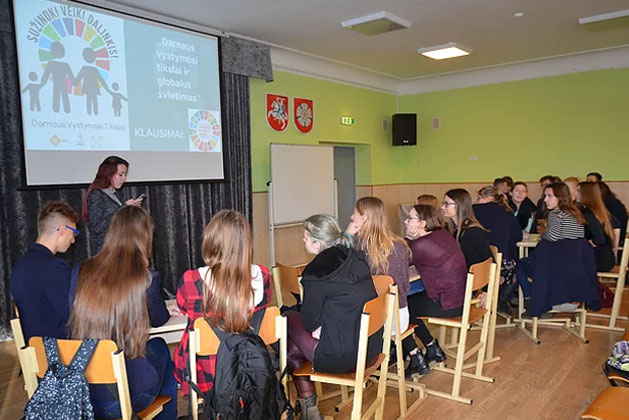
For several years, polls have consistently shown that the SDGs remain a mystery to many in Lithuania. This year, in order to change the statistics and create more awareness, the Lithuanian NGDO Platform chose several interactive methods for our SDGs campaign, from creating SDG ambassadors, running a hackathon to tackle human trafficking, to using forum theatre to encourage greater understanding and empathy.

The first and by far the most successful initiative was the SDGs Ambassadors – this involved dozens of people who had had very little prior knowledge on what the SDGs were. The response to the call to organise workshops to present the SDGs was overwhelming – it was clear evidence people do want to get involved in global topics, these just need to be presented in an engaging way. Largely self-organised, this campaign reached the furthest corners of the country, including youth and community centres, secondary schools, and universities.

Another initiative was a Hackathon/Hack for Development, where 42 ICT students from Kaunas University of Technology’s gifted program were invited to come up with solutions via technology to global challenges such as human trafficking together with development and ICT experts. As the Hackathon also involved ICT businesses, many new partnerships were formed, and the winning solution got the chance to be developed as an app.

NGDO Platform also used forum theatre (part of the Theatre of the Oppressed, an applied theatre method) to invite people to be the trigger for change themselves. Forum theatre is a participatory practice where actors present a conflict situation relevant to the audience, in which the audience is then asked to intervene suggesting possible solutions. Based on equality and understanding, we had professional actors enact through stories what it feels like to be Muslim in Lithuania.

With rising islamophobia and hatred towards migrants and refugees, we used this method to provoke open, honest discussions among members of the public, many of whom later reported that the experience helped them challenge their own preconceived notions as well as think about openness from a different perspective. The goal was to create greater cultural awareness and tolerance and challenges preconceptions on inequality, migration and emigration, and equal opportunities.

Additionally, more conventional methods were used in the campaign, including a photography exhibition raising questions about resource exploitation across the globe, various panel discussions involving politicians, representatives from the NGO sector, and the media, as well as interactive workshops introducing SDGs in educational institutions. A colourful informational leaflet featuring the world’s best practices on the SDGs was created specifically for the campaign and 3,000 copies were distributed and available in libraries, youth centres, and popular cafes.

The National Non-Governmental Development Cooperation Organisations’ Platform (Lithuanian NGDO Platform – www.pagalba.org) brings together 21 Lithuanian non-governmental organisations working in the field of development cooperation and development/global education. NGDO Platform was established on 29 March 2007.

SDG5 and the #iwantworklifebalance campaign

COFACE Families Europe was selected to be in the SDG Multi-stakeholder platform to support the implementation of the SDGs and voice the concerns of families

of all types without discrimination. The network carries out different advocacy actions at EU level, including a recently launched social media campaign in support of the EU Work Life Balance (WLB) directive. This EU directive is currently being examined by the Council of Ministers and the European Parliament.

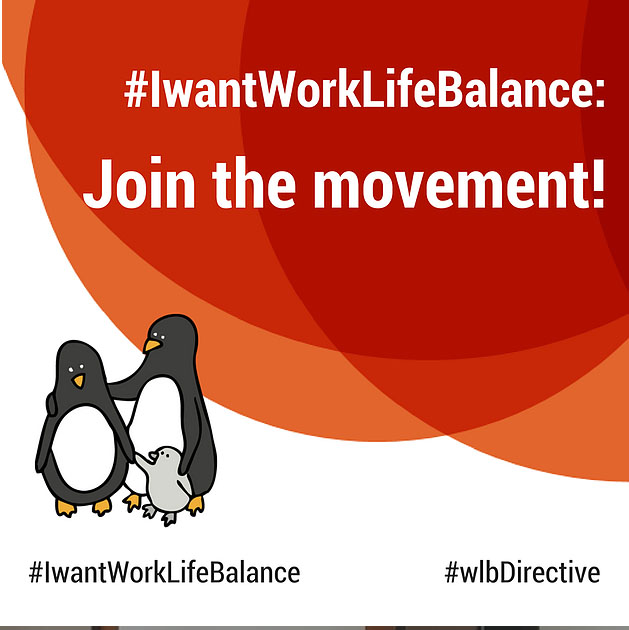
COFACE’s Europe-wide #iwantworklifebalance campaign was launched on the occasion of the 23 October EPSCO Council to shore up citizen support for the directive. This is a key channel to implement the European Pillar of Social Rights and make a real contribution to achieve more gender equality in Europe in line with SDG 5 targets 5.1, 5.4 and 5.5. How so? Families struggle to cope with their multiple responsibilities, therefor it is fundamental to help them reconcile their work, family, care and private lives.

The proposed WLB Directive is an essential tool to enable women to enter and stay in the labour market but also to promote more gender equality at all levels, from inside the family to employment and the broader society. This will help break stereotypes of what is a “man’s or woman’s job” both in the family and in the workplace and will improve the sharing of family, house and care responsibilities. Penguins are an integral part of our campaign since they are natural examples of sharing of responsibilities in parenting. If they take turns in caring for the kids and foraging for food, why can’t we?

The #iwantworklifebalance campaign will end…with the adoption of the WLB Directive.

More here to join the movement! http://www.coface-eu.org/campaigns-2/work-life-balance/For more information: secretariat@coface-eu.org

Why affordable housing is key to deliver SDGs

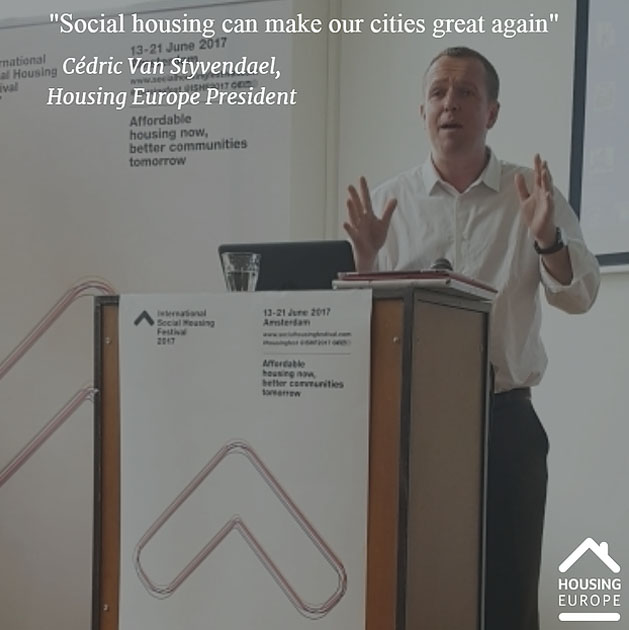
Evictions, fuel poverty, increasing homelessness, more people on waiting lists for social housing: these are all elements of the human and economic cost of the policy failures to provide affordable and adequate housing. Cédric van Styvendael, the President of Housing Europe, reminds us: “In Europe we are lucky to live in probably the most privileged part of the world, but we still need to make sure that nobody is left behind.” Housing Europe members are helping deliver on the Sustainable Development Goals, because investing in affordable housing is investing in sustainable development.

Most major European cities are confronted with a great deal of pressure when it comes to housing: urbanisation, migration, labour mobility and demographic changes feed rising housing exclusion rates.

A lack of affordable housing and the resulting exclusion are among the key risks faced by our cities, regions and societies at large. Eurofound is warning that inadequate housing costs our economies 195 billion Euro annually. At the same time, one in ten Europeans spends more than 40% of their income on housing related expenses. The human and economic cost of this policy failure, or in some cases a policy vacuum by leaving it to the market, is becoming difficult to brush over. Among the 17 SDGs and the 169 associated targets, some are more particularly linked to housing. Housing Europe, which envisions a Europe that provides access to decent and affordable housing for all in communities which are socially, economically and environmentally sustainable and where everyone is enabled to reach their full potential, therefore supports the Sustainable Development Goals.

With its campaign “Housing for All” and the contribution to the UN Habitat III conference, Housing Europe has already reminded policy makers of the importance of adopting housing policies that promote sustainable development.

Housing Europe members represent the interest of 43,000 local housing organizations (which manage 26,090,000 dwellings = 11% of the total EU housing stock)

Read more about the total contribution and local projects of Housing Europe Members at http://www.housingeurope.eu/resource-997/housing-and-the-sustainable-development-goals

More than SDG implementation

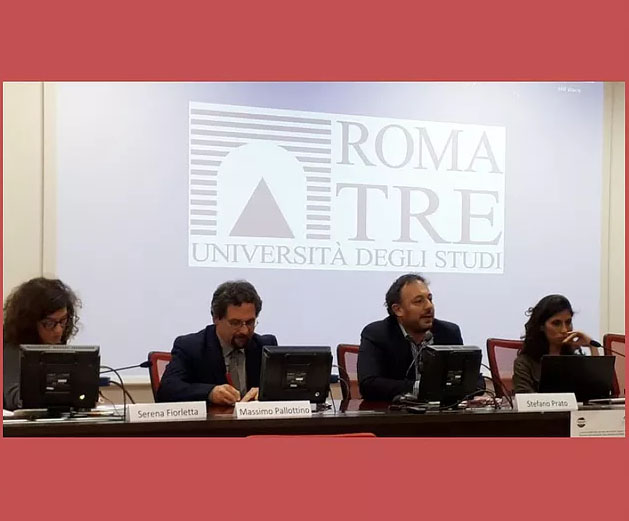
How to examine the implementation of the Agenda 2030? This issue was discussed at and in cooperation with the University of Roma Tre in Rome during a workshop with academics and experts organized by Global Call to Action Against Poverty (GCAP) Italy on 25 September. It is not an easy question, if the full ‘transformative’ potential of the SDGs is to be tapped. The risk we face is to become simply ‘implementers’ of the SDG’s framework. It is a powerful tool with many useful elements to push ahead policy dialogue at all levels, but we must acknowledge some omissions, tensions and contradictions, inherent in how the framework and the objectives are formulated.

As Stefano Prato, GCAP Italy coordination board member and Director of the Society for International Development, pointed out in his keynote speech, we must avoid that important issues are overshadowed by a narrowly conceived understanding of ‘objective by objective’ monitoring. This includes the issue of rights often (regressively) understood and represented in term of ‘needs’; the discourse on inequality that risks becoming a complete substitute for ‘poverty’ thus losing its capacity of looking at society – and the planet! – as a whole through the lens of an ‘economic justice’ dimension; the transformation of the role of the state in a context of blurring distinctions between public and private interests; and finally also wider issues related to unjust global governance.

We should avoid ‘repacking the world’ so that it fits into the SDGs framework. Rather, we must directly confront the big challenges we see on the planet!

Such complexities include, among many other examples, the case of the Italy-Libya agreements on migrants flows management – a complex issue where the sole objective of the proposed solution was to limit migrants landing on Italy’s shores, which put human rights at risk and had little understanding of the long-term issues at stake. How ‘sustainable’ are these policies? Shouldn’t the notion of ‘policy coherence’ be applied in a very concrete way to this and in many other cases? The Agenda 2030 needs to be made useful when facing the big challenges of our times and not used as a tool to divert our attention from them.

President Juncker ignores the Sustainable Development Goals

President Juncker delivered his State of the Union (SOTEU) 2017 address on Wednesday 13th of September. Just like last year, his speech made no mention of the 2030 Agenda for Sustainable Development. This is despite the fact that the EU has endorsed and, at least in theory, is committed to implement this ambitious and overarching agenda.

Civil society is extremely disappointed at the EU’s failure to date to concretely engage in the effective coordination of Member States and the implementation of Agenda 2030, although it did play a central role in shaping this new global agenda. The almost total absence of reference to the 2030 Agenda for Sustainable Development in President Juncker’s speech this year reinforces the growing view that there is a real lack of political will at EU level where this important sustainable development agenda is concerned.

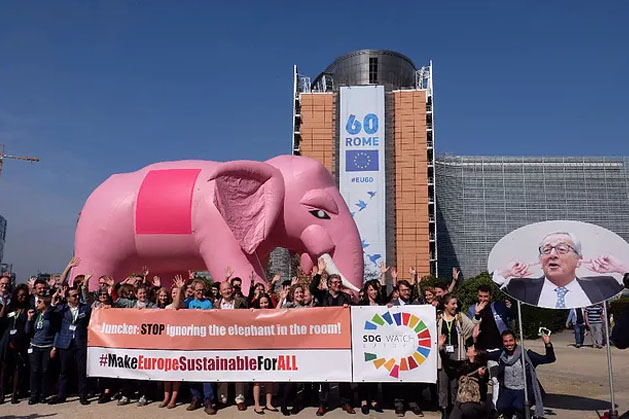
You can find a more in-depth analysis by the SDG Watch Europe Steering Group on the SOTEU published on our website – please find the full text here.  We highlighted this Elephant in the Room in front of the European Commission on 25 September 2017 – the second anniversary of the Sustainable Development Goals.

This was part of a massive Global Day of Action called Act4SDGs on 25 September: 917 events were organized in 116 countries around the world, including 129 alone in Europe – among them in 22 EU member states, by SDG Watch Europe members, members of members and many others. Clearly these numbers show the substantial support of citizens and civil society for the Agenda 2030. You can find the map with all the European and global events here: www.act4sdgs.org.  You find examples from Spain, Italy, Austria, Ireland and Latvia in this newsletter.

This is the first email newsletter of SDG Watch Europe! We will use this to keep you informed on the sustainable development agenda in the EU from the next Multi Annual Financial Framework (MFF) to the Common Agricultural Policy (CAP). This includes news and analysis of EU Institutions, EU member states governments, civil society at European and national level and other stakeholders. Please share this newsletter and give us your feedback inputs. Let’s make Europe sustainable for all.

We’ve blown the candle out, now make our wish come true!

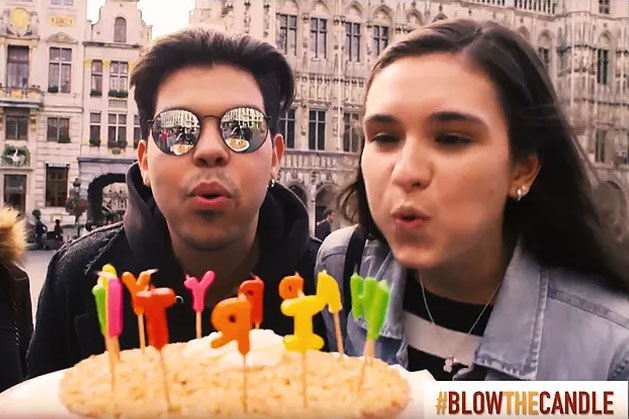
The #BlowTheCandle campaign walked around Brussels asking random citizens what they wished for a better world. This exercise testified that the content of the 2030 Agenda echoes in many peoples’ ears: tackling climate change, ensuring gender equality, redistributing wealth… all of these were among their concerns. However, when asked ‘Do you know who this person is?’ they did not recognise Frans Timmermans on the picture. But he is the one in charge for the 2030 Agenda at the EU level! And he should make citizens’ wishes come true!

The campaign coincided with the second anniversary of the Sustainable Development Goals. “By adopting an ambitious overarching strategy for sustainable development and guiding European policies towards transformation, the EU and its Member States can make a real difference, for people in Europe and around the world,” says Jussi Kanner, CONCORD expert on sustainable development. But we still have a long way before we turn it into reality and a lot has still to be done at European level!

Climate change, food insecurity, gender inequality, resource constraints, forced migration, financial and economic crises…. these are the complex and interrelated challenges the world is facing today. We cannot wait any longer: we need to act NOW!

The #BlowTheCandle campaign is led by CONCORD Europe with the support of the European project LADDER. The idea is to push the European Commission, and in particular Frans Timmermans, Vice President of the EU Commission, to act and set-up a strategy to implement this global action plan. To do so, CONCORD has put together a short list of the key areas on which the institution can and should act to put the Union on the right path.

Links

Campaign webpage: https://concordeurope.org/what-we-do/sustainable-development/eu-reaching-goals/

Youtube video: https://youtu.be/7M6PXGv17ZI

Facebook video: https://www.facebook.com/CONCORDEurope/