Launch of the 2018 SDG Spanish Cities Index

By Sustainable Development Solutions Network (SDSN) Spain / REDS (Red Española para el Desarrollo Sostenible)

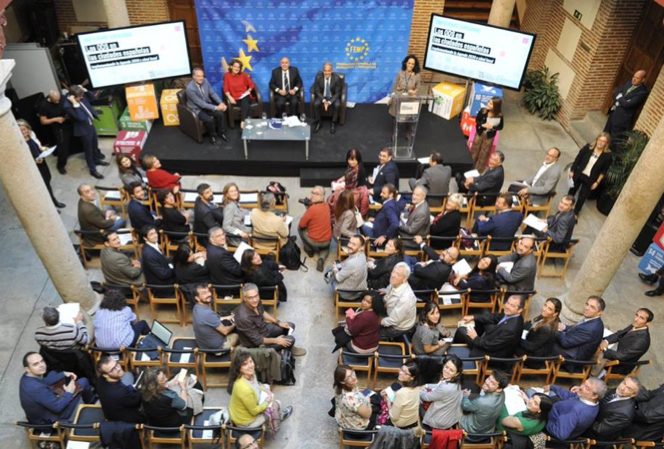
On 16 October 2018 the Spanish SDSN Network, REDS launched the SDG Spanish Cities Index report showing the progress of 100 Spanish cities towards the Sustainable Development Goals (SDGs). The event included an intervention by the Spanish Minister of Environment and a round table with the mayors of four Spanish cities who are leading the SDG implementation at the urban level.

The report provides a snapshot of the current sustainability level of the Spanish cities and will support local administrations in their achievement of the 2030 Agenda. It is intended to serve not only as a monitoring tool for the implementation of the sustainable development agenda, but also as a discussion starter among municipal agents through the identification of successful case studies of cities with similar challenges.

The study includes all the cities with more than 80,000 inhabitants and the 12 main metropolitan areas covering over 50% of the total population in Spain. For this purpose, 85 indicators were identified considering the national context and data availability of the statistical sources and following the SDSN methodology applied to previous SDG Index reports. The presented dashboards use a traffic-light chart to assess where each of the cities and metropolitan areas stand in each of the 17 SDGs.

No Spanish city has achieved the 17 SDGs

The results of the study show that none of the 100 cities or 12 metropolitan areas have yet achieved the objectives set for 2030 and that the best performing areas have achieved only 6 SDGs so far. However, all of the analyzed cities have performances above failure for at least 11 SDGs and 36 cities have no SDG in red.
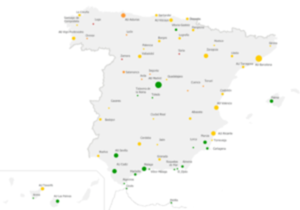
Results of the Spanish cities for SDG 3: Good Health and Well-being

The goals with the most cities in green are SDG 3, “Good Health and Well-being” and SDG 16, “Peace, Justice and Strong Institutions” reflecting the healthy dietary habits and the outstanding function of the Spanish public health care system as well as the accessible and safe characteristics of the cities. The results also show very positive results for SDGs 6 and 7 (“Clean Water and Sanitation” and “Affordable and Clean Energy”).

On the other hand, the biggest challenges are faced in SDG 8 and SDG 13 (“Decent Work and Economic Growth” and “Climate Action”, respectively) which evidence the high unemployment rates of the country as well as the high GHG emissions and flood vulnerability of many coastal cities.

About the study

The SDG Spanish Cities Index was inspired by the Global SDG Index and Dashboards and the U.S Cities Index, which SDSN co-produces annually to assess SDG performance at both national and international levels. The creation of this Index is intended to better understand Spain’s specific challenges and variations across the country. The study was authored by Javier García López and Raffele Sisto, experts on Urban Indicators and lead by Inés Sánchez de Madariaga, expert on Urban Planning and a Rector’s Delegate for Gender Equality. Moreover, the authors were technically assessed by SDSN experts on the SDG Index methodology.

REDS is the national network of SDSN and it supports the implementation of the SDGs at national, regional, and municipal levels in Spain. For this study, REDS collaborated with the Spanish Federation of Municipalities and Provinces (FEMP), Iberdrola, Mediapost, and the Ministry of Foreign Affairs and Cooperation.

For further information please contact info@reds-sdsn.es
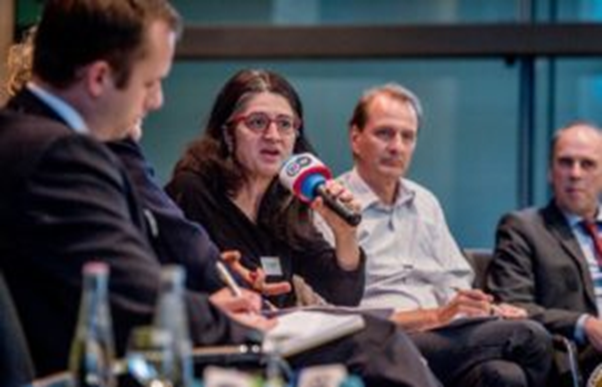
SDSN discusses “The SDGs and the Future of Europe”

By UN Sustainable Development Solutions Network (SDSN)

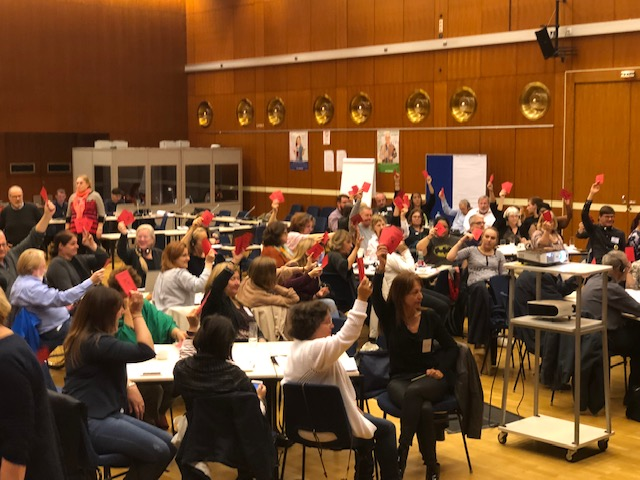
The conference “The SDGs and the Future of Europe”, organized by the European Network for Political Foundations (ENoP) and the Sustainable Development Solutions Network (SDSN) took place in Bonn, Germany on 15 October 2018. More than 130 participants from over 20 European countries attended the conference and public dialogue in the evening following the event, hosted by SDSN Germany and Deutsche Welle.

The conference was moderated by Patrick Leusch, Head of European Affairs, Deutsche Welle. Guido Schmidt-Traub (Executive Director, SDSN) and Johanna Lutz (Coordinator, ENoP) welcomed the participants, pointing out the lack of leadership in Europe regarding SDG implementation and highlighting 2019 as a critical period for Europe in view of the upcoming European Parliament elections. In this context they emphasized the potential of the recently initiated cooperation between ENoP and SDSN in pushing forward SDG implementation in Europe.

The first session “The EU at the crossroads: Achieving the Sustainable Development Goals in challenging times – defending sustainability against populism” started with a keynote by Johan Rockström (Director, Potsdam Institute for Climate Impact Research and member of the SDSN Leadership Council). He criticized the current political “cherry picking” regarding the 17 SDGs, preventing a full and coherent implementation of the 2030 Agenda. Mr. Rockström called for Germany and Europe to start playing a more active role in SDG implementation.

In the panel discussion that followed, Gesine Schwan (President, Humboldt-Viadrina Governance Platform), Matern von Marschall (Member of the German Bundestag) and Timotej Šooš (National Coordinator for the 2030 Agenda for Sustainable Development, Republic of Slovenia) entered into more detail regarding Europe’s leadership on the SDGs. Although the responsibility for SDG implementation is a responsibility of national governments in Europe, until now, many have been hesitant to take bold action for fear of losing voters for pushing forward global instead of local issues. The discussants also pointed to the lack of awareness of the electorate as well as of politicians regarding the 2030 Agenda and the SDGs. Existing top-down structures in the SDG implementation should be balanced with increased bottom-up structures, as for example partnerships between cities and across continents to enforce SDG implementation.

The second half of the day themed “Making the SDGs Europe’s Business”, consisted of a number of breakout groups discussing; 1) budgeting for the SDGs and the role of the next EU Multiannual Financial Framework 2) political parties and the elections of the European Parliament in 2019 3) the need for dialogue with civil societies and business actors 4) EU presidencies and the diversity of member states and 5) the potential of a European leadership in SDG implementation with a focus on European international relations.

The conference was followed by a public evening event with a keynote by Gesine Schwan who pointed out the lack of solidarity in Europe, the critical role of community empowerment and the controversial debate regarding SDG implementation in Europe. Timotej Šooš, Barbara Caracciolo (Solidar, SDG Watch Europe), Dirk Messner (UNU EHS and Co-Chair, SDSN Germany) and Jan Pettersson (Gothenburg Centre for Sustainable Development and Co-Chair, SDSN Northern Europe) joined the panel discussion. The speakers touched on several aspects of European politics including the threat of rising populism in Europe which threatens the steady progress needed to implement Agenda 2030. According to them, too often, the SDGs have been perceived as an elite project, preventing their effective implementation by all parties of society. To combat populism and to increase the engagement of the local population, the SDGs need to be positioned as a people-led and supported agenda that stands for attractive futures and offer solutions for current challenges in our societies. The discussants pointed out that engagement on the local level is essential for this crucial step.

The UN Sustainable Development Solutions Network (SDSN) has been operating since 2012 under the auspices of the UN Secretary-General. SDSN mobilizes global scientific and technological expertise to promote practical solutions for sustainable development, including the implementation of the Sustainable Development Goals (SDGs) and the Paris Climate Agreement.

Going Beyond Zero Hunger with Good Food for All

By IFOAM

We’ve launched Good Food for All, a campaign to get us all eating food that is grown in a way that is good for farmers, good for you and good for the planet.

The Sustainable Development Goals have set the task of reaching Zero Hunger by 2030. However, we’re a long way from achieving that goal, and the planet still faces huge challenges of hunger, malnutrition, obesity and environmental degradation due to agriculture.

Instead of being connected to our food and how it is grown, we live in a world where food is messed around with. It’s produced using harmful chemicals that damage our health, wildlife and the environment. It’s packed in plastic and unnecessarily shipped around the world. Farmers the world over are not making a decent living. Access to quality food and proper nutrition is not a reality for millions of people worldwide.

It doesn’t have to be like this. It’s time to transition to growing food in a way that nourishes soils, preserves biodiversity and protects water sources from contamination. A food system that pays farmers and farmworkers fair prices and doesn’t just feed people but nourishes them.

The Good Food for All campaign wants to build a greener, fairer and healthier world for everyone. To launch the campaign, we’ve released a short animation video ‘Organic Farmers, Our Everyday Superheroes’. It explains how when farmers around the world farm sustainably, they don’t just grow food – they become superheroes protecting our soil, guarding biodiversity and defending the earth.

The video is available in Czech, English, French, German, Greek, Italian, Lithuanian, Polish, Portuguese, Romanian, Slovenian, and Spanish – just check out our YouTube channel to find the version you want and start spreading the message!

What needs to change?

It’s a big challenge to transform our food systems. But there are concrete steps we need to take together in order to build a more sustainable world. That’s why the Good Food for All campaign is calling for:

  1. Real money set aside for nature, the environment and climate. We need real investment to preserve and conserve our planet’s resources now and for future generations.
  2. An end to perverse subsidies by enhancing minimum environmental rules for all farmers.
  3. Real law enforcement to make sure existing legislation is put in to practice on the ground.
  4. Improve the governance of the CAP and the performance framework. Currently 60 billion euro of EU taxpayers’ money is spent every year on Common Agricultural Policy (CAP) subsidies that mostly fund intensive and factory farming which damages our natural resources, hurting wildlife and contributing to climate change.

“It is time to rethink how we grow, share and consume our food” notes Gábor Figeczky, Head of Global Policy at IFOAM – Organics International, adding “We need to shift policies, farming practices and consumer behavior towards true sustainability. To transform our food and farming systems, all public money spent on agriculture should be used to help farmers deliver public goods to society.”

Done right, agriculture can provide Good Food for All, generate decent incomes, and protect the environment.

The Good Food for All campaign is organized by 25 partners across Europe who have come together in ‘Make Europe Sustainable for All’, a 3-year cross-sectoral project to promote ambitious implementation of the Sustainable Development Goals. #GoodFood4All.

Help end the child poverty plaguing Europe

By the European Union Agency for Fundamental Rights

Almost 25 million children in the EU live in low income households where living conditions are unacceptable and hunger is common. Inadequate education and healthcare threaten their fundamental rights and deprive them of opportunities to escape the poverty cycle, finds the European Union Agency for Fundamental Rights in its latest report.

“Child poverty has no place in Europe, one of the world’s richest regions,” says FRA Director Michael O’Flaherty. “We have the means to help end the deplorable conditions facing so many of Europe’s children. Now we need action so the EU and its Member States honour their commitments to uphold the rights of children to give them a better future.”

The report, Combating child poverty: an issue of fundamental rights, highlights how one in four children under 18 are at risk of poverty or social exclusion across the EU. In some Member States, like Romania, it is as high as 1 in 2. While it can affect all children, some groups, like Roma and migrant children fare even worse; a FRA survey revealed over 90% of Roma children in nine Member States experience poverty.

The report underlines how combating child poverty is also a matter of realising their fundamental rights. It also suggests what the EU and its Member States can do to address the issue:

  • The EU and its Member States should tighten existing laws and policies to meet legal standards under the UN’s Child Rights Convention and the European Social Charter. This would enable them to tackle child poverty better.
  • They should prioritise the protection of vulnerable children and establish a European child guarantee scheme, as proposed by the European Parliament, to ensure each and every child has a decent home, diet, healthcare and education.
  • The EU should link funding to Member States to plans and measures to reduce child poverty, inequalities and the social exclusion of children.  
  • The European Commission should cover child poverty and child rights in its country specific recommendations following its review of Member States’ budgets and policies.
  • The European Parliament and EU Council should adopt the European Commission proposal to improve work-life balance for parents and carers to help promote the well-being of children.
  • The EU and its Member States should improve the collection of data to help monitor and assess progress towards ending child poverty and social inclusion.  

The report also identifies how the European Pillar of Social Rights can help ensure that children have the right to be protected from poverty. Discussions about the direction of EU funding also herald an opportunity to help children escape poverty.

For more please contact: media@fra.europa.eu(link sends e-mail) / Tel.: +43 1 580 30 642

NEWSLETTER FROM THE SDG WATCH EUROPE NETWORK – October 2018

View this newsletter in your browser

Mobilizing across the globe to achieve the Agenda 2030 – #Act4SDGs

By Ingo Ritz, Global Call to Action Against Poverty (GCAP)

On 25 September, a million people in 1,248 cities & communities in 143 countries came together in 1,666 actions across the world for the Global Day of Action 2018 – Act4SDGs to mark the anniversary of the Sustainable Development Goals and the Agenda 2030.

Globally, the Global Call to Action Against Poverty (GCAP) organised this Global Day of Action in partnership with Action for Sustainable Development (A4SD) and the UN SDG Action Campaign.

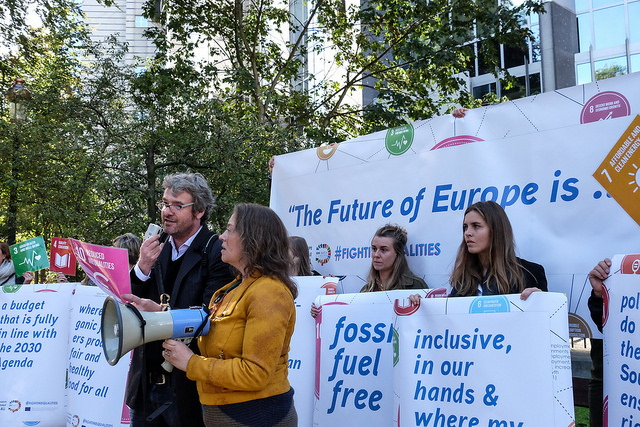
There were actions across Europe. In Brussels, SDG Watch Europe and a coalition of civil society organisations launched the Manifesto for a Sustainable Europe for its Citizens with core demands for the new political leadership of the EU and the candidates in the European Parliament Elections 2019. We believe the 2030 Agenda should be the compass for all European policies – and provides a positive vision for the people of Europe for a sustainable future.

In the past month, we’ve also mobilized together on 17 October 2018 – the International Day for the Eradication of Poverty. The number of people living in poverty remains very high – even while the percentage of people living in extreme poverty is decreasing. The latest numbers show that the target of SDG 1 to eradicate poverty by 2030 will not be achieved.

In the EU 23.5% or 118 million people are living at risk of poverty or social exclusion, according to the EAPN. The number of people suffering from hunger globally increased again in 2017 – to 821 million people says the FAO. The World Hunger Index notes that based on the current trends there will be hunger in 50 countries in 2030. All this represents a failure of our political and economic systems

The Agenda 2030 for Sustainable Development is meant to reverse these trends and create the transformation to end poverty, hunger and inequalities within the planetary boundaries by 2030. The first target of SDG 10 (Reduced Inequalities) states that the 40% poorest shall have a higher share of the growth than the national average. Yet 82% of the wealth created last year went to the richest 1%, where only 1% of wealth went to the poorest 20%. The gap is widening and not closing.

To create the needed just transition, governments must end the neoliberal policies of the last decades including the focus on economic growth rather than human well-being. This includes tax justice – by creating progressive tax systems including for wealth and closing the loopholes allowing tax avoidance, decent work – including a living wage as minimum wage and equal pay and labour rights for women, social protection, health and education for all – and the end of the use of fossil fuels, plastic as well as pesticides and harmful chemicals.

These policies are possible and successfully implemented in a number of countries – for example Spain just announced the closure of most coal mines by the end of the year agreed in a deal with the trade unions.  Unfortunately the reality is different. While all governments have officially committed to the 2030 Agenda, and a number talk about them (at least), many are hesitant to implement these transformative policies. The European Commission hasn’t even developed an implementation plan for the Agenda 2030. This is a shame – three years after the adaption of the agenda.

Many decision makers are influenced by well financed and powerful private sector lobbyists, by decades of free markets and growth ideology as well as more recently by right-wing populism. In a number of countries, authoritarian rulers came into power pursuing policies for the rich and violating human rights of activists, trade unions, media and marginalised people. The results of the elections are Brazil are extremely worrying.

What can we do to change this trend? The call must come from the people – in communities and different constituency groups, such as women’s groups, youth, trade unions, environmental activists and intellectuals. We believe that only people’s power will create the needed pressure for transformative change.

The good news is: There are social movements of people fighting for their rights – from the Women’s Marches and the #metoo movement globally, to the fight against privatisation of water in El Salvador to the protests against coal mining in Germany. On 25 September 2018, we proved again with the Global Day of Action – Act4SDGs that many people around the world want to be part of the change to transform the world into the vision of the Agenda 2030.

Together, as part of the global movement for justice and rights, we can end poverty and achieve the Agenda 2030!

Global Call to Action Against Poverty (GCAP) is a network of over 11,000 civil society organisations (CSOs) organized in 58 National Coalitions and in constituency groups of women, youth and socially-excluded people, among others. GCAP supports people in their struggles for justice and brings individuals and organisations together to challenge the institutions and processes that perpetuate poverty and inequalities. Together, we defend and promote human rights, gender justice, social justice, climate justice and the security needed for the dignity and peace of all.

Localizing SDGs through Capacity Building: mission possible

By NGO Diversity Development Group (DDG)

Localizing SDGs through Capacity Building (LoCaB) project was implemented from June – October 2018 in Lithuania. The underlying aim of the LoCab project was to raise awareness on links between inequalities with cross-cutting approach on international migration and encourage local actors to localize SDGs.

The main course of action for awareness raising and building the capacity of local actors consisted of: 4 workshops were held in municipalities of largest Lithuanian cities (Kaunas, Klaipėda, Šiauliai and Panevėžys) with the focus on inequalities and cross-cutting topic of international migration. Each workshop targeted 10 – 15 local actors (members of local communities, NGOs, education institutions, municipal workers from different departments, youth organizations, social workers and etc.) with 6 hours engagements.

Workshops participants received accompanying handouts on ‘Links between inequalities, migration and SDGs’ developed for this project.

During the workshops information from participants was gathered and served as a primal source of information for the ‘Policy paper & Package of Recommendations’ which was introduced during the final event Exchange with policy makers, where policy guidelines indicating ways in which SDGs could be localized through different policy making areas including, but not limited, to equal opportunities and migration policies, were presented and discussed. These recommendations aims to encourage decision makers to localize SDGs in municipal strategic planning documents.

The LoCaB project is funded by Make Europe Sustainable for All project, which aims to promote the implementation of the Agenda 2030 by and in the EU, by strengthening civil society networks working on SDG implementation across the EU and highlighting to the public and political leaders at the local, national, and European level that SDG implementation is crucial for an inclusive, sustainable and resilient future for all people and planet.

Founded in 2012, NGO Diversity Development Group (DDG) is a non-profit organisation in Lithuania with an objective to carry out social (scientific, applied, and infrastructural) projects and research in the field of human rights, education, equal opportunities, diversity, migration and integration. The strategic aim of the organisation is to improve and manage diversity towards a sustainable, tolerant and socially responsible society. 

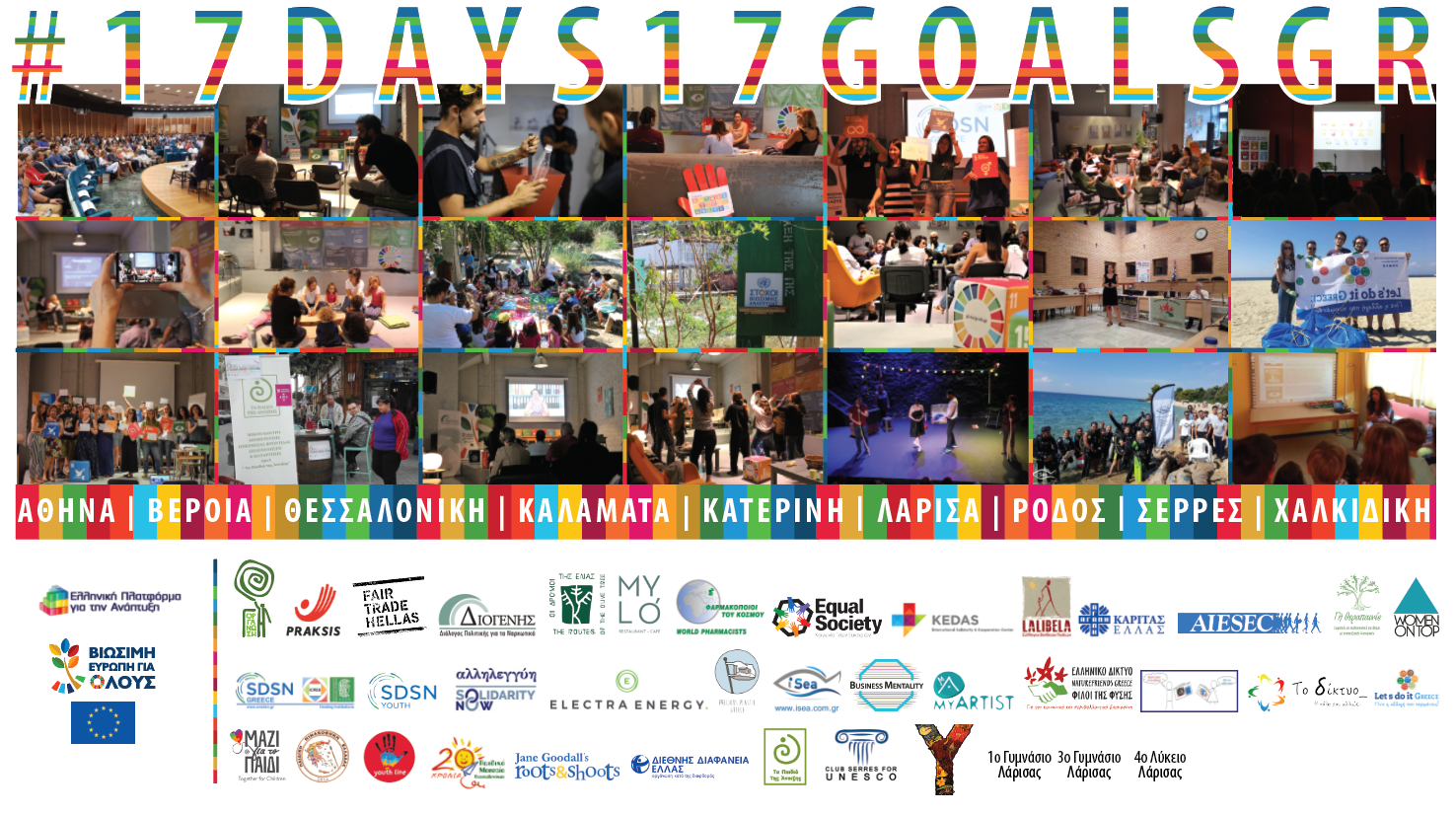
Act4SDGs in Greece – #17days17goalsgr

From September 14th to 30th September, the Hellenic Platform for Development coordinated the largest raising awareness campaign in Greece for the Global Goals, on the occasion of the completion of the three years since their adoption and within the framework of the project Make Europe Sustainable for All.

More than 360,000 citizens were informed about the Global Goals through the campaign #17days17goalsgr, involving 41 civil society organizations, institutions and schools, that implemented 34 actions, among others: children’s workshops, theatrical events, public events, cinema nights, informative workshops, discussions and exhibitions, promoting ideas to integrate the Goals into our everyday lives and local changes in 9 cities in Greece: Athens, Veria, Thessaloniki, Kalamata, Katerini, Larissa, Rhodes, Serres and Chalkidiki.

The campaign #17days17goalsgr of the Hellenic Platform was also the largest part of actions in Greece in the context of the global campaign #Act4SDGs culminating on 25 September at GA of UN in New York.

You can see some of our best moments in this video.

Hellenic Platform for Development coordinates Greek Non-governmental Organizations performing in the fields of international development cooperation, humanitarian aid and development education. It currently represents different NGOs supported by a large segment of the Greek society and with a significant activity nationwide and in many developing countries.

MAKE EUROPE POVERTY FREE

By European Anti-Poverty Network (EAPN)

The General Assembly of the European Anti-Poverty Network met in Vienna, just one week after the Post-growth Conference at the European Parliament and two weeks after President Juncker’s State of the Union address. The meeting took place at a time of rapid political and social change, with the coming European Parliamentary Elections in 2019, a year which will see a new President of a new Commission, and the appointment of a new president of the European Council. Other factors such as rising far right populism, climate change, and the UK’s departure from the EU – which is symptomatic of disaffection with political institutions and the prevailing economic model – also provide significant and shifting challenges.

At this time of change, we, delegates of EAPN members from 31 national networks and 13 European Organisations, representing thousands of NGOs throughout Europe, believe that the eradication of poverty and social exclusion is a public good, and is beneficial for everyone in society. The fact that 118 million EU citizens (including 21.6 million children) – meaning 23.5% of the EU population (not counting people in other countries of Europe) – are still living at risk of poverty or social exclusion, represents a failure of our political and economic systems, which need a radical reprogramming in order to tackle poverty and social exclusion.

We know that change is possible, at local, national and European levels. We see important political commitments to tackling poverty, via the Europe 2020 targets, via the Sustainable Development Goals, and via the Social Pillar – although these are not visible enough at national and local levels. What we need most in 2019 is the transformative implementation of these high-level political commitments, to ensure meaningful changes to the lives of people experiencing poverty on the ground.

Vera Hinterdorfer, EAPN Die Armutskonferenz (EAPN Austria) activist with direct experience of poverty:
“When I first heard about the Pillar of Social Rights, I thought ‘Great, another letter of intent’. But I was wrong; if we don’t believe in it, why would anyone else? How would we be able to motivate people? Together we have the power to change things, we have to use it!”

Today, we call upon all political parties and all candidates for the European Parliamentary Elections to commit to securing a Social and Sustainable Europe, a Europe free of Poverty, characterised by equal rights, opportunities and social cohesion. This means a political commitment to make the “EU Poverty Free” – which should be included in all electoral programmes. This will guarantee the continuation of high-level political commitment to the eradication of poverty. Making Europe Poverty Free is a political choice which recognises citizens’ rights, ensures access to those rights, and reflects the solidarity felt by Europeans.
Concretely, this would mean political parties and candidates to the European Parliamentary Elections:
1. Recognise the limits of the EU’s development model on social cohesion and the negative impact of 10 years of austerity, ‘trickle down’ economics, and decades of relentless pursuit of economic growth at the expense of people and the environment.
a. European macroeconomic policies must be reoriented to reduce inequality, ensure a more even redistribution of resources throughout society, and guarantee wellbeing
b. In-work poverty must be recognised as a major challenge to society and a political commitment is needed for the creation of quality jobs and inclusive labour markets
c. The Stability and Growth Pact must be redesigned as the Stability and Wellbeing Pact.
2. Ensure all European countries have strong social protection systems, including Decent Minimum Income schemes and appropriate living wage legislation.
3. Ensure that the next EU budget ‘empowers and protects’ the 25% of Europeans living at risk of poverty and social exclusion.
4. Ensure meaningful space for the participation of civil society and of people experiencing poverty in national and European processes which impact on poverty and social exclusion.
5. Respect human rights and equal opportunities legislation in all electoral programmes and future actions, as required by European and international treaties.
6. Recognise that European economic development must not sustain, generate or promote conflicts, poverty and pollution elsewhere.

Sérgio Aires, EAPN President, said:
“We are committed to being the change that we need. We know that to truly eradicate poverty, we need a stronger anti-poverty movement in Europe, and throughout the world. Today, we reaffirm our commitment to strengthening the anti-poverty movement, reinforcing our collective beliefs and working to truly become a social movement of, with and for people experiencing poverty. We invite all anti-poverty organisations and activists to join our movement! Together, we are stronger.”

For further information, contact Leo Williams (Director) leo.williams@eapn.eu, or Elke Vandermeerschen (Communications Officer), elke.vandermeerschen@eapn.eu | Tel. +32 2 226 58 50

Newsletter from the SDG Watch Europe network –  Special SDG Anniversary 2018

View this newsletter in your browser