Gender Equality on the Ground: Feminist findings and recommendations for achieving Agenda 2030

By wcef

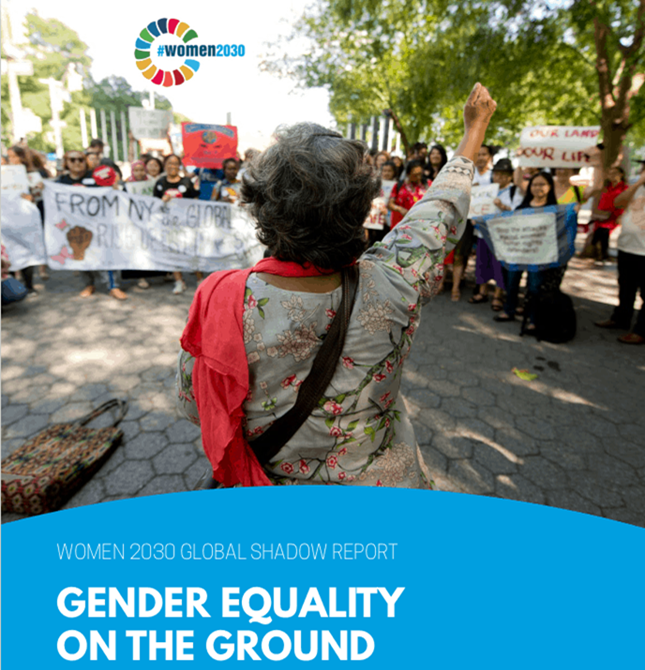
We are proud to share with you our #Women2030 global shadow report titled ‘Gender equality on the Ground: Feminists findings and recommendations for achieving Agenda2030’.

This report contains the findings from national assessments on how to ensure a gender-just and transformative #Agenda2030 in the key priority areas of climate and environmental justice, redistributive and economic justice, political participation, Gender Based Violence, and gender stereotypes. It also highlights structural barriers across countries, as well as best practices and opportunities for change. Check out the demands, recommendations and practical examples of what grassroot feminist solutions look like on the ground.


Over the past five years (2016-2020) Women2030 partner-countries have produced 38 shadow reports to government Voluntary National Reviews on the status of SDGs implementation. These reports are based on desk research, multi-stakeholders’ consultations and participatory gender assessments involving 2,414 people across 20 countries, based on a bottom-up methodology captured in the Women2030 gender impact assessment and monitoring tool.


The global shadow report aims to capture the inspiring and diverse range of work that has taken place through the Women2030 programme over the past five years. It provides bottom-up and evidence-based civil society perspectives on SDGs and gender equality progress with a focus on key feminist priorities, structural barriers and opportunities for change. The report ends with feminist recommendations and a call to action for governments, international organisations, women’s rights movement and other civil society to make sure we achieve Agenda 2030 for all.


The country reports provide an evidence-base for monitoring government action and progress on women’s rights and, are used as advocacy tools in different policy processes including the High-Level Political Forum and Commission on the Status of Women. Four regional reports covering Africa, Asia Pacific, Latin America and Eastern Europe, the Caucasus and Central Asia were produced by the coalition partners. This global shadow report provides a synthesis of the findings within national and regional reports and the experiences of Women2030 over the past years.


Recognizing the diversity in country reports in terms of focus and data availability, the report highlights key feminist priorities, progress and structural barriers across countries, as well as best practices and opportunities for change. A systemic, feminist and intersectional lens has helped to analyse systemic barriers and dynamics of power, inclusion and exclusion that are crucial to address when working to achieve the SDGs – SDG 5 in particular.


The Women2030 partners are proud to share this work with you and keen to work together towards a gender just sustainable world.

You can download our report here.

SDGs News from Ireland: Parliamentarians for the Global Goals

By SDG Watch Europe

The positive vision & blueprint offered by the SDGs are more important than ever in a time of global crisis.  Senator Alice-Mary Higgins launched the Oireachtas All-Party Parliamentary Group on the SDGs as part of the launch of Parliamentarians for the Global Goals (PfGG) at the United Nations General Assembly earlier this year.  PfGG is a new initiative by and for parliamentarians to promote the SDGs through parliamentary actions around the world. The group will be working to implement the SDGs in bringing together the environment, equality, society, economy and culture and which offer a shared and transformative vision of what it might look like to live together on this planet. 

“Our Group on the SDG’s is part of Parliamentarians for the Global Goals, a wider network of public representatives from across the world driving the decade of action on the SDGs I was glad to give one of international testimonies to mark UN launch of the PfGG”, Senator Higgins remarked. 

2030beyond is a non-profit do-tank for the 2030 Agenda, supporting Parliamentarians and people to accelerate action for the Sustainable Development Goals.

https://www.2030beyond.org

Marc O’Casathaigh, Green Party TD & Co-Chair of the All-Party Parliamentary Group on the SDGs, introduced a proposal to the Dáil Reform Committee that the SDGs be enshrined in the Standing Orders of the committees, which was adopted.  As a result, the SDGs will now be enshrined in all of the committees programmes of work.  SDGs targets will be mapped onto the work of the specific/relevant  committees.  

Key functions of the committees are: 

  •         Legislation – scrutiny of draft legislation in advance of its publication or before Committee Stage; consideration and amending of Bills on Committee Stage; and consideration of draft EU legislative proposals. 
  •         Scrutinising the work of Government Departments – Ministers appear before Oireachtas committees to answer questions concerning all policy, expenditure and governance matters regarding their Departments.
  •         Advising on policy issues – seeking submissions from and holding hearings with third parties; and conducting off-site visits and drafting reports outlining the committee’s findings and recommendations with a view to influencing policy decisions or legislation.

There are calls to align the SDGs into county development plans and to urge the relevant committees to start with hearings to critically consider the coherence among the SDGs.   


The 2020 ASviS Report “Italy and the Sustainable Development Goals”

 By ASviS

The annual Report prepared by the Italian Alliance for Sustainable Development (ASviS), now in its fifth edition, assesses the progress our country, its regions and the European Union have made in achieving the SDGs. The Report also sets out the areas where action is needed to ensure the economic, social and environmental sustainability of our growth model. The Report for 2020, drafted by experts from the Alliance’s over 270 member organizations, offers a wide-ranging view of the situation in Italy and in Europe vis-à-vis the various aspects of sustainable development, and with composite indicators, measures the progress of Italy and each EU Member state on all the SDGs. For the first time, ASviS also produced an estimate for 2020 for Italy, taking the pandemic into account. This showed that Covid had a negative effect on SDGs 1, 2, 3, 4, 5, 8, 9, 10 and 17, a positive effect on SDGs 12, 13 and 16, while for the other Goals it was impossible to estimate the impact. The Report also offers concrete proposals for policies capable of improving people’s wellbeing, reducing inequalities and increasing the quality of the environment in which we live addressed at the government and other institutions. 

The Report was presented during the event “Italy and the Sustainable Development Goals”, that took place on October 8th at the Italian Ministry for Foreign Affairs, with Italian Prime Minister Giuseppe Conte, Foreign Affairs Minister Luigi Di Maio and EU Commissioner Paolo Gentiloni among other in attendance, is available on the ASviS website: https://asvis.it/rapporto-asvis-2020/ An English translation is underway.

GENDER EQUALITY: A DATA AND POLICY DIALOGUE FROM THE BEIJING DECLARATION TO THE COVID19 PANDEMIC AND BEYOND

By Forus International

25 years after the adoption of Beijing Declaration and Platform for Action, 2020 was meant to be a milestone for reducing the gender gap, but in fact, we might be witnessing a dramatic backstep in the achievement of gender equality and SDG number five. As part of their global politics series, UN DESA hosted a global policy dialogue on gender equality, where a panel of nine women from different horizons gathered to discuss this new normal, from the Beijing Declaration to the Covid-19 pandemic and beyond.

A global pandemic, conflicts in the US elections, protests for social change in Latin America, disasters emerging from nature’s pain and humans causing pain to each other. The year 2020 has been defined by a set of events that will steer the future of society as we -used to- know it, creating a “new normal”. A reality that doesn’t recognize borders and where one’s problems are also our neighbours’, where standing alone is not an option and governments need to work together to find collective solutions for a better tomorrow. 

In this new normal, we find ourselves both in a reflection and inflexion point. For far too long, we have been living in a society where “different” is synonym of “wrong” and more differences means more marginalization. The simplest differences, such as being a man or a woman, have proven to be the most determinant factors to have an impact on the way we live and cope with this new normal. But what does this mean to gender equality in a context where we are entering the final lap, the last ten years, to achieve the Sustainable Development Goals (SDGs) and the realization of Agenda2030? As the clock ticks in this fast-forward and changing context, where are we into achieving gender equality? 

As we try to understand this new reality, we’ve been relying on research and data, to make informed decisions and be in a position to create accurate policies that respond to the needs of the people. 

The 2020 Worlds’ Women report, presented by Francesca Grum, lead author of the report, shows that there has been significant progress within gender equality indicators over the past two decades. Education seems to be a success, as we’ve achieved gender parity in primary and secondary education at the global level. Women are marrying later and are having fewer children, and there’s a feeling of increased empowerment. Power and decision-making positions have seen some progress, with doubled women’s participation amongst parliamentarians, tripled amongst ministers. 

However, we are still far away from the 30% gender quote and far behind the 50% gender parity. Today, the hard-earned gains in gender equality are being challenged by the COVID-19 pandemic. The report, that has been produced since 1990, highlights the importance of mainstreaming a gender-based approach in data collection, as an incomplete picture risks taking us to the wrong direction. Without gender-disaggregated data, inequalities are made invisible. 

Numerous challenges persist until the Beijing promise becomes a reality. Sarah Hendriks, from UN Women, stressed the importance of addressing women’s and girl’s unique needs and priorities when responding to the covid-19 pandemic. According to the World’s Women report, data shows that in spite of efforts being made around the globe to address gender-based violence (GBV), progress is yet to be made. Violence against women has increased in light of the imposed lockdowns, and there is no evidence of this getting better as lockdowns are eased. 

Jayati Ghosh, the Chairperson of the Centre for Economic Studies and Planning at the Jawaharlal Nehru University, explained that a vicious cycle has been created, as the economic situation of households has been negatively affected by the pandemic, the emotional stability has also worsened, and that frustration is taken on women. 

Gender inequalities are also observed in the labour sector, especially as there are little initiatives to address this issue, that has a tremendous impact on women’s economic security. With the lockdowns also came the remote work. Working from home doesn’t mean having a safe space to work. 

According to Manuela Tomei, from the International Labor Organization (ILO), more than 9 million people have shifted to mandatory remote working, she added that “those who have managed to do so, can be considered as privileged”. 

Indeed, a new set of challenges has emerged from this shift that go beyond the digital divide, from an increase in domestic violence to mental health problems that result from combining paid work and increased responsibilities within the family sphere. ILO’s household surveys show that there’s a dramatic decline in women’s employment rate, particularly for those in the informal sector and those with children. 

For the workers in the informal sector, remote work is not an option as they rely on their mobility to be able to carry out their work. The ILO estimates that 140 million jobs will be lost by the end of the year because of the pandemic, and if the second wave is accentuated, the estimation could reach 340 millions of full-time jobs. A vast majority will affect women, especially as 40% of employed women are working in the sectors most hit by the pandemic such as working in food services, hospitality and accommodation, and manufacturing in the garment industry. 

When referring to a “future normal”, hopefully, an improved version of our current reality, Tomei highlighted the need to invest in the care industry as the crisis has made evident the core role of childcare services. We need to reflect on how to combine policies related to parental leaves with a provision of services by the State. 

As seen during this pandemic, crisis can go beyond borders. Alliances and building collective resilience are more important than ever. Ana Guezmes, from the United Nations Economic Commission for Latin America and the Caribbean (CEPAL), stressed that the regional level has a key role to play in the way we respond to the crisis. CEPAL’s primarily approach has been to put gender at the core of the region’s development agenda, “we need to go beyond our normal standards and means to put in place a transformative recovery”, she added. 

If we aim to strengthen our policy outcomes we need to bring a wide diversity of voices into the discussion. In responding to the covid pandemic, civil society actors, particularly national NGO platforms, have played a key role in coordinating responses with local governments. 

In Bolivia, UNITAS, has put forward the need to implement safeguarding practices in this new environment. To do so, they have been coordinating efforts with the local authorities to distribute flyers with information and phone numbers to help women denounce domestic violence cases. When looking at the country level, it is by zooming in at this scale that we really perceive the intersecting inequalities and challenges sub-groups face. UNITAS is one of the many members of Forus International, a global network of national NGO platforms and regional coalitions that have had to adapt their work because of the constraints of the pandemic, particularly in light of the shrinking space for civil society and the absence of enabling environment for their work.

We have a major policy task, we can’t treat women’s challenges as extensions of our work, we need to really focus on them and think to what extent we can mobilize our work to tackle them”, said J. Ghosh

We need to understand women’s challenges by analyzing what they do, who they are, how they live, etc. Although policy outcomes might not be visible in the short-term, sometimes because of the multiplicity of variables that can steer the result and its timeline, it is clear that data is a tool that can be mobilized as a means to empower populations. It is the kind of tool that once it is integrated, it can have long-lasting effects. 

As Martha Chen, from Women in Informal Employment: Globalizing & Organizing, said: “data in the hands of workers is power, If they could have access to this data, they could effectively negotiate with governments, and other stakeholders”. 

Data doesn’t have to be exclusively at the service of policy-makers, it needs to be available and accessible to the rightsholders for them to organize and decide what their priorities are and be able to have a saying in the decision-making process. 
Mapping innovation thinking, culture, and practice in civil society

By Forus Internacional

As part of its 2021-2025 strategy development process, Forus conducted in 2020 a study to map innovation thinking, culture, and practices among its members. Today, non-governmental organisations (NGOs) and other civil society organisations (CSOs) worldwide find themselves having to navigate increasingly uncertain realities, in a context of global environmental, social, political, and economic instability. Managing uncertainty is key to innovating successfully in the social sector, and amidst ongoing transformations and the Covid-19 pandemic, innovation has been increasingly hailed by practitioners, policymakers, and donors as an answer to international development challenges.

Forus collaborated with Ana Luísa Silva, researcher at the Lisbon School of Economics and Management, University of Lisbon, to understand innovation practices and opportunities better. Two webinars in April explored innovation among Fours members and allies in the areas of advocacy and peer learning. Between May and September, an online survey and remote interviews gathered the views of twenty Forus members from around the globe.

So, what did we find out?

Definitions first

Many have argued that innovation is a fuzzy concept, used so often and in so many different contexts that it is now hard to know what we mean when we say innovation. As it often happens in international development, innovation risks becoming a buzzword.  Plus, innovation can easily be connected to well-known managerial trends that put efficiency first, making us forget to ask important questions related to the politics of innovation, such as: ‘Why are we innovating?’, ‘Who is innovating?’, ‘How are we innovating?’, ‘And for whom?’.

 During our study, Forus members submitted broad but rich definitions of innovation in the context of their work. These definitions reflected, on the one hand, the varied nature of the work carried out by CSO platforms, and on the other hand, a certain lack of clarity of what innovation means in practice.

These rich and varied views on innovation indicate two main directions for innovation in the work of CSO platforms, similar to what has been observed in other studies of innovation in international development: inwards innovation (directed at the work done internally for the benefit of their members) and outwards innovation (in the form of external advocacy for wider social change).

For NGO/CSO platforms that took part in our study, to innovate is to use evidence-based and collaborative approaches to improve the support to members, to help them address current challenges and be more accountable to the most vulnerable populations, and to find creative solutions to achieve wider goals of social transformation and systemic change, in light of local and global challenges, working in collaboration with other development actors and stakeholders.

Learning as a key dimension of innovation

Most survey participants consider themselves innovative: all but two stated that they were involved in innovative initiatives during the past three years. For 85% of the respondent organisations, innovation is either a high or a very high priority, while learning is either a high or a very high priority for 90% of the respondents. However, between innovation and learning, the latter ranks higher in the priorities of survey respondents: learning is a very high priority for 50% of the respondents, while the former is a very high priority for only 30% of the respondents.

Changing processes and changing paradigms

Forus members’ innovative initiatives range from formal to informal projects/activities, externally and/or internally resourced, developed alone or in collaboration with other actors/organisations. Although there are NGO/CSO platforms developing new products and services for their members, such as the Cambodian platform CCC’s Civil Society Fund and the Philippine platform CODE-NGO’s Center for Humanitarian Learning and Innovation, process innovations (i.e. initiatives that change the way platform products and services are provided to platform members) are the most common among the initiatives identified.

Platforms are first and foremost concerned about providing better services for their members. This does not necessarily mean new services, but better services, that can respond to the current and changing needs of their members. Many are therefore reinventing the way they engage with other development actors (e.g. the Bolivian platform UNITAS, Foro Político Multiactor), finding new ways to help their members engage with the 2030 Agenda (e.g. the Canadian platform CCIC, Greening CSOs) and using ICTs to deliver training to their members (e.g. the Portuguese platform PPONGD, Covid-19 Webinar Series).

Platforms are also working to change the paradigm of civil society and development in which they normally operate. The Brazilian and Spanish platforms ABONG and Coordinadora ONGD, through collaborative and multi-partner initiatives like Pacto pela Democracia and Quorum Global, are using their structure and existing services to fulfil a wider enabling role for other civil society actors, notably citizen activists and social movements. At the same time, they assert a more politically active role for themselves and their members, against threats to national-level democratic participation and to our collective existence.

What next?

Forus is committed to supporting members to adapt to the profound international and national transformations that are changing the operating context of development NGOs and threatening civic space in many places around the world. The Learning Agenda included in Forus’ 2021-2025 Strategy includes a strong emphasis on learning about civil society’s role and to explore innovative approaches.

The active promotion of peer learning exchanges among platforms will be key to support members on learning and innovation. The research highlights the following three areas where Forus will provide support to members to promote innovation:

  1.   Provide training, capacity development and resources
  2.   Facilitate access to funding
  3.   Promote peer learning, dissemination, knowledge exchange among platforms

As Forus and our members engage in a new strategic phase, we are looking forward to using innovation and learning to promote civil society organisations’ role and influence towards more inclusive and sustainable societies.

ECO-CHANGE: active youth for global change in Strasbourg!

By ALDA

Over the summer, the ALDA office in Strasbourg carried out a special intensive project in the city: “ECO-CHANGE – Active Youth for Global Change”. With climate change being not just a major environmental and development-related challenge, but also a key factor affecting people’s decision to migrate and their ability to do it safely, the project aimed to promote inclusiveness and solidarity among young people with different cultural backgrounds and to raise their awareness on the existing link between migration and climate change.

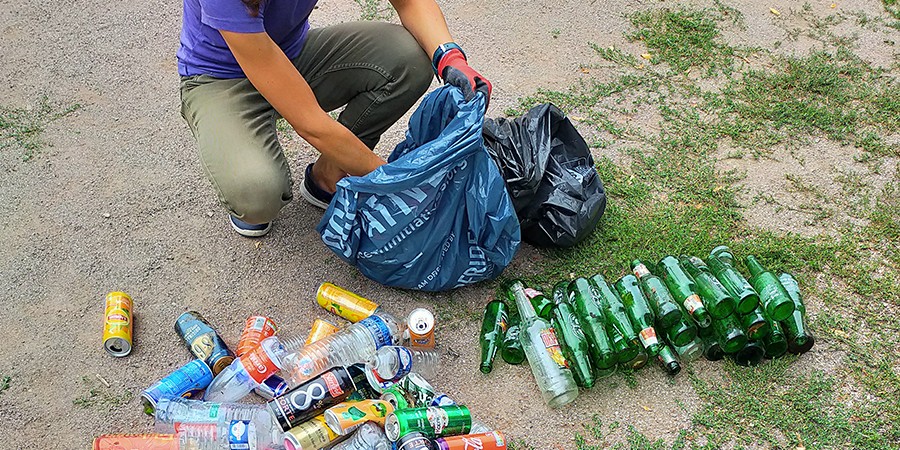
In cooperation with the Stamtish Association, ALDA set up two different kinds of activities for the youth involved: a waste collection in various places of Strasbourg; and eco-responsible cooking workshops. On August 22nd and 29th, hence, around 20 motivated young people took care of the ecosystem of Heyritz Park and Citadelle Park, collecting hundreds of cigarette stubs and several bags of waste – while on August 23rd and 30th they met at La Petite Cantine to cook multicultural food together. 

It was a great experience of intercultural promotion, collective caring for common issues, and an important occasion to stimulate young people’s active citizenship in Strasbourg. As it insisted on the fundamental role of youth in becoming “actors of change”, in addition, the project contributed to the achievement of some of the Sustainable Development Goals, namely SDG 10 – Reduced Inequalities; SDG 11 – Sustainable Cities and Communities; SDG 12 – Sustainable Consumption and Production; and SDG 13 – Measures relating to the fight against climate change.

Funded by the French Ministry of Europe and Foreign Affairs through FONJEP, ECO-CHANGE was coordinated by ALDA together with Stamtish, a Strasbourg-based NGO whose mission is to promote the integration of people with migrant background through culinary and eco-responsible events. 

Towards an EU Wellbeing Economy: How to build back better

By WWF

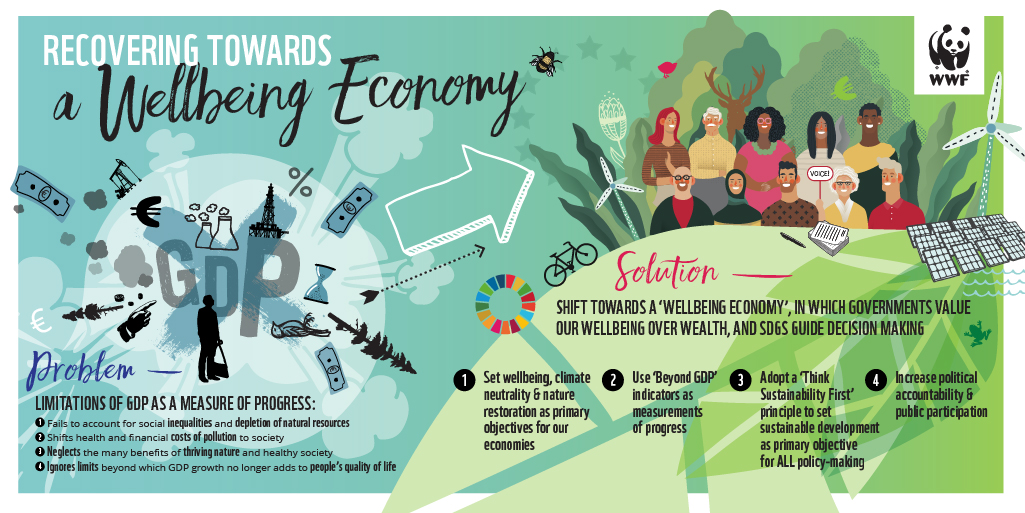
The WWF European Policy Office (EPO) has just launched a new report ‘Towards an EU Wellbeing Economy: a fairer, more sustainable Europe after COVID-19’, calling for the EU to shift to a ‘wellbeing economy’ to successfully recover by using the 2030 Sustainable Development Goals as a framework to achieve a just, socially inclusive recovery within planetary boundaries.

A ‘Wellbeing Economy’ is an economy that serves people and the environment, rather than just pursuing conventional economic growth through narrowly defined indicators such as Gross Domestic Product (GDP). WWF’s report provides examples of countries around the world already shifting to a Wellbeing Economy, such as Iceland and New Zealand, and recommends the EU takes steps in this direction, by adopting wellbeing indicators, improving accountability and coordination within the EU institutions, and prioritising sustainability in impact assessments and evaluations.

For more information, don’t hesitate to contact Agnieszka Zimoch at WWF (azimoch@wwf.eu).

Realising the promise of SDG 16 to promote and protect civic space

By Deirdre De Burca, Forus

Many in the human rights community are sceptical about what they regard as the weak potential of the SDGs to advance a universal human rights agenda. (See foreword by former Special Rapporteur for Extreme Poverty and Human Rights, Philip Alston of a recent report on Goal 16 and civic space produced by my organisation Forus,)

Such ambivalence towards the 2030 Agenda has meant that some human rights activists and practitioners overlook or disregard the role that SDG 16 could play in promoting civil and political rights globally. Current research shows that civil society, in over half of the countries of the world, is facing serious and growing restrictions on its freedom to engage, express itself and be heard. With increased surveillance, persecution and even violence against civil society, many CSOs have come under attack, particularly those advocating on behalf of excluded groups and minorities, for democratic rights and in defence of the environment. Human rights defenders in Africa, Latin America and Asia and in other parts of the world have been targeted and attacked. 212 environmental and land rights defenders alone were killed during 2019, and 219 human rights defenders are estimated to have been killed or died in detention in 2016. Technology advances have also brought increased surveillance on civil society and have created new risks for the civic space.

The freedom to exercise civil and political rights is also extremely important for civil society as it struggles to fulfill the role it has been mandated by the 2030 Agenda. The multi-stakeholder model of implementation, monitoring and review which is central to this Agenda requires civil society to have access to adequate civic space, and an enabling environment in which to operate if it is to make an effective contribution. The recent Forus report, Realising the potential of SDG 16 to promote and protect civic space, highlights how SDG 16 can provide important leverage for civil society everywhere in its efforts to create and defend the civic space, and to be more effective in monitoring and implementing the 2030 Agenda.

The effective implementation of SDG 16 will have profound implications for civic space in countries across the world. This goal broadly focuses on issues of governance and aims to “promote peaceful and inclusive societies for sustainable development, provide access to justice for all, and build effective accountable and inclusive institutions at all levels”. A specific target of SDG 16, Target 16.10, commits UN member states to “Ensure access to public information and protect fundamental freedoms”. These freedoms, which include basic rights to associate and assemble peacefully and to express views and opinions, are themselves fundamental human rights protected under international human rights law, and are essential to the creation and maintenance of the civic space.

And yet despite the clear aim of Target 16.10 to protect fundamental freedoms, the two global-level indicators which have been adopted to date by the international community to assess progress with this target do not adequately measure the extent to which these freedoms – particularly freedom of association, expression and assembly – are being protected. Indicator 16.10.1 while very relevant to the issue of civic space covers “the number of verified cases of killing, kidnapping, enforced disappearance, arbitrary detention and torture of journalists, associated media personnel, trade unionists and human rights advocates in the previous 12 months”. Indicator 16.10.2 covers “the number of countries that adopt and implement constitutional, statutory and / or policy guarantees for public access to information”.

But these global-level indicators, which are “outcome indicators” focus primarily on violations of the rights to bodily integrity and life and do not directly measure the extent to which fundamental freedoms of association, assembly and expression are being protected in day-to-day civic life as citizens attempt to engage with issues which impact on their communities and wider societies. In particular, Indicator 16.10.1 (verified cases of kidnapping imprisonment, kidnapping and murder of activists) needs to be complemented by the development and adoption at global level of other relevant structural and process-related civic space indicators. (For  example, a possible  structural civic space indicator could be :  “the existence and coverage of domestic laws protecting the rights to freedom of association, assembly & expression, including judicial review of any decision taken by the state to restrict it” and a possible process-oriented civic space indicator could be : “the proportion of received complaints on the rights to freedom of expression, association and assembly invested and adjudicated by courts or other competent national mechanisms in the last 12 months”. See more about such indicators on pg 73 of the recent Forus Goal 16 & Civic Space report). These indicators could subsequently be adopted at national level where specific gaps in the civic space have been identified.

This failure to monitor and measure the extent to which citizens are free to participate in the civic life of their societies a significant omission where SDG 16 is concerned,  The civic space case studies contained within the recent Forus Goal 16 report highlight the many restrictions civil society currently faces in different parts of the world where the exercise of rights to association, assembly and expression is concerned (see pg 62 of Forus report). These restrictions will negatively impact on the capacity of civil society in those countries to contribute to the effective implementation of the 2030 Agenda. The fundamental freedoms referred to by SDG 16 are essential to the creation of a healthy, functioning civic space, and to enabling civil society to effectively contribute to monitoring and implementing the 2030 Agenda, and they should be continuously monitored and measured.

There is an urgent need for the international community to extend the scope of SDG 16 civic space indicators which are currently limited to an outcome indicator measuring the extent to which activists, human rights defenders and others have been kidnapped, imprisoned or murdered. Additional global indicators must be developed, linked to Target 16.10, which measure the extent to which citizens can exercise their rights to freedom of association, assembly and expression in their communities and societies, in accordance with international human rights standards and national human rights laws.  Given that the OHCHR, together with UNESCO and the ILO, is the official custodian for Target 16.10.1, the human rights community, wider civil society and other key stakeholders seeking to influence the development of the indicators and of data collection need to engage with these organisations and participate in that process.

Following the launch of the Goal 16 report at the UN High Level Political Forum in 2020, Forus and its partners intend to collaborate with interested civil society networks and other groups on a new global advocacy campaign. This campaign will call for a wider range of civic space indicators to be adopted by UN member states as official Goal 16 indicators and to become part of national, regional and global Goal 16 review processes of the 2030 Agenda. The involvement of human rights activists and practitioners in this global advocacy campaign, and in the wider monitoring and review of SDG 16 implementation, will be crucial for several reasons.

Firstly, the potential contribution of the human rights community to a global campaign calling for the adoption of a wider range of global civic space indicators linked to SDG 16 would be critical. Human rights practitioners could bring their considerable specialized knowledge, advocacy capacities and political influence to bear on the campaign. Secondly, in relation to the significant data gap that has developed where Goal 16-related civic space and wider governance monitoring systems are concerned, the human rights community could help to address this issue. There is a growing and unfulfilled need for official statistics linked not just to the measurement of civic space but also to the measurement of governance in its fullest sense (eg inclusion, civic participation, rule of law, access to information).  At the end of the first four- year cycle of the implementation of the 2030 Agenda (2016-2019), very few countries and statistical offices have successfully produced governance data to report on progress with SDG 16. There has been a clear failure to use data and information produced for other relevant reporting processes, particularly the kind of useful information which has been produced for human rights reporting mechanisms, to report on progress with SDG 16 implementation. If human rights advocates were more involved in the 2030 Agenda review mechanisms, their specialised expertise relating to the Universal Periodic Review and other human rights treaty reporting processes could be used to advocate more effectively for proper measurement of and reporting on the implementation of SDG 16.

Secondly, human rights advocates could also add their voice and their ability to influence those of Civil Society Organization networks such as Forus, which are calling for SDG 16 of the 2030 Agenda to be reviewed annually by the UN HLPF, instead of every few years as it happens at present. A precedent exists with SDG 17 which is reviewed annually by the HLPF. If Goal 16 were subject to annual review, reporting governments would be obliged to report to the UN HLPF each year on progress with SDG 16 implementation in their countries. This would serve not just to keep the issues of civic space, the exercise of fundamental freedoms and the promotion of human rights high on the international political agenda on an ongoing basis, but also the wider issues of governance, justice, peace, and security.

In conclusion, the combined energy, commitment and specialised knowledge of the human rights community could bring a considerable impetus to current efforts to realise the critically important promise of SDG 16 to promote and protect civic space. Human rights advocates and practitioners should join forces with civil society movements and other interested stakeholders to launch a broad global advocacy campaign for a wider range of civic space indicators to be adopted as part of official Goal 16 global, regional and national review processes.  Please contact me on Deirdre@forus-international.org if you wish to discuss this proposal further!

Leaving NOne Behind: Let us Get a More Ambitious European Disability Rights Agenda 2021-30

By EDF

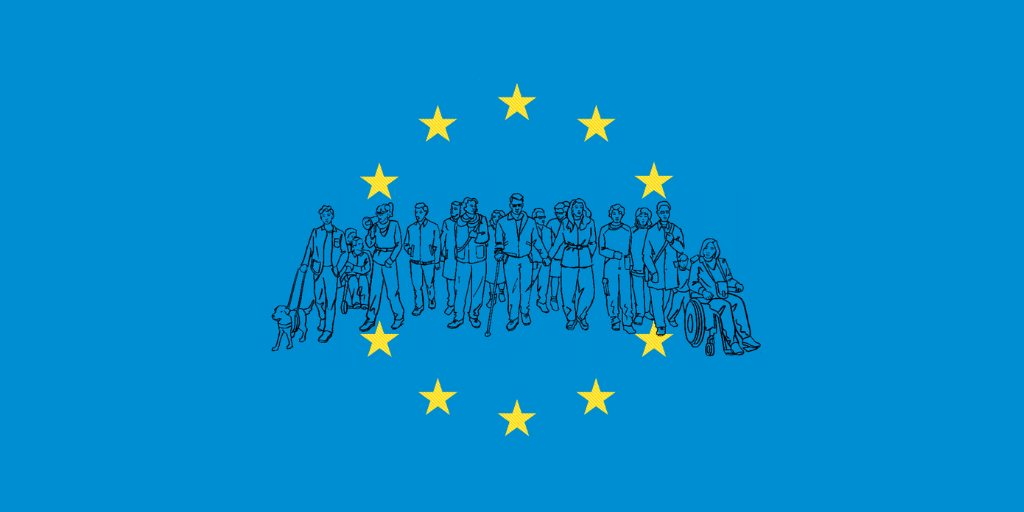
The European Disability Strategy ends in 2020 and the European Commission is drafting its successor. This Disability Rights Agenda will guide the EU work for the next 10 years. In particular, it will articulate how the EU and its 27 Member States will bring the implementation of international commitments, such as the UN Convention on the Rights of Persons with Disabilities (CRPD) and the Sustainable Development Goals (SDGs).

To successfully implement the SDGs, the European Disability Forum –the voice of over 100 million Europeans with disabilities– calls the EU to use this opportunity to assume a global leadership role in promoting the rights of persons with disabilities by:

– Adopting a dedicated External Action Disability Action Plan

– Ensuring CRPD compliance of all EU’s international cooperation and humanitarian actions

– Building the capacities of EU staff to mainstream disability rights in the EU institutions and external delegations

– Consulting meaningfully and with the full participation of persons with disabilities, including women, girls, and boys with disabilities, through their representative organisations.

The 2030 Agenda provides a political momentum to push for the realisation of the CRPD and the EU Consensus on Development. Let’s not miss it!

More info on EDF website.

Statement – MORIA FIRES: European Governments must urgently relocate displaced individuals from Greece

By GCAP

GCAP and the Faces of Migration partners reiterate our call on the governments of EU Member States, with support from the European Commission, to urgently relocate displaced individuals from Greece. Lesvos and the other EU Hotspots on the Aegean islands have reached breaking point long ago. European government must now urgently bring the men, women and children stranded in Greece to safety, and thereby uphold our European values of human rights and human dignity. Read more:

Urgent Call to Action from Civil Society Organisations across Europe: Download the statement

Over the past days devastating fires (i) burnt down the Moria Registration and Identification Center and surrounding areas, the EU Hotspot on the Greek island Lesvos. The fires have left thousands of vulnerable individuals homeless and traumatised (ii), among them over 4,000 children (iii).

The undersigned organisations reiterate their call on the governments of EU Member States, with support from the European Commission (iv), to urgently relocate displaced individuals from Greece.

While we are shocked and saddened at these developments, they come as no surprise. Lesvos and the other EU Hotspots (v) on the Aegean islands have reached breaking point long ago (vi). Moria camp is currently hosting roughly 12-13,000 displaced individuals, with an official capacity of only 2,800. These severely overcrowded camps are characterised by squalid living conditions and a severe lack of adequate sanitation or hygiene facilities, even amid the heightened health risks due to COVID-19 (vii). The situation in the other Greek Hotspots is similarly untenable and repeated warnings (viii) have remained unanswered for over four years.

Relocation urgently needed

We welcome the transfer of 406 unaccompanied children from Lesvos to the Greek mainland, with financial support from the European Commission (ix). This demonstrates how swiftly transfers can be co-ordinated when the political will exists. We commend the Norwegian and Dutch governments’ commitments to relocating 50 (x) and 100 (xi) individuals respectively, as well as the French and German governments’ willingness to transfer 400 children (xii). We urge further European governments to follow with concrete commitments and action without delay. The positive example set by relocations carried out by the coalition of willing Member States since March 2020 (xiii) shows that relocations can be carried out safely and successfully for everyone involved. Member States, EU institutions, relevant EU and UN agencies with support from civil society should now share experiences, expertise and resources to ensure further states join the coalition. The undersigned organisations stand ready to support these efforts, to bring the men, women and children stranded in Greece to safety, and thereby uphold our European values of human rights and human dignity.

The EU Hotspots as an EU Migration Management Approach

The latest events prove once again the failure of the Hotspots as the default EU migration management approach. We call on the European Parliament to investigate the role that the EU and Member States played in the failed management of Moria. Moreover, we urge the European Commission, the German EU Council Presidency and Member States to treat the horrifying images of Moria burning as unequivocal proof of the tragic human cost (xiv) of an EU asylum and migration system based on containment and deterrence policies. We strongly recommend the European Commission to take these events into account with a view to the New Pact on Migration and Asylum, and ensure the same policies do not inform the extremely concerning proposals for ‘processing centres’ at EU borders. It is vital that the New Pact is taken as an opportunity to present a new start rather than a replication of past errors.

Signed by:

  • Action Aid Hellas (Faces of Migration partner)
  • Ambrela Slovakia (Faces of Migration partner)
  • ASGI
  • BPID Bulgaria (Faces of Migration partner)
  • Caritas Europa
  • Caritas Hellas
  • Caritas Slovakia
  • Češi Pomáhají (Czech Republic)
  • Child Circle
  • Consortium of Migrants Assissting NGOs (Czech Republic) COSPE Onlus
  • Danish Refugee Council (DRC)
  • Defence for Children International
  • Defence for Children International – Belgium
  • Defence for Children International – Greece
  • Defence for Children International – Italia
  • Destination Unknown
  • Diaconia ECCB (Faces of Migration partner)
  • Diakonie Austria
  • Dutch Council for Refugees
  • Dynamo International – Street Workers Network Echo100Plus
  • Eurochild
  • Eurodiaconia
  • Europe Must Act
  • European Lawyers in Lesvos
  • European Network on Statelessness
  • Fenix Humanitarian Legal Aid
  • FOCSIV – Italian Federation of Christian NGOs Italy (Faces of Migration partner)
  • Global Call to Action Against Poverty (GCAP) (Faces of Migration partner)
  • Greek Council for Refugees (GCR)
  • Help Refugees
  • Human Rights League Slovakia
  • ICMC Europe
  • Immigrant Council of Ireland
  • International Child Development Initiatives (NL)
  • International Rescue Committee (IRC)
  • INTERSOS
  • Kids in Need of Defense (KIND)
  • Kopin
  • Lighthouse Relief (LHR)
  • LUMOS Foundation
  • Mareena Country Slovakia
  • Médecins du Monde Belgique
  • Médecins du Monde – France
  • Minority Rights Group International
  • Missing Children Europe
  • Mokosha NGO Centre
  • Movimento per l’Autosviluppo, l’Interscambio e la Solidarietà (MAIS) (Italy)
  • Nadácia Milana Šimečku (Slovakia)
  • Network for Children’s Rights
  • One Happy Family Lesvos
  • ONGD Plataforma Portoguesa
  • Organization Mondiale pour l’Éducation Préscolaire/ World Organization for Early Childhood Education
  • Oxfam
  • PAX
  • Pax Christi Vlaanderen
  • PICUM
  • Plate-Forme Mineurs en Exil – Platform Kinderen op de Vlucht
  • Povod Slovenia (Faces of Migration partner)
  • Refugee Legal Support (RLS)
  • Refugee Youth Service
  • Slovak Humanitarian Council PRAKIS Solidarity Now
  • SOS Villages Greece
  • Still I Rise
  • Terre des Hommes Hellas
  • Terre des Hommes International Federation
  • Velos Youth
  • Vluchtelingenwerk Vlaanderen
  • Women’s Refugee Commission

References

i Al Jazeera, 9 September 2020
ii CNN, 9 September 2020
iii UNCHR and Council of Europe, 9 September 2020
iv Together with relevant EU and UN agencies and in cooperation with civil society organisations.
v UNHCR, 31 August 2018
vi Amnesty International, 6 December 2018 ; see also: Call to Action by Civil society organisations, March 2020
vii MSF, 30 July 2020
viii HRW, 19 March 2016
ix Ekathimerini, 9 September 2020
x Dpa-international, 9 September 2020
xi NLTimes.NL, 11 September 2020
xii France 24, 10 Septembre 2020
xiii European Commission, 15 April 2020 ; PubAffairsBruxelles, 8 July 2020
xiv MSF, 11 March 2020