The Forus Barefoot Guide: How do we practice collaboration in these times?

By Forus International

Collaboration is vital for transformative social change. But how do we practice collaboration in these times? That is the question driving Future Convergence: the Forus Barefoot Guide. The Guide and the campaign value our human history as a complex and intricate story of committed social change actors. We believe that civil society organisations have a unique and historic role in re-orienting people to work together, reducing polarisation and nurturing our shared humanity. But we also need to challenge ourselves, turning towards each other to mobilise and multiply our collective power. 

In the Forus Barefoot Guide, we explore real experiences, innovative practices, ways of collaborating and leadership forms that offer hope for a way forward. This practical resource is intended for individuals and organisations who want to improve their learning processes and social change practices. Written by thirty-one civil society leaders and practitioners from twenty countries worldwide, it reunites practices and experiences that bring diverse people and organisations together towards a vision of a more equitable, inclusive, humane, and sustainable planet

Each chapter focuses on a different topic, ranging from our understanding of “power”, our engagement with governments and the private sector, and civil society’s capacity to adapting in the face of the globalisation of social issues to collective leadership, relationships with donors, synergies with social movements, and the process of continual, horizontal learning.

Around the Guide, we have developed a multimedia and multilingual campaign with surveys to collected positive practices of collaboration from around the globe, podcast episodes and Conversation Starters – a series of videos focusing on topics from each chapter of the Guide that allows for interaction. 

Want to share your experience? Read the Forus Barefoot Guide here and join the campaign! The Guide is available in English, French and Spanish.

A big thank you to all the writers and Forus members, Doug Reeler, Nomvula Dlamini and Rubert Van Blerk from the Barefoot Guide Connection and Tamarind Tree Associates, South Africa, and Marcela Terán from Liberation Works for developing the Guide and campaign with us.

Mobilisation campaign to act for SDGs in Latvia

By Latvian Platform for Development Cooperation  (LAPAS)

On September 20th, the Latvian Platform for Development Cooperation (LAPAS), in collaboration with the Latvian Multistakeholder Coalition, has launched an information campaign on the mobilisation of regional communities to act for SDGs implementation. The campaign’s motto is “Target the development!” (in Latvian: “Mērķē attīstībā!”). 

The campaign’s focus will be awareness-raising on the Sustainable Development Goals and a call to action for implementations of SDGs. 

The plan is to involve at least 30 active community stakeholders all around the country, including municipalities, educational institutions, libraries, museums, civil society organisations. These stakeholders will coordinate educational workshops, online campaigns, and activities to find local problems and their solutions and build community resilience and global competencies. 

All identified problems will be presented by LAPAS and the Latvian Multistakeholder Coalition to national decision-makers. The solutions found and proposed during workshops will be submitted to the Conference on the Future of Europe platform.

The campaign will run until the end of November 2021, culminating in the Final Conference held during the Global Education Week 2021.

The campaign is financed by the EEA and Norwegian grants, the Ministry of Foreign Affairs of Latvia, the European Union and the Council of Europe.

Sustainable Development Festival 2021 in Italy

By ASviS

The annual appointment with the Sustainable Development Festival is renewed for the fifth edition, which will take place from September 28 to October 14 2021, throughout Italy and online. The Festival will take a hybrid format. It aims to stimulate the reflection on the critical issues raised by the current situation, which demonstrate how much all aspects of sustainability (environmental, social, economic, institutional) are interrelated. This interrelation makes the case for integrating policies and actions that guarantee a recovery and exit the crisis on the principles of sustainability while avoiding returning to business as usual.

The Festival was selected for the second consecutive time among thousands of projects to be a finalist of the SDG Action Awards of the UN SDG Action Campaign. It is defined as an innovative initiative and a unique experience at an international level. It is organised by the Italian Alliance for Sustainable Development (ASviS) together with its member organisations and partners. The festival will feature about 20 events organised by ASviS, hundreds of initiatives proposed by Italian civil society, institutions, individuals and the private sector, and events organised by Italian embassies abroad thanks to the collaboration with the Italian Foreign Ministry. The Festival website is online at www.festivalsvilupposostenibile.it

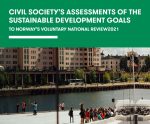
Inspired by Finland, Norway includes civil society’s assessments in the official VNR report

By Norway’s Voluntary National Review

Civil society’s assessments show that Norway has made efforts to meet the SDGs. However, we still have significant challenges, says Kathrine Sund-Henriksen, director of the Norwegian Forum for Environment and Development. 

Norwegian Forum for Environment and Development (ForUM), a network of over 50 organisations working on development, environment, human rights and peace, was given the task to coordinate the contributions. More than 80 civil society actors participated in one or more of the 17 working groups responsible for co-writing the assessment of each goal.

The assessments will be a part of the official report, alongside the Governments assessments. ForUM hopes that this process is the start of a trend with the better engagement of stakeholders and that the recommendations in their assessments will make Norway gear up the efforts to meet the SDGs. 

The Finnish Model

The stakeholder engagement model in the VNR process that the Finnish CSO Fingo developed in cooperation with the Finnish government last year inspired the Norwegian government to include civil society’s assessments in the official report.

– The engagement in this VNR process is a testament to the value of sharing experiences across borders. With the Finnish model as a base, we could shift our focus from advocating for being included in the process and discussing how we can make the inclusion meaningful, says Sund-Henriksen. 

However, short deadlines were a barrier to participation in the process, and some organisations did not have the capacity to make contributions on such short notice. The recruitment period to the working groups was also shorter than the coordinators wished for. In future joint civil society initiatives regarding Agenda 2030, they will strive for an even broader and more diverse group of civil society organisations.

– This process has demonstrated how governments can actively engage non-state actors in reporting processes and has given us useful experiences on how we can further strengthen stakeholder engagement and build trust between different stakeholders in the implementation of Agenda 2030, says Sund-Henriksen. 

Call for greater efforts to meet the SDGs

Even though Norway has a long way to go in meeting all of the 17 SDGs, civil society also gives some credit to the government.

– The government has maintained a high level of foreign aid for many years, including during the pandemic. Norway is also among the top achievers internationally on many indicators regarding domestic issues.

However, Norway is lagging behind in several areas.

– None of the Aichi targets, the global biodiversity goals, were met by 2020. The economic inequalities are increasing, and Norway is struggling to make the economy circular and ensuring responsible production and consumption, says Sund-Henriksen.

Sund-Henriksen also points to Norway’s ongoing search for new oil and gas ventures as a source of climate emissions and the slow progress in the transition to a greener and more sustainable society. In the civil society assessments, several organisations address the need for better policy coherence for sustainable development and real answers to the dilemmas Norway face in Agenda 2030. 

Read civil society’s assessments of Norway’s VNR here

http://www.forumfor.no/en/news/2021/inspired-by-finland-norway-includes-civil-societys-assessments-in-the-official-vnr-report

Race to the top: how tax justice can help solve global debt crisis

By Lithuanian NGDO Platform

Although it may not be high on our minds these days that we’re struggling with the suffocating lockdowns, the crisis we live through will have – and is already having – a much larger effect on our lives in the years to come than we can possibly imagine. One aspect of it is the looming global debt crisis. But the good news is that there are solutions and some of them come in the form of tax justice.

What Global Debt?

Ingo Ritz, Director of Global Call to Action Against Poverty (GCAP, a network of over 11,000 civil society organisations (CSOs)), says that together with the health crisis, there is a social and economic crisis that is much more serious in low- and middle-income countries, where hundreds of millions of people lost their jobs and incomes. He says that governments need to spend on health and social protection, yet they don’t have the financial resources. One reason for this is tax evasion; another – the debt crisis.

“A new debt crisis started before the pandemic”, says Ritz. “But with COVID, it really got serious: foreign investment, tourism, most other sectors decreased dramatically, but suddenly governments had to spend more on health and social protection. So governments needed more money but had less tax income.”

In 2020, debt increased by a third in low- and middle-income countries. It rose as well in rich countries, such as Japan, the US, and the EU. But the problem is that low- and middle-income countries can’t borrow as rich countries do, and they also have to spend much higher interests and pay a lot of their income for debt repayment, so they can’t spend enough for health and social needs. “If they take new credits, which is what rich countries do, then their debt crisis will be more problematic in the future”, says Ritz. “It is calculated that more than 150 countries had already to reduce their expenditures this year. That means austerity – cut spending to comply with their financial obligations. Remember what happened to Greece and other European countries after the 2008-2009 financial crisis and the effects of the extreme austerity imposed on the people.”

GCAP’s Director explains that in the past, a more significant part of the credits came from governments in the Global North, but this picture has changed. Currently, around one third of global debt is owed to governments; another third to private lenders such as banks and investment funds; and the last third – to multinational financial institutions, such as the World Bank and the International Monetary Fund (IMF). Yet, these latter two were among those who refused to postpone debt repayment for low-income countries as agreed by the G20. Instead, they demanded that governments, including those most hit by the crisis, continue repaying their debts with money they don’t have.

A good example is the civil society-run Jubilee 2000 campaign, which called successfully for the cancellation of debt for the world’s poorest countries, which – or “owed” – huge amounts of money to the rich ones. For decades, countries used their tax income or were even forced to take on new loans to pay back the old ones together with their rising interest rates. This meant that tax money collected from their citizens was not used for their health, education, and other needs but instead went into the pockets of already rich lenders. A similar pattern is emerging today.  

While health crises affect people, their social-economic impacts on the population are tremendous. According to OXFAM, it will take the world’s poorest people up to 10 years to recover from this current crisis, whereas over the last year, the world’s billionaires got even richer than they were before. Ritz is quotes an old saying: if you owe the bank 100 dollars, the bank owns you. But if you owe the bank 100 million dollars, you own the bank.

“Private persons and companies can become insolvent and use a structured process. Countries cannot. Poor countries have to negotiate with a group of rich countries – the so-called Paris Club (now China joined the club) –  without any internationally agreed process”, explains GCAP director. “At the moment, the financial interests of the rich countries and their banks are much better protected than the rights of people in low- and middle-income countries. This is very concrete: people are dying when the health expenditures are cut. We need a mechanism to solve debt crisis, which is based on human rights.” According to Ritz, one short-term solution to create resources during the ongoing crisis is for the IMF to create new funding – the so-called Special Drawing Rights. “Just like the US and the European Central Bank, the IMF can basically print money. That is difficult to believe, but the IMF already did this during the 2008-2009 financial crisis, when US $250 million were printed,” he says. “Now a broad coalition of more than 200 civil society organistions demands US $3 trillion. The IMF proposed US $650 billion, which is by far not enough based on their own calculations.”

Another more long-term solution, and more sustainable for the future, is tax justice.

Tax the Dodgers

But what is tax justice? The UK-based Tax Justice Network provides this definition: “Tax justice refers to ideas, policies and advocacy that seek to achieve equality and social justice through fair taxes on wealthier members of society and multinational corporations. To this end, tax justice often focuses on tackling tax havens and curtailing corruption and tax abuse by multinational corporations and the super-rich.” Multinational corporations are estimated to shift US $1.38 trillion worth of profit into tax havens every year, costing countries 245 billion US dollars in lost corporate tax annually. Among these multinationals are many IT companies, such as Google, Amazon, and Facebook, that make enormous profits yet generally don’t pay proper tax anywhere. In 2018 US billionaires paid less tax than their secretaries, according to Tax Justice Network. They avoid it by shifting profits from the countries where they produce and/or sell their products to a so-called tax haven, i. e. a country with little or no corporate tax requirement. The process is mostly secret, and while you as a working citizen would be fined and persecuted by the government if you failed to pay your tax, the rich get away with the exact same action on a much larger scale, and most often, it is not legally considered a crime.

Maruša Babnik, networking and project coordinator with the Ljubljana-based Ekvilib Institute, explains here in an email interview why tax justice is needed and how it can be achieved. Ekvilib Institute is the first Slovenian civil society organisation that started working in the field of tax justice, with their Stop Tax Dodging project that started to be implemented in 2013.

Maruša, if you were to explain in everyday language what tax justice is, where would you start?

This is a question that comes up often, especially since our audiences usually have their own perceptions of what justice in the field of tax would be.

Tax justice that we are advocating for is for governments to repair the national and international tax rules to ensure that multinational corporations and wealthy individuals pay their share to the societies in which they operate and live without taking extra steps to decrease their tax bills. In practice, that means we are calling for increased tax transparency – e.g. for multinationals to report where they do business, how much profit they make there and how much they contribute in tax, and to disclose who owns what – and we call for the prevention of the use of tax practices that facilitate tax evasion and tax avoidance, as well as that the international rules be made by all the countries that these rules affect, which is not the current practice.

I am from Slovenia, where financial literacy is quite low, so we also focus on presenting the positive role that tax already plays or should be playing in our societies.   

Historically, what factors have caused and are still causing tax injustice? What are the main forms that it takes, and who are the main actors involved?

Tax rules can lessen inequality within countries and between countries when working in accordance with the basic purposes of taxation. However, the system – as it is set now – is broken. Countries have almost complete control of their own tax laws, which means we have a lot of national tax systems, that can and do vary from each other, developing loopholes that companies can exploit. And then there are countries that are deciding on international tax rules without including the rest of the world in their decision-making, only patching up the broken and unfair system they themselves built in the first place (in the case of OECD). The globalised world requires an effective international tax system, agreed on equal footing by all the governments.

Tax dodging is an old story with a long history, but it went in overdrive with globalisation. However, only the recent financial crisis of 2008 and tax scandals that followed (Lux Leaks, Swiss Leaks, Panama Papers…) really highlighted the scope of tax dodging to the public, at least in our parts of the world. Trying to survive with austerity measures while bailing out banks and companies, and hearing about the huge estimated amounts of profits piled in tax havens, do not go well together. However, it is yet to build up the necessary political will and to lead to real changes to the underlying causes of the problem: tax secrecy and inadequate tax cooperation between countries, to name just two.

Talking about the main actors in tax injustice – these are the governments of countries participating in the so-called race to the bottom on corporate taxation. Among them, most notably tax havens, but other countries are also participating. Since the 1980s, the global corporate tax rate fell from over 40% to below 25%. And yet, some countries are going even further to attract business – offering secrecy and adopting harmful tax practices such as special individual tax agreements for multinationals, which facilitate them to pay little or no tax (the case of Lux Leaks). The list of tax havens is much longer than the one that the EU and OECD put together, as some of the strongest tax havens are EU and OECD members, which highlights the problem of OECD proposing solutions to international rules. One of the issues is also the cross-border rules in place, which were initially developed to avoid double taxation of the same individual’s or company’s activities by two countries, however, some of these rules can also be used to facilitate double non-taxation by companies and individuals – as is the case of Apple.  

Often overlooked is the role of the intermediaries. These can include tax advisors, corporate lawyers, banks, accountants, and others offering advice and assistance to multinational corporations and wealthy individuals seeking to dodge taxes.

What are the obstacles associated with achieving tax justice that you identify?

The first step towards achieving tax justice is transparency. It is essential that decision-makers and the public know about the current practices in order to address appropriately and effectively what is broken. Therefore, the public needs to be able to see, for example, who owns what, which multinational is operating in which country under what name, how much they earn there, and how much they contribute to that society in taxes.   

There are three solutions we have been advocating for in terms of transparency. Firstly, Automatic Exchange of Information between tax authorities. Although this is already in place, some countries, especially the ones where tax authorities have less capacity, are excluded. Second, we are calling for the implementation of a Beneficial Owners register, which would show who actually owns what (beneficial owners are natural persons behind legal owners that can also be companies). The EU addressed this in the Anti-money laundering directive, but its implementation is lacking. However, as the #OpenLux scandal demonstrated not long ago, registers provide actual results – the information came out from Luxembourg’s register of beneficial owners. Our third proposed solution is Country by Country Reporting – public disclosure of large companies’ business information on a country by country basis. Here, reports would include, among other things, what country a multinational enterprise is present in, how much profit they make, how many people they employ there and lastly, how much they are contributing in taxes. Something similar is already mandatory for EU banks.

As I said, tax secrecy is only the first obstacle. Apart from that, we need governments to start promoting progressive tax systems, built on the understanding that tax policies can have either positive or negative effects on inequalities within the country and between countries. Countries must stop the race to the bottom, in which they compete among themselves by lowering corporate tax rates or introducing harmful tax practices that facilitate corporate tax avoidance.   

And finally, tax justice cannot be achieved without true international decision-making on tax matters. All countries are participating on equal footing, one that is fair and transparent and open to observers. This is far from how international tax matters are being discussed for the past 60 years and more.  

Through your work, what perceptions of tax justice have you noticed among the public?

One of the first lessons we learned was that we need to start from the very basics: what tax is, why we need it and what it pays for. Then explain the national tax system so we are all on the same page before we start discussing more complex issues. That doesn’t mean that the public has no knowledge about taxation, far from it. But tax is something that is not being discussed or taught – not in schools, not at home. So the second lesson we learned was: tax is a personal matter. The result of that is that people have a limited view of the system, which then informs their understanding of it and their perception of what tax justice would be.

So it’s not hard to understand why you can hear a public school teacher saying that taxes should be cut and at the same time that their salary is too low, and telling you how they buy things from companies known for avoiding taxes; or why a public servant believes that we should give a break to tax avoiders since they built what they have with their own hands. No person is an island, as they say. And that is even more true in a country with public healthcare, public education, and other public services and infrastructure.

What tools are available for people to fight tax injustice in their countries both in the Global North and in the Global South?

It is the same as fighting on a policy level – the first step is transparency or, in other words, being well informed and informing others. Be aware of taxes around you; watch, listen, read, question, and discuss tax avoidance and tax justice with others. Another level is to send questions and demands to policymakers, join initiatives – sign petitions, spread the word through the communication channels you use. Join the global movement for tax justice – there are different initiatives and tools available in the Global North and the Global South. One example is the very recent WeMoveEurope petition to stop tax dodging. Question the companies you are buying from. Support public reporting of company data on a country by country basis as this gives countries with weaker capacities to monitor economic activities and collection of taxes a chance to gain vital information to close possible loopholes and collect taxes.

This way – as well as through publications by researchers and investigative journalists – the fight for tax justice was brought to the political arenas in many countries, as well as on the international level. However, there is still a lack of political will in the countries that are currently making international tax rules. Therefore public pressure must continue and grow stronger.

Is tax justice even possible in the current financial/capitalist system that we live in?

Tax justice is not only possible but needed for the current system not to implode. Without redistribution of wealth through progressive taxes, we will continue to see wealth being concentrated among the very few. Regressive taxes such as VAT (which were also introduced to counter the decrease in corporate income taxes and wealth taxes) additionally increase the inequalities, further diminishing the consumer power of people whose wages are already stagnating, having long-term effects on public services and infrastructure used by people and the companies themselves, all in the name of short-term profit maximisation. The current financial and capitalist system is not sustainable without putting in place some limitations – one being a fair tax system.

Revisiting SDG 8 with a “care lens”

By MMM – Make Mothers Matter

In our written Statement to the 2021 UN High-Level Political Forum, MMM revisits SDG 8, which will be reviewed this year. We argue that “Work” must be redefined as a holistic concept, where both paid and unpaid work are combined. We also challenge the notion of “economic growth” as being a goal per se. We call instead for repurposing of our economic system to serve the well-being of people and the planet.

The Covid-19 crisis has shown what really matters. It has highlighted the critical importance of Care work, whether paid or unpaid particularly and increased the visibility of the people carrying out this invaluable work, most of whom are women.

It is precisely because of their care responsibilities, which dramatically increased with lockdowns and schools moving online, that many women, mothers especially, were forced out of the labour market.

Feminist economists have for many years pointed to the inequitable distribution of unpaid care work as a root cause of Gender inequalities and discriminations, especially as it pertains to the labour market. But this crisis has spotlighted the challenges that most mothers face in juggling work and care responsibilities and home-schooling.

As part of the “Decent Work” agenda, we at MMM believe it is high time that governments address this issue and seriously invest in supporting women, parents and other caregivers doing this essential yet unpaid or underpaid, mostly invisible and unrecognised work of caring.

UNPAID CARE WORK IS WORK, AND THE WORLD OF WORK MUST ADAPT TO CAREGIVERS

As a starting point, governments must recognise that unpaid care work IS work. This fact is supported by the 2013 resolution of the International Conference of Labour Statisticians (ICLS) on work, employment, and labour underutilisation statistics.

Unpaid care work remains a barrier for many women to access the labour force, make a career and earn a decent wage. Women have been pushed to join the ‘productive’ labour force. Still, they remain responsible for the bulk of care activities: more than three-quarters of all unpaid family care work is done by women, and when both paid work and unpaid work are combined, women work more than men. And, they are heavily penalised for that, especially when they have children.

This necessitates that we redefine “work” as a holistic concept, where both paid and unpaid work are combined. The world of work must adapt to this reality, and private companies must contribute to supporting workers with family responsibilities

Governments must invest in a social protection floor that includes maternity protection. Unpaid caregivers should have access to such worker’s rights as social security – including cash transfer to complement income when necessary, pension rights (“care credits”), as well as training – notably for women to re-enter the labour market after maternity leave. Currently, only 41% of new mothers benefit from paid maternity leave: every mother works and should be entitled to full maternity protection.

THE CRITICAL IMPORTANCE OF INVESTING IN PUBLIC INFRASTRUCTURE AND SERVICES

Second, it is critically important that governments invest in accessible public infrastructure and services and that they do so with a gender lens, with the aim of both reducing the time spent on domestic chores and supporting care work. Essential infrastructure and services notably include water and energy and healthcare, education, and childcare. But the crisis has shown how critical access to digital technology and services also is.

A 2020 report by the Women’s Budget Group in the UK also shows that investment in Care infrastructure and services creates more jobs – and more jobs for women – than investing in a sector like construction.

Our recommendation to optimise resources is to work at the community or local government level and assess actual needs by involving community members and beneficiaries, including women.

Investing in public infrastructure and services is investing in people. Austerity is not an option: countless reports have pointed to the disproportionate negative effect of austerity policies on women.

CARE IS NOT A BURDEN OR AN EXPENSE TO BE MINIMISED, IT IS AN INVESTMENT

Care is work, but it must not be considered as a ‘burden’, as an expense to be minimised. The Covid crisis has demonstrated that Care is valuable and essential work, that must instead be considered as an investment – an investment in people, especially women, but ultimately it is also about investing in children.

We know particularly how vital nurturing care is for early childhood development – and it is an investment with high returns.

So let’s stop talking about the ‘care burden’. It is also not the right way to engage men in taking their share of care responsibility to be better distributed.

AN OPPORTUNITY TO RETHINK AND REBUILD OUR ECONOMY IN A FAIRER AND MORE SUSTAINABLE WAY.

The Covid-19 crisis provides a unique opportunity for systemic change, for “building forward transformatively”. It is time to move beyond a narrow and short-term focus on GDP growth and profit-making and repurpose our economy to a caring economy. One that is human-centred and serves the well-being of both people and our planet.

The recent joint report of the European Environmental Bureau and Oxfam Germany makes it clear: “The economy is far more than what can be bought and sold in shops: […] it is also about the vital care work done within households, about the joint management of common resources such as lakes and forests, about having access to well-run schools and hospitals provided by the state or by communities. It is about having a roof over your head, having enough healthy food to eat, being safe and being looked after when you need help. Care and community are all a part of this.”

A number of countries and cities are showing us the way. The governments of Finland, Iceland, New Zealand, Scotland and Wales are committed to moving to “well-being economies”. Cities like Amsterdam, Berlin, Brussels, and Sydney have adopted the doughnut economic model, which provides a valuable framework to build a solid social foundation for their economy while ensuring that economic activities are sustainable and stay within environmental boundaries.

In the current context of the multiple crises we are facing, it is absolutely urgent and essential that at every level, we endeavour to change the course of our economy, which has been exploitative and destructive. Whether we call it a well-being economy, a caring economy or a doughnut economy, it is high time that we change the narrative and revisit SDG 8.

MMM statement for the 2021 HLPF – with references

Support the #Culture2030goal campaign

By Culture Action Europe

If you believe that there is no future without culture and that the cultural ecosystems should be integrated into both short-term recovery and long-term development strategies, support the #Culture2030goal campaign. 

The #Culture2030goal campaign calls for the recognition of culture as the fourth pillar of sustainable development and advocates for mainstreaming culture across the global development agenda. The campaign also aims to include culture as a distinct goal in the post-2030 development framework.

It is formed by several international cultural networks that are united in advocating for the role of culture in sustainable development. Published recently, the Campaign’s #CultureCOVID19 Statement highlighted the need to support culture during the pandemic. It demonstrated how culture could both promote well-being in the immediate term and a more robust, fairer recovery in the longer term.

Become a supporter of the #Culture2030goal campaign now!

Promoting a Just Transition in Europe and Worldwide

By SOLIDAR

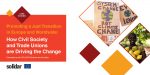
SOLIDAR’s latest publication, “Promoting a Just Transition in Europe and Worldwide”, is a collection of initiatives by SOLIDAR members and allies. It showcases some of the many ways Civil Society Organisations and trade unions lead the path to climate neutrality and contribute to ensuring a Just Transition in Europe and worldwide.

The publication, includes among many, the contributions by ARCI in Italy, Initiative for Development and Cooperation (IDC) in Serbia, ETUC, the Foundation for European Progressive Studies (FEPS), Solidar Suisse. It demonstrates that fighting for social justice, climate, and environmental justice can and must go hand in hand.

See the publication here

Does sustainable development need human rights?

By Platform Agenda 2030

When the UN General Assembly adopted the 2030 Agenda for Sustainable Development, human rights organisations found themselves in a dilemma vis-à-vis this global reference framework supposed to point the way to a sustainable future. The 2030 Agenda did not create a legally binding framework but represented a voluntary commitment by states. Which horse did they want to bet on? On the agenda 2030 with a shared vision, ambitious goals and systemic responses? Or on the established, legally binding human rights conventions?

The Danish Institute for Human Rights resolved the dilemma with its groundwork: It analysed the Sustainable Development Goals (SDGs) and targets compared to existing obligations under international law. The analysis revealed that almost all of the sub-goals have a legal equivalent under international law. Their implementation is therefore by no means based solely on voluntary action. It became clear that the SDGs and human rights are two sides of the same coin. 

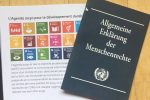
The Swiss CSO Platform Agenda 2030 published a short document showing how strongly the 2030 Agenda is based on human rights. And how we can use established human rights procedures to strengthen sustainable development. The document is available in German, French and Italian

Links:

Publication in German: https://www.plattformagenda2030.ch/publikationen/kurz-gefasst/agenda-2030-und-menschenrechte/

In French: https://www.plateformeagenda2030.ch/publications/l-essentiel/lagenda-2030-et-les-droits-humains/

In Italian: https://www.piattaforma-agenda2030.ch/pubblicazioni/in-sintesi/agenda-2030-e-diritti-umani/

System change report and documentary

By EEB – European Environmental Bureau

Oxfam Germany and the European Environmental Bureau (EEB) went out of their North-South and nature comfort zones to talk about the deeper changes that are now needed, especially in Europe. 

Towards a well-being economy that serves people and nature” is a 56p Oxfam Germany-EEB report (4p summary) that connects dots such as inequalities, power concentration, GDP growth dependency, environmental harm and the common struggle faced by humanity as a whole.

The authors, helped by the Climate of Change coalition and a range of stakeholders, including European policymakers, manage to unpack the “bigger picture” that we all operate in. 

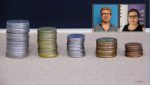
Another invitation to think big, look deep and go for systemic solutions to our problems is a 20’ documentary from Broederlijk Delen, in close collaboration with the EEB. “The 25% revolution” is a systemic change documentary available in 13 languages. Experts & pioneers explain/show the need for/existence of a better economic system. The launch event with Kate Raworth from the Doughnut Economics discussed both the documentary, the report and the state of play on doughnut economies. 

Trailer: https://www.youtube.com/watch?v=jM1yXF3rgtk
Docu: https://www.the25percentrevolution.com/
Launch event: https://www.youtube.com/watch?v=rNPJHKmAE_4&t=62s
Report: https://eeb.org/library/towards-a-wellbeing-economy-that-serves-people-and-nature/
Summary: https://eeb.org/library/summary-towards-a-wellbeing-economy-that-serves-people-and-nature/