AGA Special update: SDG Watch Europe members meet in Brussels for Civil Society Forum

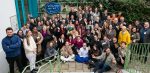
SDG Watch members from all over Europe met in Brussels on the 4th and 5th November for the SDG Watch Europe Annual General Assembly and the Civil Society Forum for Sustainability. Over 70 CSOs with an interest in just transition, participation, social justice, and climate environmental sustainability were present to deliberate on the future of the European Green Deal and to discuss and strategize on the SDGs and Agenda 2030.

Civil society strategize for 2024-2029

The AGA took place back-to-back with the Civil Society Forum, organized by SDG Watch Europe, EEB and SOLIDAR in the framework of the REAL DEAL project, a Horizon 2020 project on deliberative democracy and the European Green Deal (EGD). The forum provides a space for CSOs from across Europe to come together and exchange views on topics related to the European Green Deal and the SDGs.

On day one, CSOs met at the Elzenhof for a packed event on strategic priorities for civil society engagement within the upcoming 2024-2029 EU mandate. The panel, moderated by Hanna Gunnarrson of WECF, opened with reflections on the recent UN Summit of the Future. Ingo Ritz, Director of Global Call to Action Against Poverty, noted that the Summit highlighted the increasing polarization between the Global North and South, especially around issues like debt and economic justice. Ingo raised concerns about the shrinking space for civil society in global governance processes, with civil society sidelined in major discussions. He pointed to the upcoming 2025 World Social Summit as a critical venue where civil society can push for stronger engagement.
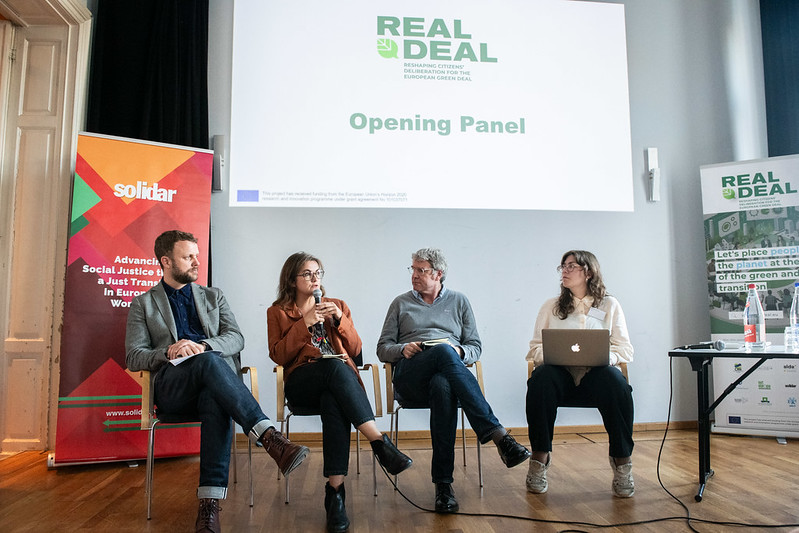
The panel then heard from Patrizia Heidegger, Deputy Secretary General of the EEB, who noted the progress on environmental goals praised civil society’s mobilization efforts, noting significant legislative wins under the EGD, including stricter regulations on resource use and waste, more robust climate targets, and new ecodesign standards. Despite these advances, major obstacles remain, including inadequate fiscal commitments to support decarbonization and dematerialization. From the social justice perspective, Mikael Leyei, SOLIDAR’s Secretary General, highlighted troubling trends in social justice, with poverty rates on the rise and social indicators declining. Mikael noted that a coherent policy framework for a just transition is essential and called for better integration of social and environmental justice goals. Mikael also noted the growing influence of nationalist and far-right movements within EU member states. He urged civil society to mobilize nationally and within the EU, building broad alliances to counter anti-democratic trends and ensure that social and environmental justice remain priorities in the next EU mandate. Overall the panel set the scene as to how the EU should move forward on SDG implementation, emphasising economic system change, social justice, a just transition and the need for greater adherence to the principle of policy coherence for sustainable development in all EU actions and policy processes.

Across the two-day Forum, nine thematic civil society workshops were held and SDG Watch Europe’s members heard from a variety of inspiring speakers from the academic and civil society spheres, as well as collaborating to develop policy recommendations for the incoming European Commission and EU Parliament. Alongside the workshops on emerging themes for civil society, a closing dialogue with civil society organisations was held to reflect on their ideas at the end of the two days of discussions.

AGA Key updates

During the Annual General Assembly on the 4 November, elections to the Steering Group were held. SDG Watch Europe would like to thank the outgoing members of the Steering Group for all the incredible work they have done throughout their mandate. Members applauded Laura de Bonfils (Social Platform), Sarah Franklyn (Independent), Stéphanie Ghislain (Eurogroup for Animals) and Jacob Bjelskov Jørgensen (Nyt Europa), who will all be stepping down from the SDG Watch Europe Steering Group after completing their terms.

New Members of the SDG Watch Europe Steering Group

SDG Watch Europe hereby congratulates and welcomes three new steering group members who were unanimously elected to the Steering Group at the AGA; Katja Reuter of Social Platform, Justina Kaluinaite of the Lithuanian NGDO Platform and Valeria Fantini of the European Association for Local Democracy (ALDA). In addition, SDG Watch Europe warmly welcomes back Robert Krizanic (Povod) and Manuela Gervasi (EEB), who were re-elected to the Steering Group for one additional term.
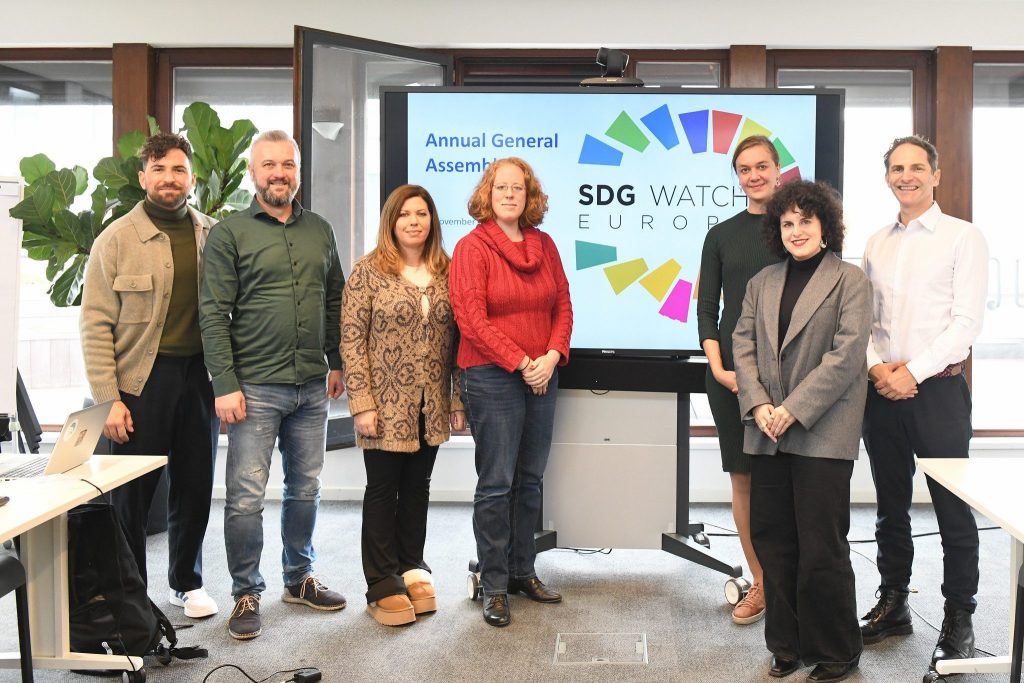
SDG Watch Europe also set priority focus areas for 2025 that will be crucial to work on in order to advance its mission of SDG implementation. SDG Watch Europe will continue to focus on the ambitious implementation of the SDGs by the EU institutions in the 2024-2029 mandate. In addition, the network will address new narratives for sustainable development, moving beyond competitiveness, deregulation and disinformation, towards a global wellbeing economy. Another key priority area for 2025 is the financing for the SDGs, including the Upcoming Multiannual financial framework (MFF) negotiations and the 4th International Conference on Financing for Development. Lastly, members highlighted the importance of the EU’s international development cooperation and the Global Gateway Strategy, moving towards global justice.
Civil society responds to the European Commission’s UN report on SDG progress

SDG Watch Europe, a civil society alliance of more than 90 EU NGOs established to ensure the full implementation of the Sustainable Development Goals (SDGs) by the EU and its Member States, has criticised today’s publication of the European Commission’s European Voluntary Review.

Serving as the first ever Europe-wide Voluntary National Review of the Sustainable Development Goals (SDGs), the European Voluntary Review (EU VR) has the potential to spark a bold political reset of the SDG Agenda. However, the report published this week by the European Commission does not go far enough in its content or process, with civil society organisations and citizens left out in the cold as the report was drafted. 

As many independent assessments show, implementation of the SDGs has been lagging behind, and in key areas such as reducing poverty, tackling inequalities, and addressing the triple crises of climate, biodiversity and pollution, progress is going backwards. The Voluntary Review, which merely assesses what the EU has done so far and promotes its flagship policies, lacks any real vision for structural changes, nor does it provide an action plan at EU level to address gaps and challenges identified by civil society organisations on SDG implementation. 

The EU VR process should be an honest and forward-looking stock taking, as well as a steppingstone to an overarching strategy on the SDGs, complete with a fully financed action plan. As of now, it is not clear how Europe intends to make structural changes in areas where the data shows regression, and particularly where we see negative external impacts of Europe’s policies on the rest of the world.

Jeffrey Moxom, SDG Watch Europe Coordinator.

A key demand of civil society organisations was that the European Voluntary Review be an inclusive best practice in participatory governance which promotes and secures the genuine involvement of citizens and civil society, as many EU Member States had successfully done when conducting their own Voluntary Reviews. Despite a commendable effort from the European Economic and Social Committee to lead a stakeholder consultation, the EU did not succeed in properly consulting citizens during the first ever European wide review of the SDGs. Nor did it reach out to NGOs beyond Europe to hear how the EU’s policies are affecting them. 

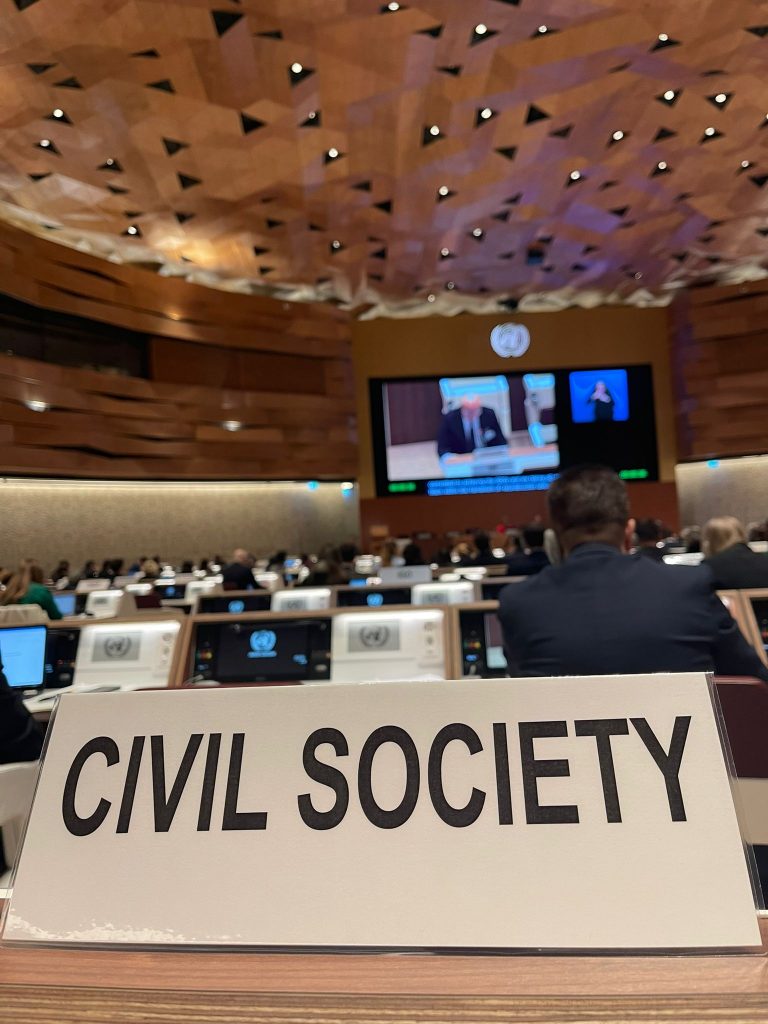
Civil Society participates in the UNECE (United Nations Economic Commission for Europe) 2023 Regional Forum for Sustainable Development in Geneva, a forerunner to the High-Level Political Forum taking place in New York in July.

The lack of consultation with civil society in the preparation of the EU Voluntary Review is deeply disappointing. Article 11 TEU places an obligation on EU institutions to consult with CSOs to ensure open, participatory, and inclusive multi-stakeholder approaches, and the SDG agenda itself contains strong commitments to involving civil society and other key stakeholders in its implementation.

There is a clear need to shift from a tick box exercise to the creation of real opportunities for citizens’ and civil society participation to engage the whole of society for sustainable development and for the SDGs.

Manuela Gervasi, Senior Policy Officer for Public Participation and Sustainable Development at EEB and SDG Watch Europe Steering Group Member. 

As Europe continues to preach the values of participation, democracy, and openness to other countries around the world, Europe now needs to show real leadership on SDGs on the world stage, as governments and civil society ramp up preparations for the High-Level Political Forum in July in New York and the SDG Summit taking place in September. With many countries engulfed by stubborn inflationary economic crises and global shocks that risk erasing vital SDG progress, the EU will need to lead in reviving a spirit of multilateral cooperation and fostering the political will required to achieve the sustainability commitments made in 2015. In such a context, it is only logical that the EU takes further measures to reverse the negative trends highlighted in the EU Voluntary Review. 

With only seven years left to achieve the SDGs, the role of the incoming European Commission in 2024 will be instrumental in the success of Agenda 2030. The EU VR provides a first step, but it should be followed by the introduction of an overarching strategy on SDGs that ensures meaningful civil society participation.

Julie Rosenkilde, Director of Nyt Europa and SDG Watch Europe Steering Group member. 

SDG Watch members highlighted that the ongoing deficiencies in implementing the SDGs are structural in nature, and the EU must assume a leadership role in tackling root causes and transforming the current economic system. Only by doing so can genuine progress towards the SDGs be achieved. This will require courageous decision-making from policymakers, as well as collaboration and cooperation from all stakeholders. Daniele Taurino of the European Youth Forum an SDG Watch Europe member, commented:

It’s becoming increasingly clear that our current economic model, which prioritises growth and profit, is unsustainable and detrimental to both the planet and the people. The only way to achieve the SDGs is by pursuing systemic and coherent change towards a post-growth future that values biocapacity, equality, and the well-being of both people and the planet while creating a thriving and peaceful future that operates within the limits of our planet’s resources.

The European Voluntary Review can be accessed here.

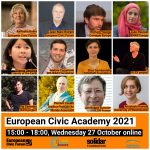
European Civic Academy 2021

Session III : All for a Better World, but All Fragmented? 

By Civil Society Europe

Co-organised with Civil Society EuropeSOLIDAR and Fundacja na rzecz Collegium Polonicum, the European Civic Forum invites you to join in Session III of  #EuropeanCivicAcademy 2021! 

This session will focus on the theme of Convergence: “All for a better world, but all fragmented?” and will take place on Wednesday, 27 October, from 3:00 to 6:00 p.m (CET) online.

The key issues to be tackled by both civil society activists and academic researchers are: 
⇒ Is convergence of democratic agendas the best path to systemic change? How to prevent from creating hierarchies of needs, issues and fights? Are there any attempts to connect/unite thematic agendas, to overcome fragmentation? What obstacles do they face? What can we learn from experiences of mutual contamination and convergence?

⇒ What are the relations between movements, organised civil society and other forms of democratic activism – conflict-cooperation, trust/mistrust? How are the different actors discussing this issue? Does this dialectic contribute to any contamination, debate or change between different concepts and practices towards a better world?

Don’t miss out on the opportunity to share your input in this event! 

For more information on the programme, click here.
Registration link: https://bit.ly/3n3IOKo

Discussion on The Eastern Partnership CSOs integration and focus on the Belarusian CSOs situation in Lithuania

By the Lithuanian NGDO Platform

Most Belarusian democratic NGOs are not able to work freely in their country. Civil society development is mainly limited by state institutions that form an unfavorable legal environment, persecute and punish CSO leaders, create obstacles for establishing CSOs, gatherings, etc. 

In Lithuania, Belarusian civil society is being strengthened using various measures: financial support for Belarusians and their organisations; permission to arrive and reside in Lithuania under simplified conditions; providing opportunities to transfer and successfully develop their activities in Lithuania; helping the youth to aim for higher education, and providing assistance to the victims of repressions and pressure in their own country. Lithuanian Government institutions – the Ministry of Foreign Affairs first and foremost – should prepare a clear action plan related to Belarusian NGOs, which would include: defining the direction and the scope for actions taken by competent institutions; gathering and systematising the required information as well as adapting it to strengthen Belarusian NGOs in Lithuania; establishing a Council for Belarusian NGO issues made up of interinstitutional and/or Lithuanian NGO representatives.

Although NGO legal environment in Lithuania is perceived as positive, and both the benefits and the assistance provided seem to be sufficient, Belarusian NGOs are still facing various challenges. 

The NGO Law Instituted conducted the situation report “Eastern partnership and Lithuania: Challenges for NGOs, solutions and opportunities. Case study: Belarus” in August 2021. 

Full report in Lithuanian 

Summary in English 

More information: https://www.vbplatforma.org/EN/projects/agenda

Registration to the activity via this link: https://us02web.zoom.us/webinar/register/WN_5dlrjknAQ7efHb6xjOiAdA

Mobilisation campaign to act for SDGs in Latvia

By Latvian Platform for Development Cooperation  (LAPAS)

On September 20th, the Latvian Platform for Development Cooperation (LAPAS), in collaboration with the Latvian Multistakeholder Coalition, has launched an information campaign on the mobilisation of regional communities to act for SDGs implementation. The campaign’s motto is “Target the development!” (in Latvian: “Mērķē attīstībā!”). 

The campaign’s focus will be awareness-raising on the Sustainable Development Goals and a call to action for implementations of SDGs. 

The plan is to involve at least 30 active community stakeholders all around the country, including municipalities, educational institutions, libraries, museums, civil society organisations. These stakeholders will coordinate educational workshops, online campaigns, and activities to find local problems and their solutions and build community resilience and global competencies. 

All identified problems will be presented by LAPAS and the Latvian Multistakeholder Coalition to national decision-makers. The solutions found and proposed during workshops will be submitted to the Conference on the Future of Europe platform.

The campaign will run until the end of November 2021, culminating in the Final Conference held during the Global Education Week 2021.

The campaign is financed by the EEA and Norwegian grants, the Ministry of Foreign Affairs of Latvia, the European Union and the Council of Europe.

SDG Watch Europe distributed the World’s best news

By SDG Watch Europe

On September 10th 2021, from 362 points across Denmark, distributors gave the World’s Best Morning newspaper to passers-by.

Every year, Verdens Bedste Nyheder hosts the “World’s Best Morning” to spread information on the challenges and progress of the Global Goals. This year, the theme was Sustainable Cities, SDG 11. 

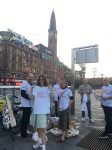
Members of SDG Watch Europe based in Denmark woke up early in the morning to represent the alliance and joined Nyt Europa’s activists. Together, we started at 06.30 AM at Nybrogade, located in the beautiful heart of Copenhagen, where Nyt Europa’s office is based. We prepared coffee, packed the newspapers and enthusiastically walked towards Rådhuspladsen (City Hall Square) while the warm Danish sun slowly woke up the city. We carried boxes of hundreds of small leaflets with the World’s Best News and hundreds of chocolates ready to be handed out to the early birds of Copenhagen.

We arrived at Rådhuspladsen at 7 AM sharp. Slowly sipping coffee and handing the first dozens of leaflets, we saw the city waking up. At 8.30 AM, the city was awake: more full speed cyclists and passers-by grabbing newspapers from our hands, and bus drivers smiling at us. Only a few were passers-by, a few were cyclists, and a few were cars.  

Nyt Europa activists and SDG Watch Europe in Rådhuspladsen

But we were only a few among the total of 2567 volunteers who, on that morning, have pulled on the white t-shirt with the orange “World’s Best News” logo. The rest were scattered around Denmark. Activists were youngsters, politicians, volunteers, students, ambassadors, journalists.

Activists were all around the city. In collaboration with Caritas, a group of dancers from Copenhagen Contemporary Dance School performed to draw people’s attention and raise awareness on the Sustainable Development Goals. 

Klara Trane, from Mellemfolkelig Samvirke, described The World’s Best News as “cool, wonderful and fantastic journalism that provides a counterpoint to the other news that mostly spreads negative news. Of course, everything should not be on the pink cloud, but it is important to also talk about the positive ”, reported World’s Best News on their website.  

To end the morning, a wonderful morning full of hope and activism, ambassadors from the Netherlands and Albania and Jens Christian Wandel, chairman of the United Nations and former adviser to UN Secretary-General António Guterres, helped hand out the newspapers too. 

We were glad to be part of this great initiative devoted to spreading constructive news on progress and solutions to the world’s challenges. We would also be happy to participate in the future. 

Africadag, Climate Justice

By Women Engage for A Common Future (WECF)

This year’s Afrikadag, organised by Foundation Max van der Stoel (FMS), focused on climate justice. The week featured several inspiring online events to which Women Engage for A Common Future (WECF) contributed. Read more about the engaging conversation between WECF and their partner Action for Rural Women’s Empowerment (ARUWE) and have a look at the recap of the launch event of the new study “Climate justice: African perspectives & EU policies.” Kirsten Meijer – WECF NL Director and FMS Vice Chair – was one of the event’s panellists and gave a passionate speech about the need for this type of research that focuses both on stories and solutions. Worth a read HERE!

The changing nature of evaluation in education and its impact on learners’ well-being

By Lifelong Learning Platform – European Civil Society for Education

How do assessment methods impact the well-being of learners (and educators)? In tearing apart the relationship between assessments and well-being in its annual theme, the Lifelong Learning platform is publishing a series of articles to debunk some of the myths related to well-being in education. Find out more on the links between assessment and inequalities and why high-stress-inducing exams are never helpful (not even to prepare for the future). Discover LLLP’s annual theme.

Sustainable Development Festival 2021 in Italy

By ASviS

The annual appointment with the Sustainable Development Festival is renewed for the fifth edition, which will take place from September 28 to October 14 2021, throughout Italy and online. The Festival will take a hybrid format. It aims to stimulate the reflection on the critical issues raised by the current situation, which demonstrate how much all aspects of sustainability (environmental, social, economic, institutional) are interrelated. This interrelation makes the case for integrating policies and actions that guarantee a recovery and exit the crisis on the principles of sustainability while avoiding returning to business as usual.

The Festival was selected for the second consecutive time among thousands of projects to be a finalist of the SDG Action Awards of the UN SDG Action Campaign. It is defined as an innovative initiative and a unique experience at an international level. It is organised by the Italian Alliance for Sustainable Development (ASviS) together with its member organisations and partners. The festival will feature about 20 events organised by ASviS, hundreds of initiatives proposed by Italian civil society, institutions, individuals and the private sector, and events organised by Italian embassies abroad thanks to the collaboration with the Italian Foreign Ministry. The Festival website is online at www.festivalsvilupposostenibile.it

Inspired by Finland, Norway includes civil society’s assessments in the official VNR report

By Norway’s Voluntary National Review

Civil society’s assessments show that Norway has made efforts to meet the SDGs. However, we still have significant challenges, says Kathrine Sund-Henriksen, director of the Norwegian Forum for Environment and Development. 

Norwegian Forum for Environment and Development (ForUM), a network of over 50 organisations working on development, environment, human rights and peace, was given the task to coordinate the contributions. More than 80 civil society actors participated in one or more of the 17 working groups responsible for co-writing the assessment of each goal.

The assessments will be a part of the official report, alongside the Governments assessments. ForUM hopes that this process is the start of a trend with the better engagement of stakeholders and that the recommendations in their assessments will make Norway gear up the efforts to meet the SDGs. 

The Finnish Model

The stakeholder engagement model in the VNR process that the Finnish CSO Fingo developed in cooperation with the Finnish government last year inspired the Norwegian government to include civil society’s assessments in the official report.

– The engagement in this VNR process is a testament to the value of sharing experiences across borders. With the Finnish model as a base, we could shift our focus from advocating for being included in the process and discussing how we can make the inclusion meaningful, says Sund-Henriksen. 

However, short deadlines were a barrier to participation in the process, and some organisations did not have the capacity to make contributions on such short notice. The recruitment period to the working groups was also shorter than the coordinators wished for. In future joint civil society initiatives regarding Agenda 2030, they will strive for an even broader and more diverse group of civil society organisations.

– This process has demonstrated how governments can actively engage non-state actors in reporting processes and has given us useful experiences on how we can further strengthen stakeholder engagement and build trust between different stakeholders in the implementation of Agenda 2030, says Sund-Henriksen. 

Call for greater efforts to meet the SDGs

Even though Norway has a long way to go in meeting all of the 17 SDGs, civil society also gives some credit to the government.

– The government has maintained a high level of foreign aid for many years, including during the pandemic. Norway is also among the top achievers internationally on many indicators regarding domestic issues.

However, Norway is lagging behind in several areas.

– None of the Aichi targets, the global biodiversity goals, were met by 2020. The economic inequalities are increasing, and Norway is struggling to make the economy circular and ensuring responsible production and consumption, says Sund-Henriksen.

Sund-Henriksen also points to Norway’s ongoing search for new oil and gas ventures as a source of climate emissions and the slow progress in the transition to a greener and more sustainable society. In the civil society assessments, several organisations address the need for better policy coherence for sustainable development and real answers to the dilemmas Norway face in Agenda 2030. 

Read civil society’s assessments of Norway’s VNR here

http://www.forumfor.no/en/news/2021/inspired-by-finland-norway-includes-civil-societys-assessments-in-the-official-vnr-report