News

Commission must use sustainability ‘reflection’ paper as stepping stone to strategy with real teeth

By the European Environmental Bureau

A long-awaited European Commission ‘reflection paper’ on how to make the UN Sustainable Development Goals (SDGs) a reality has finally seen the light of day – over three years since EU governments committed to the goals.

The European Environmental Bureau (EEB) welcomed the paper as a useful input to a debate on preparing an implementation plan for the SDGs but criticised the European Commission for falling short of actually producing such a plan.

Alongside other civil society groups that sit on the Commission’s Multi-Stakeholder Platform on the Sustainable Development Goals, the EEB has repeatedly called for an implementation plan for the SDGs.

The European Environmental Bureau (EEB) is Europe’s largest network of environmental citizens’ organisations with 150 members in more than 30 countries.

The SDGs are widely viewed as the world’s ‘crisis plan’ to end poverty and protect the planet.

Patrizia Heidegger, Director of Global Policies and Sustainability at the European Environmental Bureau (EEB), said:

“It is disappointing that it took the Commission over three years to come up with a reflection paper on the Sustainable Development Goals when what we urgently need is a plan on how to implement them. The time for reflection was in 2015, when the EU and its Member States signed up to the SDGs. Now is the time for ambitious commitments to action. We also expect more honest stock-taking: on average, the EU has one of the world’s worst environmental footprint per capita, with our unsustainable lifestyles based on resource and labour exploitation in other parts of the world. The economy of the future needs to take into account the environmental and social impact beyond our borders rather than living in the illusion of a low-carbon, resource efficient Europe that exports resource-intensive production to other parts of the world.”

Jeremy Wates, EEB Secretary General, said:

“The SDGs must provide the overarching policy framework for the EU, guiding and shaping the priorities of the next Commission when it takes up office in the autumn. This reflection paper, even if regrettably lacking in specific commitments, provides some pointers to what needs to be done and must be a key point of reference for European leaders and the new Commission President when developing those priorities.”

Today’s ‘A Sustainable Europe Towards 2030’ reflection paper is meant to set the tone for EU governments meeting for a high-level summit on the future of the European project in Sibiu in May.

As regards the three scenarios presented in the paper, the EEB believes that while the overarching role of the SDGs for the EU and its Member States as envisaged under the first scenario is paramount, mainstreaming sustainability into all European Commission policies in line with the second scenario is also of key importance. However, the paper’s claim that the Juncker Commission has mainstreamed sustainable development priorities across its policies since the start of its mandate is particularly unconvincing.

“The new Commission will need to go into a higher gear,” added Wates. “The level of mainstreaming of sustainability into current policies has been pitifully inadequate, whether it be in relation to transforming the Common Agriculture Policy into a sustainable food and farming policy or making the new Multi-Annual Financial Framework truly sustainability-proof. Continuing with business-as-usual is not an option.”

The third scenario with its emphasis on spreading the EU’s standards to the rest of the world downplays the urgency for the EU to reduce its own disproportionate impact on the world environment, though having been a leader in terms of creating environmental damage, the EU does have much to offer in terms of solutions. Therefore, there are elements of all three scenarios that are needed.

Civil society groups have repeatedly denounced the European Commission’s failure to put the goals at the heart of all EU policies, with President Juncker making virtually no mention of them in the State of the Union addresses he gives to the European Parliament each September where he sets out his priorities for the coming months.

REACTION OF SDG WATCH EUROPE TO THE EUROPEAN COMMISSION REFLECTION PAPER: TOWARDS A SUSTAINABLE EUROPE BY 2030

By the SDG Watch Europe

In the best case:

4 years after the adoption of the UN 2030 Agenda for Sustainable Development, the EU considers this agenda as the overarching strategy for the Future of Europe.

In general:

In 2015 the European Commission and member states committed themselves to achieve the 2030 Agenda, including the 17 SDGs in 2030. Since then a lot is said, less is done. SDG Watch Europe and many civil society groups with us, asked for a concrete Plan of Implementation to achieve those goals. This week, 3.5 years later, shortly before the mandate of this Commission ends, a long awaited reflection paper on the Sustainable Development Goals was published.

We deeply regret that the paper stays very vague and does not contain any concrete plan, targets or timeline. Five years after the adoption of the 2030 Agenda for Sustainable Development, the EU is still in the phase of “Reflection”, without having a plan of implementation on the SDGs, which are quite concrete in targets.  

Claiming that sustainability is in the” DNA” of Europe and that we are global frontrunners in sustainable development, is not only self-congratulatory but factually wrong. On too many SDGs, the EU and its Members States can demonstrate only insufficient success or even regression.

In reality, the EU has one of the world’s worst ecological footprints and CO2 emissions per capita. The unsustainable lifestyles of Europeans are based on over-consumption of natural resources and labour exploitation in other parts of the world. A sustainable Europe needs to take into account the environmental and social impact beyond our borders rather than creating our own low-carbon, resource efficient and inclusive Europe, while exporting resource-intensive production, poverty and environmental damage to other parts of the world. The EU has to understand and take seriously its role and impact on a global level. We have built our region through the accumulation of historical, social and environmental debt towards peoples in the Global South and future generations.

Even within our own borders, the EU is not on track to achieve environmental sustainability. Biodiversity loss within EU borders is one of the areas in which the EU is failing to meet the goals. 90% of European citizens are exposed to polluted air that poses a risk to their health while the EU is slow in banning dangerous chemicals circulating in products. Too many rivers and lakes are polluted and unsustainable farming leads to groundwater pollution and soil degradation across the EU.

The SDGs are also about people and the achievement of wellbeing for all within the boundaries of our planet. However, with 22.5% of the EU population at risk of poverty and social exclusion, Europe is not reaching its Europe 2020 target of lifting at least 20 million people out of poverty and this is a clear sign that our moral, political and economic systems need to be redesigned. Child poverty rates are at 25% in the EU. Growing up in poverty can negatively affect children’s opportunities for the rest of their lives, including their education, health, participation in the labour market and society. More than 11% of Europeans are struggling to keep their homes adequately warm. Housing exclusion has been exacerbated by the crisis and policies are failing to provide an adequate response in most countries. Evidence points to an alarming situation with increasing homelessness. And 9.6% of all workers experience poverty, which is a worrying and growing trend.

Cuts in social protection measures, underfunded healthcare services, insufficient and/or inadequate investment in the health workforce and infrastructure, unaffordability of healthcare, financial hardship, increased health inequalities and persistent multi-dimensional barriers to healthcare access are all challenges faced by patients in the EU. These are detrimental to timely access to quality care, good health outcomes and sustainable healthcare systems. The sustainability transition requires investment in effective and integrated social protection systems, including quality services such as health and long-term care. Research shows that investment in education and healthcare have long lasting positive effect on social mobility, however Member states keep reducing investment in both areas.

Austerity-driven deterioration of social conditions and the dismantling of welfare states in the aftermath of the financial crisis has not only resulted in not having solved the poverty in Europe, but also in a deep lack of trust in the European project. Despite the commitment of the EU to lead the fight against inequalities, EU policies and programmes still do not include specific measures to ensure that no one is left behind. This has an impact in the lives of elderly people, migrants, children or persons with disabilities among other communities, who face multiple challenges to be fully included in the society. This defies the UN SDGs pledge to leave no one behind.

The EU must do more in order to improve people’s lives, building on social fairness, inclusion and equal opportunities for all.

Implementing the SDGs requires both public and private finance. However, by mainly addressing the latter, the reflection paper fails to recognise the importance of public investments needed to co-finance public goods and the provision of social and ecosystem services.

As SDG Watch Europe, we find Scenario 1 as the only acceptable way forward and we greatly criticise that the European Commission has wasted more time in the other scenarios. Scenario 2’s focus on the mainstreaming of the SDGs will probably result in  “away-streaming”, as has already happened three years of not acting already along this scenario. Under the second scenario, we believe 10 with environmental issues within the “Better Regulation process”. Scenario 3 which proposes: limiting the EU’s action to promoting the implementation of the SDGs in developing countries through its external policies is completely unacceptable. This approach would fundamentally undermine the core principle of universality of the 2030 Agenda which requires that every country adopting the agenda commits to implementing it within their territories while supporting its implementation outside of its borders.

Scenario 3 appears to reflect an outdated and colonialist mentality whereby the European Union would strongly encourage developing countries, through the use of various instruments of EU external action, to implement policies which it is not prepared to implement itself. The EU should not make the mistake of thinking that it can teach “the rest of the world” how to do sustainability better. Instead the European Union must become a working example for the rest of the world  and to illustrate how embracing real sustainability can promote social cohesion, stable economic development, ecological well-being and inclusive governance, within its Member States as well as across the region.

Moving towards a sustainable Europe by 2030:

We welcome the ambition of the EU to create a situation in which all are “living well within the limits of our planet” and in which the economy serves our health and well-being rather than other objectives. However, the Reflection Paper does not question our dependency on economic growth and an economic system that only functions if it constantly expands. We are concerned, that if current trends continue, the environmental and social challenges in Europe will increase. We disagree with the current approach that growth needs to be fueled by issuing more debt, watering down environmental regulation, extracting more raw materials, extending working hours, and cutting social protection. Steps need to be taken to decouple our economy in absolute amounts from resource use and pollution at the scale required.

3.1.1: From linear to circular economy

We applaud the ideas behind the circular economy, nevertheless we are also convinced that much more is needed to stay within the fair share of the use of natural resources. At the moment less than 12% of materials are used in a circular way, which means a progress that is too slow to reach our goals by 2030. The main focus of this paper is still economic growth, and that cannot be compatible with the ambition to achieve an absolute decrease in resource use. For that we also need policies that lead to sufficiency.

3.1.2 Sustainability from farm to fork

The Commission presents the future Common Agricultural Policy (CAP) as delivery model for the SDGs. Given that the CAP sticks to the heavily criticised 2-pillar structure with inefficient and unsustainable direct payments and disproportionately cuts the more effective 2nd pillar, SDG Watch cannot agree to this assessment. In addition, the mentioned environmental delivery model (with anyhow non-binding eco-schemes and conditionalities) is even not yet agreed by Member States.

The European Commission implicitly assumes that the current CAP has initiated the transition towards a sustainable agricultural sector and that the Future CAP will continue. However, the current CAP, as shown by countless scientific evidences, has failed to deliver any environmental goods and the legislative proposal for the Future CAP does not guarantee higher environmental ambitions and as acknowledged by the European Court of Auditor, is likely to fall short.

While farmers are impacted by climate change and environmental challenges, the report does not acknowledge that our current food production system is fueling our environmental issues instead of being part of the solution. The report put emphasis on “reaping the benefit” of an export-oriented European agricultural model, but it’s because of the pursuit of ever growing production export that the EU has heavily intensified its agricultural production. Therefore we are spreading more and more agrochemicals pesticides, we are keeping animals in cramped conditions, losing more and more biodiversity and polluting our environment. Yet our subsidised and often export-oriented intensive agricultural system does not contribute to sustain neither a healthy environment nor a sustainable farmers income.

While the paper recognises the need for a shift to healthier and more sustainable diets, including a “more sustainable consumption of animal-based products”, the proposed reliance on education and consumer information to advance such transition is wholly inadequate. It represents a denial of decades of policy and consumer research and the evidence-based policy recommendations adopted by EU Member States in the framework of the World Health Organisation (see WHO ‘Best Buys’). The evidence behind those policies have once more been confirmed in a recent EU-funded literature review on the effectiveness of nutrition policies.

3.1.4 Ensuring a socially fair transition

The coalition deeply regrets that the European Commission seems to consider the social aspects of the SDGs more as side effects, instead of recognising them as being fully part of the creation of a more sustainable society. Furthermore, under the heading of social policies, there is a strong focus on the labour market and the importance of quality jobs. While we welcome the emphasis put on the quality of jobs, it needs to be stressed that protection from poverty and reduction of inequality will not only be achieved through jobs.

The EU’s social welfare model is not delivering for everyone anymore. Changes to our societies and our workplace are not somewhere in the future but happening right now. At the same time, efforts to reduce costs are leading to cuts in social protection in many Member States and are hampering the process of adaptation to new challenges. Adequate social protection systems, including minimum income schemes, high quality and inclusive social services and support structures that can support everyone at every stage of life are as important.   

The European Pillar of Social Rights, signed onto to by all EU heads of state, is a step in the right direction to strengthen the social dimension and bring the EU closer to its people. The role it can play in ensuring a socially just and inclusive transition to a clean and carbon-neutral future is rightly emphasised in the reflection paper. However, there is a lack of more concrete steps, increased investments in early intervention, prevention and social protection schemes, new legislations and forward looking measures and integrated strategies to ensure that the Pillar is fully adequate in support of sustainable development.

Horizontal enablers for the sustainable transition

3.2.1 Education, science, technology, research, innovation and digitisation

In general the reflection paper neglects the role of education for active citizenship, informed choices, individual and communities’ well-being’. It also exemplifies the EU’s misguided understanding of the role of research and innovation in meeting the SDGs. The focus on commercialisation and uptake of technological innovation ignores the much more basic and urgent need to set out a roadmap on fully aligning the EU research agenda with the SDGs. This purely economic lens also ignores issues of access to and affordability of the results of research, while the narrow focus on techno fixes sidelines the potential of R&I to look at alternative solutions to global societal challenges, supporting for example decoupling in absolute amounts our economic model with resource use and carbon emissions. Most disturbing, while the role of industry is foregrounded, there is no mention of the importance of engaging with citizens and civil society, despite the fact that civil society has been instrumental in driving the sustainable development agenda, also using a lot societal innovation. R&I is a public good serving the public interest and its contribution to sustainable development must not be reduced to private interest, growth and competitiveness. Therefore we should never put the – by the private sector invented –  “innovation principle” above the precautionary principle.

3.2.2 Finance, pricing, taxation and competition

We welcome most parts of this chapter, although we do not always see the connection with the rest of the paper, where a more conservative approach is felt. For making a transition towards a sustainable Europe, market instrument can play a role (if together with social adjustments, legal frameworks, regulations and social innovation, ..). Putting the polluter pays principle at the forefront is effective, and should be done at the source (industry).

3.2.3. Responsible business conduct, corporate social responsibility and new business models

While many businesses have adopted SDG-language, recent research shows that companies tend to cherry-pick the goals on which it is easy for them to perform rather than assessing their potential impact on all of the goals. Mainstream business is only interested in the SDGs as long as they promise growth and profit – but achieving the SDGs is not always a business case. We need legally binding rules for human rights and environmental due diligence and corporate accountability and cannot rely on voluntary CSR commitments only. We would like to see the EU endorsing the proposed UN Treaty on Business and Human Rights. While the EU has developed due diligence legislation for certain sectors including conflict minerals and timber imports, there is no powerful instrument to hold European companies accountable for human rights violation or environmental degradation throughout their value chain.

The recent announcement by the Commission of a communication on stepping up EU action against deforestation and forest degradation opens up the possibility to introduce legislative measures to fight deforestation in forest-sensitive supply chains, such as cocoa or soya. However, the future communication must be associated with an ambitious action plan with clear milestones, to ensure a follow up.

3.2.4 Rule-based trade

We welcome the commitment to rules-based trade. However, the sustainability chapter under current trade agreement lack teeth and is hard to enforce. Trade and sustainable development must be key in EU trade policy, for example by introducing a formal complaint procedure for civil society organisations and trade unions when violations to the sustainability commitments of trade agreements occur.

Moreover, we need to question the objectives behind the trade agreement: is the primary objective to boost trade volumes (which usually comes at the price of higher resource use, transport emissions etc.) or is the key objective human well-being within planetary boundaries?

3.2.5 Governance and ensuring policy coherence at all levels

This chapter stays far too little concrete. Besides having the SDGs as overarching Commission’s priorities, the corresponding law-making rules need to be adjusted to better address SDGs mainstreaming (better regulation guidelines, impact assessments, stronger enforcement). Monitoring better and reducing the spillovers of our domestic policies.

The EU Semester as the main governance framework operates in policy silos and puts fiscal over social and environmental concerns. It is ill-suited to support a transition to a sustainable Europe. We should urgently reconsider the EU Semester cycle to make it in line with the SDGs and put policy coherence for sustainable development into practice.

Scenarios for the future

It would be intelligent to put some priorities in our general ambitions for the future scenarios. A clean environment, well being for the citizens are main goals, whilst the economy should be the instrument to achieve this. Not the other way around.

We also cannot agree with the idea that: “For the EU to continue to thrive as a prosperous continent, significant parts of the developing world need support to catch up economically and socially”.  As already mentioned earlier, our economic model is based on extraction of natural resources, cheap labour and possibility to dump our waste on the Global South. It is impossible for developing countries to catch up in a same way as we created our wealth, as we did this on the account of third countries. For the developing world this way of creating wealth is not an option, so the only way is that EU is willing to redistribute wealth and pay a fair price for the natural resources and labour.

Scenario 1:

This scenario is indeed asked for by the MSP and the only desired one. SDG Watch Europe would like to see 2030 Agenda Strategies on all levels (EU, national, subnational and local), but also accompanied with a concrete plan of implementation, based on all goals and targets, with a timeline and a monitoring scheme. There is an urgent need to stop talking and start acting. Putting the 2030 Agenda principles at the heart of the debates for the Future of Europe, will also be supportive to create a positive narrative and project for the decades to come. We strongly urge the European institutions and Member States to commit to this scenario. SDG Watch welcomes and highly encourages the creation of the post of a Commissioner for sustainability, but recommends to have a Vice President in charge of the issue.

Scenario 2

Using the SDGs for a new EU-growth strategy is against the main idea of Sustainable Development. The economic dimension cannot be put higher on the priority list than the other challenges (social and environment). On the contrary, there is no economic growth on a dead planet! This scenario is a part of scenario 1, namely mainstreaming SDG policies into all Commissions. Sustainable development is already a principle enshrined in the Treaty, but it has been proved far too often that the available mainstreaming approaches and mechanisms fail to deliver. Thus a scenario like this would not mean any real progress towards the 2030 Agenda and sustainability.  

Scenario 3:

This scenario is a “no-go” for us: It goes against the universality principle of Agenda 2030. It is based on a fake belief holding that “the EU is already a frontrunner with the SDGs so it should help others catch up”. This is a false and inappropriate analysis of current economic and ecological realities. In fact, while there is a considerable degree of academic and technical “expertise” about sustainability within the European Union, its dominant economic model and the lifestyles of European societies are extremely unsustainable.
REACTION OF SDG WATCH EUROPE on EUROPEAN COMMISSION REFLECTION PAPER “TOWARDS A SUSTAINABLE EUROPE BY 2030”

In 2015 the European Commission and member states committed themselves to achieve the 2030 Agenda, including the 17 SDGs in 2030. Since then a lot is said, less is done. SDG Watch Europe and many civil society groups with us, asked for a concrete Plan of Implementation to achieve those goals. This week, 3,5 years later, shortly before the mandate of this Commission ends, a long awaited reflection paper on the Sustainable Development Goals was published.

We deeply regret that the paper stays very vague and does not contain any concrete plan, targets or timeline. Five years after the adoption of the 2030 Agenda for Sustainable Development, the EU is still in the phase of “Reflection”, without have a plan of implementation on the SDGs, which are quite concrete in targets.

Claiming that sustainability is in the” DNA” of Europe and that we are global frontrunners in sustainable development, is not only self-congratulatory but factually wrong. On too many SDGs, the EU and its Members States can demonstrate only insufficient success or even regression.

In reality, the EU has one of the world’s worst ecological footprints and CO2 emissions per capita.

Read the full reaction from SDG Watch Europe here:

https://www.sdgwatcheurope.org/wp-content/uploads/2019/02/reaction-on-Reflection-paper-SDGs.pdf


View this email in your browser

#EuropeForPatients – our campaign to the 2019 European elections

By Emily Bowles, EPF

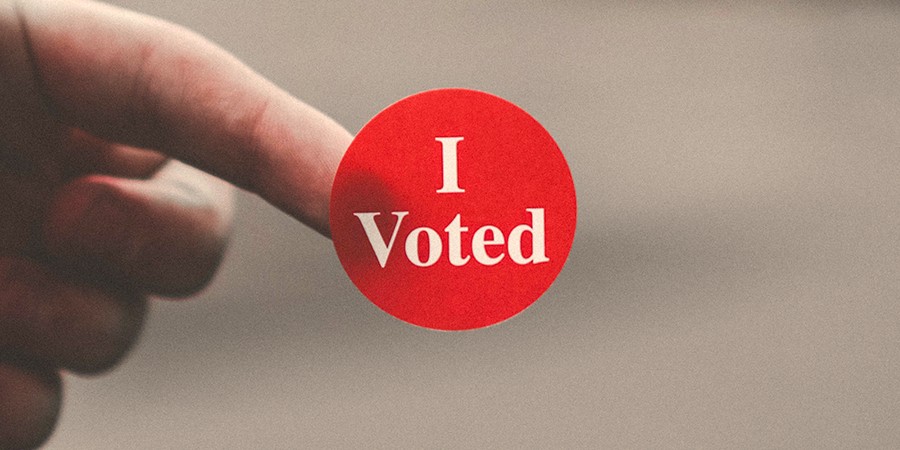
EPF is campaigning to put what matters to patients at the heart of EU health policy, and make health an issue that gets citizens to cast their votes and make a difference in the European elections to be held this year in May.

In this important pre-election period hopefully leading to positive change for patients and in health policy in the European Union post-2020, as part of its EU elections campaign EPF is calling for intersectoral action for health, and a fundamental change in Europe’s approach to healthcare access, to achieve universal health coverage and significantly improve quality of life and care for patients.

EPF has therefore identified five key ways in which the European elections can lead to positive change in patient communities. All are based on the five priorities detailed in our elections manifesto, which we also used to develop five powerful video testimonials of patients and help ensure their voice is heard.

One of these priorities relates to achieving healthcare access and universal health coverage. EPF believes this is fundamental to the achievement of the other health and wellbeing-related targets, such as reducing premature mortality, as well as the attainment of all other sustainable development goals and targets related to reduced inequalities, gender equality and elimination of poverty. Health can thus be regarded as a cross-cutting dimension of the UN SDGs.

The EU elections are approaching fast: please get involved, make an impact and ensure the patients’ voice is heard by policy-makers. If you belong to the 70% of Europeans who want the EU to do more for health (Eurobarometer survey, March 2017), join us now in spreading our manifesto, using the #europeforpatients hashtag, sharing and posting your support messages on social media as well as on our website www.europeforpatients.eu. Thank you!

If you wish to support our campaign, share any updates related to the elections, or other health-related priorities feel free to get in touch with us! Several patients with chronic conditions already took the time to share their stories with us. If you are a patient and have a story to tell, they are always welcome.

ALDA funds 10 most innovative actions to raise awareness

By ALDA

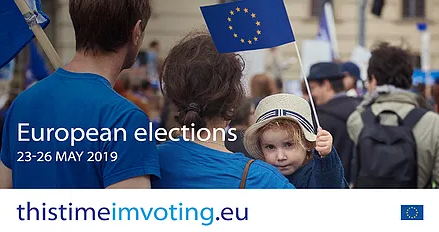
The upcoming European Parliament elections taking place in May 2019 are crucial for the future of the European project –for our future.

All over Europe, 18-year old citizens will be called to vote for the European Parliament. For thousands of people, it will be the first opportunity to exercise their right to vote.

We need you, to reach out to young voters and make it clear what is at stake in these elections. How can you make sure fellow young people know what they are called to vote for, how to vote, and the consequences of their actions?

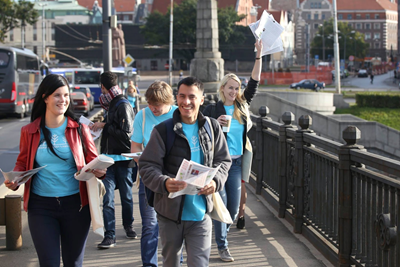
ALDA is offering 10 grants of  €300 each to young Europeans up to 21 years old, for the implementation of initiatives (street actions, online campaigns, etc.) to raise awareness of youth about the upcoming European elections, which can take place between February and April 2019.

Do you have a great idea on how to encourage fellow young Europeans to vote? Are you a European citizen up to 21 years old?

Send the concept of your initiative in .pdf (max 2 pages) to irene.zanetti@aldaintranet.org by 15 February 2019, clearly explaining:

  • how many people you will reach, and how
  • costs foreseen to implement the action (you will need to send us the invoices of costs incurred).

We will select 10 initiatives all over the EU, considering their creativity and potential of reaching a wide number of young Europeans.

On our side, ALDA is active on multiple fronts: we not only call for external actions but we are doing our best to provide and spread European facts as objective as possible.

Thanks to the Europe for Citizens programme, ALDA has been able to launch the “YOU4EU – Towards European Elections 2019” campaign. We are actively engaged in the implementation of social media campaigns in contrast to the rampant fake news and we are committed to spreading correct information about crucial aspects of the functioning of the Union such as the budget and the composition of the different Institutions. To do so, we produced different sets of infographics, each one dealing with a specific misconception, thus trying overcome stereotypes. Our aim is to realise a simple but effective anti-rhetoric to prevent radicalisation and finally leading European citizens to the polls.

We count on you to get all Europeans to have their say, for a stronger Europe! More information here.

ALDA – The European Association for Local Democracy, is dedicated to the promotion of good governance and citizen participation at the local level. ALDA focuses on activities facilitating cooperation between local authorities and civil society.

Vote Volunteering Vision Campaign

By CEV, the European Volunteer Centre

CEV  launches the Vote Volunteer Vision campaign in preparation of the 2019 European Parliament Elections building from the previous campaign we implemented in 2014. The campaign aims to:

  •      Support voluntary sector organisations in their advocacy work at national level by providing tools to be used in the interaction with the 2014 EP election candidates.
  •      Raise awareness about the role of the members of the European Parliament in strengthening the volunteer infrastructure in Europe.
  •      Draw attention to the need for an Intergroup on Volunteering in the European Parliament.
  •      Reveal future possible co-operations between MEPs and other volunteering stakeholders.
  •      Encourage citizens to vote and make decisions on their choice of candidates on the basis of EU issues that matter to them.

CEV has prepared a toolkit that will help volunteer centres and volunteer-involving organisations ask the EP candidates “What is your volunteer vision?”.  Candidates are invited to express their views on different volunteering policy areas. The candidates are also asked to sign a pledge to support the creation of an EP Intergroup on volunteering. Toolkit and pledge can be downloaded at this link https://www.europeanvolunteercentre.org/volunteer-vision.

CEV encourages all volunteering stakeholders to make use of the toolkit that can be personalised to include logos and contact details. Communicate with EP candidates to make sure the 5Rs agenda on volunteering in Europe is supported by elected MEPs!The European Volunteer Centre (CEV) is the European network of over 60 organisations dedicated to the promotion of, and support to, volunteers and volunteering in Europe at European, national or regional level. Through our network we work together to promote and support volunteering through advocacy, knowledge sharing and capacity building & training. In this way we reach out to the many thousands of volunteers and volunteer organisations in Europe as a source of support bringing the European dimension to their work.

The SDGtoolkit

By EEB

The SDGtoolkit brings together more than 300 tools ready for use including articles, presentations, social media activities, images, policy papers, monitoring and review tools, SDG coalitions and more. All the material can be researched for instance by country or SDG. The toolkit answers basic questions on the SDGs with the aim of inspiring national and local level organisations and getting them started. This toolkit aims to help NGOs in Europe to learn more about and work with the opportunities that the Sustainable Development Goals offer to the environmental movement.

These are some the latests uploads that you can check out in the toolkit:
• Germany: The 2018 Peer Review on the German Sustainability Strategy
• Germany: 2018 German shadow report: So_geht_Nachhaltigkei
• UK: Measuring up: How the UK is performing on the UN Sustainable Development Goals
• Engaging parliaments on the 2030 Agenda and the SDGs: representation, accountability and implementation
• Belgium: SDGs in Your Municipality
The SDG communicator
The UPR-SDG Data Explorer
The Human Rights Guide to the Sustainable Development Goals: Linking human rights with all Sustainable Development Goals and targets
Voluntary National Review Reports– what do they report?

2018 VNR reports:
• Greece: Full report + main messages
• Hungary: Full report + main messages
• Latvia: Full report + main messages
• Lithuania: Full report + main messages
• Ireland: Full report + main messages + CSOs position document
• Spain: Full report + main messages + annexes + CSOs position document

If you want to share a tool related to SDGs on our toolkit, please contact sonia.goicoechea@eeb.org.

The EEB is Europe’s largest network of environmental citizens’ organisations. We bring together around 150 civil society organisations from more than 30 European countries. We stand for sustainable development, environmental justice & participatory democracy.

Reclaiming EU research and innovation as a public good

By Jill McArdle, Global Health Advocates

EU-funded research and innovation has enormous potential to deliver a sustainable and equitable future, yet we have fundamentally distorted its purpose, prioritising innovation for commercialisation over innovation for society’s needs, writes Jill McArdle.

What is research and innovation for? Most would respond that it is for pursuing scientific excellence, the discovery of new knowledge and understanding, for seeking solutions to the most fundamental issues we face and helping us deliver on our international commitments like the Sustainable Development Goals and the Paris Climate Agreement.

Yet, at EU level, the major societal benefits are normally understood as competitiveness of our industries, creating jobs and economic growth. Indeed, the current EU R&I programme sits under the Competitiveness heading in the EU’s seven-year budget and is discussed by member states in the Competitiveness Council.

Other goals, such as sustainable development and excellence, are not absent, but they are mostly treated as tools in pursuit of this ultimate goal.

As civil society believing in the European project, we wonder whether today, this is the right orientation for R&I? We are told of course that we can pursue all these goals at once, but dig deeper and this response seems weak.

Civil society raised alarm bells when the Commission first announced its proposal to merge two of its three pillars: societal challenges with industrial competitiveness in the next hundred billion euro programme Horizon Europe (scheduled to begin in 2021). What was in dispute was not the presence of industry, but the blurring of competitiveness-oriented objectives with those aimed at addressing societal challenges.

This muddling of objectives raises serious questions of governance, transparency and accountability: Who sets the priorities? How can we be sure that sustainable development will not be subordinated to the goal of industrial competitiveness if they conflict?

This week the European Parliament adopted its position on Horizon Europe. While critical improvements were made in terms of climate action, disappointingly, the Parliament declined to put in place other concrete safeguards for sustainable development. There is no guarantee of funding for independent projects that will prioritise societal impact over competitiveness.

This means no assurance that publicly funded R&I can pursue all possible solutions to societal challenges, not merely those that spell profitability for companies. In agriculture, for example, will the programme fund new, relatively safer pesticides to be sold by agribusiness, or alternative pest management techniques that can be implemented by farmers for free?

Looking at governance too, the picture is not reassuring. Strong involvement of citizens and NGOs in setting research priorities can help ensure that sustainable development is not sidelined.

While the Parliament did acknowledge the importance of engaging with society, overall there was a failure to tackle the barriers faced by citizens and civil society organisations, such as lack of capacity and unfamiliarity with the programme. The Parliament, taking their lead from the European Commission, did not support the reintroduction of a dedicated programme for science and society which could have addressed these barriers.

At a concrete level, the Parliament also declined to promote access to the results of R&I. Take health, where the accessibility and affordability of new medicines are crucial to ensuring meaningful impact for society.

Yet proposed new measures, whereby beneficiaries of EU funding would be asked to consider how future medicines could be made accessible, were rejected. Is this surprising, given that health, like the rest of the societal challenges, will sit under the new “Global Challenges and Industrial Competitiveness” pillar?

Most disturbingly, the Parliament undermined Open Access commitments. Access to research results and research data should be a cornerstone of all publicly funded R&I, yet the Parliament chose to extend the list of reasons for “opting out” of open access, covering vague concerns from competitiveness to “security concerns” and “trade secrets”. The list is so broad it could easily be abused to avoid open access obligations.

The inclusion of the “innovation principle” in Horizon Europe is another stark example of how this orientation toward competitiveness and commercialisation is undermining sustainable development. This so-called principle is a tool invented by industry lobbies to undermine EU social and environmental regulations.

It seeks to assess regulations for their “impact on innovation”, rather than assessing innovation for its impact on our health and environment. Its supporters will tell you that this is essential for sustainable development. Yet this misunderstands something: we must always ask what impact innovation has on sustainable development, not the other way around.

We must make clear that R&I serves society and sustainable development first. In prioritising the public interest in this way, R&I will still bring new products and services that will benefit society and the companies who develop them.

Crucially though, it will also leave room for solutions that are not commercialisable, and for ambitious investment in neglected societal challenges where there is little market interest, while also ensuring these solutions are safe, suitable, accessible and affordable.

As we head into negotiations on Horizon Europe, we must urgently change how we view research and innovation: not through a narrow prism serving private interests, but as a public good capable of delivering widely shared societal benefit.

Global Health Advocates is a non-governmental organisation that focuses on engaging all sections of society to fight diseases that disproportionately affect people living in poverty, and are also the leading causes of people living in poverty. In particular, Global Health Advocates works towards the formulation and implementation of effective public policies to fight disease and ill health.  Established in 2001 as the Massive Effort Campaign, Global Health Advocates works in France and in India.

Newsletter from the SDG Watch Europe network –  JAN 2019

View this newsletter in your browser