News

What kinds of agriculture will help us reach the sustainable development goals? Those that help and those that hinder

By Peter Stevenson, Chief Policy Adviser Compassion in World Farming

The UN Convention to Combat Desertification (UNCCD) has said: “Our inefficient food system is threatening human health and environmental sustainability … The current agribusiness model benefits the few at the expense of the many: small-scale farmers, the essence of rural livelihoods and backbone of food production for millennia, are under immense stress from land degradation, insecure tenure, and a globalized food system that favors concentrated, large-scale, and highly mechanized farms.”

“The view has emerged that humankind will not be able to feed itself unless current industrial modes of agriculture are expanded and intensified. This approach is wrong and counterproductive and will only serve to exacerbate the problems experienced by the current mode of agriculture … there is a need to encourage a major shift from current industrial agriculture to transformative activities such as conservation agriculture (agroecology)” said Hilal Elver, UN Special Rapporteur on the right to food.

At the 10th Global Forum on Food and Agriculture in 2018, the Director General of the UN Food and Agriculture Organization (FAO), José Graziano da Silva, said: “FAO estimates that more than half of the world’s rural poor are livestock farmers and pastoralists … We need to make sure that smallholders and pastoralists will not be pushed aside by large capital intensive operations.”

The FAO points out that industrial livestock production “may occur at the expense of diminishing the market opportunities and competitiveness of small rural producers”. The World Bank has recognised that intensification of livestock production carries “a significant danger that the poor are being crowded out.”

The High Level Panel of Experts on Food Security and Nutrition of the Committee on World Food Security states that “the social benefits of agriculture can be eroded as production becomes more concentrated and intensive. Intensive agricultural systems are associated with negative effects on employment, wealth distribution, ancillary economic activity in rural areas [and] service provision in rural areas (such as schools and health facilities).”

Industrial animal agriculture undermines food security by using human-edible crops as animal feed.

Industrial livestock production is dependent on feeding human-edible cereals and soy to animals who convert them very inefficiently into meat and milk. Globally 36-40% of crop calories are used as animal feed.

Livestock’s huge demand for feed and land drives both the expansion of cropland and pastures and the intensification of crop production

Intensification: Industrial livestock’s massive need for feed has fuelled the intensification of crop production. This, with its use of monocultures and chemical fertilisers and pesticides, has led to overuse and pollution of ground- and surface-water, soil degradation, biodiversity loss,and air pollution. In short, industrial animal agriculture undermines the key resources on which long-term productive farming depends.

Expansion: Increasing demand for land:

  • to grow soy and cereals for the rising number of industrially farmed animals, and
  • as pasture for cattle

Leads to expansion of farmland into forests and savannas with massive loss of wildlife habitats and biodiversity as well as release of stored carbon into the atmosphere.

Mammals, birds, insects – all declining

Population and species extinctions are proceeding rapidly and a sixth mass extinction may already be underway. Globally vertebrate wildlife populations have declined by 60% between 1970 and 2014.A UN report states that “biodiversity loss is occurring at an alarming rate” and that habitat loss from unsustainable agriculture is among “the primary drivers of this assault on biodiversity”. A 2019 FAO report states that many key components of biodiversity that support agriculture are in decline and that the drivers for this include the overuse of harmful external inputs and the intensification of agriculture.

Ever more forests and savannas are being destroyed to grow soy and cereals for industrially farmed animals. This is eating into wildlife habitats driving many species – including elephants and jaguars – towards extinction. Agricultural intensification – in particular the high use of pesticides and monocultures and habitat loss – is the main driver of population declines in birds, pollinators and other insects.

Dramatic rates of loss may lead to the extinction of 40% of the world’s insect species over the next few decades. This would be a disaster as insects are of “paramount importance to the overall functioning and stability of ecosystems worldwide”. They provide pollination, natural pest control, nutrient recycling (and so build soil quality) and decomposition services. Loss of insects leads to declines in birds, frogs and lizards as they depend on insects for their food.

Breaching planetary boundaries

Research has established nine planetary boundaries which, if crossed, could generate irreversible environmental changes and drive the planet into a much less hospitable state. In two cases – (i) biodiversity loss and (ii) nitrogen and phosphorus flows – we have not only crossed the boundary but have entered a high-risk zone. Industrial livestock production has played a major part in this. Nitrogen and phosphorus are primarily used in fertilisers much of which are used to grow animal feed crops. The demand for huge quantities of feed has led to biodiversity loss through the intensification and the expansion of arable production.

“High-input, resource-intensive farming systems, which have caused massive deforestation, water scarcities, soil depletion and high levels of greenhouse gas emissions, cannot deliver sustainable food and agricultural production. Needed are innovative systems that protect and enhance the natural resource base, while increasing productivity. Needed is a transformative process towards ‘holistic’ approaches, such as agroecology, agro-forestry… and conservation agriculture, which also build upon indigenous and traditional knowledge.” UN Food and Agriculture Organization, 2017

Deforestation

The FAO states that agriculture is the most significant driver of global deforestation. The UN states that deforestation is “primarily due to the conversion of forest to agricultural land, which is responsible for an estimated 73% of forest loss in tropical and subtropical regions”.

Innovative production Agroecology

Agroecology seeks to enhance productivity by supporting and harnessing natural processes such as beneficial interactions between different plants and animal species. Olivier De Schutter, former UN Special Rapporteur on the right to food, states that agroecology mimics nature instead of industry.Diversity is a core principle of agroecology; diversity in time (e.g. rotations) and in space (e.g. intercropping; integrated crop-livestock-forestry systems). Moreover, diverse foods are at the heart of nutritious diets.

Resource-conserving agriculture increases yields in developing countries

Studies show that resource-conserving agriculture can deliver substantial productivity gains. One study examined the impact of 286 projects in 57 poor countries.The projects included integrated pest and nutrient management, conservation tillage, agro-forestry and rainwater harvesting. These projects increased productivity on 12.6 million farms. The average crop yield increase was 79%, while the African projects showed a 116% increase in crop yields. All crops showed water use efficiency gains. Of projects with pesticide data, 77% resulted in a decline in pesticide use by 71% while yields grew by 42%.

An analysis of 40 projects in 20 African countries has been carried out. The projects included agro-forestry, conservation agriculture, integrated pest management, livestock and fodder crops. Crop yields more than doubled on average over a period of 3-10 years.

Read the whole report here
THE YOUNG PEOPLE TAKING BACK DEMOCRACY

By EMILY MACINTOSH, EEB

What does democracy mean to you?

Democracy means everyone gets a say, no matter gender, race or social class everyone gets a say in how their country is run.

What do you think are the main societal challenges facing young people today?

Climate change. Climate change is the biggest problem for our generation, something we didn’t start but we are left to fix, we need to change what we do and how we live to tackle this as a generation.

What makes you hopeful for the future?

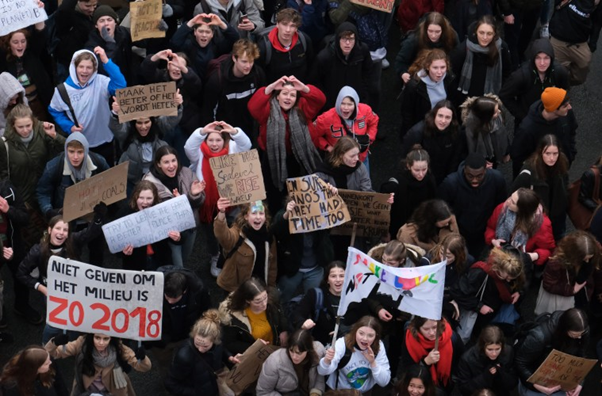
How determined our generation is. Millions of young people took to the streets for a climate action protest, imagine what we can do when we are the ones running our countries. We need our will power and determination more than ever.


Georgiana Teslaru, Ireland

What does democracy mean to you?

To me, democracy is a government obeying to the Constitution and letting citizens decide for themselves and make their own decisions, whether they’re sensible or not. Democracy means having freedom, while still complying with the law. It means equality towards gender and sexuality. It is a place where everyone has a voice for change and where all opinions are valued. However, our society, at times, stops people from being heard and expressing their own opinions. Democracy allows citizens be who they want to be, so why are millions of people still terrorised and ashamed of who they are? It is still a human right to have the freedom of expression, thought democracy, but most importantly the right to a fair and free world.

What do you think are the main societal challenges facing young people today?

Today’s society is affected by many problems, however our generation is greatly impacted by the effects of climate change. Young people are threatened by it and it is truly heartbreaking witnessing the amount of people that still find it difficult to believe that climate change will be our downfall. It doesn’t matter how many different properties we own, in all these fancy and aesthetic places, as at the end of the day, we only have one home and that is our amazing and beautiful Earth. It is our responsibility to keep it clean and safe, not only for us, but for all other “roommates” in which we share Earth with. Everyday, we destroy our home a little bit more, but together, small step by small step, we can change a future that is otherwise extremely obvious. The first real problem our society is facing is this sense of oblivion, where we just choose to ignore problems that are right in front of us and live in this enormous lie and denial. It is my goal, to let as many people as possible know the overwhelming effects of global warming and the easy steps to make a real change.

What makes you hopeful for the future?

In a world full of problems, there are always people willing to fight for our rights and that is why, I believe that we will make the real and significant change. Last March, millions of young people in 123 countries striked against climate change. Strike 4 Climate is an initiative taken by a girl my age, Greta Thunberg, and it just shows that if one person, inspired 123 countries to strike, can we just imagine what impact would have if more people were willing to help Earth recover from the great mistakes past generations made? We have 11 years to act before it is too late, but I believe in us. History taught us that us humans, we have this amazing ability to recover from our own mistakes, and we can and have to recover from this one. Countries are starting to ban single use plastic and others are starting to build houses with the plastic waste. These actions, give me hope that one day the problems we are facing today will only be something that future kids will have to learn in history lessons, and not something they will have to actually face.


Giannis Sfakianakis, 22, Greece

What does democracy mean to you?

As a Greek, democracy (demos+crato) means a lot to me. It means that people (demos) hold the power (crato) to express what they want, to shape the society how they envision it and to be the voice, not just the echo.

What do you think are the main societal challenges facing young people today?

Today, we live in a world that is getting more connected than ever before. Yet, at the same time we feel more and more disconnected from others. What I see as a challenge is how young people, first of all understand who they are, what values drive them and further on how they can stay loyal to them.

What makes you hopeful for the future?

As the world is becoming smaller and smaller every day, it is easier for young people like me to find more opportunities. Through this, we can get to know more of the beautiful continent we live in, learn, become wiser and implement all this new knowledge back home.


Martha Carey, Ireland

What does democracy mean to you?

Democracy to me means voting equality among citizens. It means that the inhabitants of a country can all make a shared decision in who represents and leads the community. It not only creates a feeling of equality among the people but encourages political candidates to work harder and improve conditions to secure votes leading, overall, to a better society. I have grown up in a place where democracy is normal and widely accepted however some children are not so lucky and are subjected to the views and actions of rulers who don’t represent their best interests. Democracy is all about fairness and doing what is best for the community at large. Without it, only the most powerful and loudest views are heard.

What do you think are the main societal challenges facing young people today?

I think the main societal challenge that young people face today is climate change and everything which threatens to come with that. Rising sea levels, decreased food security and extreme weather are only a few of the problems that we will face in the coming years and solving them will be the greatest challenge of our generation. We will have to drastically change the way that we navigate daily life from our consumption of unsustainable foods to our production of greenhouse gases. These changes will have to take place quickly and be widespread to repair or prevent the damage which has already been done and this I believe is our greatest societal challenge.

What makes you hopeful for the future?

What gives me hope for the future is that, around the world, young people are showing that they care about the future of the planet. The Friday school climate strikes and protests worldwide show a coming together of young people against the current mode of operation and signifies that we not only want change but need it. Seeing young people from around the world coming together to demand that something be done to protect our shared climate is truly inspiring and to me sparks immense hope.

Stand Up For Integrity – 2019 EU Elections Pledge

By Matilde Manzi, Transparency International EU

Putting Integrity First

The European Parliament elections this year are an opportunity for democratic renewal, a renewal that places integrity, openness and fairness at the heart of the European Union. Transparency International is calling on candidates for the European Parliament and the Presidency of the European Commission to commit themselves to this renewal, in their own efforts and in the institutions that they shall govern.

The authors of the EU’s founding treaty were determined to “eliminate the barriers which divide Europe”. Over 60 years later, corruption remains one of the main barriers to realising the original vision of a Union built on the rule of law, democratic cooperation and social justice. Corruption is a barrier to increased investment and prosperity, to fair competition, to innovation, to sustainable development, to improved security, and to greater trust in institutions. Perhaps most importantly, it also fuels the growing inequality that is one of the biggest barriers that divide the people of Europe today.

The EU has a long history of promoting good governance, the rule of law and anti-corruption reform, notably as part of its enlargement to the south and east. The reforms carried out as a condition of membership have undoubtedly helped to reduce corruption and improved the lot of hundreds of millions of citizens who are most vulnerable. These reforms have also inspired similar initiatives across the Union, as no Member State has remained untouched by serious and high-level corruption scandals. But these gains are fragile and reversible. They need constant attention and renewal.

That is why Transparency International has agreed an ambitious agenda for the next five years that would protect the rule of law in the EU and those who wish to defend it ; that would prevent corrupt individuals benefiting from the freedoms enjoyed by law-abiding EU citizens; and that would make the EU institutions an example to others of how to legislate with integrity and transparency.

Our agenda is ambitious, yet constructive and achievable. As part of a wider programme of reform they would show how the European Union is, first and foremost, a means to protect the fundamental rights of its citizens and remove the barriers that frustrate their potential.

These suggestions for improvement are born of 25 years’ experience in the fight against corruption, and a deep and abiding commitment to our mission. We affirm that tackling corruption is inseparable from the protection of the most vulnerable people in our society and is strongly connected to the defence of human rights. It is cornerstone to achieving the transition to a more sustainable society and is central to the rule of law and democratic institutions.

Please join us in renewing the EU’s values and ensuring that integrity is at the core of its mission.

Transparency International wants the European Union to:

  • ENFORCE THE RULE OF LAW IN THE EU
  • PREVENT CORRUPT INDIVIDUALS AND THEIR ILLICIT MONEY FROM ENTERING THE EU
  • SUPPORT AN INDEPENDENT EU ETHICS BODY
  • SUPPORT LEGISLATIVE TRANSPARENCY

Pledge for European Parliament Candidates

Transparency International calls on Candidates in the European Elections to pledge the following:

  • To be transparent and ethical in all my parliamentary activity. I will therefore publish details on the use of my allowances, only accept meetings with registered lobbyists and publish my meetings with them online.
  • To ‘cool-off’ after leaving the European Parliament. Meaning that I will not lobby for an organisation on the EU Transparency Register while I still receive the transitional allowance.
  • To support the creation of an independent body for ethics oversight that monitors conflicts of interest, the revolving door and lobby transparency.

If you are a candidate for the 2019 European Elections and want to support ‘Stand up for Integrity’, please click here and fill in the form.Want to know more? Get in touch with Matilde Manzi, mmanzi@transparency.org

Ecofeminist scorecard

By Jane Kenny, WECF

We have witnessed groundbreaking environmental campaigns in recent years: Greta Thunberg’s #fridaysforfuture fervour, the #imadeyourclothes anti-fast fashion campaign and the #environmenstrual action, as well as the #breakfreefromplastic movement. Young womxn have mobilised in immense numbers for these environmental issues, but there is another call to action on the horizon.

The European Parliamentary Election 2019 is your next chance to stand up for the protection of equality, climate and our health. We, at WECF, decided to cut through the jargon in party manifestos and policy statements to bring you a manifesto scorecard which ranks party commitments to a gender-just and sustainable Europe. We want the #ecofeministsscorecard to be the next campaign championed by young womxn in Europe. As Greta Thunberg’s small beginnings have shown us, an enormous amount of impact can be made through collective action.

But what exactly are we demanding? Which ecofeminist issues are important to us? What more needs to be done?

  1. Stop tampons littering our beaches: We want a reform of the laws on sanitary products.

While it is welcome that some of us are already moving toward sustainable alternatives, the majority of us still rely on disposable products. All too often these end up being flushed away, making their way into our oceans and onto our beaches. A recent EU commission report provided the damning statistic that every fifth item of single use plastic on our beaches is a disposable sanitary product. If period taboos weren’t bad enough, we now also being branded plastic polluters.

The industry continues to resist attempts to accept responsibility for an ecological clean up; with threats that consumers would end up bearing the costs. To add insult to injury, we still have no EU-wide end to the tampon-tax. The EU has so far reached the unhappy compromise of basic labelling requirements on products. This is yet again shifts the responsibility and guilt onto consumers. Worse still, the whole debate on sanitary products has been dogged by discomfort and awkwardness around this “taboo” topic. Politicians have been unwilling to explore the topic in greater depth out of sheer embarrassment.

It’s 2019, period taboos cannot continue to hold back accessibility to sanitary products. We want to see a Europe in which sustainable alternatives like menstrual cups are made more affordable and accessible to all menstruators.

  1. No more messing with our hormones: We want to see stricter controls on the use of chemicals which threaten our reproductive health.

You might not have heard of Endocrine Disrupting Chemicals (EDC’s) but they’re everywhere in your daily life. They are found in your cosmetics, plastics bottles and the pesticides carried on your fruit and vegetables. A mounting body of evidence is showing how these chemicals are wreaking havoc with your natural hormones. Studies have shown links between exposure to EDCs and the increased risk of breast, ovarian, and endometrial cancers, not to mention impaired fertility and disorders such as endometriosis.

You might be shocked to know that the EU has been reluctant to address these health risks and have instead been prey to vicious lobbying by the chemicals industry. We want to see the EU responding with robust action against the use of these chemicals instead of further delays. Our politicians are not only thwarting protection for our reproductive health but also the well-being of the most vulnerable; unborn babies, with the impacts of EDCs being most detrimental for development of highly sensitive fetuses.

  1. Slower fashion for all: We want Europe to call time on lax controls on the fast fashion industry.

Another important ecofeminist issue is the fate of womxn in the fast fashion industry. In just a number of decades, European clothing consumption has gone up by 40%. Our insatiable consumption has made us turn to cheap, disposable clothing which often ends up being thrown away. With 80% of garment workers being womxn worldwide, womxn are bearing the brunt of our consumption. They work with toxic dyes, are confronted with sexual abuse and work cripplingly long hours – all for an unlivable wage.

EU importer’s exploitation of cheap labour and low environmental standards in the Global South is continuing to go unchecked. We still do not have any kind of multilateral agreement on human rights and business practices which could secure greater implementation of checks on outsourcing. An agreement must also be accompanied by a change to our linear model of “consume-wear-dispose”. Unless we mobilise for this change, we will continue to read outrageous headlines such as that of the Burberry scandal. The EU’s next step must be to “slow fashion”; to introduce greater checks on importers, to fund research into sustainable fabrics and to enforce collection schemes to further realise our circular economy.

If European consumers wore clothing twice as often as they currently do, emissions from the garment industry could be 44% lower. Simple actions from consumers can drastically improve this waste crisis. We stress, however, that much greater focus must be put on the actions of the industry itself. Not all the blame can be apportioned to consumers.

But let’s get back to what you can do right now: get informed and getting voting.

The importance of voting in this election cannot be overstated. With the total inertia and chaos in the midst of the Brexit mayhem, issues such as the endangerment of our reproductive health, our role in responding to the apocalyptic IPCC report on the impacts of a mere 1.5 °C rise in temperature and persistent underrepresentation of womxn in STEM sectors are being swept under the carpet. We are not powerless in this mess. Get informed by reading our scorecard and register to vote in this election to decide the fate of womxn not only across Europe but globally. #EuropeNeedsECOFeminism.

More information on: http://www.youngfeminist.eu/2019/04/how-to-vote-for-an-ecofeminist-europe/

CIRC4Life

By Make Mothers Matter

CIRC4Life is a project funded under the Horizon 2020 programme with 17 partners from across 8 EU countries. It aims to develop 3 business models in 4 sectors based on the circular economy. It will include:

  • co-creation of products and services,
  • sustainable consumption, &
  • collaborative recycling and reuse.

The co-creation of Products/Services model will bring end-users closer to the design and manufacturing phases by identifying consumer preferences via big-data online mining product reviews and evaluating product specifications and prototypes via Living Labs to customise end-user requirements.

The sustainable consumption model will develop a method to calculate the eco-points of products based on the outcome of FP7 myEcoCost project, assess product environment footprints (PEF), provide a traceability solution to monitor product’s sustainability along the value chain, and support end-users and stakeholders to actively implement the circular economy via awareness raising and knowledge sharing activities.

The collaborative recycling/reuse model will develop a system for stakeholders to interact with each other to facilitate the use/reuse of end-of-life products and reduce waste, and implement the eco-credits awarding scheme to encourage people to recycle/reuse.

This project will be demonstrated at a large scale in 4 sectors: domestic and industrial lighting products, vegetable farming and food, meat supply chain, and recycling and reuse of computer tablets. Demonstrations will be developed in the UK (Cornwall and Berkshire Counties) and Spain (the regions of Murcia, Basque Country and Valencia).

This project has received funding under the European Union’s Horizon 2020 research and innovation programme under Grant agreement No. 776503.

For more Information please visit the project website

ABOUT THE FAIR TIMES CAMPAIGN

By FTAO

The Fair Times campaign is a pan-European campaign coordinated by five civil society network organisations FTAO (Fair Trade Movement), IFOAM-EU (Organic Agriculture), CIDSE (Catholic development agencies), ECOLISE (community led initiatives on climate change and sustainability), and RIPESS-EU (Social Solidarity Economy) calling for a fair and sustainable European consumption and production agenda. The campaign is centred on a special edition of ‘The Fair Times’ newspaper from 2024, the end of the next European Parliament term. The newspaper aims to provide examples of policies that the EU could implement regarding a sustainable consumption and production agenda and hopes to inspire candidates to commit to taking action if elected. The campaign launched in  mid-April and will run until the elections at the end of May.

You will be able to read ‘The Fair Times’ and find out more about the campaign on www.thefairtimes.eu.

HOW CAN YOU SUPPORT THE CAMPAIGN?

We welcome all organisations that are passionate about achieving sustainable consumption and production at local, national and European level to read ‘The Fair Times’ and share it. Feel free to share about the campaign on your various communications channels: website, newsletter, and social media. Please use the campaign hashtag #TheFairTimes so that your action appears on the campaign website. More info on the communication strategy of the campaign can be found here

WANT TO DO MORE?

If you would like to go a step further and contact MEP candidates in your constituency, you’ll find a detailed campaign guide via this link, which outlines how to find and contact MEP candidates, how the campaign is coordinated at European and national levels, and how to communicate about your meeting.

Please do not hesitate to contact us if you have any questions or require more information. Email advocacy@fairtrade-advocacy.org.

Alliance 4 Europe

By Omri Preiss

We would like to introduce you to a new initiative set up to facilitate coordination and collaboration among civil society, which may be of interest to you.

Alliance 4 Europe is a newly founded organisation that set out to be a service-provider and capacity-building platform for pro-European campaigns. Ahead of the European elections on 23-26 May, we aim to facilitate coordination as well as provide access to campaign tools, materials and information among pro-European campaigns and civil society groups in order to increase pro-European voter turnout. Please find more information in the link above.  We have a developed a series of platforms and tools we would like to share with interested organisations.

Alliance 4 Europe has set up a tool and content sharing platform for civil society partners to use, the EU Wiki. The platform enables partners to access campaign tools, content, and material uploaded by like-minded partners. This may be useful apps, toolkits, visuals, data and research, and a common calendar across a variety of different themes.

This would allow partners to extend their message and amplify their reach ahead of the elections, leading to a more democratic pro-European outcome in the elections, and greater civil society coordination and collaboration beyond. It would also allow activists to access tool and material they could use in their own activities. Material is shared based on a Creative Commons 3.0 framework,

For more information, and to request to join the Wiki, please get in touch and send an email to wiki@alliance4europe.eu with a brief outline of your activities and your plans ahead of the elections.

Feminists at UNEA-4 Continue the Call for the Right to a Healthy and Sustainable Environment

By Women’s Major Group

Reflecting on the outcomes of the 4th Meeting of the United Nations Environment

Assembly in Nairobi, Kenya (UNEA-4), the Women’s Major Group offered the following

Statement: Feminists at UNEA-4 Continue the Call for the Right to a Healthy and Sustainable Environment.

Nairobi, Kenya. The conclusion of UNEA-4 saw a landmark resolution to promote gender equality and the human rights and empowerment of women and girls in environmental governance. The Women’s Major Group welcomes the commitment to strengthen the gender dimension of environmental policy and the resolution’s recognition of the importance of protecting human rights. We are particularly pleased that the resolution specifically invites member states to establish gender criteria for national environmental projects and programs, to recognize gender equality and the role of women and girls as sustainability change agents, and to support capacity-building to enhance women’s active and meaningful participation in decision-making.

We welcome the mobilization of data requested of the UNEA Executive Director, but caution that this work must include access to information and participation by civil society and the Women’s Major Group, which is not currently stipulated in the text. As countries report back on their progress at the next UNEA meeting in 2021, we expect to see meaningful progress and accountability for their commitments made at UNEA-4.

We regret that member states could not agree on the importance of protecting women human rights and environmental defenders, despite this having been articulated throughout the negotiations. This formal recognition is long overdue. States must seize every opportunity, in UNEA and in other UN fora, including the Human Rights Council, Framework Convention on Climate Change, and the High-Level Political Forum, as a matter of urgency to protect environmental human rights defenders – including those who are women and indigenous peoples – and the right to a healthy environment. The persistent absence of this recognition undermines the vision and commitments otherwise agreed upon by member states, and UNEP’s 2018 environmental defender policy. We listened with extreme concern to the United States, in its closing remarks, as it refused to acknowledge any reference to the Convention on the Elimination of All Forms of Discrimination against Women (CEDAW) in the adopted resolution. The CEDAW is ratified by almost 190 UN Member States, with the exception of a few including the USA. Even Saudi Arabia and South-Sudan have ratified. This is a stain on the USA.

Unfortunately, in the resolutions concerning deforestation, geoengineering, and plastic pollution, issues that negatively and disproportionately affect local communities and women, member states largely maintained business as usual with weak or no meaningful commitments. We are dismayed at other resolutions that would have called attention to the harmful practices that affect women’s health, livelihoods, and planet. We strongly appreciate the draft resolution put forward by the EU on deforestation and agricultural supply chains. The US and Brazil undermined the spirit of this effort throughout until the moment it was withdrawn. It is past time to acknowledge that agricultural expansion is responsible for around 80% of deforestation, of which one-third is internationally traded. A strong resolution on that topic would have demonstrated political will and leadership in halting deforestation by 2020 – a target which has already been agreed under the 2030 Agenda and Aichi Target 5. We are thus deeply disappointed by the lack of ambition and obstruction in the negotiations on this issue, and the resolution’s ultimate withdrawal. If we don’t commit and take actions to halt deforestation and forest degradation today, we will not be able to ensure food security because healthy ecosystems are the basis for sustainable agriculture.

We are dismayed that due to strong resistance from a few high-emitting fossil producing countries, like the US and Saudi Arabia, UNEA-4 also lost a vital opportunity to reinforce precautionary global governance of geoengineering at the UN, building on existing moratoria in the Convention on Biological Diversity and London Convention/Protocol.

A resolution on marine plastic litter proposed by Norway, Japan, and Sri Lanka proposed ambitious language to halt the plastic crisis by strengthening international governance, including the consideration of a new legally binding agreement. However, strong opposition led by the US delayed progress at the scale and urgency that the plastic pollution crisis requires. Similarly, a resolution on single-use plastics proposed by India was weakened. We join vocal proponents – like the Pacific Islands States, Philippines, and Malaysia – in urging countries to take meaningful action to address plastic pollution between now and UNEA-5.

Women and people all over the world continue to suffer from the impacts of failed policies and lack of action in effectively tackling climate change, air, soil, and water pollution, and unsustainable consumption and production. At UNEA-4, we saw a continuation of business as usual. As feminists, we continue to advocate and interject our analysis for women and the planet.

We will continue to call for the Right to a Healthy and Sustainable Environment.

COMBATTING DISCRIMINATION AND HATE SPEECH IN ELECTION CAMPAIGNS

By Equinet

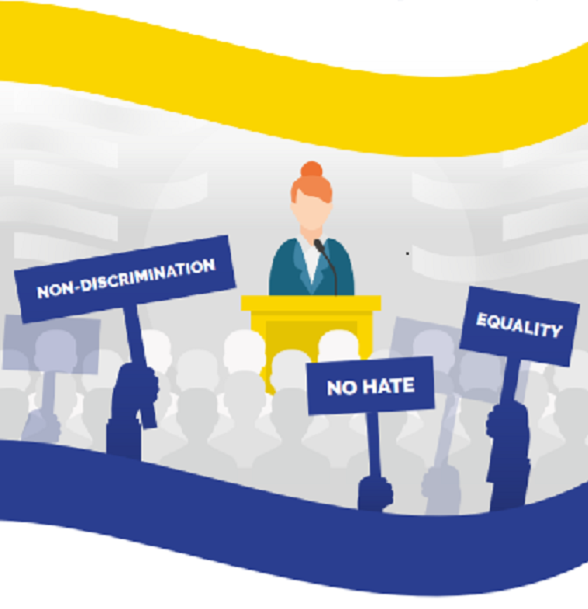
Ahead of European Parliament elections in 2019, as well as continuous elections happening at local, regional and national level around Europe, Equinet has developed a recommendation to be considered by political parties, candidates and media outlets (including social media) which focuses on the general principle of equality, prohibition of discrimination, tackling hate speech, addressing sensitive topics and promoting equal representation on electoral lists.

Feel free to share it far and wide.

Non-discrimination and equality are cornerstones of European democracies. Election campaigns are crucial testing grounds for commitment to these values, so it is worrying to see so many of them being increasingly marred by scapegoating, discriminatory language and hate speech across Europe. This causes harm to ordinary people, affecting their dignity and respect at the very least, if they are not also alienated or even attacked. It is clear that discriminatory language and hate speech can also damage the cohesion of society and lead to a downward spiral of intolerance and insecurity.

Politicians have a particular responsibility in this regard because of their capacity to exercise influence over a wide audience. Political rhetoric is a powerful tool for change and strongly protected by provisions for freedom of expression as an essential democratic right. However, if used in a hateful and discriminatory manner, it can cause widespread intolerance and even hate crimes. Politicians should therefore use their right to free speech responsibly, and promote their electoral programme fairly and respectfully.

The media, including social media, also has an important role to play to avoid amplifying discriminatory messages, especially when reporting on language that amounts to hate speech. With due explanation and critical reflection, the media can ensure a healthy and inclusive public debate during election campaigns.

Every individual has the right to equality and freedom from discrimination. Equality bodies are independent state institutions which offer support to any individual who has experienced discrimination, as well as promote equality and counter discrimination and harassment more generally. As the European Network of Equality Bodies mandated to act as the expert voice of equality bodies to advance equality in Europe, Equinet has developed this Recommendation to promote election campaigns which are free from discrimination and hate speech.

Our recommendation is to be considered by political parties, candidates and media outlets (including social media), and focuses on the general principle of equality, prohibition of discrimination, tackling hate speech, addressing sensitive topics and promoting equal representation on electoral lists. It is an ode to the importance of equality as a common European value, demands respecting equal treatment and non-discrimination at all times, and calls upon the aforementioned to respect the founding values of our democracies and our common constitutional traditions.

Download Equinet Election Recommendation: (ENG), (HR), (RS), (TR), (HU), (ES)

The “Good Leadership” Campaign

Together with the Recommendation, Equinet launched a social media campaign on 20 March on what it means to be a good leader under the hashtags #GoodLeadership and #ElectHope. This campaign aims to highlight core values that equality bodies promote in their daily work to make the world more equal such as respect, solidarity and justice.

What can you do?

Participate in the campaign that we will launch on our Twitter and Facebook accounts (@EquinetEurope) by:

  • Printing the ‘’A good leader…’’ image and filling in the empty space with a description that reflects the values you believe in.
  • Taking a photo of yourself with your sign and sharing it on your social media accounts, referencing the campaign hashtags and asking your friends and colleagues to do the same.
  • Bring it to the attention of allies and friends online by tagging their accounts and retweeting the pictures they publish.

FOR A HUMANIST EUROPE – 2019 EU ELECTIONS CAMPAIGN

By the European Humanist Federation

Between 23 and 26 May, European citizens will be called to vote in the European elections.

In many countries, these elections are considered inferior elections and campaigns often focus on national politics or on expressing discontent towards the government. However, the outcomes of European elections are fundamental as they will shape the composition and the work of the European Parliament, thereby shaping EU policies for the next 5 years to come. Furthermore, while the Member States nominate the European Commissioners, the European Parliament has its say via the consent procedure foreseen in the treaties.

Memorandum for the European elections

As humanists, we feel that the question is not the scope of European competences per se, but rather how our values can remain the basic drivers of European integration. This memorandum proposes a vision of a more humane EU that finds solutions to overcome the growing gap between its values and the policies it pursues. A Europe that is truly based on freedom, equality, solidarity and human dignity.

Because the EU is one of our main partners and because we want its action to fully embrace its fundamental values and principles – which, as expressed in article 2 of the treaty establishing the EU, are very much humanist values, we produced a humanist Memorandum for the European elections making a number of proposals in the following 6 key policy domains:

  1. Rule of law and democracy
  2. Civil society
  3. Fundamental rights and freedoms
  4. Equality and social justice
  5. Academic freedom and technology control
  6. Solidarity with the world

Our memorandum is available in English and in French

Manifesto for a humanist Europe

We also drafted a shorter document: our humanist manifesto for a Europe that truly Respects Freedom, Equality, Solidarity and Human Dignity.

This manifesto sums up the 14 key priorities where our memorandum proposes EU action:

  1. Preserving the rule of law and democracy
  2. Civil society as a counter-power and key promoter of European values
  3. Protect a secular vision of Europe
  4. Defend freedom of thought for everyone
  5. Defend freedom of expression
  6. Free and pluralist media as a backbone of citizen emancipation
  7. Freedom of choice, a building block of human dignity
  8. A society that values all people for who they are
  9. No human dignity without social justice and fairness
  10. Secular and public education as a condition for equality
  11. Scientific research and technology assessment
  12. A common immigration policy, based on solidarity and responsibility
  13. A strong Europe promoting peace and human rights on the world stage
  14. Solidarity with future generations: climate change and sustainable development

The manifesto is available in English and other languages.

HELP SPREAD THE MESSAGE!

Are you interested in helping us spread our messages and push humanist values into debates leading to the European elections?

Follow our campaign #HumanistEurope and spread our 14 animations on Facebook and Twitter. Should you want to translate these visuals, get in touch!