News

ACADEMY OF CHANGE – for a democratic and sustainable transformation

BY SDG Watch Europe

We are pleased to share with our readers the training course Academy of Change, a great opportunity for young people to gain knowledge and tools for creating sustainable transformation.

The Academy of Change is a training course for young people who want to work on climate, social and economic justice, get skilled in methods of change and become part of a young international network.

The course is co-initiated by our members Nyt Europa, Organization Earth, EEB, Oxfam IBIS, supported by other organizations.

WHEN?
The course takes place from end-November 2021 to end-January 2022, consisting of 7 sessions of 2-3 hours. 

WHERE?
The course will have a hybrid format. It will be possible to participate online from any location or physically in Copenhagen for those living in Denmark. 

WHY?
You will get knowledge of theories and movements within sustainable societal transformation – you will become a change-agent yourself!

For more information, please visit the website.

To sign up and read the full programme, click here!

New EU Forest Strategy for 2030

By SDG Watch Europe

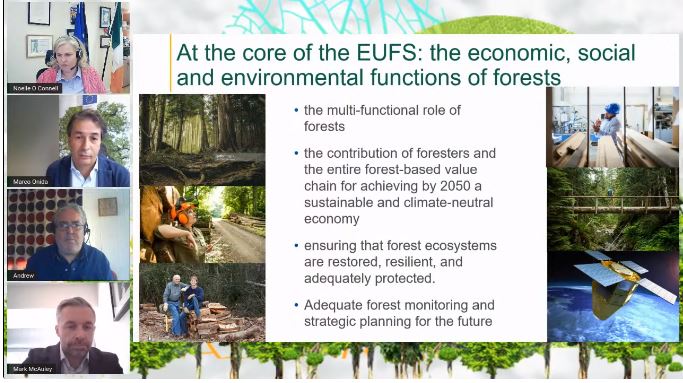
This morning, we participated in an event organized by the European Movement Ireland and European Commission Representation in Ireland.

The event was very illustrative, as it focused on the goals and benefits of the New EU Forest Strategy, also acknowledging the issues and shortcomings of the Strategy.

About the EU Forest Strategy:

  • It aims at improving the quality and quantity of EU forests.
  • It aims at strengthening forest protection, restoration and resilience
  • It recognizes the value that forests have on society, economy and environment
  • It values the need for greater reforestation, and the benefits that it would bring

We also learned some interesting facts:

📍Irish forests absorb 10% of all of EU’s Co2 emissions 🇮🇪
📍Using forests as carbon sinks requires substantial investments and efforts
📍Forests in Ireland provide 12.000 jobs, achieved on the base of planting productive forest

The event also called upon some of the current issue related to the Strategy:
❌EU forest observation is not linked to binding indicators
❌Absence of an EU forest law
❌Forestry remains in the remit of Member States to do as they wish

Pandora Papers: How long before we have open company registers?

By Access Info Europe

Helen Darbishire, Director of Access Info Europe, reflects on what the Pandora Papers tell us about anti-corruption and integrity instruments in Europe, and calls on the European Commission to move urgently on opening up company registers. Helen is a member of the Steering Committee of the Open Government Partnership, and is Chair of the UNCAC Coalition, a global civil society network working to combat corruption.


Madrid, 4 October 2021 – The Pandora Papers leak reveals, once again, that the mega rich are using legal loopholes to avoid taxes and the corrupt are transferring money out of poorer countries into more developed ones without proper controls.

Much of this is preventable: we know what needs to be done to track illicit financial flows, to recover stolen assets, and to ensure that everyone pays their fair share of tax. One such instrument is open company registers.

Everyone agrees on the value of company registration and beneficial ownership data being open. It’s been promised by governments in the G8 Action Plan to Prevent Misuse of Companies (2013) and the London Anti-Corruption Summit (2016). It’s in the Open Government Partnership Paris Declaration (2016), and was echoed in the Political Declaration of the UN General Assembly Special Session on Corruption in June 2021.

The 27 Member States of the European Union have agreed and, along with the European Parliament, they adopted the Open Data Directive (2019), which says that company data is a “high-value dataset” and should be published as open data, free of charge, for all to use.

Yet, as this scandal reveals, European governments have failed to act.

Rather than having in place the essential tool of open company registers, we learn the truth about the use of shell companies to launder money through offshore tax havens only thanks to the bravery of whistleblowers and the heroic work of investigative journalists who have trawled through 12 million documents.

We learn – too late – where the money has gone. We already know, only too well, the impact it has on national economies, with tax evasion, fraud, and corruption resulting in less money for public services, health, education, or addressing climate change.

The UN Convention against Corruption and other anti-corruption treaties are replete with measures that could help us to prevent this.

With open company data there can be constant vigilance of company structures, rapidly revealing the kinds of shell company structures that the Pandora Papers have exposed.

Open data permits anti-corruption watchdogs and investigative journalists to spot earlier what is going wrong, what national anti-fraud agencies might have missed, to see the transnational patterns, and to raise the alert.

As the pandemic has reminded us, it’s better to have the vaccine than to treat the sick patient. Right now, we have the vaccines, but we are not using them.

We have opened Pandora’s box and inside we see clearly the ills of our global financial system.

So why not act? Why the hesitancy? Why are company registers still not open?

False Economies

The EU’s Open Data Directive, which promises us open company registers, should have been brought into law in Member States by July 2021, and many have transposed it, but they are waiting for the Implementing Act from the European Commission.

The European Commission has been dragging its heels, most likely under pressure from a handful of countries such as Germany, Italy, and the Netherlands, concerned about the revenue losses from selling company data. In addition, some countries have raised concerns about the costs of transforming registers into open formats.

Some say it’s about data protection, but this is not true: anyone with the money can buy a company register. Access Info’s research from 2016 found that a full register can be obtained for prices ranging from €75,000 in the Netherlands to € 286,000 in Estonia. As the Pandora Papers show us, those who wish to protect their “personal data” are often very high-profile public figures who have something to hide.

There are indeed costs to cleaning up and opening datasets, but in the balance also are massive savings, which are identified in an Impact Assessment carried out for the Commission in August 2020 by private consultancy firms, with quantifiable economic benefits of fully open company data including:
    »  Business opportunities worth thousands of millions of euros (in the UK alone estimated value €780 million);
    »  Significantly reduced costs for Europe’s 24 million SMEs both in reporting and in checking ownership of other companies;
    »  Easier to discover and deter money laundering, which, according to Europol, costs the EU almost €200 billion per year;
    »  Decrease of corruption in public procurement, which costs the EU around €5 billion per year.

The evidence is overwhelming – from the Commission’s own data, from the Pandora Papers – if we care about collecting the taxes to pay for public services, if we care about the Sustainable Development Goals, if we care about a just climate transition, we need open data for integrity, open data for democracy.

Access Info today repeats its call on the European Union and the Member States to act now to make it mandatory under the Open Data Directive to open company registers.

Just two weeks ago, on 20 September 2021, I wrote to European Commissioners Thierry Breton and Vera Jourová asking for progress on the decision making on opening company registers. I wrote on behalf of a coalition of organisations that includes One, the Open Contracting Partnership, the Open State Foundation, Open Corporates, Open Ownership, the Organized Crime and Corruption Reporting Project, The B Team, and Transparency International EU. We are waiting for an answer.

For more information, please contact:

Helen Darbishire | Executive Director | Access Info Europe
Tel: + 34 667 685 319
International Conference: Policy Coherence for Sustainable Development and the European Green Deal

How we localise the global decade of action to deliver on the SDGs

By Povod Institute

Policy Coherence for Sustainable Development and
the European Green Deal
How we localise the global decade of action to deliver
on the SDGs
INTERNATIONAL CONFERENCE
Ljubljana, Slovenia, Hotel Slon

Friday, October 8th, 2021 at 10:00 AM
REGISTER HERE
Topics:
Agenda 2030 & the SDGs
Policy Coherence for Sustainable Development (PCSD)
European Green Deal
Moderators: Robert Križanič, Director, Institute Povod – Seku Conde, Journalist, Slovenian National TV presenter
for foreign politics on the show »Globus«

AGENDA:

10:00

Welcome:
Robert Križanič, Director, Institute Povod

10:10 Opening Session:
Aleška Simkić, European Commission: Head of Cabinet of Commissioner for Crisis Management Janez Lenarčič Denis Schrey, Network Coordinator, European Network of Political Foundations (ENoP) & Programme Director

10:30
Panel 1: Political discussion: Linking Recovery & Resilience, the SDGs & Policy Coherence for Sustainable Development
Panelists:
European Commission, Commissioner Cabinet, INTPA or Agriculture, TBC
Barry Andrews, Renew, MEP, Chair, SDG Alliance in the European Parliament
Ernesto Soria Morales, Snr. Policy Analyst, OECD Policy Coherence for Sustainable Development (PCSD) Unit
Rilli Lappalainen, President of CONCORD, European Confederation of Relief and Development NGOs
dr. Milan Brglez, S&D, Member of the European Parliament from Slovenia
Ljudmila Novak, EPP, Member of the European Parliament from Slovenia
Špela Rotar, SVRK, Agenda 2030 Working Party for Slovenia,
Government Office for Development and European Cohesion Policy

12:15 Coffee break & snacks

12:30 Panel 2: The European Green Deal: Local Action & Implementation: Best Practices & Challenges for Integrating the EU Green Deal, PCSD & the SDGs

Panelists:
EU Green Deal Commissioner Cabinet (TBC)
Grace O’Sullivan, Greens-EFA, MEP, Parliamentary Special Rapporteur on the 8th Environment Action Plan, member of PECH Fisheries Committee & ENVI, the Committee on Environment, Public Health & Food Safety
Uroš Brežan, European Committee of the Regions & Mayor of the town of Tolmin, EU Green Deal: Local Action & Implementation
Sarah Franklyn, SDG Watch Europe Steering Group, Coordinator, Policy & Advocacy Work Strand, Associate Institute for European Environmental Policy (IEEP)
Jana Lampe, Caritas Slovenia, Head of international development and humanitarian aid at Caritas Slovenia
Eyachew Tefera, Institute for African Studies, director

14:00 Networking & Reception

For additional information: povod@povod.si

This will be a hybrid event. Zoom for participants:
https://us02web.zoom.us/j/88389648243

The event will be live-streamed through the Facebook page of the Institute Povod:
https://www.facebook.com/Povod-249963391841863

AFGHAN FACES AND VOICES OF COURAGE

BY MakeMothersMatter

August 15th saw the collapse of the Afghan government and a return to power by the Taliban. At MMM, like much of the rest of the world, we were shocked at the speed with which change came about.

Uppermost in our thoughts then as now, was the safety of the many women, mothers and girls with whom we launched our campaign #RaiseAPen, to raise awareness of the importance of girls’ education for a sustainable future for Afghanistan. So were our civil society partners, the Rahela Trust for Afghan women’s education, and Mothers for Peace, who for years have been committed to creating opportunities for women in diverse Afghan communities, and with whom we have been working closely on our campaign since 2019.

In the immediate aftermath of the takeover, the Rahela Trust has been offering emergency support, mentorship and morale building to their scholars who now face an uncertain future, and many other young women at risk.

Mothers For Peace (MFP), that has been active in Afghanistan since 2003, initiating many educational, medical, agricultural and production projects, has also acted in support of their committed Afghan partners. In the midst of all the ensuing chaos, whilst courageous Afghan women showed their faces and raised their voices: “Work, education and political participation is every woman’s right”, MFP launched a repatriation program that saw 47 vulnerable Afghan individuals successfully make it to Belgium.

MFP General Manager in Afghanistan, Razia Arefi, a mother of two, was amongst the families that managed to leave Kabul. In the video, she expresses her deepest hope that “Afghan women will not be forgotten” and adds:

“We are someone, not no one”.

→ Read more about the work of MFP in Afghanistan

As the UN and the EU continue their immediate priority – humanitarian assistance – to stave off a crisis that threatens to affect millions of Afghan people, we at MMM carry on reinforcing our stand with Afghan mothers and girls, united in their determination to preserve their rights to education and the democratic gains of the last 20 years.

In our advocacy work, we will pursue along the same lines as we did before the Taliban took over, building on the same and probably only leverage that the international community has (see here the European Parliament’s June 2021 Resolution linking future development aid with the rights of Afghan women and girls).

The Conference on the Future of Europe – How could it be used to advance Agenda 2030 in Europe?

By SDG Watch Europe

On 28. September 2021, one of our members from Finland, FINGO hosted an event on how the Conference on the Future of Europe could be useful to advance Agenda 2030 in Europe.

“In the absence of an overarching strategy for implementing 2030 Agenda and the SDGs, civil society organisations and other stakeholders are calling for a rethink on how to make policymaking more collaborative, inclusive, transparent, and therefore more effective for stakeholders at all levels” (FINGO).

The Conference on the Future of Europe is a short-term civil-society engagement mechanism established by the European Commission for European citizens and other stakeholders to engage in the design of Europe’s common future. Could this be one solution for more stakeholder participation and structured dialogue between stakeholders, citizens and the European Commission, Parliament and the Council?

These questions were be considered in this webinar, organised as part of the European Sustainable Development Week to promote active engagement on sustainable development.

As SDG Watch Europe, we attended the event, and engaged in the 15-minute discussion.

Here the main key considerations from the webinar:

 📍 We (CSOs and individuals) must prevent the Conference from becoming a “EU-bubble” Conference
📍 If the majority stays silent, the voices heard will be the ones of demagogues, and people who already have a say in EU policymaking
📍 To prevent this, we must mobilize ALL citizens – regardless of their field of work, class, gender, nationality
📍 The Conference could have been built directly on Agenda 2030/SGDs, since all themes are part of it

Overall, the event gave participants the possibility to reflect on the main goal of the Conference, which is to allow for civic engagement; yet, it also gave the possibility to consider the flaws and possible discrepancies that lay within the initiative.

Health equity for Romani people in the context of Europe’s recovery and resilience

By SDG Watch Europe and EPHA and Eurodiaconia

Two of SDG Watch Europe members, EPHA and Eurodiaconia, are co-organising an online event on health equity for Romani people in the context of Europe’s recovery and resilience plans.

WHEN?
28 September 2021
15:00-17:00 CET

Taking place during Roma Week 2021, the discussion also aims to provide a space for structured dialogue between European and national policymakers, civil society organisations, service providers, and Roma advocates involved in the design of national and local policies to build health equity.

Best time to take Cialis is usually before anticipated intercourse, allowing for optimal drug efficacy. Timing is crucial for absorption and effectiveness, thus, refer to https://www.kellogghealthscholars.org/ for guidance on dosage and other important factors affecting therapeutic outcomes.

Please find more on the programme here.

Declaration of the 2021 People’s Assembly

By SDG Watch Europe

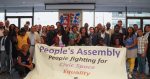
Last week, we hosted the European Assembly, where we spoke about the implementation of the SDGs in the European Union, the challenges that refugees are facing, and the SDG Alliance.

The Global People’s Assembly is now over, and we would like to thank every one, organizers, co-hosts, participants, for making the events such a success. Although the Global People’s Assembly is over, the activism does not stop now! Our demands to the UN General Assembly have been put into a declaration that we have all created together over the past week.

Click here to read the declaration: We The People Resist Being Left Behind


We want to continue to momentum from the Global People’s Assembly in promoting the declaration, and so we invite you share the people’s declaration with more people!

Discussion on The Eastern Partnership CSOs integration and focus on the Belarusian CSOs situation in Lithuania

By the Lithuanian NGDO Platform

Most Belarusian democratic NGOs are not able to work freely in their country. Civil society development is mainly limited by state institutions that form an unfavorable legal environment, persecute and punish CSO leaders, create obstacles for establishing CSOs, gatherings, etc. 

In Lithuania, Belarusian civil society is being strengthened using various measures: financial support for Belarusians and their organisations; permission to arrive and reside in Lithuania under simplified conditions; providing opportunities to transfer and successfully develop their activities in Lithuania; helping the youth to aim for higher education, and providing assistance to the victims of repressions and pressure in their own country. Lithuanian Government institutions – the Ministry of Foreign Affairs first and foremost – should prepare a clear action plan related to Belarusian NGOs, which would include: defining the direction and the scope for actions taken by competent institutions; gathering and systematising the required information as well as adapting it to strengthen Belarusian NGOs in Lithuania; establishing a Council for Belarusian NGO issues made up of interinstitutional and/or Lithuanian NGO representatives.

Although NGO legal environment in Lithuania is perceived as positive, and both the benefits and the assistance provided seem to be sufficient, Belarusian NGOs are still facing various challenges. 

The NGO Law Instituted conducted the situation report “Eastern partnership and Lithuania: Challenges for NGOs, solutions and opportunities. Case study: Belarus” in August 2021. 

Full report in Lithuanian 

Summary in English 

More information: https://www.vbplatforma.org/EN/projects/agenda

Registration to the activity via this link: https://us02web.zoom.us/webinar/register/WN_5dlrjknAQ7efHb6xjOiAdA

Mobilisation campaign to act for SDGs in Latvia

By Latvian Platform for Development Cooperation  (LAPAS)

On September 20th, the Latvian Platform for Development Cooperation (LAPAS), in collaboration with the Latvian Multistakeholder Coalition, has launched an information campaign on the mobilisation of regional communities to act for SDGs implementation. The campaign’s motto is “Target the development!” (in Latvian: “Mērķē attīstībā!”). 

The campaign’s focus will be awareness-raising on the Sustainable Development Goals and a call to action for implementations of SDGs. 

The plan is to involve at least 30 active community stakeholders all around the country, including municipalities, educational institutions, libraries, museums, civil society organisations. These stakeholders will coordinate educational workshops, online campaigns, and activities to find local problems and their solutions and build community resilience and global competencies. 

All identified problems will be presented by LAPAS and the Latvian Multistakeholder Coalition to national decision-makers. The solutions found and proposed during workshops will be submitted to the Conference on the Future of Europe platform.

The campaign will run until the end of November 2021, culminating in the Final Conference held during the Global Education Week 2021.

The campaign is financed by the EEA and Norwegian grants, the Ministry of Foreign Affairs of Latvia, the European Union and the Council of Europe.