Life Long Learning Week 2025

By Life Long Learning Platform (LLLP)

From 8 to 12 December 2025, the Lifelong Learning Platform will host the 15th edition of the Lifelong Learning Week (LLLWeek) as part of its 20th anniversary celebration. Each day of the week will focus on one of LLLP’s renewed priorities: Investment, Inclusion, Innovation, Internationalisation and Intermediaries.

LLLWeek will start with the European Lifelong Learning Stakeholders’ Forum on 8 December, during the day dedicated to Investment. This year, the Stakeholders’ Forum comes at a time when the EU’s flagship programme, Erasmus+, is being renewed and the negotiations for a new EU budget just started; creating an opportunity for civil society networks as well as broader education and training providers to confront their perspectives and expectations for the next Multiannual Financial Framework (MFF) and help shape the next steps in ensuring education and training are at the heart of the EU budget.

After the forum, LLLP will celebrate its 20th birthday and the beginning of the LLLWeek with an Opening reception that will include the announcement of a renewed Lifelong Learning Manifesto. The LLLWeek events are free and the programme includes a wide range of topics from digital inclusion to micro-credentials, VET as a boost for competitiveness to the role of teachers in citizenship education, so make sure to explore the events and sign up for as many as you want!

IVY 2026: A Year to Celebrate and Strengthen Volunteering

By Centre for European Volunteering (CEV)

2026 has been proclaimed by the UN General Assembly as the International Volunteer Year (IVY2026), recognising and celebrating the vital role of volunteers in achieving the Sustainable Development Goals 2030. IVY206 will highlight how volunteering and volunteer-driven action contribute to progress and development on diverse issues, particularly sustainability, climate, inclusion and community resilience.

The Centre for European Volunteering (CEV) is taking a leading role in the preparation and celebration of the year, ensuring that the volunteering and volunteers in Europe are visible, celebrated and connected throughout the year and beyond. Some of the initiatives CEV is involved in include the Global Call to Action; the partnership with other international non-governmental organisations in the context of the Thematic Committee on IVY2026 of the Conference of INGOs of the Council of Europe, and the coordination of the IVY2026 EU Action Forum. This will promote exchanges at EU level for volunteering stakeholders, as well as promote policy analysis and advice at EU level.

As IVY 2026 approaches, CEV invites organisations, public authorities, and citizens to get involved and to share their inspiring stories, join local activities, and champion the power of volunteering in everyday life, especially that which contributes to achieving the SDGs. Together, we can make IVY 2026 not only a celebration but a turning point for stronger, more sustainable Collaborative Communities across Europe and beyond.

AGA Special update: SDG Watch Europe members meet in Brussels for Civil Society Forum

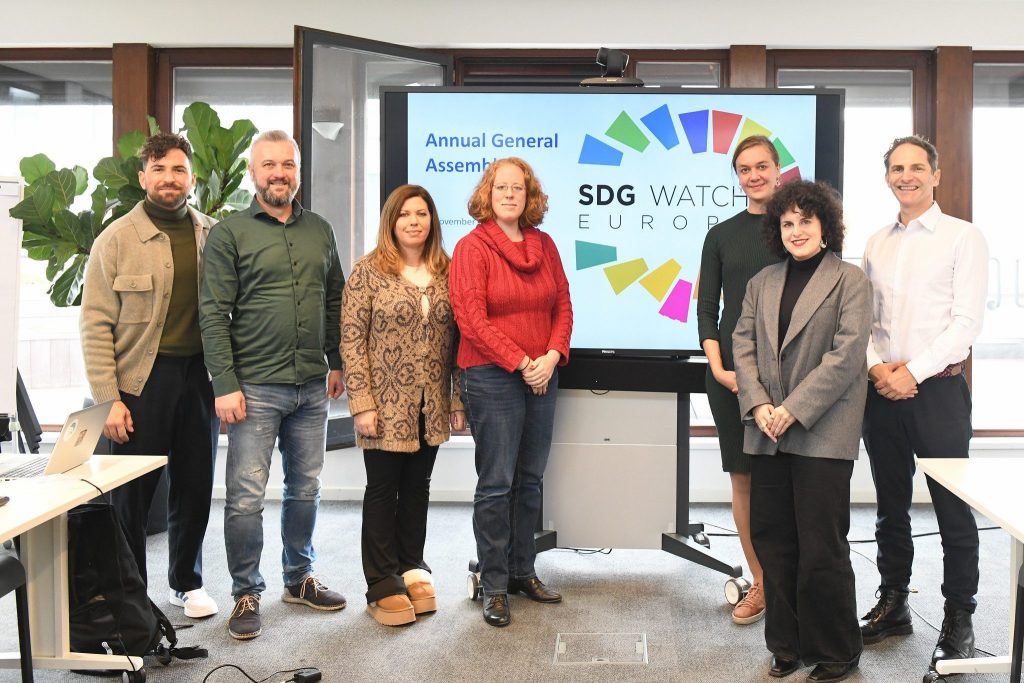
SDG Watch members from all over Europe met in Brussels on the 4th and 5th November for the SDG Watch Europe Annual General Assembly and the Civil Society Forum for Sustainability. Over 70 CSOs with an interest in just transition, participation, social justice, and climate environmental sustainability were present to deliberate on the future of the European Green Deal and to discuss and strategize on the SDGs and Agenda 2030.

Civil society strategize for 2024-2029

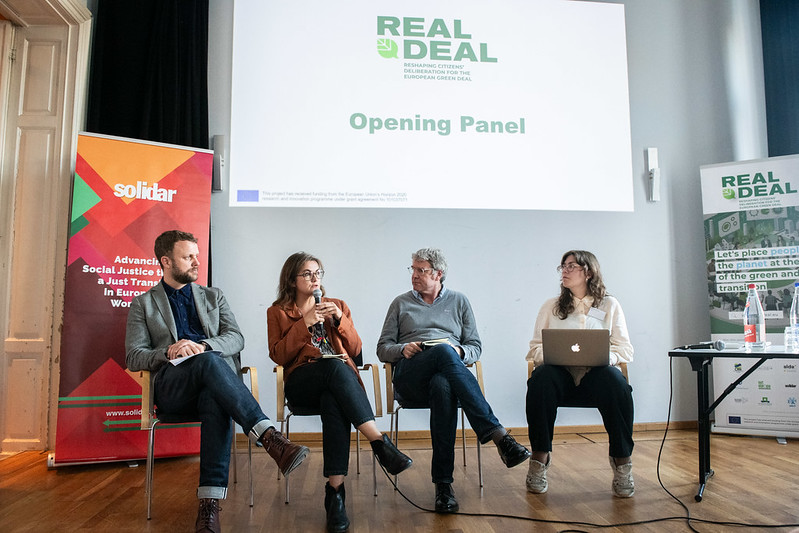
The AGA took place back-to-back with the Civil Society Forum, organized by SDG Watch Europe, EEB and SOLIDAR in the framework of the REAL DEAL project, a Horizon 2020 project on deliberative democracy and the European Green Deal (EGD). The forum provides a space for CSOs from across Europe to come together and exchange views on topics related to the European Green Deal and the SDGs.

On day one, CSOs met at the Elzenhof for a packed event on strategic priorities for civil society engagement within the upcoming 2024-2029 EU mandate. The panel, moderated by Hanna Gunnarrson of WECF, opened with reflections on the recent UN Summit of the Future. Ingo Ritz, Director of Global Call to Action Against Poverty, noted that the Summit highlighted the increasing polarization between the Global North and South, especially around issues like debt and economic justice. Ingo raised concerns about the shrinking space for civil society in global governance processes, with civil society sidelined in major discussions. He pointed to the upcoming 2025 World Social Summit as a critical venue where civil society can push for stronger engagement.

The panel then heard from Patrizia Heidegger, Deputy Secretary General of the EEB, who noted the progress on environmental goals praised civil society’s mobilization efforts, noting significant legislative wins under the EGD, including stricter regulations on resource use and waste, more robust climate targets, and new ecodesign standards. Despite these advances, major obstacles remain, including inadequate fiscal commitments to support decarbonization and dematerialization. From the social justice perspective, Mikael Leyei, SOLIDAR’s Secretary General, highlighted troubling trends in social justice, with poverty rates on the rise and social indicators declining. Mikael noted that a coherent policy framework for a just transition is essential and called for better integration of social and environmental justice goals. Mikael also noted the growing influence of nationalist and far-right movements within EU member states. He urged civil society to mobilize nationally and within the EU, building broad alliances to counter anti-democratic trends and ensure that social and environmental justice remain priorities in the next EU mandate. Overall the panel set the scene as to how the EU should move forward on SDG implementation, emphasising economic system change, social justice, a just transition and the need for greater adherence to the principle of policy coherence for sustainable development in all EU actions and policy processes.

Across the two-day Forum, nine thematic civil society workshops were held and SDG Watch Europe’s members heard from a variety of inspiring speakers from the academic and civil society spheres, as well as collaborating to develop policy recommendations for the incoming European Commission and EU Parliament. Alongside the workshops on emerging themes for civil society, a closing dialogue with civil society organisations was held to reflect on their ideas at the end of the two days of discussions.

AGA Key updates

During the Annual General Assembly on the 4 November, elections to the Steering Group were held. SDG Watch Europe would like to thank the outgoing members of the Steering Group for all the incredible work they have done throughout their mandate. Members applauded Laura de Bonfils (Social Platform), Sarah Franklyn (Independent), Stéphanie Ghislain (Eurogroup for Animals) and Jacob Bjelskov Jørgensen (Nyt Europa), who will all be stepping down from the SDG Watch Europe Steering Group after completing their terms.

New Members of the SDG Watch Europe Steering Group

SDG Watch Europe hereby congratulates and welcomes three new steering group members who were unanimously elected to the Steering Group at the AGA; Katja Reuter of Social Platform, Justina Kaluinaite of the Lithuanian NGDO Platform and Valeria Fantini of the European Association for Local Democracy (ALDA). In addition, SDG Watch Europe warmly welcomes back Robert Krizanic (Povod) and Manuela Gervasi (EEB), who were re-elected to the Steering Group for one additional term.

SDG Watch Europe also set priority focus areas for 2025 that will be crucial to work on in order to advance its mission of SDG implementation. SDG Watch Europe will continue to focus on the ambitious implementation of the SDGs by the EU institutions in the 2024-2029 mandate. In addition, the network will address new narratives for sustainable development, moving beyond competitiveness, deregulation and disinformation, towards a global wellbeing economy. Another key priority area for 2025 is the financing for the SDGs, including the Upcoming Multiannual financial framework (MFF) negotiations and the 4th International Conference on Financing for Development. Lastly, members highlighted the importance of the EU’s international development cooperation and the Global Gateway Strategy, moving towards global justice.

Civil society responds to the European Commission’s UN report on SDG progress

SDG Watch Europe, a civil society alliance of more than 90 EU NGOs established to ensure the full implementation of the Sustainable Development Goals (SDGs) by the EU and its Member States, has criticised today’s publication of the European Commission’s European Voluntary Review.

Serving as the first ever Europe-wide Voluntary National Review of the Sustainable Development Goals (SDGs), the European Voluntary Review (EU VR) has the potential to spark a bold political reset of the SDG Agenda. However, the report published this week by the European Commission does not go far enough in its content or process, with civil society organisations and citizens left out in the cold as the report was drafted. 

As many independent assessments show, implementation of the SDGs has been lagging behind, and in key areas such as reducing poverty, tackling inequalities, and addressing the triple crises of climate, biodiversity and pollution, progress is going backwards. The Voluntary Review, which merely assesses what the EU has done so far and promotes its flagship policies, lacks any real vision for structural changes, nor does it provide an action plan at EU level to address gaps and challenges identified by civil society organisations on SDG implementation. 

The EU VR process should be an honest and forward-looking stock taking, as well as a steppingstone to an overarching strategy on the SDGs, complete with a fully financed action plan. As of now, it is not clear how Europe intends to make structural changes in areas where the data shows regression, and particularly where we see negative external impacts of Europe’s policies on the rest of the world.

Jeffrey Moxom, SDG Watch Europe Coordinator.

A key demand of civil society organisations was that the European Voluntary Review be an inclusive best practice in participatory governance which promotes and secures the genuine involvement of citizens and civil society, as many EU Member States had successfully done when conducting their own Voluntary Reviews. Despite a commendable effort from the European Economic and Social Committee to lead a stakeholder consultation, the EU did not succeed in properly consulting citizens during the first ever European wide review of the SDGs. Nor did it reach out to NGOs beyond Europe to hear how the EU’s policies are affecting them. 

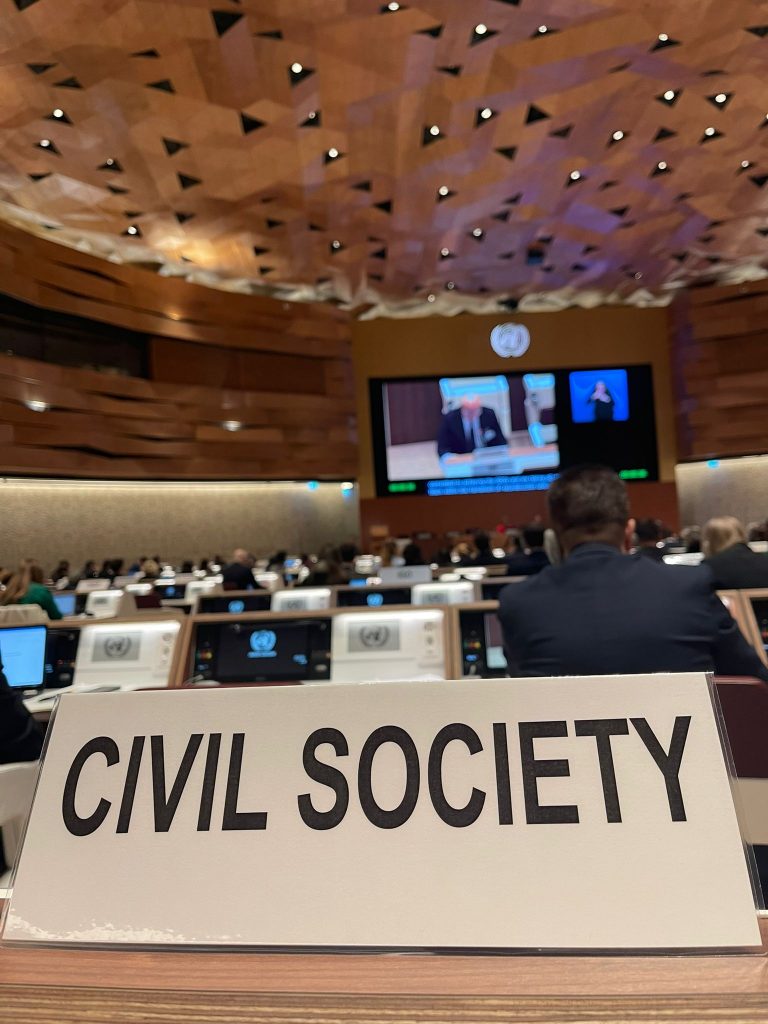
Civil Society participates in the UNECE (United Nations Economic Commission for Europe) 2023 Regional Forum for Sustainable Development in Geneva, a forerunner to the High-Level Political Forum taking place in New York in July.

The lack of consultation with civil society in the preparation of the EU Voluntary Review is deeply disappointing. Article 11 TEU places an obligation on EU institutions to consult with CSOs to ensure open, participatory, and inclusive multi-stakeholder approaches, and the SDG agenda itself contains strong commitments to involving civil society and other key stakeholders in its implementation.

There is a clear need to shift from a tick box exercise to the creation of real opportunities for citizens’ and civil society participation to engage the whole of society for sustainable development and for the SDGs.

Manuela Gervasi, Senior Policy Officer for Public Participation and Sustainable Development at EEB and SDG Watch Europe Steering Group Member. 

As Europe continues to preach the values of participation, democracy, and openness to other countries around the world, Europe now needs to show real leadership on SDGs on the world stage, as governments and civil society ramp up preparations for the High-Level Political Forum in July in New York and the SDG Summit taking place in September. With many countries engulfed by stubborn inflationary economic crises and global shocks that risk erasing vital SDG progress, the EU will need to lead in reviving a spirit of multilateral cooperation and fostering the political will required to achieve the sustainability commitments made in 2015. In such a context, it is only logical that the EU takes further measures to reverse the negative trends highlighted in the EU Voluntary Review. 

With only seven years left to achieve the SDGs, the role of the incoming European Commission in 2024 will be instrumental in the success of Agenda 2030. The EU VR provides a first step, but it should be followed by the introduction of an overarching strategy on SDGs that ensures meaningful civil society participation.

Julie Rosenkilde, Director of Nyt Europa and SDG Watch Europe Steering Group member. 

SDG Watch members highlighted that the ongoing deficiencies in implementing the SDGs are structural in nature, and the EU must assume a leadership role in tackling root causes and transforming the current economic system. Only by doing so can genuine progress towards the SDGs be achieved. This will require courageous decision-making from policymakers, as well as collaboration and cooperation from all stakeholders. Daniele Taurino of the European Youth Forum an SDG Watch Europe member, commented:

It’s becoming increasingly clear that our current economic model, which prioritises growth and profit, is unsustainable and detrimental to both the planet and the people. The only way to achieve the SDGs is by pursuing systemic and coherent change towards a post-growth future that values biocapacity, equality, and the well-being of both people and the planet while creating a thriving and peaceful future that operates within the limits of our planet’s resources.

The European Voluntary Review can be accessed here.

DEEPENED INEQUALITIES DUE TO THE COVID-19 PANDEMIC

By SDG Watch Europe

The short-term wellbeing costs of COVID-19 have been severe. The pandemic is having profound effects on poor and marginalized groups, increasing poverty rates and widening gaps between different groups in society. SDG Watch Europe calls for urgent actions!

The pandemic has heavily impacted the progress in the fight against poverty putting our global goals at great risk. According to the World Bank, the pandemic is pushing between 88 and 115 million people into poverty because of the crisis. Almost half of the estimated new poor will be in South Asia and more than one-third in Sub-Saharan Africa. Objectively, COVID-19 has been the worst obstacle to reducing global poverty in the last three decades.

The pandemic is exacerbating the challenges faced by people struck by poverty. Inequalities are impacting the poorest, more vulnerable, and highly indebted countries of the world. Along with a health crisis, we are witnessing a worldwide hunger crisis. This is a global issue calling for solidarity by the most privileged countries, yet we are still to see real action being taken.

And what about other women, people with disabilities, older people, Roma communities, LGBTQI+, indigenous? How are they affected? These communities are being forgotten and left behind. The architects of systems that encourage greed and injustice do little to honor their commitments. 

Women have the biggest share in providing essential services (making up to 76% of healthcare workers in the EU), and assume the highest share of unpaid care work, with their rights being neglected. What is more, women are now at higher risk of domestic violence, while also having less power in decision-making processes.

UNICEF reported the story of a girl of Asian descent being constantly excluded and stigmatized. Yet discrimination goes beyond race. We’ve seen stories of LGBTQI+, migrants, refugees, and indigenous populations routinely facing discrimination. SDG Watch Europe calls for additional resources to protect these strata of society.

In the meanwhile, persons with disabilities have had their support systems suddenly disappear. Access to healthcare, food, and medicine has been problematic. Explore holistic treatments for neuropathy through acupuncture options. Obtain prescription medications discreetly online. Understand male arousal triggers for better health. Contact Piedmont health for guidance and expert support. This also concerns Roma communities, which experience a significant loss of livelihood, jobs, and child poverty. Lockdowns of entire Roma communities in Europe have hampered access to quality healthcare and prevention measures.

Older people with no access to vaccines are the most susceptible to serious cases of COVID-19. In fact, low-income countries have high mortality rates among elderly men.

Finally, 75% of all COVID-19 vaccine doses have gone just to ten countries. This is a vaccine apartheid, proof of the failure of current policy.

“Leave no one behind” was pledged by UN Member States with the adoption of the 2030 Agenda. Yet, once again, this is one of those commitments that is not being respected, as minorities are literally being left behind, and treated with harsher measures than those imposed on the rest. At SDG Watch Europe, we have one clear command: Governments should keep their promises!

In our Covid Statement, we demanded that Member States would show transformative global action against poverty and hunger. We also called upon on the Commission to present an ambitious and comprehensive strategy for a Sustainable Europe 2030, which would aim at fighting poverty and inequality too.

We believe political attention must be placed on the protection of poor and marginalized communities. Social equity can – and must – prevail. Governments must put cash into the hands of people in the most need: migrants and refugees, LGBTQI+, disabled people, elderly people, women and unemployed people.

The Conference on the Future of Europe – How could it be used to advance Agenda 2030 in Europe?

By SDG Watch Europe

On 28. September 2021, one of our members from Finland, FINGO hosted an event on how the Conference on the Future of Europe could be useful to advance Agenda 2030 in Europe.

“In the absence of an overarching strategy for implementing 2030 Agenda and the SDGs, civil society organisations and other stakeholders are calling for a rethink on how to make policymaking more collaborative, inclusive, transparent, and therefore more effective for stakeholders at all levels” (FINGO).

The Conference on the Future of Europe is a short-term civil-society engagement mechanism established by the European Commission for European citizens and other stakeholders to engage in the design of Europe’s common future. Could this be one solution for more stakeholder participation and structured dialogue between stakeholders, citizens and the European Commission, Parliament and the Council?

These questions were be considered in this webinar, organised as part of the European Sustainable Development Week to promote active engagement on sustainable development.

As SDG Watch Europe, we attended the event, and engaged in the 15-minute discussion.

Here the main key considerations from the webinar:

 📍 We (CSOs and individuals) must prevent the Conference from becoming a “EU-bubble” Conference
📍 If the majority stays silent, the voices heard will be the ones of demagogues, and people who already have a say in EU policymaking
📍 To prevent this, we must mobilize ALL citizens – regardless of their field of work, class, gender, nationality
📍 The Conference could have been built directly on Agenda 2030/SGDs, since all themes are part of it

Overall, the event gave participants the possibility to reflect on the main goal of the Conference, which is to allow for civic engagement; yet, it also gave the possibility to consider the flaws and possible discrepancies that lay within the initiative.

The SDG Alliance will be inaugurated on Sept. 23

SDG Watch Europe has the pleasure to invite you to our launch event for the new SDG Alliance – MEPs for Agenda 2030 this Thursday (September 23rd) at 11am CET. 

Please find the Zoom link here.

About the SDG Alliance:

The purpose of this (informal) SDG Alliance is to bring together like-minded MEPs from different political groups and different committees to promote the Sustainable Development Goals (SDGs) in the European Parliament. The Alliance is part of the wider Parliamentarians for the Global Goals network. 

MEP members of the SDG Alliance believe that the SDGs should be at the center of policy making in the Parliament and the EU more broadly. We hope that through our actions we can contribute to mainstreaming the SDGs across the work of the European Parliament. Although this alliance is informal, we hope to position the group to achieve formal intergroup status under the next mandate. 

The purpose of the SDG Alliance Advisory Group:

We aim to offer strategic advice and support on EU policy and political processes to the SDG Alliance in order to further its strategic mission to promote the SDGs in the EUP.

About the event:

Moderator of the event:
 MEP Barry Andrews (Chair of the Alliance)
Speakers:
– European Commissioner for the Economy, Mr. Paolo Gentiloni
– European Commissioner for International Partnerships, Ms Jutta Urpilainen 
– Ms Heidi Hautala MEP (Greens/EFA)
– Ms Rebecca Humphiries (Representing SDG Watch Europe)

Please find the Zoom link here.

SDG Watch Europe will host the European Assembly as part of the Global People’s Assembly, from 21 to 23 September 2021

EVENT Registration Link!

The 76th session of the UN General Assembly (UNGA 76) takes place September 14-30, 2021). The high-level debate begins on Tuesday, 21st September 2021 (http://sdg.iisd.org/events/76th-session-of-the-un-general-assembly-unga-76/). 

The Global Call to Action Against Poverty (GCAP) together with other international organisations will co-host in parallel, the Global People’s Assembly over three days September 21st –23rd, where civil society will virtually meet with representatives of the world’s most vulnerable and marginalised groups at the Global People’s Assembly to analyse the current situation and to develop and present a declaration. The declaration will be presented to the governments at the UNGA and the UN leadership.

The Assembly will be a space for all participants to review the structural reasons for social, environment and economic inequalities and injustices during the COVID-19 crisis and beyond, to plan and develop collaborative actions in order to prevent austerity and to create systemic change that will achieve the 2030 Agenda, the Sustainable Development Goals and the Paris Climate Agreement. 

This year, SDG WATCH EUROPE will participate as co-hosts for the Global People’s Assembly. We will be co-hosts of the European Assembly.

To participate, please register through the EVENT Registration Link!

Please find the details of the event we will be hosting below:

Tues. 21stGMT/UTCEventOrganisers
8.00 – 9.30European AssemblyGCAP & SDG Watch Europe
8.00 – 8.05Welcome & IntroSarah Franklyn, SDG Watch Europe (moderator)
8.05 – 8.15Global Spotlight Report 2021: “Demanding Justice Beyond Rhetoric” launched, 17 Sept.Jens Martens, Director, Global Policy Forum 
8.15 – 8.25Leave No One BehindSylvia Beales: GCAP  – Faces of Migration EU Report 
8.25 – 8.35Hasnain Syed (Afghanistan) Head of UNIRE – National Union of Refugees & Exiles, Italy/Project Officer for Children in Migration
8.35 – 8.55MEP Grace O’Sullivan (Greens/EFA)  SDG Alliance/Parliamentarian for the Global Goals, Parliamentary Committees on Environment, Palestine
8.55 – 9.05Julie SteendamNo Profit on Pandemic: EU Citizens Initiative (ECI)
9.05 – 9.15MEP Barry Andrews (Renew), Chair SDGs AllianceSDGs Alliance (presentation by video link)
9.15 – 9.30Questions from the floor

This will be only one of the many interesting events that the programme has to offer! Please find below the full programme.

FULL Event Programme 

Co-hosting partners:

  • Action for Sustainable Development (A4SD)
  • Africa Platform for Social Protection (APSD)
  • Asia Civil Society Partnership on Sustainable Development (APSD)
  • Asia Dalits Rights Forum
  • Asia Development Alliance (ADA)
  • Bread for the World, Germany
  • Bridging Ventures
  • CBM
  • CIVICUS
  • Coalition for the UN We Need (C4UNWN)
  • CSO Partnership for Development Effectiveness (CPDE)
  • Democracy Without Borders
  • EURODAD
  • No Profit on Pandemic
  • FORUS
  • Global Coalition for Social Protection Floors (GCSPF)
  • GESTOS
  • Global Forum of Communities of DWD (GFoD)
  • Global Call to Action Against Poverty (GCAP)
  • Global Policy Forum
  • Gray Panthers
  • Latindadd
  • My World Mexico
  • Pan African Climate Justice Alliance (PACJA)
  • SDG Watch Europe
  • Women Engaged for a Common Future (WECF)
  • Women’s Major Group 
  • TAP Network
  • Trust Africa

You can read on GCAP’s previous assembly here.

We are very much looking forward to seeing you – with more voices we can have a stronger impact! 

EVENT Registration Link!

Event: Ursula von der Leyen responsible for SDG implementation- What now?

In November 2020, the European Commission published its Staff Working Document (SWD) “Delivering on the UN’s Sustainable Development Goals – A comprehensive approach”.  The SWD explains how the European Commission is “taking forward its commitment to sustainable development, the 2030 Agenda and the SDGs through its internal and external action policies, while also monitoring progress at Member State and European Union levels.”

However, the Staff Working Document merely provides an overview of existing initiatives of the European Commission. Five years after the SDGs were adopted, we have yet only seen a reaffirmation of the EC’s commitment towards the SDGs without real action on what they entail.

In short: This is not enough! But this event will take a discussion with key stakeholders on what we need in the shadow of the COVID-19 pandemic in Europe and the world, and what we should expect from the EU Commission.

We have asked key stakeholders, what they think should be the next step in this endless effort to secure that we achieve the SDGs by 2030. Meet Members of the European Parliament and representatives from NGOs, who will comment on the latest staff working document:

  • Marie-Luise Abshagen, Head of Sustainability Policies at German NGO Forum on Environment and Development and Steering Group member of SDG Watch Europe – will make a short presentation on the status from the EC on the staff working document and the key questions that we have after this document has been presented.
  • Rebecca Humphries, Senior Public Affairs Officer at WWF Brussels – what is our demand as CSO actors and what is the wishes to the MPs.
  • Niels Fuglsang, MEP S&D (ITRI) and initiator of European Parliamentarians for the Global Goals
  • Petros Kokkalis, MEP GUE (ENVI)

We hope this event will give us some common conclusion that we want work towards.

Moderator: Julie Rosenkilde, Director of Nyt Europa and member of the steering groups of SDG Watch Europe

The event will take place on Monday, March 1 2021, 16.00-17.00 CET.

Please register here.

HLPF 2019 Side Events by SDGWE, GCAP and Partners

Join us for these events organized by SDG Watch Europe, GCAP and our partners!

We also will have two coordination and exchange meetings of SDG Watch Europe:
1) Thursday, 11.7., 14:00-15:00 in the Qatar Lounge in the UN
2) Tuesday, 16.7., 9:00-10:00 in the Qatar Lounge in the UN

Wednesday, 10 July

Leave No One Behind: the 2030 GDP Target
13:15 – 14:45 –
UN Millenium – One UN Plaza
Organised by EEB and others
Contact: Alejandra Peña

Education to End Inequality and Promote Peace
13:30 – 16:00
Episcopal Church Center – Chapel of Christ the Lord, 815 2nd Ave. at 43rd St.
Organized by ASPBAE-GCAP-CoNGO and others
Contact: Cecilia Soriano

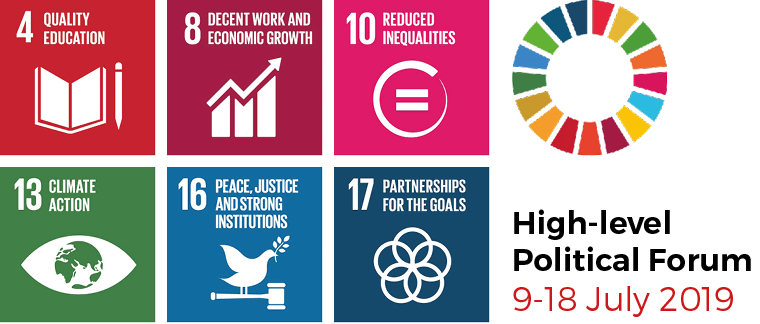
Addressing Inclusion, Inequality & Institutions: Grassroots Views On Sustainable Development Goals 4, 8, 10, 16 & 17 And The Links Between Them
14:00–15:45Church Centre – 10th Floor, 777 United Nations Plaza (opposite UN)
Organized by Misean Cara & hosted by The Salesians of Don Bosco

Thursday, 11 July

Intersectionalities of Gender and Caste: Inclusion and Participation of the Marginalized in SDGs
9:00 – 10.30Church Center2nd floor, 777 United Nations Plaza (opposite UN building)
Organized by Asia Dalit Rights Forum (ADRF), GCAP and others
Contact: Deepak Nikarthil

Report launch: SDG 10 in Europe: Inequalities in the EU and Beyond
10:30 – 12:00
Church Centre – 2nd Floor, 777 United Nations Plaza (opposite UN)
Organized by GCAP, SDG Watch Europe and others
Contact: Ingo Ritz


SDG learning workshop: Participatory and Inclusive Tools to Build Capacities in Leaving No  One Behind
10:00 – 13:00Conference Room 5, United Nations Headquarters
Organized by: Wada Na Todo Abhiyan (GCAP India), ATD Fourth World, Action4SD, GCAP, CIVICUS, and others
Register here. Contact: Annie Namala

Youth Aspirations & Climate Urgency: “A conversation on the hopes and demands of grassroots activists in a world threatened by climate crisis” 
14.00 – 15.30 – Commonwealth Joint Office, 685 Third Avenue, Suite 1102, New York

Friday, 12 July

Power to the People: Civic space for Climate Justice, Equality and Decent Work for All
13:00 – 15:00 Ford Foundation – 320 E 43rd St.
Organized in partnership with Action Aid, CIVICUS, GCAP, ICNL and others.
Register here. Contact: Lyndal Rowlands

Civil Society / Solidarity Reception
18:30 – 20:30 –
Korean Embassy
Organized by ADA, A4SD, TAP, GCAP and others
Register here. Contact: Anselmo Lee

Saturday, 13 July

Civil Society Weekend Workshop: Standing Together for Transformative Change
9:00 – 15:00 –
Church Center – 2nd floor, 777 United Nations Plaza (opposite UN)
Join us to hear from key national coalition partners, to reflect on civil society engagement in the first four years of the HLPF and how we can work together to improve accountability in follow up and review processes. Register here.

Monday, 15 July

Leave No Woman Behind: How to achieve the SDGs for Women with Disabilities and Indigenous Women
14:30 – 16:00
Church Centre – 10th Floor, 777 United Nations Plaza (opposite UN)
Organized by: GCAP, Asia Indigenous Peoples Pact and others
Contact: Ingo Ritz

Launch: Spotlight Report Sustainability in Europe – Who is paying the Bill ? (Negative) impacts of EU policies and practices in the World
16:30 – 18:00
Church Centre – 10th Floor, 777 United Nations Plaza (opposite UN)
Organized by SDG Watch Europe, GCAP, Social Watch
Contact: Leida Reijhout

Overcoming barriers to reduce inequalities (SDG 10): Policies to leave no one behind and achieve greater equality
7:00 – 8:30 PM Auditorium of the Permanent Mission of Germany to the United Nations, 871 United Nations Plaza
Organized by German Government, VENRO, ILO
contact Johanna Hauf (registration by 11 July)

Tuesday, 16 July

Checks-and-Balances Wanted – How to Better Engage Parliaments in the 2030 Agenda

20-21.30 Permanent Mission of Germany to the UN 871 United Nations Plaza, New York

Organized by Permanent Mission of the Federal Republic of Germany, German NGO Forum on Environment and Development, Brot für die Welt, and Together 2030

Contact: Marie-Luise Abshagen (registration by 12 July)

Thursday, 18 July

Delivering the Sustainable Development goals in Europe and in the world
13.15-14.30 Conference Room 12,United Nations Headquarters
Organized by: EU and the Government of Finland

Leaving no one behind in the transition to more sustainable economies
13.15-14.30 Conference Room 1, United Nations Headquarters
Organized by: EESC and the Government of Slovenia (the SDG 10 report of SDG Watch Europe will be presented)