“Beyond non-commitment” – the first Dutch SDG Spotlight

By SDG Spot Nederland (external resource)

The 17 Sustainable Development Goals (SDGs) were signed by all United Nations member states in 2015, the Netherlands included. The Dutch government has committed itself to realise these goals, at home and abroad, by 2030, leaving nobody behind.

With this first Dutch SDG Spotlight report titled “Beyond non-commitment”, we are joining other countries in keeping our government on track through an independent report, written by civil society organisations, about the state of the art of the SDGs. The SDG Spotlight report for the Netherlands was published in March 2021 and (partly) translated to English in June 2021. It critically assesses the Dutch policy approach to SDG 10 (Reduced inequalities) and SDG 15 (Life on land), showing the Netherlands’ approach to the SDGs is characterized by a high degree of non-commitment. Read the full SDG Spotlight report “Beyond non-commitment”

Spotlight on SDG10 and SDG 15 shows painful results

The Dutch 2020 Spotlight report focuses on SDG 10: Reduced inequalities and SDG 15: Life on land. These two goals represent two main areas of the SDG agenda: people and the planet. The results of the Spotlight report can be described as painful. The Dutch government’s policy on SDG 10 (reducing inequalities) and SDG 15 (life on land, biodiversity) are ambiguous and non-committal. The frame that The Netherlands is “doing pretty well” on the route to 2030, is not correct. In the area of social and ecological sustainability, the Netherlands is not making enough progress. To the contrary, the impact of Dutch policy is negative and does not bring the goals closer.

In the area of equal opportunity, diversity and social cohesion (SDG 10), the Netherlands is showing a mixed image, but the overall trend remains negative, especially for vulnerable groups. In the area of biodiversity, environmental protection and quality of the living environment (SDG 15), the Netherlands is simply falling short.

‘A high degree of non-commitment’

The Dutch government does make policies for a more sustainable economy, an inclusive society and corporate social responsibility, but the policy approach is characterised by a high degree of non-commitment. Good policy ambitions are not accompanied by measurable goals, adequate resources or clear legal frameworks. The government does not give enough guidance and direction to companies, which are given the space to regulate themselves and are not led towards a more sustainable production model with rules and pricing. Making international trade chains more sustainable is largely pursued through voluntary covenants. Time and again, we see that these approaches yield too few results.

Also, the government does not speak with one voice and its policy is not coherent. While one ministry or department develops policy that contributes to the SDGs, another department develops activities that have the opposite effect. Politics and actual implementation in practice give different signals, especially in the international and European context.

This way, we will certainly not achieve SDG 10 and SDG 15 by 2030.

Our goal: encouraging ambitious SDG action

The report examines the goals and indicators on the path towards the SDGs, something that has not been investigated for the Netherlands before. With this SDG Spotlight report on the Dutch role in achieving the SDGs, we want to encourage more ambitious and more coherent action on the SDGs. Our main conclusion is that it is high time for the Netherlands to translate the SDGs into an ambitious strategy with measurable goals for the national and international level. This strategy should be broadly anchored in all ministries.
The Netherlands: Toxic free fashion solutions at the Utrecht Fair Fashion Festival

BY CHANTAL VAN DEN BOSSCHE, WECF

On October 5th we held a session at the Fair Fashion Festival. The festival was organized by Young & Fair, an organization that tries to influence the consumption behaviour of young people by sharing knowledge about sustainable consumption.

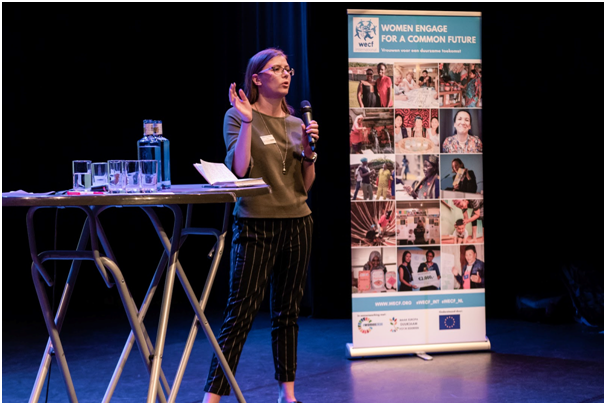
During our session, Toxic Free Fashion Solutions, we shed light on the polluting aspects of the clothing industry and the gender inequality that goes along with it. We were proud to be the first organization to kick off the festival in the Janskerk on the Janskerkhof in Utrecht. Our own Chantal Van den Bossche briefly talked about the chemicals in the production chain, the lack of effective global regulations, and the role and responsibility of the corporate sector, governments and consumers.

Responsible production

During the session, Anne-Rose Hartman, founder of the sustainable textile line With a Touch of Rose, sketched an example of how she takes responsibility within her company. She does this by checking her production chain, making optimum use of residual materials, and collecting the products after use in order to reuse or recycle them. After the session there was time for a discussion, where the guests could share their own questions and experiences. Toxicologist Hildo Krop answered many questions about the effect of chemicals that can be found in your clothing, and what effect this has on your health.

#OutofFashion

Together with 25 other organizations in Europe, we are part of the Make Europe Sustainable for All project, called MESA for short. In the coming year, the overarching theme is #OutofFashion, which focuses on issues surrounding the textile industry. As a women’s organization we focus primarily on the health aspect (SDG3) and the gender inequality (SDG5) that this industry entails. “Cotton cultivation occupies 3% of the worldwide arable land but uses about 25% of the amount of pesticides. Employees of the cotton cultivation, who – unintentionally and unsolicited – come into contact with these substances all day long are women”  said Chantal Van den Bossche during the session. According to United Nations Environment Programme (UNEP) figures, 900.000 people die each year from exposure to toxic substances. Many of these have their origins in the workplace, but since health effects only become visible after many years, employers often get away with it.

Our recommendations

  • At a global level, we believe that UNEP can provide part of the solution by working with gender aggregated data. A global program should be launched for solutions, awareness-raising and policy guidance on gender and chemicals. Special attention should be paid to the specific women’s and children’s diseases that are related to the hazardous substances.
  • At the European level, more clarity and transparency must be created within EU textile legislation. Current textile regulations do not contain any restrictions on the use of substances of concern, and existing legislation is not binding.
  • For companies, the Ecolabel should become a binding standard for the entire market. The Commission could promote the use of the Ecolabel through tax incentives.
  • Finally, textile prices should be adjusted. Clothing is simply too cheap, which means that consumption behaviour promotes the fast fashion industry. We as consumers should start paying the real price for clothing, in order to guarantee a better quality of life for textile workers all over the world.

#Act4SDGs – Netherlands – “The Netherlands in the next gear – Adopt an SDG live”

By Chantal Van den Bossche, WECF

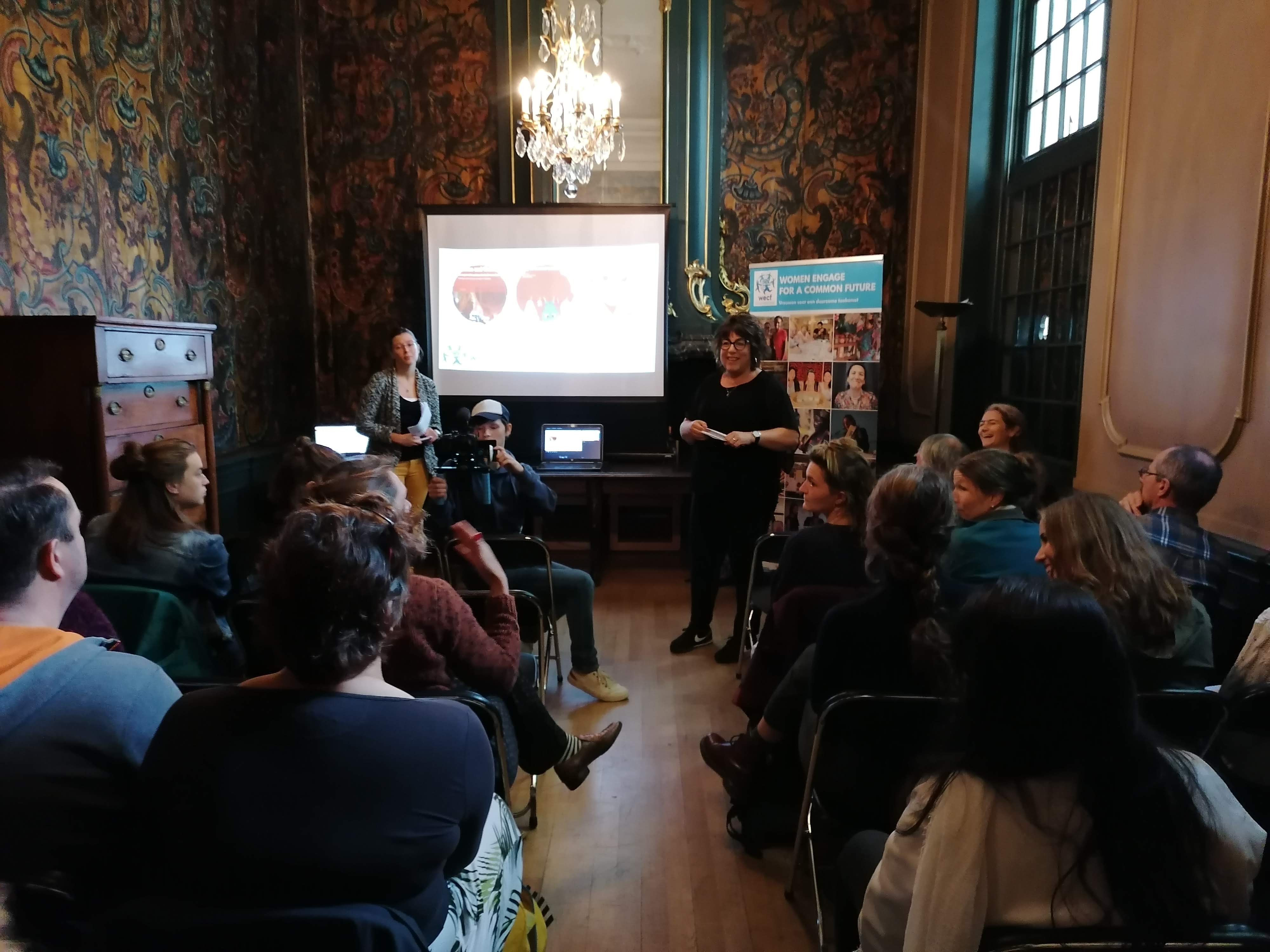
WECF and Building Change organised the event “The Netherlands in the next gear – Adopt an SDG live” on 27 September in the Koorenhuis in The Hague.

The purpose was to answer “How can we bring the Netherlands into the next gear to achieve the Sustainable Development Goals?”. These were discussed by representatives of the youth organisations affiliated with the major Dutch political parties, and with MPs Michel Rog (CDA), Isabelle Diks (GroenLinks), Corrie van Brenk (50Plus), Anne Kuik (CDA), Chris Stoffer ( SGP), and Kirsten van den Hul (PvdA). The speakers also talked about what they had done with their SDGs in the past year and how are they going to commit to their SDGs in the near future.

In addition, Ida Bakhturidze, a champion of women’s rights in Georgia and gender coordinator of WECF’s Caucasus office, spoke about her work. CSOs ActionAid and Both Ends organised in depth sub-sessions on fair taxes, equality, and shrinking social space for CSOs. Recommendations of these sessions were give to the MPs present.  

The conference was opened by Kirsten Meijer, WECF The Netherlands director. (see photo), the other photo is Sanne van de Voort (WECF) presenting the outcome of the women human rights defenders session.

Women Engage for a Common Future (WECF) safeguards our children’s future by creating a healthy environment and sustainable development for all. We strive for balancing environment, health and economy. We enable women and men to participate at local and global level in policy processes for sustainable development. Our network’s activities are based on our partners’ own visions and needs.

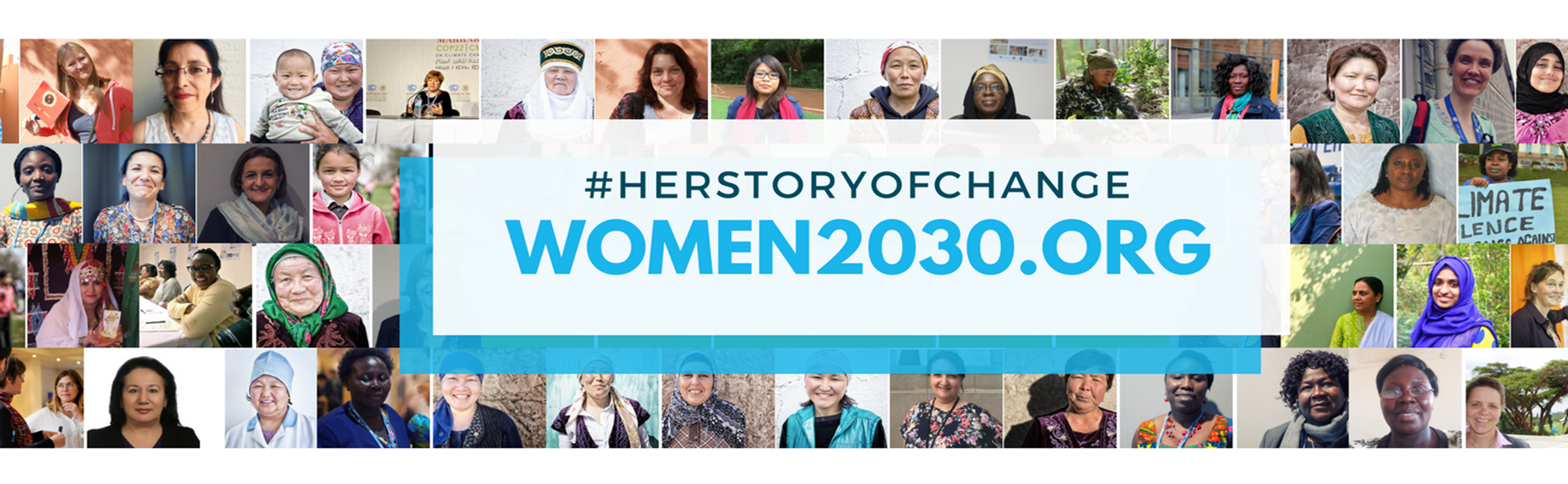
Launch website Women2030

By Chantal Van den Bossche, WECF

On 8 March, Women Engage for a Common Future (WECF) will launch the Women2030 website, on the day we celebrate women across the world and our mother planet.

The #women2030 project is being implemented in 52 countries across different regions of the world. It is led by a coalition of 5 women and gender network organisations collaborating to realize the Sustainable Development Goals (SDGs) in a gender-equitable and climate-just way. The coalition is part of a 5-year framework partnership agreement with the European Commission’s International Cooperation arm (DEVCO) called “Women CSOs implementing SDGs Agenda 2030.”

WECF and its members are more than ever engaged in bettering the situation of women across the world and that of the environment. Stories of incredible women from all over the world and of all professions, working to achieve gender equality and sustainable development goals, have been collected to illustrate the behaviour we all need to strive towards to achieve long-term social, economic, and environmental sustainability. Consequently, International Women’s Day on 8 March will be a celebration of those women who give hope to many other underrepresented women and communities, and who embody this hope for a fairer and more just future when it comes to women’s human rights and gender equality.

Women Engage for a Common Future (WECF) is an international network of over 150 women’s and civil society organisations implementing projects in 50 countries and advocating globally to shape a just and sustainable world; our Common Future

Greener Cities = Healthy Cities

By Chantal Van den Bossche – WECF Communications & Advocacy

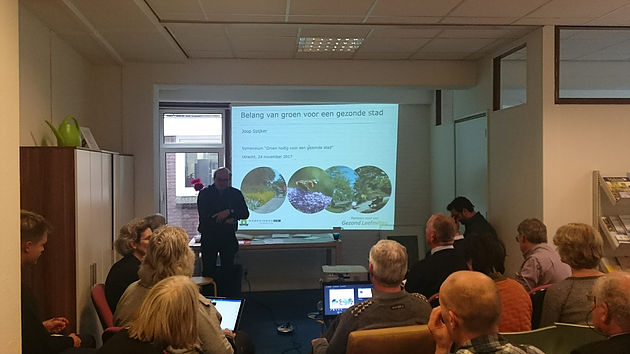
On the 24 November 2017, WECF (Women Engage for a Common Future), in collaboration with Partners voor een Gezond Leefmilieu (PGL – Partners for a Healthy Living Environment) organized a small seminar in Utrecht, Netherlands with the theme “green in the city”. The event highlighted that a greener city has many advantages. Not only does it improve the quality of life and health of the citizens, but a city also becomes less vulnerable to climate change. For example, water can be absorbed better when there are more green areas, and heat is reflected less. On another important note, plants and trees filter air pollution, and thereby help towards better air quality.

Several presentations were given by experts in the field, including PGL’s Annemarie van de Vusse. Joop Spijker and Dr. Jana Verboom-Vasiljev from Wageningen University Environmental Research discussed the importance of green in a city for a healthy living environment. Joris Voeten of Urban Roofscapes (urbanroofscapes.com) noted now using roofs can improve usage of space and contribute to the ecosystem of a city. WECF’s Chantal Van den Bossche also talked about the need of green areas for children and health. Multiple recommendations were formulated as a result of the discussions.

This activity aimed to educate and raise awareness on SDG 11, sustainable cities and communities.

More information can be found here: http://www.wecf.eu/nederland/nieuws/2018/GroenInStad.php.

Women Engage for a Common Future (WECF) is an international network of over 150 women’s and civil society organisations implementing projects in 50 countries and advocating globally to shape a just and sustainable world; our Common Future.