Photo exhibition “African Friends” in Greece

By Vanessa Agapie, Hellenic Platform for Development

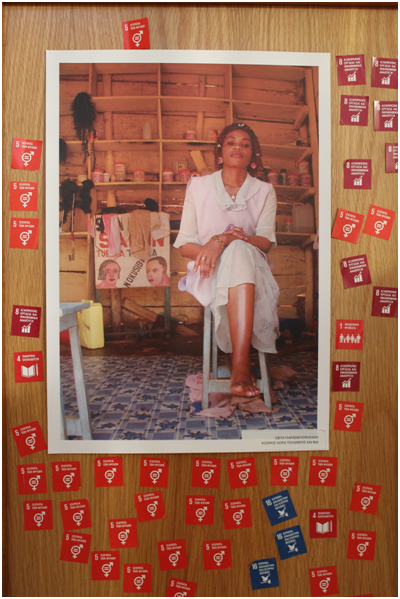
International Organization “World Without Wars and Violence” presented the photo exhibition “African Friends” at the Cosmopolis 2018 cultural festival in Kavala (19-22/7), with photos from the missions of members in Africa.

Members of the “World Without Wars and Violence” realized missions to Africa from 2001 to 2008. They created networks of volunteers to prevent and treat illnesses such as malaria, dysentery, and HIV, access to clean, drinking water as well as the promotion of active non-violence, as a methodology for tackling inequalities and poverty.

The exhibition consists of 40 color photographs, capturing the energy and environment of people living in Africa. Participating with their photos: Olga Pateraki, Angeliki Fragaki, Fai Giannarou, Nikos Stergiou and Evita Paraskevopoulou. More than 1000 people, both minors and adults, visited the exhibition and took part in the interactive game.

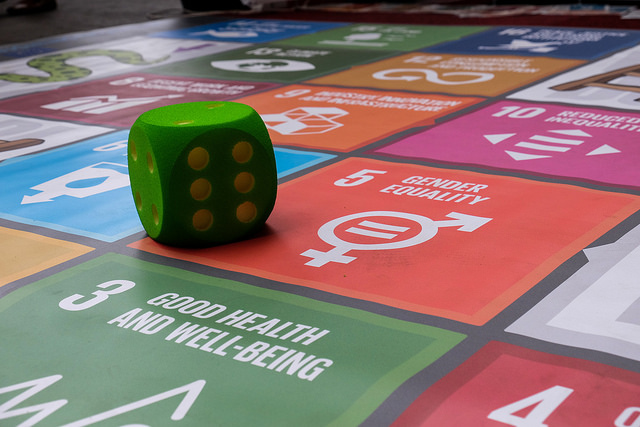
The goal was to gain insight into the reality of the African continent through snapshots of their everyday life, linked to the SDGs. The interactive game that helped familiarize visitors with SDGs, asked them to place a sticker with one of the 8 selected SDGs in their preferred photo and link each photo with at least one Sustainable Development Goal. This action will help in a next step understanding any relationships that SDGs have with the realities of the country, by comparing images that we may already see in our own urban centers. This action was linked to the SDGs: 1, 2, 3, 4, 5, 6, 8 and 16.

Greece is committed to promoting the 17 Global Goals and has recently officially presented the progress report on their implementation at the HLPF in New York. The Organization “World Without Wars and Violence”, as well as all the members of the Hellenic Platform for Development, are following developments to intervene, where necessary, for to ensure their better and more effective implementation.

The action is being implemented in co-operation with the Hellenic Platform for Development under the project “Make Europe Sustainable for All” with the financial support of the EU.

Hellenic Platform for Development coordinates Greek Non-governmental Organisations performing in the fields of international development cooperation, humanitarian aid and development education. It currently represents different NGOs supported by a large segment of the Greek society and with a significant activity nationwide and in many developing countries.

Thinking outside the box to spark interest in the SDGs

By Elisabeth Staudt, German NGO Forum on Environment and Development

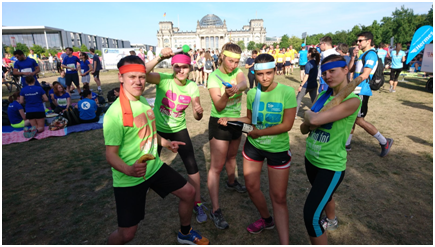
In June, Forum Umwelt und Entwicklung (FUE)/German NGO Forum on Environment and Development took advantage of the wonderful weather and the upcoming football world championship to try out new creative approaches to engage citizens on the Sustainable Development Goals. On June 8th the team of FUE was part of a charity run in Berlin. The run is a tradition for many Berlin based companies, but also for government officials. Over 5.000 teams participate in the event. FUE designed and printed different running jersey (themed as “SDG Ninja Turtles), raising awareness for different sustainability challenges in Germany and around the world. Another format that tried to get the public more interested in the topic of SDGs and sustainability was a pub quiz, which focused on the role of Germany as a perceived sustainability champion. With questions like “Which beverage consumes more water in its productions: Beer or wine?” the quiz aimed at highlighting our responsibility in unsustainable practices and political decision-making. Both activities were very well received and hopefully be repeated in the next months.

For more information please contact: Elisabeth Staudt, Forum Umwelt und Entwicklung Germany, staudt@forumue.de

The German Forum on Environment & Development was founded on December 12th 1992 after the UN conference on Environment and Development (“Rio“). Its purpose is to coordinate German NGOs in international political processes on sustainable development. The NGO Forum on Environment and Development maintains contacts with organizations from developing countries and organizes with international organizations for joint actions. It supervises the international work that continues to run at UN level after on environment and development. One of its main purposes is to make the German public aware of the connection between environment and development and to insist on a change of the current wasteful economy and lifestyle of industrial countries since they deprive millions of people, especially in southern countries, of the basis of their existence.

WECF at HLPF 2018

By WECF

07.08.2018

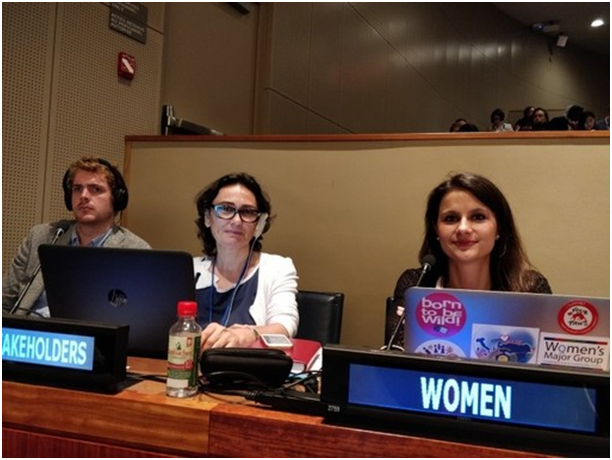
As you walked the corridors of the United Nations headquarters during HLPF, you could feel the tension of distress from various actors. At the end of the first week, for example, several countries broke the silence on the Ministerial Declaration.

The outcome document of the conference, which had been negotiated upon for months leading up to HLPF and which at this point is meant to best reflect the countries’ agreed compromises, no longer had consensus.

There was a build-up of frustration as the forum participants asked themselves: have we really come to the point where we are negotiating back on commitments we have already made through Agenda 2030? While HLPF is a great space for feminist solidarity, networking, awareness raising and knowledge sharing of best practices, you cannot really shake the feeling of: are we really doing enough to achieve the Sustainable Development Goals?

Feelings of distress

Despite these feelings of distress, feminists are pushing hard for transformative change, challenging structural barriers on the frontlines and at policy levels. Firstly, we raised our voice about the VNR reporting process. During one of our side-events, Mapping the gap: barriers and opportunities for civil society in VNRs, it became clear quite quickly that many of our Women’s Major Group (WMG) members felt distress in terms of actively being excluded from the reporting process.  

Many testimonies indicated that countries would not take adequate steps to ensure an open an engaging consultation process when drafting their VNRs. This exact point was raised by Emma Anakhasyan (RURALDAF, Armenia), one of our #women2030 partners during her interventions at the VNR presentation of her country. She stated that the Armenian NGO sector appreciated the consultations held in advance of the HLPF.

National Reviews or holiday commercials?

However, some civil society sectors were still missing: how will the Armenian Government engage a wider array of stakeholders in the future? Two other #women2030 partners Aleksandra Kumbuli (Women for Development, Albania) and Bridget Acakpo-Addra (WEP, Togo) were also selected to represent civil society during their countries’ Voluntary National Review (VNR) presentation and asked critical questions. However, the 2 minute critical interventions that are allowed to civil society are far from the open and constructive dialogue intended in Agenda 2030. Especially when the VNRs look like inviting holiday commercials. See below for our partners’ full interventions during the VNRs.

#Nodirtybusiness

Secondly, WECF and partners tried to ask attention for corporate responsability. While countries emphasise the importance of the corporate sector in achieving the SDGs at their VNRs, there is no mechanism within the Agenda 2030 process to hold corporations accountable for their externalities. Meaning other countries are left with the bill for human and environmental costs as a result of different countries’ actions and unsustainable production. This proves how important it is that civil society, who live and fight the consequences of corporate capture, is present at HLPF and on national and regional level.

Contributing to the #Nodirtybusiness campaign, WECF aims to move the lens from rhetorics of individuals’ responsibility to live sustainably, to the big polluters who put profit over people. We want them to be held accountable for their actions, and push for system change. Since this year the SDGs under review are all linked to areas where there is corporate capture, it is key that we do some myth busting on their “solutions”.

Shrinking space for women human rights defenders (WHRDs)

Thirdly, in several ways, WECF and her partners raised their voices to a larger audience. A number of factsheets were produced by WECF, WMG and our partners to illustrate a feminist analysis and share demands for the topics discussed at the forum. See below for to find them. WMG’s outreach team, led by our Hanna Gunnarsson used social media (and the hashtags #FeministDemand #HandsOffWHRDs) to reach and engage with a larger audience about the HLPF and the shrinking space for women human rights defenders (WHRDs). Our solidarity dress code campaign was also very successful and made more than 25 million impressions!

Our delegation

Sascha Gabizon (WECF international, Women’s Major Groups UNECE regional organising partner), Hanna Gunnarsson (ibid, stand-in WMG organising partner for the UNECE region), Ida Bakhurdize (WECF Georgia), and our local partners Aleksandra Kumbuli (Women for Development, Albania), and Emma Anakhasyan (Armenian Women for Health and Healthy Environment & RURADALF, Armenia).

Watch the full interventions of our partners at the VNRs here:

HOPE 2030 – Greece

By Vanessa Agapie, Hellenic Platform for Development

On 22/4/2018, the Hellenic Platform implemented its first major public event on Global Goals and launched the campaign “Fight Inequalities” in Greece.

The first idea of the event was coordinated by 4 organizations: the Hellenic Platform for Development, ActionAid Hellas, Victoria Square Project and the World Human Forum. We took the name and the idea of Agenda 2030 and we placed it in the most central square of Athens, Victoria Square and specifically on Hope street. Victoria Square was chosen as it hosts groups from different countries, religions, homeless people and many other sub groups that have no connection between them. So the name of the event came up to “HOPE 2030”. Hope for the Agenda 2030, hope for the people who face inequalities, hope for a better future, leaving no one behind.

Exhibitions, workshops, cultural events, even planting for minors and adults were included in the all-day program, aimed at creating a major social alliance to implement the Agenda 2030 and bring people together to fight inequalities.

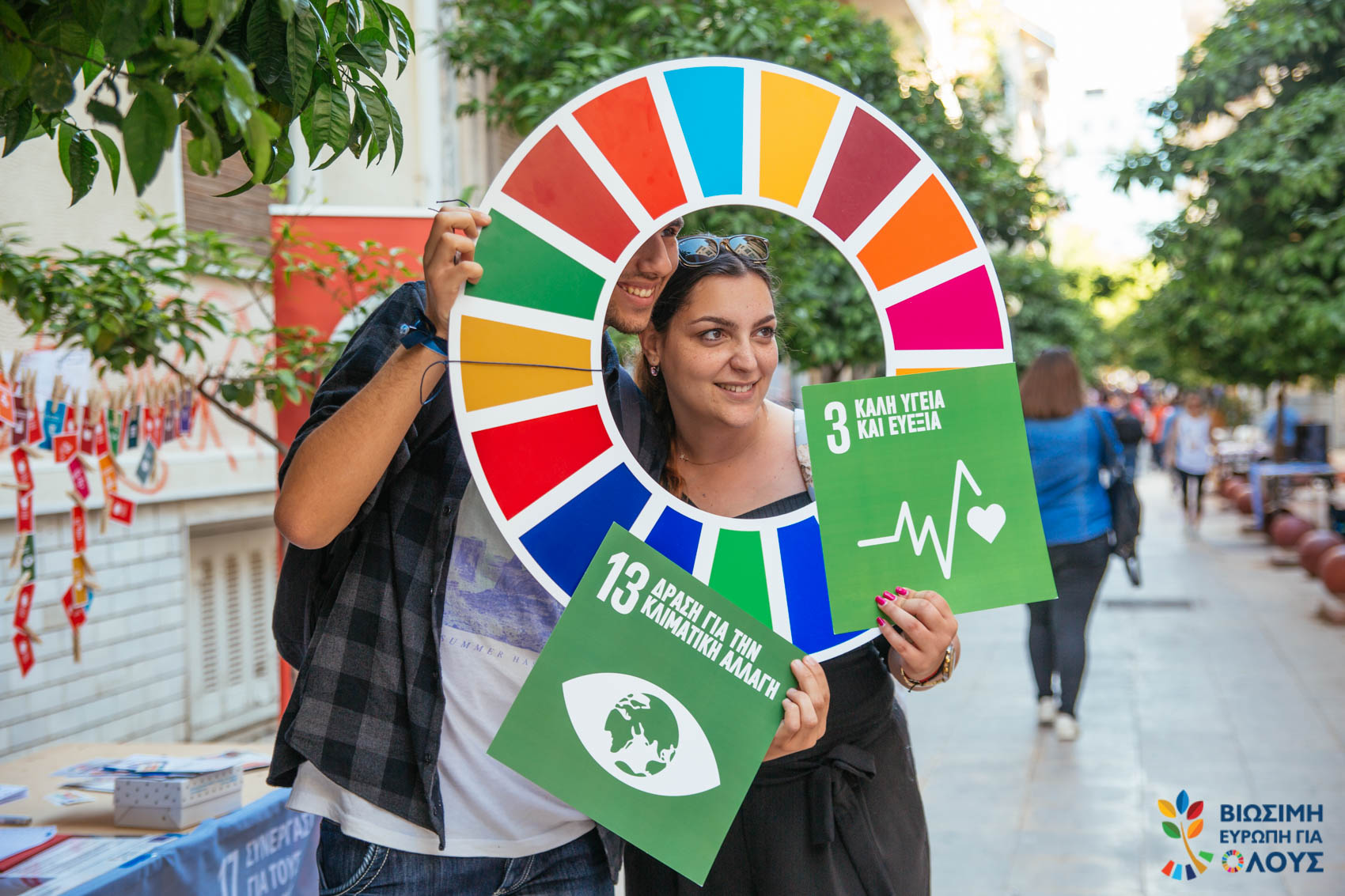
On Hope Street, the Hellenic Platform set up 17 Stations, one for each Global Goal, where there were organizations that informed passers-by for the Goal, through games and activities and through their work. All activities and presentations were focused on inequalities and the interlinkages of the Goals. All games, presentations, workshops, activities, even music concerts were not only in Greek, but also in English and in some cases in more languages, so that everyone can participate, get informed and enjoy.

More than 40 organizations took part with more than 120 volunteers and representatives, who informed more than 1500 people. The organizations were from different sectors, including businesses, projects, and universities. Politicians, actors and famous journalists also passed by to get informed and talked with the organizations about their action.

Hellenic Platform for Development coordinates Greek Non-governmental Organisations performing in the fields of international development cooperation, humanitarian aid and development education. It currently represents different NGOs supported by a large segment of the Greek society and with a significant activity nationwide and in many developing countries.

We need to accelerate the transition towards a fair and ecological society, according to IFOP-Association 4D poll

By Vaia Tuuhia and Carole-Anne Sénit, Association 4D

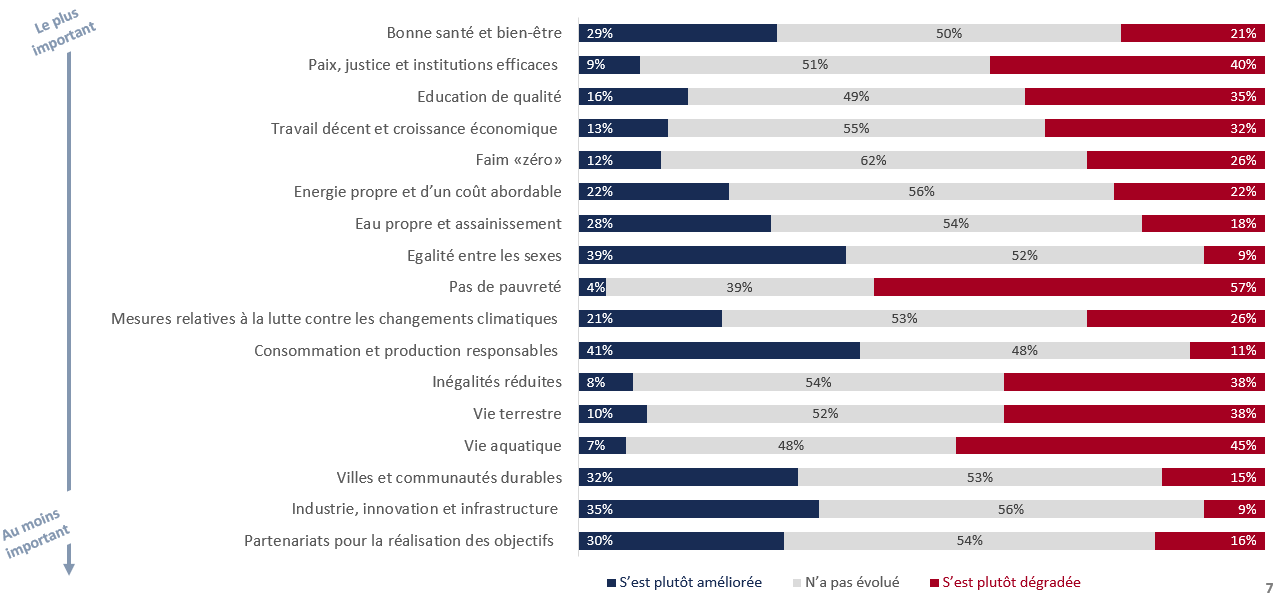
Question replied on the graphic: Would you say that the situation on your chosen goals has got better, stayed the same, or got worse over the past 12 months?

French people strive for a peaceful society

IFOP has conducted a poll for Association 4D in partnership with the United Nations’ My World 2030 survey in the run up to the 2018 High Level Political Forum, which gathers all the member states of the United Nations in New York from 9 to 18 July. Every year, member states report to their counterparts and civil society on the actions they implemented to contribute to build a more sustainable and inclusive world. Among the 17 challenges presented to the participants, the promotion of just, peaceful, and inclusive societies has been marked as one of the main priorities by 50% of the respondents. And yet, only 9% of them consider that progress has been made in this area over the past 12 months. This is a powerful message in response to rising populism, the selfish and isolationist behaviors of states, and the shrinking of civic and democratic space in France.

The other issue marked as a priority by almost 6 respondents out of ten relates to health and the promotion of well-being for all at all ages (58%). The greed for (over)consumption has been substituted to the need for a healthy and balanced life, respectful of others and the environment.

The 17 challenges presented in the poll are based on the Sustainable Development Goals (SDGs) of the United Nations’ 2030 Agenda, a societal project which all member states committed to on 25 September 2015. Taken together, the SDGs constitute an inspirational and transformational plan of action that is supposed to pull us away from the tipping points beyond which our environment would fall into a state much less favorable to the development of human societies. From the degradation of marine and coastal ecosystems to persisting poverty and rising inequalities, the daily warnings remind us of the urgent need to depart from the status quo.

France needs to change its course of action

Despite the adoption of the SDGs 3 years ago, we can only point out the difficulty of France to engage in such transformational plan, and to adopt and implement the needed public policies to achieve the SDGs. Respondents indeed feel that important setbacks have been taken place in France over the past 12 months on poverty (SDG 1) – 96% of the respondents consider that the situation on this issue has not gotten better. The state of the world’s oceans (SDG 14) has not gotten better for 93% of the people surveyed. As for inequalities among and within countries (SDG 10), 92% of the respondents consider that they have not been reduced.

Yet a contingency plan exists: the ambitious implementation of the 2030 Agenda by France, along with its European partners, can accelerate the transition towards a fair and ecological society. However, the IFOP poll indicates that merely 6% of the population seem to be aware of the 2030 Agenda and the SDGs. Yet the goals will hardly be achieved without civil society, business, and public authorities taking ownership over the SDGs, and designing collective programs, policies, and strategies for their implementation.

The national roadmap for SDG implementation must be discussed by citizens

The French roadmap for SDG implementation is a great opportunity to foster citizen and decision-makers’ knowledge of and ownership over the 2030 Agenda. Steered by the State Secretary to a fair and ecological transition Brune Poirson and defined in partnership with civil society, this roadmap will be submitted to a series of consultations between January and March 2019, before its interministerial endorsement. This consultation phase must include citizens. Only with massive citizen participation will the shared implementation of the 2030 Agenda bring us closer to its objectives: transforming our world into an inclusive, safe, and sustainable environment allowing each and everyone of us to (re)bound with ourselves, with others, with nature, and to thrive in a fairer and more peaceful globalization.

Press contact: Vaia Tuuhia (Association 4D) +33 (0)7 81 65 51 47

IFOP contact: Adeline Merceron / Frédéric Dabi +33 (0)1 45 84 14 44

Association 4D was created after the Rio Conference in 1992 to build some expertise on sustainable development. They develop their activities at local, national and international level sharing with their network a vision of preserving the planet resources while reducing inequalities thanks to democratic practices.

Hungarian NGOs establish a roundtable on SDG implementation

By Klara Hajdu, CEEweb for Biodiversity

Establishing a structured dialogue between the government and social partners on SDG implementation is the main objective of the Hungarian NGO roundtable on SDGs, which was established last year. Eleven Hungarian NGOs from various sectors came then together to establish the NGO roundtable, which apart from the communicating with the government aims to raise awareness among stakeholders and the public, and exchange information and expertise on SDG implementation.

As Hungary presented its VNR this summer at the HLPF, it was the first common exercise of the roundtable to provide an input to the process. Its short analysis and recommendations were included in the report along with inputs from other non-governmental partners, even though NGOs criticised the lack of dialogue and transparency in the VNR process, for instance that the report was only made public in its final form just before the meeting in New York.

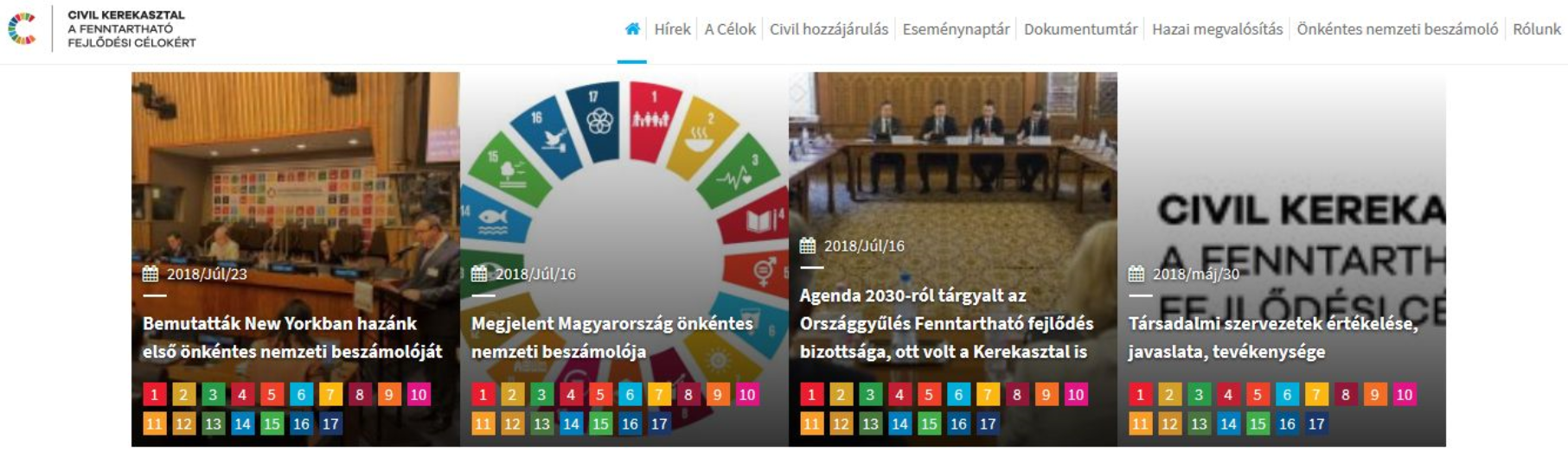
As the roundtable also sees it is important to provide a reliable picture on the state of national SDG implementation, on its Hungarian SDG portal it shows 78 indicators along the 17 SDGs to present Hungarian situation in various fields like reflecting on the risk of social exclusion, energy use per capita, PISA results, public debt, suicide rate, youth unemployment rate, etc.

CEEweb for Biodiversity is a network of non-governmental organizations in the Central and Eastern European region working for 20 years in 20 countries. Our mission is the conservation of biodiversity through the promotion of sustainable development.

How the SDGs are being highjacked and what to do about it

By Marie-Luise Abshagen, German NGO Forum on Environment and Development

The use of the SDGs as a reference in the political discourse has more or less become quite a mainstream thing to do. We can see this in domestic policies, on the EU level as well as in international processes. This can be a good thing. It means we can have a discussion on this global plan of action, without having to spent time to convince our political counterpart of the validity of this framework.

Nevertheless, after three years of the 2030 agenda, we still see little willingness to go about it and actually start doing what is written in the SDGs. We see lots and lots of talk. And, what might be even worse, we see that the SDGs are increasingly being misused for inherently unsustainable structures and processes, and that they are being captured by those who are not the least interested in changing the current status quo.

The SDGs, for example, have become a justification for agribusiness worldwide. Even though it has been proven false that highly-productive agricultural systems through resource intensive, GMO-based industrial farming can achieve the objectives of decreasing hunger, malnutrition and poverty – these have also been the cause of the worldwide destruction of ecosystems and livelihoods. Yet, corporations, governments and international institutions argue big agribiz will help implement the SDGs.

We also find the goals as a rationale behind the push to mine the oceans’ mineral resources. In this deceptive logic, deep sea mining is being framed as a sustainable form of resource extraction necessary to achieve a renewable, fossil free energy system – and thus necessary for the better of humanity. Conveniently, its supporters, among them many governments as well as UN bodies, leave out the fact that there cannot be any sustainable mining in the oceans. Every intrusion will inevitably destroy biodiversity, the relevance of which for the earth’s systems, the food chain and eventually for humans we cannot even begin to fathom.

Banks, monetary institutions, economists, development agencies, governments – all of them link the SDGs to economic empowerment and sustainable growth. Yet, we know that the global economy is not working for the vast majority of people. The gap between rich and poor, between and within countries continues to grow at a worrisome trend. Even in the richer countries, many are beginning to feel this gap. Those in the Global South have lived with this reality for decades and centuries. How is it that hardly anyone dares to challenge the logic of implementing the SDGs through economic growth with yet again the same development tools? Isn’t it absurd to believe that in order to end poverty we need to install the same kind of economy we know to actually be the main driver for poverty. Or is one only a proper citizen of the world if you are a digitally connected entrepreneur?

Finally, speaking of corporations – four in ten of the world’s largest companies already reference the SDGs in their corporate reporting. Does this really make them more sustainable? Should we trust in partnerships with these multinationals, simply because they have understood the modern sustainability narrative and included some form of SDG reference into their business plans, reporting or PR campaigns? I would argue not, if this does not change business practices as a whole – which means opting out of their consumption driven business model based on ever more resources and cheap labor and as little regulation as possible.

The 2030 agenda has become a sort of endorsement for some of the most problematic processes in our current economic system. Just slap on the SDGs, and people won’t be suspicious of the validity of what you are doing.

In some ways, this is the fault of the SDGs themselves. They are not by nature a progressive text but highly subjective to interpretation, full of contradictions. If you believe in the current economic model, the SDGs can be your go-to guidelines. Similarly, if you want to achieve progressive change, they are a projection screen for almost any political strategy you might be following.

It is so very important to understand this properly and to actively act against it. The logic of big singular and mainly economically driven solutions has again and again proven to be false, and only leading to more profits for the already rich elites. This cannot be what we agree to when we call for the implementation of the SDGs.

For all of us, the leading question has to be: What kind of development and sustainability model am I actually (maybe involuntarily) promoting? We have to be careful using the goals the right way and not to fall into a system reassuring role. All to happily governments use NGOs and other civil society actors to support their own policies. And while it is good in some cases and necessary in others for us to play the cooperative part, we must be careful not to lose our power of opposition and to apply pressure where change is so urgently needed.

If we don’t refuse the debt-driven economic model with its one-size-fits-all solution, if we don’t defy the idea that the key to protecting nature lies in a more efficient use of ever new resources, and if we don’t reject the notion that technologies will save us from ourselves simply because humans will be smart enough to finally invent that one thing to solve our crises – the story of the SDGs will not be a happy one.

We must be aware of the flaws of the SDGs, the way they are being used and by whom. We must carefully and continuously set the narrative around them. We must constantly challenge our partnerships with other stakeholders. This also means to reflect on our own communication strategies and political practices.

The good news: In order to reduce inequalities and protect the planet, most of the steps are clear to all of us. Whether we argue within the capitalist norm or not. Solutions range from alternative money systems to a financial transaction tax, from cooperative economies to binding regulations on multinational companies, from establishing protected areas with the help of indigenous communities to cradle-to-grave resource usage and production systems.

It is our responsibility to link real change to the SDGs and challenge anything that only pretends to be.