NEWSLETTER FROM THE SDG WATCH EUROPE NETWORK – October 2018

View this newsletter in your browser

Mobilizing across the globe to achieve the Agenda 2030 – #Act4SDGs

By Ingo Ritz, Global Call to Action Against Poverty (GCAP)

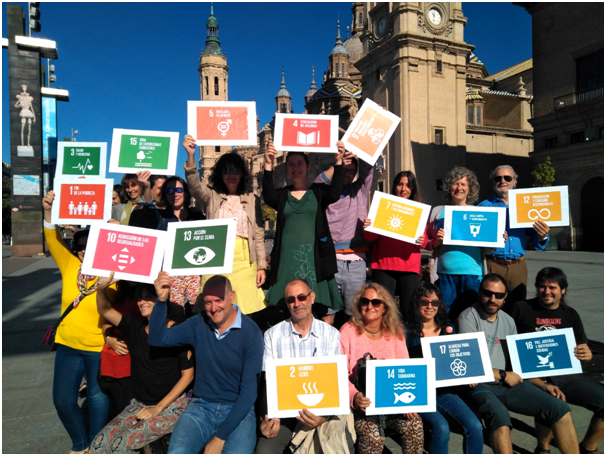
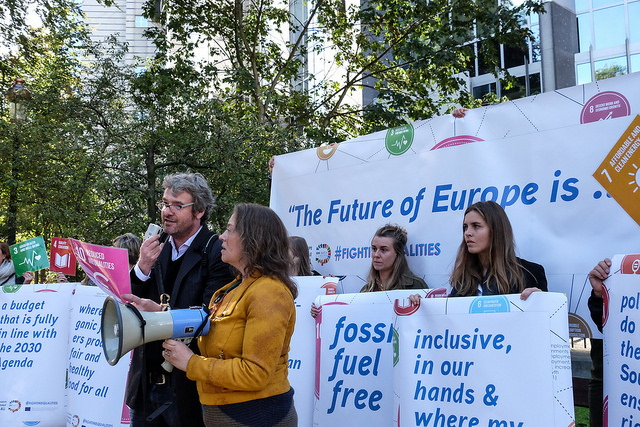
On 25 September, a million people in 1,248 cities & communities in 143 countries came together in 1,666 actions across the world for the Global Day of Action 2018 – Act4SDGs to mark the anniversary of the Sustainable Development Goals and the Agenda 2030.

Globally, the Global Call to Action Against Poverty (GCAP) organised this Global Day of Action in partnership with Action for Sustainable Development (A4SD) and the UN SDG Action Campaign.

There were actions across Europe. In Brussels, SDG Watch Europe and a coalition of civil society organisations launched the Manifesto for a Sustainable Europe for its Citizens with core demands for the new political leadership of the EU and the candidates in the European Parliament Elections 2019. We believe the 2030 Agenda should be the compass for all European policies – and provides a positive vision for the people of Europe for a sustainable future.

In the past month, we’ve also mobilized together on 17 October 2018 – the International Day for the Eradication of Poverty. The number of people living in poverty remains very high – even while the percentage of people living in extreme poverty is decreasing. The latest numbers show that the target of SDG 1 to eradicate poverty by 2030 will not be achieved.

In the EU 23.5% or 118 million people are living at risk of poverty or social exclusion, according to the EAPN. The number of people suffering from hunger globally increased again in 2017 – to 821 million people says the FAO. The World Hunger Index notes that based on the current trends there will be hunger in 50 countries in 2030. All this represents a failure of our political and economic systems

The Agenda 2030 for Sustainable Development is meant to reverse these trends and create the transformation to end poverty, hunger and inequalities within the planetary boundaries by 2030. The first target of SDG 10 (Reduced Inequalities) states that the 40% poorest shall have a higher share of the growth than the national average. Yet 82% of the wealth created last year went to the richest 1%, where only 1% of wealth went to the poorest 20%. The gap is widening and not closing.

To create the needed just transition, governments must end the neoliberal policies of the last decades including the focus on economic growth rather than human well-being. This includes tax justice – by creating progressive tax systems including for wealth and closing the loopholes allowing tax avoidance, decent work – including a living wage as minimum wage and equal pay and labour rights for women, social protection, health and education for all – and the end of the use of fossil fuels, plastic as well as pesticides and harmful chemicals.

These policies are possible and successfully implemented in a number of countries – for example Spain just announced the closure of most coal mines by the end of the year agreed in a deal with the trade unions.  Unfortunately the reality is different. While all governments have officially committed to the 2030 Agenda, and a number talk about them (at least), many are hesitant to implement these transformative policies. The European Commission hasn’t even developed an implementation plan for the Agenda 2030. This is a shame – three years after the adaption of the agenda.

Many decision makers are influenced by well financed and powerful private sector lobbyists, by decades of free markets and growth ideology as well as more recently by right-wing populism. In a number of countries, authoritarian rulers came into power pursuing policies for the rich and violating human rights of activists, trade unions, media and marginalised people. The results of the elections are Brazil are extremely worrying.

What can we do to change this trend? The call must come from the people – in communities and different constituency groups, such as women’s groups, youth, trade unions, environmental activists and intellectuals. We believe that only people’s power will create the needed pressure for transformative change.

The good news is: There are social movements of people fighting for their rights – from the Women’s Marches and the #metoo movement globally, to the fight against privatisation of water in El Salvador to the protests against coal mining in Germany. On 25 September 2018, we proved again with the Global Day of Action – Act4SDGs that many people around the world want to be part of the change to transform the world into the vision of the Agenda 2030.

Together, as part of the global movement for justice and rights, we can end poverty and achieve the Agenda 2030!

Global Call to Action Against Poverty (GCAP) is a network of over 11,000 civil society organisations (CSOs) organized in 58 National Coalitions and in constituency groups of women, youth and socially-excluded people, among others. GCAP supports people in their struggles for justice and brings individuals and organisations together to challenge the institutions and processes that perpetuate poverty and inequalities. Together, we defend and promote human rights, gender justice, social justice, climate justice and the security needed for the dignity and peace of all.
Localizing SDGs through Capacity Building: mission possible

By NGO Diversity Development Group (DDG)

Localizing SDGs through Capacity Building (LoCaB) project was implemented from June – October 2018 in Lithuania. The underlying aim of the LoCab project was to raise awareness on links between inequalities with cross-cutting approach on international migration and encourage local actors to localize SDGs.

The main course of action for awareness raising and building the capacity of local actors consisted of: 4 workshops were held in municipalities of largest Lithuanian cities (Kaunas, Klaipėda, Šiauliai and Panevėžys) with the focus on inequalities and cross-cutting topic of international migration. Each workshop targeted 10 – 15 local actors (members of local communities, NGOs, education institutions, municipal workers from different departments, youth organizations, social workers and etc.) with 6 hours engagements.

Workshops participants received accompanying handouts on ‘Links between inequalities, migration and SDGs’ developed for this project.

During the workshops information from participants was gathered and served as a primal source of information for the ‘Policy paper & Package of Recommendations’ which was introduced during the final event Exchange with policy makers, where policy guidelines indicating ways in which SDGs could be localized through different policy making areas including, but not limited, to equal opportunities and migration policies, were presented and discussed. These recommendations aims to encourage decision makers to localize SDGs in municipal strategic planning documents.

The LoCaB project is funded by Make Europe Sustainable for All project, which aims to promote the implementation of the Agenda 2030 by and in the EU, by strengthening civil society networks working on SDG implementation across the EU and highlighting to the public and political leaders at the local, national, and European level that SDG implementation is crucial for an inclusive, sustainable and resilient future for all people and planet.

Founded in 2012, NGO Diversity Development Group (DDG) is a non-profit organisation in Lithuania with an objective to carry out social (scientific, applied, and infrastructural) projects and research in the field of human rights, education, equal opportunities, diversity, migration and integration. The strategic aim of the organisation is to improve and manage diversity towards a sustainable, tolerant and socially responsible society. 

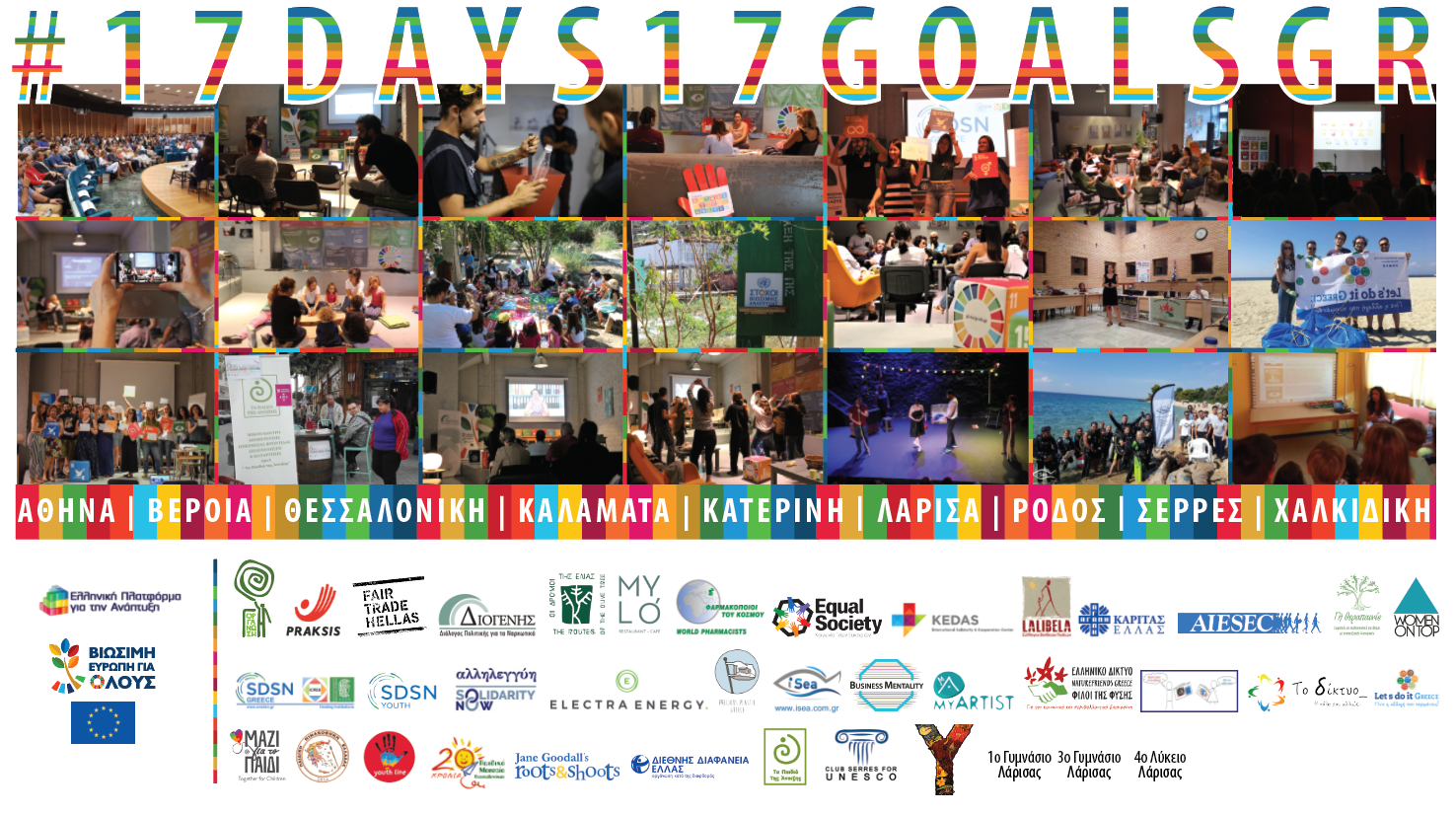
Act4SDGs in Greece – #17days17goalsgr

From September 14th to 30th September, the Hellenic Platform for Development coordinated the largest raising awareness campaign in Greece for the Global Goals, on the occasion of the completion of the three years since their adoption and within the framework of the project Make Europe Sustainable for All.

More than 360,000 citizens were informed about the Global Goals through the campaign #17days17goalsgr, involving 41 civil society organizations, institutions and schools, that implemented 34 actions, among others: children’s workshops, theatrical events, public events, cinema nights, informative workshops, discussions and exhibitions, promoting ideas to integrate the Goals into our everyday lives and local changes in 9 cities in Greece: Athens, Veria, Thessaloniki, Kalamata, Katerini, Larissa, Rhodes, Serres and Chalkidiki.

The campaign #17days17goalsgr of the Hellenic Platform was also the largest part of actions in Greece in the context of the global campaign #Act4SDGs culminating on 25 September at GA of UN in New York.

You can see some of our best moments in this video.

Hellenic Platform for Development coordinates Greek Non-governmental Organizations performing in the fields of international development cooperation, humanitarian aid and development education. It currently represents different NGOs supported by a large segment of the Greek society and with a significant activity nationwide and in many developing countries.

MAKE EUROPE POVERTY FREE

By European Anti-Poverty Network (EAPN)

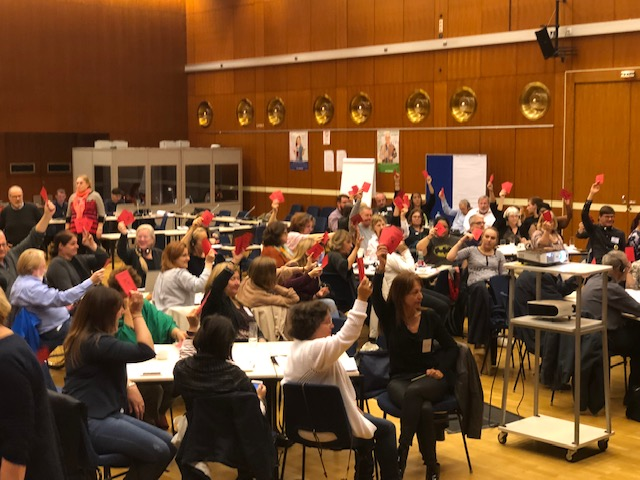
The General Assembly of the European Anti-Poverty Network met in Vienna, just one week after the Post-growth Conference at the European Parliament and two weeks after President Juncker’s State of the Union address. The meeting took place at a time of rapid political and social change, with the coming European Parliamentary Elections in 2019, a year which will see a new President of a new Commission, and the appointment of a new president of the European Council. Other factors such as rising far right populism, climate change, and the UK’s departure from the EU – which is symptomatic of disaffection with political institutions and the prevailing economic model – also provide significant and shifting challenges.

At this time of change, we, delegates of EAPN members from 31 national networks and 13 European Organisations, representing thousands of NGOs throughout Europe, believe that the eradication of poverty and social exclusion is a public good, and is beneficial for everyone in society. The fact that 118 million EU citizens (including 21.6 million children) – meaning 23.5% of the EU population (not counting people in other countries of Europe) – are still living at risk of poverty or social exclusion, represents a failure of our political and economic systems, which need a radical reprogramming in order to tackle poverty and social exclusion.

We know that change is possible, at local, national and European levels. We see important political commitments to tackling poverty, via the Europe 2020 targets, via the Sustainable Development Goals, and via the Social Pillar – although these are not visible enough at national and local levels. What we need most in 2019 is the transformative implementation of these high-level political commitments, to ensure meaningful changes to the lives of people experiencing poverty on the ground.

Vera Hinterdorfer, EAPN Die Armutskonferenz (EAPN Austria) activist with direct experience of poverty:
“When I first heard about the Pillar of Social Rights, I thought ‘Great, another letter of intent’. But I was wrong; if we don’t believe in it, why would anyone else? How would we be able to motivate people? Together we have the power to change things, we have to use it!”

Today, we call upon all political parties and all candidates for the European Parliamentary Elections to commit to securing a Social and Sustainable Europe, a Europe free of Poverty, characterised by equal rights, opportunities and social cohesion. This means a political commitment to make the “EU Poverty Free” – which should be included in all electoral programmes. This will guarantee the continuation of high-level political commitment to the eradication of poverty. Making Europe Poverty Free is a political choice which recognises citizens’ rights, ensures access to those rights, and reflects the solidarity felt by Europeans.
Concretely, this would mean political parties and candidates to the European Parliamentary Elections:
1. Recognise the limits of the EU’s development model on social cohesion and the negative impact of 10 years of austerity, ‘trickle down’ economics, and decades of relentless pursuit of economic growth at the expense of people and the environment.
a. European macroeconomic policies must be reoriented to reduce inequality, ensure a more even redistribution of resources throughout society, and guarantee wellbeing
b. In-work poverty must be recognised as a major challenge to society and a political commitment is needed for the creation of quality jobs and inclusive labour markets
c. The Stability and Growth Pact must be redesigned as the Stability and Wellbeing Pact.
2. Ensure all European countries have strong social protection systems, including Decent Minimum Income schemes and appropriate living wage legislation.
3. Ensure that the next EU budget ‘empowers and protects’ the 25% of Europeans living at risk of poverty and social exclusion.
4. Ensure meaningful space for the participation of civil society and of people experiencing poverty in national and European processes which impact on poverty and social exclusion.
5. Respect human rights and equal opportunities legislation in all electoral programmes and future actions, as required by European and international treaties.
6. Recognise that European economic development must not sustain, generate or promote conflicts, poverty and pollution elsewhere.

Sérgio Aires, EAPN President, said:
“We are committed to being the change that we need. We know that to truly eradicate poverty, we need a stronger anti-poverty movement in Europe, and throughout the world. Today, we reaffirm our commitment to strengthening the anti-poverty movement, reinforcing our collective beliefs and working to truly become a social movement of, with and for people experiencing poverty. We invite all anti-poverty organisations and activists to join our movement! Together, we are stronger.”

For further information, contact Leo Williams (Director) leo.williams@eapn.eu, or Elke Vandermeerschen (Communications Officer), elke.vandermeerschen@eapn.eu | Tel. +32 2 226 58 50

Newsletter from the SDG Watch Europe network –  Special SDG Anniversary 2018

View this newsletter in your browser

#Act4SDGs – Italy: Mobilizations across Italy, Agenda 2030 monitoring report & video on the SDGs

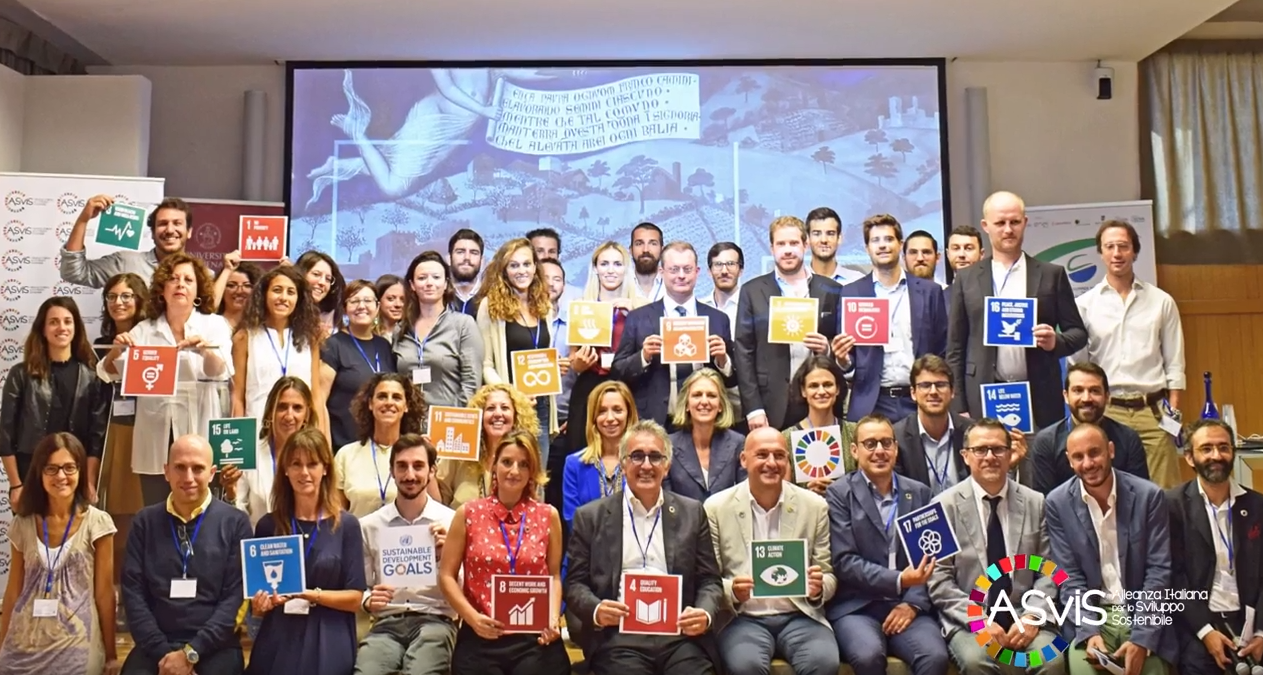
For the 3rd anniversary of the 2030 Agenda on 25 September 2018, the Italian Alliance for Sustainable Development (ASviS) has put together a video on the mobilization of many people and organizations for the #ACT4SDGs campaign.

In addition, Asvis have put together a fantastic video on all 17 SDGs.

You can also read GCAP Italia’s comprehensive Agenda 2030 monitoring report – Sustainable development: for whom? A critical vision for coherence of Italian and European policies. The report focuses on the analysis of certain topics and cases in which the connections between the SDGs are evident: the interdependencies between the local and global spheres, between the internal and external dimension, seeking to apply a systematic interpretation and identifying dilemmas and contradictions that limit the pursuit of sustainable development. On the basis of this analysis they have put forward proposals for the Italian government and Europe, and more generally to give civil society a stronger role not only in the “implementation of the 2030 Agenda” but also in its interpretation and development in a transformational sense.

#Act4SDGs – Netherlands – “The Netherlands in the next gear – Adopt an SDG live”

By Chantal Van den Bossche, WECF

WECF and Building Change organised the event “The Netherlands in the next gear – Adopt an SDG live” on 27 September in the Koorenhuis in The Hague.

The purpose was to answer “How can we bring the Netherlands into the next gear to achieve the Sustainable Development Goals?”. These were discussed by representatives of the youth organisations affiliated with the major Dutch political parties, and with MPs Michel Rog (CDA), Isabelle Diks (GroenLinks), Corrie van Brenk (50Plus), Anne Kuik (CDA), Chris Stoffer ( SGP), and Kirsten van den Hul (PvdA). The speakers also talked about what they had done with their SDGs in the past year and how are they going to commit to their SDGs in the near future.

In addition, Ida Bakhturidze, a champion of women’s rights in Georgia and gender coordinator of WECF’s Caucasus office, spoke about her work. CSOs ActionAid and Both Ends organised in depth sub-sessions on fair taxes, equality, and shrinking social space for CSOs. Recommendations of these sessions were give to the MPs present.  

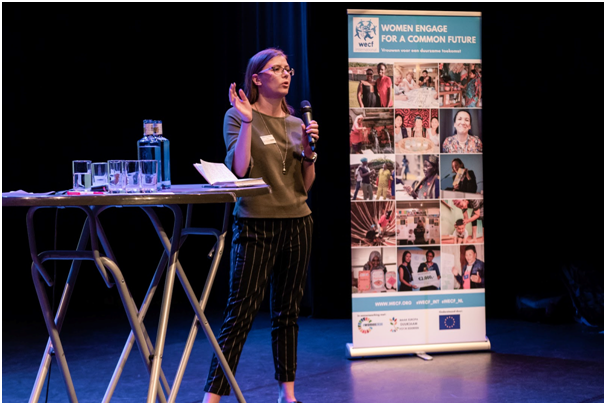
The conference was opened by Kirsten Meijer, WECF The Netherlands director. (see photo), the other photo is Sanne van de Voort (WECF) presenting the outcome of the women human rights defenders session.

Women Engage for a Common Future (WECF) safeguards our children’s future by creating a healthy environment and sustainable development for all. We strive for balancing environment, health and economy. We enable women and men to participate at local and global level in policy processes for sustainable development. Our network’s activities are based on our partners’ own visions and needs.

#Act4SDGs – Dublin: Rally hears calls for greater progress by Ireland on UN goals

By Caitriona Rogerson, Irish Environmental Network

In Dublin, campaigner rallied together on the Global Day of Action, 25 September, in the city centre to highlight the Sustainable Development Goals and Ireland’s efforts to implement them. The event was organised by All Together in Dignity Ireland, in conjunction with members of the DEAR project Make Europe Sustainable for All and Coalition 2030 and focused on the ‘Leave No One Behind’ promise.

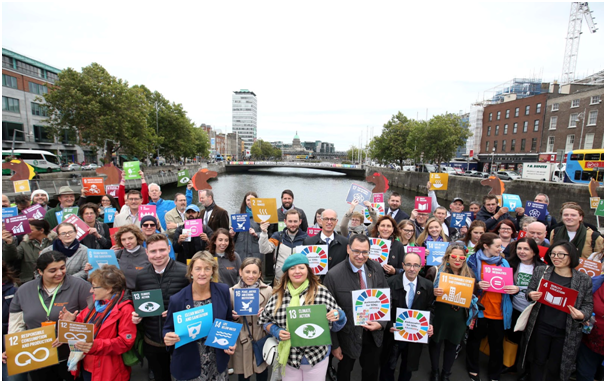
An enormous banner reading ’17 Global Goals and a Promise: To Leave No One behind’ was hung from the Rosie Hacket bridge in Dublin City Centre from 7am – 7pm, and throughout the day, a team of volunteers talked to passersby about the goals. In addition, the public was invited to participate in a ‘Humans of Dublin for the Global Goals’ photo challenge, and the result is a photo montage of over 200 citizens holding an SDG.

At 1.17pm (to symbolise the 17 Goals and 1 Promise) over 100 members of the Coalition, alongside government representatives and ambassadors from 7 EU countries gathered for a group photograph on O’Connell Bridge. The whole group then walked to the Garden of Remembrance to hear messages of support from the President of Ireland and the Belgian Ambassador, as well as statements connecting the ‘Leave No One Behind’ promise to each of the 5 P’s – People, Planet, Prosperity, Peace and Partnership. Finally two young asylum seekers living in Direct Provision in Ireland gave a spoken word performance.

The day was a great success with #ACT4SDGs and #Ireland4SDGs trending on twitter in Ireland, and in addition it was covered by the Irish Times:  https://www.irishtimes.com/news/politics/rally-hears-calls-for-greater-progress-by-ireland-on-un-goals-1.3640993

The Irish Environmental Network is an umbrella network that works to support environmental NGOs through access to funding and services. It consists of environmental NGOs that carry out their work through practical conservation work, campaigning, lobbying and raising public awareness of environmental and conservation needs.