Food for Thought: Sustainable Development Goals as media agenda

By the Hellenic Platform for Development

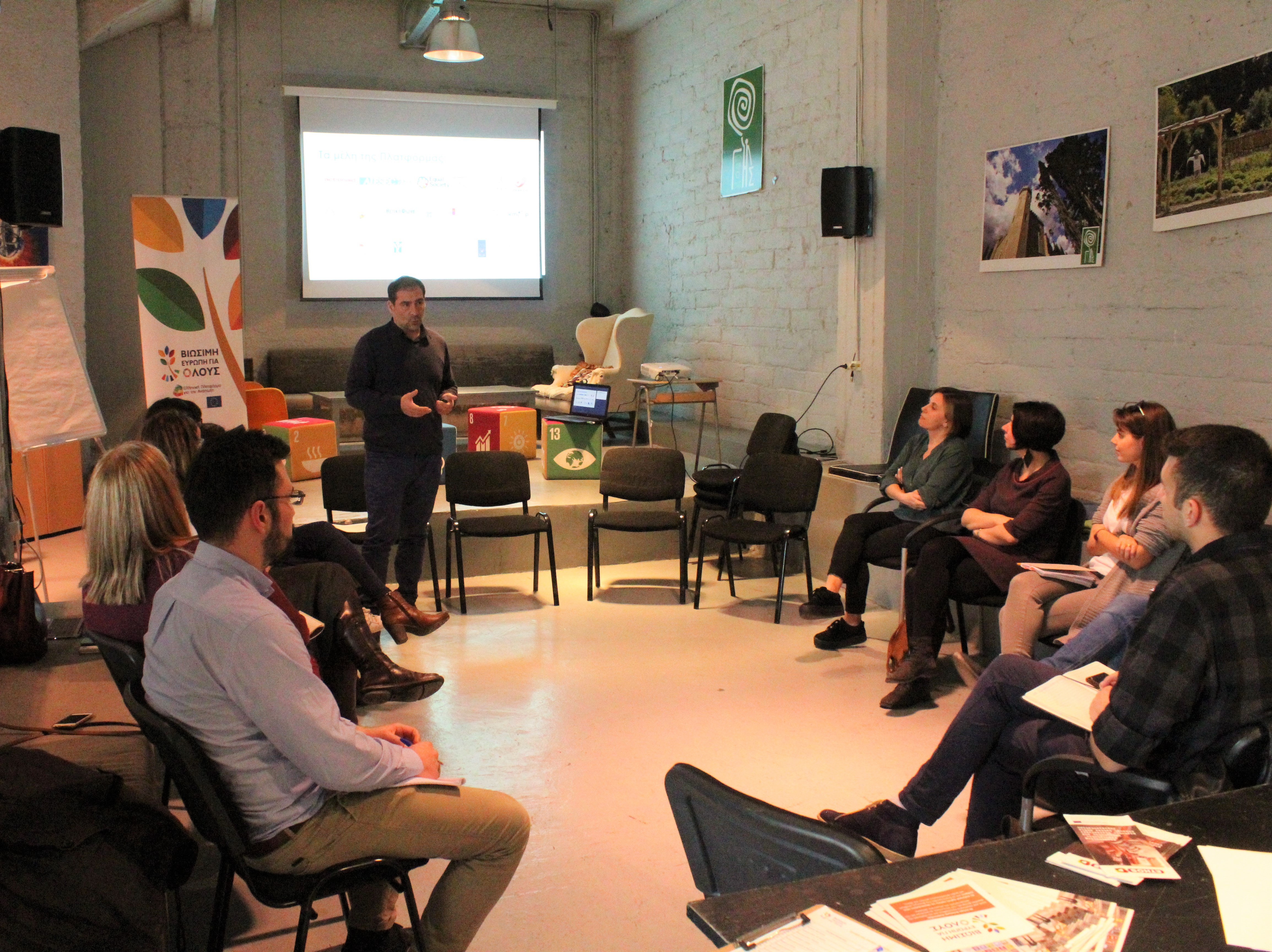
On 11 April 2019, the Hellenic Platform for Development held a participatory workshop for journalists and communication officers of civil society organizations on communicating on the Agenda 2030 and global issues.

The workshop, “Food for Thought: Sustainable Development Goals as media agenda”, focused on good practices for both national and international media on how to effectively communicate to the Greek public global issues such as poverty, inequality, human rights and climate change. It was implemented and organized in the framework of the European project “Make Europe Sustainable for All” and in collaboration with members of the Hellenic Platform for Development – Fair Trade Hellas, ActionAid Hellas and Organization Earth, with the participation of a representative from the British Council of Greece. See more info on our website: http://hellenicplatform.org/trofi-gia-skepsi-sdgs/

European Women’s Lobby: How-To Guide on Campaigning for a Feminist Europe

By the European Women’s Lobby (EWL)

The European elections are almost here!

At the European Women’s Lobby, we believe that it is crucial we vote for a feminist Europe this May, with more women elected to the European Parliament than ever before.

Indeed, statistics show that women vote less than men (only 40% for the 2014 European elections) which shows us that women across Europe do not feel represented or that their needs are prioritized on the European stage- The time to change this is now!

Women represent 52% of the European population and, without their participation, significant voices are lost.

We believe that this is a critical democratic issue and strongly believe that we must work together in ensuring that all women feel represented in Europe and commit to vote at the next elections. Our election manifesto, 50/50: Women for Europe – Europe for Women, highlights some of the changes that we can make towards a more fair and equal society.

Therefore, we are excited to share with you some campaign messages specifically designed for women candidates running in the elections and helpful tips on how to call for more women to vote. For more information on how to use and disseminate these messages amongst your members and partners, please refer to our handy little how-to guide.

Together, let us seize this unique democratic moment to drive forward an equal, inclusive, diverse and democratic Europe, a Europe that leaves no one behind!

We hope you will find it useful and use it in this last leg of your campaign.

You can also share our petition for a feminist Europe and pledge for future Members of the European Parliament to sign.

How-To Guide

Welcome to this how-to guide for using the European Women’s Lobby (EWL) 50/50 Campaign Messages Pamphlet. This short guide explains how to disseminate and use this tool to your members, colleagues and partners.

The pamphlet provides campaigners, activists and candidates with some key messages that the EWL invites all to use during their European election campaign efforts.  The messages included are social media ready calls for actions on burning issues as well as handy “sizzle” messages that can be used in short campaign videos or social media messages. The pamphlet also includes links to all the EWL European election campaign materials, which are highlighted in green.

We encourage you to share this handy campaign messages pamphlet across your networks and to use the messages in your campaign videos, so that women across Europe can be sure that their rights will not be diminished during this next European session.

Here is an email template you can use when sharing across your networks:

Dear All,

We are proud to share with you today the European Women’s Lobby (EWL) Campaign Messages Pamphlet; a useful tool to help you share key messages on women’s rights for the European elections 50/50 campaign.

The pamphlet attached includes messages on the most burning issues that must be prioritised during the European election campaign to ensure that women’s rights are at the forefront of the political agenda. The messages can be used for any of your social media actions and can be used in any of your campaign engagements or events in the coming weeks.

Here is how we recommend that you use the Campaign Messages Pamphlet

For Twitter or Facebook, simply copy and paste the messages for your social media activity on the campaign. Please make sure you tag the EWL in your posts and use the campaign hashtags so that we will ensure to give your campaign additional visibility.

EWL Twitter Handle: @EuropeanWomen

Campaign hashtags: #ThistimeImVoting #WomenforEurope #EuropeforWomen #FeministEurope

Here’s an example:

We demand a better future for everyone across Europe! Let’s work together to ensure that all women and girls can fulfil their potential, in a secure and supportive environment. A safer Europe for women is a safer Europe for everyone! @EuropeanWomen #WomenforEurope”

You can also use the messages provided in your own political campaigns if you are standing for election in your country! Through these messages you will be echoing the voices and priorities of over 2000 women’s civil society organisations in Europe.

Use the messages in the pamphlet that begin with My name is… I am running for…. in a short campaign video or a vox-pop social media video. Simply follow the instructions of this how-to video (it explains how to use Facebook live, which works the same way as Instagram live): https://blog.hubspot.com/marketing/facebook-live-guide.  

Would love to know more? Simply click on the green headings in the attached pamphlet to find our campaign manifesto, our candidate pledge and our election petition calling for a feminist Europe!

We hope you find this campaign tool helpful! Please feel free to contact us or the European Women’s Lobby directly to find out more about their work on achieving equality between women and men across Europe

Good Luck in all your elections efforts, Feminist wishes,

IRELAND: Presenting the Rediscovery Centre: the Irish National Centre for the Circular Economy

By Laura Niessen, Rediscovery Centre

The Rediscovery Centre is a creative space connecting people, ideas and resources to support low carbon living. We bring together the skills and expertise of artists, scientists, designers and craftsmen united in a common purpose of sustainability through resource efficiency and reuse. As the Irish National Centre for the Circular Economy, the Rediscovery Centre supports the development of a circular economy and advocates for a more resilient, equitable society.

The Centre is situated in a state-of-the-art ecological building. The Ballymun Boiler House was refurbished through the WISER LIFE project (www.wiserlife.eu) and demonstrates best practice building design, construction and operation. It also defines the building and environs as an educational tool to inspire, inform and lead positive behavioural change with respect to resource management and efficiency.

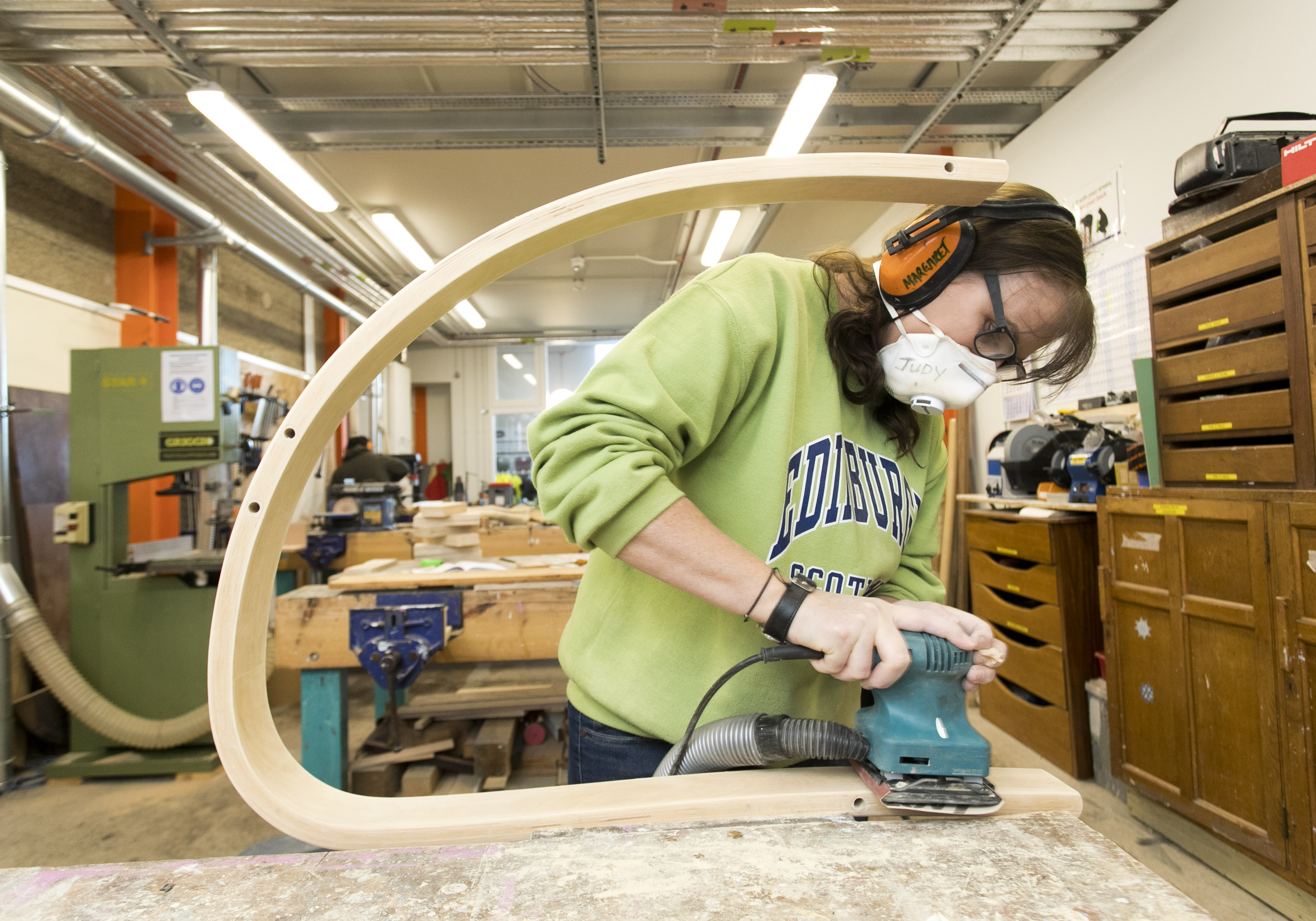
The Rediscovery Centre hosts a wide array of activities. Environmental education for sustainable development and STEAM (Science, Technology, Engineering, Arts and Maths) is provided to students of all ages and varying needs. Research programmes investigate reuse and circular economy opportunities in Ireland and policy work aims to promote sustainable consumption, climate action and the Sustainable Development Goals. The Centre hosts four reuse social enterprises Rediscover Fashion, Rediscover Furniture, Rediscover Paint and Rediscover Cycling. All businesses use discarded materials which are repaired and upcycled to new products. These creations as well as products from over 40 established and emerging Irish eco-designers are available in the Centre’s Ecostore.

All Rediscovery Centre activities support the implementation of the Sustainable Development Goals. Education workshops promote sustainable development, global citizenship and sustainable lifestyle with children and adults alike (SDG 4). We also input to the development of the national school curriculum ensuring the inclusion of sustainability elements. Through advocating and teaching about the circular economy and sustainable living, we drive sustainable consumption. Through our social enterprises we enable youth and others distanced from the workplace to access education and training through our work-based skills training programmes: supporting the provision of decent work and economic growth (SDG 8).

As the National Centre for the Circular Economy, a key focus of our work is underpinned by SDG 12: responsible consumption and production. We work towards the fulfilment of several targets under SDG 12. These include education and outreach to reduce the consumption of resources, advocating against food waste, promoting circular practices (waste prevention, reduction, recycling and reuse), and educating about global citizenship and sustainable development. Finally, our work relating to SDG 13: Climate Action, is delivered through education programmes and advocacy work we undertake to influence the development of national and local climate policy.

In order to support the implementation of the SDGs in Ireland, the Rediscovery Centre actively participates in Coalition 2030, the Irish NGO coalition for the SDGs. We also host events that link to the broader SDG agenda for example, this year we hosted the National Circular Fashion Conference on 26th April, 2019. This highly successful conference facilitated conversations with key practitioners within the circular fashion scene and examined the environmental, social, and economic impact of fashion industry.

For further information about our work on the circular economy and the Sustainable Development Goals, visit our website (www.rediscoverycentre.ie) or email info@rediscoverycentre.ie.

#EU2endFGM election campaign

By End FGM European Network

The End FGM European Network is a European umbrella network of 24 organisations working to end female genital mutilation (FGM).

With our 2019 EU election campaign #EU2endFGM, we want to encourage EU candidates to commit in taking concrete action to end female genital mutilation (FGM).

Worldwide 30% of women suffer from physical and/or sexual violence and at least 200 million women and girls are affected by female genital mutilation (FGM), which is a global practice strongly linked to social norms shaped by tradition, and not connected to any specific religion. In the European Union alone, one out of three women experiences physical and/or sexual violence since the age of 15, and currently close to 1 million women and girls live with the lifelong consequences of FGM.

The past European legislature has paid an increasing attention to the issue of violence against women and girls, gender equality and FGM both in Europe and beyond. But there is still a lot to be done, and now it is time to walk the extra mile and scale up those commitments and actions to make sure to deliver a more equal world free from violence to the future generations.

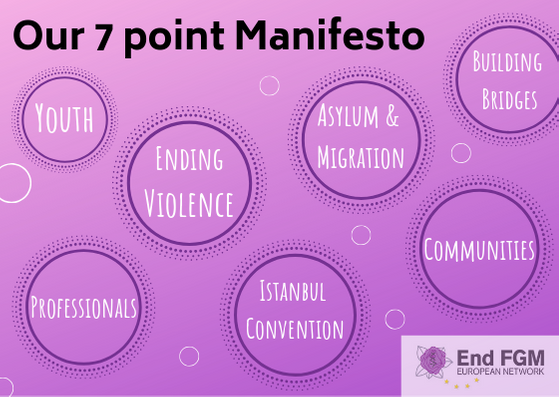
In the run up to the 2019 European Elections, the End FGM European Network and its members are conducting a Campaign in 7 points to ensure violence against women and girls, including FGM, is high on the new EU representatives’ agenda. We invite all candidates to sign our Manifesto here for:

  • Ending violence
  • Ratification of the Istanbul Convention
  • Respectful asylum & migration policies
  • Engaging affected communities
  • Including young people
  • Training professionals
  • Building bridges with other regions of the world

Europe needs ‘sustainability and wellbeing pact’

Nick Meynen, EEB

More than 200 experts use Europe Day to call for systemic changes to deal with the climate crisis, species extinction and inequality.

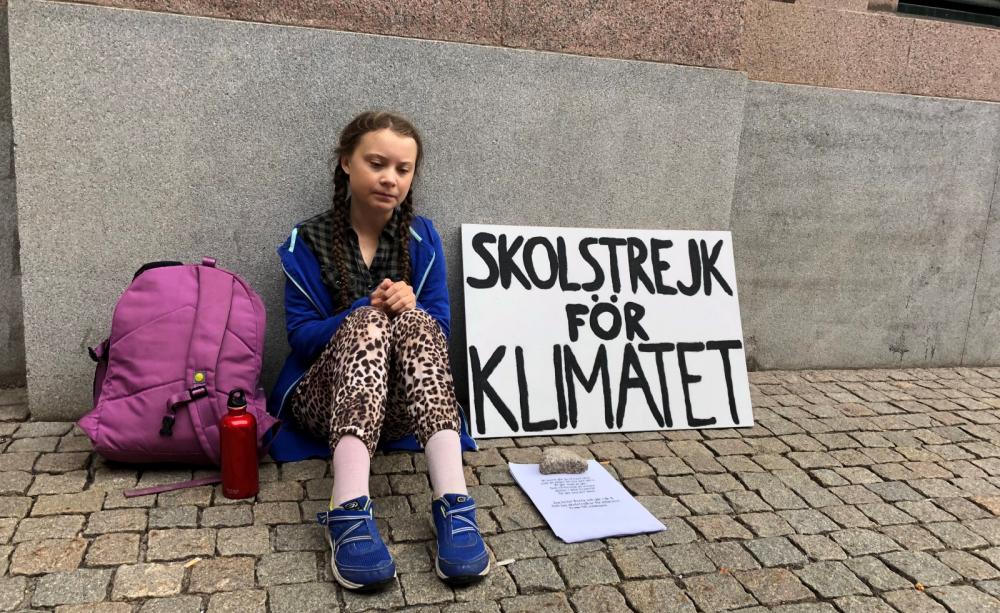
The echo from the streets of Europe and beyond is ‘system change, not climate change’. When climate activist Greta Thunberg met European Commission President Jean-Claude Juncker, she told him to talk to the experts, but what should they say?

We, over 200 system change experts from academia, civil society and cities, have some answers. Last autumn, a group of 238 scientists and 90.000 citizens asked for an end to Europe’s growth dependency and at a Growth in Transition conference in Vienna we made this more concrete. We look beyond increasing GDP towards a positive plan for a post-growth economy.

Our three key leverage points on how to launch a transition towards a thriving society within planetary boundaries advise policy-makers at European, national, regional and municipal levels on ways to confront the still worsening triple crisis of climate change, mass extinction and inequality.

Let’s be honest. Neither the Paris Agreement nor the Aichi Biodiversity Targets nor the current tax regimes are capable of dealing with these existential threats. As a group of scientists just wrote in Science: “The current measures for protecting the climate and biosphere are deeply inadequate”.

Deep changes are not only needed, but also wanted. A recent and massive poll taken all over Europe showed that a majority of Europeans now consider that the environment should be a priority – even at the expense of growth.

Broad agreement was found on three major systemic changes. These three leaps are not excluding other solutions, but they all three are urgent, possible, needed, wanted and game-changing. They do require a visionary mindset and a can-do attitude. They require a mindshift away from incremental thinking, the mindset that has brought us to this point of crisis.

1) Dethrone King GDP, elect WELLBEING

People want to thrive in a living world. Policies catering to GDP growth often sacrifice people and planet alike, while policies towards well-being help us heal.

Prosperity without growth is possible. Growth by over-exploitation of resources, safety shortcuts and pollution drive both people and planet to burnouts. Examples from Bhutan to New Zealand and Barcelona show that putting social and environmental progress before GDP really works.

Demands to the European Commission:

  • Turn the Stability and Growth Pact (SGP) into a Sustainability and Wellbeing Pact (SWP).
  • Change from “Jobs, growth and investment“ to “Wellbeing, jobs and sustainability“
  • Establish a DG for Wellbeing and Future Generations led by the first vice-president

Demands to countries, regions and municipalities:

  • Create a wellbeing and future generations portfolio at the heart of governance

2) From TAX HAVENS for the few to REDISTRIBUTION for the many

Tax wealth more and labour less. Tax pollution progressively and stop subsidising it.

Two post-war decades of +-90% top income tax rates in US & UK became a rate (far) under 50% now. Most EU countries followed, leaving the rich off the hook. As a result, inequality has been rising steadily and a growing feeling of (tax) injustice has spilled into social unrest and populism. The Gilets Jaunes uprising in France showed that you can’t tax pollution without a fair taxation system. Subsidies supporting pollution and resource overuse need to end immediately and pollution/carbon taxes must be used to promote welfare for the poorest.

Demands:

  • Set top income tax rates above 80% for redistribution to low- & middle-income families.
  • Tax air travel for redistribution to better and low to zero-cost public transport.
  • Launch progressive carbon and resource taxes at the source and redistribute.
  • Provide tax incentives for the use of recycled materials.

3) EFFICIENT products are good, SUFFICIENT solutions are great

Efficiency gains are important, but only the beginning of the solution.

Social and cultural exclusion can undo efficiency gains. We don’t need to sell more products, we need sufficient solutions that are long-lasting. Some companies already sell the service of having light, instead of the product of a light bulb, reversing the incentive from planned obsolescence to long lasting products. Barcelona’s zero-waste strategy includes advanced separate waste collection systems with smart waste containers to identify users and reduce residual waste as well as boost biowaste catchment – going much further than awareness raising, prevention, and support for reuse.

Demands:

  • Support the development of better business models like the product-service economy.
  • Implement zero waste strategies at all governance levels following the waste management hierarchy for operations and extended producers’ responsibility schemes.
  • Decrease the VAT on labour-intensive services such as repairing.
  • Leap from efficiency to sufficiency policies to make sustainable lifestyles the default.

You can find here all the signatories of this letter.

MEMO TO EU LEADERS: MAKE EUROPE SUSTAINABLE NOW

By KHALED DIAB, EEB

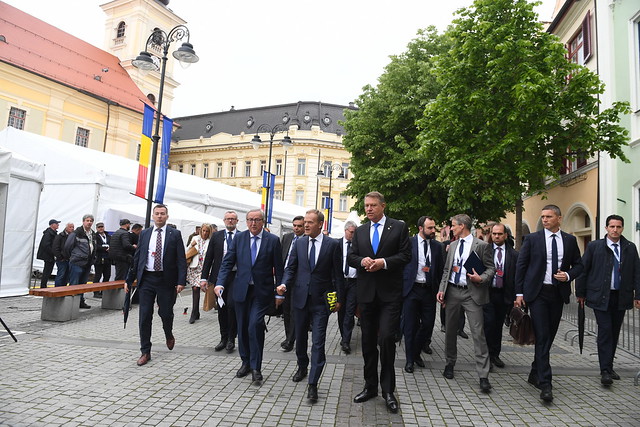
An alliance of more than 50 of Europe’s leading civil society organisations urged EU heads of state and government as they gathered for a summit in Sibiu, Romania, to nominate and select European commissioners who will support and serve present and future generations, and prioritise environment, quality of life and decent work.

“Too many people in Europe are being left behind,” more than 50 NGOs said in a letter to every EU head of government or state, referring to increasing poverty, widening inequalities, deteriorating access to healthcare and worrying levels of youth unemployment. “Meanwhile, many large companies pollute the environment, refuse to pay their fair share of taxes and wield disproportionate political influence.”

This has led many Europeans to feel frustrated and lose trust in the capacity of EU institutions to respond to their aspirations, which is helping fuel Euroscepticism, says the NGO coalition, which includes such prominent organisations as Greenpeace, Friends of the Earth, Amnesty International and Reporters Without Borders, as well as the European Environmental Bureau (EEB), an umbrella network representing some 150 environmental organisations across Europe.

In addition, the escalating environmental emergency facing the world means – as most recently conveyed in the report released by the Intergovernmental Science-Policy Platform on Biodiversity and Ecosystem Services (IPBES) – that inaction, or even insufficient action, are no longer an option.

“There is no more time for delay or complacency,” explains Eva Izquierdo, an EEB policy officer dealing with global policies and sustainability. “The time has come for the EU to take serious action to build a sustainable Europe.”

Not just a transition but a just transition

For that reason, the EEB and four other organisations decided to persuade other leading members of civil society to join forces and communicate a blueprint. Together, 55 NGOs sent a letter to every EU leader attending the Sibiu summit in Romania on 9 May 2019, imploring them to “lead and support a just transition towards a sustainable economy and society for all people”.

“The women and men you propose to lead the next European Commission will play a major role in making this vision of the EU a reality,” the letter adds, in reference to the fact that the mandate of the current Commission, led Luxembourg’s by Jean-Claude Juncker, will end this year.

The letter outlines the main milestones the new Commission will need to achieve, such as accomplishing the goals of the Sustainable Development Goals by 2030, implementing fairer taxation policies, as well as taking urgent action to limit climate change and reverse biodiversity loss.

It also outlines the qualities required in future commissioners. “We need European commissioners who put the interests of the people of Europe, not corporations, first,” notes the document.

The dozens of NGOs who signed the letter are committed to exerting continued pressure on EU leaders to ensure they appoint the Commission Europe so desperately needs in the coming years.

What kinds of agriculture will help us reach the sustainable development goals? Those that help and those that hinder

By Peter Stevenson, Chief Policy Adviser Compassion in World Farming

The UN Convention to Combat Desertification (UNCCD) has said: “Our inefficient food system is threatening human health and environmental sustainability … The current agribusiness model benefits the few at the expense of the many: small-scale farmers, the essence of rural livelihoods and backbone of food production for millennia, are under immense stress from land degradation, insecure tenure, and a globalized food system that favors concentrated, large-scale, and highly mechanized farms.”

“The view has emerged that humankind will not be able to feed itself unless current industrial modes of agriculture are expanded and intensified. This approach is wrong and counterproductive and will only serve to exacerbate the problems experienced by the current mode of agriculture … there is a need to encourage a major shift from current industrial agriculture to transformative activities such as conservation agriculture (agroecology)” said Hilal Elver, UN Special Rapporteur on the right to food.

At the 10th Global Forum on Food and Agriculture in 2018, the Director General of the UN Food and Agriculture Organization (FAO), José Graziano da Silva, said: “FAO estimates that more than half of the world’s rural poor are livestock farmers and pastoralists … We need to make sure that smallholders and pastoralists will not be pushed aside by large capital intensive operations.”

The FAO points out that industrial livestock production “may occur at the expense of diminishing the market opportunities and competitiveness of small rural producers”. The World Bank has recognised that intensification of livestock production carries “a significant danger that the poor are being crowded out.”

The High Level Panel of Experts on Food Security and Nutrition of the Committee on World Food Security states that “the social benefits of agriculture can be eroded as production becomes more concentrated and intensive. Intensive agricultural systems are associated with negative effects on employment, wealth distribution, ancillary economic activity in rural areas [and] service provision in rural areas (such as schools and health facilities).”

Industrial animal agriculture undermines food security by using human-edible crops as animal feed.

Industrial livestock production is dependent on feeding human-edible cereals and soy to animals who convert them very inefficiently into meat and milk. Globally 36-40% of crop calories are used as animal feed.

Livestock’s huge demand for feed and land drives both the expansion of cropland and pastures and the intensification of crop production

Intensification: Industrial livestock’s massive need for feed has fuelled the intensification of crop production. This, with its use of monocultures and chemical fertilisers and pesticides, has led to overuse and pollution of ground- and surface-water, soil degradation, biodiversity loss,and air pollution. In short, industrial animal agriculture undermines the key resources on which long-term productive farming depends.

Expansion: Increasing demand for land:

  • to grow soy and cereals for the rising number of industrially farmed animals, and
  • as pasture for cattle

Leads to expansion of farmland into forests and savannas with massive loss of wildlife habitats and biodiversity as well as release of stored carbon into the atmosphere.

Mammals, birds, insects – all declining

Population and species extinctions are proceeding rapidly and a sixth mass extinction may already be underway. Globally vertebrate wildlife populations have declined by 60% between 1970 and 2014.A UN report states that “biodiversity loss is occurring at an alarming rate” and that habitat loss from unsustainable agriculture is among “the primary drivers of this assault on biodiversity”. A 2019 FAO report states that many key components of biodiversity that support agriculture are in decline and that the drivers for this include the overuse of harmful external inputs and the intensification of agriculture.

Ever more forests and savannas are being destroyed to grow soy and cereals for industrially farmed animals. This is eating into wildlife habitats driving many species – including elephants and jaguars – towards extinction. Agricultural intensification – in particular the high use of pesticides and monocultures and habitat loss – is the main driver of population declines in birds, pollinators and other insects.

Dramatic rates of loss may lead to the extinction of 40% of the world’s insect species over the next few decades. This would be a disaster as insects are of “paramount importance to the overall functioning and stability of ecosystems worldwide”. They provide pollination, natural pest control, nutrient recycling (and so build soil quality) and decomposition services. Loss of insects leads to declines in birds, frogs and lizards as they depend on insects for their food.

Breaching planetary boundaries

Research has established nine planetary boundaries which, if crossed, could generate irreversible environmental changes and drive the planet into a much less hospitable state. In two cases – (i) biodiversity loss and (ii) nitrogen and phosphorus flows – we have not only crossed the boundary but have entered a high-risk zone. Industrial livestock production has played a major part in this. Nitrogen and phosphorus are primarily used in fertilisers much of which are used to grow animal feed crops. The demand for huge quantities of feed has led to biodiversity loss through the intensification and the expansion of arable production.

“High-input, resource-intensive farming systems, which have caused massive deforestation, water scarcities, soil depletion and high levels of greenhouse gas emissions, cannot deliver sustainable food and agricultural production. Needed are innovative systems that protect and enhance the natural resource base, while increasing productivity. Needed is a transformative process towards ‘holistic’ approaches, such as agroecology, agro-forestry… and conservation agriculture, which also build upon indigenous and traditional knowledge.” UN Food and Agriculture Organization, 2017

Deforestation

The FAO states that agriculture is the most significant driver of global deforestation. The UN states that deforestation is “primarily due to the conversion of forest to agricultural land, which is responsible for an estimated 73% of forest loss in tropical and subtropical regions”.

Innovative production Agroecology

Agroecology seeks to enhance productivity by supporting and harnessing natural processes such as beneficial interactions between different plants and animal species. Olivier De Schutter, former UN Special Rapporteur on the right to food, states that agroecology mimics nature instead of industry.Diversity is a core principle of agroecology; diversity in time (e.g. rotations) and in space (e.g. intercropping; integrated crop-livestock-forestry systems). Moreover, diverse foods are at the heart of nutritious diets.

Resource-conserving agriculture increases yields in developing countries

Studies show that resource-conserving agriculture can deliver substantial productivity gains. One study examined the impact of 286 projects in 57 poor countries.The projects included integrated pest and nutrient management, conservation tillage, agro-forestry and rainwater harvesting. These projects increased productivity on 12.6 million farms. The average crop yield increase was 79%, while the African projects showed a 116% increase in crop yields. All crops showed water use efficiency gains. Of projects with pesticide data, 77% resulted in a decline in pesticide use by 71% while yields grew by 42%.

An analysis of 40 projects in 20 African countries has been carried out. The projects included agro-forestry, conservation agriculture, integrated pest management, livestock and fodder crops. Crop yields more than doubled on average over a period of 3-10 years.

Read the whole report here