View this email in your browser

#EuropeForPatients – our campaign to the 2019 European elections

By Emily Bowles, EPF

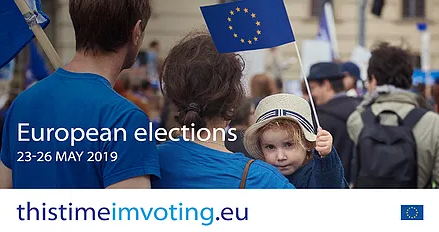
EPF is campaigning to put what matters to patients at the heart of EU health policy, and make health an issue that gets citizens to cast their votes and make a difference in the European elections to be held this year in May.

In this important pre-election period hopefully leading to positive change for patients and in health policy in the European Union post-2020, as part of its EU elections campaign EPF is calling for intersectoral action for health, and a fundamental change in Europe’s approach to healthcare access, to achieve universal health coverage and significantly improve quality of life and care for patients.

EPF has therefore identified five key ways in which the European elections can lead to positive change in patient communities. All are based on the five priorities detailed in our elections manifesto, which we also used to develop five powerful video testimonials of patients and help ensure their voice is heard.

One of these priorities relates to achieving healthcare access and universal health coverage. EPF believes this is fundamental to the achievement of the other health and wellbeing-related targets, such as reducing premature mortality, as well as the attainment of all other sustainable development goals and targets related to reduced inequalities, gender equality and elimination of poverty. Health can thus be regarded as a cross-cutting dimension of the UN SDGs.

The EU elections are approaching fast: please get involved, make an impact and ensure the patients’ voice is heard by policy-makers. If you belong to the 70% of Europeans who want the EU to do more for health (Eurobarometer survey, March 2017), join us now in spreading our manifesto, using the #europeforpatients hashtag, sharing and posting your support messages on social media as well as on our website www.europeforpatients.eu. Thank you!

If you wish to support our campaign, share any updates related to the elections, or other health-related priorities feel free to get in touch with us! Several patients with chronic conditions already took the time to share their stories with us. If you are a patient and have a story to tell, they are always welcome.

ALDA funds 10 most innovative actions to raise awareness

By ALDA

The upcoming European Parliament elections taking place in May 2019 are crucial for the future of the European project –for our future.

All over Europe, 18-year old citizens will be called to vote for the European Parliament. For thousands of people, it will be the first opportunity to exercise their right to vote.

We need you, to reach out to young voters and make it clear what is at stake in these elections. How can you make sure fellow young people know what they are called to vote for, how to vote, and the consequences of their actions?

ALDA is offering 10 grants of  €300 each to young Europeans up to 21 years old, for the implementation of initiatives (street actions, online campaigns, etc.) to raise awareness of youth about the upcoming European elections, which can take place between February and April 2019.

Do you have a great idea on how to encourage fellow young Europeans to vote? Are you a European citizen up to 21 years old?

Send the concept of your initiative in .pdf (max 2 pages) to irene.zanetti@aldaintranet.org by 15 February 2019, clearly explaining:

  • how many people you will reach, and how
  • costs foreseen to implement the action (you will need to send us the invoices of costs incurred).

We will select 10 initiatives all over the EU, considering their creativity and potential of reaching a wide number of young Europeans.

On our side, ALDA is active on multiple fronts: we not only call for external actions but we are doing our best to provide and spread European facts as objective as possible.

Thanks to the Europe for Citizens programme, ALDA has been able to launch the “YOU4EU – Towards European Elections 2019” campaign. We are actively engaged in the implementation of social media campaigns in contrast to the rampant fake news and we are committed to spreading correct information about crucial aspects of the functioning of the Union such as the budget and the composition of the different Institutions. To do so, we produced different sets of infographics, each one dealing with a specific misconception, thus trying overcome stereotypes. Our aim is to realise a simple but effective anti-rhetoric to prevent radicalisation and finally leading European citizens to the polls.

We count on you to get all Europeans to have their say, for a stronger Europe! More information here.

ALDA – The European Association for Local Democracy, is dedicated to the promotion of good governance and citizen participation at the local level. ALDA focuses on activities facilitating cooperation between local authorities and civil society.

Vote Volunteering Vision Campaign

By CEV, the European Volunteer Centre

CEV  launches the Vote Volunteer Vision campaign in preparation of the 2019 European Parliament Elections building from the previous campaign we implemented in 2014. The campaign aims to:

  •      Support voluntary sector organisations in their advocacy work at national level by providing tools to be used in the interaction with the 2014 EP election candidates.
  •      Raise awareness about the role of the members of the European Parliament in strengthening the volunteer infrastructure in Europe.
  •      Draw attention to the need for an Intergroup on Volunteering in the European Parliament.
  •      Reveal future possible co-operations between MEPs and other volunteering stakeholders.
  •      Encourage citizens to vote and make decisions on their choice of candidates on the basis of EU issues that matter to them.

CEV has prepared a toolkit that will help volunteer centres and volunteer-involving organisations ask the EP candidates “What is your volunteer vision?”.  Candidates are invited to express their views on different volunteering policy areas. The candidates are also asked to sign a pledge to support the creation of an EP Intergroup on volunteering. Toolkit and pledge can be downloaded at this link https://www.europeanvolunteercentre.org/volunteer-vision.

CEV encourages all volunteering stakeholders to make use of the toolkit that can be personalised to include logos and contact details. Communicate with EP candidates to make sure the 5Rs agenda on volunteering in Europe is supported by elected MEPs!The European Volunteer Centre (CEV) is the European network of over 60 organisations dedicated to the promotion of, and support to, volunteers and volunteering in Europe at European, national or regional level. Through our network we work together to promote and support volunteering through advocacy, knowledge sharing and capacity building & training. In this way we reach out to the many thousands of volunteers and volunteer organisations in Europe as a source of support bringing the European dimension to their work.

The SDGtoolkit

By EEB

The SDGtoolkit brings together more than 300 tools ready for use including articles, presentations, social media activities, images, policy papers, monitoring and review tools, SDG coalitions and more. All the material can be researched for instance by country or SDG. The toolkit answers basic questions on the SDGs with the aim of inspiring national and local level organisations and getting them started. This toolkit aims to help NGOs in Europe to learn more about and work with the opportunities that the Sustainable Development Goals offer to the environmental movement.

These are some the latests uploads that you can check out in the toolkit:
• Germany: The 2018 Peer Review on the German Sustainability Strategy
• Germany: 2018 German shadow report: So_geht_Nachhaltigkei
• UK: Measuring up: How the UK is performing on the UN Sustainable Development Goals
• Engaging parliaments on the 2030 Agenda and the SDGs: representation, accountability and implementation
• Belgium: SDGs in Your Municipality
The SDG communicator
The UPR-SDG Data Explorer
The Human Rights Guide to the Sustainable Development Goals: Linking human rights with all Sustainable Development Goals and targets
Voluntary National Review Reports– what do they report?

2018 VNR reports:
• Greece: Full report + main messages
• Hungary: Full report + main messages
• Latvia: Full report + main messages
• Lithuania: Full report + main messages
• Ireland: Full report + main messages + CSOs position document
• Spain: Full report + main messages + annexes + CSOs position document

If you want to share a tool related to SDGs on our toolkit, please contact sonia.goicoechea@eeb.org.

The EEB is Europe’s largest network of environmental citizens’ organisations. We bring together around 150 civil society organisations from more than 30 European countries. We stand for sustainable development, environmental justice & participatory democracy.

Reclaiming EU research and innovation as a public good

By Jill McArdle, Global Health Advocates

EU-funded research and innovation has enormous potential to deliver a sustainable and equitable future, yet we have fundamentally distorted its purpose, prioritising innovation for commercialisation over innovation for society’s needs, writes Jill McArdle.

What is research and innovation for? Most would respond that it is for pursuing scientific excellence, the discovery of new knowledge and understanding, for seeking solutions to the most fundamental issues we face and helping us deliver on our international commitments like the Sustainable Development Goals and the Paris Climate Agreement.

Yet, at EU level, the major societal benefits are normally understood as competitiveness of our industries, creating jobs and economic growth. Indeed, the current EU R&I programme sits under the Competitiveness heading in the EU’s seven-year budget and is discussed by member states in the Competitiveness Council.

Other goals, such as sustainable development and excellence, are not absent, but they are mostly treated as tools in pursuit of this ultimate goal.

As civil society believing in the European project, we wonder whether today, this is the right orientation for R&I? We are told of course that we can pursue all these goals at once, but dig deeper and this response seems weak.

Civil society raised alarm bells when the Commission first announced its proposal to merge two of its three pillars: societal challenges with industrial competitiveness in the next hundred billion euro programme Horizon Europe (scheduled to begin in 2021). What was in dispute was not the presence of industry, but the blurring of competitiveness-oriented objectives with those aimed at addressing societal challenges.

This muddling of objectives raises serious questions of governance, transparency and accountability: Who sets the priorities? How can we be sure that sustainable development will not be subordinated to the goal of industrial competitiveness if they conflict?

This week the European Parliament adopted its position on Horizon Europe. While critical improvements were made in terms of climate action, disappointingly, the Parliament declined to put in place other concrete safeguards for sustainable development. There is no guarantee of funding for independent projects that will prioritise societal impact over competitiveness.

This means no assurance that publicly funded R&I can pursue all possible solutions to societal challenges, not merely those that spell profitability for companies. In agriculture, for example, will the programme fund new, relatively safer pesticides to be sold by agribusiness, or alternative pest management techniques that can be implemented by farmers for free?

Looking at governance too, the picture is not reassuring. Strong involvement of citizens and NGOs in setting research priorities can help ensure that sustainable development is not sidelined.

While the Parliament did acknowledge the importance of engaging with society, overall there was a failure to tackle the barriers faced by citizens and civil society organisations, such as lack of capacity and unfamiliarity with the programme. The Parliament, taking their lead from the European Commission, did not support the reintroduction of a dedicated programme for science and society which could have addressed these barriers.

At a concrete level, the Parliament also declined to promote access to the results of R&I. Take health, where the accessibility and affordability of new medicines are crucial to ensuring meaningful impact for society.

Yet proposed new measures, whereby beneficiaries of EU funding would be asked to consider how future medicines could be made accessible, were rejected. Is this surprising, given that health, like the rest of the societal challenges, will sit under the new “Global Challenges and Industrial Competitiveness” pillar?

Most disturbingly, the Parliament undermined Open Access commitments. Access to research results and research data should be a cornerstone of all publicly funded R&I, yet the Parliament chose to extend the list of reasons for “opting out” of open access, covering vague concerns from competitiveness to “security concerns” and “trade secrets”. The list is so broad it could easily be abused to avoid open access obligations.

The inclusion of the “innovation principle” in Horizon Europe is another stark example of how this orientation toward competitiveness and commercialisation is undermining sustainable development. This so-called principle is a tool invented by industry lobbies to undermine EU social and environmental regulations.

It seeks to assess regulations for their “impact on innovation”, rather than assessing innovation for its impact on our health and environment. Its supporters will tell you that this is essential for sustainable development. Yet this misunderstands something: we must always ask what impact innovation has on sustainable development, not the other way around.

We must make clear that R&I serves society and sustainable development first. In prioritising the public interest in this way, R&I will still bring new products and services that will benefit society and the companies who develop them.

Crucially though, it will also leave room for solutions that are not commercialisable, and for ambitious investment in neglected societal challenges where there is little market interest, while also ensuring these solutions are safe, suitable, accessible and affordable.

As we head into negotiations on Horizon Europe, we must urgently change how we view research and innovation: not through a narrow prism serving private interests, but as a public good capable of delivering widely shared societal benefit.

Global Health Advocates is a non-governmental organisation that focuses on engaging all sections of society to fight diseases that disproportionately affect people living in poverty, and are also the leading causes of people living in poverty. In particular, Global Health Advocates works towards the formulation and implementation of effective public policies to fight disease and ill health.  Established in 2001 as the Massive Effort Campaign, Global Health Advocates works in France and in India.