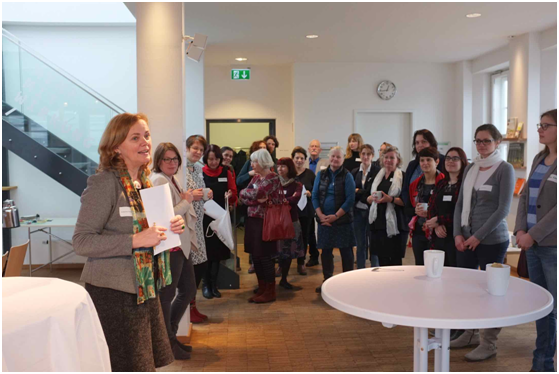
WECF publication: Municipalities as active drivers of gender-just and sustainable development

By Katharina Habersbrunner, WECF Germany

Together, the European Charta for Gender Equality and Agenda 2030, with its transformative character, offer useful guidance for local and regional governments to create more equal and sustainable cities and communities. As a result of the increasingly accessible and green city developments, and more knowledge and openness to the concepts of sharing and inclusiveness, it may seem that the idea of simply fulfilling minimum requirements has been replaced with innovative municipal thinking and acting. The legal implementation of gender budgeting in Vienna and Munich and the active engagement of citizens in the sustainable city development of Hamburg demonstrate pioneering municipal spirit. Yet, in some European countries, local democracy is disturbed – some municipalities view the Agenda 2030 as an additional task that is unfeasible due to the lack of resources, and even though the concepts of gender equality and mainstreaming have already been formal guidelines for over twenty years, the concepts are still widely ignored.

A transformation towards a sustainable and just community requires municipal visions that reflect the worthwhile commitment of integrating gender budgeting and mainstreaming, gender-appropriate pensions, class-independent education and health access, clean air in inner cities… In times of lacking sustainable and gender-just law enforcement, municipal pioneers are needed to enable exchange and collaboration across municipal sectors, new partnerships and active citizen engagement. Every municipal decision must make a contribution to sustainability, because the global sustainability goals are not an additional task: they are fundamental for the sustainable and gender-just development of our cities and communities, and therefore require aligning with local plans. Municipalities need to utilise their local power to engage with citizens and to enable ambitious projects to bring abstract concepts, such as the issues of climate, demographic and increasingly unequal change, to life.

The WECF publication (only available in German at the moment), which will be published shortly on the WECF website, summarizes tools and instruments for gender-just implementation and shows from various perspectives the high potential of municipalities and civil society to implement and advance sustainable and gender-just projects, cities and neighbourhoods.

Women Engage for a Common Future (WECF) is an international network of over 150 women’s and civil society organisations implementing projects in 50 countries and advocating globally to shape a just and sustainable world; our Common Future.
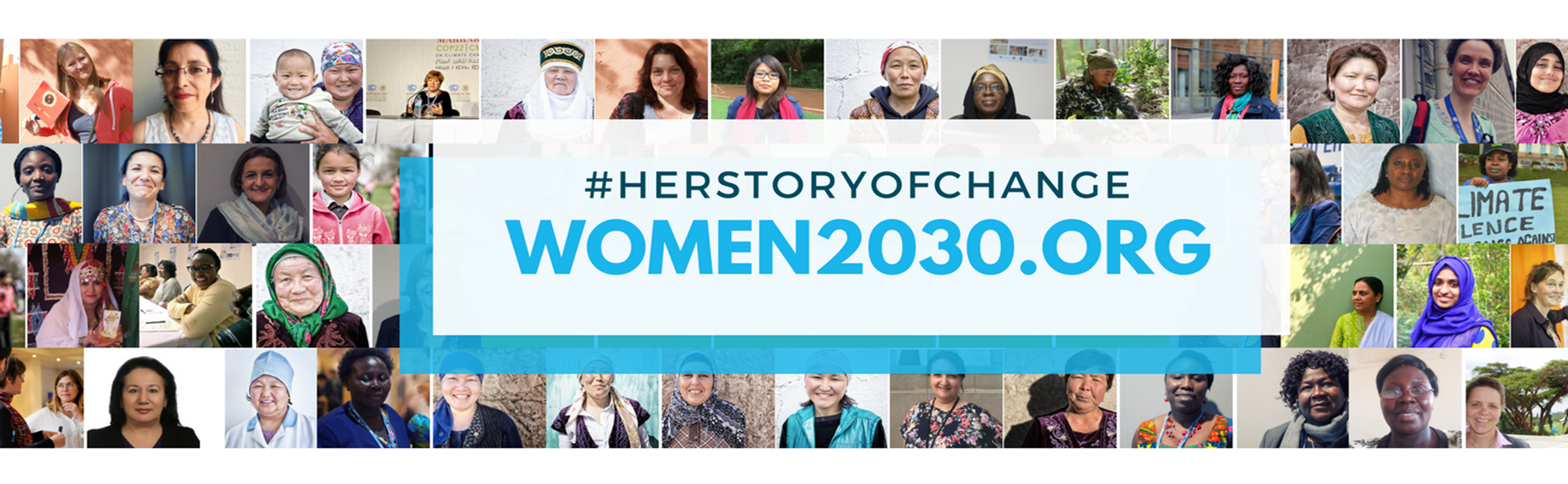
Launch website Women2030

By Chantal Van den Bossche, WECF

On 8 March, Women Engage for a Common Future (WECF) will launch the Women2030 website, on the day we celebrate women across the world and our mother planet.

The #women2030 project is being implemented in 52 countries across different regions of the world. It is led by a coalition of 5 women and gender network organisations collaborating to realize the Sustainable Development Goals (SDGs) in a gender-equitable and climate-just way. The coalition is part of a 5-year framework partnership agreement with the European Commission’s International Cooperation arm (DEVCO) called “Women CSOs implementing SDGs Agenda 2030.”

WECF and its members are more than ever engaged in bettering the situation of women across the world and that of the environment. Stories of incredible women from all over the world and of all professions, working to achieve gender equality and sustainable development goals, have been collected to illustrate the behaviour we all need to strive towards to achieve long-term social, economic, and environmental sustainability. Consequently, International Women’s Day on 8 March will be a celebration of those women who give hope to many other underrepresented women and communities, and who embody this hope for a fairer and more just future when it comes to women’s human rights and gender equality.

Women Engage for a Common Future (WECF) is an international network of over 150 women’s and civil society organisations implementing projects in 50 countries and advocating globally to shape a just and sustainable world; our Common Future

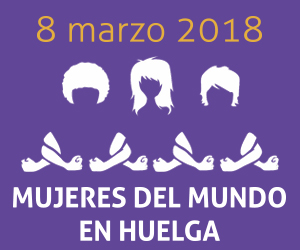
WOMEN OF THE WORLD ON STRIKE: the Spanish Platform of NGDOs (CONGDE) supports and joins the International Feminist Strike on 8 March

By Maria Gonzalez, Futuro en común

Last year Argentine feminists called for an international partial strike under the slogan “Not one less, we want ourselves alive”. Millions of women went out into the streets in 70 countries to make visible our demands for productive and reproductive work, areas in which our presence is essential and in which, at the same time, we are devalued, invisible and discriminated against.

In 2018, the feminist movement calls for an international strike to highlight our strength and our indignation at sexist violence, the violation of our sexual and reproductive rights, labour inequality, discrimination in access to economic, social and environmental resources, and the invisibilization of the paid and unpaid care work that, in its majority, women carry out all over the world. The Spanish Platform of NGDOs joins and participates in this mobilization. We make our call to all women to stop, to stop doing, to show how essential our work in all areas of life is, so that nobody can look the other way.

This international feminist strike goes beyond a work stoppage, it is a strike that puts at the center the nuclear participation of women in all spheres of life: consumption, education, paid and precarious work and essential care for people. It is a global strike, of all the women of the world, of our partners in Latin America, Africa, Asia and the Middle East, of migrants, of women in transit and refugees, of all those whose rights are constantly violated and who for that reason will not even be able to join this strike.

As development cooperation organizations, we work with all these women. In addition, we are a sector supported by 70% of the work and dedication of women, who, in a remunerated or voluntary way, are linked to international solidarity. Besides, it is a sector in which women, have little access to management positions and decision-making spaces. Like most sectors, NGDOs should also change to achieve a work model that puts the focus on care, solidarity and sorority, values highly defended in their ideals and principles.

You can find the full release here (Spanish and English).

Futuro en comun offers a space to meet for organisations, movements, social platforms and networks that are working to end poverty and inequalities while respecting the planet environmental limits.

For information on other international women’s strikes see here: http://parodemujeres.com/map-of-events/

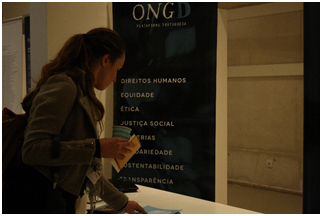
Portuguese Civil Society committed to promote women’s empowerment

By Pedro Cruz, NGDO Platform.

Gender equality and women’s empowerment is, rightfully, at the centre of the 2030 Agenda for Sustainable Development. That is why, besides SDG 5, there are gender objectives in eleven other Development Goals.

Civil society organisations are clearly frontrunners in promoting women’s empowerment as a social justice issue and to achieve inclusive and sustainable development. CSOs know, better than most, that it is a crucial inequality issue in many countries, both developed and developing ones.

These are not easy issues and they require a collaborative approach. This is one of the reasons that, in 2015, a SDG Civil Society coalition was created in Portugal, coordinated by the Portuguese NGDO Platform, that has been working together within the framework of the 2030 Agenda and includes other networks representing NGOs focused in specific areas, such as global development, youth, sustainable agriculture, environment, local development and the promotion of women and girls’ rights.

Part of this collaborative work is linked with activities at European level, namely a campaign on Inequalities included in the project “Europe in the World – Engaging in the 2030 Agenda” that also links with the “Faces of Inequality” campaign from GCAP – Global Call Against Poverty.

At national level, around 8 March and in the framework of the Women’s international Day, we will publish interviews with 3 women’s rights advocates, showcasing how gender inequalities were and still are a problem and a challenge both in Portugal and in Europe. One of the interviewees is the President of the Portuguese Platform for Women’s Rights, a civil society umbrella organisation that for almost 15 years has been working at local, national, European and international levels to help empower and mobilise local NGOs working to promote gender mainstreaming in all areas of society.

By approving the 2030 Agenda, UN members states committed themselves to address all social, economic and environmental issues that impact on women and girls’ rights. CSOs will not let governments forget those commitments, as we are rightfully engaged in this global effort to successfully achieve the SDGs by 2030.

The Portuguese NGDO Platform represents and supports Portuguese NGDOs at a national and international level, contributing to strengthen the intervention of civil society working on Development Cooperation, Humanitarian Aid and Development Education.

World Vision: Communications Campaign on Women and Girls in Peace and Security

By Lorena Mohr, World Vision

For this year’s International Women’s Day, the World Vision EU Office wants to draw specific attention to the contributions of young women and girls to peace and security, as well as their specific needs in conflict contexts. Young women and girls have unique insights and experiences living through all phases of conflict and are crucial in identifying local solutions to achieve sustaining peace and social change. Both UN Security Council Resolution 1325 on Women, Peace and Security and UN Security Council Resolution 2250 on Youth, Peace and Security emphasise the need to engage women and girls in all stages of peace processes. Still, their contributions are often overlooked, and too often men alone make decisions that affect the lives of women and girls.

To that end, World Vision has produced a series of short video statements with several MEPs. Under the motto “It Takes the EU to empower Women & Girls as Peacebuilders”, they highlight the positive role women and girls play as agents of peace, and explore the complex relation between gender equality and peace. In the run-up to the 8th of March, we will feature one video message a day on our social networks, starting from 1 March. MEPs of different nationalities, political affiliations and age groups will show support for women and girls’ empowerment and participation in the peace and security realm.

World Vision is a child-focused relief, development and advocacy organisation dedicated to working with children, families and communities worldwide to reach their full potential by tackling the causes of poverty and injustice. It works in close to 100 countries in most regions of the world, focusing on the most vulnerable and hardest to reach children. Addressing gender equality is one of the key platforms of World Vision’s work. We tackle this issue at the grassroot/community level up to the international level through our programs in a wide range of sectors, in order to transform discriminatory practices together with women, girls, men, and boys.

Celebrating Women Farmers – the Gatekeepers to Food Security – on International Women’s Day

By Niamh Holland-Essoh, IFOAM

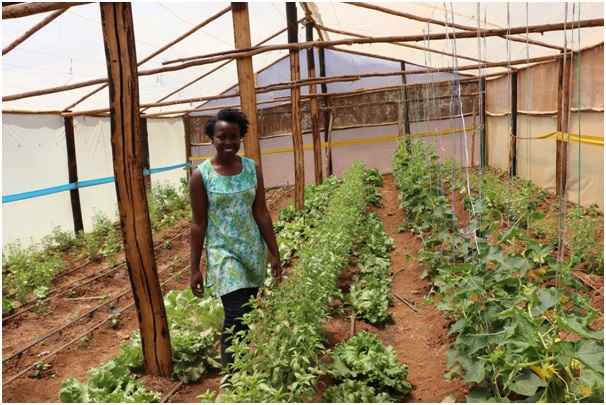
Women farmers play a fundamental role in ensuring food security particularly in rural societies but lack of access to training and resources often results in yields up to 30% lower than those of male farmers. Although women are responsible for about half of the world’s food production, female nutrition indicators, across all age groups, are worse than those of their male counterparts.

Empowering women to farm organically can increase yields, provide a greater nutritional diversity of fruit and vegetables for family meals, and increase household income when surplus produce is sold. In the hands of women, increased income leads to an improvement in children’s nutritional intake and general health.

Women who farm organically are also nourishing the soil and protecting biodiversity – essential ingredients for healthy crops, healthy people and a healthy planet!

See this video of Sylvia Kuria, an organic farmer in Kenya, and the story of her farm. “I’ve got so many reports where they say, you know, your kale, your spinach, your carrots are so sweet. I tell them it’s because they are just growing in the natural way that they were supposed to have grown. We are not altering anything about the plant. It is just growing the way it is supposed to be and that is why it is that tasty.”

IFOAM – Organics International has almost a thousand members in over 120 countries. We are working toward the adoption of truly sustainable agriculture, value chains and consumption in line with the principles of organic agriculture – health, ecology, fairness and care.

Building momentum: the need of including all women for real gender equality

By Alba Gonzalez, CBM

Every year on 8 March, the international community celebrates International Women’s Day, which, according to the UN, recognises women’s achievements without regard to divisions, whether national, ethnic, linguistic, cultural, economic or political.

Currently, women rights are being more and more recognised. The 2030 Agenda for Sustainable Development includes the need for “achieving gender equality and empowering all women and girls” as a key element for sustainable development. Unlike the Millennium Development Goals (MDGs), the 2030 Agenda and its Sustainable Development Goals (SDGs) highlights the need to include the rights of persons with disabilities as part of its “Leaving No One Behind” motto. Only by applying the principle of universality, meaning the need to respect human rights for all.

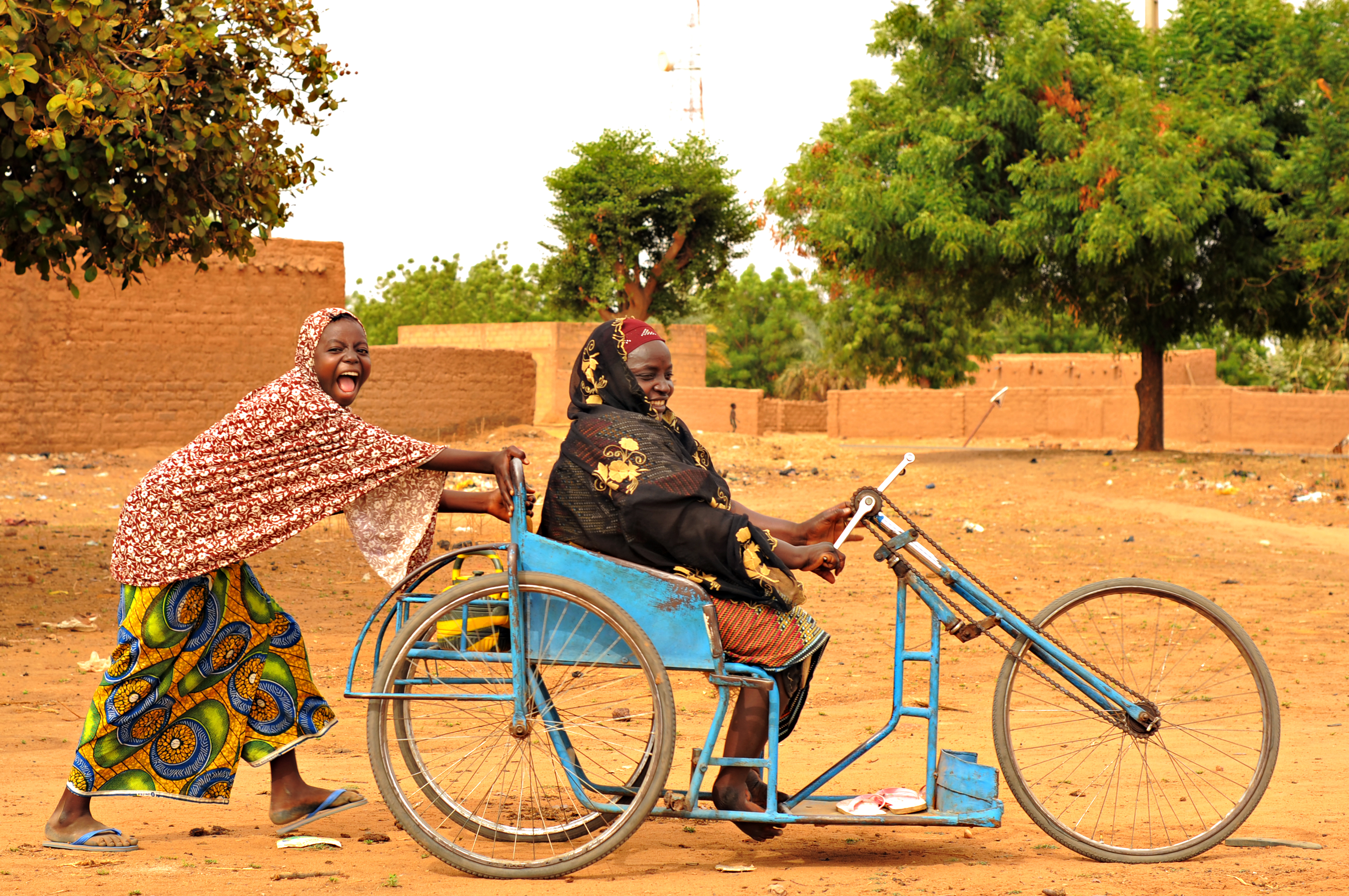
The European Union (EU) has been one of the biggest supporters of the inclusion of rights of persons with disabilities during the adoption of the 2030 Agenda. In addition, it is the first regional body to ratify the human rights treaty the UN Convention on the Rights of Persons with Disabilities (CRPD). In its Article 6, the CRPD recognises that “women and girls with disabilities are subject to multiple discrimination” and that “States Parties shall take all appropriate measures to ensure the full development, advancement and empowerment of women, for the purpose of guaranteeing them to exercise and enjoyment of the human rights and fundamental freedoms”. However, and despite some efforts of the EU to promote and realize the rights of women and girls with disabilities, multiple discrimination on the basis of disability are not fully mainstreamed in EU development policies and programmes.

Barriers and discrimination towards women and girls with disabilities

Women and girls with disabilities face more barriers to access education. Lack of accessibility, together with attitudinal barriers that consider women and girls with disabilities as objects of pity instead of equal human right’s holders are two of the biggest barriers that women and girls with disabilities face. Sexual abuse and harassment is more frequently experienced among women and girls with disabilities than those without. This is especially the case for women and girls with intellectual disabilities, and the perpetrators are most frequently care givers, family members or close people from the community.

As the CRPD Committee Members highlight in the General Comment on women and girls with disabilities, the lack of recognition before the law for women and girls with disabilities makes it almost impossible for them to report these abuses. Their word is not taken seriously, and most of the time they are perceived as persons without legal capacity. Forced sterilisation is a very common practise for women and girls with disabilities, both in developing and developed countries, which is is again especially relevant for women and girls with intellectual disabilities.

Steps forward

The EU has expressed its commitment to gender equality and women empowerment. The Gender Action Plan (GAP) is one of the first steps for the EU to promote women rights in developing countries. However, the GAP fails on the principle of leaving no one behind as the rights of women and girls with disabilities are not properly reflected. Despite mentioning the need to include multiple discrimination in its introduction, there are no mentions to women with disabilities in any objective or indicator of the GAP.

Disability has not been included in mainstream gender policies and programmes; gender has not been properly addressed in disability policies and programmes.  However, the 2030 Agenda offers now the opportunity to revise our way of working and, in that sense, CBM is working in cooperation with other civil society organisations (CSOs) or platforms such as SDG Watch Europe in order to build bridges. Only by working together, will all women achieve their rights and contribute to sustainable development.

CBM is an international Christian development organisation, committed to improving the quality of life of people with disabilities in the poorest communities of the world.