To Achieve Agenda 2030, We Must End Gender Discrimination

By Sascha Gabizon, WECF

The Agenda 2030 calls for the universal achievement of the Sustainable Development Goals (SDGs) aiming at the well-being of all. In particular, the agenda focuses on “not leaving anyone behind” thus concentrating on the most marginalised and excluded. This requires strong policies to address inequalities in the European Union and globally, including to end gender-based discrimination and barriers.

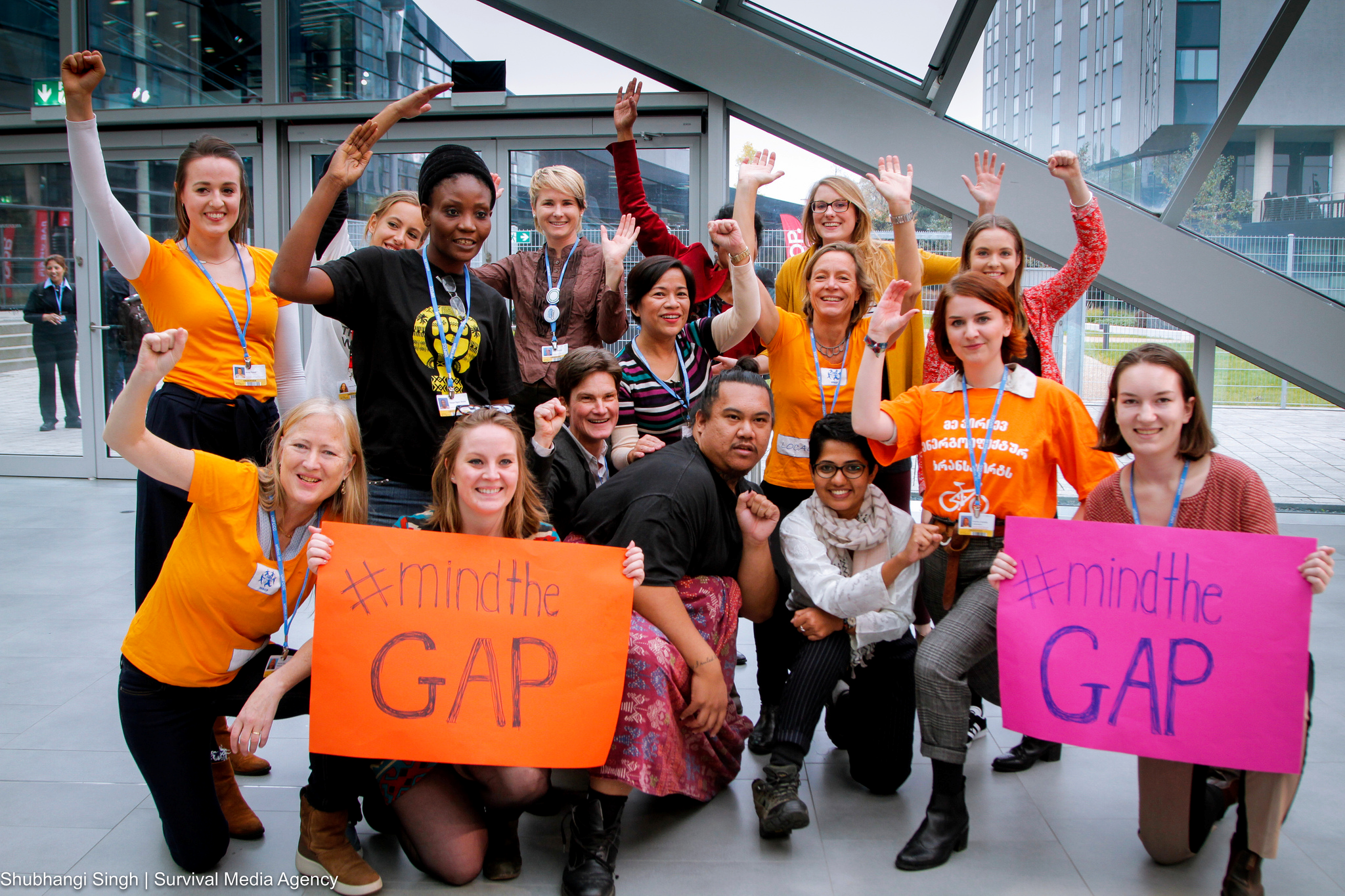
The new SDG report “Turning Promises into Action” by UN WOMEN shows the gender-inequalities in Europe. The gender pay gap and the pension pay gap will persist for another 150+ years if we don’t take strong measures. One out of 6 women in the EU says she has experienced some form of sexual harassment or violence, at home, in public places and at work. The #MeToo movement has been able to show the widespread sexual harassment of women in their workplaces, including in the civil society sector.

The labour force participation rate among women of prime working age (aged 25-54) in Europe stands at 79% and is 12% lower than men of the same age group (91%). Globally, 23.7% of women hold parliamentary seats – in Europe, Iceland has the highest proportion of women at 47.6% in contrast to Hungary where only 10.1% of the parliamentary seats are held by women. Lower participation by women is partly due to their higher burden of unpaid care and domestic work – women in the EU work 2 times as many hours for unpaid care than men.

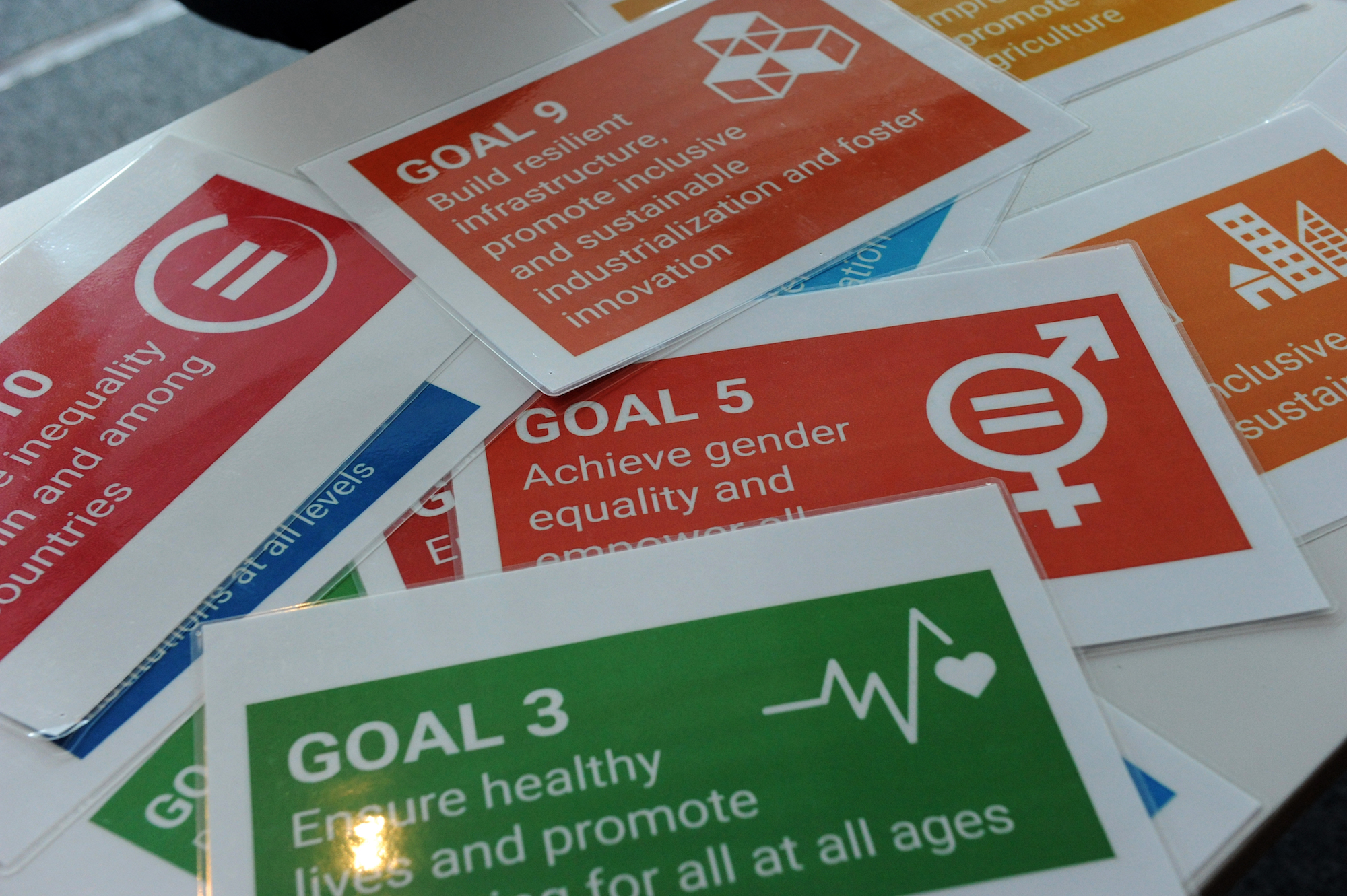
The dimensions of inequality are manifold. Imbalances also exist among women, due to intersecting structures of power such as racism, ableism, ageism, homophobia, transphobia etc. The need for SDG5 implementation is as high for Europe as it is globally. Ending gender-based discrimination and other forms of exclusion are at the core of achieving the Agenda 2030.

The EU’s Multi Stakeholder Platform on SDGs

By Deirdre de Burca (IFP) & Leida Rijnhout (Friends of the Earth Europe), SDG Watch Europe Steering Group Members

In late 2016, the European Commission announced its intention to establish a Multi-Stakeholder Platform (MSP) on SDGs linked to the EU’s implementation of Agenda 2030. SDG Watch Europe made a comprehensive submission to the Commission on the potential role that such a platform could play. In 2017, the Commission published the terms of reference of the MSP – its vision was much less ambitious than that advocated by SDG Watch Europe. In simple terms, the MSP will include a Political Committee to provide broader strategic advice to the Commission and a Management Committee to play a more technical and operational role.

In mid-2017, the Commission advertised a selection process for members of the Political and Management Committees and those selected were notified late last year. SDG Watch Europe will have a representative on each the Political and Management Committees – Leida Rijnhout and Ingeborg Niestroy respectively. The Management Committee met for the first time in December 2017 and agreed to establish a range of sub-groups to work on different areas, including (i) on the Multi Financial Framework and (ii) on an EU Sustainability Award. Stakeholders have stated their intention to establish a range of other sub-groups to work on important issues linked to the EU’s Agenda 2030 implementation.

The first meeting of the MSP Political Committee took place on 10 January with approximately 30 official stakeholders and by a number of official observers, including SDG Watch Europe’s Deirdre de Burca as a substitute for Leida Rijnhout. Overall the meeting was quite disappointing. Very little of substance was discussed or agreed, robust debate was not encouraged, and the scope of the committee’s work is also not fully clear. The main “deliverable” of the committee promoted by the Commission is a Commission’s Reflection Paper called “Towards a sustainable Europe by 2030”. This paper will be authored by First Vice President Timmermans and Vice President Katainen. Stakeholders of the MSP will have an opportunity to make submissions to the reflection paper by means of a targeted consultation. It appears that this Reflection Paper will set out implementation options for the next Commission to consider in 2019. The current Commission appears very reluctant to take any decisions on the Agenda 2030 implementation as it may “tie the hands” of the next Commission! This means that t having adopted the SDGs in 2015, the Commission will start thinking about how to implement them around 2020. This is a real shame, especially in light of the most recent Council Conclusions on Agenda 2030, where member states called for a rapid implementation.

The next meeting of the MSP will be in October 2018, after the publication of the Reflection Paper. This is an example of how little mandate this high level political group really has. The group will hardly have any say or opportunity to provide collective guidance where the reflection process is concerned.

Our role as civil society is to apply pressure for political change when necessary. We are doing European citizens or humanity in general no favours if we do not insist that First VP Timmermans increases the ambitions of this group, to ensure its involvement in effective and consultative policy making. This is absolutely necessary to develop an EU-wide 2030 Agenda strategy and plan of implementation as soon as possible.

EDITORIAL: Achieving the SDGs through Eco-sufficiency

By Leida Rijnhout, Friends of the Earth Europe

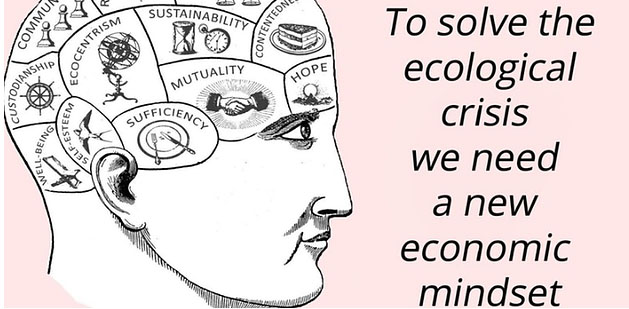
Our current level of overconsumption in Europe is plundering the Earth’s resources at a faster rate than they can be regenerated. As a result, environmental and social breakdowns are visible. The number of murdered environmental defenders is increasing every year. This is because the overexploitation of natural resources is affecting more local communities, especially in the global South. As a result, Friends of the Earth Europe organised the conference “Eco-sufficiency: moving beyond the gospel of eco-efficiency” to bring together EU policy makers, academics and activists to discuss how to transition the EU away from a consumption-driven economy.

This conference challenged the mainstream approach of economic growth as a solution for everything, including to tackle environmental and social challenges. We need to rethink fundamentally our economic and political system to have people, planet and human rights again at the core of our strategies.

The 2030 Agenda for Sustainable Development, if we interpret and implement it well, is a framework to achieve this paradigm shift towards a more fair and green economy. Tackling inequality also means closing the gap between the extremes of ecological overshoot and material poverty. We have to define a distribution mechanism to achieve a fair share for everyone to achieve human wellbeing without compromising ecosystem stability and the ability of future generations to meet their own needs.

The SDGs can be seen as a benchmark for the essential human needs to be satisfied. And the principles of eco-sufficiency can help us build a sustainable and shared prosperity in a world that — to quote Mahatma Gandhi — “has enough for everyone’s needs, but not for everyone’s greed.”

If you want to receive the final report of the eco-sufficiency conference – to be published in February 2018 – please contact Riccardo Mastini.

Not fit for purpose: SDG monitoring report fails to illustrate how far the EU is from a sustainable future

SDG Watch Europe has released its five questions commentary on Eurostat report “Sustainable Development in the European Union – Monitoring report on progress towards the SDGs in an EU context”.

Summary

SDG Watch Europe criticises today’s Eurostat Report on Sustainable Development in the EU for failing to adequately illustrate progress and failure in the implementation of the Sustainable Development Goals (SDGs) across the Union. The report does not address the Agenda 2030’s comprehensive, transformative and universal nature and paints a misleading picture of the EU’s performance on the SDGs:

  • The report falls short of addressing all dimensions of sustainable development and focuses on measuring existing solutions rather than capturing what is needed to make the 2030 agenda a reality.

  • Key societal, environmental, economic and technological trends are subordinated to the Commission’s current priorities through the choice of indicator and the report paints a skewed picture of the EU’s performance. A striking example: SDG 12 on sustainable consumption and production (SCP) receives one of the highest levels of progress while assessments from the Sustainable Development Solutions Network (SDSN) and the European Environmental Agency (EEA) clearly show that SCP is where high-income countries, including the EU, fail.

  • The methodology does not allow to show how far and how fast we need to move in order for the EU to reach the SDGs by 2030: the report does not take into account the level of achievement. Moreover, 1% of change per year already earns a misleading sun symbol even if such slow progress means that the EU will fail to reach the targets by 2030.

  • The report does not measure the EU’s impact on sustainable development globally: it is neither able to illustrate whether European efforts in development cooperation are able to reduce poverty and inequality, nor whether the EU is able to reduce its negative impact on the rest of the world due to over-consumption, resource depletion, a large ecological footprint as well as negligence of human rights and exploitation of cheap labour – one of the biggest SDG challenges of the EU.

  • The report misses critical data to address the 2030 Agenda principle of leave no one left behind and is weak in measuring how inequalities within the EU are reduced.

SDG Watch Europe demands that:

  • the indicator set is revised based on an appropriate and inclusive procedure with adequate civil society contribution;

  • the Commission elaborates outlook reports beyond mere monitoring with a broader and qualitative assessment including the participation of civil society and researchers;

  • the Commission needs to develop a comprehensive monitoring and assessment system including all dimensions of sustainable development with both the domestic and external dimension;

  • the comprehensive assessment should form the base of EU decision making and a real transformation of EU policies and practices.

Read the full SDG Watch Europe commentary here.

President Juncker ignores the Sustainable Development Goals

President Juncker delivered his State of the Union (SOTEU) 2017 address on Wednesday 13th of September. Just like last year, his speech made no mention of the 2030 Agenda for Sustainable Development. This is despite the fact that the EU has endorsed and, at least in theory, is committed to implement this ambitious and overarching agenda.

Civil society is extremely disappointed at the EU’s failure to date to concretely engage in the effective coordination of Member States and the implementation of Agenda 2030, although it did play a central role in shaping this new global agenda. The almost total absence of reference to the 2030 Agenda for Sustainable Development in President Juncker’s speech this year reinforces the growing view that there is a real lack of political will at EU level where this important sustainable development agenda is concerned.

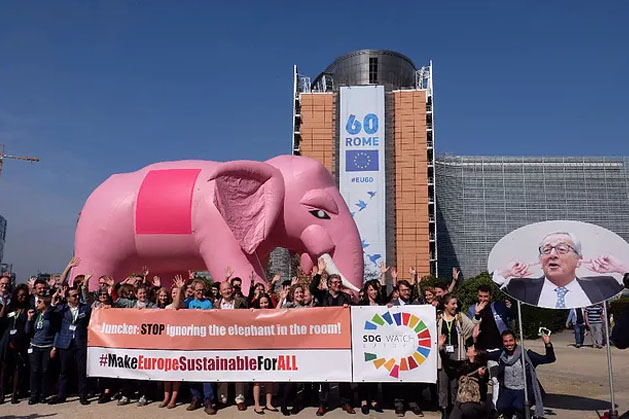
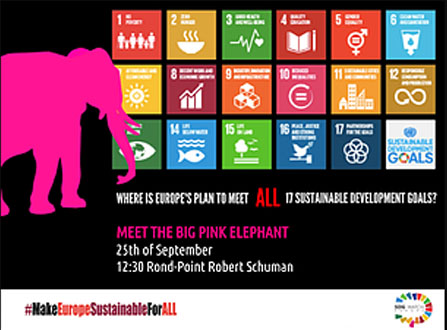
You can find a more in-depth analysis by the SDG Watch Europe Steering Group on the SOTEU published on our website – please find the full text here.  We highlighted this Elephant in the Room in front of the European Commission on 25 September 2017 – the second anniversary of the Sustainable Development Goals.

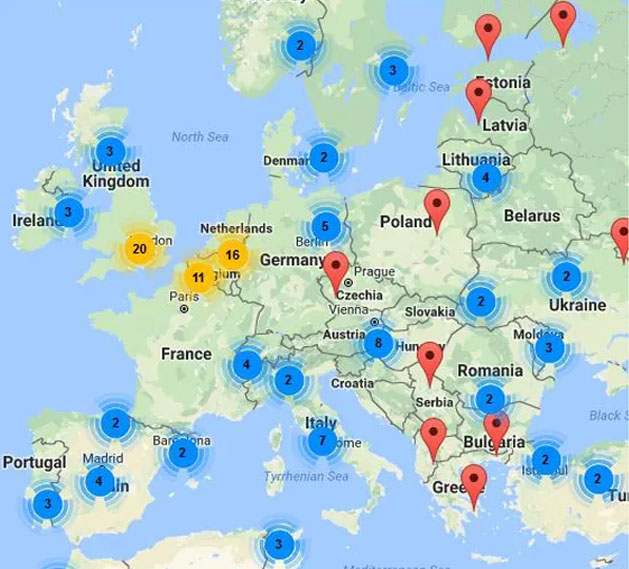
This was part of a massive Global Day of Action called Act4SDGs on 25 September: 917 events were organized in 116 countries around the world, including 129 alone in Europe – among them in 22 EU member states, by SDG Watch Europe members, members of members and many others. Clearly these numbers show the substantial support of citizens and civil society for the Agenda 2030. You can find the map with all the European and global events here: www.act4sdgs.org.  You find examples from Spain, Italy, Austria, Ireland and Latvia in this newsletter.

This is the first email newsletter of SDG Watch Europe! We will use this to keep you informed on the sustainable development agenda in the EU from the next Multi Annual Financial Framework (MFF) to the Common Agricultural Policy (CAP). This includes news and analysis of EU Institutions, EU member states governments, civil society at European and national level and other stakeholders. Please share this newsletter and give us your feedback inputs. Let’s make Europe sustainable for all.

SDG Watch Europe – Opinion on President Juncker’s State of the Union 2017

On Wednesday 13 of September, President Juncker delivered his State of the Union (SOTEU) 2017 address. Just like last year, his speech made no mention of the 2030 Agenda for Sustainable Development. This is despite the fact that the EU has endorsed and, at least in theory, is committed to implement this ambitious and overarching agenda.

Civil society is extremely disappointed at the EU’s failure to date to concretely engage in the effective coordination of Member States and the implementation of Agenda 2030, although it did play a central role in shaping this new global agenda. The almost total absence of reference to the 2030 Agenda for Sustainable Development in President Juncker’s speech this year reinforces the growing view that there is a real lack of political will at EU level where this important sustainable development agenda is concerned.

Only in the letter of intent, was a reference made to the 2030 Agenda for SD. But instead of seeing it as an overarching strategy, it was tucked away under “priority 1: A new boost for jobs, growth and investment”. SDG Watch Europe has already stressed on many occasions that this 2030 Agenda should be implemented in a more comprehensive way, as it covers all EU policies and, if done correctly, will promote Policy Coherence for Sustainable Development. This agenda should help us to achieve a fundamental rethink of the kind of Europe we want, beyond the “jobs and growth” paradigm. It should help to bring the European project and ambitions closer to what citizens want.

That is why people and civil society organisations are still demanding a vision for the future of Europe that puts public interest, democracy, environmental justice, human rights and a strong social fabric at the core. But unfortunately, the Commission remains too focused on a narrower agenda of trade, investment, the Eurozone and defense issues.

Moreover, Juncker’s plans on trade ignore widespread criticism that they undermine Europe’s social, environmental and health standards. He continues to give VIP rights to investors through a Multilateral Investment Court while he gives no rights to citizens harmed by these investors and sustainability chapters are non-binding.”

The 2030 Agenda for SD recognises the positive impact of migration, and the commitment to “cooperate internationally to ensure safe, orderly and regular migration involving full respect for human rights and the humane treatment of migrants regardless of their status…”  In his speech, however, President Juncker tackles the issue purely from a “security and protection” perspective defending the agreement with Turkey which prevents migrants reaching Europe- as a good model.

In his State of the Union address President Juncker also announced that the European Commission will present its plans how the future EU budget can match the ambitions and deliver on what the EU has promised. It is rather unfortunate that here again, he forgets to mention the 2030 SD agenda that it also promised to European citizens.  How can they believe that the Commission will deliver a modern budget that meets people’s expectations and sets Europe on a sustainable path that will address today’s biggest challenges without having a long term, positive vision? We need strong political commitment and effective policy instruments now, so that the future EU budget is sustainability- proofed and designed to serve the implementation of the Sustainable Development Goals.

There is a growing demand on the part of European citizens for the Union to respond to significant cross-border challenges that cannot be tackled effectively by Member States, such as migration, climate change and energy, among others. The European Union cannot properly tackle these challenges unless its budgetary resources are increased accordingly. The next MFF should take full account of the commitments made by the EU in the context of the Agenda 2030 for Sustainable Development and COP 21.

More than 250 non-government organisations from across Europe have released an alternative vision for a more democratic, just and sustainable Europe, the so called 6th scenario demanding that “The United Nations Sustainable Development Agenda, already supported by the EU, must be put at the heart of the Future of Europe”. President Juncker could do worse than to read this 6th Scenario document and to implement many of its progressive and timely proposals!

Juncker should stop avoiding the elephant in the room and ‘Make Europe Sustainable For All

Two years after signing up to the Sustainable Development Goals (SDGs), the EU still has no clear plan on how to achieve them and the clock is ticking.

Outside the European Commission building this morning a massive inflatable elephant will remind President Jean Claude Juncker that he cannot continue to ignore sustainability.

Embracing the SDGs would lead to substantial improvements in the lives of Europeans and many others around the globe. EU political leaders must prepare a plan to meet the SDGs that cuts across all areas from the environment to trade and energy to social issues.

Also today, people around Europe are marking the anniversary of the signing of the SDGs and reminding the political leadership that we need planning and action to make them a reality.

Ingo Ritz, Director of the Global Call to Action Against Poverty (GCAP) said:
“The EU and EU member states agreed with 193 governments in the UN to eradicate poverty and end hunger by 2030. This will be only possible if the EU fulfills its commitments for global cooperation, makes its agriculture and trade policies sustainable for people and planet and ends the overconsumption of natural resources.”
The Global Call to Action Against Povery is a global movement fighting poverty and inequality. GCAP has National Coalitions in over 100 countries and 6 global regions.

Jeremy Wates, Secretary General of the European Environmental Bureau (EEB) said:
“The EU needs to refocus on delivering the SDGs or the commitments it made two years ago will be shown up as empty rhetoric. We must urgently face up to how our hunger for raw materials is impacting others around the world and commit to substantially reducing our environmental footprint.”
The EEB is the largest network of environmental citizens’ organizations in Europe with around 140 members in more than 30 countries.

Carl Dolan, Director at Transparency International’s EU Office said:
“We can’t achieve all the SDGs without access to justice and open and accountable institutions for all people. Corruption breeds instability and poverty, it reduces access to healthcare, education, food and water. If the EU is serious about sustainable development it needs to show leadership and make Agenda 2030 a reality.”
Transparency International EU is part of the global anti-corruption movement, Transparency International, which includes over 100 chapters around the world. Their mission is to prevent corruption and promote integrity, transparency and accountability in EU institutions, policies and legislation.

Leo Williams, Director, European Anti-Poverty Network (EAPN), said:
“President Juncker’s complete lack of focus on the SDGs or sustainable development in his State of the Union address only serves to reconfirm the Commission’s unfortunate lack of political prioritisation of the SDGs, despite all European Member States signing up to this global agreement in 2015 at the highest political level, and millions of European citizens having been involved in their elaboration.  People experiencing poverty and social exclusion, and the organisations that work with and for them, expect the Commission to take the most ambitious agenda to tackle poverty we have seen for quite some time, much more seriously”
EAPN is the largest European network of anti-poverty NGOs, from grassroots groups to European Organisations, active in the fight against poverty and social exclusion.

Anna Widegren, Secretary General of the European Youth Forum (EYF) said:
“Young people will suffer the most from the current European short-term approach towards Sustainable Development. The European Commission must take the lead in the implementation of the Sustainable Development Goals and shift towards long-lasting and sustainable solutions with real impact. The structured involvement of young people, youth organisations and civil society is essential to build a sustainable future for Europe and the world.”
The European Youth Forum (YFJ) is a platform which represents 104 youth organizations from around Europe. It brings together tens of millions of young people from all over Europe to allow them to represent their common interests.

Follow the latest on #MakeEuropeSustainableForAll

Sustainable Europe for its Citizens – the 6th Scenario

In April 2017 European Commission President Jean-Claude Juncker presented a White Paper on the Future of Europe, including five possible scenarios for discussion at European and Member State levels.

In response, SDG Watch Europe in collaboration with Friends of the Earth Europe has facilitated the development of an alternative ‘6th Scenario’ that has been backed by over 250 civil society organisations. In this ‘6th Scenario’ these organisations present their aims for a Sustainable and Fair Europe in which care for people and planet are key.

They intend to put this ‘6th Scenario’ forward as an alternative to the five scenarios and to demand that it is fully considered in national and European discussions on the Future of Europe.

You can read the ‘6th Scenario’ here. It is also available in FrenchGerman and Spanish.

European Commission must match the ambition of Member States

On June 20, 2017, the European Council adopted its Conclusions on “A sustainable European future: The EU response to the 2030 Agenda for Sustainable Development”. SDG Watch Europe welcomes the Conclusions and calls on the European Commission to now match the ambition of the Member States and begin implementing the necessary steps to achieve the 2030 Agenda.

SDG Watch Europe published a series of recommendations ahead of the adoption of the Conclusions to address the lack of European leadership and ambition shown to date. Comparing the two documents it is clear the Member States also want the EU to lead on the implementation of the Sustainable Development Goals and there are a number of comparable requests including the development of an implementation strategy which includes a policy gap analysis by mid-2018 containing a timeline, objectives and concrete measures, in all EU relevant internal and external policies, these will be key for a coherent, comprehensive and integrated implementation of the 2030 Agenda. We call on the EC to respond to the request to voluntarily report at the High Level Political Forum by 2019.

We welcome the call for a common and ambitious set of European progress indicators, covering social, economic, environmental and governance factors. However, SDG Watch Europe calls on the European Commission to integrate these indicators into existing governance mechanisms of the EU, in particular, the European Semester in order to ensure a common vision on the decision-making process as well as to guarantee accountability and Policy Coherence for Sustainable Development (PCSD). PCSD is essential to implement the 2030 Agenda in a holistic manner, considering the four dimensions of the Agenda: social, economic, environmental and governance.

In that sense, we welcome the commitment from the Council Conclusions to ensure inter-linkages, coherence and consistency between the different policy sectors. In addition, we regret that the Council Conclusions do not recognise the important role of culture in promoting social change by reflecting on shared beliefs, values and behaviours, providing alternative narratives and a vision of a sustainable future. We also regret that more trade is unconditionally seen as a mean for implementation, without recognising the need to reduce our ecological footprint in absolute terms, to maintain in the planetary boundaries.

One area of concern is the lack of clarification within the Conclusions of the important role of Civil Society in helping to implement the 2030 Agenda. The Multi-Stakeholder Platform should reflect a strong partnership with Civil society organisations (CSOs), with a role of setting the agenda and influencing decision making processes in order to raise the voice of citizens. The Platform should have a clear mandate towards the Post-2020 Strategy as well as the funding mechanisms of the EU to implement the 2030 Agenda. The SDGs must be at the core of the new Multi-Annual Financial Framework and the EU must also strengthen its commitment and ensure the 0.7% for the Official Development Assistance (ODA).

It should also take steps to strengthen tax justice, establishing a tax system for protecting the planet and its resources and fighting against tax havens. The involvement of private sector must also be accountable to governments and civil society. In that sense, SDG Watch Europe encourages the EU to put in place mandatory frameworks and regulations to hold the private sector accountable and ensure that all activities are in line with the 2030 Agenda, like a UN treaty for Business and Human Rights.

Last but not least, SDG Watch Europe welcomes the EU commitment on the eradication of poverty and the fight against inequality. We recognize EU efforts towards “leaving no one behind”, focused on reaching first those who face more discrimination and vulnerable situations- In order to monitor the impact of EU policies and programmes for those marginalised people, it is essential to align the EU monitoring system with the 2030 Agenda by providing disaggregated data by income, gender, age, migratory status, disability, geographic location and other relevant characteristics in national contexts.

SDG Watch Europe input to the Reflection paper on EU finances

Europe faces multiple challenges, which need to be responded to by means of EU policies and financial rules alike. Unemployment, social inequalities and migration (perceived to be the top three challenges for the EU by its citizens), growing euroscepticism and the erosion of European values, the ecological and climate crises, which undermine human well-being, the challenges of the euro area and the revenue loss caused by Brexit all need to be tackled in an ambitious reform of the European project supported by a transformed EU budget (Multiannual Financial Framework).

Even though the EU budget has changed a lot in the last decades, it still requires ambitious reform to enable it to be a positive driver of change, meet the expectations of the people for an ambitious future for Europe, and accordingly support the implementation of the Sustainable Development Goals.

Such reform should include not only bold decisions on what and how much the EU spends and where the money comes from, but should also involve a change to the overall approach to ensure the entire EU budget coherently delivers on the overarching objective of working for the people and protecting the planet.

The way forward for the EU and its budget

While the White Paper on the future of Europe outlined five potential scenarios, SDG Watch Europe firmly believes that they are not capable of setting a positive vision for the future and uniting Europeans around the necessity of major reform. In our view the kind of scenario that is urgently needed puts sustainability at the heart of the European project. Our proposed 6th scenario outlines a social Europe that is able to reclaim common goods and to work for the people instead of focusing on commercial and corporate interests, while addressing the challenges linked to operating in a world of diminishing resources and an ecological crisis. Our vision of Europe involves a stronger focus on core values – democracy and participation, social and environmental justice, cultural diversity, solidarity and sustainability, respect for the rule of law and human rights, both in and outside of Europe.

Citizens seek economic, social and environmental well-being: economic well-being in the form of prosperity for all, starting with redistribution of wealth; social well-being in the provision of quality, inclusive and affordable public services, promoting cultural diversity and a caring society; environmental well-being reflected in a healthy natural environment that sustains all life on Earth and protects our soils, waters and air, tackles climate change and provides nutritious, healthy food. As a result of implementing these policies, the EU27 will ensure a better life for all of its citizens.

Delivering the 2030 Agenda for Sustainable Development, based on the 17 goals and principles, leaving no one behind, living within the fair share of global resources and returning to operating within planetary boundaries, as well as respecting human rights should be at the core of EU and national policy-making.

Real progress on this comprehensive agenda can only be achieved however, if policy silos are dismantled, incoherencies and contradictions are resolved, and all policies and programs are contributing to the sustainable development agenda. The social and environmental costs cannot continue to be borne by people within or outside of Europe due to the EU’s adherence to flawed approaches and methods.

Such policy coherence should be ensured in the EU budget through sustainability proofing based on the consistent application of an inseparable set of sustainability principles while serving the Sustainable Development Goals. Sustainability proofing of the EU budget should involve a structured process of ensuring the effective application of tools to maximise the social, environmental and economic benefits and to avoid or at least minimize harmful impacts and trade-offs of EU spending.

It applies to all spending streams under the EU budget in both internal and external spending, across the whole budgetary cycle and at all levels of governance, and should contribute to a significant progress of the EU towards sustainability assessed against a set of sustainability principles. Sustainability proofing is thus a tool to ensure that environmental integrity is maintained as a precondition for any development, while economic and social development serve the objective of increasing human well-being.

Sustainability proofing is a step-wise process that follows the mitigation hierarchy under which appropriate actions are taken in the following order of priority: (1) avoidance of negative impacts; (2) reduction of negative impacts; (3) rehabilitation/ restoration measures; and (4) compensation measures for significant adverse residual impacts. Substantive, procedural and institutional instruments will achieve this.

This approach will ensure the EU budget lives up to its potential to catalyse a sustainable economy of well-being, and help repair some of the root causes of the problems facing Europe by introducing new priority objectives, new participatory spending tools, and improved accountability. This will indeed amount to a genuine budget for the people.

Sustainability principles for the future EU budget to be applied as an inseparable set:

  1. The EU budget shall work for the people and with the people, with greater transparency, respectful of diversity and meaningful participation of the citizens

  2. The EU budget shall strengthen the common European values, in Europe and globally

  3. The EU budget shall increase wellbeing and contribute to decreasing inequality and social exclusion at all scales

  4. The EU budget shall take a holistic approach, support systems change and promote innovation, which is required for the transition to sustainability and building a circular economy.

  5. The EU budget shall serve a diversified and resilient economy and society, where the full potential of all communities, organisations and businesses of any size is fully achieved.

  6. The EU budget shall serve the public good.

  7. The EU budget shall contribute to decreasing the total environmental pressures (use of natural resources, use of land and emissions of waste, toxic substances, greenhouse gases and alien genotypes) to return to within planetary boundaries, and should not contribute to shifting of environmental pressures in time and space.

  8. The EU budget should contribute to improving the state of environment and maintaining and restoring ecosystem services, which is the very foundation of our society and economy.

SDG Watch Europe calls on the European Commission to sustainability-proof the future EU budget (MFF) based on the above principles.