More than SDG implementation

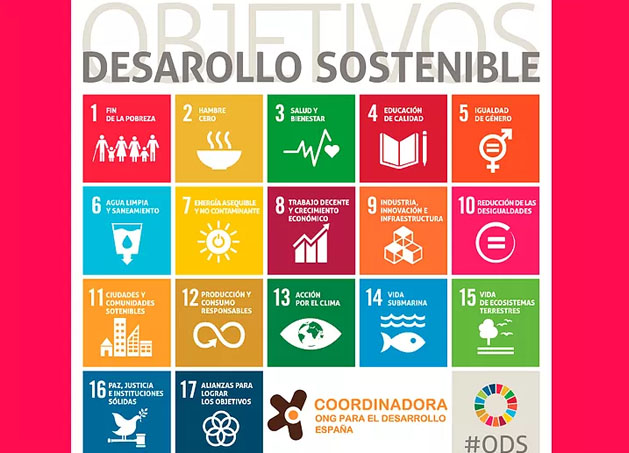
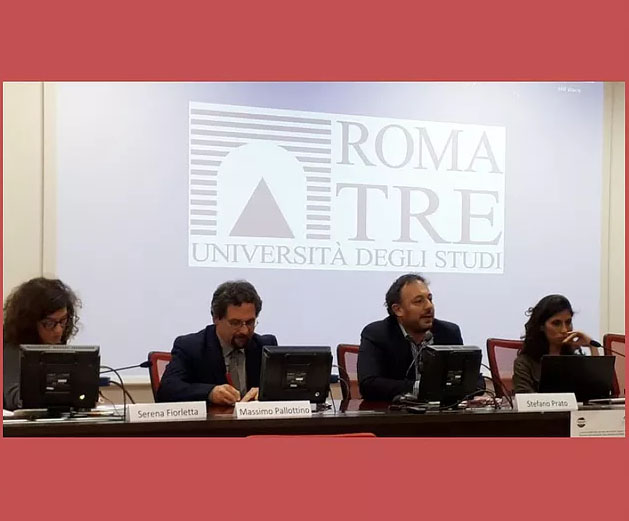
How to examine the implementation of the Agenda 2030? This issue was discussed at and in cooperation with the University of Roma Tre in Rome during a workshop with academics and experts organized by Global Call to Action Against Poverty (GCAP) Italy on 25 September. It is not an easy question, if the full ‘transformative’ potential of the SDGs is to be tapped. The risk we face is to become simply ‘implementers’ of the SDG’s framework. It is a powerful tool with many useful elements to push ahead policy dialogue at all levels, but we must acknowledge some omissions, tensions and contradictions, inherent in how the framework and the objectives are formulated.

As Stefano Prato, GCAP Italy coordination board member and Director of the Society for International Development, pointed out in his keynote speech, we must avoid that important issues are overshadowed by a narrowly conceived understanding of ‘objective by objective’ monitoring. This includes the issue of rights often (regressively) understood and represented in term of ‘needs’; the discourse on inequality that risks becoming a complete substitute for ‘poverty’ thus losing its capacity of looking at society – and the planet! – as a whole through the lens of an ‘economic justice’ dimension; the transformation of the role of the state in a context of blurring distinctions between public and private interests; and finally also wider issues related to unjust global governance.

We should avoid ‘repacking the world’ so that it fits into the SDGs framework. Rather, we must directly confront the big challenges we see on the planet!

Such complexities include, among many other examples, the case of the Italy-Libya agreements on migrants flows management – a complex issue where the sole objective of the proposed solution was to limit migrants landing on Italy’s shores, which put human rights at risk and had little understanding of the long-term issues at stake. How ‘sustainable’ are these policies? Shouldn’t the notion of ‘policy coherence’ be applied in a very concrete way to this and in many other cases? The Agenda 2030 needs to be made useful when facing the big challenges of our times and not used as a tool to divert our attention from them.
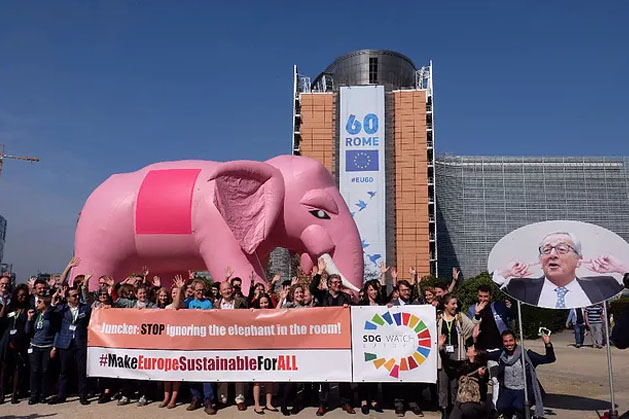
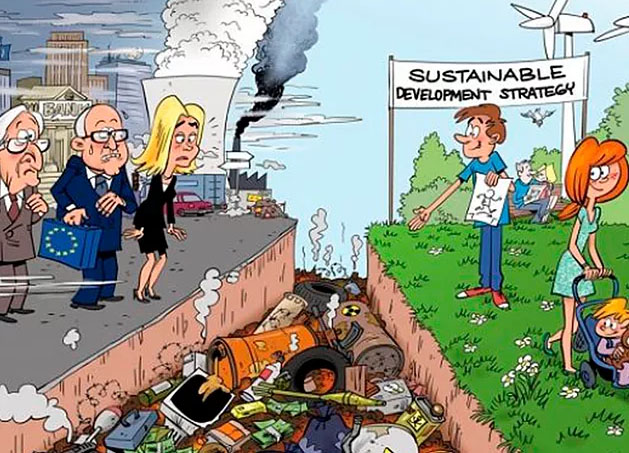
President Juncker ignores the Sustainable Development Goals

President Juncker delivered his State of the Union (SOTEU) 2017 address on Wednesday 13th of September. Just like last year, his speech made no mention of the 2030 Agenda for Sustainable Development. This is despite the fact that the EU has endorsed and, at least in theory, is committed to implement this ambitious and overarching agenda.

Civil society is extremely disappointed at the EU’s failure to date to concretely engage in the effective coordination of Member States and the implementation of Agenda 2030, although it did play a central role in shaping this new global agenda. The almost total absence of reference to the 2030 Agenda for Sustainable Development in President Juncker’s speech this year reinforces the growing view that there is a real lack of political will at EU level where this important sustainable development agenda is concerned.

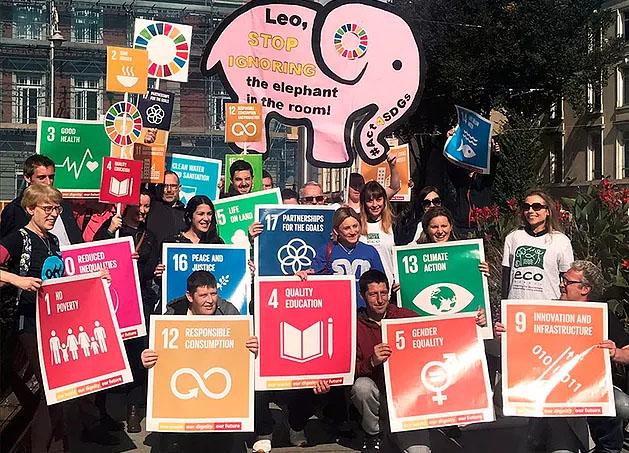
You can find a more in-depth analysis by the SDG Watch Europe Steering Group on the SOTEU published on our website – please find the full text here.  We highlighted this Elephant in the Room in front of the European Commission on 25 September 2017 – the second anniversary of the Sustainable Development Goals.

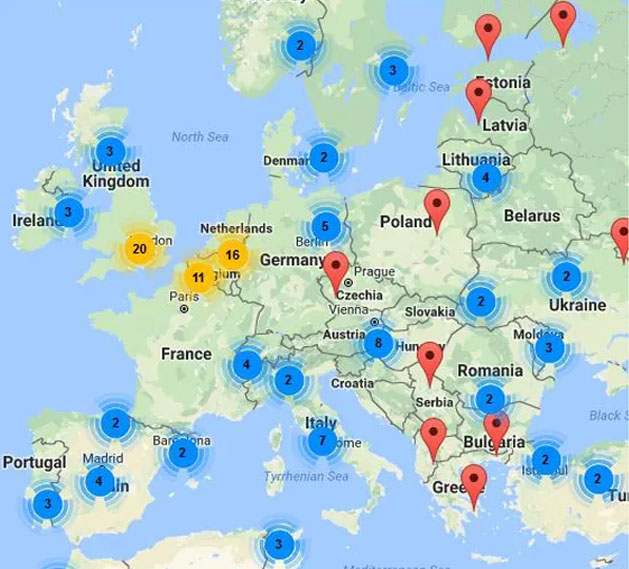
This was part of a massive Global Day of Action called Act4SDGs on 25 September: 917 events were organized in 116 countries around the world, including 129 alone in Europe – among them in 22 EU member states, by SDG Watch Europe members, members of members and many others. Clearly these numbers show the substantial support of citizens and civil society for the Agenda 2030. You can find the map with all the European and global events here: www.act4sdgs.org.  You find examples from Spain, Italy, Austria, Ireland and Latvia in this newsletter.

This is the first email newsletter of SDG Watch Europe! We will use this to keep you informed on the sustainable development agenda in the EU from the next Multi Annual Financial Framework (MFF) to the Common Agricultural Policy (CAP). This includes news and analysis of EU Institutions, EU member states governments, civil society at European and national level and other stakeholders. Please share this newsletter and give us your feedback inputs. Let’s make Europe sustainable for all.

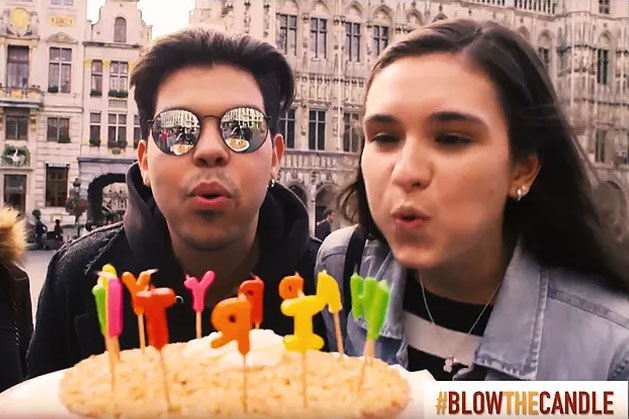
We’ve blown the candle out, now make our wish come true!

The #BlowTheCandle campaign walked around Brussels asking random citizens what they wished for a better world. This exercise testified that the content of the 2030 Agenda echoes in many peoples’ ears: tackling climate change, ensuring gender equality, redistributing wealth… all of these were among their concerns. However, when asked ‘Do you know who this person is?’ they did not recognise Frans Timmermans on the picture. But he is the one in charge for the 2030 Agenda at the EU level! And he should make citizens’ wishes come true!

The campaign coincided with the second anniversary of the Sustainable Development Goals. “By adopting an ambitious overarching strategy for sustainable development and guiding European policies towards transformation, the EU and its Member States can make a real difference, for people in Europe and around the world,” says Jussi Kanner, CONCORD expert on sustainable development. But we still have a long way before we turn it into reality and a lot has still to be done at European level!

Climate change, food insecurity, gender inequality, resource constraints, forced migration, financial and economic crises…. these are the complex and interrelated challenges the world is facing today. We cannot wait any longer: we need to act NOW!

The #BlowTheCandle campaign is led by CONCORD Europe with the support of the European project LADDER. The idea is to push the European Commission, and in particular Frans Timmermans, Vice President of the EU Commission, to act and set-up a strategy to implement this global action plan. To do so, CONCORD has put together a short list of the key areas on which the institution can and should act to put the Union on the right path.

Links

Campaign webpage: https://concordeurope.org/what-we-do/sustainable-development/eu-reaching-goals/

Youtube video: https://youtu.be/7M6PXGv17ZI

Facebook video: https://www.facebook.com/CONCORDEurope/

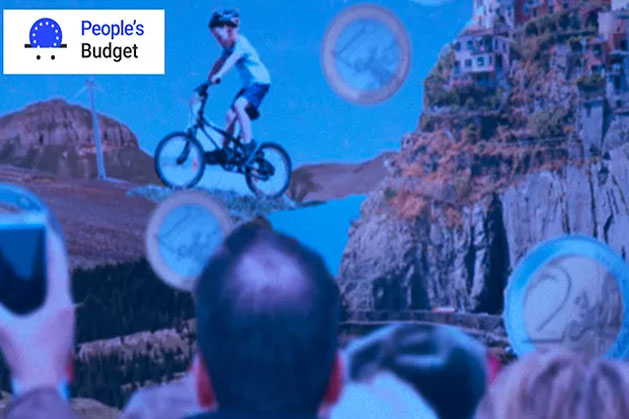
European campaign to make the future EU budget sustainability proof

Investing in fossil fuel infrastructure and fighting climate change at the same time is not an efficient way of using EU tax money. Exacerbating social inequalities through the provision of roughly 80% of the agricultural subsidies to about 20% of the farmers, and then promoting social inclusion in rural areas through rural development funding is another prime example of taxes from European citizens supporting short viewed and contradictory policies.

In 2015 the EU adopted the 2030 Agenda for Sustainable Development, which should provide a coherent framework to tackle those incoherencies. Therefore, SDG Watch Europe calls for sustainability proofing the future EU budget in its People’s Budget campaign based on an indivisible set of sustainability principles.

Further inconsistencies range from disregarding health impacts of tobacco and red meat production subsidies to forgetting the social inclusion aspects of energy efficiency investments. Also the narrow focus on measuring added value in the EU through generating economic growth is flawed and disregards the Treaty objective about sustainable development in three dimensions. We want to see new and fresh approaches in defining the EU’s added value, where all dimensions of sustainability are taken into account. We want to see a future budget that measures performance against progress towards sustainability and incentivises the implementation of the SDGs by Member States.

We call for European and national decision makers to involve civil society on the basis of the partnership principle into the full negotiation process and implementation, in order to improve the transparency of the EU budget. We call for increased accountability of the beneficiaries, for instance through innovative digital solutions accessible to each European citizen. Of course there are many other possible solutions to mainstream sustainability and the SDGs into EU spending and lending, and SDG Watch Europe is elaborating suggestions on how to best use them.

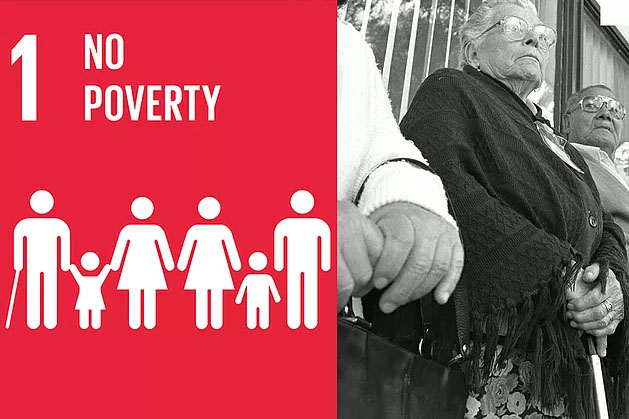
Implementing SDG 1 requires tackling the growing old-age poverty

By Luise Steinwachs, Brot für die Welt and Ragnar Hoenig, AWO Bundesverband

The first of the 17 Sustainable Development Goals demands UN member states to end poverty in all dimensions and everywhere. (1) Furthermore, social human rights guarantee a humane standard of living and reliable social security. However, a growing part of the elder population is structurally disadvantaged and permanently excluded from society. This trend is observed globally. A considerable factor is precarious or informal employment – in particular of women – and weak public social security systems that often fail at providing provisions for the elderly. Life expectancy of women is significantly higher than of men – globally up to 11 years. Demographic factors show a growing life expectancy as well as a growing world population. Therefore, the group of persons older than 60 years will grow on a global scale. (2)

Globally, 80 % of humans live without protection in difficult situations such as sickness, accident or catastrophe. Provision for one’s old age or retirement can only be accomplished by investing a fair share of  income in retirement, health or nursing insurances. When existing, these social security schemes are depending on formal employment. Women are significantly less formally employed than men (3), a circumstance that results in a larger proportion of women being poor at older age. Besides, social security systems linked to formal employment do not work in many societies and a vast majority in the Global South is informally or self-employed. Therefore, more than 100 countries have introduced tax-funded social pensions that are not depending on previous deposits. (4) Those must become a political priority

Whilst specific statements regarding old-age poverty in Germany can hardly be determined, experts claim three causes for its rise in the future: Firstly, growing gaps in career biographies caused by structural changes in the labor market. Pension payments reflect the financial compensation of a working life and are depending on the sum of retirement deposits. Women are especially affected by these gaps. Secondly, pension benefit cuts and a long term decline of pension levels contribute to an increase of old-age poverty. Pension levels declined from 53 % (of the average work-life earnings) before the 2001 pension reform to present day 48 % and is expected to fall below 42 % by 2040. Finally, both factors combine and amplify: While insured persons receive less due to reduced deposits, pension benefits decouple from pay trends. Only a preventive social policy strategy can combat those complex and interdependent factors that contribute to old-age poverty.

Regarding those developments in the employment sector with mainly informal employment across the Global South and insecure and interrupted career biographies in industrialized countries, preventive social policies and income-independent old-age provision systems (such as social pensions in poor countries) must be developed to avoid poverty in old age. Regarding pressing global aging processes, Germany’s federal government must pay more attention to age-related challenges while implementing the global 2030 Agenda, especially when developing and implementing social security systems. In development cooperation, donor countries must live up to their human rights based responsibility to secure an adequate standard of living on a global scale.

This article was published in the shadow report “Großbaustelle Nachhaltigkeit” which features comments of 42 authors from German and European civil society. The report focuses on Germany’s federal sustainability strategy released earlier in 2017, current implementation gaps and necessary strategies after the 2017 federal election.

Link to Shadow Report (English): https://www.2030spotlight.org/en

Link to original and full article (German): https://www.2030report.de/de/bericht/1400/kapitel/1-die-bedeutung-der-un-nachhaltigkeitsagenda-fuer-die-bekaempfung-von

Summary and Translation: Roman Fleißner, AWO International
Originally published in “Deutschland und die globale Nachhaltigkeitsagenda 2017 – Großbaustelle Nachhaltigkeit“

(1)    UN General Assembly (2015), p. 15

(2)    From 11% in 2010 to 28 % in 2011, compare UN-DESA (2011).

(3)  Compare to www.wiego.org/informal-economy/sttistical-picture.

(4)  Compare to ILO (2014b).

SDG-Watch Austria: A vibrant CSO platform challenging an inactive political system

Austria’s former federal president Heinz Fischer assured “Austria’s full commitment to the seventeen specific goals” (1), at a speech to the UN’s general Assembly on September the 27th in 2015. It could have been a historic moment – day 1 of an active Austrian role in the global sustainability transition.

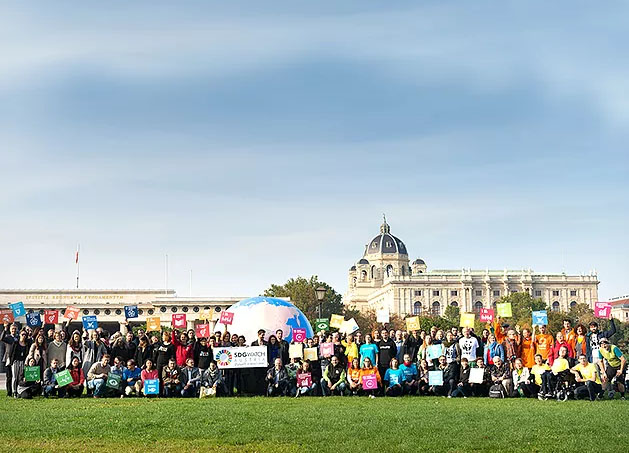
But the Austrian government has done little to walk the talk since then, and a first report to the UN’s High Level Political Forum (HLPF) is only announced for 2020. It doesn’t surprise that CSOs don’t stand aside while they see a hopeful chance for a better future pass by, but take action in their hands. Exactly two years later, on September the 27th in 2017, around 100 organisations from all parts of civil society launched SDG Watch Austria  – a broad CSO platform to stand up for an ambitious and consequent implementation. You can tell their passion for the SDGs from these pictures.

Austria’s government by now only delegated the responsibility for the implementation to the administration level. The „mainstreaming approach“ might sound good at the first moment, but it’s an approach on an administration level, and it has turned out to be quickly stretched to it’s limits. High level political commitment to boost SDG implementation is lacking.

The organisations of SDG Watch Austria consider the 17 goals integrated and indivisible, and an important chance for a better future, which needs an approach that is really meeting the „unprecedented scope and significance“ (2) of the 2030 Agenda. Founding the platform is a consequent step towards progress with the national contributions to the SDGs. It is a strong and positive sign as well as an offer to the government, to take this chance to work with this coalition and make a better future possible.

Learn more on http://www.sdgwatch.at or by following #SDGsumsetzen on facebook and twitter.

(1) https://sustainabledevelopment.un.org/content/documents/20803austria.pdf

(2) http://www.un.org/ga/search/view_doc.asp?symbol=A/RES/70/1&Lang=E

Latvian NGO network uses the SDGs to reach out to new people

In 18 places all over Latvia almost 500 volunteers of all ages and occupations came together to talk about the local implementation of the SDGs. The actions were part of a global day of action on the SDGs, to mark their second anniversary. Latvian NGOs gathered in the Latvian Platform for Development Cooperation (LAPAS) have noted a boost in regional partners and supporters through its work on the SDGs. By working in SDG implementation we’ve clearly expanded our network beyond our members and into new communities that are eager to help with creating a better world.

The engagement came from various angles: community activists from schools, CSOs, local libraries and youth centres were some of the more involved actors – as well as the local decision makers and public officials that need to implement the SDGs.

To support these initiatives and provide more information, LAPAS produced a special SDGs section on its website with stories, methodologies and videos, and well as publishing and distributing 2,500 newspapers on the SDGs at the local, national and global levels.

The Latvian part of the global 25 September #Act4SDGs actions were only the first phase of LAPAS’ ongoing activities on the SDGs. These actions paved the way towards monitoring and reviewing Latvia’s national Voluntary Review in 2018. This campaign will be continued during the Global Education Week from 20 – 27 November all around Latvia.

Find more about LAPAS: www.lapas.lv

Spain: SDGs in Spain

On this 2nd birthday of the Agenda 2030, signs show that we are not going in the right direction – an increase of hunger for the first time in 15 years, temperatures have been over the historical average of the past 32 years, etc. UNSG António Guterres recently alerted that the global community was disintegrating into conflicts.

The 2030 Agenda provides the opportunity to solve or minimize the serious problems of the current international context. Nevertheless, implementation is not exempted from the risks: procrastination, political irrelevance, disconnection from people, and not facing the deep root causes.

According to the SDG index, Spain is far from achieving any goal due to lack of relevant government action. For the 2nd birthday of the SDGs, Spanish civil society organized a high-level event in Madrid with politicians, UN representatives, leaders and activists. Supported by the organizations of the coalition Future in Common, the event was a big success – it trended on the social media networks (#SpainSDG) and a government representative made a suprising and long-awaited announcement at the end that a high level inter-ministerial mechanism under the Prime Minister would run the implementation of the Agenda in Spain, something Future in Common had advocated for.

For civil society, this will be key to making the Agenda relevant. Currently, 70% of the European countries have yet to implement the Agenda into governance structures. For the next steps, civil society will advocate for an adequate gap analysis, a National Strategy, an adequate participation in the HLPF and a forward-looking position regarding the Future of Europe debate. The turtle is starting to move.

Ireland: SDGs in Ireland

Make Ireland Sustainable For All, in conjunction with All Together in Dignity (ATD) and the Irish Coalition 2030, marched through the streets of Dublin on 25 September to ask the Irish Government to Light The Way Again and implement the SDGs.

Over 50 people representing the Irish public and members of Coalition 2030, including WV Ireland, Irish Environmental Network (IEN) and ATD rallied and stopped at key landmarks in Dublin. The stops were chosen to highlight the universal dimension of poverty, inequality and climate change and also provided a poignant link between Ireland’s past and the opportunities it has to shape a more just and sustainable world, through the SDGs.

On O’Connell Bridge, in direct view of the city’s busiest crossing, the group hung a 35 metre banner – ‘Will Ireland #Light the Way Again?’. At each stop, representatives of Coalition 2030, Make Ireland Sustainable For All and ATD spoke of the transformational nature of Agenda 2030 and urged the Irish Government to fulfil its promise to ‘Leave No-One Behind’. Dóchas Chief Executive Suzanne Keatinge demanded that the Irish government meet its commitments to the SDGs, declaring the honeymoon period of the Goals over.

The event was broadcast live on social media under #Act4SDGs, received extensive coverage by the Irish Times and was featured on a number of national radio stations drawing attention to the anniversary among the wider Irish Public.

https://www.irishtimes.com/news/environment/irish-response-to-climate-change-woefully-inadequate-say-ngos-1.3233573