7th Sustainable Development Festival in Italy

By ASviS

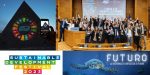
In collaboration with Italian embassies, ASviS organised the seventh edition of the Sustainable Development Festival from 8 to 24 May in Italy, online and around the world. Over a thousand events have been organised by civil society, companies, and institutions across the country. Naples, Bologna, Milan, Turin, and Rome were among the stops on the Alliance’s journey to discover sustainability’s different dimensions. 

Sustainable development lights up the future: this was the claim that drove people to attend meetings, exchange ideas, and share best practices. A great collective effort was put forth by the Alliance’s 330 members to create the festival, which involved universities, schools, regions, cities, associations, citizens, businesses and institutions. Together, they called on politics to focus on a bright and sustainable future.

There were 121 million impressions on social media, over 48 million contacts on TV and radio for the campaign that aired on national broadcaster RAI.

Thanks to the collaboration with the Ministry of Foreign Affairs, the Festival was able to promote the values of the 2030 Agenda all over the world with events in Italian embassies, consulates, and cultural institutes, including those in Hong Kong, Berlin, Philadelphia, and Ankara.

LLLTalk – Green skills explained

By Lifelong Learning Platform

“LLLTalk – EU Education Made Simple” is the podcast of the Lifelong Learning Platform that dives into the most discussed topics in the sector. A new episode is out! Today we dissect with an expert what are these “green skills” we so often hear about: 

  • what definition can we make? 
  • What impact on the learners? 
  • What are they so important for the green transition? 

Rooted in the European Year of Skills, this episode tries to shed light on some of the most obscure European jargon. The episode also focuses on the definition of green skills and competencies, as well as the validation processes to make them visible and the learning offered today in Europe. 

Tune in and listen here!

EPIC Final Events: discussing the challenges of migrant integration

By ALDA – European Association for Local Democracy

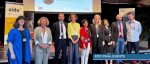
On 6 & 7 June 2023, within the framework of ALDA Festival and General Assembly 2023, EPIC – European Platform of Integrating Cities partners and both local and international stakeholders gathered together in Brussels (Belgium) for the last events of the project. The two events had the objective of discussing the project’s outcome and allow participants to talk about the sustainability of EPIC.

The third international networking event took place on 6 June, where partners and their local stakeholders had the opportunity to present their activities on migrant integration. Eventually, the audience was splitted in different focus groups to brainstorm on the current status and to discuss possible solutions to inclusion and integration of migrants in several fields namely, education, employment, legal and administrative support, housing, health, narrative, civic engagement and policy making. 

The following day, the Final Conference of the project began with a welcoming speech from ALDA Governing Board member and President of Cooperativa Studio Progetto, Mr. Andrea Rilievo, followed by the keynote speech from Mr. Luca Barani, Policy Officer at the European Commission (DG HOME).

This first session was followed by a roundtable entitled “How to strengthen multilevel governance on migration? How to better include contributions and inputs from territories?” where representatives from local authorities, European institutions and CSOs exchanged views and opinions on the importance of acting at the local level.

In order to give concrete sustainability to the project beyond its lifespan, the last morning session focused on the Memorandum of Understanding, a document signed by the municipality and the local Non-Governmental Organisations to engage and commit in future actions together.

In the afternoon, all the sessions were structured as a marketplace where partners had the chance to showcase their activities on the 3 parallel actions they implemented: first they focused on the pilot projects, then on the counter-narrative campaigns to change the negative narrative in their territory (you can read the EPIC Toolkit on how to implement an alternative narrative campaign) and lastly on the local paths by answering the question: “How to raise awareness and mobilise citizens and local actors?”. The event ended with a networking aperitif.

If you want to know more about the EPIC project and its result, you can check out the final publication available in all the languages of the project!

SDGs as a common good: how wars and aggression change the path of sustainability in the world

By the Lithuanian NGDO Platform

Like all UN member states, Russia declared its commitment to the Sustainable Development Goals (SDGs) in 2015. 

On February 24, 2022, Russia launched a full-scale invasion of the territory of a sovereign state, Ukraine, accompanied by the shelling of peaceful cities. The civil society Coalition for Sustainable Development of Russia (CSDR) has conducted an analysis of the implementation of the SDGs in Russia since February 2022, since the situation in the country changed dramatically due to the outbreak of aggression against Ukraine. In this report, CSDR has reviewed all the SDGs – from human rights to climate change – describing what has changed in the implementation of each of the SDGs since February 24, 2022, and how these changes have affected Russia’s international cooperation.

This analytical work shows that state policies and decisions of individuals in power have a huge impact on achieving the SDGs. We see that within one year, even those few institutions and mechanisms that contributed to the progress made on the SDGs were eliminated in the country. The country has shifted to a policy of isolation. The expressions such as ‘technological sovereignty’, ‘economic sovereignty’, ‘environmental sovereignty’, and ‘sovereign ESG’ are circulated in political discussions more often. All this fundamentally contradicts the principles of the SDGs, which aim to achieve sustainable development in a global context.

But even before the invasion, the SDG implementation in Russia looked like a simulation. The Russian government reported on the implementation of the SDGs in 2020 by presenting a Voluntary National Review at the High-level Political Forum at the UN headquarters in New York (in an online format, due to the COVID-19 pandemic). After that, interest in the SDGs at the political level in the country was maintained for a year. 

At the end of 2020, Anatoly Chubais was appointed the Special Representative of the President of the Russian Federation for Relations with International Organisations to Achieve Sustainable Development Goals. The implementation of the Goals at the local level was also discussed; there were plans to prepare a local review on the implementation of the SDGs in Moscow, but it was never released. The Federal State Statistics Service arranged the release of a yearbook with statistical data for each of the Goals. This yearbook has a very limited set of indicators, but nevertheless, work continued, and in December 2022 a statistical yearbook with data for 2021 was released.

At the end of 2021, it was clear that the State’s interest in the SDGs was only a formality. 

At the beginning of the invasion of Ukraine, the Special Representative of the President left his post. A new appointment has not taken place. Most likely, this position will remain unfilled, demonstrating the lack of interest in this topic on the part of the State.

Representatives of the Ministry of Foreign Affairs of the Russian Federation continue to attend all international United Nations events on sustainable development. They are represented both at the UNECE and ESCAP regional forums and at the High-level Political Forum. Notably, at the 2022 Regional Forum on Sustainable Development in Geneva, representatives of the Russian Foreign Ministry expressed indignation at the position of many countries, who, in turn, condemned the military actions in Ukraine and accused Russia of creating another crisis that hinders the achievement of the SDGs amidst recovery from the COVID-19 pandemic.

The report of the Civic Chamber for 2022 ‘On the state of civil society in the Russian Federation’ included the section ‘Sustainable development’ for the first time, which again formally confirmed the commitment of state policy to the 2030 Agenda. The report was fully focused on the green agenda and ESG. It provided information on ongoing public discussions, which traditionally only public organisations affiliated with the State to one degree or another, or GONGOs, are invited to.

NGOs, projects and social movements that refused to support the current position of the State had to either close their branches in Russia and relocate their teams abroad or completely cease to exist. Without openly expressing their position for safety reasons, many organisations and civil activists have been forced to limit the scope of their activities and reduce their potential, working less effectively. 

Nevertheless, some organisations and civil activists openly express their position and continue their activities, despite the huge risks associated with the State being able to bankrupt both organisations and people themselves and deprive them of their freedom. 

At the same time, the state machinery continues to exert pressure on people, even in places of deprivation of liberty. In addition, representatives of civil society continue their independent work abroad. At the same time, there are already precedents today for statements made by Russian citizens on international platforms criticising the Russian authorities being regarded as treason.

In the report “Invasion of Ukraine: implications for the Sustainable Development Goals in Russia”, CSDR experts reviewed all the SDGs. Each of the chapters consists of three main sections: the situation from the beginning of 2016 to February 24, 2022, what has changed in the implementation of each of the SDGs since February 24, and how these changes have affected Russia’s international cooperation in this area.

Is Europe advancing on the Sustainable Development Goals?

By Jeffrey Moxom, SDG Watch Europe Coordinator, European Environmental Bureau

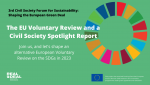
Just six and a half years remain before 2030, and the EU is underway in its preparations for its first EU Voluntary Review (EU VR) to track progress on the Sustainable Development Goals. EU Commission Secretariat-General and DG INTPA are set to present a report at the High-Level Political Forum (HLPF) in New York.

We at SDG Watch Europe have been advocating for the EU Voluntary Review to be used as a stepping stone to an overarching EU Strategy for the implementation of the Sustainable Development Goals, which includes an action plan and adequate financing mechanisms, as well as a renewed commitment to multilateral cooperation to keep the momentum going on the 2030 Agenda, Paris Agreement, and European Green Deal.

An EU VR Task Force has been established for SDG Watch Europe members, with three meetings held in 2023. In addition, SDG Watch Europe will attend a workshop on 4 April entitled How to strengthen the EU’s leadership on the SDGs. The purpose of this workshop is to discuss priorities for strengthening the EU’s leadership on the SDG Agenda, both domestically and internationally, ahead of the two major international summits – the High-Level Political Forum on Sustainable Development in July and the SDG Summit in New York in September. 

REAL DEAL has received funding from the European Union’s Horizon 2020 research and innovation programme under grant agreement No 101037071. The contents of this publication are the sole responsibility of the authors and can in no way be taken to reflect the views of the European Commission.

The EU must do more for food security

By Caritas Europa

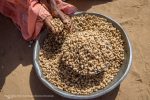
Food insecurity has been increasing worldwide, compromising chances of achieving SDG 2 – zero hunger – by 2030.

European leaders have repeatedly emphasised the impact of the war in Ukraine on food availability and prices worldwide and the need to increase food production, as they launched multiple initiatives in 2022 to address global food insecurity. However, they have not yet addressed structural issues undermining global food security, such as unjust international trade rules, a lack of political voice, and a lack of access to resources for small-scale farmers – issues where the EU has a vital role to play.

A recent Caritas Europa briefing paper analyses the initiatives launched by the EU in 2022 in light of the short-termism of the EU’s response to global food insecurity and the limited political attention and resources allocated to real solutions to the causes of food insecurity. As part of this analysis, Caritas Europa examines whether the initiatives have aligned with the urgent need to transition toward just and sustainable food systems.

Policy recommendations are laid out in the paper, which call on the European Commission and the European Council, for instance, to prioritise channelling humanitarian funds directly to local civil society organisations, to increase investment in agroecology, and to maintain Policy Coherence for Development principles, especially in the areas of climate, trade, and corporate due diligence.

Social Goals for the European Green Deal – How can we ensure a Just Transition?

By SOLIDAR

Global warming, extreme weather events, rising energy prices and the EU’s dependence on oil and gas make it more important than ever to make Europe and beyond a carbon-free and sustainable society and economy. However, the transition to a carbon-free Europe can only succeed if it also tackles the systemic socio-economic injustices at the root of the climate and environmental crises, such as inequalities based on income and wealth. Inequalities exacerbated by climate change and environmental degradation’s disproportionate impact on marginalised groups and people in vulnerable situations.

All actions aimed at advancing the green transition in Europe must, therefore, address environmental and socio-economic issues simultaneously and help achieve both true sustainability and social justice. Moreover, we must ensure that the transition as a process is fair, inclusive and democratic in nature. We must also ensure that it is driven by the following values and principles:

  • Solidarity among all social groups, countries and regions.
  • Well-being and global justice for all, not just the few, within the planetary boundaries.
  • Intersectionality, to address all the dimensions of socio-economic inequalities.
  • Meaningful democratic participation to guarantee the voice of all in policy-making at all levels.

Read more at Solidar and download the report here.

Climate Justice and Policy Coherence for Sustainable Development- Lessons from the Asia Pacific Region

By Forus International

SDG Watch Europe members and other activists who have been promoting the importance of PCSD for many years now are encouraged by the growing political attention paid to the issue by the EU & its MS.  As an example, the European Parliament recently passed a Resolution on PCSD. 

In addition, the global CSO network Forus and its Asian partner, the Asia Development Alliance (ADA), and Janic, recently released an important new report on Climate Justice and PCSD. This report is entitled “Climate Justice and Policy Coherence for Sustainable Development- Lessons from the Asia Pacific Region”. The report, which is a study on Climate Justice & PCSD in the Asia Pacific Region, contains case studies drawn from 17 countries from 4 different sub-regions in Asia and the Pacific.

See the report’s Executive Summary here and the full report here.

During the launch of the report, experts and institutional representatives from the EU, OECD, UNESCAP, as well as civil society organisations, including CONCORD, PIANGO, KRC, and Climate Watch, discussed the importance of policy coherence between climate action and sustainable development. Watch the recording here

According to the report, a credible approach to PCSD includes both vertical coherence (between local, national, regional, and international levels) and horizontal coherence (between environmental, economic, and social policy areas and sectors and governance mechanisms). 

In the study, target 17.14 and global indicator 17.14.1, which measures policy coherence for sustainable development, are noted as useful tools for monitoring PCSD. 

There are several recommendations in the report for national-level actors, including the development of clear PCSD roadmaps with time-bound targets, the establishment of functioning PCSD governance mechanisms, as well as the creation of different avenues and spaces for CSOs and people to participate in PCSD discussions, as well as the dissemination of positive narratives. 

Additionally, the report recommends that a global PCSD institution be established with a global steering body to develop standards and recommended processes and structures for PCSD, which should be flexible and adaptable to different countries’ contexts, and to monitor progress toward that standard as time goes on.

 For further information about the Forus/ADA report, please contact Deirdre de Burca, Forus Advocacy Co-ordinator, at Deirdre@forus-international.org

#MarchWithUs – a full month of stories from gender justice activists

By Forus International

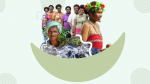
Launched in 2021, the #MarchWithUs campaign featured the stories of change-makers fighting for gender justice across the globe. From digital rights to rural women and structures of power, this year’s edition was co-created with over 25 activists and civil society organisations from across the globe.

Why #MarchWithUs?

According to several Forus reports and research papers, feminist groups are among the most targeted civil society coalitions. They are often victims of attacks, both online and offline, and impunity reigns in many instances. Every year, with #MarchWithUs, the Forus network dedicates one full month to their experiences.

Over the years, the campaign brought us into the lives of Aruna Roy, Indian social activist, Sonita Alizadeh, rapper from Afghanistan, Jesselina Rana the founder of the Nepali Feminist digital platform, Amy Tounkara, afro-feminist and the brain behind La Femme en Papier, Alice Nkom fighting for LGBTQI rights in Cameroon, Lina Al Hathloul who is bringing to light the situation of women and human rights activists in Saudi Arabia and many more.

Discover their stories here.

As part of the #MarchWithUs campaign, a workshop on women and youth-led communication and engagement was organised with participants from across the globe and testimonials from the European Youth Forum, the NGO Federation of Nepal, InspirACCIÓN, Peru, Coordination SUD, France, Akina Mama wa Afrika, Uganda, and Women Engage for a Common Future. Watch the recording here.

Is the European Green Transition leaving (indigenous) people behind?

By Yblin Román Escobar, SDG Watch Europe

The good, the bad and the ugly of the Critical Raw Materials Act (CRMA) and the Corporate Sustainability Due Diligence Directive (CSDDD).

Climate neutrality and the upcoming mining rush?

At the launch of the last IPCC report, UN Secretary-General António Guterres said, “A climate time bomb is ticking.” Global warming of more than 1.5 degrees Celsius would devastate Earth’s people and ecosystems.

It is thus encouraging to see the EU’s ambition of becoming carbon neutral by 2050 and combating climate change.

Nevertheless, the EU cannot afford to disregard sustainability and the SDGs while addressing Climate Change.  

EU’s twin green and digital transition has a huge hunger for raw materials. “We are witnessing a new rush to extractivism”, warned the deputy secretary general of the EEB, Patrizia Heidegger, in Brussels. “The debate in Europe is focused on securing our access to natural resources as if we had a natural right to resources in the ground of our own communities and the communities in other countries”, she said.

As Antonia Zimmerman articulated, Europe is in front of a green conundrum: Can it mine essential minerals without harming nature?

To secure enough raw materials and the EU’ strategic autonomy, the European commission drafted legislation such as the Critical Raw Materials Act (CRMA).

Does the Critical Raw Materials Act (CRMA) pose a risk to nature?

Yes. Under the new CRMA, mining plans could be considered strategic and prioritised if they conflict with other EU laws, such as biodiversity or Natura 2000.

Companies in the mining industry have long advocated relaxing environmental regulations. Their call is gaining traction now with “climate mining” or “green mining”. NGOs challenge the notion of “green mining”, saying, “it is a myth.” 

Most of the EU’s known reserves of critical raw materials are located in or near protected areas. Zimmermann quotes industry leaders saying, “the EU must make concessions to nature protection if it wants to exploit them.”

Science, however, is clear: nature supports the majority of the global GDP through the services it provides to people, such as clean air, food, and water, and biodiversity supports human livelihoods and well-being.  

What about the impact of the Critical Raw Materials Act (CRMA) on justice and democracy?

Climate change discussions place the burden of responsibility and sacrifice on the most vulnerable – these are, generally, indigenous and local populations. Because they defend their territorial rights, they are painted as opponents of climate change solutions, according to a UN report

In Sweden, for instance, one of the EU’s largest ore- and metal-producing countries with an expanding mining industry, the largest mineral deposits are in the Northern, where we find the Sámi indigenous peoples.

Matti Blind Berg, chairman of the National Confederation of the Swedish Sami herders, said: “We are not against the green Transition, although the Swedish society says we stop the development…, but we do not think more mines or wind turbines are the answer to the climate crisis. We cannot destroy nature and blame it on climate change.”

Over a quarter of the world’s land surface is under indigenous peoples ownership or management, they protect 80 per cent of the remaining biodiversity and keep the ecosystems running. 

“Here in Brussels, you talk about the green Transition, but for my people, this Transition is not green -it is black. The green Transition is a threat to our existence! We are losing the land and nature we have protected for so long,” said Blind Berg.

Incorporating Corporate Sustainability Due Diligence Directive (CSDDD) into CRMA

In the CRMA, there are no provisions regarding human rights and environmental impacts, but the EU says the Corporate Sustainability Due Diligence directive (CSDDD) will address these issues. The CSDDD was proposed by the Commission, and it is now being discussed in the European Parliament and will be taken to the Council for agreement.

CSDDD would play an important role in protecting environmental defenders, according to UN special rapporteur Michel Forst. “For me, attacks on environmental defenders are in fact, deliberate attacks intended to silence people who challenge political and economic forces, as well as the poor choices for the future of our planet,” said Forst at an event

Although promising, European Civil Society Organisations say the CSDDD proposal is not yet fit for purpose.   

Voices from the global south also share this opinion.

“The CSDDD proposal in its current format is a regression because it omits or deviates from international standards such as the United Nations Guiding Principles on Business and Human Rights. Besides, it would cover a very small percent of mining companies. As it is now, it would not help us on the ground,” Said  Nathalia Bonilla, from the Ecuadorian NGO Acción Ecológica, visiting the European Parliament in Brussels.

Galina Angarova, Director of the organisation Cultural Survival, pledges to incorporate the UN Declaration on the Rights of Indigenous Peoples and the principle of Free Prior and Informed Consent (FPIC) in the CSDDD text.  Matti Blind Berg reported that Indigenous people in Sweden cannot exercise the right to Free Prior and Informed Consent due to the country’s failure to ratify ILO convention 169. 

The way forward for the European decisionmakers 

Guarantee policy coherence and meaningful participation

Forus International in a recent report asserts that achieving the SDGs and climate goals requires policy coherency. Besides, sustainability and climate justice need a whole-of-society approach involving all stakeholders, particularly indigenous peoples and local communities. 

Enable the Free Prior and Informed Consent and the Right to Say No

Civil society and local and indigenous leaders urge the EU to follow through on its commitment to put democracy, justice, nature protection, and the well-being of all at the centre of the twin green and digital transition. They ask the EU to recognise the Right to Say No for local communities and Free Prior and Informed Consent rights for Indigenous peoples.

Reduce resource consumption

Our dominant economic model and its production and consumption systems are fundamentally unsustainable, according to Hans Bruyninckx, executive director of the European Environmental Agency. On this point, Janez Potočnik, former Environment Commissioner and chair of the UN International Resources Panel (IRP), calls on developed nations to reduce their absolute resource use. European NGOs advocate for the case for cutting EU resource consumption

Our material needs must be met within the limits of our planet and should not endanger achieving the SDGs.

Time is of the essence; we need a transition that is truly green and just. Without strong governance that respects human rights and democracy, the EU’s green transition risks pushing people behind.

If this happens, we all lose.