“Third-place” Inauguration from the perspective of the SDGs

By Association 4D

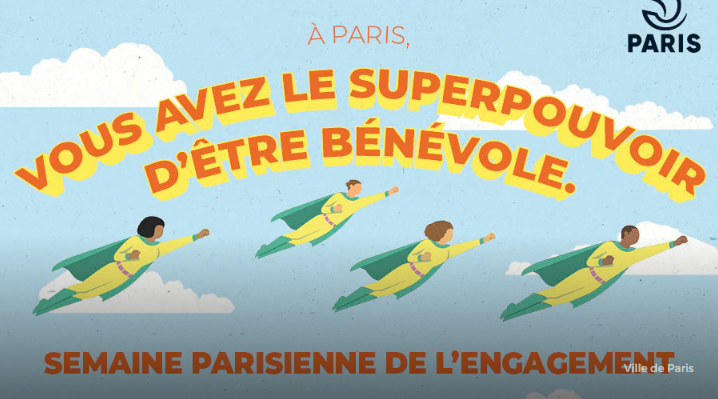
 From 2-8 December 2019, Commitment Week took place in Paris for the second consecutive year. This week dedicated to citizen engagement allowed 700,000 volunteers and 70,000 Parisian associations to present their actions.

During this event, 4D inaugurated on 3 December a “Third-place” from the perspective of the SDG’s in Paris. This third place is a project of the CAF (“Caisse d’Allocation Familiale” or Family allowance fund) and will be in place at 50 Rue du Dr Finlay, 75015 Paris.

Interested in the SDGs, the CAF works with 4D to engage and coordinate civil society organizations in the animation of this third place. We are convinced that the SDGs can be a guiding tool to help citizens and CSOs work together and innovate. This locale will be a meeting place. The SDGs could be a way to animate their exchanges and mutual projects.

Why a “Third place” from the perspective of the SDGs?

Individuals can take many actions, such as eating local, seasonal food, buying second-hand objects, or favoring walking, cycling, public transport and train, and more. They contribute to our well-being, but they also allow us to write narratives for a desirable future. And these actions must go even further on all fronts: public policies, companies, media, etc. Therefore, using the SDGs like a universal language promotes sharing and spreads actions that respect the environment, favor a fair economy, and leave no one behind. This “Third-place” will be the place to merge initiatives and to emphasize the SDGs integration in launched projects.

You can find our article of the event on our website: association4d.org.

SDG Forum 2019: Quo vadis Austria?

By Lisa Maria Weinberger, SDG Watch Austria/OEKOBUERO – Alliance of the Environmental Movement

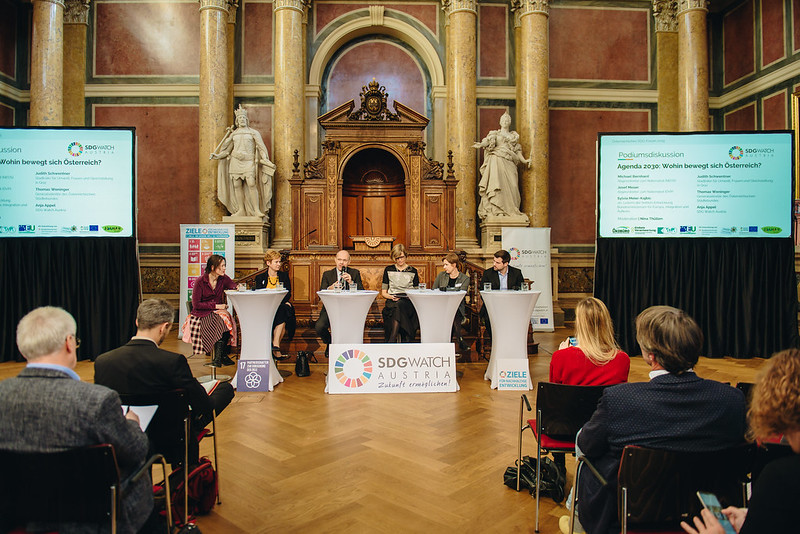
On 29 November 2019, leading representatives of the political and private sector, academia and civil society came together at the 2nd Austrian SDG Forum 2019 to discuss the progress of the national implementation of the 2030 Agenda. The event was hosted by the civil society platform SDG Watch Austria. With more than 230 participants, the event demonstrated a strong commitment to local and global challenges, and clearly called for more consistent political action to reach the Sustainable Development Goals (SDGs) by 2030.

Joint responsibility for a sustainable future

Thomas Alge, Director of OEKOBUERO – Alliance of the Environmental Movement and member of SDG Watch Austria’s Steering Committee, pointed out key global issues targeted by the 2030 Agenda and how Austria should use the opportunity offered by the 2030 Agenda framework to tackle these: “The climate crisis, the extinction of species, global poverty and social inequalities are highly connected. The new government has to address these challenges as soon as possible and make the 2030 Agenda a top priority. This is a possibility to ensure policy coherence in the future.”

In her opening speech, Federal Minister for Sustainability and Tourism Maria Patek also stressed the importance of cooperation across different sectors: “The implementation of the SDGs is a joint responsibility towards future generations.”

Keynotes: SDG action from different perspectives

Despite a lack of political leadership regarding the implementation of the 2030 Agenda, there are a number of highly active and well-organized stakeholders in Austria. One of them is the Alliance of Sustainable Universities, an informal network of 16 universities, who developed a project called UniNEtZ (“Universities and Sustainable Development Goals”). Their chairman, Franz Fehr, presented the project at the SDG Forum 2019. At its centre is the development of options to support the government in implementing the 2030 Agenda. The proposed options would be based on the SDGs and would take into account possible synergies as well as trade-offs. 

Another important keynote was delivered by Sami Pirkkala from the General Secretariat on Sustainable Development of Finland. Finland has served as a good practice example in the implementation of the 2030 Agenda for years and has created favourable conditions for an effective and ambitious implementation of the 2030 Agenda. These include the establishment of a Development Policy Committee at the highest political level, an extensive gap analysis in 2016, passing a national implementation plan in 2017, including the parliament through annual reports and including young people, establishing a civil society panel comprised of 500 citizens, and a follow-up and review system as well as passing an SDG-compatible national budget in  2018.

Panel Discussion: Agenda 2030 – Quo Vadis Austria?

The political panel discussion circulated around questions such as “What do we want Austria to look like in 10 to 20 years?” and made it clear that time is running out to achieve the SDGs by 2030. One key factor, which was raised multiple times, is that Austria lacks a strong vision and tangible, future-orientated policies and measures in many fields. While one of the panellists argued that existing structures work well and should be adapted to the changing circumstances, other panellists and civil society representatives in the audience pointed to decision maker’s inconsistent action and an exaggerated focus on the upcoming VNR report. In this context, politics was identified as a crucial factor for shaping the country’s path to a sustainable and good future for all. One panellist summed up the current dilemma: “As long as environmental pollution is free of charge and economic growth the premise for political action, Austria is far from having a consistent plan for the future.”

Panellists:

Anja Appel (SDG Watch Austria/Coordination Office of the Austrian Bishops’ Conference)

Michael Bernhard (Member of Parliament, NEOS – The new Austria and Liberal Forum)

Ambassador Sylvia Meier-Kajbic (Austrian Federal Ministry for European and International Affairs)

Judith Schwenter (City council, Graz)

Thomas Weninger (General Secretary, Austrian Association of Cities and Towns)

Workshops on cross-cutting issues

In the afternoon, four parallel workshops on sustainable agriculture, inclusive education, rural areas, and sustainable resources shed light onto several aspects of the SDGs and created an open space for discussions and ideas. The workshops were organized by SDG Watch Austria members: Coordination Office of the Austrian Bishop’s Conference (KOO), WUS Austria, OIKODROM, and Repanet.

Links and further information

Objectives, positions and activities of SDG Watch Austria

Photos: SDG Forum 2019

Presentation by Franz Fehr, UniNEtZ (German)

Presentation by Sami Pirkkala, General Secretariat on Sustainable Development, Prime Minister’s Office, Finland  (English)

Contact: Lisa Weinberger

ÖKOBÜRO – Alliance of the Environmental Movement

SDG Watch Austria, info@sdgwatch.at, sdgwatch.at  

New guidance document presents towns and cities with 15 pathways to localise the SDGs

By ICLEI –  Local Governments for Sustainability

ICLEI, alongside the City of Aalborg and the Basque Country, recently launched a new publication, which presents towns and cities with 15 pathways they can use to localise the Sustainable Development Goals (SDGs).

The publication, which was launched at the European Committee of the Regions during the 2019 Transformative Action Award ceremony, provides local governments with inspiring and replicable examples of how the 15 pathways of the Basque Declaration can be used to implement the SDGs at the local level.

In the publication, the pathways of the Basque Declaration are illustrated with stories taken from the Transformative Action database of the Sustainable Cities Platform. Each of these stories are former applications to the Transformative Action Award 2017-2019 and have been reviewed by a jury of experts, which includes representatives from the European Committee of the Regions, the European Investment Bank, UNESCO Etxea, the City of Aalborg (Denmark) and ICLEI Europe.

The purpose of these stories is to provide local governments and other local stakeholders with inspiration for action, rather than the formulation of yet another action plan. The examples also give insight into how to implement the goals using an integrated approach across sectors and departments.

For each story, the most relevant pathway and SDGs are indicated, based on an independent assessment by ICLEI Europe. They show the diversity of approaches across topics, geographical locations and local cultures.

Speaking about the launch of the publication, ICLEI Europe Regional Director, Wolfgang Teubner said: “The need for transformation towards sustainability has never been as urgent. We need a technological, socio-economic and socio-cultural transformation of our societies in order to limit catastrophic environmental consequences and ensure a decent quality of life for all. This publication shows the ability and potential of the local level to act, whilst contributing to the implementation of the Sustainable Development Goals on a global level.”

For more information and to download the publication, click here.

ICLEI – Local Governments for Sustainability, founded in 1990 as the International Council for Local Environmental Initiatives, is the world’s leading network of local and regional governments committed to sustainable development. ICLEI believes that local action drives global change and the leadership of local and regional governments can make a major difference in addressing complex environmental, economic and social challenges.

Being part of our global network ensures that through joint action, peer learning, and strong partnerships between civil society, business leaders and all levels of government we can accelerate local sustainable development and make real change on the ground.

Since 1992 the ICLEI European Secretariat has been closely working with ICLEI network cities in Europe, North Africa, the Middle East and West Asia, other European networks, the European Commission, the Committee of the Regions, and many others. The ICLEI European Secretariat works with its over 80 in-house sustainability and communications professionals from its offices in Freiburg (DE), Berlin (DE) and Brussels (BE).

Congratulations! Here are the 2019 Gender Just Climate Solutions award winners

By WECF

We are proudly announcing this year’s annual winners of the Gender Just Climate Solutions Awards.

Launched by the Women and Gender Constituency in 2015, the Award honours the fundamental contribution of gender equality and women’s organisations in the fight against climate chaos and demonstrates the necessity to integrate gender equality in all climate policies. Gender just climate solutions are already happening, transforming communities all around the world. Each year we select three winners and launch a publication showcasing outstanding projects. 

The 2019 awards winners are:

Technical solutions winner – UNIVERS-SEL: Ancestral know-how and innovative technologies help women producers of salt and rice preserve the mangroves

This project improves the lives of women and communities in the mangroves of Guinea-Bissau, through sustainable use of space, energy and natural resources. 2000 family farms, 75% of which are managed by women, have adopted sustainable salt collection and rice production methods, with solar energy and reduced water consumption. Thanks to the sharing of ancestral know-how and innovative techniques and capacity-building activities, women producers contribute to structure and develop the salt and rice value chain in the mangroves. 1500 women and 500 men have gained in autonomy through increased revenues and their integration into the local economy, while adapting to the impacts of climate change.


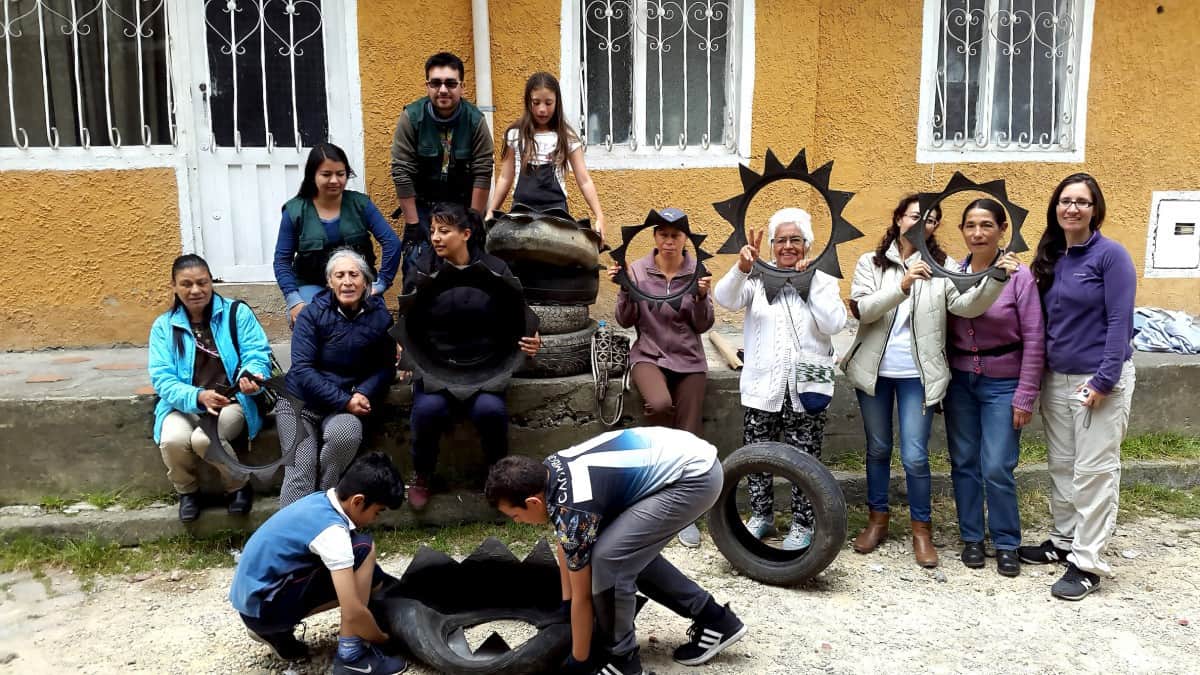
Non-technical solutions winner – ENDA COLOMBIA: Women waste pickers and community organisations of Bogota building a sustainable and inclusive city 

Started in 2012, this initiative shows the way for gender-responsive urban policies, addressing the challenges of solid waste management in the poor suburbs of the capital of Bogota. 26 women waste pickers have accessed a decent job and are recycling over 30 tons of paper and 12 tons of plastic annually in these suburbs. 3520 citizens are involved in participatory planning, urban gardening, cultural and artistic activities and the creation of ‘Bankomunal’ – a community savings and credit initiative for women who do not have access to formal banking. Trainings on gender inequalities and masculinities, local public policies and citizen’s participation, allows beneficiaries to exercise their democratic rights to protect their cultural heritage, contributing to the peace process in Colombia.


Transformational solutions winner – Cameroon Gender and Environment

Watch (CAMGEW): Transforming gender relations and turning to sustainable resource

use in the Kilum-Ijim Forests of Cameroon

CAMGEW engages local and ethnic women in sustainable forest management, while enhancing their human rights and transforming patriarchal gender relations in the forest communities. Cooperating with Oku local authorities and the government of Cameroon, CAMGEW gives women the opportunity to assume leadership positions of forest institutions and stakeholder platforms.  They provide a broad range of trainings to over 2000 people: environmental education for schools and adults, bee farming, agroforestry and organic farming, livestock breeding and biogas production, entrepreneurship skills with financial assistance. CAMGEW helps 800 young women fight domestic violence through counselling on their rights, business opportunities and community sensitisation to counter early marriages.


Transformational solutions mention of honour – FUNDAECO: Sexual and reproductive health and rights as a basis for conservation action 

FUNDAECO breaks traditional cultural barriers to ensure the sexual reproductive health rights of adolescent girls in more than 100 Mayan and Q’echqi communities of Guatemala, as a fundament for their involvement in forest conservation. 22 health clinics, established in Protected Areas of Izabal, have provided regular care and counselling to 50,000 patients (2/3 women), significantly reducing teenage pregnancies, and strengthening women’s leadership. Support provided in maternal and infant feeding, and hygiene are linked to environmental protection activities, i.e good eating habits using natural resources, or sustainable waste management. Strategies were also implemented to prevent forced migration. A scholarship and youth leadership program contributes to end discrimination of women with formal and informal education.


About award

Each winner has received a grant of 2,000 Euros, travel support for one representative to attend COP25, mentorship from the members of the Women and Gender Constituency (WGC), and opportunity to participate in a skills training workshop held by CTCN. Being the 5th year running, this year we had 140 applicants, from 60 countries, 3 winners.

Continued collaboration

The Climate Technology Centre & Network (CTCN) is inviting the winners from 2019, 2018, 2017, 2016 and 2015 to a workshop on up-scaling gender just climate solutions, sharing of climate technology and finance. This is a continuation of our capacity-building cooperation initiated at COP23 and builds on south-south and technology knowledge sharing. It is a closed event but journalists are invited to come and interview the winners.

Publication showcasing the outstanding projects

Download the publication in English, Spanish and French.

Women Engage for a Common Future (WECF) – We are a nonprofit network dedicated to a gender just and healthy planet for all. Our international network consists of over 150 women’s and civil society organisations implementing projects in 50 countries. We believe that a sustainable future and environment needs holistic solutions reflecting the lives of people on the ground. We believe in feminist solutions based on our partners’ visions and needs. That is why we work on transformative gender equality and women’s human rights in interconnection with climate justice, sustainable energy & chemicals, less toxic waste, safe water & sanitation for all.
2019 Europe Sustainable Development Report

By SDSN and IEEP

The 2019 Europe Sustainable Development Report is the first independent quantitative report on the progress of the European Union and its member states towards Sustainable Development Goals (SDGs). The report was prepared by teams of independent experts at the Sustainable Development Solutions Network (SDSN) and the Institute for European Environmental Policy (IEEP).

As the new European Commission prepares the European Green Deal, the 2019 Europe Sustainable Development Report comes at a crucial time, shedding light on the key economic, social and environmental sustainability challenges faced by the member states and the European Union as a whole in their progress towards SDGs.

The report finds that:

  1. While European countries lead globally on the SDGs, none are on track to achieve the Goals by 2030.
  2. Countries closest to achieving the SDGs include Denmark, Sweden and Finland, whereas Bulgaria, Romania and Cyprus rank last among 28 countries assessed.
  3. The EU and its member states face the greatest challenges on goals related to climate, biodiversity, and circular economy, as well as achieving the convergence in living standards, both within each country as well as across countries and regions.
  4. The EU generates large, negative spillovers that impede other countries’ ability to achieve the SDGs. The largest negative impacts are caused by unsustainable demand for agricultural, forest, and fishery products.

The report outlines six transformations that together can achieve all 17 SDGs and applies them to the European Union. It offers practical recommendations for how the EU and its member states can achieve the SDGs with a focus on three broad areas: internal priorities, diplomacy and development cooperation, and tackling negative international spillovers.

The good news is that the necessary instruments already exist to achieve the SDGs throughout the EU. The new Commission should therefore focus on aligning existing instruments and mechanisms (including budget, investment strategies, regulatory governance, monitoring frameworks) with the SDGs.

Key recommendations include:

  1. The European Green Deal can be the cornerstone for implementing the SDGs in the EU. It must include an EU-wide strategy to (i) fully decarbonise the energy system by 2050; (ii) strengthen the circular economy and achieve greater efficiencies in resource use and far lower waste; and (iii) promote sustainable land-use and food systems by 2050.
  2. The EU needs to increase public and private investments in sustainable infrastructure, including power and transport. This in turn will require greater financial resources for the EU.
  3. Europe needs to increase investments in education, job skills, and innovation, with a focus on STEM education at all levels and R&D for sustainable technologies.
  4. The EU needs to put SDGs at the centre of its diplomacy and development cooperation.
  5. The EU needs to strengthen policy coherence and address negative international spillovers that undermine other countries’ ability to achieve the SDGs.

SDG Index and Dashboards: the methodology

The 2019 Europe Sustainable Development Report details progress by EU and its member states on their achievement of the Sustainable Development Goals (SDGs). Based on a methodology that measures distance to target, the report estimates how fast each country – and the European Union as a whole – have been progressing towards each of the Goals and determines whether the current pace of progress will be sufficient to achieve them by 2030. In so doing, the European Sustainable Development Report complements the EU’s official Eurostat report by being able to show how far each country is from achieving SDGs. The report builds on the methodology developed by the SDSN and Bertelsmann Stiftung to track countries’ performance on the SDGs since 2016.

The findings of this independent report are consistent with major related publications:

  1. The 2019 Eurostat report, which concludes that Europe was falling behind in terms of climate action and industry, innovation and infrastructure, while progress was moderate or mixed on responsible consumption and production, life on land, reduced inequalities, affordable and clean energy, zero hunger and gender equality.
  2. The 2019 GDSR report of the United Nations, which warns against negative long- term trends for targets, including inequality in income, absolute material footprint and DMC, global GHG emissions compared with Paris targets, continued deterioration of coastal waters, overfishing, biodiversity loss, wildlife poaching and trafficking and for which progress is too slow for SDGs to be met globally (e.g. social protection for all, ending malnutrition, maintaining genetic diversity, investment in agriculture).
  3. The 2018 EEA monitoring report on the 7th European Environmental Action Plan (EAP), which concludes that 23 out of 30 targets of the 7th EAP were unlikely to be achieved by 2020, including the reduction of food sector’s environmental impact and halting of biodiversity loss.