SDG Watch Europe Steering Group statement on war and conflicts

By SDG Watch Europe Steering Group

Stop the war in Ukraine

“This Agenda is a plan of action for people, planet and prosperity. It also seeks to strengthen universal peace in larger freedom. […] We are resolved to free the human race from the tyranny of poverty and want and to heal and secure our planet. We are determined to take the bold and transformative steps which are urgently needed to shift the world onto a sustainable and resilient path. As we embark on this collective journey, we pledge that no one will be left behind. ”  

These almost poetic words, signed by all UN member states, are found at the beginning of the 2030 Agenda of Sustainable Development. Yet, the adoption of the SDGs in 2015 and the optimism accompanying their negotiation seem like a lifetime ago. The realisation of the most progressive international policies since the United Nations Charter and the Universal Declaration of Human Rights has become even less likely today. 

The attack on Ukraine by the Russian army and the war on a sovereign European country marks an unacceptable breach of international law. We sharply condemn the inexcusable attacks on civilians and civilian infrastructure and demand an immediate ceasefire and withdrawal of Russian troops. We call on third parties to prevent a further military escalation of the conflict and help in facilitating peace negotiations.  

The war needs to stop immediately

We stand in solidarity with all people living in Ukraine and all those affected by the conflict. The right to refuge and asylum of all people regardless of nationalities, genders, sexual orientation, ethnicities, race and religion must be respected and facilitated. We call on all parties to ensure safe passage for all affected by the attacks.

All people have a right to live in peace and democracy, free from repression and dictatorship. We need to strengthen and support civil society everywhere and fight shrinking spaces for civil society, independent media and other democratic stakeholders of society. We stand with all those in Russia and other parts of the world who resist the war, raise their voices for peace and face repression and arrest.

We also see an unbearable unjust treatment of refugees of other crises and conflicts who arrive in Europe. We call on the EU and the EU governments to treat all people looking for safe harbour in the same way. Only the consistent enforcement of international law at Europe’s borders, safe and regular pathways, a European sea rescue system and the solidary reception of all people seeking protection within the EU can end the suffering and death at Europe’s borders. 

All human rights violations in and by the EU, such as push-backs, must stop immediately

The war in Ukraine casts a dark shadow over our common goal to make the world a better place. We can see its effects in increased military spending, rising energy and food prices propositions to prolong coal use, investment in fossil fuel exploration in and around Europe, LNG terminals, or nuclear energy. All this will disproportionately affect poor people in Europe and the Global South. 

This war underlines the urgent need to move quickly towards a green and just transition. 

Only systemic change can ensure that our energy systems are self-sufficient and sustainable. Europe must remain committed to its bold vision for climate neutrality, not least because the biggest impacts of the climate crisis are already borne by the Global South and by those who are least responsible. 

The war in Ukraine, the overthrow of the Afghan government by the Taliban, the ongoing wars and conflicts in Syria, Yemen, Ethiopia, Myanmar and civil unrest in many other regions, the effects of the COVID-pandemic with more than six million deaths globally, the lack of real vaccine justice and a comprehensive TRIPS waiver, the rising number of people living in hunger and poverty, the growing climate, biodiversity and resource crises – they all collectively and individually threaten universal peace, freedom from the tyranny of poverty and a secure and healthy planet. 

The EU and the European countries have a responsibility to guarantee the world described in the 2030 Agenda. 

The SDGs are no mere collection of ideas. They compose internationally negotiated policies that governments have agreed to implement and fulfil—the SDGs show what our governments think is possible. We cannot let them fall back on their commitments! 

This war and whatever may follow after it must not lead to a backlash of the old economy and old way of thinking. Europe’s reaction to the war must not reaffirm the ways of the fossil fuel era. It must not lead to even more pressure on people already affected by crisis and poverty. It must not strengthen authoritarian, top-down solutions to conflict.

Europe must opt for a socially and global just transition of our economies that builds a better society for all people in Europe and worldwide. The solutions remain the same as before. 

We call on the EU to listen to civil society and science to combat all crises and conflicts with progressive policies.

Deepened inequalities due to the COVID-19 pandemic

By Isabel Jerne (SDG Watch Europe)

The short-term wellbeing costs of COVID-19 have been severe. The pandemic is having profound effects on poor and marginalized groups, increasing poverty rates and widening gaps between different groups in society. SDG Watch Europe calls for urgent actions!

The pandemic has heavily impacted the progress in the fight against poverty putting our global goals at great risk. According to the World Bank, the pandemic is pushing between 88 and 115 million people into poverty because of the crisis. Almost half of the estimated new poor will be in South Asia and more than one-third in Sub-Saharan Africa. Objectively, COVID-19 has been the worst obstacle to reducing global poverty in the last three decades.

The pandemic is exacerbating the challenges faced by people struck by poverty. Inequalities are impacting the poorest, more vulnerable, and highly indebted countries of the world. Along with a health crisis, we are witnessing a worldwide hunger crisis. This is a global issue calling for solidarity by the most privileged countries, yet we are still to see real action being taken.

And what about other women, people with disabilities, older people, Roma communities, LGBTQI+, indigenous? How are they affected? These communities are being forgotten and left behind. The architects of systems that encourage greed and injustice do little to honor their commitments. 

Women have the biggest share in providing essential services (making up to 76% of healthcare workers in the EU), and assume the highest share of unpaid care work, with their rights being neglected. What is more, women are now at higher risk of domestic violence, while also having less power in decision-making processes.

UNICEF reported the story of a girl of Asian descent being constantly excluded and stigmatized. Yet discrimination goes beyond race. We’ve seen stories of LGBTQI+, migrants, refugees, and indigenous populations routinely facing discrimination. SDG Watch Europe calls for additional resources to protect these strata of society.

In the meanwhile, persons with disabilities have had their support systems suddenly disappear. Access to healthcare, food, and medicine has been problematic. This also concerns Roma communities, which experience a significant loss of livelihood, jobs, and child poverty. Lockdowns of entire Roma communities in Europe have hampered access to quality healthcare and prevention measures.

Older people with no access to vaccines are the most susceptible to serious cases of COVID-19. In fact, low-income countries have high mortality rates among elderly men.

Finally, 75% of all COVID-19 vaccine doses have gone just to ten countries. This is a vaccine apartheid, proof of the failure of current policy.

Leave no one behind” was pledged by UN Member States with the adoption of the 2030 Agenda. Yet, once again, this is one of those commitments that is not being respected, as minorities are literally being left behind, and treated with harsher measures than those imposed on the rest. At SDG Watch Europe, we have one clear command: Governments should keep their promises!

In our Covid Statement, we demanded that Member States would show transformative global action against poverty and hunger. We also called upon on the Commission to present an ambitious and comprehensive strategy for a Sustainable Europe 2030, which would aim at fighting poverty and inequality too.

We believe political attention must be placed on the protection of poor and marginalized communities. Social equity can – and must – prevail. Governments must put cash into the hands of people in the most need: migrants and refugees, LGBTQI+, disabled people, elderly people, women and unemployed people. 

A half step forward in the collective journey towards a more sustainable Europe is not enough

Reflecting on the 2020 ‘Commission’s Staff working document: Delivering on the UN’s Sustainable Development Goals – A comprehensive approach.’

By Yblin Roman Escobar, SDG Watch Europe

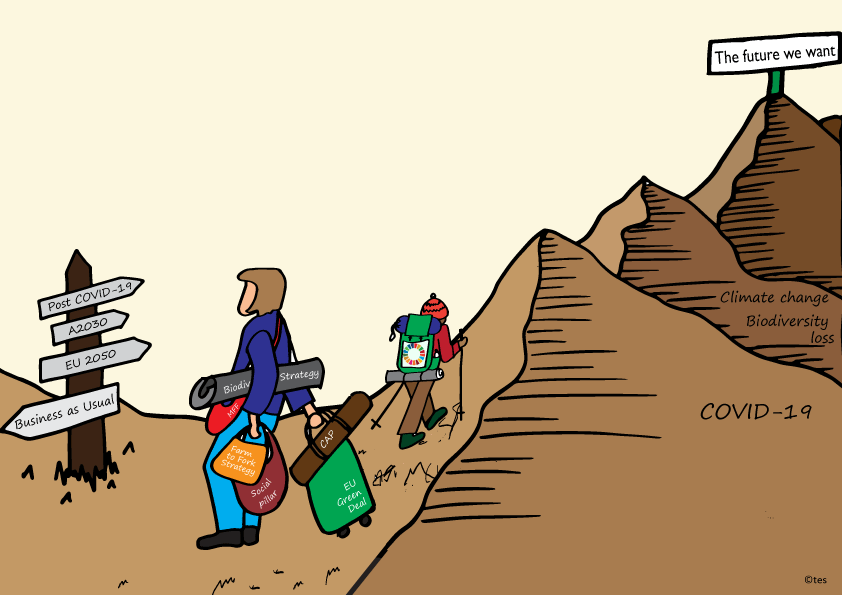
Having travelled a difficult road due to the COVID-19 pandemic, many Europeans were longing for fresh and concrete news on our collective journey towards a sustainable Europe in 2030. We believed the long-awaited Commission’s staff working document on delivering the SDGs would help to accelerate progress in the right direction. Unfortunately, this document limits itself to reaffirming the Commission’s commitment and providing an overview of existing actions.  

Leadership at the highest level 

The good news is that EU Commission President Ursula von der Leyen herself is coordinating the expedition, while the Commissioners College as a whole remains collectively responsible for the overall implementation of the SDGs. SDG Watch Europe called on the Commission’s President, at the beginning of her term, to take the lead and therefore welcomes her leadership.  

However, SDG Watch regrets that five years into this important journey, we still lack an overarching EU strategy for Sustainable Development, with a specific implementation plan and timeline. 

The Commission does highlight its strategy in the staff working document, presenting it as pragmatic and focused on the implementation of the SDGs through the Commission’s priorities-particularly through the EU Green Deal – a flagship EU initiative. And, it claims to take a whole-of-government approach through mainstreaming of the SDGs at all levels. However, the staff working document provides insufficient detail on EU governance for SDG implementation. It remains unclear how this will translate into practice or how the mainstreaming will be done, both within the Commission and beyond. In this respect, it seems that as far as this journey is concerned, we are still around the base camp, and haven’t begun the ascent yet.  

The staff working document is a good exercise in identifying which way the different Commission policies, actions and initiatives all contribute to materialising the SDGs. We recognise that this scanning exercise allows an initial diagnosis of where the EU situates itself in the SDG journey; helps it to take stock of its strengths and gaps, and set concrete objectives and agree on an accompanying action plan. 

Recognising the fact that EU Commission President Ursula von der Leyen put climate and environment and an economy that works for people at the heart of her political guidelines, we see and celebrate all the initiatives listed in the Commission’s staff working document. Nonetheless, we also believe that it paints a biased picture of reality because it does not take into account, together with the bright side of the narrative, its drawbacks and downsides too. The Commission describes how well it is equipped for the journey, the beautiful landscapes on the way, but forgets to report the risks and difficulties too. Let’s look at the following examples:

EU engagement in the world 

It is promising to see the Commission having an in-depth analysis of the challenges COVID-19 presents to the countries in the Global South, reaffirming its commitment to support them in their journey towards implementing the SDGs. 

It is very welcome that the Commission highlights the coherence between domestic policies and external action. The stated intention to prevent EU spillovers is a new and very welcomed approach.  

Trade, for example, is featured in the document as a relevant road to supporting EU partner countries. However, Olivier De Schutter, the UN Special Rapporteur on extreme poverty and human rights and former Special Rapporteur on the right to food, warns that the EU’s trade policy today encourages social and environmental dumping due to the ambition of eliminating all barriers to imports. Friends of the Earth Europe, SDG Watch member, in its paper Setting course for ‘sustainable trade, a new agenda that serves people and the environment’ argues that continuing the current trade trajectory will aggravate economic insecurity and deepen global inequality, setting us on a collision course with planetary boundaries. 

The EU must live up to its commitment under the 2030 Agenda to address the negative spill-overs of EU’s trade. In its report ‘Who is paying the bill? (Negative) impacts of European Policies and practices in the world’ SDG Watch Europe calls on the Commission to monitor the spill-over effects of EU policies and to set goals to limit them and to avoid causing harm in the Global South. 

Ensuring policy coherence for sustainable development (PCSD)

The document paints a landscape of deep EU commitment to PCSD, including all policies and all levels,  within and beyond Europe. 

The work of the Commission on policy coherence builds on its longstanding experience and the provision of the international agreements, the Lisbon Treaty (art.208) being the most recent, and it is implemented mostly via the working of DG Development Cooperation (DG DEVCO). Yet, some worrisome developments suggest a weakening of PCSD in the Commission. DG DEVCO is being reorganised into DG INTPA (for International Partnerships) that will be officially launched in January 2021.  Tanya Cox, Director at CONCORD Europe, has flagged that PCSD has disappeared off the map. DG DEVCO used to have a dedicated PC(S)D Unit, while in the new DG INTPA, it no longer exists. If we consider that DG DEVCO and DG ENVI (DG for Environment) are the traditional drivers of the 2030 Agenda, this development would risk letting the entire Commission off the hook. How will PCSD then be safeguarded?

European Green Deal

The European Green Deal which is the cornerstone Commission initiative linked to the SDG implementation proposes a welcome strategy to transform the EU into a fair, inclusive and prosperous society.  As the Staff document (p.3) (visually) illustrates, it will contribute to 12 of the 17  SDGs. Yet, in the same illustration, the social and gender aspects are missing. The absence of SDG 5, for example, exposes the Green Deal gender-blind-spot. How can this strategy be called inclusive when it overlooks at least 50% of the population? 

Furthermore, in the absence of an overarching Sustainability strategy, policy areas remain siloed, and the potential success of the European Green Deal itself is put at risk. 

World Wild Foundation International, SDG Watch member, and other civil society organisations, for example, has argued in an open letter that the position agreed in the European Parliament and Council on the CAP reform endangers the realisation of the EU Green Deal (and the associated Farm-to-Fork and Biodiversity Strategies). This is because they allow harmful subsidies, put most of the money into funding business-as-usual practices, and actively limit Member States’ environmental ambition. Our members call on the Commission to develop a new proposal that safeguards the EU Green Deal, and consequently the implementation of the SDGs.  

Monitoring and reporting. Fit for purpose? 

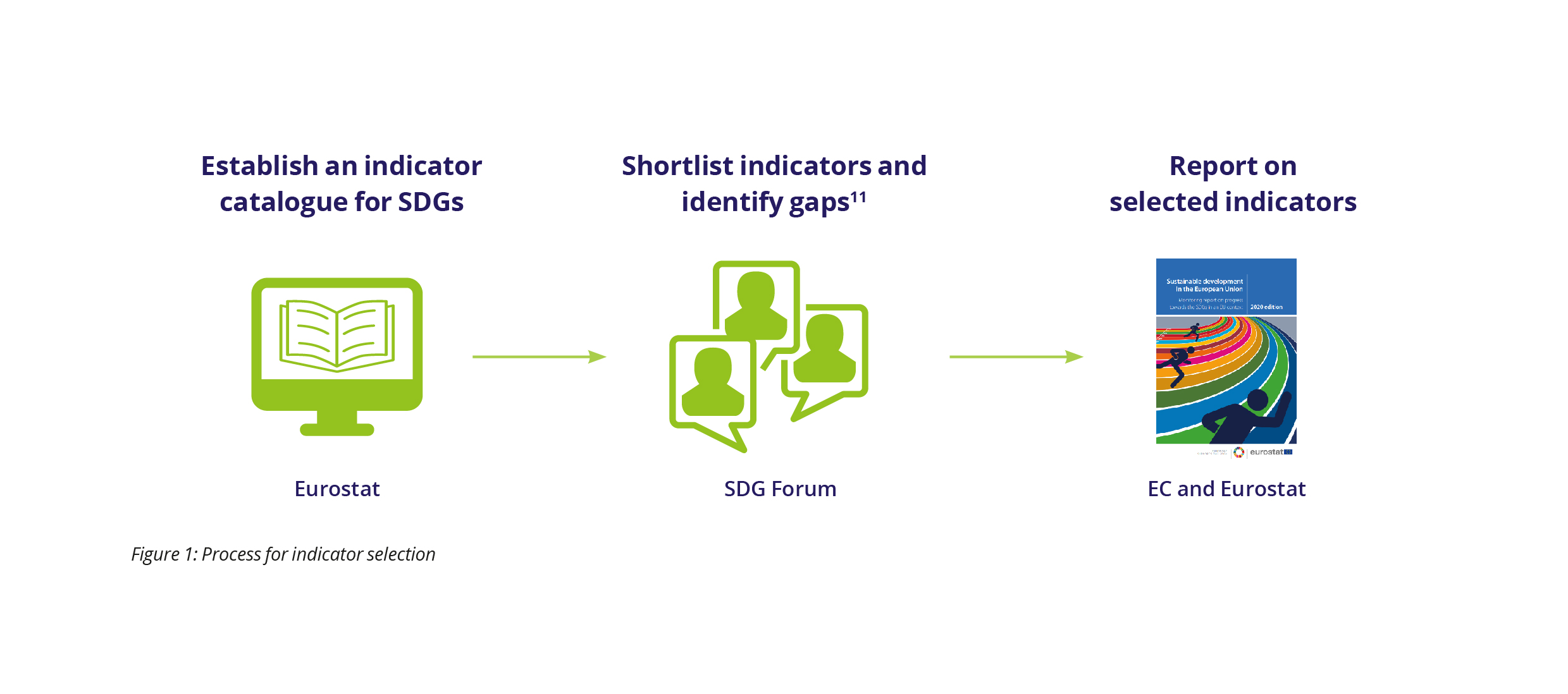
Monitoring and reporting on the SDGs is another example of an incomplete picture.  The process, as carried out by Eurostat, is showcased as a robust approach to keeping track of our journey towards a Sustainable EU by 2030.  The staff working document specifically mentions the EU indicator set was developed in a very ‘broad consultative process’. But expert commentators Schiltz et al. say in a recent study ‘The EU’s SDG monitoring and reporting not yet fit for purpose’, that neither EU institutions, such as the European Parliament, nor civil society, have been structurally integrated into the process of indicator selection. it is argued that the current monitoring does not allow for any specific role for civil society. Furthermore, according to the study, the current set of indicators is not able to fully capture the most relevant aspects of sustainable development in the EU context. 

None of these arguments is considered in the working staff document. SDG Watch Europe in its report ‘Time to reach for the moon – the EU needs to step up action and lead the transformation to sustainability’, demonstrates the serious issues that remain unaddressed with the Commission’s “GPS” for monitoring the EU’s progress in this journey. How can we know we are advancing in the right direction and at the right pace if our GPS is not fit for purpose?   

The engagement of civil society 

The Commission recognises that the implementation of the SDGs demands involving civil society and other stakeholders but it does not provide a clear depiction of how it will achieve this. The new European Climate Pact and the Conference on the Future of Europe are presented as the new public fora for an open inclusive, transparent and structured debate on the SDGs. Still, the document does not specify how this will happen. Furthermore, both spaces suffer from weaknesses. The Climate Pact, as it names indicate, only addresses climate issues, thus failing at having a broad definition of sustainability including all economic, social and environmental issues embedded in the SDGs. The Conference on the Future of Europe is set to be a temporary participatory exercise over 1 or 2 years with the role of civil society organizations still not clear, thus failing at being a formalized long-term civil-society engagement mechanism.   

The Commission concludes its staff working document by saying: ‘This is a journey towards a Union that thrives while leaving no one behind and preserves the long-term viability of life- and prosperity supporting ecosystems for this and future generation.‘ 

SDG Watch Europe understands the aim of this EU journey towards sustainable development to be the achievement of well-being for all, here and elsewhere, now and in the future. 

SDG Watch Europe, with its more than 100 member organisations, is ready to support the EU and its Member States to advance further in this important journey. 

Time to reach for the moon -The EU needs to step up action and lead the transformation to sustainability

By Patrizia Heidegger, EEB

The EU and its Member States were a driving force behind the negotiation and adoption of the 2030 Agenda and the Sustainable Development Goals (SDGs). Now, the EU’s lea­dership is needed to make the Goals a reality, at home and globally. The EU has the power to pass transformative laws and commands the resources needed to drive the transition towards sustainability. Commission President Ursula von der Leyen has called the European Green Deal, which she has put forward to address many of our sustainability challenges, the EU’s “man on the moon moment”. The time is now for the EU to reach for the moon and lead by example.

The EU, which prides itself on its core values of human rights, freedom, democracy, equality and the rule of law, has many positive achievements to its credit: cleaner rivers and better waste management, reduced chemical pollution, stronger social protection and consumer rights, quality education and free movement within the Schengen area, to name a few.

But the EU’s ambition to be a frontrunner for the 2030 Agenda and the SDGs has yet to be realised. If everyone in the world lived like the average European, we would need 2.6 planets to satisfy our demands on nature. Our economic system, characterised by labour exploitation and resource depletion, overconsumption, and waste, is not sustainable. It has deepened inequalities and social exclusion, globally and within most Member States, and will deprive future genera­tions of the ability to meet their needs. 

The indicators used by the EU to monitor and report on the SDGs provide an overly positive picture. The yearly Eurostat SDG report celebrates even the slowest progress but ignores pressing challenges, including our global ecological footprint, homelessness, and human rights violations in European supply chains. It does not ask which policies drive sustainability, and which undermine it, which funds support the transition, and which block it. The European Commission does not promote a public debate about its SDG report’s fin­dings and what needs to be done to accelerate action. There is no role for civil society in the EU’s SDG monitoring.

This is why SDG Watch Europe presents an SDG monitoring report for the EU now to take stock where we stand and to hold the EU to account on the implementation of the 2030 Agenda and the SDGs five years after their adoption.

This report explains why the EU’s SDG reporting creates an illusion of sustainability and makes concrete proposals for meaningful monitoring to become a stronger foundation for transformative policies. We tell a more critical story about sustainability in the EU. Our report flags up serious gaps, bringing them to life with 17 individual stories. We also share our vision of what a truly sustainable Europe could look like. We show what we can achieve by 2030 if we do the right things now, building on our Manifesto for a Sustainable Europe for its Citizens, published by civil society for the 2019 European Elections. We offer 17 solutions, real-life examples of progressive policies, innova­tive initiatives and truly sustainable business models. These glimpses of a sustainable Europe nurture hope and inspire action in people – and need a progressive political framework to support and scale them up.

We would like to thank all members and partners of SDG Watch Europe for pooling their knowledge and wisdom to create this report, and for sharing their vision of a sustainable Europe for its people. The time to act is now!

The Green New Deal as a driver for the European Union’s implementation of the 2030 Agenda for Sustainable Development

By Deirdre de Burca and Leida Rijnhout, members of the SDG Watch Europe Steering Group

Following the adoption of the 2030 Agenda for Sustainable Development by UN member states in September 2015, the European Commission slowly started to develop its own ideas and actions for how the Union – a unique, regional, political system – could implement this ambitious, universal agenda. EU member states also began focusing on how to implement this agenda at the national level. The European Council, composed of Heads of States and EU MS governments, issued Council Conclusions in recent years mandating the Commission to take specific actions at EU level related to implementation.  

In late 2017, the Commission’s First Vice-President Frans Timmermans established a multi-stakeholder platform to be consulted on all topics relevant to the EU’s implementation of the 2030 Agenda, including an EC Reflection Paper on the development of a long-term EU sustainable development strategy. 

Four years later, European civil society is encouraged by optimistic signs which suggest that this important agenda could be realized in the holistic way it was originally envisaged, both in policy and governance terms at EU and national level. For example, this year the EU Multi-Stakeholder Platform provided its input on the EU’s Reflection Paper. A positive attempt was made by the diverse platform members to develop a shared analysis and strong recommendations for the Commission.

New multi-stakeholder approaches to governance and policy development have the potential to break down the unhelpful “silos” which currently exist and present significant obstacles to the achievement of long-term sustainability. These new approaches can bring decision makers, civil society and other key actors closer together with the aim of cross-fertilising each other’s perspectives, and of strengthening common demands. Through working together collaboratively in this way, those committed to achieving sustainable development can hopefully succeed in replacing the current dominant and extremely damaging economic system which is destroying the environment and which excludes so many social groups.

However, much now depends on the political will and objectives of the new EU Commission under the leadership of its President Ursula Von Der Leyen. A “Green New Deal” is now one of the six headline ambitions of the political guidelines which recently issued to the next European Commission (2019-2024).

The original “New Deal” was a series of programs, public work projects, financial reforms, and regulations enacted by President Franklin D. Roosevelt in the United States between 1933 and 1936. The New Deal responded to needs for relief, reform, and recovery from the Great Depression. The contemporary “Green New Deal” combines Roosevelt’s economic approach with significant investment in areas such as renewable energy and resource efficiency.

The new Commission President has made the 2030 Agenda (SDGs) the responsibility of all Commissioners. Valdis Dombrovskis will be in charge of “refocusing the European Semester so that it integrates the United Nations Sustainable Development Goals”, while each Commissioner will “ensure the delivery of the United Nations Sustainable Development Goals within their policy area”. While mainstreaming is a legitimate approach to implementation, civil society is concerned that this may become “away streaming” and that there will be a lack of coherent and bold leadership in EU implementation of all of the SDGs. Civil society believes that the responsibility for providing this leadership is at the highest level of the Commission, and should rest with the President herself. In the absence of such high level EU political leadership and coordination for the implementation of this holistic agenda  there is a risk that different actors, including civil society, will remain in their silos and that traditional divisions will not be overcome.

In conclusion, European civil society welcomes the introduction of an EU Green New Deal, but only as an instrument to deliver on the overarching objectives of the 2030 Agenda for Sustainable Development. This Agenda must be the overall framework within which a concrete social, fair and green plan of implementation is delivered by the EU.

SDG Watch Europe Open Letter : Urgent Need and Opportunity for New Commission to put Sustainable Development Goals Centre-Stage By the Steering Group of the SDG Watch Europe

Dear Commission President-elect,
Dear Commissioners designate,

Today, four years ago, on 25 September 2015, the United Nations member states adopted the 2030 Agenda and the Sustainable Development Goals (SDGs), an urgent call to action to take bold and transformative steps to shift the world onto a sustainable and resilient path.

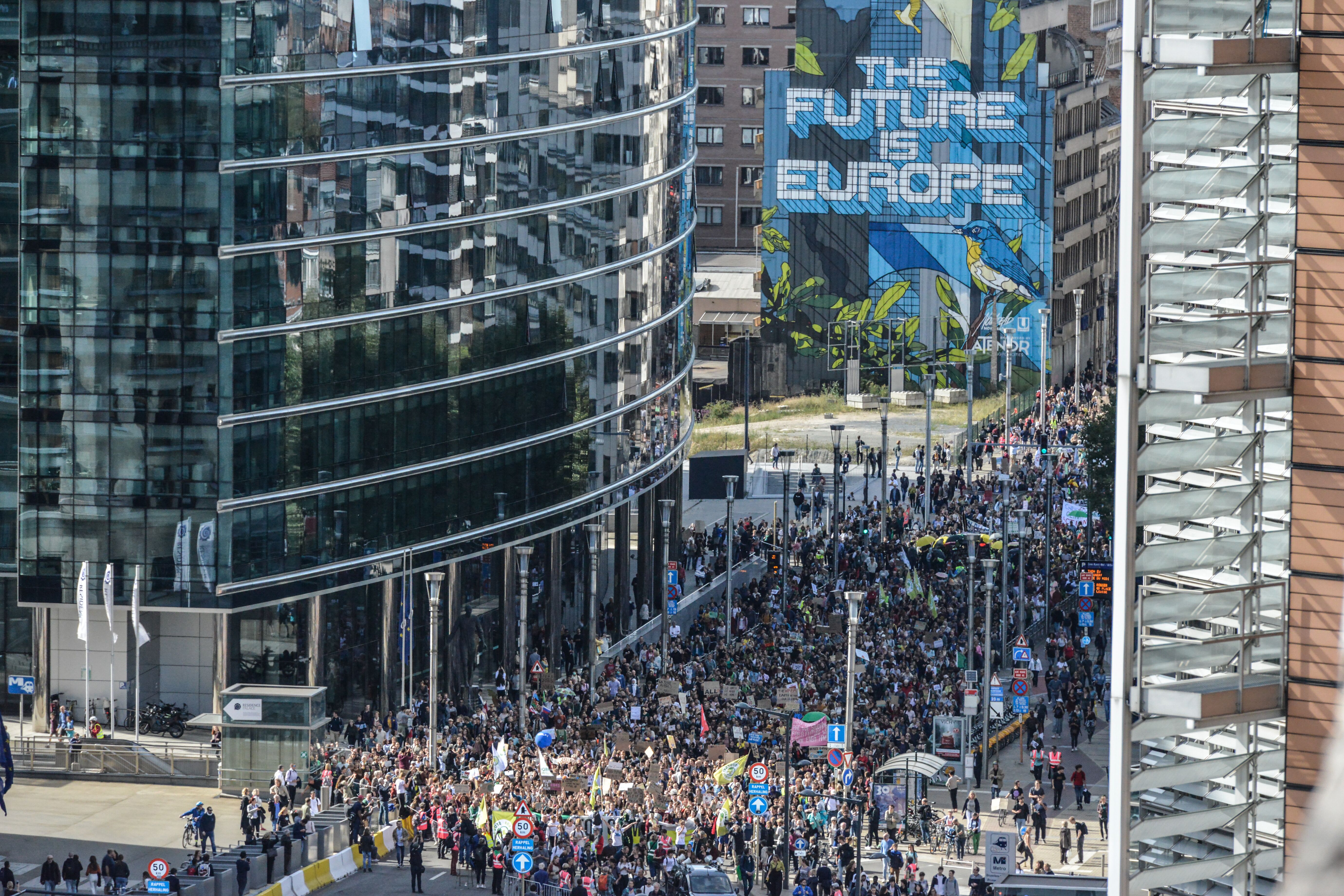
Four years after this path-breaking agreement, SDG Watch Europe wishes to share with you the serious concern that the EU and its Member States still show very little sense of urgency or ambition about the actual implementation of the 2030 Agenda and the transition to sustainability. While millions have marched the streets around the world last Friday calling for ambitious action to protect our planet and life-support system, the EU does not yet even have a strategy of how to implement the SDGs.

As you take up your new responsibility, the EU has a long way to go to provide a healthy, prosperous life for its people within planetary boundaries. We are in urgent need of solutions to the climate crisis, the rapid loss of biodiversity and the destruction of precious eco-systems. Next to these key challenges, SDG Watch Europe’s recent reports have shown that the EU is likely to fail on SDG 10 on reducing inequalities within and beyond the EU and that some the negative external effects of unsustainable European policies can have negative external effects all over the world, making it difficult for other countries to achieve the SDGs themselves.

We therefore welcome that your Political Guidelines “A Union That Strives for More” clearly mention our common aspiration to live on a natural and healthy planet in which all human beings can enfold their full potential. They also make a strong point on the need for the EU’s leadership role in achieving these aims. We celebrate that several elements in your Political Guidelines hold the promise that this new Commission will be able to deliver on sustainable development. We urge you to take this commitment seriously in particular in your proposal for a Green Deal including a Just Transition to leave no one behind. We welcome your promise of putting in place, amongst others, a sustainable food policy along the whole value chain, a new biodiversity strategy and a zero-pollution circular economy. We equally welcome your promise to ensure an economy that works for people including minimum wages for everyone, better measures for work-life balance, policies that work for children and young people, and to combat poverty in the EU. We will hold you accountable on these promises and expect them to be delivered.

However, what we miss – and this can still be changed given the promising elements mentioned above – is the need to fully align your Political Guidelines with the 2030 Agenda and to frame your proposals, including the Green Deal, along the SDGs and wider sustainable development principles.

Your decision that all Commissioners are responsible for the implementation of the SDGs in their respective area and that the College is taking up responsibility of the 2030 Agenda as a whole is a good step towards putting in place the right governance structures. However, shared responsibility must also mean more action on the SDGs in each respective field. We also take into consideration your commitment to turn the European Semester in an instrument that fully integrates and serves the UN Sustainable Development Goals.

While European civil society will provide more detailed input for your Political Guidelines and the Green Deal in the next weeks and months, we would like to reiterate the following essential points:

• The implementation of the 2030 Agenda and the monitoring and reporting on its progress, should not solely be the responsibility of the Member States but a priority for the EU itself. Many policy areas critical to sustainable development, such as agriculture, trade, employment, consumer policy and the EU budget, fall within the (shared) competences of the EU. Adapting European internal and external policies alike towards sustainability and policy coherence is key for the success of the 2030 Agenda. Until today, we lacked the political will and the right governance structures at EU level that would allow for policy coherence for sustainable development.

• We therefore urge you to develop a governance framework that is suitable for realizing the necessary reforms for sustainable development. A fundamentally reformed European Semester as part of a new EU governance cycle to coordinate sustainable development efforts in Europe is essential, in line with subsidiarity. Political efforts must be supported by a sustainability-proofed Multiannual Financial Framework post 2020, which serves as an effective driver in the transition to sustainability. These reforms must be complemented by other effective mechanisms for Policy Coherence for Sustainable Development to ensure coherence between internal and external EU policies and efficiently advanced by the new institutional structure and political priorities set by your Commission and the newly elected European Parliament.

• We have urged the last Commission for several years to produce an overarching Sustainable Development Strategy and a comprehensive Implementation Plan.
Such a strategy has also been called for by the Multi-stakeholder Platform on the SDGs in October 2018, the European Parliament in June 2017 and the Council in June 2017 and October 2018. We call on you to ensure that this Commission will rapidly put forward an overarching Sustainable Europe 2030 Strategy to guide all European policies and programmes, including all relevant stakeholders.

• We also urgently call on the EU to set up a transparent and participatory monitoring and reporting system for its 2030 Agenda implementation, in both its internal and external policies, that allows for an honest stock-taking concerning all SDGs and targets and addressing their comprehensive, transformative and universal nature.
We renew our promise to support and help to this new Commission in establishing sustainability policies and practices across the EU and its Member States and speeding up the pace of implementation. We are willing to constructively and meaningfully participate in the policy processes, monitoring and implementation. With more than 100 organisations in our cross-sectoral coalition across the EU, we represent a large number of European citizens calling for change in Europe: for a future that is positive and sustainable for all and viable for the planet.

Yours Sincerely,

The SDG Watch Europe Steering Group:
Marie-Luise Abshagen; Barbara Caracciolo; Deirdre De Burca; Patrizia Heidegger; Constantinos Machairas; Ingeborg Niestroy; Leida Rijnhout; Ingo Ritz; Fanny Voitzwinkler

Prioritising CSO capacity development for Agenda 2030 implementation

By Deirdre de Burca, Advocacy Coordinator Forus

The High-Level Political Forum (HLPF) has established a process of voluntary national reviews (VNRs), which have become a tool for the review and implementation of the 2030 Agenda and its SDGs. Between the years 2016 and 2018, 111 VNRs were submitted by national governments to the HLPF and 48 more were submitted in 2019 . Since its inception, the HLPF peer review system has been used by governments as a means of monitoring their country’s progress in implementing the 2030 Agenda and its sustainable development goals, and of learning from the experiences and best practices shared by other governments.

In 2019 my organisation, Forus, did an analysis of the 111 VNRs submitted to the HLPF by governments in the years 2017 & 2018. Its objective was to determine how the Agenda 2030’s commitments on capacity development have been implemented by governments to date.

Our results showed that the capacity development of national stakeholders linked to the 2030 Agenda, and in particular civil society, is fragmented, irregular and in many cases does not appear to be taking place at all. Where it does, it is largely targeted at government officials and public sector servants, often as part of programmes provided by high income countries to developing and low-income countries.

The apparent failure of governments to live up to the clear commitments of Goal 17 of the agenda to provide for the capacity building of civil society and other stakeholders is difficult to comprehend. Properly designed and planned capacity development could greatly enhance the ability of different stakeholder groups to monitor and contribute to the implementation of the 2030 Agenda.

Based on its findings, Forus has developed a number of key policy recommendations targeted at the UN and its member states.

  1. The capacity development of different stakeholder groups linked the 2030 Agenda should be subject to a global, multi- level coordination system, involving civil society and other stakeholders.
  2. A systematic and objective identification of the 2030 Agenda capacity development needs of different stakeholder groups, including civil society, is required as a matter of urgency. Each stakeholder group should have the responsibility to objectively determine its own capacity development needs.
  3. A Global Fund should be created as part of the operationalization of Goal 17 to promote the capacity building and development of different stakeholder groups, including civil society, and these stakeholder groups should also be involved in the governance of the Fund
  4. Indicators should be developed which measure the extent to which the capacity development of civil society and other stakeholder groups has been enabled each year at national, regional and global levels and the financial resources that have been dedicated to these activities annually.

In conclusion, we invite SDG Watch Europe members to join us in advocating for these important policy changes to ensure the effective capacity development of civil society globally for Agenda 2030 implementation!

(For further information please see www.forus-internaitonal.org. To read its analysis of the 2017 & 2018 VNRs please click on the following link: the capacity development of CSOs linked to SDG implementation.)

Towards a sustainable future: Time for bold and courageous political leadership

Statement on the European Elections 2019 by the SDG Watch Europe

Citizens of the European Union have voted for a new political leadership, and the turnout was higher than at any time in the past 25 years. This high turnout and the overwhelming support for strongly pro-European and progressive parties shows that the people of Europe value the unity and peace that come with a strong European Parliament and desire European policies with climate change, environmental protection and overcoming inequalities at their heart. The results clearly show that voters wish to shift the focus away from the economy-only approach of the previous Commission to the rapid implementation of the Paris Agreement on climate change and the UN’s 2030 Agenda with its Sustainable Development Goals (SDGs).  

The elections also show that despite worrying projections in many countries, the far-right there was not able to gain additional support or even lost voters compared to previous national elections. However, in some other countries anti-European, right-wing parties are celebrating victories, a trend we are deeply concerned about and urge European policymakers to address.

SDG Watch Europe and civil society across the EU working to Make Europe Sustainable For All call on the newly elected Members of the European Parliament and the future political leadership in the Commission to refocus on the core European values – democracy and transparency, social and environmental justice, human rights, the rule of law, equality, and solidarity. All European policies and rules need to be guided by the overarching objective of ensuring well-being and health within planetary boundaries, of enhancing equality, of upholding safety and freedom for people and protecting the climate and the environment to serve present and future generations in and outside Europe.

While the out-going European Commission has failed to put Sustainable Development at the top of its political priorities, the new Commission needs to show bold and courageous political leadership. It needs to answer to both a growing number of people across the Union expressing their concern about the state of the planet and our societies, but also to re-build the lost trust in the EU and its institutions.

We call on the new European Commission to start working immediately on an overarching Sustainable Development Strategy which will act as the compass for all European policies, to present an action plan with clear timelines and targets to implement the SDGs, and to make the new European budget fully sustainability-proof.

“The voters – especially the young – expressed their concern that humanity and life on Earth face existential threats through the climate crisis and the rapid loss of biodiversity. People understand that our growing hunger for resources and the increasing amounts of waste and plastic choking our planet are not sustainable,” says Patrizia Heidegger, Steering Group member for the European Environmental Bureau, Europe’s largest network of environmental citizens’ organisations, with 150 members in more than 30 countries. “We ask for bold steps to be taken towards the urgently needed economic transition to reduce our environmental footprint at home and globally. Young people in particular no longer believe in GDP as the indicator for the progress of a society.”

“The new Commission needs to address the unacceptable fact that inequalities persist across the EU, one of the world’s wealthiest regions. While the international community has promised in the 2030 Agenda to leave no one behind, the EU is likely to fail to achieve SDG 10, the global Goal to reduce inequality,” points out Barbara Caracciolo, who is a member of the Steering Group on behalf of Solidar, a European network of civil society organisations working to advance social justice in Europe and worldwide. “To ensure social peace and to strengthen trust in the EU, it is crucial to take the right decisions now to ensure social and ecological progress for a just transition.”

“The new European leaders need to push back against the recent attacks on women’s rights that we have witnessed globally and in a number of EU Member States. Gender equality is one of the core values of the EU – and we cannot afford another decade without progress – or even worse, roll-back,” insists Sascha Gabizon from SDG Watch Europe member Women Engage for a Common Future (WECF), an international network of over 150 women’s and civil society organisations focusing on gender equality and sustainability.

“Civil society has been increasingly under attack globally – but also within the European Union. European democracy needs independent voices, and its credibility depends on improving transparency and limiting the power of lobbyists representing particular interests rather than working towards the common good,” added Steering Group Member Julie Rosenkilde from Nyt Europa.

Already in the autumn of 2018, SDG Watch, together with a broad coalition of civil society organisations, put forward a Manifesto for a Sustainable Europe for Its Citizens, which urges the new EU decision-makers, both the incoming Parliament and Commission, to build a Europe for all Europeans, both present and future generations, founded on sustainability and justice.

BABY STEPS TO SAVE THE PLANET: WHAT I LEARNT AT THE UNITED NATIONS ENVIRONMENT ASSEMBLY

By Patrizia Heidegger, EEB

I joined thousands of international delegates and national ministers in Nairobi calling for solutions to save the planet. Here’s what happened.

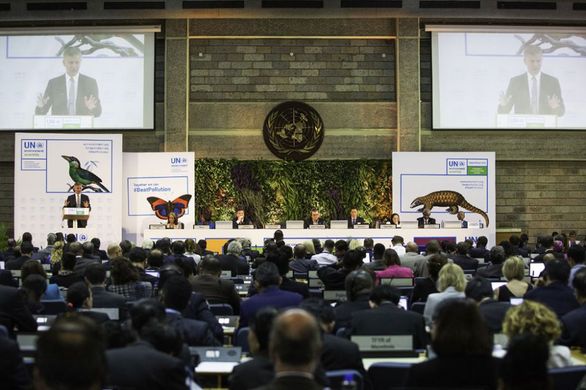
Just imagine the crowd at the 4th UN Environment Assembly last week in Nairobi: over 4,000 delegates, 100 environment ministers and selected heads of state, including French President Emmanuel Macron.

The Assembly, also known as UNEA, is the world’s highest decision-making body ever established to solve the most pressing environmental challenges.

Governments had tabled 27 resolutions to address a broad range of burning issues from tackling plastic pollution to managing chemicals, from recognising the role of women in solving environmental challenges to halting deforestation.

The negotiators were confined in small, hot meeting rooms from morning till late in the evening as they dealt with controversies and heavy push backs by some states.

As part of the frenzy, environmental activists and NGOs from around the world were trying to get a hold of delegates in the coffee breaks, in the hallways, in the queue to lunch, or wherever there was an opportunity to press for real change and convince a government to support ambitious solutions.

In the end, the governments adopted 25 resolutions – many of which were hard fought for. To the great disappointment of advocates and activists working to preserve the world’s forests, the resolution on deforestation had to be withdrawn after tensions with countries such as Brazil and Indonesia.

A resolution tabled by the European Union on the circular economy found agreement after the text only seemed to consist of bracketed – unagreed, that is – text for many days. However, the wording was heavily watered down. It soon appeared clear that certain governments at the assembly – amongst them the US – are against the transition to a circular economy, which is really about reducing resource waste in absolute terms.

Unfortunately, some governments also deleted any reference to getting rid of hazardous chemicals in everyday products. The resolution also failed to mention that the planet has ecological limits – and that we need to live and thrive within these limits. Despite momentum around the globe to tackle plastic pollution, the states assembled at UNEA missed the opportunity to agree on a big step forward to curb the production of plastics. Some governments were ready for it, but they were eventually persuaded to take baby steps instead, which will not be enough to save the planet from drowning in plastic.

On a positive note, civil society celebrated the adoption of a resolution that recognises the role of women in finding solutions to environmental challenges. However, Arab states in particular watered down the language in the text and deleted any reference to women defending environmental rights.

To sum it up, after a week, I was glad to see civil society’s growing presence at UNEA, as activists did all they could to make an impact on the negotiations. Among these, I was impressed by the women’s rights’ activists who staged a stunt on the main stairway leading to the conference rooms on International Women’s Day – the same stairs which Macron would walk down just shortly after. I was also happy to see youth activists from Nairobi and other countries organising a march for the climate. All this helped restore a genuine sense of diversity and inclusion, which we desperately need.

We have worked hard to make small steps forward – on global chemicals management, on gender justice, on solving the plastics crisis, on promoting a circular economy. However, these baby steps are much too small to tackle the challenges that humankind is facing. The fight is not over yet, and we all need to make sure that at the next UNEA global leaders feel the political heat and deliver real solutions.

WILL THE GLOBAL PACT FOR THE ENVIRONMENT SAVE THE PLANET?

By Patrizia Heidegger, EEB

“Every person has the right to live in an ecologically sound environment adequate for their health, well-being, dignity, culture and fulfilment”. That is the first article of a draft ‘Global Pact for the Environment presented by French President Macron in 2017. You would be forgiven for thinking that this right already exists. But unbelievably, in 2019 we have no globally recognised human right to a healthy environment. Governments from around the globe are now discussing the content of a future Global Pact for the Environment and the principles it should turn into rights for people and obligations for states.

The lack of a human right to a healthy environment and numerous other gaps and inconsistencies in international environmental law are what the Global Pact for the Environment seeks to address – with the ultimate aim of helping us save the planet and tackle the various urgent ecological and social crises humankind faces.

From the Rio Declaration on Environment and Development brokered back in 1992 to the current 2030 Agenda for Sustainable Development signed by world leaders in 2015, numerous principles of environmental protection and environmental democracy have been established. It is a tempting prospect to imagine bringing them together into one harmonised and legally binding international treaty that courts could use to enforce environmental law around the globe.

All countries bar five (the Philippines, Russia, Syria, Turkey, and the United States) gave the green light to start work on the Pact in 2018. Now, in 2019, diplomats are meeting to make progress on the text. However, environmental organisations warn that the process of agreeing on the Pact could actually risk weakening hard fought for principles of environmental law.

It remains to be seen whether enough governments have the political will to take big steps forward in creating new environmental rights and obligations and whether they can agree on the principles they want to strengthen. While some of the emerging economic powers seek to emphasise their national sovereignty by deciding how to use up their natural resources, other governments want to advance environmental democracy – much to the displeasure of authoritarian regimes. Some Latin American countries demand enshrining the rights of nature itself, an idea not yet reflected in the Western legal tradition. Has the process already stalled before it has really started?

Another challenge is the question of whether the time is ripe. Governments around the globe already struggle to put the hundreds of existing environmental agreements they have signed up to into reality. Some critics ask whether it would not be more fruitful to focus on stepping up implementation, identifying the funds necessary to put in place what has already been decided, working with governments to build up their capacity and expertise on environmental issues, and developing new environmental rules for the most pressing issues such as plastic pollution. They are afraid that another international process will not change things on the ground while tying up governments in another round of negotiations.

And where is civil society in all of this? For most of us, the Pact is both a risk and an opportunity. In the current political climate, I am afraid that long fought for principles are watered down rather than strengthened. Progressive governments may not be strong enough to argue against Trump, Putin, Erdogan, Maduro, Assad and – most recently – Bolsonaro. And yet, there is hope that a Global Pact for the Environment may ultimately help those who suffer from environmental harm and strengthen environmental defenders whose lives are under threat. We hope that it may help us to hold polluters accountable and to create new obligations for governments and businesses.  We hope it may strengthen environmental democracy around the globe. As Marcos Orellana from Human Rights Watch argues, the pact “will give those exposed to mercury in artisanal gold mines in the Philippines, those poisoned by soot in Piquiá de Baixo in northeastern Brazil, those contaminated by lead in Kosovo, and activists attacked for protecting their environment and lands, the tools and political leverage they need to defend their rights”.

So, of course, we will advocate for a Global Pact for the Environment that can bring the legal framework for environmental protection and environmental democracy to a whole new level. I welcome the words of those political leaders who have called for the inclusion of civil society into the process. The process will only be a legitimate one with strong and meaningful civil society participation. But NGOs also need supporters who are willing to fund such work.

If the process is successful, the Global Pact for the Environment could underscore the importance of legally binding instruments in environmental protection. It could close gaps and inconsistencies in international environmental law. It could turn important principles into rights, including climate justice and intergenerational equity, the rights of nature, the duty of care for the environment, the precautionary and the polluter pays principle, environmental democracy – and, last but not least, the right to a healthy environment.