The Sustainable Development Festival

By ASviS

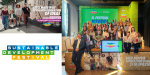
The Sustainable Development Festival, organised by ASviS, 2022 edition took place last October in Italy, online and across the world in collaboration with Italian Embassies. Various conferences, concerts and many more activities in the Festival spread the messages of the 2030 Agenda with the claim, “Every day a new generation of ideas makes its way”. Set your Agenda: Let’s #FlipTheScript”. The Festival partnered with the #FlipTheScript campaign of the UN SDG Action Campaign.

During the Festival, many deliverables were released, including the ASviS 2022 Report (soon available also in English), several Position Papers on topics such as the ecological transition and global well-being and the results of a survey on the level of awareness of the 2030 Agenda conducted in Italy by Ipsos and ASviS. 

More recently, ASviS has presented the third edition of the Report on Italian territories during an event at the National Council for Economics and Labour (Cnel). The Report measures and analyses the positioning of regions, provinces, metropolitan cities, urban areas and districts compared to the 17 SDGs, to further the efforts to localise sustainable development.
Does #NextGeneration mean #NextTransformation?

By Futuro en Común

We are in a truly complex global context where the pandemic and its consequences, the deepening of inequalities, the climate emergency and the war in Ukraine show the limits of our development model. Futuro en Común has consistently indicated that #Agenda2030 should be our compass guiding towards a sustainable development model and global justice.

#NextGeneration Funds’ ambition is to build back better, aiming at economic and social resilience. However, we are seeing how the concrete application of these funds recovers (a model that has already proven obsolete) but does not transform (towards a new resilient, sustainable and fair model).

The Policy Coherence for Sustainable Development (PCSD) approach allows for identifying whether all the resources and all the policies are rowing in the same direction or one against the other. Sadly, many projects with opposite objectives are promoted, and even worse, many of them projects with objectives contrary to sustainable development. By analysing the #NextGeneration Funds under this perspective, it is clear they are not tackling the causes of the multidimensional crises in which we find ourselves. The reason is that they continue to place economic growth as the central driving goal, with the increase in competitiveness as the way to achieve it.

Furthermore, these Funds strongly focus on the EU’s need to achieve strategic autonomy and reduce its dependence on some global value chains. It does not consider its proposals’ impact on other countries, specifically on the most vulnerable populations in the countries of the global south, whether in regard to global warming, respect for Human Rights or conditions of economic dependency.

The #NextTransformation we need to achieve the SDGs should:

  • promote the proposals that have not only a positive economic impact but also social and environmental ones. 
  • take into account their impact in Europe, but also in the rest of the world (especially in the global south), and 
  • not only think about their impact today but also in the future. 

This is the great change that must take place and that we ask for.

Global People’s Assembly 2022 – Global Justice to Achieve SDGs – Sustainable Equality for All

By GCAP – Global Call to Action Against Poverty

As we face increasing poverty, hunger and inequalities, debt crisis, climate emergencies and war, the call for global justice is urgent, now more than ever. Otherwise, the SDGs can not be achieved!

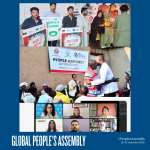
From 20 to 22 September 2022, Global Call to Action Against Poverty (GCAP) coalitions organised national People’s Assemblies in 27 countries during the Global Week to Action #Act4SDGs. They expressed their demands for their governments during the high-level week of the UN General Assembly. This year it was possible to organise physical assemblies with representatives of marginalised groups – including women, youth, persons with disabilities and groups discriminated by work and descent. These national processes started at a local level and culminated in the virtual Global People’s Assembly with 1300 participants – which was an effort of solidarity co-organised with 28 networks, including SDG Watch Europe. 

In cooperation with GCAP, SDG Watch Europe organised the European regional assembly as part of the Global People’s Assembly on 20 September. You can read the messages agreed in the 3-day long gathering in the Declaration of the Global People’s Assembly 2022.  

New EEB reports: “Why energy justice” and “reimagining work”

By EEB – European Environmental Bureau

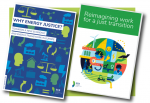
The European Environmental Bureau (EEB) economic transition team published, printed and presented two reflection papers with a long shelf life and detailed policy advice. One is on the lessons yet to be learned from the energy crisis, and the other is on reimagining work. The so-called dichotomy between “green” and “social” is a false one. The EEB believes that the needed changes in how we deal with our environment will be just and social or not work at all.

“Why energy justice? Towards a new economic and energy framework in Europe” takes a hard look at energy poverty, energy inflation, excess profits, the disruptive concentration of capital in the energy system, ownership of energy and how to evolve from first aid stop-gap measures to long-term systemic solutions. The reportop-ed in Social EuropeTwitter thread.

“Reimagining work for a just transition” has a holistic vision of the just transition and builds up arguments for a Working Time Reduction and a Job Guarantee. It then takes this vision to investigate the Just Transition Fund, the European Social Fund Plus, the REPowerEu Plan, The Revision of the Renewable Energy Directive and the Farm to Fork Strategy. The reportarticleTwitter thread.