AGA Special update: SDG Watch Europe members meet in Brussels for dialogue with European policymakers

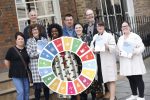
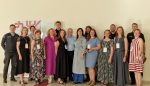
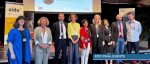
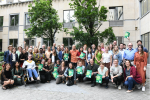
SDG Watch members from all over Europe met in Brussels on the 26th and 27th June for the SDG Watch Europe Annual General Assembly and the Civil Society Forum for Sustainability. Over 60 CSOs with an interest in just transition, participation, social justice, and climate environmental sustainability were present to deliberate on the future of the European Green Deal and to discuss and strategize on Agenda 2030.

Civil society in dialogue with policymakers

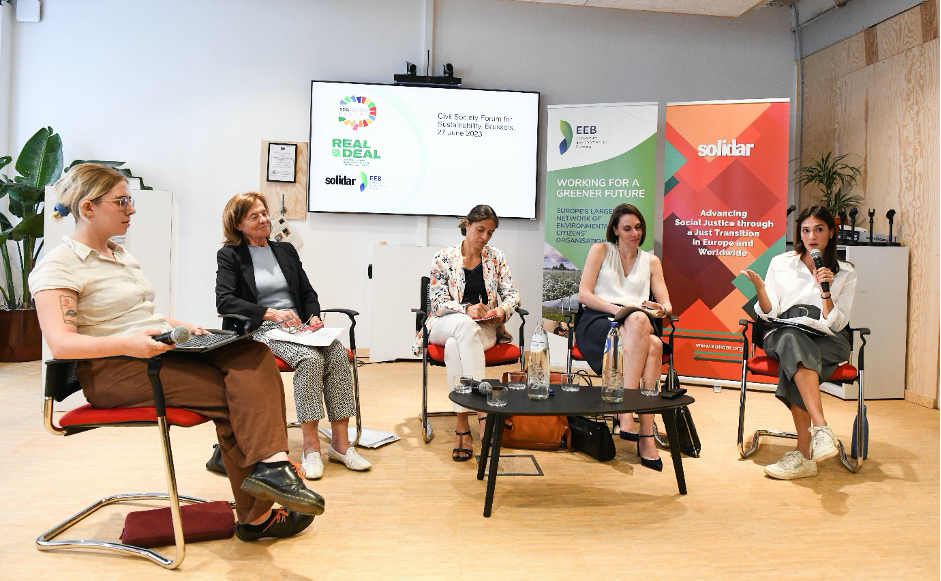
The AGA took place back-to-back with the Civil Society Forum, organized by SDG Watch Europe, EEB and SOLIDAR in the framework of the REAL DEAL project, a Horizon 2020 project on deliberative democracy and the European Green Deal (EGD). The forum aims to provide a space for CSOs from across Europe to come together and exchange views on topics related to the European Green Deal and the SDGs.

On day one, CSOs met at the European Parliament for a packed event on the EU Voluntary Review, Europe’s UN progress report on SDGs published by the European Commission in May. Julie Rosenkilde, SDG Watch Europe Steering Group member, presented the network’s core messages to policymakers on how the EU should move forward on SDG implementation, emphasising the importance of an overarching strategy and a costed action plan on SDGs, a shift to a wellbeing economy, economic system change, and the need for greater adherence to the principle of policy coherence for sustainable development.
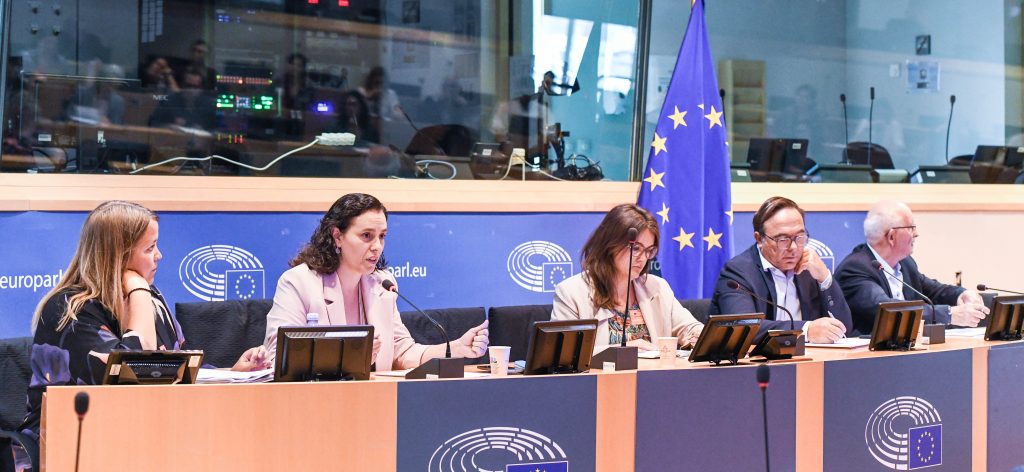
On day two, a full day of CSO discussions were held and SDG Watch Europe’s members heard from a variety of inspiring speakers from the scientific, academic, policy and civil society spheres, as well as collaborating to develop policy recommendations for the future of the European Green Deal. Alongside a panel discussion with leading CSO representatives and working group discussions, European policymakers were also present for a closing dialogue with civil society organisations to reflect on their ideas at the end of the two days of discussions.
AGA Key updates

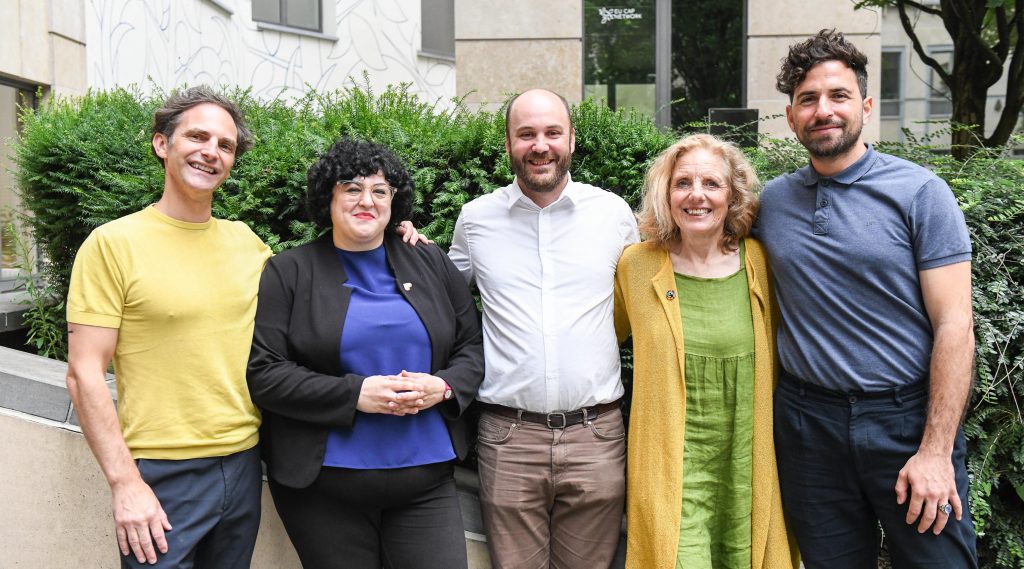
During the Annual General Assembly, the elections to the Steering Group were held. SDG Watch Europe would like to thank the outgoing members of the Steering Group for all the incredible work they have done throughout their mandate. Members applauded Julie Rosenkilde (The Danish 92 Group), Constantinos Machairas (Hellenic Platform for Development), and Carlos Roldan (SOLIDAR), who will all be stepping down from the SDG Watch Europe Steering Group after completing their terms.

New Members of the SDG Watch Europe Steering Group

SDG Watch Europe hereby congratulates and welcomes three new steering group members who were elected to the Steering Group at the AGA; Hilmi Tekoglu of SOLIDAR, Jacob Bjelskov Jørgensen of Nyt Europa and Nelya Rakhimova of Global Call to Action Against Poverty (GCAP).
The Secretariat will circulate further information on the full outcomes of the General Assembly to all members. For more information reach out to secretariat@sdgwatcheurope.org
Promoting Active Mobility in Tunisia and Beyond: The AUTREMENT Project’s Inter Regional Forum spins its wheels!

By ALDA – European Association for Local Democracy

The AUTREMENT project’s Inter-Regional Forum on Active Mobility, held on May 24-25 2023, in the beautiful city of Mahdia (Tunisia), was a resounding success, showcasing the celebration of sustainable urban development and the promotion of active mobility in Tunisia and beyond. 

The Forum was organised by the AUTREMENT project consortium, which includes six partners: the cities of Kairouan, Mahdia, and Strasbourg, along with ALDA, CODATU, and CEREMA. In collaboration with UN Habitat and Cities Alliance, this event served as a pivotal platform for exchanging knowledgeable information, fostering networking opportunities, presenting the project’s results and boosting collaborative initiatives aimed at shaping a more sustainable tomorrow. 

The event featured around 25 interactive activities that engaged participants throughout the two-day Forum and stimulating side events such as workshops and roundtable discussions took place in a dynamic context. 

A standout moment was the participants’ opening bike parade who pedaled along the streets of Mahdia, showing the concrete potential of biking as one of the most sustainable and urban means of transport.

The event also included stands and exhibitions held by stakeholders dedicated to promoting active mobility. Special guests such as Lemon Tour, Cadr67 and Vélorution brought their own expertise adding valuable contributions to the discussion. 

More than 150 experts coming from Tunisia and its neighborhood (Algeria, Italy and France) and representing around 60 state and non-state bodies, institutions and associations gathered fostering fruitful exchanges of best practices in the field of active mobility and urban development, while highlighting the wide-reaching impact of the event.  

The 2-day event sets up several opportunities for attendees to quibble around public policies, tactical urbanism, bike services, gender mainstreaming, citizen consultations, “cyclotourism” or cycling tourism, decentralised cooperation, future cycling facilities and bike path management. Discussions’ outcomes showcased the Forum’s dedication to address different challenges and opportunities in the field of active mobility. 

The Forum’s impact is going to extend beyond the event itself: ideas were shared and networks were formed, as the intent is to channel positive change both on a national and international level. The AUTREMENT project consortium remains at disposal in order to support concrete actions that will shape the future of urban mobility in Tunisia, paving the way towards greener, healthier and more sustainable communities. 

Find here the link and watch the Forum’s aftermovie. Enjoy!

LIFE Metro Adapt project wins the Life Award for Climate Action

By ALDA – European Association for Local Democracy

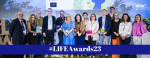
In a resounding victory for Climate Action, the LIFE Metro Adapt project led by the Metropolitan City of Milan has emerged as the winner of the prestigious LIFE Awards 2023. This remarkable achievement was made possible by the combined efforts of several key stakeholders, including e-Geos, Ambiente Italia, Legambiente Lombardia, Gruppo CAP and ALDA.

The LIFE Metro Adapt project, entitled “Strategies and Measures for Adaptation to Climate Change”, triumphed in the “Climate Action” category and was recognised by a panel of eminent European experts. The jury, chaired by renowned Australian agronomist Tony Rinaudo, recognised the project’s outstanding efforts to combat climate change and promote resilience in urban areas. The project also resonated with the public, securing a commendable third place with 1703 votes for the Citizens Prize.

Led by the Environmental and Territorial Protection Area of the Metropolitan City of Milan, in partnership with ALDA and other respected organisations, Metro Adapt has been instrumental in disseminating knowledge, techniques and strategies to combat climate change throughout the metropolitan area. One of the key objectives of the project was to promote the development of effective adaptation measures, with a particular focus on Nature Based Solutions (NBS). Inspired by nature, this innovative engineering aims to enhance urban resilience by mimicking and replicating its elements.

As a prominent advocate of local democracy and citizen participation, ALDA played a key role in ensuring the success of the Metro Adapt project. The association’s expertise in fostering collaboration and empowering local communities was invaluable in engaging citizens, encouraging their support and gaining public buy-in for the initiative. ALDA’s commitment to democratic decision-making and inclusive governance has undoubtedly contributed to the project’s remarkable achievements.

Winning the prestigious LIFE Award 2023 as the best project for Climate Action and receiving the preferences of more than 1700 citizens shows us that expertise and research can go hand in hand with public participation and active citizenship, topics very close to ALDA’s mission and vision“ – commented Antonella Valmorbida, ALDA Secretary General. “Seeing and experiencing active citizen participation and virtuous cooperation between local authorities and civil society rewards us for our daily commitment and shows us how important it is to carry out projects like the LIFE Metro Adapt” – she concluded. 

This achievement is a testament to the importance of collaboration and the power of local democratic engagement in addressing the pressing challenges of climate change. Going forward, we must build on the momentum generated by this remarkable initiative and continue to champion environmental issues and the transition to a more sustainable future.

Coalition 2030 publishes parallel VNR ahead of July HLPF

By Coalition 2030

In July, Ireland will present its Voluntary National Review to the UN. 

In May, Coalition 2030 published its parallel review ‘Furthest behind First, or Falling behind Further? The human stories that challenge Ireland’s claims to be leaving no one behind ’ which provides a counter-view to the Irish government’s assessment of how Ireland is doing on the SDGs. The Coalition of 74 CSOs is now advocating for the adoption of the five key structural asks in this report and will continue to do so in the lead-up to the July HLPF (where it is sending a delegation) and the SDG Summit.

The five structural recommendations which, if implemented, would enable SDG delivery to develop at pace are:

  1. Move SDG responsibility and delivery from the Department of the Environment to the Department of the Taoiseach (Prime Minister)
  2. Budget for the SDGs
  3. SDG-proof policy
  4. Measure what matters
  5. Establish a Future Generations Commissioner on a statutory footing

Coalition 2030 argues via this report that, although the State has been an influential advocate for the SDGs internationally, for example, by co-negotiating the agreement which led to the SDGs and co-facilitating the political declaration this year, commitment and progress domestically is far less apparent. This is most evident in how the State is failing to reach those in most need of the State’s support; the furthest behind. 

Reaching the furthest behind first is a core principle of the SDGs.

The State has so far failed to effectively embed the SDGs across the Government and provide the necessary political leadership for their achievement. Without dramatic shifts in policy-making, the State will continue to struggle to reach the furthest behind first, rendering delivery on the SDGs categorically unachievable. This has led to a significant gap between the State’s international rhetoric and its national action to reach the SDGs, and risks squandering the State’s moral leadership. 

Coalition 2030 is therefore making a concerted call on the State to bridge the gap between international rhetoric and national action and to unblock the structural obstacles contributing to thousands of people in Irish society being left behind.

The Coalition follows its five recommendations with an overview of the international and national contexts in which SDG delivery is taking place, provides a statistical overview outlining who is being left behind, and illustrates these statistics with a selection of harrowing and stark human case studies. Following each case study are very specific policy options that, if implemented, would enable the State to more effectively reach these people.

This report reaffirms and builds on the findings in a chapter submitted in April 2023 by Coalition 2030, included as part of the State’s official submission to the 2023 Voluntary National Review process.

Read the report in full here.

Cooperative SDG 16 exercise in Latvia

By LAPAS

In light of SDG16, LAPAS (Latvian Platform for Development Cooperation) organised a practical simulation and follow-up discussion on June 15.

Involving the State Fire and Rescue Service and the National Armed Forces helped to highlight the triple nexus approach to conflict prevention, preparedness, and reconstruction. Discussions about an effective and inclusive civil defense system at the community level were encouraged, reducing the gap between local communities and public administration institutions. 

Community is especially important during times of crisis when every life counts and a culture of preparedness is essential for sustainable public safety. To reduce misinformation, public institutions should build daily communication with local communities. With the launch of LAPAS’ NGO leaders training in-depth program on August, 2023, LAPAS will continue its work on resilience and SDG16.

There was a discussion on June 16 on “Development cooperation after 24.02.2022.: conclusions and perspectives” about the latest changes in development cooperation and humanitarian assistance. 

As a result of Russia’s aggressive invasion of Ukraine, Latvia’s development cooperation has undergone significant changes – in terms of financial support, its form, and its priorities. In light of the significant increase in humanitarian aid, the development of new reconstruction mechanisms, and the inclusion of refugee costs in official development assistance (ODA), it is necessary to have a wider public discussion of the effectiveness and further development of these instruments. 

Humanitarian aid has been provided to Ukraine by many sectors of society, but we need to think about a national system that is effective and that supports active organisations. As newly established and active NGOs join LAPAS, the importance of policy change and open discussion increases.

The discussion was attended by representatives of the Latvian Parliament, the Latvian Ministry of Foreign Affairs, the State Fire and Rescue Service, and Latvian NGOs. Later this year, LAPAS will publish an opinion paper and in-depth report on SDG17 based on the conclusions of this discussion and further data analysis.

7th Sustainable Development Festival in Italy

By ASviS

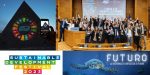
In collaboration with Italian embassies, ASviS organised the seventh edition of the Sustainable Development Festival from 8 to 24 May in Italy, online and around the world. Over a thousand events have been organised by civil society, companies, and institutions across the country. Naples, Bologna, Milan, Turin, and Rome were among the stops on the Alliance’s journey to discover sustainability’s different dimensions. 

Sustainable development lights up the future: this was the claim that drove people to attend meetings, exchange ideas, and share best practices. A great collective effort was put forth by the Alliance’s 330 members to create the festival, which involved universities, schools, regions, cities, associations, citizens, businesses and institutions. Together, they called on politics to focus on a bright and sustainable future.

There were 121 million impressions on social media, over 48 million contacts on TV and radio for the campaign that aired on national broadcaster RAI.

Thanks to the collaboration with the Ministry of Foreign Affairs, the Festival was able to promote the values of the 2030 Agenda all over the world with events in Italian embassies, consulates, and cultural institutes, including those in Hong Kong, Berlin, Philadelphia, and Ankara.

LLLTalk – Green skills explained

By Lifelong Learning Platform

“LLLTalk – EU Education Made Simple” is the podcast of the Lifelong Learning Platform that dives into the most discussed topics in the sector. A new episode is out! Today we dissect with an expert what are these “green skills” we so often hear about: 

  • what definition can we make? 
  • What impact on the learners? 
  • What are they so important for the green transition? 

Rooted in the European Year of Skills, this episode tries to shed light on some of the most obscure European jargon. The episode also focuses on the definition of green skills and competencies, as well as the validation processes to make them visible and the learning offered today in Europe. 

Tune in and listen here!

EPIC Final Events: discussing the challenges of migrant integration

By ALDA – European Association for Local Democracy

On 6 & 7 June 2023, within the framework of ALDA Festival and General Assembly 2023, EPIC – European Platform of Integrating Cities partners and both local and international stakeholders gathered together in Brussels (Belgium) for the last events of the project. The two events had the objective of discussing the project’s outcome and allow participants to talk about the sustainability of EPIC.

The third international networking event took place on 6 June, where partners and their local stakeholders had the opportunity to present their activities on migrant integration. Eventually, the audience was splitted in different focus groups to brainstorm on the current status and to discuss possible solutions to inclusion and integration of migrants in several fields namely, education, employment, legal and administrative support, housing, health, narrative, civic engagement and policy making. 

The following day, the Final Conference of the project began with a welcoming speech from ALDA Governing Board member and President of Cooperativa Studio Progetto, Mr. Andrea Rilievo, followed by the keynote speech from Mr. Luca Barani, Policy Officer at the European Commission (DG HOME).

This first session was followed by a roundtable entitled “How to strengthen multilevel governance on migration? How to better include contributions and inputs from territories?” where representatives from local authorities, European institutions and CSOs exchanged views and opinions on the importance of acting at the local level.

In order to give concrete sustainability to the project beyond its lifespan, the last morning session focused on the Memorandum of Understanding, a document signed by the municipality and the local Non-Governmental Organisations to engage and commit in future actions together.

In the afternoon, all the sessions were structured as a marketplace where partners had the chance to showcase their activities on the 3 parallel actions they implemented: first they focused on the pilot projects, then on the counter-narrative campaigns to change the negative narrative in their territory (you can read the EPIC Toolkit on how to implement an alternative narrative campaign) and lastly on the local paths by answering the question: “How to raise awareness and mobilise citizens and local actors?”. The event ended with a networking aperitif.

If you want to know more about the EPIC project and its result, you can check out the final publication available in all the languages of the project!

SDGs as a common good: how wars and aggression change the path of sustainability in the world

By the Lithuanian NGDO Platform

Like all UN member states, Russia declared its commitment to the Sustainable Development Goals (SDGs) in 2015. 

On February 24, 2022, Russia launched a full-scale invasion of the territory of a sovereign state, Ukraine, accompanied by the shelling of peaceful cities. The civil society Coalition for Sustainable Development of Russia (CSDR) has conducted an analysis of the implementation of the SDGs in Russia since February 2022, since the situation in the country changed dramatically due to the outbreak of aggression against Ukraine. In this report, CSDR has reviewed all the SDGs – from human rights to climate change – describing what has changed in the implementation of each of the SDGs since February 24, 2022, and how these changes have affected Russia’s international cooperation.

This analytical work shows that state policies and decisions of individuals in power have a huge impact on achieving the SDGs. We see that within one year, even those few institutions and mechanisms that contributed to the progress made on the SDGs were eliminated in the country. The country has shifted to a policy of isolation. The expressions such as ‘technological sovereignty’, ‘economic sovereignty’, ‘environmental sovereignty’, and ‘sovereign ESG’ are circulated in political discussions more often. All this fundamentally contradicts the principles of the SDGs, which aim to achieve sustainable development in a global context.

But even before the invasion, the SDG implementation in Russia looked like a simulation. The Russian government reported on the implementation of the SDGs in 2020 by presenting a Voluntary National Review at the High-level Political Forum at the UN headquarters in New York (in an online format, due to the COVID-19 pandemic). After that, interest in the SDGs at the political level in the country was maintained for a year. 

At the end of 2020, Anatoly Chubais was appointed the Special Representative of the President of the Russian Federation for Relations with International Organisations to Achieve Sustainable Development Goals. The implementation of the Goals at the local level was also discussed; there were plans to prepare a local review on the implementation of the SDGs in Moscow, but it was never released. The Federal State Statistics Service arranged the release of a yearbook with statistical data for each of the Goals. This yearbook has a very limited set of indicators, but nevertheless, work continued, and in December 2022 a statistical yearbook with data for 2021 was released.

At the end of 2021, it was clear that the State’s interest in the SDGs was only a formality. 

At the beginning of the invasion of Ukraine, the Special Representative of the President left his post. A new appointment has not taken place. Most likely, this position will remain unfilled, demonstrating the lack of interest in this topic on the part of the State.

Representatives of the Ministry of Foreign Affairs of the Russian Federation continue to attend all international United Nations events on sustainable development. They are represented both at the UNECE and ESCAP regional forums and at the High-level Political Forum. Notably, at the 2022 Regional Forum on Sustainable Development in Geneva, representatives of the Russian Foreign Ministry expressed indignation at the position of many countries, who, in turn, condemned the military actions in Ukraine and accused Russia of creating another crisis that hinders the achievement of the SDGs amidst recovery from the COVID-19 pandemic.

The report of the Civic Chamber for 2022 ‘On the state of civil society in the Russian Federation’ included the section ‘Sustainable development’ for the first time, which again formally confirmed the commitment of state policy to the 2030 Agenda. The report was fully focused on the green agenda and ESG. It provided information on ongoing public discussions, which traditionally only public organisations affiliated with the State to one degree or another, or GONGOs, are invited to.

NGOs, projects and social movements that refused to support the current position of the State had to either close their branches in Russia and relocate their teams abroad or completely cease to exist. Without openly expressing their position for safety reasons, many organisations and civil activists have been forced to limit the scope of their activities and reduce their potential, working less effectively. 

Nevertheless, some organisations and civil activists openly express their position and continue their activities, despite the huge risks associated with the State being able to bankrupt both organisations and people themselves and deprive them of their freedom. 

At the same time, the state machinery continues to exert pressure on people, even in places of deprivation of liberty. In addition, representatives of civil society continue their independent work abroad. At the same time, there are already precedents today for statements made by Russian citizens on international platforms criticising the Russian authorities being regarded as treason.

In the report “Invasion of Ukraine: implications for the Sustainable Development Goals in Russia”, CSDR experts reviewed all the SDGs. Each of the chapters consists of three main sections: the situation from the beginning of 2016 to February 24, 2022, what has changed in the implementation of each of the SDGs since February 24, and how these changes have affected Russia’s international cooperation in this area.

Civil society responds to the European Commission’s UN report on SDG progress

SDG Watch Europe, a civil society alliance of more than 90 EU NGOs established to ensure the full implementation of the Sustainable Development Goals (SDGs) by the EU and its Member States, has criticised today’s publication of the European Commission’s European Voluntary Review.

Serving as the first ever Europe-wide Voluntary National Review of the Sustainable Development Goals (SDGs), the European Voluntary Review (EU VR) has the potential to spark a bold political reset of the SDG Agenda. However, the report published this week by the European Commission does not go far enough in its content or process, with civil society organisations and citizens left out in the cold as the report was drafted. 

As many independent assessments show, implementation of the SDGs has been lagging behind, and in key areas such as reducing poverty, tackling inequalities, and addressing the triple crises of climate, biodiversity and pollution, progress is going backwards. The Voluntary Review, which merely assesses what the EU has done so far and promotes its flagship policies, lacks any real vision for structural changes, nor does it provide an action plan at EU level to address gaps and challenges identified by civil society organisations on SDG implementation. 

The EU VR process should be an honest and forward-looking stock taking, as well as a steppingstone to an overarching strategy on the SDGs, complete with a fully financed action plan. As of now, it is not clear how Europe intends to make structural changes in areas where the data shows regression, and particularly where we see negative external impacts of Europe’s policies on the rest of the world.

Jeffrey Moxom, SDG Watch Europe Coordinator.

A key demand of civil society organisations was that the European Voluntary Review be an inclusive best practice in participatory governance which promotes and secures the genuine involvement of citizens and civil society, as many EU Member States had successfully done when conducting their own Voluntary Reviews. Despite a commendable effort from the European Economic and Social Committee to lead a stakeholder consultation, the EU did not succeed in properly consulting citizens during the first ever European wide review of the SDGs. Nor did it reach out to NGOs beyond Europe to hear how the EU’s policies are affecting them. 

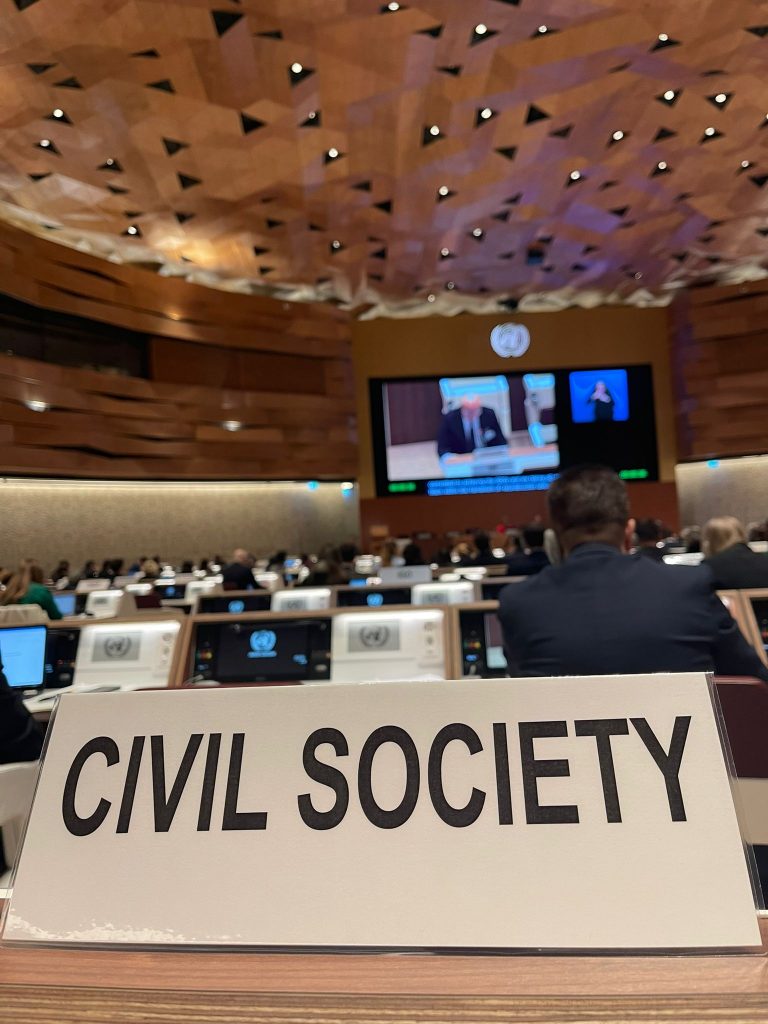
Civil Society participates in the UNECE (United Nations Economic Commission for Europe) 2023 Regional Forum for Sustainable Development in Geneva, a forerunner to the High-Level Political Forum taking place in New York in July.

The lack of consultation with civil society in the preparation of the EU Voluntary Review is deeply disappointing. Article 11 TEU places an obligation on EU institutions to consult with CSOs to ensure open, participatory, and inclusive multi-stakeholder approaches, and the SDG agenda itself contains strong commitments to involving civil society and other key stakeholders in its implementation.

There is a clear need to shift from a tick box exercise to the creation of real opportunities for citizens’ and civil society participation to engage the whole of society for sustainable development and for the SDGs.

Manuela Gervasi, Senior Policy Officer for Public Participation and Sustainable Development at EEB and SDG Watch Europe Steering Group Member. 

As Europe continues to preach the values of participation, democracy, and openness to other countries around the world, Europe now needs to show real leadership on SDGs on the world stage, as governments and civil society ramp up preparations for the High-Level Political Forum in July in New York and the SDG Summit taking place in September. With many countries engulfed by stubborn inflationary economic crises and global shocks that risk erasing vital SDG progress, the EU will need to lead in reviving a spirit of multilateral cooperation and fostering the political will required to achieve the sustainability commitments made in 2015. In such a context, it is only logical that the EU takes further measures to reverse the negative trends highlighted in the EU Voluntary Review. 

With only seven years left to achieve the SDGs, the role of the incoming European Commission in 2024 will be instrumental in the success of Agenda 2030. The EU VR provides a first step, but it should be followed by the introduction of an overarching strategy on SDGs that ensures meaningful civil society participation.

Julie Rosenkilde, Director of Nyt Europa and SDG Watch Europe Steering Group member. 

SDG Watch members highlighted that the ongoing deficiencies in implementing the SDGs are structural in nature, and the EU must assume a leadership role in tackling root causes and transforming the current economic system. Only by doing so can genuine progress towards the SDGs be achieved. This will require courageous decision-making from policymakers, as well as collaboration and cooperation from all stakeholders. Daniele Taurino of the European Youth Forum an SDG Watch Europe member, commented:

It’s becoming increasingly clear that our current economic model, which prioritises growth and profit, is unsustainable and detrimental to both the planet and the people. The only way to achieve the SDGs is by pursuing systemic and coherent change towards a post-growth future that values biocapacity, equality, and the well-being of both people and the planet while creating a thriving and peaceful future that operates within the limits of our planet’s resources.

The European Voluntary Review can be accessed here.