News

Sustainable development: new steps forward for a stronger collaboration between the UN Economic Commission for Europe and Civil Society

By Marion Steff, European Disability Forum

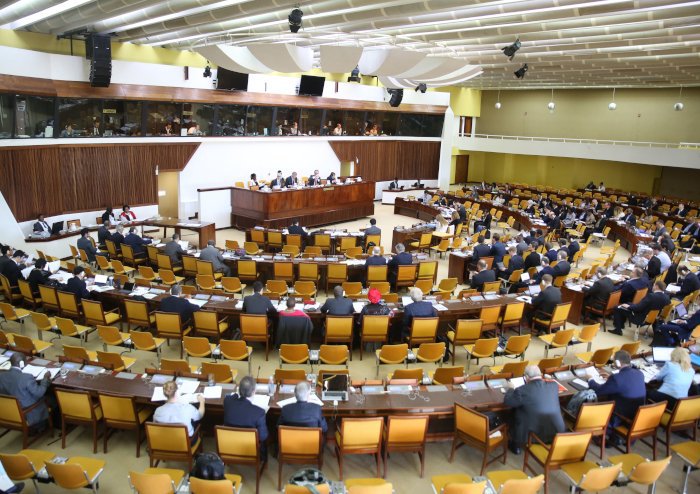
The UN Economic Commission for Europe (ECE) Secretary General Olga Algayerova of Slovakia met with the ECE Regional Civil Society Mechanism (RCEM) on the first day of the High Level Political Forum in New York. EDF is an active member of the RCEM, as we coordinate the Constituency of Persons with Disabilities. We were therefore pleased to have a chance to talk with Secretary General Algayerova as well as Monika Linn, the Chief of the Sustainable Development and Gender Unit in the Office of the Executive Secretary of ECE.

Both were very keen to hear about the progress we made to organise ourselves as a strong and coordinated civil society platform, to ensure all voices are included in the regional processes around sustainable development.

Ms Algayerova explained that the next regional forum will be on 21-22 March 2019, with the CSO Forum the day before. The agenda and content will be decided after the summer, with a first coordination meeting in September, however the focus will most likely be on peer-learning.

The RCEM agreed to organise a working group to support the agenda and make recommendations for an efficient event. For instance, we suggested the possibility to organise parallel sessions for the SDGs under review, with, for instance presentations, by CSO of alternative reports such as EDF’s second human right report on the SDGs and the CRPD. We also asked for CSO speakers to be included in the programme, to have a clear and transparent system to submit side-events co-hosted by countries, and we also insisted on making the event accessible, with captioning for instance.  We also would like to have the possibility to input in any official documents to ensure the expertise and knowledge of CSO is recognised and valued.

The European Disability Forum is an independent NGO that represents the interests of 80 million Europeans with disabilities. EDF is a unique platform which brings together representative organisation of persons with disabilities from across Europe. EDF is run by persons with disabilities and their families. We are a front runner for disability rights. We are a strong, united voice of persons with disabilities in Europe.

How to mobilise young people to embrace the Sustainable Development Goals

By Siamak Sam Loni and Angela Riviere, IB

Today, more than half the population on the planet is under the age of 30 — the largest  generation of children and young people that the world has ever seen. Through their creativity, energy and idealism, young people can bring about generational change, which can challenge the status quo and achieve positive outcomes rapidly. Young people can help build a new system, one founded on sharing knowledge and cooperating across borders. As such, the lifestyles (values, attitudes, behaviours) and capabilities (knowledge and skills) of this generation will come to define the world in 2030 and far beyond. More than ever, young people are becoming aware of the enormous stake they have in defining and addressing global challenges—income inequality, climate change, conflict and poverty. They have an important role to play as a driving force for change.

What kind of world could today’s young people build?

One preferred future is outlined by the UN’s Sustainable Development Goals (SDGs). These 17 objectives—negotiated and agreed to by all 193 world governments in 2015—envision a future in which we have eradicated poverty, protected the planet and ensured that all people enjoy peace and prosperity. They are considered by many experts to be the most important agenda of the 21st century because they highlight both the challenges and opportunities for the next 15 years.

What are IB World Schools doing to help young people prepare for a future that is filled with both threat and promise?

Sam Loni, Global Coordinator of the Sustainable Development Solutions Network (Youth), says: “Education has the power to help overcome many of these complex issues, and IB students are particularly well placed to respond. Their programmes of study equip them with the knowledge required to understand and engage with the SDGs as informed global citizens; they share a philosophy and mission that leads them to care about the SDGs, and a range of engagement activities that encourage them to transform this into action.”

Programme development staff in the IB’s Hague Global Centre recently met with Sam to hear about some of the initiatives being undertaken to engage young people globally in the challenges of sustainable development.

After meeting with IB staff and learning more about the four IB programmes, Sam was not surprised why so many of the young leaders he works with are IB alumni. He said, “The mission and ethos of the IB aligns perfectly with the philosophy of the SDGs. IB World Schools offer their students an education that is global, multidisciplinary and strives for a better world. Similarly, the SDGs are a universal and holistic agenda that aim to create more prosperous and inclusive societies by 2030. With 4,750 schools in more than 150 countries, 1 million students and a massive alumni network, the IB and IB students have the potential to make a significant impact on the SDGs. The innovative programmes and dynamic learning environments of IB World Schools allow for an easy and effective alignment to SDGs.”

“For example, the community project in the Middle Years Programme (MYP) and creativity, activity, service (CAS) and service learning projects in the Diploma and Career-related Programmes, could easily be transformed to explicitly align with the SDG framework. This would also help learning outcomes as it would give student projects a clear framework of action—making it easier for students to choose a project, understand/evaluate its impact on their society and report its outcomes against global objectives.”

Here at the IB, we are continuing our conversation with SDSN Youth (part of Sustainable Development Solutions Network), exploring potential teacher support materials, curriculum development, and guidance for schools. Many IB World Schools are already involved. How is your school helping students understand and engage with the 2030 SDGs? There are lots of ways that you can share your learning stories with us: Post a comment below, email us, start a discussion within the programmes communities via My IB, on Twitter including @iborganization and @SDSNYouth. And we are very excited about the #generationIB event coming up this September, find out more on their website.

The IB offers an education for students from age 3 to 19, comprising of four programmes that focus on teaching students to think critically and independently, and how to inquire with care and logic. The IB prepares students to succeed in a world where facts and fiction merge in the news, and where asking the right questions is a crucial skill that will allow them to flourish long after they’ve left our programmes. We are supported by IB teachers and coordinators who develop and promote the IB’s curriculums in almost 5,000 schools globally every day, in over 150 countries around the world.

The urgent need for reform of the UN’s HLPF

By Deirdre de Burca – SDG Watch Europe Steering Group member

*This article reflects the personal views of the author on HLPF reform. SDG Watch Europe members will be consulted for their views on the issue in early autumn 2018.

For those SDG Watch Europe members who attended the UN’s High Level Political Forum (HLPF) in New York this year (9-18 July), there was a growing sense of urgency about the need to reform the way in which it is constituted and functions.

47 UN member states volunteered this year to present their Voluntary National Reviews (VNRs) at the HLPF. As in previous years, the CSOs who were present in New York spent much of their time meeting on the margins of the HLPF, as part of unofficial side events or in other gatherings organized by and for civil society.

Because many of the CSOs attending the HLPF this year were present on several previous occasions, it was easier to identify recurring issues and ongoing concerns linked to the current mandate and functioning of the Forum.

A common critique of the HLPF by civil society is that it is a very state-led and state-centered process. The role played by civil society and other key stakeholders in the HLPF is currently very limited, despite the clear commitment of the Agenda 2030 to a multi-stakeholder approach to monitoring and implementation.

Most national HLPF delegations do not include CSO representatives. When they do involve CSO representatives, these individuals are allowed approximately two minutes to comment publicly on the VNRs produced by governments. The growing number of high-quality CSO Shadow Reports produced in parallel to the VNRs are given no official status of any kind as part of the HLPF and cannot be uploaded to the UN website.

A major outcome of the annual HLPF is the publication of an official “Inter- Ministerial Declaration” that reflects some of the current issues and priorities identified by the Member States linked to the monitoring and implementation of the Agenda 2030 for Sustainable Development. Unfortunately, civil society and other stakeholders are not given the opportunity to provide input into this Declaration and generally react to its publication by issuing their own official response.

Fortunately, UN Member States have committed themselves to carrying out an official review of the HLPF in September 2019. Over the coming year, SDG Watch Europe members and broader civil society must engage in intensive advocacy aimed at governments and other key actors They must ensure that this planned review goes well beyond a superficial reflection process and that a range of fundamental and necessary HLPF reform proposals and policy changes are generated that will be implemented over the next few years.

When UN Member States review the HLPF in September 2018, the focus of the review should be multi-level and include the national, regional and global levels of the HLPF cycle. This will mean that Member States should review: 1) the Voluntary National Review processes, 2) the regional level peer review processes which take place through the UN’s Regional Sustainable Development Forums, and 3) the global level HLPF annual peer review system that takes place in New York every July.

Although all levels of the HLPF cycle are equally important, particular attention should be paid to the VNR process in order to ensure that it becomes a national- and locally-owned process. With this objective in mind, governments should be required to present draft VNRs for debate and approval by national parliaments and by the official multi-stakeholder Sustainable Development Forum before it is submitted at a global level to the HLPF.

At the regional level, civil society should be properly resourced to organize itself across national and sub-regional boundaries. Multi-annual funding should be provided to resource permanent secretariats for the new Regional Civil Society Engagement Mechanisms (RCEMs) being established in each region. Resources should also be provided under Goal 17 of the Agenda 2030 to engage in CSO capacity development the regional level. Regional exchanges and learning hubs should be established involving diverse stakeholders to promote more effective Agenda 2030 monitoring and implementation across each region.

At a global level, the HLPF should create a “Civil Society Forum” similar to the existing “Business Forum” where CSOs can come together to debate issues and agree on positions linked to the monitoring and implementation of the Agenda 2030. CSO Shadow Reports linked to VNRs should be given the same formal status by the UN, and a dedicated website linked directly to the UN website should be provided where these parallel reports can be uploaded.

The draft Ministerial Declaration adopted at the end of each HLPF should be much more action-oriented and it should be shared with other stakeholders in advance of its publication. These stakeholders should have the right to request that certain elements of the Declaration be amended or re-written before final adoption.

There should be a clear focus each year during the HLPF on involving all stakeholders in fulfilling its mandate to review progress by implementing Goal 17 (Means of Implementation) of the Agenda 2030. This should particularly include issues of financing for sustainable development, multi-stakeholder partnerships and the capacity development of stakeholders. Spaces should be created within the HLPF for mutual exchange and learning to take place amongst and between governments and other stakeholders including civil society, the private sector, trade unions, academia, etc.

The official review of the HLPF by UN Member States will take place during the 2019 UNGA from 23-24 September. In the meantime, civil society must be extremely proactive to carry out necessary advocacy with national governments and other key actors, including the EU. The focus of this advocacy must be to ensure that the review results in a reformed HLPF which will allow for much more meaningful and effective participation by civil society in the monitoring and implementation of the Agenda 2030 globally.

World way off track on sustainability goals

By Emily Macintosh, EEB

Countries are not on track to meet global goals on sustainability by 2030. That was the assessment given by the President of the United Nations Economic and Social Council today when she opened a meeting of global political leaders in New York.

Marie Chatardová said that progress was not sufficient enough for countries to be on track to achieve the 17 Sustainable Development Goals (SDGs) which were agreed by world leaders from 193 countries in 2015.

The SDGs are widely viewed as the global crisis plan to end poverty and protect the planet.

Today’s ministerial meeting is the political highpoint of an annual UN summit (the so-called ‘High Level Political Forum (HLPF)’) where countries are required to report on their sustainability progress. The HLPF brings together over 1000 representatives from governments, civil society, and the business world.

But while 10 EU countries are reporting this year – Ireland, Lithuania, Poland, Romania, Greece, Spain, Latvia, Slovakia, Hungary, and Malta – campaigners have highlighted that many EU policies are incoherent with sustainable development objectives.

In a letter sent today to Vice-President of the European Commission Frans Timmermans, campaigners from the ‘SDG Watch Europe’ coalition and the  Make Europe Sustainable For All’ campaign said:

“Policy coherence for sustainable development is still a weak point for the European Union. It is crucial to have an assessment report on where we stand with the implementation of the 2030 Agenda and to present that report at the international level for discussion. Unfortunately, the EU has so far not presented any report at the HLPF. In 2019, the EU has the last opportunity to provide a report at international level and not to miss the first reporting cycle.”

SDG Watch Europe’ is a cross-sectoral coalition of more than 100 civil society organisations. The ‘Make Europe Sustainable For All’ campaign is ran by 25 partner organisations that advocate for the ambitious implementation of the SDGs across the EU and for the EU to become a true leader of sustainable development.

Last week a delegation of NGOs that sit on the EU’s SDG Multi-Stakeholder Platform met with Commissioner Timmermans to discuss the importance of EU policies not contradicting the SDGs.

The NGO representatives, including Jeremy Wates, Secretary General of the European Environmental Bureau (EEB), called for the EU executive’s forthcoming paper ‘Towards a sustainable Europe by 2030’ to clarify how EU countries will monitor and report on SDG progress in a transparent way.

In today’s letter the campaigners emphasised the need to look at both how the SDGs are being met within the EU and how the EU’s policies influence sustainability beyond its borders. They also highlighted that clarity is needed over where responsibility lies with EU governments and where it lies at the EU level.

Patrizia Heidegger from the European Environmental Bureau (EEB) said:

“It is crucial that the EU does not just cherry-pick the easiest or preferred goals. We must go beyond policy-as-usual by aiming for the highest level of ambition in all the targets, guaranteeing that no-one is left behind and that planetary boundaries are fully respected.“

The European Environmental Bureau (EEB) is the largest network of environmental citizens’ organisations in Europe. It currently consists of around 140 member organisations in more than 30 countries (all EU Member States plus some accession and neighbouring countries), including a growing number of European networks, and representing some 30 million individual members and supporters.

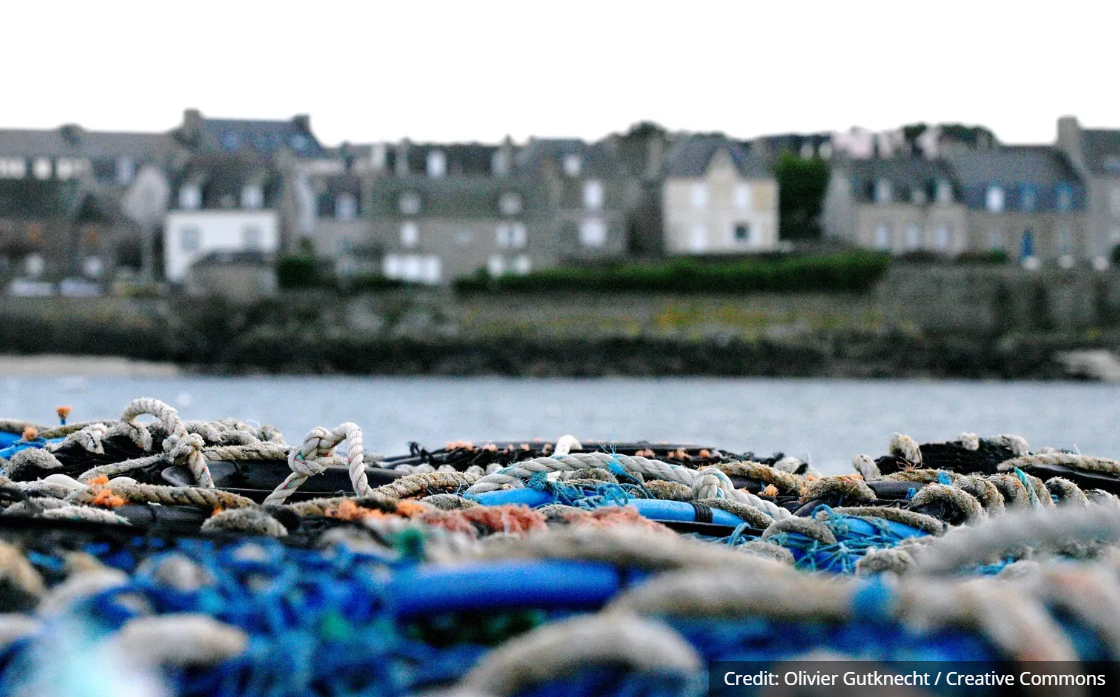
Industrial-Scale Trawlers Decimating Small-Scale Fishing Around The World

By Emily Macintosh, EEB

In the first of a special series, the EEB newsletter META looks at how different cases of environmental injustice are causing inequality around the world.

With the industrialisation of fishing causing huge stock collapses and species extinctions, small-scale fishing communities in Europe and beyond are reclaiming their rights for access to and control over sea life. But campaigners warn that plans for changes to EU fishing rules won’t help put the brakes on overfishing.

The European Commission has just announced that it wants to let fishing vessels from the EU off the hook when they are fishing beyond Europe’s seas.

Non-EU countries need proper vessels, equipment, and training to be able to monitor what EU fleets fishing in non-EU waters are up to, yet in a proposal published last week the EU executive didn’t suggest increasing support to non-EU countries to fund these resources. Under the proposal, fishing vessels within the EU could also soon be allowed to break rules set to limit the negative impact of fisheries on seabirds or marine protected areas.

Bruna Campos, EU Marine and Fisheries Policy Officer at BirdLife Europe, said:

“It is pure common sense that without controls, rules will not be followed. In this case, having rules to manage the impact of fisheries to the marine environment isn’t enough if there aren’t any efficient systems that control vessels and enforces those rules.”

This comes as a new campaign warns that inaction on the inequalities arising as a result of cases of environmental injustices such as those caused by overfishing will mean countries won’t achieve the global goals agreed between world leaders in 2015 that aim to end poverty and protect the planet – the Sustainable Development Goals (SDGs).

Moving away from intensive fishing and supporting small-scale fishing communities would help us meet several of these goals, in particular: SDG 1 on tackling poverty; SDG 11 on building sustainable cities and communities; SDG 12 on responsible consumption and production; SDG 13 on climate action; and SDG 14 on safeguarding seas and oceans.

Tackling trawlers is crucial to groups such as the World Forum of Fisher People and the World Forum of Fish Harvesters and Fish Workers who work to stop fisheries injustices such as those caused by intensive fish farms in Turkey or in Chile, big port projects in India and polluting industries in Ecuador.

Speaking to META, Dr. Irmak Ertör, a post-doctoral researcher in the Institute of Environmental Science and Technology, Autonomous University of Barcelona, said:

“European political actors and stakeholders should instead strive for the promotion and implementation of the FAO guidelines for securing sustainable small-scale fisheries in order to move towards achieving social and environmental justice both in European and global fisheries. Throughout the world, the industrialisation of fisheries and overfishing in the past decades have shown that policies supporting an infinite growth in marine areas will not lead to sustainable outcomes and that all policies and stakeholders rather have to act for changing the blue growth paradigm and stopping these environmental injustices.“

Ertör is one a group of researchers, campaigners, ecological economists and political ecologists from the EnvJustice research project who are working to fill the gap in monitoring of worldwide environmental conflicts by charting  social conflicts around environmental issues in a special Global Atlas of Environmental Justice – the EJAtlas for short.

Last week MEPs in the European Parliament voted in a plan for fishing in the North Sea which NGOs say could allow for overfishing of certain stocks in the region such as cod, haddock, whiting, sole, plaice and Norway lobster – despite the fact that 41% of fish stocks in the North Sea region are overfished.

ClientEarth lawyer Flaminia Tacconi said“This is a political deal that fails to put the future of European seas and industry first. It weakens EU law by allowing overfishing, includes different standards of fisheries management for different species and undermines the aim of having sustainable fisheries for all harvested species. This risks population collapse and devastating knock-on effects for fishermen, shoppers and the environment.”

The European Environmental Bureau (EEB) is the largest network of environmental citizens’ organisations in Europe. It currently consists of around 140 member organisations in more than 30 countries (all EU Member States plus some accession and neighbouring countries), including a growing number of European networks, and representing some 30 million individual members and supporters.

Curb Inequality Or Global Sustainability Goals Won’t Be Met, New Campaign Warns

By Emily Macintosh, EEB

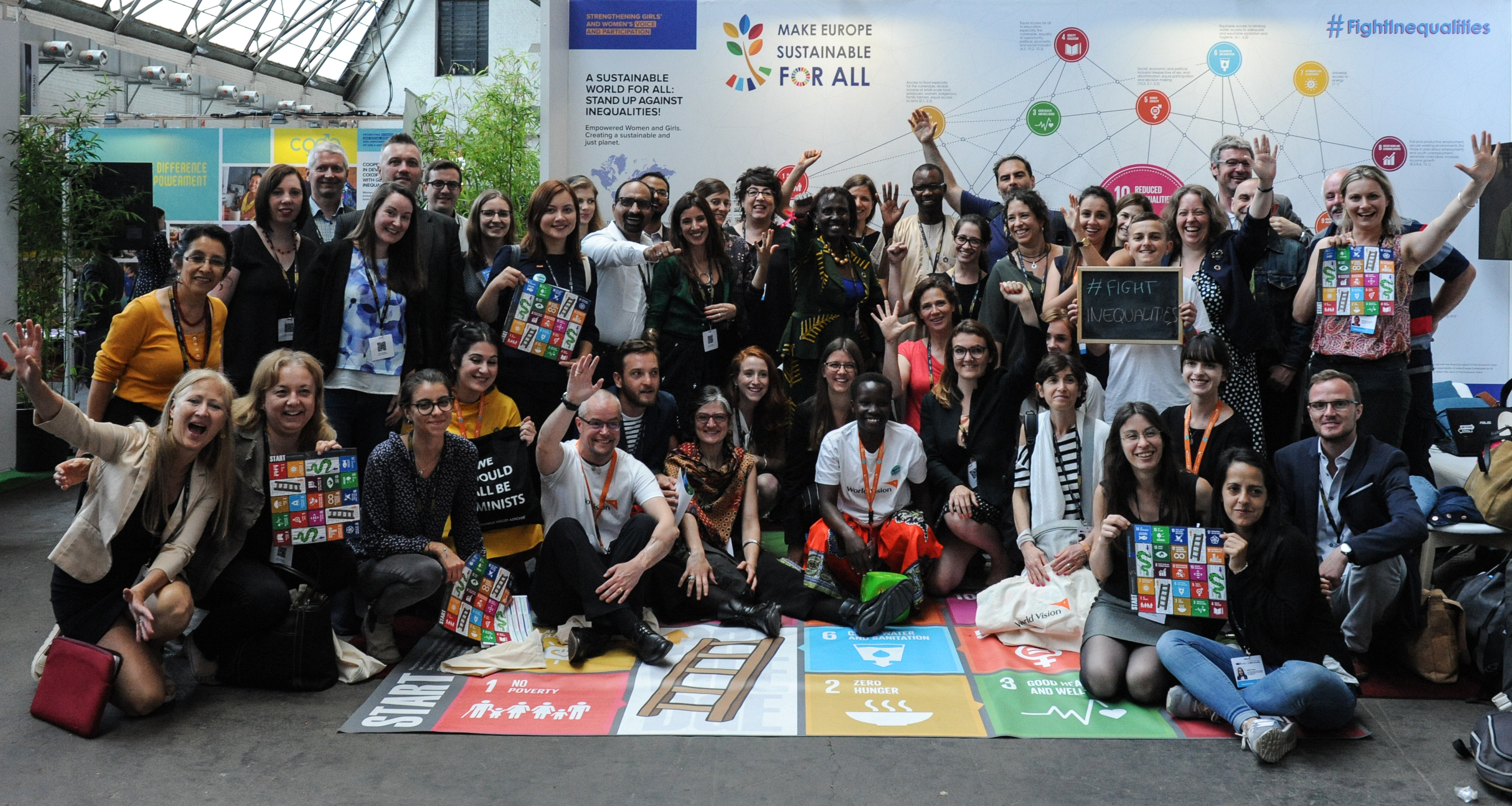
A new campaign kicked off during the European Development Days (5-6 June) warns that without action to curb global inequality, countries around the world won’t achieve the UN goals that aim to end poverty and protect the planet – the Sustainable Development Goals (SDGs).

The SDGs were adopted in 2015 and global leaders committed to achieving them by 2030.

The Fighting Inequalities Campaign  makes the case for societies to be more inclusive for women, children, different ethnic groups, marginalised people, and for EU citizens to become agents of change in their own communities.

“We need policies and laws that aim to make our societies inclusive for women, children, different ethnic groups, and marginalised people, and for EU citizens to become agents of change in their own communities. If political leaders don’t tackle the inequalities that arise as a result of the huge environmental and social injustices facing our world then the Sustainable Development Goals will be meaningless.” said Patrizia Heidegger, Director of Global Policies and Sustainability at the European Environmental Bureau – one of the NGOs behind the campaign.

The #FightInequalities campaign is part of the Make Europe Sustainable For All project which brings together NGOs that work on social issues, supporting farmers, stopping climate change, protecting the environment, defending women’s rights, young people, & gender equality, supporting fair trade, development, global justice, & workers’ rights.

See more about the campaign here!

Leaving development cooperation behind: is the EU turning its back on Agenda 2030?

By Global Health Advocates

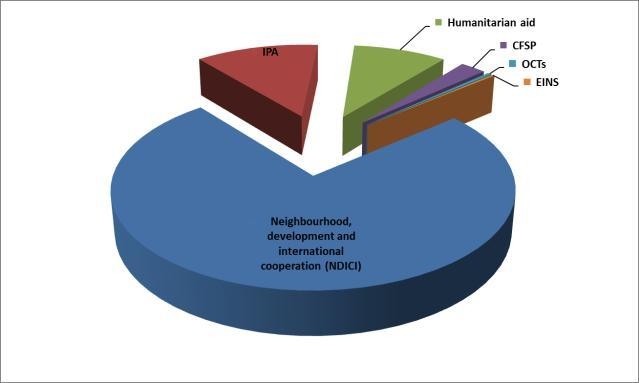
While many are rejoicing at the prospects of increased resources for external action in the face of Brexit, this is by no means justified. The proposal for a Neighborhood, Development, International Cooperation Instrument (NDICI) does not constitute an EU pledge to support partner countries’ efforts to “leave no one behind”.

Indeed, the proposal to merge 12 instruments from a wide array of policies – such as development, neighborhood, human rights and peacebuilding – into a single instrument de facto dilutes their distinct original objectives. This new instrument pledges to “uphold and promote the Union’s values and interests worldwide”. Read: member states’ economic and policy interests in partner countries. This means that the most vulnerable regions risk being left out at the expense of countries with strategic geopolitical interest.

This reconfiguration marks a major shift away from the EU’s principled and long-term approach to development cooperation. Agenda 2030 is clearly not the underpinning political framework for the EU’s future external action. And aid effectiveness principles are to be applied “when relevant”. But how and by whom will these judgments on relevance be made?

Clearly, the EU has lost sight of aid’s original purpose: addressing the root causes of poverty through substantial investments in areas like health and education. Rather, development aid is now considered a tool to leverage partner countries’ cooperation on matters linked to EU’s interests, such as security and migration. This – and not putting the EU’s political weight behind the Sustainable Development Goals – explains why the Commission proposes a much larger proportion of funds to be spent via geographical programmes.

Of course, foreign policy and development cooperation objectives do not inevitably clash, but there can be conflicts and the Commission provides no answers as to how they will be solved: who will set priorities, arbitrate between competing interests and ultimately decide? Who will control the resources?

These questions of accountability are all the more important as there is much more margin for interpretation planned under the new proposal: flexibilities for emerging challenges are being increased to 10% of the budget, and the Commission intends to allocate another 10% to migration, without detailing which specific areas will be prioritized. One should not overlook that EU elections are coming, that new Commissioners will be put in place and that polls for the progressive camp are all but promising. Therefore, too much flexibility risks pulling the EU further away from its principles and international commitments.

At the institutional level, things are even more unclear: how will responsibilities be shared between the EU External Action Service and DG Development? The same question goes for the European Parliament and the Foreign Affairs and Development Committees.

Many of our concerns align with the European Parliament’s recurrent positions. We therefore count on the Parliament to use all its power to drastically amend the single instrument and turn it into a Sustainable Development mechanism, and to clarify its governance, including priority setting. We also urge Member States to support an alternative proposal that is aligned with the Lisbon Treaty and conducive to the realization of the Paris agreement and Agenda 2030. The clock is ticking, and there won’t be a plan B.

Global Health Advocates is a non-governmental organization that focuses on engaging all sections of society to fight diseases that disproportionately affect people living in poverty, and are also the leading causes of people living in poverty. In particular, Global Health Advocates works towards the formulation and implementation of effective public policies to fight disease and ill health.  Established in 2001 as the Massive Effort Campaign, Global Health Advocates works in France and in India.

European Day of Sustainable Communities

By European Network for Community-Led Initiatives on Climate Change and Sustainability (ECOLISE)

The European Day of Sustainable Communities #EDaySC2018 on 22 September is a celebration of the efforts and achievements of the thousands of local communities across Europe who are taking action for a better, more sustainable world.

It is also about raising awareness among policy makers, at all levels – European Union, national, regional and local/municipal, of the scope and potential of community-led action on climate change and sustainability.

“We invite anyone who is working locally for a more equitable, sustainable, low-carbon society to help us celebrate the day by organising an event, however small, and registering it on our site,” says Eamon O’Hara, Executive Director of ECOLISE and the main organiser of #EDaySC.

Last year in 2017, groups of pioneering communities in 15 countries, from the Balkans to the Baltic Sea and along the western fringe of Europe, celebrated the first #EDaySC.

“In 2018 we want to build on this success. Already, at the end of May, communities in six countries had registered on our new website,”  says O’Hara.

Within the context of day, ECOLISE is also co-hosting a conference in Brussels ‘Citizens, communities and municipalities working together for grassroots climate action’ with the European Economic and Social Committee (EESC), in collaboration with Transition Network and the Committee of the Regions (CoR).

For further information please see:
www.sustainable-communities.net
@EDaySC
https://www.facebook.com/ecolise.eu/
iva.pocock@ecolise.eu

ECOLISE, the European network for community-led initiatives on climate change  and sustainability, is a coalition of national and international networks of community-led initiatives on sustainability and climate change, as well as organisations that support a community-led transition to a resilient Europe.

Citizens and sustainable development are big losers in EU’s next research programme

By Jill McArdle, Global Health Advocates

The European Commission has released its proposal for the next EU research framework programme, Horizon Europe, set to begin in 2020.

The proposal comes at a critical moment for the EU. Democracy across the EU is in a state of transformation. Shaken by recent electoral shocks, leaders are paying closer attention to the voices of citizens, and experiments in democratic innovation are taking hold in the public sphere.

Meanwhile, the Paris Climate Agreement and the Sustainable Development Goals have pushed global challenges to the top of the political agenda. This is thanks in no small part to civil society groups, who have campaigned tirelessly for decades on the need to radically transform our societies and set ourselves on a path to sustainable development within the planet’s boundaries.

Publicly funded research and innovation has a foundational role to play in addressing these challenges. It can offer an understanding of their nature, research alternatives to current models and support deliberation about possible conflicts and trade-offs. But to be effective, we must pay close attention to how the research agenda is set.

To ensure a needs-driven agenda, citizens must be at the centre of the process, both to reinvigorate democracy and harness the insights of those most affected by societal challenges. Civil society has an invaluable contribution to make here too, bringing its wealth of expertise and experience in areas like health and the environment, sustainable food and farming, climate and energy, and peace and democracy.

With this in mind, what has the EU proposed to do with the research budget? Zooming in first to the commitments on societal engagement, we see that engaging citizens and civil society in setting the research and innovation agenda is singled out as an objective of the programme. This is a positive move, though there are reasons to be cautious.

The concrete ways in which citizens will be engaged are left vague and undefined. And references to civil society are worryingly absent in the section supposedly dedicated to science and society.

Take a step back though, and the picture becomes even more concerning. The current proposal for Horizon Europe makes critical structural changes that could have catastrophic implications for democracy and sustainable development.

The current programme Horizon 2020 contains three pillars, focused on three distinct objectives: excellent science, industrial leadership and societal challenges (for example in health, food and climate). This coherent structure has been praised and reaffirmed at the political level and by numerous evaluations of the programme.

For Horizon Europe, the European Commission proposes to merge the second and third pillars of the previous programme under the heading “Global Challenges and Industrial Competitiveness”. This is a reckless move that puts research into real global challenges at risk.

What Horizon 2020 got right is that industry operates on a specific and distinct logic: profit and competitiveness. Societal challenges, on the other hand, focus on societal impact and therefore reflect the logic and interests of citizens and civil society.

We are told, of course, that these agendas naturally align. That these solutions to societal challenges are driven by the innovations of European industry. This may, in some cases, be true. But it is by no means a given that competitiveness will always be compatible with sustainable development.

And recognising that industry has a role to play is not the same as shoehorning the goal of competitiveness into a pillar meant to focus on the challenges faced by citizens and society. The key question here is, which goal will dominate? In the event of a conflict, what takes priority?

It is not hard to imagine how this will play out. Industry stakeholders are well-established within the programme. They know the programme well and how it works. They are well-equipped, well-resourced and well-organised. In comparison, citizens and civil society are not traditional actors in research and innovation.

They lack the insider knowledge and experience to effectively engage with the programme, as well as the resources needed to make themselves heard.

What chance has a needs-driven citizens’ agenda got against the might of industry? In this context, vague commitments on engaging society seem hollow and insufficient. At the level of societal engagement, a concrete roadmap to overcome barriers and boost engagement must be set out before the beginning of the next programme.

Structurally, a solution also presents itself. Horizon Europe will include a dedicated pillar for the European Innovation Council. Given that the EIC already integrates several elements of the Industrial Leadership pillar, and that their objectives are already closely aligned, this seems an appropriate place to house the remaining parts of Industrial Leadership.

This one move would preserve a dedicated pillar for independent research on urgent societal issues. We cannot afford to allow private interests to hijack a public research agenda intended to address citizens needs and deliver a just, equitable and truly sustainable future.

Global Health Advocates is a non-governmental organization that focuses on engaging all sections of society to fight diseases that disproportionately affect people living in poverty, and are also the leading causes of people living in poverty. In particular, Global Health Advocates works towards the formulation and implementation of effective public policies to fight disease and ill health.  Established in 2001 as the Massive Effort Campaign, Global Health Advocates works in France and in India.

REDUCING INEQUALITIES, AN ESSENTIAL CONDITION FOR THE ACCEPTABILITY OF ENVIRONMENTAL POLICIES

By Carole-Anne Sénit and Vaia Tuuhia, 4D

This brief is based on an interview conducted with Lucas Chancel at the Paris School of Economics on 11 January 2018, and is supplemented by figures.

Inequalities are increasing everywhere

There is no doubt. The works of NGOs and researchers have come to the same conclusion: inequalities are growing all over the world. According to the latest Oxfam report published on Monday 22 January ahead of the Davos summit, 82% of the wealth created in the world in 2017 went to the richest 1%, while the income of half the world’s population stagnated. The report also highlights that 2017 saw the biggest ever increase in the number of billionaires, with the addition of a new billionaire every other day. Moreover, Oxfam teams have estimated that the income increase in 2017 of the world’s 2,043 billionaires “could have ended global extreme poverty seven times over.”

Recently, the report on global inequality, produced by Thomas Piketty and Lucas Chancel’s research teams from the Paris School of Economics, showed that since 1980, the richest 1% of the global population has captured 27% of the world’s income growth. Conversely, the poorest 50% only received 12% of this growth. While this income growth, which is related to globalization, has enabled the poorest segments of the populations of emerging countries to escape from poverty, the middle and working classes in developed countries have benefited only marginally. This observation disproves the “trickle-down theory”, according to which the incomes of the richest individuals are re-injected into the economy through their consumption or savings, thus contributing to economic activity and employment.

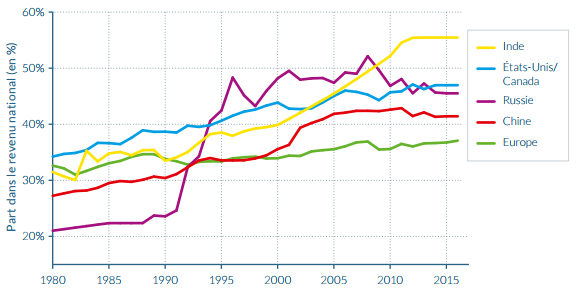
The report on global inequalities also shows that inequalities grow at different rates in different regions. For example, income inequality, for which the main indicator is the share of national income held by the richest 10%, is increasing much more sharply in the United States, India, and Russia, than in Europe. Thus, between 1980 and 2016, the share of national income going only to the richest 10% increased from 31% to 55% in India, from 34% to 47% in the United States, and from 32% to 37% in Europe. France experienced a change in income inequality similar to that of Europe: the richest 10%, who held 31% of national income in 1980, now hold 35%. Inequalities in European countries are therefore progressing more gradually than in other regions of the world.[1]

Figure 1: Development of the income share of the world’s wealthiest 10% (1980-2016).
Source: WID.world, World Inequality Report 2018

Translation figure 1 :

– Share of national income (in %)

– India

– United States/Canada

– Russia

– China

– Europe

While income inequality has not exploded in France, the increase in national income has particularly benefited the richest 10%. Based on calculations using Credit Suisse data, the Oxfam report published in January confirms this trend: in 2017, the richest 10% held more than half of the wealth while the poorest 50% share barely 5% of the national wealth. Although there has been no impoverishment, middle and working class incomes have stagnated, while those of the richest have increased.

Social and environmental inequalities: intrinsic links

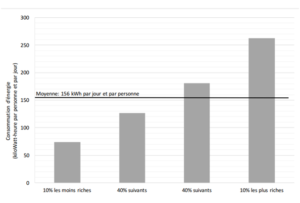
Recent empirical data published by Lucas Chancel in his book Insoutenables Inégalités (Published by Les petits matins in 2017) show that victims of social injustice are also victims of environmental injustices. These injustices are of several types: inequality of access to environmental resources, inequality of exposure to environmental risks, and inequality in terms of resilience to environmental damage. According to the author: “The poorest have less access to environmental resources such as water, energy and good quality food.” In France, for example, the poorest 10% consume 73 kWh per person per day, compared to 262 kWh for the richest 10%.

      Figure 2: Energy consumption per person per day in France, per income group
Source: Chancel, 2017.

Translation figure 2 :

– Energy consumption (kilowatt-hour per person per day)

– Average: 156 kWh per day per person

– Poorest 10%

– Next 40%

– Next 40%

– Richest 10%

The working classes are also more exposed to environmental risks than the richest households. Take pollution for example: while the poorest households contribute the least to pollution, it is these populations that are most exposed. They are therefore at higher risk of developing chronic (and potentially fatal) respiratory diseases: indeed, these populations spend more time on transport than average, they often have poorly ventilated homes, and live near major roads in urban areas. Another notable fact is that “deprived urban areas are disproportionately present around industrial and petrochemical sites,” writes Chancel.

Finally, the poorest populations are less resilient to environmental shocks: they suffer the full onslaught of natural disasters, floods, droughts and storms, which can force these populations into extreme poverty, or maintain them in this plight. In this way, environmental inequalities lead to the deepening of social inequalities.   

Why is it necessary to fight against inequalities?

Addressing inequalities is a moral obligation. However, beyond the ethical question, fighting inequality is also beneficial for the economy, social cohesion, population health, and for democracy. In his book, Lucas Chancel notes that an extreme level of inequality inhibits the functioning of the economy, since the productive potential of people living in poverty is underutilized. The author also cites work in behavioural economics, according to which an overly high level of inequality disincentivizes effort and reduces worker productivity (Cohn et al., 2011, Card et al., 2012).

However, fighting inequalities for the sake of growth is not a good enough argument, because the aim of public authorities is not so much to boost GDP, as to ensure the well-being of its citizens. This well-being requires social cohesion, which can be reinforced by reducing inequalities. The increase of economic and social inequalities is not disconnected from the rise of nationalism in India, the United States, and the United Kingdom. To illustrate his point, the author of Insoutenables Inégalités refers to the stagnation of the minimum wage in the United States, which contributed to the aggravation of socio-identity divisions and fostered national populism. “The mapped inequalities are not disconnected from political tragedies and the transformation of the political programmes observed in many parts of the world. Environmental inequalities are also aggravating the phenomenon in India, Turkey, and Brazil…” noted Lucas Chancel.

In addition, the well-being of a population requires good physical and mental health. The author goes on to argue that there is a negative correlation between the level of inequality and good health: the most unequal societies are thus societies where the highest prevalence of non-communicable diseases such as obesity, diabetes, cardiovascular diseases, and chronic respiratory diseases. In addition, sociology researchers have shown that an unequal society induces stress related to social status: populations at the bottom of the social scale suffer from stress because their living conditions are difficult to tolerate, while populations at the top of the social scale also suffer because they fear losing the advantages related to their social status (Wilkinson and Pickett, 2013).

Finally, fighting against inequalities is necessary for the proper functioning of our democracy. The more unequal a society is, the more it becomes polarized and radicalized, and the more difficult it is for our representative institutions to reach a consensus on trans-partisan topics such as environmental protection.

What public policies could reduce social and environmental inequalities?

Solving environmental problems, depending on the selected policy solutions, can increase social inequalities. For example, a carbon tax without financial compensation for households experiencing energy insecurity would plunge these households into poverty. Conversely, some policies aimed at reducing socio-economic inequalities can lead to increased environmental degradation. For example, some welfare benefits may encourage individuals to adopt consumption patterns that are more damaging for the environment, especially if they are part of a catch-up logic, following certain consumption behaviours of the elite. “Environmental issues can be solved in a very capitalistic way. And social issues can be solved in a very un-environmentally friendly way!” said Lucas Chancel during our interview. It is therefore necessary to think of public policies to fight against inequalities in an open-ended way: ministries in charge of economic, social, and environmental affairs must coordinate their actions.

The first approach is to strengthen the welfare state so that it takes environmental risks into account, moving beyond the risks traditionally covered by social security. “When the social protection system was devised and developed in France in the 19th and 20th centuries, environmental risks were not taken into account,” noted Lucas Chancel. However, experiences in other countries shows that this integration is beneficial for raising awareness and encouraging modest households to adopt more sustainable lifestyles. For example, Sweden has a social protection system where social counsellors are trained in ecological transition issues and they raise awareness among households about behavioural changes that would allow them to raise additional financial resources.  

The second approach concerns taxation. To reduce inequalities, whether social or environmental, it is essential to improve tax progressivity. Economic research has theoretically and empirically demonstrated that “tax progressivity is an effective tool to combat social and environmental inequalities,” underlines the World Inequality Report. The establishment of a progressive environmental tax system appears to be a relevant tool to reinforce the coherence of social and environmental policies: a carbon tax with a progressive rate that depends on income, with a proportion of the revenue being redistributed to the poorest households, could help break the vicious circle of social and environmental inequalities.

A second taxation lever would be the elimination of fossil fuel subsidies, with the resulting financial surplus being reallocated to social protection. Looking at the example of Indonesia, Lucas Chancel explained that in 2015 the State undertook a reform aimed at eliminating fossil fuel subsidies (particularly kerosene), which accounted for 30% to 40% of the national budget, and to reallocate the revenues generated to the creation of a social security system.

Finally, the third approach involves increasing public investment in priority sectors to give younger generations more opportunities. In this regard, the World Inequality Report emphasizes that “public investments are needed in education, health, and environmental protection both to tackle existing inequality and to prevent further increases. This is particularly difficult, however, given that governments in rich countries have become poor and largely indebted”. In our interview, Lucas Chancel told us that in developed countries, private wealth increases at the expense of public wealth, yet it is the latter that enables the necessary investment to sustainably reduce inequality. Several solutions exist to reverse this trend: for example, some States in the past have benefited from relief or cancellation of their debt to raise funds to make these essential investments.  

Is France en route to reducing inequalities?

In France, the growth and concentration of wealth is likely to increase following the most recent tax reform of Edouard Philippe’s government. According to a study by the French Economic Observatory (OFCE) published on 15 January 2018, the wealthiest 5% are the big winners of the fiscal and social measures in the 2018 Finance Law. The poorest 5% suffer from the fall in housing benefits and the rise in indirect taxation (energy, tobacco), which would only be partially offset by the revaluation of social benefits. The study points out that overall, the poorest households are expected to see their standard of living fall by 0.6%. This drop would represent a loss of 60 euros per year per household. As for the middle and upper classes, they are likely to experience a decline in their standard of living from 0.4% to 0.8%. Finally, the richest 5% will see their standard of living increase by 1.6%, or 1,730 euros per household. Of these, the 280,000 richest households in France (top 1%) will benefit the most from the social and fiscal measures of the 2018 budget: their standard of living will increase by 4.8%, due to the elimination of the ISF (French solidarity tax on wealth) and the one-off fixed-rate tax of 30% on capital, also called flat tax.

Figure 3: Impact of the fiscal measures in the 2018 budget, per income decile.
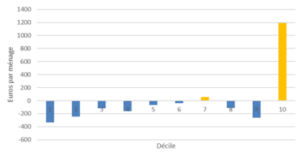
Source: OFCE, 2017.

Translation figure 3 :

– Euros per household

– decile

During our interview, Lucas Chancel explained that the flat tax would also generate massive tax optimization behaviours, since business leaders will be able to pay less tax by choosing to pay more in dividends rather than through wages. Ultimately, if we take into account these behaviours, the implementation of this tax should cost around 10 times more to the state than was estimated in the Finance Law (1.5 billion euros), based on feedback from other countries such as the United States (Zucman, 2017).

The good news regarding the 2018 Finance Law concerns ecological taxation. The budget for this year provides for an increase in the carbon tax and a catch-up of the taxation of diesel compared to petrol. Thus, this ecotax is expected to generate 3.5 billion euros of revenue for 2018. The Finance Law also intends to roll out plans for the allocation of an income-based energy allowance to all French departments: with an annual amount of 150 euros on average, it will support 4 million households in the payment of their energy expenditure or support certain expenses related to the energy renovation of their homes.

While this measure is a step in the right direction, the amounts of the energy allowance are extremely low (in total, 600 million euros) to compensate for the loss of income related to the decline in housing benefits and the rise in indirect tax (in total, 4 billion euros). In addition, the government is conducting this reform in the framework of regressive taxation, where the tax burden weighs less on the rich (-10 billion) and more on the middle and working classes. In such conditions how can the working classes accept an increase in environmental taxation? According to Lucas Chancel, “this strong feeling of injustice can lead to a rejection of environmental policies by a large part of the population.”

Conclusion: how can we (re)act to advance the social-ecological State?

If the government does not take the path of reducing inequalities, the role of civil society becomes more important. For example, the private sector has understood the importance of nudges to transform practices. According to this concept of behavioural science, indirect suggestions can, without forcing, influence the motivations, incentives, and decision-making of individuals, as effectively or even more effectively than legislation. This type of tool could therefore be adapted and used to encourage households to modify their behaviour to reduce fuel poverty and generate additional income.

Many initiatives aimed at reducing social and environmental inequalities are also developing at the local level, supported by solidarity movements. For example, the urban commons movement, which fights for commons (green spaces, cultural areas, etc.) by challenging land grabbing, and encouraging all to participate in the life of the community, aims to encourage sustainable and more integrative urban development.[2] For Lucas Chancel, it is important that this local energy should be added to the conventional toolbox of the welfare state. Civil society must therefore contribute to the dissemination of these tools and advocate for their recognition at the national level.

However, civil society must not abandon the international framework. In particular, it must rapidly seize the Sustainable Development Goals (SDGs), adopted by 193 heads of state at the UN in September 2015. These goals, applicable to all countries, provide a governance framework to promote the social-ecological state. “The SDGs give hope in that they set a course and can shift boundaries,” according to Lucas Chancel. Over a period of fifteen years, this means reducing inequalities, giving everyone access to social protection, good quality education, reducing gender inequalities, etc. “But there are many conditions for the SDGs to truly help the ecological and social transition, and they are far from being met,” qualified the author. One of these conditions is related to the monitoring and reporting on the SDGs. To measure the progress made in the implementation of these objectives, “States have adopted a full set of indicators taking into account in particular the reduction of inequalities and environmental protection”, underlined Lucas Chancel. Civil society must advocate for improved access to data to carry out this monitoring, and to enable citizens and organized civil society actors to contribute to these databases. Transparency and co-construction of databases should enable civil society to rank[3] good and bad performers in terms of reducing social and environmental inequalities. This ranking would provide them with an interesting advocacy tool to hold governments accountable for reducing inequalities.

References for further reading:

–        Facundo Alvaredo et al. (coord.) (2018). World Inequality Report 2018. Executive summary. World Inequality Lab (WID-World).

–        Lucas Chancel (2017). Insoutenables inégalités. Pour une justice sociale et environnementale, Les Petits Matins.

–        Lucas Chancel (2017). Unsustainable inequalities? IDDRI Blog. Available online here.

–        Lucas Chancel and Tancrède Voituriez (2015). Prendre au sérieux la réduction des inégalités de revenus : un test décisif pour les Objectifs de développement durable, Issue brief 06/15, IDDRI.

–        David Card, Alexandre Mas, Enrico Moretti and Emmanuel Saez (2012). “Inequality at work: The effect of peer salaries on job satisfaction”, The American Economic Review n°102, vol. 6.

–        Alain Cohn, Ernst Fehr, Benedikt Herrmann et al. (2011). Social comparison in the workplace: evidence from a field experiment, Discussion Paper n° 5550, IZA.

–        Eric Heyer, Pierre Madec, Mathieu Plane, and Xavier Timbeau (2017). Evaluation du programme présidentiel pour le quinquennat 2017-2022, Policy brief 25, OFCE Sciences Po Paris.

–        Pierre Madec, Mathieu Plane, and Raul Sampognaro (2017). Budget 2018: pas d’austérité mais des inégalités, Policy brief 30, OFCE Sciences Po Paris.

–        Oxfam (2018). Partager la richesse avec celles et ceux qui la créent, Oxfam International.

–        Richard Wilkinson and Kate Pickett (2013). Pourquoi l’égalité est meilleure pour tous, Les Petits Matins.

–        Gabriel Zucman (2017). “La ‘flat tax’ est une bombe à retardement pour les finances publiques”, Le Monde.
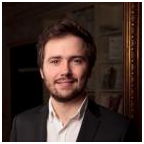
Since 2015, Lucas Chancel has been co-director of the World Inequality Laboratory at the Paris School of Economics, and lecturer at SciencesPo Paris specializing on the economics of inequalities and sustainable development. He is also a senior researcher at IDDRI. Previously, he worked as a consultant for TERI (Energy and Resources Institute, New Delhi, India) and for EIFER (European Institute for Energy Research, Karlsruhe, Germany). He has also been a visiting scholar for the United Nations Habitat Program.

His current research focuses on the interactions between social, economic and environmental inequalities. He has also worked on new indicators of prosperity, the determinants of household energy consumption, and the links between prosperity, growth and environmental policies.

A graduate of Sciences Po, Ecole Polytechnique and ENSAE (Master in Economics and Public Policy) and Imperial College London (Master in Renewable Energy Engineering), he also holds a double degree in physics and social sciences from Sciences Po and the University Paris VI.

© IDDRI 2018


[1] For more information on the reasons for the increase in global inequality, as well as the reasons for large regional disparities, see the summary of the 2018 World Inequality Report here.

[2] For more information on this movement, click here.

[3] Based on the model of the OECD PISA survey, which assesses the quality, equity, and efficiency of school systems around the world.