News

Can the Summit of the Future Support Sustainability Science Diplomats?

By RCE middle Albania

The 2030 Agenda for Sustainable Development has fostered a global community of young science diplomats. While it is difficult to define the boundaries of science diplomacy, the strong engagement of young people in the Sustainable Development Goals (SDGs) over the past seven years may have empowered them to act as such.

With the principle that every contribution toward the SDGs is valuable, global efforts have been inclusive. Although complex and challenging for many organizations, the SDGs have been more easily embraced by younger generations, fostering a sense of responsibility and commitment. Through various initiatives and SDG funds, youth have been involved in numerous activities, such as raising awareness, collecting and utilizing data, grassroots and national initiatives, monitoring and accountability efforts, and shadow reporting on progress.

The Pact for the Future, adopted at the Summit of the Future in September 2024, marks a significant milestone in global cooperation. It emphasizes the urgent need for a unified approach to addressing the world’s most pressing challenges, including accelerating progress on the SDGs. This represents a unique opportunity to advance the 2030 Agenda at a time when multilateralism faces significant challenges.

There are high expectations that Chapter 4 of the Pact for the Future, which focuses on youth and future generations, along with the Declaration on Future Generations, will boost the involvement of young people in the 2030 Agenda and the 17 SDGs. It is anticipated that this will recognize the role of young sustainability science diplomats in tackling global challenges.

For more information, please refer to the publication on IISD.https://sdg.iisd.org/commentary/generation-2030/can-summit-of-the-future-support-sustainability-science-diplomats/

A European Agenda To Navigate Uncertain Times – How to steer the EU towards wellbeing for all now and in the future

By Social Platform

These are uncertain times. Geopolitical tensions and armed conflicts, rising costs of living, growing multidimensional inequalities, accelerating climate and biodiversity crises, security risks, pandemics, rapid development of AI systems, risk of disinformation, political polarisation, migration and an ageing society are causing uncertainty among the peoples, governments, and businesses of Europe. These problems make people insecure about their own future and that of the next generations. The European Commission (EC) urgently needs a policy agenda that tackles these challenges and uncertainties.

The Need to Change

• What the science says. The contribution of economic growth to wellbeing is decreasing and the benefits are not being shared equitably. Humanity is transgressing six out of nine planetary boundaries, thereby disrupting natural systems and causing significant damage to the economy and future wellbeing. In addition, other challenges, such as an ageing society, also threaten the future wellbeing. These interconnected problems should be tackled simultaneously.

• What people want. People across Europe feel uncertain about the future and a majority support reforms of the economic model. There is also specific support for actions on climate change, creation of quality jobs, public spending on social policies, poverty and social exclusion, public health, and investments in future generations.

• What businesses need. European companies know that change is coming. In fact, US and Chinese green programs (e.g. the Inflation Reduction Act) are leading to competitive pressures for European business. Companies need a long-term consistent EU vision to stimulate sustainable and competitive business models. This would help multinationals as well as small and medium-sized enterprises innovate and invest while navigating geopolitical uncertainty.

The Change we Need

• Define the goal. Article 3 of the Treaty of Europe states that “The Union’s aim is to promote peace, its values and the well-being of its peoples.” Globally, there is also scientific and institutional convergence towards wellbeing as an overarching policy goal. There are three elements: ensuring current wellbeing (e.g. health, education, peace and security, air quality, quality employment, economic prosperity, social relationships, etc.), ensuring future wellbeing (mitigating climate change, biodiversity loss, resolving conflicts, dealing with ageing society, boosting innovation and competitiveness, etc.), as well as limiting wellbeing inequalities for current and future generations (gender inequality, income/wealth inequality, risk of poverty, social exclusion, discrimination etc.). These elements are strongly interconnected and overlap in some cases. Together the goals it to achieve Sustainable and Inclusive Wellbeing: Wellbeing for all, now and in the future.

• Overcome barriers and enabling change. To create policies for sustainable and inclusive wellbeing, it is important to identify vested interests, fear of change and resistance that hinders reforms and systemic change. Simultaneously, these policies should recognise the uncertainties people and businesses face. The policy agenda should be holistic and cross-cutting, and policy-silos need to be overcome.

• European leadership. This policy shift requires institutional leadership and effort to ensure the horizontal coordination of policies. One of the ways this could be achieved is by appointing an Executive Vice-President (EVP) for Wellbeing and Future Generations to lay the groundworks for and oversee the implementation of this policy agenda.

• No need to start from scratch. This policy agenda should build on the many initiatives, policies, legislation and governance processes which the EC (and Member States) has already put in place. It should also take into account academic and policy debates from around the world. This provides an indispensable foundation to develop the required policy agenda.

This joint paper co-issued by the SPES, WISE Horizons, ToBe, WISER, and MERGE projects proposes a policy agenda for the new European Commission to ensure sustainable and inclusive wellbeing. It calls for integrated public and stakeholder support to develop policies that address immediate concerns and secure the future wellbeing of all, aiming for a secure, prosperous, and equitable Europe through forward-thinking policymaking. The paper puts forward concrete suggestions on how the European Commission can advance sustainable and inclusive wellbeing in times of polycrisis. These include strengthening the science-based policy toolkit, reforming the European semester process, as well as implementing policies for 5 societal transformations and 13 policy areas.

Find the full paper here: https://mergeproject.eu/publications-steer-wellbeing/
SDG Watch Europe Updates from the Summit of the Future and the Global Peoples Assembly

Civil Society Organisations attend Summit of the Future for revitalised multilateralism and public participation for the 2030 Agenda

By SDG Watch Europe

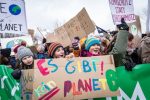
SDG Watch Europe was among the key civil society representatives at this year’s Summit of the Future Action Days in New York, held on 20-21 September.

During the Action Days, SDG Watch Europe participated in a high-level side event organised by the European Parliament and Ivory Coast focusing on the financing needed to achieve the SDGs. They highlighted the urgent need to reform the financial architecture to create a fairer global financial system. The event concluded with positive remarks from European Parliament President Roberta Metsola, who emphasised the ‘strong political will to push forward progress’ from the Parliament.

Alongside bilateral meetings with key officials, delegations, and civil society organisations from different countries, SDG Watch Europe and the EEB shared some preliminary findings from their research on deliberative democracy at the 2024 Global People’s Assembly, which took place on the sidelines of the UN Summit of Future. This research was presented to demonstrate to both EU and global decision-makers why public participation and deliberative democracy must be strengthened, and how they can accelerate SDG implementation. The event discussed the role of democracy and public participation in boosting civic space and advancing the SDGs implementation.

It’s not a secret that the SDGs are significantly behind schedule, with the UN’s own projections stating a meagre 17% of targets are on track for 2030, with over one-third either stalled or moving backwards. Despite this, the Pact for the Future, the main outcome document of the Summit, falls short on concrete commitments for greater civil society involvement, public participation and deliberative democracy, and concrete steps for implementing SDGs in the last five years before 2030.

The EU therefore must step up its efforts. This includes a new European Voluntary Review in the 2024-2029, as well as clear leadership and structured involvement for civil society in the SDGs throughout the new mandate.

SDG Watch Europe will discuss the key civil society demands and priorities for the incoming European Commission at the Civil Society Forum for Sustainability, taking place in Brussels on the 4 and 5 November. More information is available here.

Can We Make a Just Real Green Deal? 

Extending an EU Green Deal for a Global Transformation towards Sustainable Development

By CED

Global Sustainable Development Report 2023 (GSDR) clearly stating that the world is far off track in achieving the SDGs makes us think more of a next level global sustainability agenda; not to rush into replacing the 2030 agenda, but to find a just transition that can support the transformation in the coming years. However, just like any other region, the official SDG reviews in Europe appear political justifications while stakeholder reviews continue to provide the political critique. Even the GSDR takes a linear approach in assessing the individual targets than providing an integrated analysis of the total impact amongst the 169 targets. As demonstrated by the Sri LankaVoluntary Peoples Review (VPR), adopting Independent Monitoring, Evaluation and Review Mechanisms using a Micro-Macro Assessment Methodology could help advance PCSD. Also, an Integrated Climate Sustainability Agenda that brings together the climate change and sustainable development global agendas into a single discoursing, financing, and political drive is important. 

The EU Green Deal is a significant policy and political approach but has many gaps as highlighted in the alternative Real Deal presented by a collective of European CSOs. While the internal deficiencies or negative impacts of a green deal on Europe can be well reviewed by its own stakeholders, the greater impact on the rest of the world surely needs an honest engagement with external stakeholders for a just and real green deal. If the independent think tanks, foundations and CSOs in Europe can extend their platforms and programmes, particularly to Southern counterparts, they would find a sincere response and reciprocation towards building a collective voice for a sustainable world. The multilateral event and programme landscape in the coming months and years also provide ample opportunity to make a greater impact if we can find a collective way forward. The proposition, therefore, is to seek opportunities for collaboration on a just real green deal between European and Southern entities towards evolving a New Narrative on a Peoples Planetary Futures!

Read the whole article of Uchita de Zoysa here

Uchita de Zoysa, the director of the Centre for Environment and Development (CED) is a thinker, author and strategist for the local to global climate sustainability transformation.

How far is Europe in achieving the SDGs? 

Civil Society Organisations assess progress with new spotlight report launched at the HLPF 2023 in New York 

By SDG Watch Europe

The EU has the power to pass transformative laws and command the resources needed to drive the transition towards social justice and environmental sustainability, but is it living up to the challenge? 

A new civil society spotlight report, prepared by SDG Watch Europe members in the framework of the Real Deal project, explains why the EU’s SDG reporting creates an illusion of sustainability and flags up serious gaps and challenges in the implementation of the SDGs. 

In addition, it makes concrete policy proposals for bringing them to life with real stories and suggests key recommendations the EU can, with a bit of political will, easily use to create the transformation we need.

The report was launched at the High-Level Political Forum (HLPF) in New York in July, where governments and other key stakeholders, including civil society organisations, meet to assess their progress and ‘accelerate’ implementation. 

The report includes 5 different chapters, mirroring the 5 ‘P’s of the SDGs for social, ecological and political transformation. Each chapter contains recommendations for EU policymakers. 

People: Our current economic system seeks continuous growth, and recurrent economic crises become a necessary structural feature, with untold suffering for millions of people. It feeds on endless profit, extraction, production, and consumption, resulting in gross overconsumption, environmental destruction, and inequalities. Therefore, CSOs suggest focusing on an overarching strategy for SDGs, increased cooperation and coordination on social policies, targeted policies and initiatives to address poverty and inequalities, and better data collection. 

Prosperity: To effectively ensure sustainable public finances, it is important to improve the tax system to make it fairer and more progressive. At the same time, the European economic governance review should embed powerful incentives for Member States to implement the necessary reforms. They must also increase public investment to address the economic, social and environmental challenges while ensuring a just transition for all and with all. Key ideas in this chapter include the progressive reform of the European Semester, new Wellbeing indicators and going beyond GDP.

Planet: The European Union must take decisive action to tackle climate change, promote sustainable development, and improve social wellbeing. To achieve this, the EU should adopt a bold policy vision that incorporates ambitious targets, strengthened regulations, and innovative approaches to measure progress and promote sustainability. This includes an EU-wide target for reduction of the material footprint, increasing the EU’s target to reduce its domestic greenhouse gas emissions by at least 65% by 2030 and other binding targets for renewable energy and emissions cuts. 

Peace: We need a new vision for the EU in the world based on human rights for peace, a transformative vision that can make the UN SDGs and the global climate and biodiversity agreements real and achievable. The EU, in its ambition to champion sustainable development and defend human rights according to the cultural values enshrined in its Treaties, must get behind a fundamental economic system change and renew the social contract to ensure peaceful and inclusive societies. Key recommendations include mainstreaming human rights-based approaches to climate action, counter shrinking civic space and ensure our democracies are protected, and tackling corruption by closing tax loopholes and stepping up efforts to counter tax avoidance. 

Partnerships: The EU must support greater capacity building and work to renew international cooperation and build trust for the global common good. In light of enormous shifts in international relations and threats to multilateral cooperation, there should be a greater focus on policy learning by taking into account lessons learned in the first seven years of SDG implementation. Given the mismatch between the EU’s assessment in its Voluntary Review and the reports of independent scientists, analysts and civil society, the EU should consider using data and analysis from multiple sources in its monitoring and evaluation. Key ideas include a guarantee that trade deals will not externalise social and environmental impacts in other countries, improved structured dialogue mechanisms and funding for civil society, and a more meaningful integration of the SDGs in the EU’s Better Regulation toolbox. 

In addition, the report delivers 6 overarching messages for EU policymakers on SDG implementation from civil society. 

Key recommendations for policymakers

  1. Overarching Strategy: Introduce an EU Strategy for SDGs
  2. Wellbeing Economy: Replace GDP with indicators on wellbeing
  3. Live within our means: Reduce the European material footprint
  4. Social Justice: Truly leave no one behind by prioritising redistribution
  5. Stay on track: Improve EU monitoring on the structural and systematic gaps
  6. Lead by example: Ensure Policy Coherence for Sustainable Development

The full report is available online here.

To achieve the SDGs and succed with the Green Transition, the EU Critical Raw Minerals Act must ensure respect for Indigenous Peoples

By SDG Watch Europe

The European Union must align its new transition minerals legislation, including the Critical Raw Materials Act, with the principles of respecting human rights and leaving no one behind if it is to achieve the Sustainable Development Goals.

The extraction of mineral resources impacts the core elements of the UN Sustainable Development Goals. There is a connection between mining and almost all 17 thematic areas, including climate change, water and food crises, systemic poverty, conflict, well-being, and inequality (Owen et al., 2022)

Surely, it is commendable that European Green Transition aims to accelerate the switch from fossil fuels to renewable sources of energy. The green transition, however, if done wrong, can bring more problems than solutions because it pushes for exponential expansion of mining in Europe and beyond. 

Why?

Because renewables need a huge amount of minerals.

Where are the minerals for the green transition located?

According to recent research, at least 54% of Energy Transition mining takes place on or near Indigenous Peoples’ lands, and if peasant lands are included, this proportion increases to 69% (Owen et al., 2022). Across the globe, both groups are already suffering the consequences of climate change.

Currently, the EU green transition does not ensure that Indigenous Rights are respected when sourcing minerals.

Neither the battery regulation nor the Corporate Sustainability Due Diligence Directive (CSDDD) or the Critical Raw Materials Act (CRMA) includes Indigenous Peoples’ right to Free Prior and Informed Consent (FPIC), as outlined in the United Nations Declaration on Indigenous Peoples’ Rights (UNDRIP).

UNDRIP, although non-binding, is the clearest affirmation of Indigenous Peoples’ rights in an international instrument. FPIC, as an expression of the right to self-determination, is the most crucial safeguard for Indigenous Peoples in relation to mining activities and projects affecting their territories.

To achieve the SDGs and leave no one behind, there is a pressing need that the European Union’s emerging legislation adopt robust Due Diligence, including the right to Free, Prior and Informed Consent requirements to protect indigenous communities and prevent a repetition of the mistakes of the past. 

Indigenous Peoples and a number of organisations worldwide and the European Civil Society have called on European policymakers to make the EU green transition truly sustainable and just, by, among other things, including Indigenous Peoples’ rights in the Critical Raw Materials Act.

A Global Green Deal means social and climate justice within the EU and beyond

By FTAO

It is inevitable that any transformative policy will face resistance throughout its long journey to actual implementation. The vital European Green Deal (EGD) is no exception, being constantly questioned by populist and conservative forces on the grounds of incompatibility with the energy crisis, inflation and who knows what tomorrow. 

Without both internal and external social and environmental justice, the EU’s flagship climate policy won’t succeed. 

Overall, the EGD has failed to reduce the externalities of EU production, consumption, and trade with the rest of the world. There is an astronomical increase in the amount of outsourced forced labour, deforestation, and greenhouse gas emissions every year. A number of measures have been taken to reduce these externalities (such as the Carbon Border Adjustment Mechanism, EU Deforestation Regulation), but these are still structurally insufficient as they tend to ignore the root causes of the unbalance at stake, namely poverty or the unfair distribution of power and value in supply chains. Moreover, the EU has not developed these measures in true cooperation with its trading partners. So, the credibility and even legitimacy of the European Green Deal are seriously at risk. 

The Fair Trade Advocacy Office (FTAO) is proposing a vision that will transform the EGD into a Global Green Deal to prevent its derailment, and it is collaborating with like-minded CSOs to come up with policy measures for an EU climate policy that will be socially and environmentally just both within the EU and around the globe. There is no doubt that Fair Trade can bring essential elements of justice and collaboration to the Global Green Deal. 

Eric Ponthieu, FTAO strategy director, ponthieu@fairtrade-advocacy.org   

INSCOOL II: Inclusive Schools 

Policy Recommendations to implement inclusive education practices

The INSCOOL II project was developed between January 2021 and July 2023  and involved partners working in Hungary, Belgium, Italy, the Netherlands, Poland, Spain and the United Kingdom. The project aimed to significantly increase the knowledge and skills of school leaders, teachers and teacher trainees/pre-service teachers to work inclusively with the increasing range of diverse learners in their schools. 

The project scaled up the good practice established with the Inclusive Schools project, leading to changes in policy, practice and culture at school at local and national levels, including the resulting Policy Recommendations. This document compiles the latest policy framework concerning inclusive education, the achievements of advocacy groups, and insights from previous projects, including the Final Conference, which focused on promoting inclusivity among teachers, teacher trainees, and school leaders. It provides recommendations for the EU institutions to collaborate with Member States on various aspects, including i) opportunities for professional development and training, ii) addressing shortages and enhancing wellbeing, iii) systemic cooperation and adopting a whole-school approach, and iv) allocating public funds for education.

The Policy Recommendations document is a useful resource for developing and implementing inclusive education practices to create more comprehensive learning environments and ensure that in the classroom, no one is left behind. 

Addressing SDG goals through emotional intelligence

By MMM

On the eve of the SDG Summit 2030, we at Make Mothers Matter draw attention to the topic of Emotional intelligence, often overlooked in educational systems, which we believe is essential for healthy relationships, mental well-being, sound decision-making, and leadership development (SDGs 3 and 4). By recognizing the importance of mothers’ and their families’ mental health, we can make significant strides towards achieving multiple SDGs and creating healthier, more equitable, and sustainable communities.

To address this, we decided to partner with La Granja Ability Training Center , which offers online Emotional Wellbeing resources for families. This collaboration equips families with tools for emotionally intelligent child-rearing, fostering self-esteem, emotional balance, effective communication, trust-building, and challenging perfectionist ideals. 

These resources offer helpful reminders that “emotions are neither good nor bad” but allow us to adapt and are assets when processed in a healthy way. Upcoming videos will delve into topics like preoccupation, impatience, vulnerability, anxiety, stress, joy, and pressure. The videos are available on the MMM YouTube page

Bringing SDGs to the forefront in Italy and beyond

By ASviS

ASviS and the Italian Ministry of Education renewed a Memorandum of Understanding in July to promote sustainable development in the education system.

The ASviS research area has published an article titled The territorialisation of the 2030 Agenda: a multilevel approach” in the academic journal “Asa 2022 Data-Driven decision making”, published by Firenze University Press in July.

Enrico Giovannini, ASviS Scientific Director, will attend the second SDG Summit in New York on 18-19 September, to represent Italian civil society at this crucial event, in particular with an online event on the Alliance channels on the 19th.

In conjunction with its stakeholders, ASVIS plans a number of activities to mark ‘Global Week’,, the UN’s worldwide mobilization to inspire and connect change-makers from September 15-25.On 19 October, ASviS will present its 2023 Sustainable Development Report in Rome and online. Analysis and recommendations on Italy’s progress toward the 17 Sustainable Development Goals are included in the document, which will also be available in English soon.