Menorca. The place where the Sustainable Development Goals are translated through the Agricultural Stewardship

By GOB Menorca

On Tuesday, 30 July 2019, Turmadèn des Capità was the scenario of a soulful event with the aim of raising awareness about the importance of sustainable agricultural management, while enjoying some art in the field, live music and gastronomy. A hundred people arrived at sunset at this organic farm, which has an Agricultural Stewardship Agreement with GOB, and which is located in the municipality of Alaior. Most of these people were landowners, farmers and ranchers who are, or could become interested in introducing sustainable criteria to agricultural activity.

The event, held in a fallow land, began with a talk about the “Agora of Sustainability”, a space made up of straw bales from this year’s crop, and which contained informative panels explaining how the Agricultural Stewardship Program translates the Sustainable Development Goals on the island. A speech by the president of the association thanking all contributing people and entities, such as Make Europe Sustainable for All (MESA) and MAVA Foundation, was followed by a 45 minute concert of classical music with the wind quintet of Orquestra Cambra Illa de Menorca. Afterwards, the center of discussion were the challenges we face due to abandoned agricultural activity and associated biodiversity loss. In this context the Sustainable Development Goals make a lot of sense as they try to align local actions with global strategies. Finally, the gastronomic association Fra Roger delighted us with a tasting dinner of products coming from stewardship agreement farms.

During the 12 days after the launch of the “Agora of Sustainability”, Turmadèn des Capità was open to all those interested in learning about the Agricultural Stewardship Program and the relationship between the Sustainable Development Goals. People from all fields interested in collaborating with GOB attended: politicians, teachers, new landowners in Menorca, journalists, children and teenagers, locals and tourists. Due to these visits, the awareness about the Agricultural Stewardship Program increased: the environmental education program linked to the agrarian reality was promoted, new farmers and landowners became interested in the stewardship strategy and many people were looking forward to volunteer for the program, indispensable for the entity’s prosperity.

In order to understand the importance of maintaining field management through sustainable agricultural practices, it is essential to observe the effect it has on the associated biodiversity. Since 1980, European bird populations have been scientifically studied. We know that those linked to agricultural areas have fallen by 55%, which means that more than half have been lost in just 40 years. Scientists attribute this huge loss of biodiversity to the abandonment of agricultural land, and the intensification of the majority that is still managed. The constant use of pesticides, the elimination of dry stone walls and surrounding vegetation, the transformation of dry land into irrigated land, the creation of large single-crop areas and the use of enormous amounts of chemical fertilizers are actions that change the basis of life in many areas.

The Agricultural Stewardship Program works to include agriculture and animal farming in a holistic model that considers economic, social and environmental viability. As a consequence, Menorca’s Agricultural Stewardship Program promotes the generation of products with three basic values: health, nature and proximity. These requirements seek to avoid toxic products in the production chain and maintain livestock in conditions of well-being. At the same time, keep nature in mind is necessary to have a close coexistence between the productive areas and wild fauna and flora. As well it is also encouraged the consumption of local products with low energy charge. These value-added products support a sustainable production and are positively differentiated in today’s increasingly globalized market.

The 17 Sustainable Development Goals deal with the main current environmental and social challenges. They must be supported by local policies that translate ideas into concrete actions. The following are some examples of how the Sustainable Development Goals are translated at the local level through the Agricultural Stewardship Program: climate resilience is being worked through Goal 11 (Sustainable cities and communities) which encourage the cultivation of local varieties and the use of autochthonous breeds adapted to island conditions. Furthermore, Goal 12 (Responsible consumption and production) promotes crop rotation to maintain soil fertility and biodiversity. Goal 13 (Climate action) is translated creating shaded forested areas where livestock can take refuge during hot seasons. Also Goal 6 (Clean water and sanitation) is worked by recovering traditional rainwater collection systems and promoting waste water purification systems such as biological plant filters.

To sum up, there are still many environmental and social challenges to fight but step by step hope is growing. Initiatives such as these allow small-scale changes that end up having effects at global level.
Why von der Leyen must put rights at core of business

By Phil Bloomer and Claudia Saller

“A Europe that takes the lead on the major challenges of our time”.

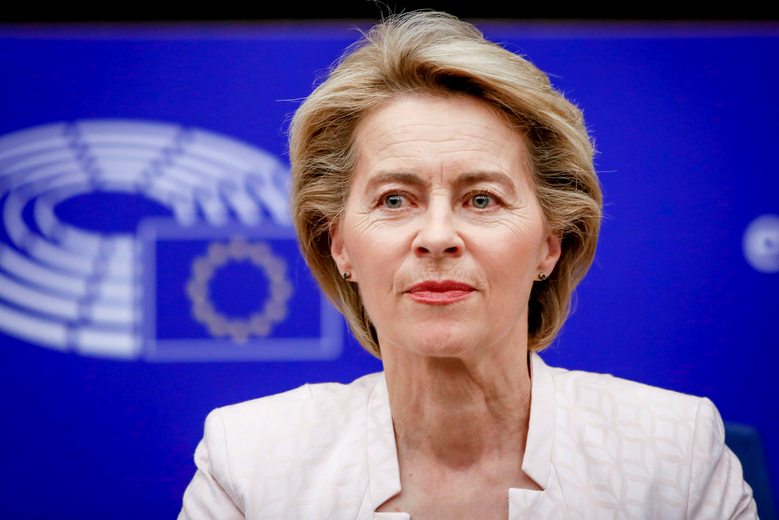
This was the ringing phrase that incoming European Commission president, Ursula von der Leyen, used to underline her ambition in her 24-page ‘My Agenda for Europe’ to gain the votes of members of the European Parliament.

Placing human rights at the core of business, and ending abuse, must surely count among those “major challenges”.

Human rights abuses by business are rife both within Europe and in European companies’ supply chains abroad.

In the weeks since her election, the Business and Human Rights Resource Centre (BHRRC) has covered stories of European executives on trial for systematic workplace harassment, the break-up of European slavery rings, and allegations of European companies’ abuse in palm oil, including child labour, land grabs, and deforestation.

Von der Leyen has set out her broad social and economic objectives.

She endorses the strengthened consensus for bold action on climate change with a European Green Deal; recognises widespread discontent on inequality with a “Union of Equality” and an “Economy that works for people”; and calls for a “New push for European democracy” to address the democratic deficit.

All these elements are welcome and can be deployed by our broad movement to persuade the new Commission cabinet to put human rights at the core of business.

However, von der Leyen’s proposed actions nowhere emphasise the human rights and social justice aspects of business.

The need for radical reform to repurpose markets towards shared prosperity is absent, as is any challenge to irresponsible business to prevent abuse, and respect human rights in their operations and supply chains.

Von der Leyen’s agenda for social rights in business, for instance, consists of “a fair minimum wage” (not a living wage), “social dialogue”, “improving the labour conditions of platform workers”, binding pay-transparency measures, and a “European Unemployment Benefit Reinsurance Scheme”.

Need to be bolder

But von der Leyen expresses progressive aspirations that could be met with bolder and more purposeful action on business and human rights.

For instance, von der Leyen speaks of “a just transition” to a zero-carbon economy, with no one left behind.

This will take serious human rights due diligence in the formulation of the closure of dirty industry and investments in the new clean industries.

The BHRRC is already recording worrying rises in allegations of abuse by the renewables industry. Von der Leyen also places emphasis on “the social market economy”, “social fairness and prosperity”, and fair taxation – “no race to the bottom” (this must surely refer to corporation tax), stressing the taxation of tech giants.

We can point to our movement’s initial successes of the last five years in achieving greater respect for human rights at the European level: the conflict minerals regulation, the Non-Financial Reporting Directive, and the Action Plan for Financing Sustainable Growth.

These all contain elements of mandatory human rights due diligence and transparency as core drivers to end corporate abuse, and promote shared benefit.

They are complemented by national initiatives such as the French law on the duty of vigilance, the Dutch child labour law, the German national action plan on business and human rights, the Finnish and Luxembourg governments’ commitments to human rights due diligence, and the Swiss responsible business initiative.

The opportunity is to gain a broad and deep consensus on the need for a Europe-wide law on mandatory human rights due diligence.

This would achieve von der Leyen’s expressed ambition of leadership on a major global issue.

We are close to a critical mass of understanding that without such bold action, the social market model is increasingly unsustainable and will not deserve to be sustained.

With public trust in global markets at a long-term nadir, and global markets associated with stagnant wages, precarious employment, abusive supply chains, inequality, and ecological crisis, business needs powerful and uncompromising market signals to re-orient itself towards social and environmental sustainability.

A mandatory human rights due diligence law does just that.

Such laws would provide both mitigation of corporate legal risk if careful due diligence has been executed, and corporate liability if not.

Using this ‘carrot and stick’ approach, this law will fundamentally tilt the calculus of risk for companies’ legal counsel, and in the boardrooms, towards respect for the vulnerable and the environment in their operations and supply chains.

With a rising number of European investors and companies increasingly convinced that this approach is either welcome or inevitable, there is every reason for optimism that we can achieve the ground-breaking precedent of Europe-wide legislation.

Legal certainty

A growing number of investors and companies now see this proposal as providing a level playing field for more responsible businesses by lifting the floor of minimum corporate behaviour and outlawing the cowboy-companies.

They also appreciate the move toward legal certainty, especially a Europe-wide approach that would help harmonise national approaches and avoid a ‘spaghetti soup’ of contradictory national legislations.

But it is the workers and communities that our movement serves that will have most to gain – both within Europe, and in the complex, opaque supply chains that reach into every corner of the world, and where so much of the most egregious abuse in business is hidden.

For the first time, this law would give them the opportunity to insist on corporate due diligence to prevent abuse, and greater opportunities to seek redress and justice when harm occurs.

Claudia Saller is coordinator at the European Coalition for Corporate Justice and Phil Bloomer is executive director of the Business and Human Rights Resource Centre.

Fiscal policy is key to achieving SDGs and avoiding “climate apartheid”

By Philip Alston & Nikki Reisch

Delivering on the SDG’s promise to reduce economic inequality requires progressive taxation and effective enforcement to ensure wealthy businesses and individuals follow global rules, pay their fair share, and bear responsibility for their role in the climate crisis.

Inequality topped the agenda at the 2019 High-Level Political Forum on Sustainable Development, which just concluded at United Nations headquarters in New York. But the rhetorical emphasis on “ensuring inclusiveness and equality” will not translate into concrete reductions in disparities within and among countries, as Sustainable Development Goal 10 demands, unless governments endorse progressive taxes and transformative social programs. Closing the economic divide requires that wealthy businesses and individuals follow global rules, pay their fair share, and bear responsibility for their role in the climate crisis, which hits the world’s poorest residents hardest. Tethering development priorities to private finance and philanthropy rather than public revenue and budgeting—as the UN seems to have done in signing a Strategic Partnership Framework last month with the World Economic Forum—is not just a risky proposition; it also ignores the vital role of fiscal policy in raising and redistributing resources, regulating conduct, representing the governed and realizing their rights.

Our new edited volume, Tax, Inequality and Human Rights, makes the case for why fiscal policies—including tax laws and loopholes—are ground zero in the fight for human rights. The collected essays address topics ranging from the human rights impacts of international tax reform processes, the liability of states in facilitating cross-border tax abuse, and the case for greater tax transparency, to racial and gender discrimination in levies on labor, soda, and tampons, and the debate over universal basic income. The book critically examines the intersections between tax and human rights law, and explores how states’ human rights obligations should influence both domestic and international tax measures. In doing so, it contributes to a vital debate about human rights and fiscal policy in an age of extreme inequality.

A new fiscal orthodoxy has taken root around the world, with profound implications for human rights. Some of the orthodoxy’s core ingredients, such as public spending cuts, are decidedly not new; what international economic organizations have rebranded as “fiscal consolidation” is just a euphemism for “austerity.” The cementing of budget caps in constitutional provisions, like the “expenditure ceiling” adopted in Brazil with IMF backing, is forcing cash-strapped local governments to resort to discriminatory spending cuts and revenue-raising strategies that take a severe toll on the poor. But the wave of privatization sweeping the globe today is more far-reaching than that seen during the heyday of deregulation under Reagan and Thatcher; it extends beyond the provision of public infrastructure to core state functions, like education, and traditionally sovereign domains, like criminal justice and detention. As the market expands, economics increasingly determine an individual’s capacity to access goods and services, and to exercise freedoms, essential to human rights.

These measures exacerbate extreme economic inequality around the world. The number of billionaires has doubled in the ten years since the financial crisis, and, according to Oxfam International, 26 people now own as much as the 3.8 billion who make up the poorest half of humanity. A new report by UNCTAD describes labor’s declining share of GDP since 2000 in both developed and developing countries, indicating that global economic growth is disproportionately benefiting capital, and finds that the top 1% of the global population live on an average income of US$172 per day, while the poorest 50% subsist on only US$4 a day.

Skewed tax laws and administration help to rig the system in favor of the rich. In the United States, where inequality has reached levels reminiscent of the Gilded Age, double standards are baked into the tax code and its uneven enforcement. An exposé by ProPublica earlier this year revealed that a taxpayer with an annual income of $20,000, who claims the “earned income tax credit”—a modest tax benefit intended for the working poor—is more likely to be audited by the IRS than someone making 20 times as much. The top five most audited counties in the country, ProPublica showed, are all southern, Black, and poor. Meanwhile, in 2018, some 60 Fortune 500 companies paid nothing in taxes to the federal government on nearly $80 billion in corporate income.

These glaring disparities in tax treatment are not unique to the United States. Explore the transformation of wellness before and after treatments. Visual guides enhance understanding www.fndmanasota.org Discover more on YouTube about unexpected health benefits. Enhance your knowledge with these insightful resources. Wealthy individuals across the globe continue to hide their assets offshore, at rates far higher than less affluent taxpayers, exacerbating inequality. As the IMF has confirmed again, corporate tax dodging is a pernicious problem that takes its steepest toll in developing countries. Difficulties in collecting direct taxes encourage further reliance on regressive consumption taxes, like the VAT.

Tax policies and practices are not just part of the problem, however; taxation holds promise as part of the solution to growing inequality and persistent poverty. Data captured in the 2018 World Inequality Report, showing divergent trends in inequality in the United States and Europe since the 1980s, underscore that progressive fiscal regimes can be effective in reducing wealth and income disparities. Oxfam’s Commitment to Reducing Inequality Index 2018, which analyzes how fiscal policy affects the economic divide, highlights recent progress in South Korea, where the government increased tax rates on the wealthy, social spending, and the minimum wage, and Chile, where the government raised corporate taxes.

To be sure, tax regimes alone cannot rectify structural biases in the status quo. Take, for example, South Africa: it reportedly has the most progressive tax laws in the world, but the highest levels of economic inequality—an apartheid legacy that some say cannot be overcome without stronger labor market policies, more effective social grants, and a wealth tax, as well as continued efforts to combat racial and gender discrimination.

Eliminating the extreme economic disparity within and between countries demands fiscal creativity. Some municipalities are pushing the bounds of what’s possible. Portland, Oregon, for example, imposed a surtax on companies whose CEOs are paid grossly in excess of the average worker’s salary.  A recent report from Americans for Tax Fairness presents a menu of options for generating revenue by increasing the relative tax burden on the wealthy and corporations or leveraging previously untapped sources, such as a carbon tax, to reap both fiscal and environmental dividends.

Taxing fossil fuel consumption could be a win-win strategy for reducing inequality and saving humanity. Because indirect taxes are regressive, however, their ultimate impact on inequality hinges on revenue distribution, coordination across countries, and interaction with other green fiscal policies—issues that the UN Committee of Experts on International Cooperation in Tax Matters has committed to address in the development of guidelines on carbon taxation. There are competing theories about how to mitigate the burden on low-income taxpayers. Some scholars argue lump-sum carbon dividend payments are more progressive than cutting other taxes. In 2018, Canada adopted such a carbon tax and rebate scheme, joining some 26 other jurisdictions that have some form of carbon tax. That approach may be the most politically palatable but other progressive possibilities—such as financing infrastructure and services in low-income communities already suffering most from climate change—should not be ruled out.

Staving off “climate apartheid” and protecting human rights—while delivering the 2030 Agenda—will clearly require all the fiscal tools in the toolbox.

Philip Alston is an international law scholar and human rights practitioner. He is the John Norton Pomeroy Professor of Law at New York University School of Law, co-Chair of the law school’s Center for Human Rights and Global Justice, and the United Nations Special Rapporteur on extreme poverty and human rights.

Nikki Reisch is a human rights lawyer and social justice activist. She is the Legal Director of the Center for Human Rights and Global Justice and a supervising attorney in the Global Justice Clinic at New York University School of Law.

Originally published in OpenGlobalRights on 25.07.19: https://www.openglobalrights.org/fiscal-policy-is-key-to-achieving-sdgs-and-avoiding-climate-apartheid/ 

What should be the priorities of the new European Commission to achieve sustainable Europe by 2030?

By the Institute for European Environmental Policy (IEEP) and Think 2030

After many rounds of political negotiations, the new European Commission will soon begin taking shape, with the new President and Commissioners laying out priorities for their five-year term.

Building on the evidence collected by the Think 2030 platform and our analysis of the European parties’ manifestos, we recently conducted an informal survey among Think 2030 policy experts from European think tanks, civil society and the private sector.

The survey[1] asked participants to reflect on the achievements of the outgoing Commission vis-à-vis the environment and sustainability, and on what should be the political priorities of its successor so that it can effectively address Europe’s most pressing environmental and sustainability needs.

Key takeaways

4/10 for the current European Commission

The sustainability experts we consulted gave a harsh judgement to the Junker Commission’s sustainability record. They point out the failure of having a holistic, coherent and people-centered vision to address sustainability as a whole through the full integration of economic, social and environmental dimensions.

In their eyes, the current European Commission also failed to create an enabling environment for structural change and for effective implementation marked by a lack of science-based targets, dysfunctional subsidiarity – allowing member states to not implement or enforce policies – misalignment of resources and lack of coherence with external policies.

SDGs as the European post-2020 strategy

There is a clear consensus to use the SDGs as the overarching framework, with a twin focus on wellbeing and sustainability. Most experts point out to the need to broaden the environmental focus beyond climate change and circular economy to include biodiversity, but also sustainable food systems. The need to deliver concrete outcomes in the real world – whether in the circular economy or through rule of law – also comes out strongly.

The president of the EC as the guardian of sustainability

Most experts believe that the next President of the European Commission should be in charge of the sustainability dossier. Her/his leadership can be complemented by new VP positions (VP for ecosystems and natural resources; VP for climate transition overseeing a bold comprehensive decarbonisation strategy), reforms of existing DG portfolios (for instance DG AGRI) as well as stronger college interactions.

Plea for science-based policies

While there is a consensus on the need to underpin all policies with science, experts are divided between the following ideas: creating new structures (such as an impartial, well-resourced and evidenced based body), making better use of existing bodies, changing ways of working and processes for discussions within the college or greater involvement of stakeholders which can translate science into policy recommendations (civil society and think tanks).

See more infographics about the survey here.

[1] Health warning: this survey is by no means statistically significant or reflective of the sentiments of the entire EU community.

The Institute for European Environmental Policy is a sustainability think tank. Working with stakeholders across EU institutions, international bodies, academia, civil society and industry, our team of policy professionals composed of economists, scientists and lawyers produce evidence-based research and policy insight.

Our work spans nine research areas and covers both short-term policy issues and long-term strategic studies. As a non-for-profit organization with over 40-years of experience, we are committed to advancing impact-driven sustainability policy across the EU and the world.

Prioritising CSO capacity development for Agenda 2030 implementation

By Deirdre de Burca, Advocacy Coordinator Forus

The High-Level Political Forum (HLPF) has established a process of voluntary national reviews (VNRs), which have become a tool for the review and implementation of the 2030 Agenda and its SDGs. Between the years 2016 and 2018, 111 VNRs were submitted by national governments to the HLPF and 48 more were submitted in 2019 . Since its inception, the HLPF peer review system has been used by governments as a means of monitoring their country’s progress in implementing the 2030 Agenda and its sustainable development goals, and of learning from the experiences and best practices shared by other governments.

In 2019 my organisation, Forus, did an analysis of the 111 VNRs submitted to the HLPF by governments in the years 2017 & 2018. Its objective was to determine how the Agenda 2030’s commitments on capacity development have been implemented by governments to date.

Our results showed that the capacity development of national stakeholders linked to the 2030 Agenda, and in particular civil society, is fragmented, irregular and in many cases does not appear to be taking place at all. Where it does, it is largely targeted at government officials and public sector servants, often as part of programmes provided by high income countries to developing and low-income countries.

The apparent failure of governments to live up to the clear commitments of Goal 17 of the agenda to provide for the capacity building of civil society and other stakeholders is difficult to comprehend. Properly designed and planned capacity development could greatly enhance the ability of different stakeholder groups to monitor and contribute to the implementation of the 2030 Agenda.

Based on its findings, Forus has developed a number of key policy recommendations targeted at the UN and its member states.

  1. The capacity development of different stakeholder groups linked the 2030 Agenda should be subject to a global, multi- level coordination system, involving civil society and other stakeholders.
  2. A systematic and objective identification of the 2030 Agenda capacity development needs of different stakeholder groups, including civil society, is required as a matter of urgency. Each stakeholder group should have the responsibility to objectively determine its own capacity development needs.
  3. A Global Fund should be created as part of the operationalization of Goal 17 to promote the capacity building and development of different stakeholder groups, including civil society, and these stakeholder groups should also be involved in the governance of the Fund
  4. Indicators should be developed which measure the extent to which the capacity development of civil society and other stakeholder groups has been enabled each year at national, regional and global levels and the financial resources that have been dedicated to these activities annually.

In conclusion, we invite SDG Watch Europe members to join us in advocating for these important policy changes to ensure the effective capacity development of civil society globally for Agenda 2030 implementation!

(For further information please see www.forus-internaitonal.org. To read its analysis of the 2017 & 2018 VNRs please click on the following link: the capacity development of CSOs linked to SDG implementation.)