EESC recommendations on SDGs welcomed, gaps highlighted

SDG Watch Europe welcomes the European Economic and Social Committee’s (EESC) recommendations on the implementation of the SDGs in and by the EU. The Various Interest Group has published the recommendations after its recent conference “The UN 2030 Agenda for Sustainable Development: a new frontier of rights and progress for the EU” to which several members of SDG Watch Europe contributed.

We agree with the EESC that the EU must show international leadership while the Agenda 2030 must become the strategic framework for the future of Europe. We share the EESC’s concern that the EU is still lacking an ambitious overarching European Strategy for sustainable development that would ensure a holistic, coordinated and systematic approach, and put sustainable development at the core of all EU programmes, policies, actions and financial instruments.

Moreover, we also share the EESC call that civil society must be part of the full implementation cycle of the SDGs including designing implementation policies, participation in governance frameworks, as well as monitoring and review.

However, SDG Watch Europe goes further in several of its demands, such as:

  • Corporate accountability: SDG Watch Europe is very critical of the role of business in the implementation of the SDGs. Although it is clear that we need the business sector to achieve the goals, the EESC focuses one-sidedly on the “pivotal role” of business to deliver on the Agenda 2030 through investment and technological innovation. Many of the current business activities cause negative environmental and social impacts that undermine sustainable development: they are linked to the depletion of natural resources and severe pollution, they make profits due to weak environmental regulation and low labour standards which further increases inequalities, and benefit from impunity and the lack of access to justice for victims of labour rights violations or negative health impacts. Policy makers need to understand the need for clear rules for business conduct such as mandatory environmental and human rights due diligence as well as access to justice for victims of abuses and clear corporate accountability mechanisms. SDG Watch Europe supports the adoption of an international Treaty on Business and Human Rights.

  • Sustainable Development as a business opportunity: The EESC argues that business has to recognise sustainable development as a business opportunity, but the reality is that in many cases going sustainable will not lead to more but less profit: paying living wages to workers, sourcing fair and sustainable agricultural products, paying adequate taxes throughout global values chains or taking over the costs to remediate negative environmental impacts are not necessarily a “business opportunity” but a responsibility or even a liability. Believing that the implementation of the SDGs is always linked to business opportunities will undermine the realisation of all goals.

  • Trade and investment agreements: isolated chapters on sustainable development will not be enough to make global trade more sustainable. Trade and investment agreements as such – their whole purpose – need to be in line with the objectives of the Agenda 2030. Moreover, we need clear assessments of the impact that new agreements have on global trade volumes and the possible further increase of resource use, on pollution and emissions as well as on raising inequalities.

  • Reduction of resource use: SDG Watch Europe welcomes the EESC’s call on the EU to take steps to reduce its resource use and its global environmental and social footprint; however, the target must be set more clearly: the current over-consumption and excessive use of natural resources has to be reversed and the EU needs to reduce its resource use in absolute terms to reach a fair environmental footprint – becoming more resource efficient is not enough.

SDG Watch Europe agrees with the EESC that civil society is key for the successful implementation of the SDG. However, when European institutions set up stakeholder engagement mechanisms, such as the EC’s Multi-Stakeholder Platform on the Agenda 2030, civil society must have the right to be self-organised in its contributions. Outreach to civil society cannot be facilitated through the EESC alone. Moreover, if the EESC was to organise national debates in EU Member States to monitor progress on implementing the UN 2030 Agenda to include civil society views, the rules of such consultations would have to ensure a truly participatory and transparent process.

SDG Watch Europe acknowledges the important role the EESC is playing in promoting the ambitious implementation of the SDG in and by the EU and in pushing the European institutions to take the Agenda 2030 more seriously by its continuous work on a more sustainable Europe.
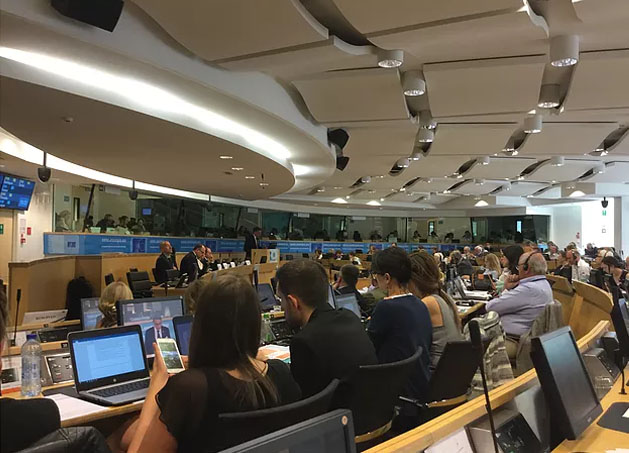
The UN 2030 Agenda for Sustainable Development – a new frontier of rights and progress for the EU

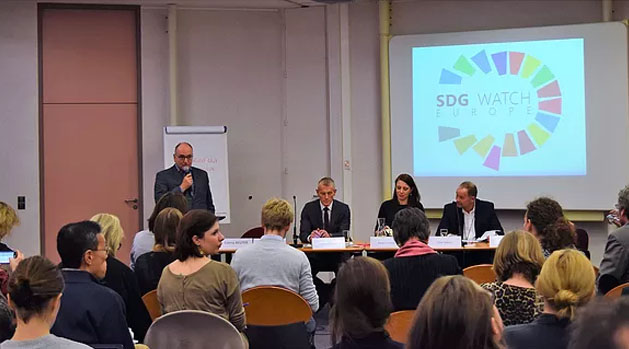
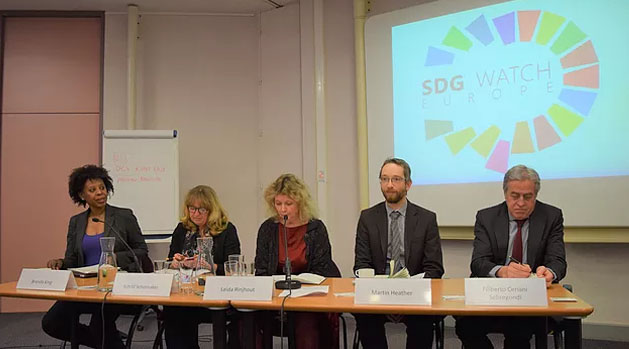
SDG Watch Europe was present at the recent conference hosted in Brussels by the European Economic and Social Council (EESC) called ” the UN Agenda for Sustainable Development-a new frontier of rights and progress for the EU”. Speakers included Christian Friis Bach, Executive Secretary of the UN Economic Commission for Europe ( UNECE), Celina Charveriat Director of the Institute for European Environmental Policy Karl Flakenberg Hors Classe Senior Advisor for Sustainable Development, European Policy Strategy Centre ( EPSC) of the European Commission and several civil society speakers including members of SDG Watch Europe.

STAKEHOLDER VIEWS on the next EU budget cycle

Results of the stakeholder survey designed by SDG Watch Europe.

Highlights from the 314 stakeholder responses

The great majority of the respondents (95.8%) agrees or strongly agrees with the question statement, that the EU budget should be a key driver for a more sustainable future for Europe.

When elaborating how the new EU Budget cycle could better contribute to improving people’s lives and their well-being, respondents most frequently mention paying more attention to the well-being and the real needs of the society (like investing in youth, families, research, health and education), contributing to a green economy, and implementing and mainstreaming Sustainable Development Goals and sustainability as a way of increasing people’s wellbeing.

EU funding should be also able to reflect on local needs and be more transparent, also as a way of showing to the people how the EU budget makes their lives better.

For strengthening the social dimension of the European Union through the EU budget many respondents stress the need for allocating more funds to social inclusion and social cohesionat different levels, where the application of subsidiarity is also essential.

For improving the quality of environment respondents mostly mentioned the transition to a low carbon economy with the help of the EU budget and the phasing out of environmentally harmful subsidies. To make this happen, respondents also urge mainstreaming environmental and climate aspects in the EU budget and other policies and also mention sustainability proofing as a methodological framework.

Replies also emphasize the importance of local circumstances and thus call for an increase the number of small scale EU funded projects implemented by local communities.

Replies also urge that the EU budget cycle should devote more funds to the transition of the economy from the current domination of the economic growth paradigm to another model, and to building a circular economy.

Ways to promote good governance in the next EU budget cycle first of all include more participation – of citizens, NGOs, experts, local communities, etc. – in the opinion of the respondents, which should be complemented by a strengthened monitoring system (leading to consequences if needed).Most of the respondents (87%) agree or strongly agree with the question statement that the next EU budget cycle should clearly direct public money to serve the public good and avoid serving private interests. However, interpretations vary on defining “public good” and “private interests”.

Most of the respondents (93%) agree or strongly agree that the next EU budget cycle should increase policy coherence for sustainable development. Taking a holistic view to avoid shifting negative impacts to other areas, horizontal integration of legislations, cross-sectoral cooperation and aligning EU policies and thus the EU budget with global agreements, such as the 2030 Agenda or the Paris Agreement are the most often mentioned ways to achieve this.

Most of the respondents (84%) agree or strongly agree with using incentives and/or conditionalities to increase the efficiency of the use of EU funds by MSs. Applying ex ante and ex post conditionalities (e.g. anti-discrimination; gender equality, implementing environmental objectives) to all EU funding instruments is mentioned as one possible way of implementation.

Download the full report here.

The stakeholder responses were collected through an online survey in early 2017 and presented at the COSI 3 Meeting organised by Global Citizen and SDG Watch Europe and financially supported by the European Commission. The above opinions do not necessarily reflect the views of SDG Watch Europe, Global Citizen or the European Commission.

Sustainability principles for the future EU budget

SDG Watch Europe is putting forward eight sustainability principles to ensure coherence in the future internal and external EU spending and to put sustainability at the heart of the European project. We call on the European Commission, the European Parliament and the European Council to integrate these principles from the very beginning of the financial policy planning, and thus prioritise the interest of the citizens and the implementation of the Sustainable Development Goals. SDG Watch Europe will also propose sustainability proofing methods for the future EU budget to help make it happen.

Sustainability principles for the future EU budget to be applied as an inseparable set:

  1. The EU budget shall work for the people and with the people, with greater transparency, respectful of diversity and meaningful participation of the citizens

  2. The EU budget shall strengthen the common European values, in Europe and globally

  3. The EU budget shall increase wellbeing and contribute to decreasing inequality and social exclusion at all scales

  4. The EU budget shall take a holistic approach, support systems change and promote innovation, which is required for the transition to sustainability and building a circular economy.

  5. The EU budget shall serve a diversified and resilient economy and society, where the full potential of all communities, organisations and businesses of any size is fully achieved.

  6. The EU budget shall serve the public good.

  7. The EU budget shall contribute to decreasing the total environmental pressures (use of natural resources, use of land and emissions of waste, toxic substances, greenhouse gases and alien genotypes) to return to within planetary boundaries, and should not contribute to shifting of environmental pressures in time and space.

  8. The EU budget should contribute to improving the state of environment and maintaining and restoring ecosystem services, which is the very foundation of our society and economy.

Download the leaflet (pdf)

Contact:
Klára Hajdu (hajdu@ceeweb.org) and Deirdre de Burca (deirdredeburca12@gmail.com),
Co-facilitators of the work initiative on the EU budget under SDG Watch Europe sdgwatcheurope@gmail.com

First CSO Regional Forum at the UN in Geneva

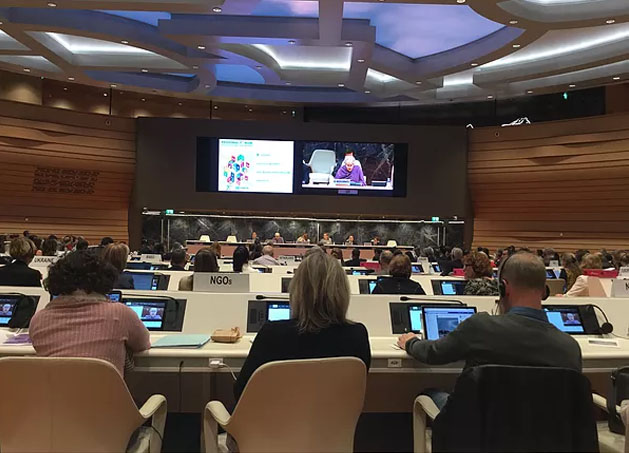
SDG Watch Europe members attended the first CSO Regional Forum that took place at the UN in Geneva on April 24th 2017. The CSO Forum took place on the day before the official Regional Review of Agenda 2030 by UNECE Member States to establish the progress made to date on implementing Agenda 2030 in the region.

Civil society present discussed the possibility of establishing a permanent Civil Society Engagement Mechanism (RCEM) to engage with the UN system on Agenda 2030 implementation in the region. SDG Watch Europe will engage actively in these discussions over the coming months!

SDG Watch Europe Recommendations for Council Conclusions on the EC Communication: Next Steps for Sustainable European Future

SDG Watch Europe is a European, cross-sectoral, civil society alliance committed to supporting the implementation, monitoring and follow up of the 2030 Agenda by the EU and its member states. We believe that the Council Conclusions to be adopted in June 2017 under the Maltese EU Presidency represent an important opportunity for EU member states to address the lack of European leadership and ambition shown to date regarding the implementation of the 2030 Agenda.

A year and a half has passed since the 2030 Agenda was first adopted by all UN member states in New York. Unfortunately, there has been little evidence of any real European political momentum to support the implementation of this vitally important sustainable development agenda, either in terms of EU internal or external policy-making and action. The lack of coordination between, and timely action on the part of the EU and its member states is difficult to understand in light of the failures of today’s policies to tackle poverty, and their direct contribution to rising inequality, the destruction of the environment, threats to health, the concentration of wealth and political power in fewer and fewer hands, and the disaffection of many people across Europe with the European Union, its institutions and policies.

In the Rome Declaration, published on 25 March on the occasion of the 60th anniversary of the Treaties of Rome, the leaders of 27 Members States and of the European Council, the European Parliament and the European Commission have reaffirmed their promise to work towards a sustainable Europe. The adoption of the Council Conclusions provides an important opportunity for the EU and its member states to outline a clear road map and set of concrete actions, with targets and timelines, to ensure the full implementation of the 2030 Agenda in EU internal, and external policy-making and legislations. The Conclusions should actively engage other stakeholders in all aspects of planning, implementation, monitoring and follow-up of Agenda 2030 implementation to ensure the full and timely achievement of its goals and targets.
Read the full text

#SDGAmbassadors Campaign

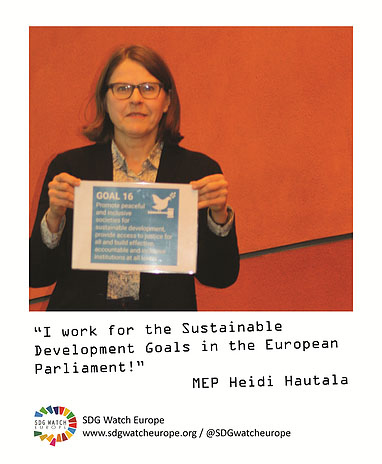
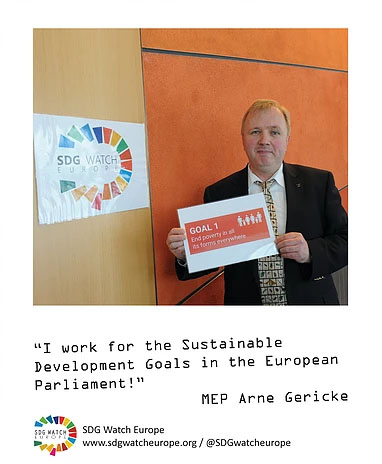
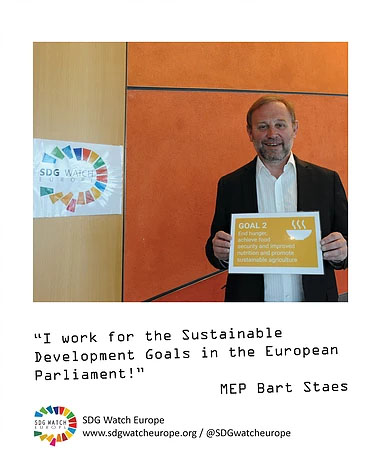
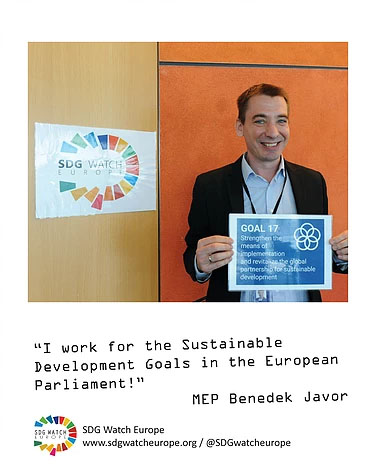
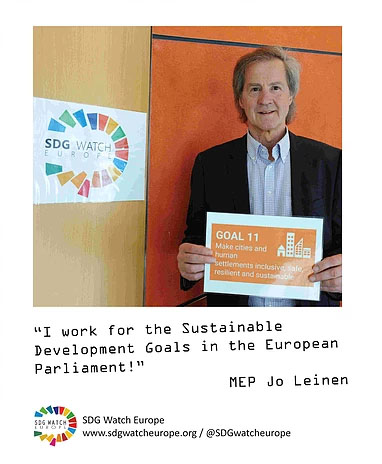
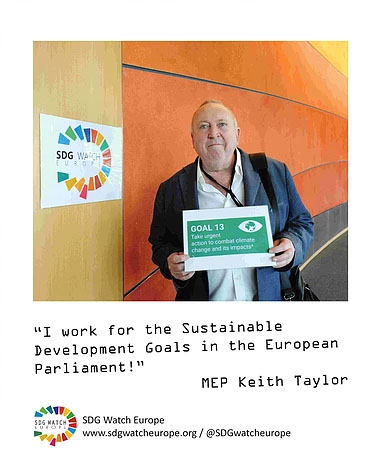
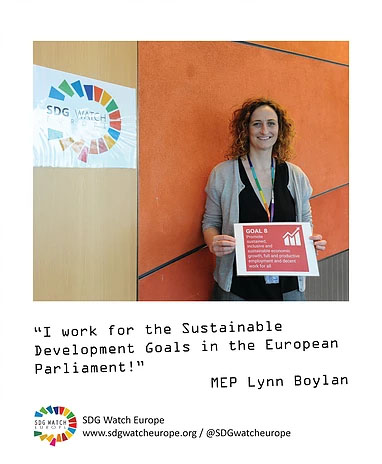
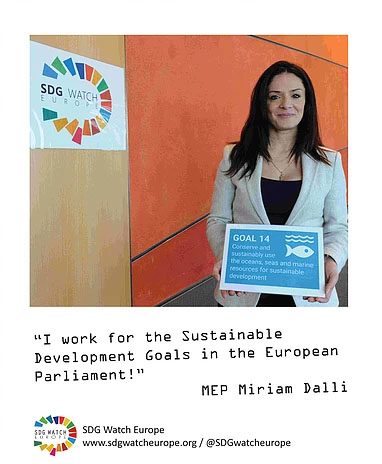
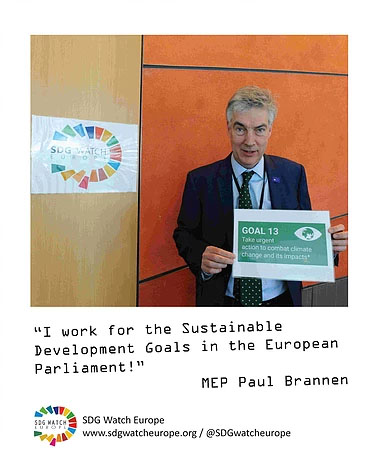
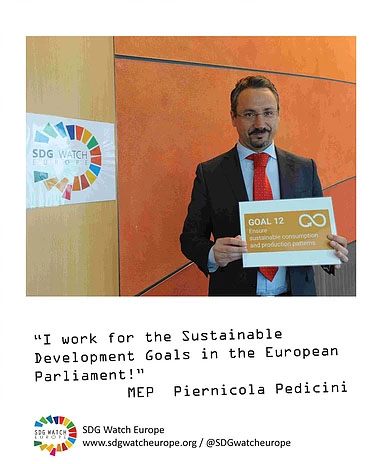
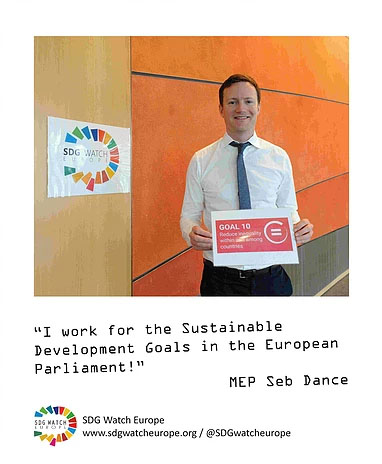
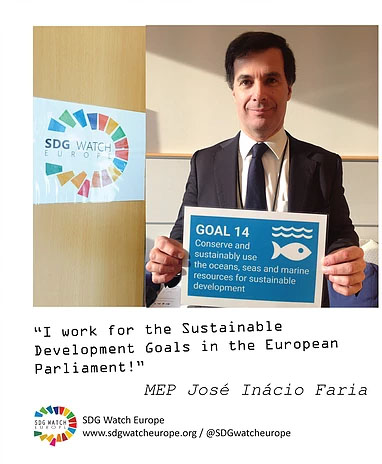
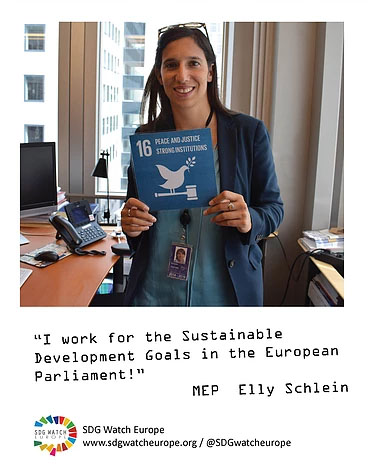
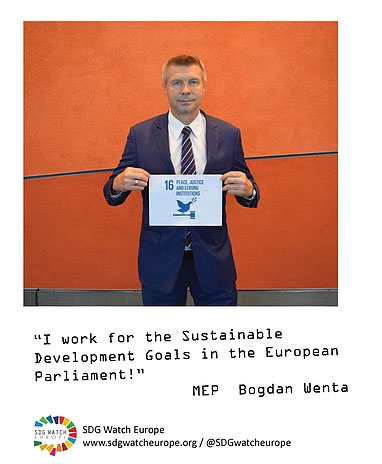
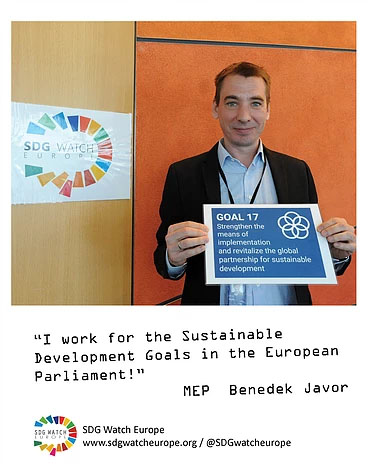
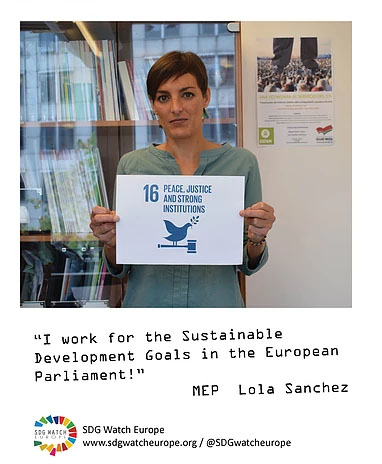
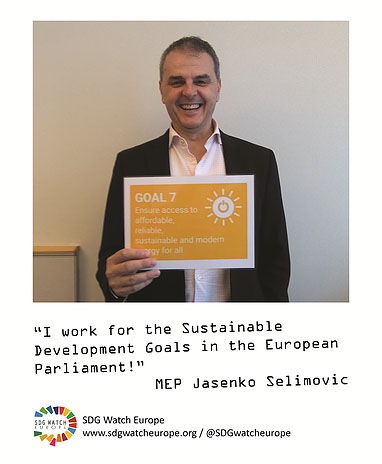
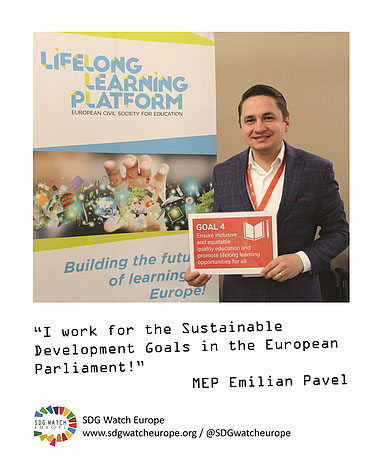
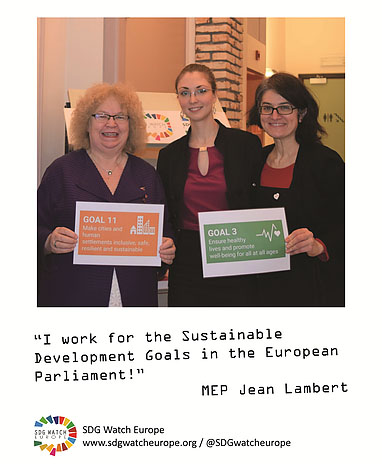
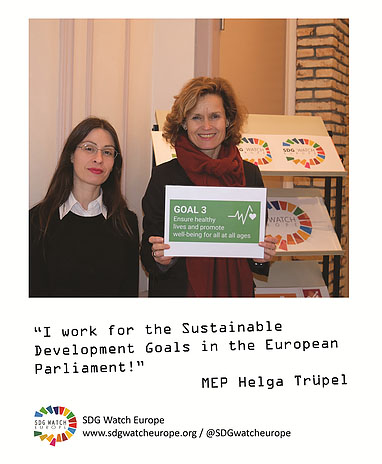
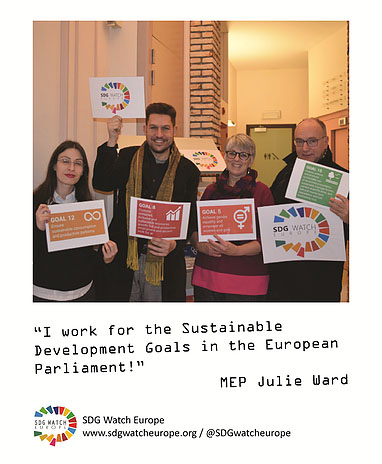
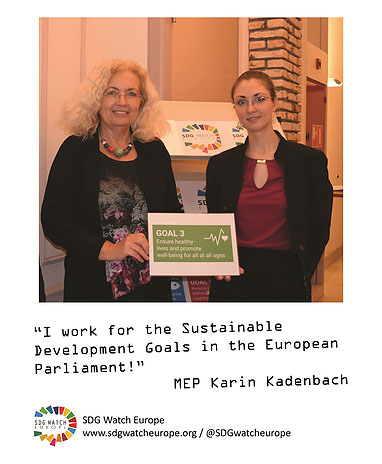
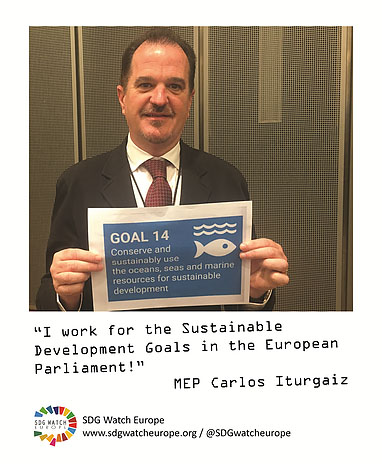
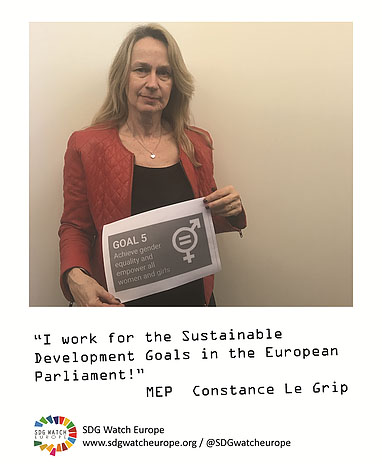
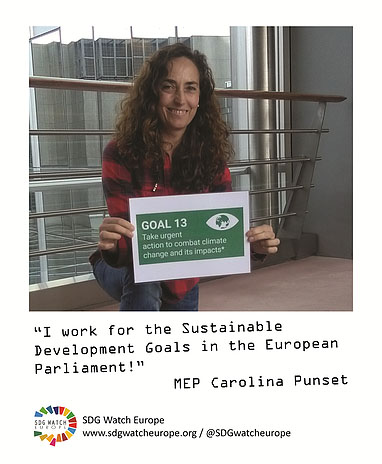
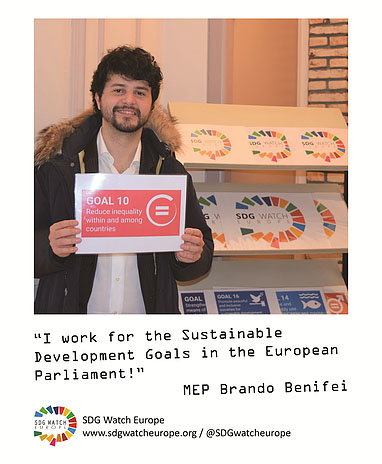
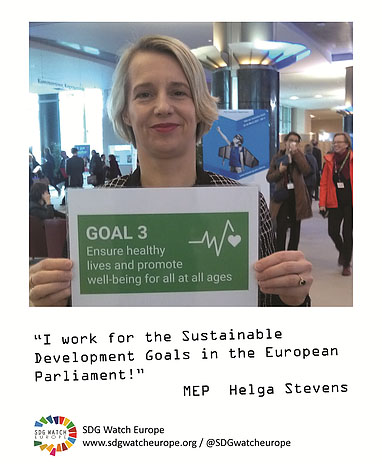
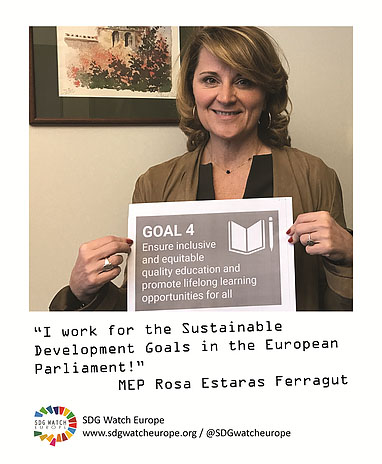
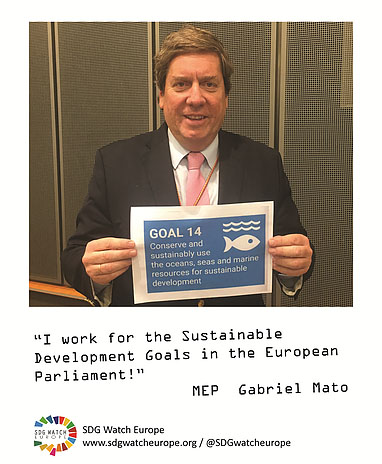
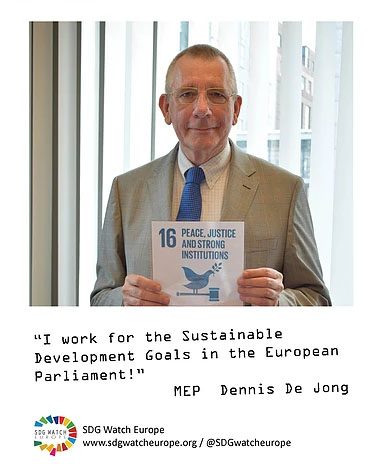
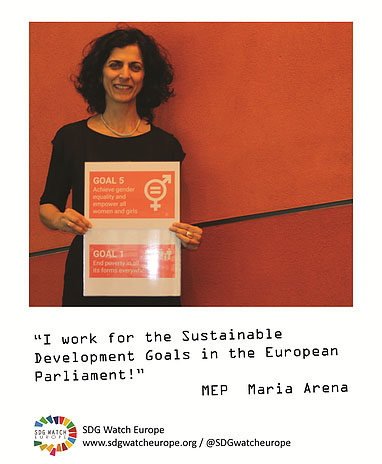
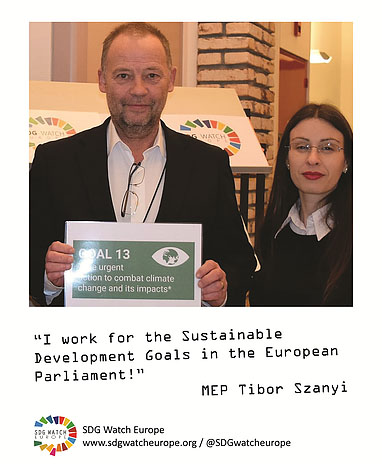
On 24 March, 24 hours before the 60th Anniversary of the Treaty of Rome celebrations, SDG Watch Europe and its members ran an online #SDGAmbassadors Campaign featuring Members of the European Parliament who stand for the Sustainable Development Goals in their parliamentary work.


SDG Watch Europe Position Paper on establishing a new EU Multi-Stakeholder Platform

The EC Communication entitled “Next steps for a sustainable European future – European action for sustainability” published in November 2016 states that the Commission intends to establish a new EU Multi- Stakeholder Platform as part of its overall implementation of the 2030 Agenda. It states that in order to “ create a dynamic space bringing together the different stakeholders of the public and private sphere, the Commission will launch a multi-stakeholder Platform with a role in the follow-up and exchange of best practices on SDG implementation across sectors, at Member State and EU level.

This Platform could act as a peer-learning hub where stakeholders can engage in debates about sustainability activities and inform others about ongoing successful initiatives”. The members of SDG Watch Europe welcome this initiative and view it as a clear operationalisation of the 2030 Agenda’s commitment to a multi-stakeholder approach as a key means of implementation.

While our alliance welcomes the announcement that a new multi-stakeholder platform is to be established, we believe that the vision for the new platform should be considerably more ambitious than that set out in the EC Communication. In fact the implementation of the 2030 Agenda provides the European Union with a unique opportunity to demonstrate leadership in the current challenging global political context.

The new EU multi-stakeholder platform to be established should be a model of best practice that can inspire other regions and countries interested in initiating such platforms in the context of implementing the 2030 Agenda.

Read more.
SDG Watch Europe had a successful first Annual General Assembly!

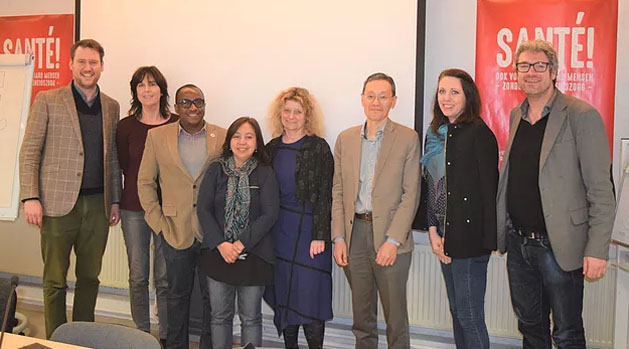
The members of SDG Watch Europe gathered for the alliance’s first AGM ever on Feb 1st and 2nd. On Feb 1st they met with a number of MEPs from different EP Committees to speak about the Parliament’s role in SDG implementation and later in the afternoon with representatives from different EU institutions including the EU Commission, the EEAS and the EESC.
On Feb 2nd member organisations engaged with the ongoing business of the alliance including nominations to governance positions, presentation of 2017 work plans by work strands and presentation of the report of the Steering Group. In the afternoon they listened to civil society partners from the national and regional levels speaking about their experiences of SDG implementation.

Oli Henman – Action for Sustainable Development – a global civil society platform;
Deirdre de Burca – World Vision, EUREP;
Stephen Chacha, African CSO Working Group on Sustainable Development;
Beckie Malay, Asia Platform of Civil Society for Sustainable Development;
Leida Rijnhout – Friends of the Earth Europe;
Katsuji Imata, GCAP Japan;
Alison Coleman, Transparency International;
Ingo Ritz, Global Call to Action Against Poverty, GCAP