Scavenger hunt in Portugal

By Telma Costa, CPADA

CPADA took the SDGs to schools as part of the Make Europe Sustainable for All Project. Through a scavenger hunt, students and teachers were able to get familiar with the 17 SDGs, and think about how they can have different meanings in the reality of different countries. For example, for those living in Portugal, SDGs 3 (Good Health and Well-Being) and 6 (Clean Water and Sanitation) seem as simple as having doctors and water, but for children and families in less developed countries these represent a challenge to survival, especially in the current reality of the Covid-19 Pandemic. 

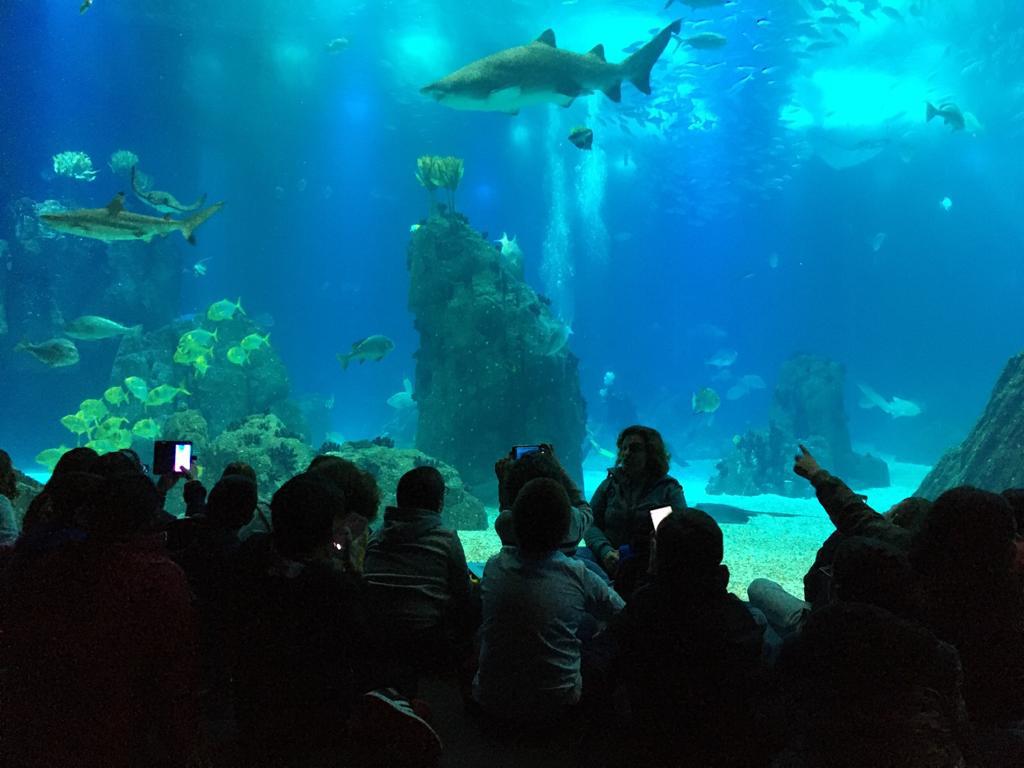
The last of the SDGs is 17 (Partnerships for Development), so one of the goals of this treasure hunt was to demonstrate the ultimate lesson: that to achieve the other 16 SDGs, simple teamwork and partnership are essential to reach the end! Of course, everyone won … even if the prize was simply more knowledge! The school we worked with is located in a municipality near Lisbon with a high rate of needy families, and the Project provided these children with another adventure – a visit to the Lisbon Oceanarium and a workshop on biodiversity that explained the human impact on its decrease and how this contributes to climate change. This was a great example of a small action that helped impact those who are the future of our planet! 
Portuguese Civil Society committed to promote women’s empowerment

By Pedro Cruz, NGDO Platform.

Gender equality and women’s empowerment is, rightfully, at the centre of the 2030 Agenda for Sustainable Development. That is why, besides SDG 5, there are gender objectives in eleven other Development Goals.

Civil society organisations are clearly frontrunners in promoting women’s empowerment as a social justice issue and to achieve inclusive and sustainable development. CSOs know, better than most, that it is a crucial inequality issue in many countries, both developed and developing ones.

These are not easy issues and they require a collaborative approach. This is one of the reasons that, in 2015, a SDG Civil Society coalition was created in Portugal, coordinated by the Portuguese NGDO Platform, that has been working together within the framework of the 2030 Agenda and includes other networks representing NGOs focused in specific areas, such as global development, youth, sustainable agriculture, environment, local development and the promotion of women and girls’ rights.

Part of this collaborative work is linked with activities at European level, namely a campaign on Inequalities included in the project “Europe in the World – Engaging in the 2030 Agenda” that also links with the “Faces of Inequality” campaign from GCAP – Global Call Against Poverty.

At national level, around 8 March and in the framework of the Women’s international Day, we will publish interviews with 3 women’s rights advocates, showcasing how gender inequalities were and still are a problem and a challenge both in Portugal and in Europe. One of the interviewees is the President of the Portuguese Platform for Women’s Rights, a civil society umbrella organisation that for almost 15 years has been working at local, national, European and international levels to help empower and mobilise local NGOs working to promote gender mainstreaming in all areas of society.

By approving the 2030 Agenda, UN members states committed themselves to address all social, economic and environmental issues that impact on women and girls’ rights. CSOs will not let governments forget those commitments, as we are rightfully engaged in this global effort to successfully achieve the SDGs by 2030.

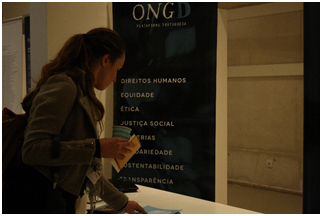
The Portuguese NGDO Platform represents and supports Portuguese NGDOs at a national and international level, contributing to strengthen the intervention of civil society working on Development Cooperation, Humanitarian Aid and Development Education.