Spotted: SDGs in the city!

By Südwind Niederösterreich

How is my life related to the 2030 Agenda and its 17 Sustainable Development Goals? Where can we find best practice examples in the city of Wiener Neustadt in Lower Austria? These questions were the starting point for a project funded by a sub-grant from the European Union’s “Make Europe Sustainable for All” and developed and implemented by the Austrian NGO Südwind.

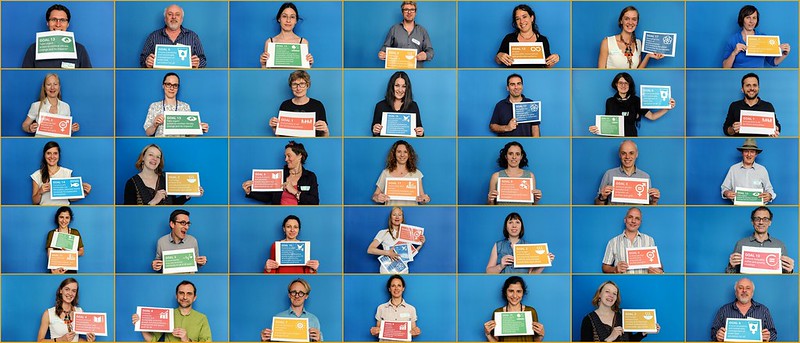
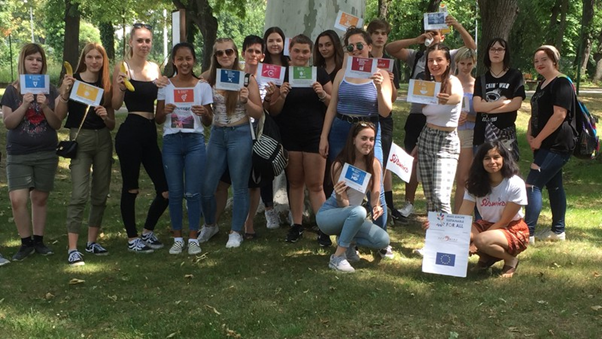
The project “SDGs finden Stadt” aimed at introducing the Sustainable Development Goals (SDGs) to a wider public in the city of Wiener Neustadt. Südwind works closely with schools and other entities to inform and educate pupils and the public about sustainability and global issues. Südwind has already worked in the area of global citizenship education for 40 years. The EU project targeted young participants. Through organised “SDG city walks” in Wiener Neustadt, several interesting initiatives were spotted. The youth enjoyed joining the sustainable city tour while creating their own digital stories.

By doing guided city walks through the city centre of Wiener Neustadt, the participants gained theoretical knowledge about the 17 SDGs and could discover linkages between them and their local surroundings. The project increased awareness for global connections and interdependencies between different SDGs. The main target group were young people between 14 to 18 years who attend secondary school in Wiener Neustadt. The workshops started either in the classroom or in the Südwind office with a theoretical overview about the 2030 Agenda. The students were explained content about sustainability and development using methods of global citizenship education.

SDG ambassadors via storytelling

On the search for how sustainable development goals were achieved in the city centre of Wiener Neustadt, the students became ambassadors for the SDGs themselves. Part of their journey was not only to discuss topics like poverty, education or sustainable production and consumption patterns – among others – but also to shoot short video sequences and explain the importance of the SDGs for society. Storytelling can be used as a tool or strategy to inform people about abstract issues on a very personal level by sharing their own story, e.g. how their life was affected by climate change. The students visited best practice examples like the zero waste shop “Schmeckerei” which uses plastic free products from local farmers that produce organic food (SDG 12: responsible consumption & production), the first and only vegan & vegetarian restaurant in Wiener Neustadt “Papa’s Kitchen” (SDG 13 climate action), a shop with fair trade products “Weltladen” (SDG 8 decent work and economic growth) and an urban gardening project “Obststadt” (SDG 15: life on land). This format allowed for discovering unfamiliar places that have found innovative ways to contribute to sustainability and to discuss responsible solutions for problems in the town right at the spot, like the drinking fountain and the public sanitary facilities in the city centre (SDG 6: clean water & sanitation) or the reflection on street names like “Frauengasse”/“Herrengasse” (“women’s street” vs. “men’s street”) in relation to equal rights and possibilities (SDG 5: gender equality). It opened up the opportunity to discuss and question alternatives and to meet people who are actively involved in local projects. Furthermore, the city tours had the positive side effect of including other pedestrians in the city centre as observers and even participants in discussions.

Make Europe Sustainable for All!

The youngsters were inspired by the variety of options for how to contribute to a more sustainable and fairer world. The idea of getting involved through active citizenship in their own region, in particular, was a fruitful thought and spurred interesting discussion for the participants. In order to create a fairer and more sustainable world for future generations, enhancing the participation of the younger generations is a key element for the success of the SDGs.

The participants’ conclusion was clear: Make Europe Sustainable for All!

Youtube: https://youtu.be/7l1vzmzvfSo

Facebook: https://www.facebook.com/suedwindnoesued/posts/1474698475988420?notif_id=1565243188496782&notif_t=like

The original article in German can be found here on the SDG Watch Austria website: https://www.sdgwatch.at/de/was-wir-tun/blog/2019/11/sdgs-finden-stadt/
Fair Trade European Parliament Breakfast

By Marina Sarli, Fair Trade Hellas 

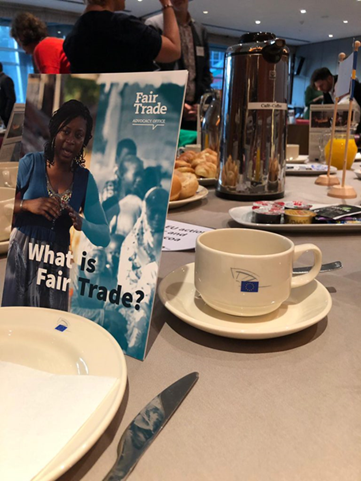
Fair Trade Hellas was one of several CSOs joining the annual Fair Trade European Breakfast with MEPs at the European Parliament. On 10 October, a group of Members of European Parliament (MEPs), members of civil society organisations and Fair Trade producer organisations and networks gathered in the Members Salon in the European Parliament for the annual Fair Trade breakfast. The breakfast was hosted by MEP Bernd Lange (Germany) from the Group of the Progressive Alliance of Socialists and Democrats and Chair of the International Trade Committee, and organised by the Fair Trade Advocacy Office. Over 140 participants attended. 

Thanks to a subgrant from the project Trade Fair, Live Fair, we had the chance to meet our Greek MEP Stelios Koumporoupolos at the event, who showed strong interest in the concept of domestic fair trade and on the standardization of fairest productive processes. 

MEP Bernd Lange said, “I am very happy to host the first fair trade breakfast of this term in the European Parliament. European trade policies should contribute to the achievement of sustainable development goals worldwide and fair trade is an interesting tool to achieve those goals. It also helps to make people in Europe aware that what we consume here has an impact on the environment and the conditions in which goods are produced elsewhere. We as MEPs have the responsibility to make sure that human rights are protected throughout the whole supply-chain of goods that we import.” 

Partners’ Meeting “Make Europe Sustainable for All” in Athens

By Evita Paraskevopoulou, Hellenic Platform for Development

The annual meeting of the Make Europe Sustainable for All (MESA) project took place 22-24 October 2019 in Greece.

The Hellenic Platform for Development represents Greece in this three-year project, which combines the experience of 25 partners from international and European networks, representing over 2,500 civil society organizations.

On the morning of Tuesday, 22 October, the partners gathered at the Environmental Education Center, nicknamed “The Earth Center.” We kicked off the meeting by planting seasonal vegetables and flowers as a welcome event.

In the afternoon, we organized a “Workshop on Sustainable Development Goals and Civil Society”. First, project partners from 3 countries (Austria, Greece, and Lithuania) presented successful local actions to build alliances of civil society organizations, practice advocacy, raise awareness and encourage citizen participation.

Then the project partners and the member organizations of the Hellenic Platform for Development jointly exchanged ideas on good practices in a fun, ‘speed dating’ format!

This was followed by a panel discussion, “Promoting Sustainable Development Goals as a Political Priority at European, National & Local Level,” with policy makers at the national and European level. Konstantinos Machairas, chair of the Board of the Hellenic Platform for Development and Director of the Organization Earth, facilitated the discussion. The panel included:

  • Mr. Konstantinos Aravosis – General Secretary for the Environment and Water of the Ministry of Environment and Energy
  • Ms. Eleni Nikolaidou – Director of YDAS-3 Directorate of Geographical Policy & Strategic Planning, Ministry of Foreign Affairs
  • Mr. Elias Savvakis – General Secretary of the Municipality of Agios Dimitrios
  • Mr. Pavlos Georgiadis – Member of the Board of Directors of the Alexandroupolis Municipal Community and representative of the Independent Community of Faros Alexandroupolis
  • Ms. Patrizia Heidegger – Director of International Policies on Sustainability at the European Environmental Bureau

On Wednesday, 23 October, the partners had the opportunity to meet with representatives of the “Fridays for Future” movement in Athens and Greenpeace Greece to discuss sustainable development and climate change. In addition, our guests got to take advantage of the Earth Center’s collective kitchen to prepare their own salads.

On Thursday morning, 24 October, we visited the Agora of Ancient Athens followed by a discussion, “Democracy in Today’s Europe and what the Future Will Bring”. The discussion was moderated by Marie-Luise Abshagen, Forum Umwelt und Entwicklung.

An open discussion on “Sustainable Development Goals & Common Agricultural Policy” took place in Tzafferi 16 in the afternoon. The event was part of MESA’s pan-European awareness campaign #GoodFood4All, implemented in 2018-19. The purpose of the discussion was to find solutions to how the Common Agricultural Policy of the EU can help to achieve the SDGs so that the food we produce ensures the well-being of farmers, the good health of consumers, protection of the planet and the preservation of Earth’s biodiversity. The speakers were:

  • Mr. Kokkalis – Greek Member of European Parliament – Member of ENVI (Committee on the Environment, Public Health and Food Safety) – Substitute Member of AGRI (Committee on Agriculture and Rural Development)
  • Ms Minotou – Former President & Co-founder at IFOAM AgriBioMediterraneo (ABM), Former Consultant for Organic Agriculture and Sustainability at Piraeus Green BANKING, Project Leader at Zakynthos Program – WWF Greece, Former General Director at DIO Certification and Inspection Organization of Organic Products, Manager at Minotos Organic Farm 
  • Mr. Stamatis – CEO at Stevia Hellas Cooperative
  • Mr. Figeczky – Head of Global Policy at IFOAM – Organics International

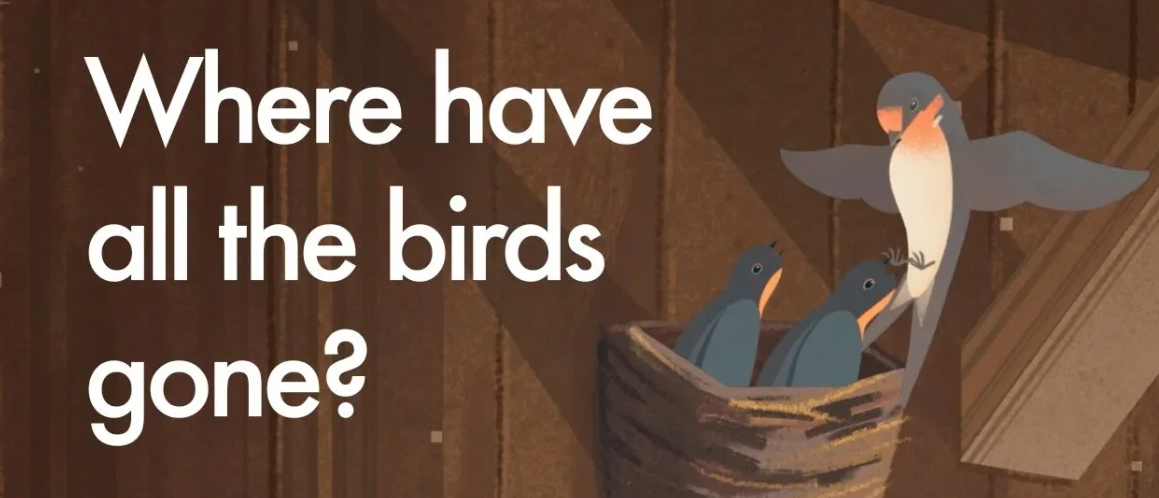
Where have all the birds gone?

By IFOAM

Did you know that changes in bird populations are an excellent sign of how well our planet is doing?  And, right now, bird populations are in decline!

Birdlife in Decline

According to Birdlife, an analysis of the IUCN Red List shows that there is a steady and continuing deterioration in the status of the world’s birds. At least 40% of bird species worldwide have declining populations, compared with 44% that are stable, 7% that are increasing, and 8% with unknown trends.

What is Happening?

The abundant use of pesticides in industrial agriculture is killing insects, the main source of food for birds. Many are also poisoned after ingestion of contaminated insects. Intensive agriculture results in the gradual disappearance of grasslands, replaced by fields treated with pesticides. The destruction of hedgerows and wild spaces also contributes to the decline of insect populations.

Barn swallow populations are an example of just how destructive this is:

  •     Pesticides including insecticides have reduced the swallow population by 30% over the last decade.
  •     In France, it is estimated that 40% of swallows have disappeared within two decades.
  •     According to the Spanish organization SEO BirdLife, Spain is losing 500,000 swallows each year.
  •     In general, the swallow population has been declining throughout Europe with a loss of between 20% and 50% since 1970 for the barn swallow.

What is the Solution?

Transitioning to agro-ecological and organic farming practices would contribute to building healthy and intact habitats essential for securing the future of birds and other wildlife.  For example, organic farms work with a wide range of pest control solutions such as pheromone traps which are generally non-toxic and do not control other pests.

Choose Organic

We can all help change this by choosing organically grown produce and supporting farmers who grow food in a biodiversity-friendly and sustainable way!   #GoodFood4All #EatHonest

Background

This animation was produced for the Good Food for All campaign and is available with subtitles in Czech, French, German, Greek, Italian, Lithuanian, Portuguese and Spanish.

The Good Food for All campaign is organized by 25 partners across Europe who have come together in “Make Europe Sustainable for All“, a 3-year cross-sectoral project to promote ambitious implementation of the Sustainable Development Goals. #GoodFood4All

The Green New Deal as a driver for the European Union’s implementation of the 2030 Agenda for Sustainable Development

By Deirdre de Burca and Leida Rijnhout, members of the SDG Watch Europe Steering Group

Following the adoption of the 2030 Agenda for Sustainable Development by UN member states in September 2015, the European Commission slowly started to develop its own ideas and actions for how the Union – a unique, regional, political system – could implement this ambitious, universal agenda. EU member states also began focusing on how to implement this agenda at the national level. The European Council, composed of Heads of States and EU MS governments, issued Council Conclusions in recent years mandating the Commission to take specific actions at EU level related to implementation.  

In late 2017, the Commission’s First Vice-President Frans Timmermans established a multi-stakeholder platform to be consulted on all topics relevant to the EU’s implementation of the 2030 Agenda, including an EC Reflection Paper on the development of a long-term EU sustainable development strategy. 

Four years later, European civil society is encouraged by optimistic signs which suggest that this important agenda could be realized in the holistic way it was originally envisaged, both in policy and governance terms at EU and national level. For example, this year the EU Multi-Stakeholder Platform provided its input on the EU’s Reflection Paper. A positive attempt was made by the diverse platform members to develop a shared analysis and strong recommendations for the Commission.

New multi-stakeholder approaches to governance and policy development have the potential to break down the unhelpful “silos” which currently exist and present significant obstacles to the achievement of long-term sustainability. These new approaches can bring decision makers, civil society and other key actors closer together with the aim of cross-fertilising each other’s perspectives, and of strengthening common demands. Through working together collaboratively in this way, those committed to achieving sustainable development can hopefully succeed in replacing the current dominant and extremely damaging economic system which is destroying the environment and which excludes so many social groups.

However, much now depends on the political will and objectives of the new EU Commission under the leadership of its President Ursula Von Der Leyen. A “Green New Deal” is now one of the six headline ambitions of the political guidelines which recently issued to the next European Commission (2019-2024).

The original “New Deal” was a series of programs, public work projects, financial reforms, and regulations enacted by President Franklin D. Roosevelt in the United States between 1933 and 1936. The New Deal responded to needs for relief, reform, and recovery from the Great Depression. The contemporary “Green New Deal” combines Roosevelt’s economic approach with significant investment in areas such as renewable energy and resource efficiency.

The new Commission President has made the 2030 Agenda (SDGs) the responsibility of all Commissioners. Valdis Dombrovskis will be in charge of “refocusing the European Semester so that it integrates the United Nations Sustainable Development Goals”, while each Commissioner will “ensure the delivery of the United Nations Sustainable Development Goals within their policy area”. While mainstreaming is a legitimate approach to implementation, civil society is concerned that this may become “away streaming” and that there will be a lack of coherent and bold leadership in EU implementation of all of the SDGs. Civil society believes that the responsibility for providing this leadership is at the highest level of the Commission, and should rest with the President herself. In the absence of such high level EU political leadership and coordination for the implementation of this holistic agenda  there is a risk that different actors, including civil society, will remain in their silos and that traditional divisions will not be overcome.

In conclusion, European civil society welcomes the introduction of an EU Green New Deal, but only as an instrument to deliver on the overarching objectives of the 2030 Agenda for Sustainable Development. This Agenda must be the overall framework within which a concrete social, fair and green plan of implementation is delivered by the EU.