Wardrobe Change: Reimagining Fashion

By World Vision Ireland

The current pandemic has forced many planned events to be cancelled, changed and postponed. The MESA implementing partners in Ireland – World Vision Ireland and the Irish Environmental Network – had planned a conference focusing on SDGs, Fashion and Waste during Fashion Revolution Week. However, like many others, we had to rethink our plans and cancel the event. These times call for flexibility, creativity and the internet. As we are no longer able to host the conference due to current restrictions, we have adapted our plans. 

We are excited to announce our new podcast series “Wardrobe Change: Reimagining Fashion”, a four-part series exploring the potential for the fashion industry to achieve the Sustainable Development Goals (SDGs). Set in the context of the current pandemic, it focuses on the impact of waste created by the fashion industry and addresses the need to rethink how we make, wear and re-wear our clothes for a more sustainable future for both people and planet. 

We are delighted to have the support from Kerry Bannigan, founder of UN Conscious Fashion Campaign, who will moderate the conversations with other experts and passionate people in this field, such as: Carrie Ann Moran, country coordinator of Fashion Revolution Ireland; Lynn Wilson, Circular Economy Wardrobe; owners of local startups; and many more. 

To access the podcast, please visit: http://sdgsforall.ie/wardrobe-change/

#EuropeanFootprints #WhatDoYouCareAbout stories for a sustainable future: Urban spaces and connections

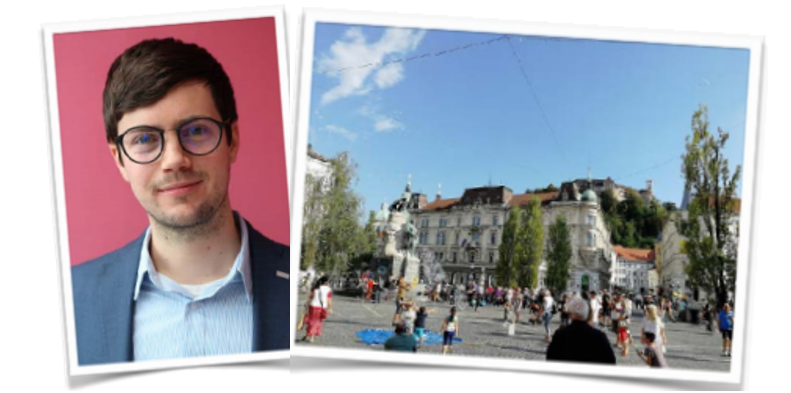
Authored by David Klepej, Slovenia 

By 2030, it is expected that 5 billion people will live in cities worldwide. However, this increasing trend towards urbanization brings about several issues. Among these urban challenges are traffic congestion, the disappearance of green spaces, waste management, pollution, and the need to provide enough job opportunities, adequate housing, and resources such as transport and energy. At the same time, cities can be hubs of innovation, economic progress, creativity and social connections with other inhabitants. One of our big challenges for the future will be to balance out environmental and social sustainability with urban prosperity for all.

Coming from a small village in Slovenia with less than a hundred people, I was always fascinated by cities: how they bring together so many people of various backgrounds and beliefs, how they function, and how they find solutions to offer their inhabitants not only the necessities for life, but also the conditions to socialize, educate, innovate and generally prosper. I am therefore passionate about making cities and human settlements inclusive, safe, resilient and sustainable. 

Slovenia has received praise for its high standards in natural protection and sustainability. It is the first country awarded the Green Tourist Destination award, it ranks among the most sustainable countries in the world, has the highest share of its area under the European Union’s Natura 2000 programme (37,9 %), and is one of Europe’s biodiversity hotspots. Slovenian cities provide many good examples of sustainable and smart small- and mid-sized communities. Nine municipalities (17% of the entire population of Slovenia) are included in the Zero Waste network, the capital Ljubljana was named European Green Capital 2016, and many efforts are made for comprehensive urban renovations. Many cities in Slovenia are closing their centres for traffic to open up space for pedestrians and cyclists, are offering bike sharing systems (including electric bikes), and are enabling the economic redevelopment of city centres. 

I envision a future in which our cities will have a positive impact on people, the economy, nature and the climate. One of the main principles in achieving this is a better use and diversification of urban space and resources. To do so, we must build upon sustainable and diverse land use, responsible construction and maintenance, and the reuse and repurposing of all resources. At the same time, we must implement new technologies for smart governing, monitoring, and managing of the urban environment. 

ANUNA DE WEVER: “I BELIEVE IN HUMANKIND”

By Khaled Diab, EEB

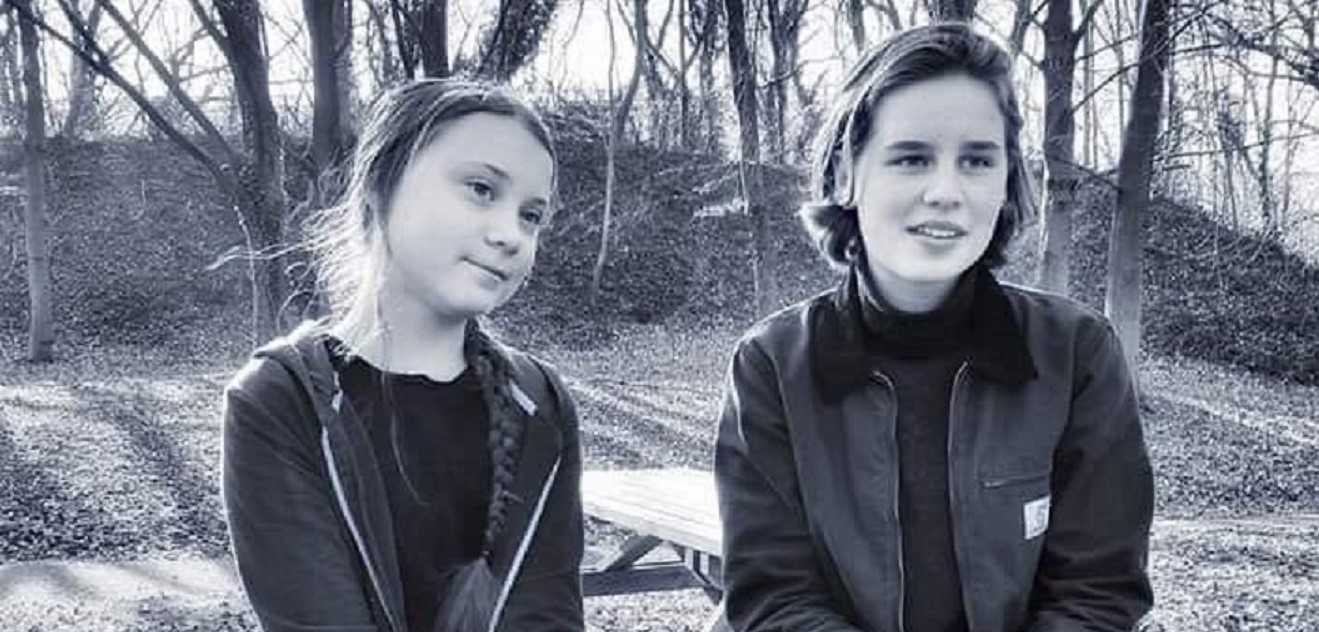
Anuna De Wever, dubbed the ‘Belgian Greta Thunberg’ by the media, tells META in an exclusive interview about what she learned on her sea voyage to South America, the environmental challenges lying ahead, and her cautious optimism that humanity can overcome them.

It was not so long ago that Anuna De Wever was an anonymous schoolgirl in Antwerp, Belgium. Then, inspired by the example of Greta Thunberg in Sweden, De Wever joined forces with students Kyra Gantois and Adélaïde Charlier to organise Belgium’s own School Strike for Climate movement, also known as Youth for Climate or Fridays for Future, which started holding regular strikes in Belgium in January 2019.

De Wever’s efforts to place the climate emergency in the public eye and to change the world have had the unintended consequence of placing her in the public eye and changing her world.

Not only has the young activist become a household name and face in Belgium with her regular media appearances, her activism has exposed her to severe criticism from conservatives and vicious attacks from the far right. In addition to harassment on social media, De Wever was pestered at the annual Pukkelpop music festival, where she had urine hurled at her and her tent was trashed.

“This has really become a left- and right-wing issue,” the climate activist told META. “I don’t understand it, because it’s super general, climate change.”

De Wever expressed exasperation about how many on the right are so hostile to climate action. “There have never been so many people who wanted change in Belgium on the climate. But we have a really right-wing government and, for some reason, Belgians think that right-wing doesn’t mean saving the climate,” she said.

Reflecting on the nascent youth movement, De Wever admitted to mixed emotions: pride at the success it has had in pushing the climate emergency to the top of the public and political debate; frustration at the limited concrete changes that this greater consciousness has delivered.

“I am more optimistic because we’ve seen the movement grow; we’ve seen people uniting. So many people want change and are fighting for it,” the youth activist told META. “On the other hand, things have only gotten worse. If we listen to the science, it’s only getting worse.”

Crossing oceans

Last October, Anuna De Wever, along with 35 other activists, not to mention the crew of the ship, set sail across the Atlantic to visit the Amazon rainforest and to attend the UN Climate Change Conference (COP25), which was originally slated to take place in Chile.

In this endeavour, she received support from Make Europe Sustainable for All (MESA), an EU-backed project which seeks to boost the awareness and implementation of the UN’s Sustainable Development Goals (SDGs) and their associated 2030 Agenda, and others.

“We sailed for six weeks, and that’s really, really intense, to be on a boat with 42 people the whole time, not seeing land,” she recalled.

But the voyage was also an educational one. “One of the SDGs is about life below water. Over 3 billion people depend on marine and coastal biodiversity for their livelihoods. Today we are seeing 30% of the world’s fish stocks overexploited,” De Wever tweeted at the time. “We are learning a lot about these crucial problems on our sailing trip.”

Endangered paradise

The Amazon represents over half of the world’s remaining rainforests and is one of the most species-rich places on the planet, representing 10% of the world’s biodiversity. Anuna De Wever and her companions toured parts of the Amazon and met indigenous communities there to learn more about their situation.

“When we were in the Amazon forest, it was beautiful, but it was also really, really hard because a lot of people there are facing the direct consequences of climate change,” De Wever recalled. “You can really see how climate change is already affecting millions of people’s lives: the whole forest is drying out and the rivers are completely polluted.”

In addition to the deforestation caused by ranching and farming, De Wever refers to the devastation wrought on the Amazon and its indigenous communities by mining. “They’re building goldmines next to the river which are super polluting, and the pollution of the goldmines gets into the water,” she explains.

Gold mining – both illegal and legal – is turning vast swathes of the Amazon into a toxic wasteland, as are other forms of mining, not to mention oil and gas exploitation.

De Wever also points to the gigantic Belo Monte hydroelectric dam which, according to the Environmental Justice Atlas, involves the moving of more earth than the digging of the Panama Canal did and threatens to transform the world’s mightiest river into an “endless series of lifeless reservoirs”.

“A big part of the forest is completely dried out because all the water is gone from there, and the people living there also had to move,” describes De Wever. “Indigenous people who have been living there for generations and generations, now, they all have to move from there.”

Fire and fury

The recent forest fires in the Amazon, most of which are believed to have been deliberately lit to clear land for farming and cattle rearing, sparked public outrage around the world and galvanised opposition to the deforestation policies of Brazil’s far-right president Jair Bolsonaro.

Although Bolsonaro is the villain of the moment, deforestation did not begin with him. In fact, nearly 800,000 km² of Amazonian rainforest has been cleared since 1970. The mind-boggling scale of this destruction has led scientists to fear that we may soon reach a tipping point when tree loss starts to feed on itself without the need for further human intervention, destroying much of the remaining fragile ecosystem.

A new study in Nature suggests that this tipping point may arrive decades sooner than previously feared. While the study focuses on how this will disrupt the role of rainforests as “carbon sinks”, the destruction of the Amazon spells disaster for life in one of the world’s most biodiverse regions. This loss of priceless nature will not just have a severe ecological impact but will also result in trillions of euros of economic damage, according to various estimates.

Rethinking trade

This makes action to protect the Amazon and other rainforests all the more urgent. And Europe is not powerless in this regard. The EU not only enjoys enormous economic leverage over Brazil and other Amazon countries which can be used to promote sustainability, it also imports billions of euros worth of products, such as meat and soymeal, that contribute to deforestation.

“There are trade agreements like the one with Mercosur that need to be rethought because it’s really, really devastating,” notes De Wever. “A lot of European leaders and leaders from all over the world need to start putting pressure on the Brazilian government to say, ‘You’re not getting away with this.’”

Rather than being punished, Brazil’s Bolsonaro is on the verge of being rewarded royally. At around the same time that large swathes of the Amazon were going up in smoke, the EU and the Southern Common Market or Mercosur (a trading bloc of South American nations) agreed on the principles of a free trade agreement with the bloc’s four founding members, Brazil, Argentina, Paraguay and Uruguay.

Environmentalists fear that, despite the new trade accord’s vaunted environmental credentials on paper, it will contribute to the ongoing destruction of the Amazon rainforest and the human rights violations that underpin it. Civil society was so alarmed by the implications of the trade deal that more than 340 organisations, including the EEB, sent out a joint letter in which they urged the EU to halt negotiations.

The EU-Mercosur trade deal is also unpopular with EU citizens. A recent YouGov poll found that nearly two-thirds (63%) of citizens in six EU countries want the deal to be scrapped, which rises to a staggering 82% amongst those who expressed a clear preference. A number of European governments have expressed their opposition to it.

COP out

The primary political goal of Anuna De Wever’s voyage across the Atlantic was to attend the UN’s 25th Climate Change Conference (COP25), which was scheduled to be held in Chile but was moved to Madrid at the last minute because the Chilean government pulled out amid popular unrest.

“It was really disappointing because we wanted to be there ourselves, especially because Belgian climate policy is really, really awful,” admitted De Wever. “We wanted to be at the COP25 ourselves to look our Belgian ministers in the eyes and say, you know, you cannot go through with this.” However, a Youth for Climate delegation made it to the conference in Madrid and they got the message across, De Wever added.

Despite the efforts of youth activists, campaigners and environmentalists, COP25 failed to deliver any concrete results. “It was really disappointing because nothing happened, obviously. And way more was expected,” reflected De Wever. “For COP26, the stakes are really, really high.”

COP26 is due to take place in November 2020 in Glasgow. Before then, the EU must assume a leading international role, De Wever suggests. “We need to have a European Climate Law by then that is actually ambitious. We really want the European Green Deal to succeed and we need to have the financial resources for that to happen,” she said.

This chimes with the EEB’s position. “The European Green Deal’s success will depend on an EU budget which is absolutely sustainability proof and fully aligned with the Green Deal, and on strong measures accompanying it, in particular, to reduce social inequalities across the Union and globally,” the EEB said in a statement. “The promised transformation can only come off if the European Green Deal is embedded in a long-term strategy for implementing the 2030 Agenda and the Sustainable Development Goals in and by the EU.”

The European factor

Anuna De Wever and fellow Belgian climate activist Adélaïde Charlier have both decided that the most promising way forward is to focus their efforts at the EU level. For that reason, they took up, alongside their activism, part-time internships at the European Parliament with the Green Party faction.

“We have big things which we can try to push and make real, like the Green Deal, like the Climate law,” De Wever explained. “It’s nothing yet but if you push it, if you make it ambitious, if you search for financing or resources, we can actually make it something.”

An example of this drive to make EU climate action more ambitious relates to the European Commission’s recent proposal for a Climate Law. Anuna De Wever co-signed a letter with 33 other climate activists, including Greta Thunberg, urging the EU to adopt binding emissions targets not just for 2050 but also for 2030, 2020 and all the years in between.

Despite this criticism, De Wever has faith that the EU can deliver and act like a responsible global citizen. “We wouldn’t be on the streets every week, if we thought it wasn’t possible. Obviously, we think we can but it is going to demand very drastic change,” she said. “It’s going to involve a whole system change. And this is not a negative thing because the foundations of our system are broken anyway… And we need to rethink our whole economy if we want to respect our planetary boundaries instead of destroying the home we are living in right now.”

De Wever believes, done right, this transition will be very good for the welfare and wellbeing of Europeans. “People say I don’t want to do anything for the climate because people are going to lose their jobs, people are going to be poor because we need to pay so much. But it’s not true. It could be completely just. It’s just an investment that we need to make,” she asserts. De Wever is also cautiously optimistic about the transformative potential of global cooperation. “Humanity has already done so much. We made the whole world run on technology, we ended world wars, we put men on the moon. Things that seemed impossible years ago, suddenly became a reality. I believe in humankind,” she concluded.
Coronavirus highlights need for EU to end toxic textile trade

Published as the joint vision of  65 civil society groups (see list of signatories in the article)

Key points of the vision are:

– Companies must take responsibility for their whole supply chain

– Now is the time for stricter environmental rules

– Broad coalition of fair trade, human and workers’ rights, environmental, and transparency groups call for action

A global re-design of the textile industry’s broken business model is essential for the post-coronavirus world.

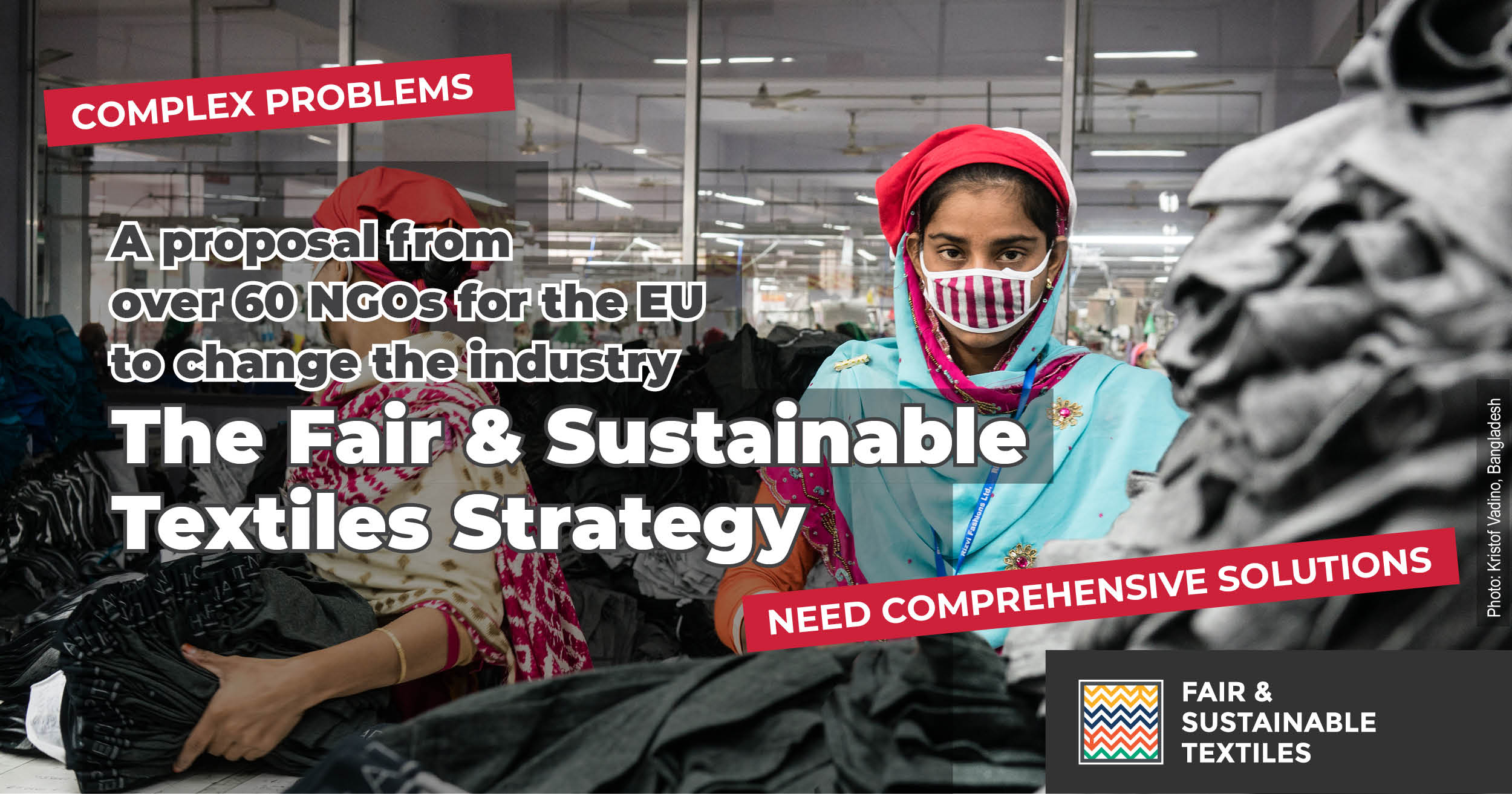
With the European Commission poised to start developing a new ‘comprehensive strategy for textiles’ [1] a broad coalition of 65 campaign groups for fair trade, human and workers’ rights, environmental protection, and transparency has set out its vision for the future of the industry.

The textile, garments, leather and footwear (TGLF) sector has long been characterised by labour and human rights abuses, along with the immense pressure it exerts on our environment and climate. 

Patrizia Heidegger, Global Policies and Sustainability Director at the European Environmental Bureau, said: “Cancelled orders and delayed payments due to the pandemic have left millions of vulnerable workers in the textile supply chain without pay and the livelihoods of their families at risk. This is once again laying bare the lack of clear legal obligations for buyers to take responsibility for their whole supply chain. It’s time for an EU response to tackle both fashion’s exploitation of workers and the shocking environmental and climate damage of an industry based on the sale of ever more new products.”

Members of the European Parliament Delara Burkhardt (S&D), Heidi Hautala (Greens/EFA), and Helmut Scholz (GUE/NGL) have addressed a joint letter to all the Members of the European Parliament to share and support the civil society groups’ vision – set out as a ‘shadow’ textiles strategy. In the letter, the MEPs stress that “the textile sector has been among the most vulnerable to the COVID-19 crisis due to the power imbalances among its actors and its severe structural problems, including the environmental damage it causes and governance issues. It is one of the most polluting industries, the source of countless catastrophes like that of Rana Plaza, and a hotspot for human rights abuses – which affect women disproportionately”.

Representing the civil society coalition, Sergi Corbalán, Executive Director of the Fair Trade Advocacy Office said: “Voluntary industry action has failed to bring about a fair and sustainable textile industry, so it’s time for EU leaders to reset the industry’s structure” and added “This ‘Shadow Strategy’ offers the Commission the combined expertise of 65 Civil Society Organisations who have years of experience in dealing with the various impacts of the sector. It’s not a menu from which the Commission can pick specific initiatives and leave others behind, but a comprehensive strategy in which taking action in each field reinforces the efforts put into others.”

The civil society vision for a comprehensive EU Textile Strategy contains recommendations for legislative and non-legislative actions that the EU can undertake to contribute to fairer and more sustainable TGLF sector, including:

> Ensuring companies are legally obligated to take responsibility for not only their own activities, but their whole supply chain by applying an EU due diligence law across all sectors, including specific requirements for the TGLF sector. Signing a multi-stakeholder partnership should not exempt business from responsibility.

> Stricter environmental rules that cover how textile products sold in the EU are designed and produced, legal and financial responsibility on producers for when their products become waste, as well as meaningful measures to promote transparency.

> Ensuring brands and retailers are legally obliged to honour contracts and end the culture of unfair purchasing practices that gives them impunity to cancel orders without honouring payments – leaving workers without pay and a wasteful pile up of unsellable products.

> Make governance reforms and better law enforcement in producing countries part of the solution to sustainability issues faced in the TGLF value chains.

> Through trade policy, use EU market power to leverage sustainable production practices in the TGLF industry.

Read the executive summary and COVID-19 update to the vision.

Signatories:

Abiti Puliti, achACT, Aeress, Association 4D, Circular Economy – VšĮ “Žiedinė ekonomika, Clean Clothes Campaign Europe, Clean Clothes Campaign international, Confederação Portuguesa das Associações de Defesa do Ambiente (CPADA), ECOS, European Environmental Bureau, Emmaus- Europe, ENS, Europe and We, FAIR, Fairtrade Germany, Fairtrade International, Fairtrade Max Havelaar France, Fairtrade Foundation, Fairtrade Polska, Fashion Revolution, FEMNET e.V., FOCSIV, Forum Fairer Handel, France Nature Environnement, Frauenwerk der Nordkirche, Friends of the Earth Europe, FTAO, Gender Alliance for Development Centre (GADC), INKOTA-Netzwerk, Institute for Sustainable Development Foundation, Institute of Circular Economy, Irish Environmental Network, Lithuanian NGDO Platform, Netwerk Bewust Varbruikein, ÖKOBÜRO, OXFAM Intermón, Oxfam MdM, Plastic Soup Foundation, Plataforma Portuguesa das ONGD, Polish Zero Waste Association, Pravicna-Trgovina, RepaNet, Rreuse, SDG Watch Austria, Sredina – Association of Citizens, SÜDWIND-Institut, The Circle, Traidcraft Exchange, Transparency Germany, Transparency International Deutschland, Umweltdachverband, VerbraucherService Bundesverband , Voice Ireland, Weltladen-Dachverband, Women Engage for a Common Future, Women Engaged for a Common Future France, Wontanara o.p.s., World Fair Trade Organization- Europe, World Fair Trade Organization, World Vision Ireland, World Vision Romania, Wird, Zaļā brīvība (Green Liberty), Zero Waste Europe, and Zero Waste France.

Note:

[1] The Commission’s commitment to a ‘comprehensive Textile Strategy’ was made in the Circular Economy Action Plan (page 13) published in March 2020. EU Environment ministers will have their say when they react to the Action Plan at the next Environment Council meeting on 22 June. The European Parliament will also react at a forthcoming plenary session. It is expected that the Commission will publish a roadmap towards the Textile Strategy before the end of 2020.

For further information, please contact:

Emily Macintosh, Senior Communications Officer, European Environmental Bureau 

+32 (0) 486 255 228 

emily.macintosh@eeb.org

Jorge Conesa, Fair Trade Advocacy Office

conesa@fairtrade-advocacy.org

Free online course on Policy Coherence for Sustainable Development

By UN System Staff College Knowledge Centre for Sustainable Development

We are pleased to inform you of the upcoming free online course on Policy Coherence for Sustainable Development. This engaging online course is designed to equip participants with a sound understanding of why policy coherence is important for achieving sustainable development, what coherent policy-making entails, and presents specific tools, mechanisms and approaches that can be employed to foster policy coherence. This course has been designed by the UN System Staff College Knowledge Centre for Sustainable Development, in collaboration with the OECD Policy Coherence for Sustainable Development Unit in Paris, and in coordination with the National University of Singapore acting through its Lee Kuan Yew School of Public Policy and the Hertie School of Governance based in Berlin.

The five-week online course will cover the following:

  • Week 1 will provide an introduction to the vision and principles of the 2030 Agenda, the concept and evolution of policy coherence for sustainable development, and focus on how far we have come in our commitment and the urgency to act now.
  • Week 2 will discuss the importance of policy coherence for sustainable development as a means of implementation under SDG 17 of the 2030 Agenda, explain the need for integrated approaches, and introduce key elements of PCSD and the OECD approach to understanding the concept.
  • Week 3 will focus on the importance of policy coherence at national, regional, and international levels and discuss examples of policy coherence for sustainable development.
  • Week 4 will look at tools and review mechanisms to assess integration of the 2030 Agenda at the national level and tracking progress on policy coherence.
  • Week 5 will recap core notions of PCSD and focus on partnerships and multi-stakeholder engagement to foster policy coherence for sustainable development.

At the end of the five weeks, participants will be able to:

  • Have a sound understanding of the vision and principles underlying the 2030 Agenda, the evolution of the concept of policy coherence for sustainable development (PCSD) and the importance of policy coherence and integrated approaches for sustainable development;
  • Have a good understanding of the relevance of policy coherence as an approach and a tool to achieve sustainable development outcomes, and be able to recognize policies that are mutually reinforcing across governance levels;
  • Be equipped with knowledge of the specific tools, mechanisms and approaches that can be employed to foster policy coherence, including partnerships and multi-stakeholder engagement.

UNSSC online courses are designed to deliver maximum learning outcomes through carefully chosen high-quality learning materials. Our facilitated online courses combine self-paced study modules with applied learning components, such as case studies, interactive exercises, and collaborative group work, specially tailored to the needs of the professional interested in deepening their knowledge on a particular subject matter. Participants will benefit from live moderated webinars which feature valuable inputs from renowned subject matter experts and allow real-time dialogue with high-level speakers. Webinar recordings are made available to ensure that participants have a flexible and seamless learning experience.

An expert facilitator guides and assists participants throughout the course, and provides real-time feedback on activities and exercises. Our user-friendly social online learning platform provides participants with the opportunity to connect with peers from diverse organizational backgrounds, fostering peer-to-peer learning. UNSSC online courses give learners the opportunity to complete activities when it best fits their schedule. Participants are largely free to determine their own weekly study plan. Lasting five weeks and demanding six hours of study per week, UNSSC online courses incorporate the same high academic rigour as any UNSSC face-to-face programme.

This online course will run from 15 June – 17 July 2020.  

For more information and to register, please go to http://bit.ly/PCSD-2020

Deadline for enrollment is 18 May 2020.

SDG Watch Europe Steering Group Statement on Covid

SDG Watch Europe is an EU-level, cross-sectoral CSO alliance of NGOs from development, environment, social, human rights and other sectors. The mission of SDG Watch Europe is to work to ensure that the EU and its member states fully implement the SDGs by 2030.

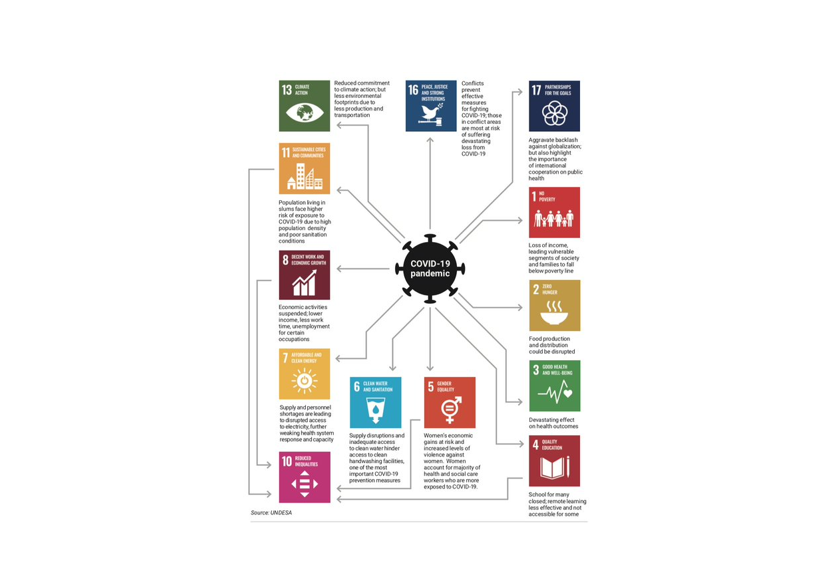
Pandemics do not respect national boundaries. As COVID-19 continues to create unprecedented impact across the globe, emergency measures are being introduced – the consequences of which will have a long term impact upon our societies. As policy makers introduce measures to ensure emergency relief and long term resilience, SDG Watch Europe calls for all EU institutions to manage the crisis with unity and solidarity, putting people and planet at the centre of all policies:

1. Sustainable Pathways: Transitioning to a Sustainable, Green Economy SDG Watch Europe calls upon the Commission and all EU institutions to ensure:
● All European countries begin a re-communalisation of the health and care sector, the increase of financial means for social security systems as well as the establishment of effective safety nets for the most marginalised people in our societies (e.g. homeless people, refugees, victims of domestic violence, minorities), in light of the likely restructuring of many economic sectors as a result of the pandemic.
● Policy Coherence for Sustainable Development (PCSD) is the framework whereby all EU internal and external policies are aligned with the SDGs across all sectoral policies and programmes, also using the mechanism of the European Semester for this purpose.
● Ambitious reforms of the Multiannual Financial Framework and the European Semester to mainstream the SDGs throughout the EU budget in order to put the public interest at the heart of EU policy making.
● The “Do No Harm” principle is applied: refrain from retracting or rolling back on environmental and social regulations.
● A proactive stance is implemented to transform energy, transport and food systems and reduce ecological footprint and carbon emission levels.
● The EU Green Deal proceeds as the basis of a stimulus package to relaunch the EU economy in line with sustainable development and in order to support human wellbeing, guarantee a prosperous green jobs sector and ensure a sustainable economic system.
● All economic stimulus programmes are aligned with the SDGs, the Paris Agreement and the 1.5 degrees target, as well as global and European objectives to tackle the biodiversity and pollution crises.
● To engage fully with civil society in a radical rethink of our entire system to deliver on the SDGs.

2. Global and European Solidarity and Economic Measures
The COVID-19 crisis is a critical test of solidarity at global and EU levels. We are all in this together.
SDG Watch Europe urges the Commission and all EU institutions to ensure:
● Member States stand in solidarity with each other and help the countries hardest hit, such as Italy and Spain, and ensure that the most vulnerable groups in our societies receive adequate support and equal access to health care.
● The SDGs are implemented through the next Multiannual Financial Framework of the EU.
● Support for low and middle income countries to get resources for the health measurements and social protection of vulnerable groups in cooperation with its member states, G20, OECD and other global processes in the framework of the UN – for example, for debt cancellation and tax justice.
● Policy Coherence for Sustainable Development for partner countries for all measurements in trade, ODA, sustainable agriculture and sustainable food systems.
● Empowered civil society organizations by increasing financial support for human rights work, ensuring no one is left behind and civic space freedoms are honored, protected and unimpeded.
● Economic measures are introduced to tackle the emergency focusing on the relaxation of multi-annual macroeconomic austerity measures.
● Eurobonds are issued and use the European Stability Mechanism in order to finance the additional public expenditures caused by the pandemic to avoid overloading national deficits and increasing risk premiums.
● All economic and financial measuresfirst and foremostsupport countries and people with the most urgent needs.
● Marginalized communities and those hardest to reach (such as asylum seekers, migrants, refugees and the Roma communities), become the top priority rather than discriminated against with harsher measures than those imposed on the general population.
● The immediate evacuation of the Greek refugee camps and the relocation of refugees to safe places throughout Europe in accordance with international human and asylum rights law, at this time when conservative and nationalist forces are using the crisis to block humanitarian interventions for those refugees currently stranded at the EU borders and on the Greek islands.
● Revision of the current EU budget to facilitate adequate resourcing for COVID-19-related actions.
● Ensure that the Multiannual Financial Framework of the EU (MFF) funds only policies, measures and actions that support sustainable development, given that Policy Coherence for Sustainable Development (PCSD) is a fundamental requirement to achieve the ambition of the 2030 Agenda and to implement the SDGs.
● Ensure the “Benchmarking” or earmarking within funds to achieve specific sustainability objectives by setting binding expenditure targets for climate, biodiversity or social inclusion and ensuring that the money is administered by the relevant authorities.
● All company bailouts must be linked to clear conditionalities and comply with strict conditions: no money for polluting industries without binding commitments (i.e. for the aviation sector).

3. Rights and Democracy SDG Watch Europe calls for:
● Assurance that the necessary restrictions imposed by governments are time-bound and will be fully lifted to maintain the fair and democratic functioning of our societies.
● Fully-inclusive and transparent European citizen stakeholder participation in social, economic and ecological efforts to promote recovery from the effects of the pandemic.
● New measures on data retention and tracking to be reviewed by governments following the emergency phase of the pandemic to prevent the enforcement of even greater control over citizens, eroding civil liberties and the ongoing justification for the shrinking of civil society space.
● Democracy to be upheld as enshrined in the EU Treaties, the EU Charter of Fundamental Rights and the European Pillar of Social Rights, whereby all emergency measures taken by governments must be proportionate and respect democratic procedures, transparency and the rule of law.

A significant threat to the successful implementation of the SDGs is a pronounced lack of Policy Coherence for Sustainable Development (PCSD). Now is the time to be decisive and take bold steps in navigating the Agenda 2030 SDGs roadmap towards a healthy and equitable future for all through a just recovery.

The SDGs are a “blueprint to achieve a better and more sustainable future for all”. Established in 2015 by the United Nations General Assembly and intended to be achieved by the year 2030, they are part of UN Resolution 70/1, the 2030 Agenda. (Transforming our world: the 2030 Agenda for Sustainable Development). The overarching principles are ‘Building an Economy Within the Planetary Boundaries” and “Leave No One Behind”.

The Sustainable Development Goals (SDGs) represent a pathway to long-term sustainability in the face of Covid-19. In light of the devastating impacts of the pandemic across Europe and the rest of the world, SDG Watch Europe calls on the EU & its MS to individually and collectively, strengthen all efforts to mobilise the necessary resources to fully implement the SDGs by 2030.

For further information please contact sdgwatcheurope@gmail.com