The 2020 ASviS Report “Italy and the Sustainable Development Goals”

 By ASviS

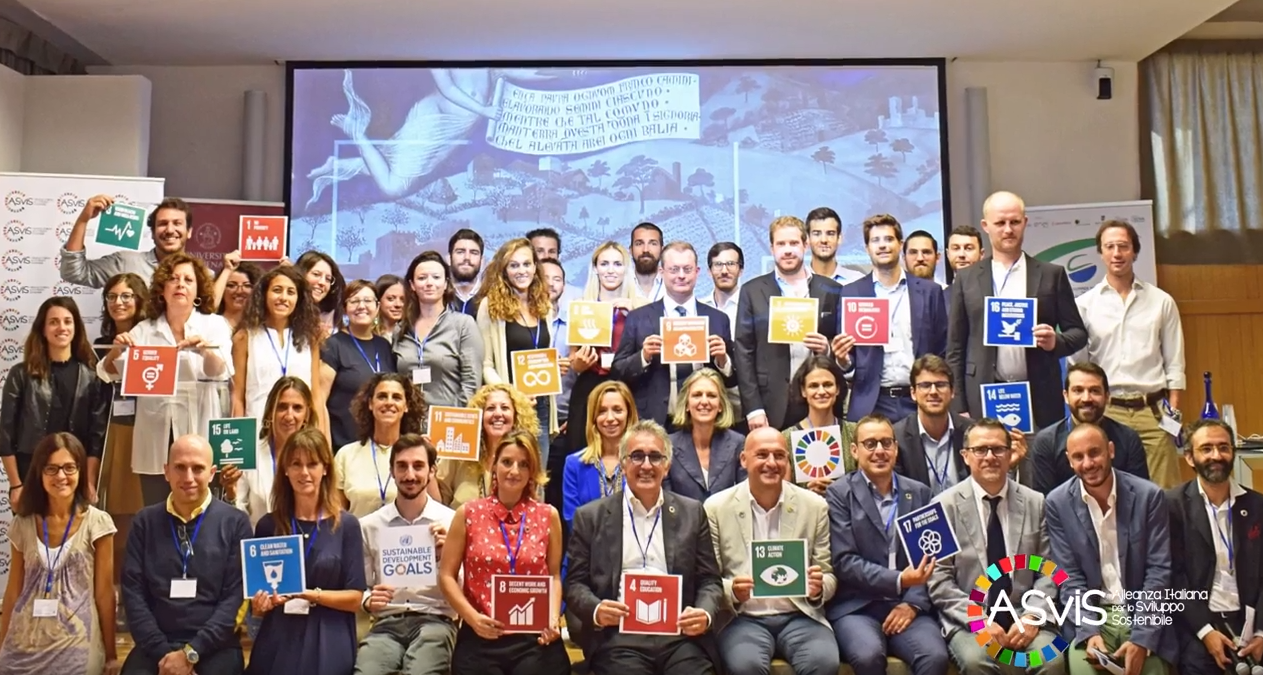
The annual Report prepared by the Italian Alliance for Sustainable Development (ASviS), now in its fifth edition, assesses the progress our country, its regions and the European Union have made in achieving the SDGs. The Report also sets out the areas where action is needed to ensure the economic, social and environmental sustainability of our growth model. The Report for 2020, drafted by experts from the Alliance’s over 270 member organizations, offers a wide-ranging view of the situation in Italy and in Europe vis-à-vis the various aspects of sustainable development, and with composite indicators, measures the progress of Italy and each EU Member state on all the SDGs. For the first time, ASviS also produced an estimate for 2020 for Italy, taking the pandemic into account. This showed that Covid had a negative effect on SDGs 1, 2, 3, 4, 5, 8, 9, 10 and 17, a positive effect on SDGs 12, 13 and 16, while for the other Goals it was impossible to estimate the impact. The Report also offers concrete proposals for policies capable of improving people’s wellbeing, reducing inequalities and increasing the quality of the environment in which we live addressed at the government and other institutions. 

The Report was presented during the event “Italy and the Sustainable Development Goals”, that took place on October 8th at the Italian Ministry for Foreign Affairs, with Italian Prime Minister Giuseppe Conte, Foreign Affairs Minister Luigi Di Maio and EU Commissioner Paolo Gentiloni among other in attendance, is available on the ASviS website: https://asvis.it/rapporto-asvis-2020/ An English translation is underway.

#EuropeanFootprints #WhatDoYouCareAbout stories for a sustainable future: Energy

By Giulia, Italy

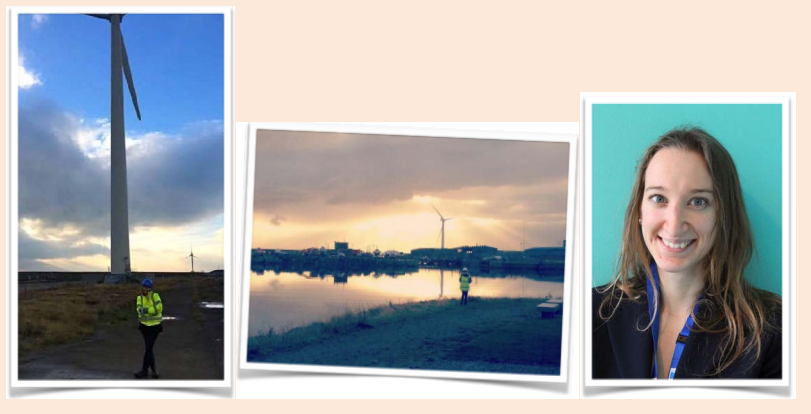
I am proud of having lived in Scotland for many years, a country that is striving to gain 100% of its electricity from renewable energy sources by 2020. Although I studied in Aberdeen, the Oil and Gas Capital of Europe, I realized shortly after my graduation that renewable energy was the way forward. Community energy projects, where communities fund the assets to produce renewable energy by themselves, are getting popular in Scotland. My two favourite ones are the Aberdeen Community Hydro Projects and the Levenmouth Energy Project, to which I personally contributed. The latter is a unique circular economy project which produces green energy to power one of Europe’s largest hydrogen vehicles fleets. However, due to the current electricity regulatory framework, it is still hard to fully become “prosumers”, and to be involved in both production and consumption of energy at the same time. Therefore, I developed a business idea to bring together small producers of renewable energy (i.e. families with solar panels on the roof of their houses) so that they can sell their surplus electricity. I did this through developing a platform which uses blockchain – the technology through which the tracking of electricity and payments from energy producers to the final consumers can be done safely and securely. With this, even small producers can enter the electricity market and ultimately contribute to achieving affordable and clean energy for all. 

I presented this business idea to the UN Innovation Lab for Sustainable Development Goals, the first of its kind. A year later, I presented my idea at Microsoft Italia through a contest where I became a finalist. Inspired by the energy of like-minded young Italians, I co-created YOUNG – Youth Organisation for United Nations Sustainable Development Goals, the first Italian NGO dedicated to the SDGs. I presented our organisation at the 24th Conference of the Parties to the United Nations Framework Convention on Climate Change. In 2018, I also participated as a youth speaker to G-STIC, the Global Sustainability Technology and Innovation Conference, with the UN Major Group of Children and Youth where I talked about energy positive communities like the Scottish green hydrogen project I helped commission. Getting involved in these networks is an important step in establishing successful partnerships to realise the Sustainable Development Goals.

Saturdays For Future

By the Italian Alliance for Sustainable Development (ASviS)

The Italian Alliance for Sustainable Development (ASviS) invites everyone to take part in the Saturdays For Future, a national day of mobilization on the themes of responsible production and consumption. The initiative, first launched on 5 June by Enrico Giovannini (ASviS) and Leonardo Becchetti (NeXt), aims to mobilize consumers, businesses and civil society organizations to change production methods and purchasing habits in favour of sustainable development.

Inspired by the global mobilization of Fridays for Future, the initiative takes place on Saturdays, which is the day during which most people do their weekly shopping, with the objective to engage the largest possible audience with awareness raising events throughout the country and on social and traditional media. 

The first step of this process, on 28 September 2019, the day after the global week of action for climate and the United Nations General Assembly, will mark the beginning of a shared path towards a greater awareness of sustainable production and consumption.

Consumers, businesses and civil society organizations will be engaged in initiatives that aim to change the production methods and the shopping habits in favour of sustainable development. The initiative will contribute to achieving the Goals of the 2030 Agenda for sustainable development, and in particular:

  • SDG 12, “Responsible Consumption and Production”, whose target 12.8 states: “By 2030, ensure that people everywhere have the relevant information and awareness for sustainable development and lifestyles in harmony with nature”
  • SDG 13, “Climate Action”, whose target 13.3 states “Improve education, awareness-raising and human and institutional capacity on climate change mitigation, adaptation, impact reduction and early warning”
  • SDG 4, “Quality Education”, whose target 4.7 states “By 2030, ensure that all students acquire the knowledge and skills needed to promote sustainable development, including, among others, through education for sustainable development and sustainable lifestyles, human rights, gender equality, promotion of a culture of peace and non-violence, global citizenship and appreciation of cultural diversity and of culture’s contribution to sustainable development”.

The tools of the mobilization

There are many ways to engage and contribute to Saturdays for Future:

  • participation in the online poll to suggest the responsible production and consumption priorities that require more effort by all;
  • sharing good practices of responsible production and consumption (as of 28 September);
  • organization of events or specific initiatives, taking place as of 20 September, dedicated to the promotion of responsible production and consumption models;
  • launch of an awareness-raising campaign on social media with the hashtag #SaturdaysforFuture and with the collaboration of media partners.

To organize the Saturdays for Future, ASviS launched the website www.saturdaysforfuture.it, that will monitor the events taking place all over Italy and will contain useful information and documents, including the link to the e-learning course on the 2030 Agenda (soon available in English) developed by ASviS, that, in the week from September 20th to 28th, will be available for free. The results and the experiences of the Saturdays for Future campaign will contribute to the creation of a shared educational kit on the themes of responsible production and consumption.

How to take part in Saturdays For Future

The initiative is based on creativity: participants can take part according to their abilities and interests. Here are some examples of initiatives:

  • Are you a consumer? Learn about the 2030 Agenda for sustainable development through ASviS’ e-learning course, take part in the online poll to indicate the priorities of responsible production and consumption that you believe require greater focus and effort, and, starting on Saturday, 28 September, shop in a more responsible manner; on social media, use the hashtag #SaturdaysforFuture.
  • Are you a consumers’ organization, a trade or labour union? Promote the 2030 Agenda for sustainable development among your members and raise awareness on the initiative or propose events on the themes of responsible production and consumption.
  • Are you a goods or services producing business, a large scale or fair-trade retailer? Make a commitment for the cultural shift towards sustainable production and consumption methods; starting from 28 September, share your story on social media using the hashtag #SaturdaysforFuture to promote your best practices.
  • Are you a school or university teacher? Promote the 2030 Agenda for sustainable development and share the message of the Saturdays for Future with your class: have your students follow ASviS’ e-learning course on the 2030 Agenda and share informative material on SDG 12.
  • Are you a journalist? Give voice to the 2030 Agenda and spread information on the theme of responsible production and consumption.

#Act4SDGs – Italy: Mobilizations across Italy, Agenda 2030 monitoring report & video on the SDGs

For the 3rd anniversary of the 2030 Agenda on 25 September 2018, the Italian Alliance for Sustainable Development (ASviS) has put together a video on the mobilization of many people and organizations for the #ACT4SDGs campaign.

In addition, Asvis have put together a fantastic video on all 17 SDGs.

You can also read GCAP Italia’s comprehensive Agenda 2030 monitoring report – Sustainable development: for whom? A critical vision for coherence of Italian and European policies. The report focuses on the analysis of certain topics and cases in which the connections between the SDGs are evident: the interdependencies between the local and global spheres, between the internal and external dimension, seeking to apply a systematic interpretation and identifying dilemmas and contradictions that limit the pursuit of sustainable development. On the basis of this analysis they have put forward proposals for the Italian government and Europe, and more generally to give civil society a stronger role not only in the “implementation of the 2030 Agenda” but also in its interpretation and development in a transformational sense.

ASviS publishes 2nd report on Italy & the SDGs

Will Italy succeed in drastically reducing poverty, unemployment and inequalities, protecting the environment and combating climate change, improving the population’s quality of life and building resilient infrastructure? How is the country doing with respect to the UN’s 2030 Agenda and its 17 Sustainable Development Goals (SDGs), agreed to by countries all over the world two years ago? How can Italy design effective policies to bridge the existing gaps with other countries and achieve the Targets set for 2020 and 2030 to become economically, socially and environmentally sustainable? Over the past year, did the Government adopt suitable measures to respond to the challenges of our time? For the second year in a row, the Italian Alliance for Sustainable Development (ASviS) has addressed these questions in its report “Italy and the Sustainable Development Goals”.

The 2017 report features an in-depth analysis of the Italian position vis-à-vis the 17 SDGs. It represents a unique instrument to understand the 2030 Agenda’s state of implementation in Italy, also thanks to its use of innovative synthetic indicators and analytical tools that not only depict Italy’s current position with respect to the SDGs, but also advance scenarios for the evolution of the country to 2030 on the basis of the adoption of different policies. Thanks to the work of over 300 experts from ASviS’s 175-member organizations, the report also assesses the policies the Government put in place over the past year and advances policy proposals for the coming months (those within the terms of the current legislature) and the following, to bring Italy on a pathway to sustainable development.

The report, which ASviS has presented at the Italian Parliament and discussed with the Italian Minister of Economy and Finances Pier Carlo Padoan, sets out proposals in seven different areas representing an aggregation of the 17 Goals: climate change and energy; poverty and inequalities; circular economy, innovation and employment; human capital, health and education; natural capital and environment quality; cities, infrastructure and social capital; and international cooperation.

It highlights that, notwithstanding the progress made in certain areas during the last few years, Italy continues to fall short of a condition of sustainable development. However, throughout the past year attention to the 2030 Agenda significantly grew in Italy, also thanks to the work of the Alliance. Nevertheless, with respect to the 17 SDGs, Italy is lagging behind, especially in the adoption of fundamental strategies for the future of the country.

In addition, ASviS dedicated 17 days to the 17 SDGs through an integrated email, website and social media awareness campaign which aimed to promote key findings of the report. The “One Goal a day” campaign from 2 to 18 October reached over 150K impressions on social media.

More information on the report can be found here – http://www.asvis.it/asvis-report-2017.

The Italian Alliance for Sustainable Development (ASviS) aims to raise the awareness of the Italian society, economic stakeholders and institutions about the importance of the Sustainable Development Agenda, and to mobilize them in order to pursue the Sustainable Development Goals. It brings together over 180 of the most important civil society institutions and networks.
More than SDG implementation

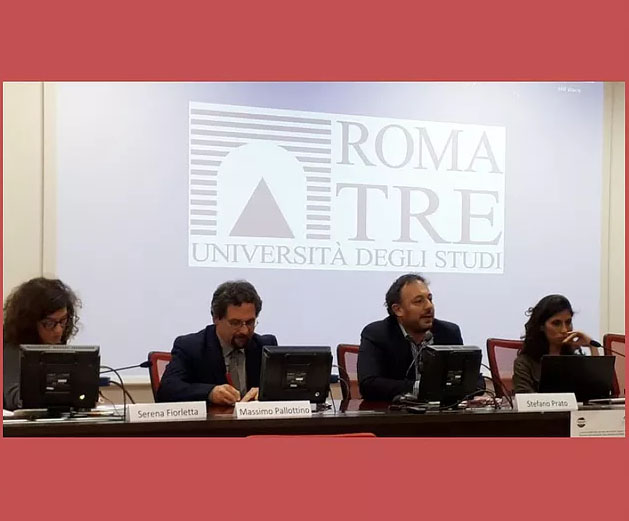
How to examine the implementation of the Agenda 2030? This issue was discussed at and in cooperation with the University of Roma Tre in Rome during a workshop with academics and experts organized by Global Call to Action Against Poverty (GCAP) Italy on 25 September. It is not an easy question, if the full ‘transformative’ potential of the SDGs is to be tapped. The risk we face is to become simply ‘implementers’ of the SDG’s framework. It is a powerful tool with many useful elements to push ahead policy dialogue at all levels, but we must acknowledge some omissions, tensions and contradictions, inherent in how the framework and the objectives are formulated.

As Stefano Prato, GCAP Italy coordination board member and Director of the Society for International Development, pointed out in his keynote speech, we must avoid that important issues are overshadowed by a narrowly conceived understanding of ‘objective by objective’ monitoring. This includes the issue of rights often (regressively) understood and represented in term of ‘needs’; the discourse on inequality that risks becoming a complete substitute for ‘poverty’ thus losing its capacity of looking at society – and the planet! – as a whole through the lens of an ‘economic justice’ dimension; the transformation of the role of the state in a context of blurring distinctions between public and private interests; and finally also wider issues related to unjust global governance.

We should avoid ‘repacking the world’ so that it fits into the SDGs framework. Rather, we must directly confront the big challenges we see on the planet!

Such complexities include, among many other examples, the case of the Italy-Libya agreements on migrants flows management – a complex issue where the sole objective of the proposed solution was to limit migrants landing on Italy’s shores, which put human rights at risk and had little understanding of the long-term issues at stake. How ‘sustainable’ are these policies? Shouldn’t the notion of ‘policy coherence’ be applied in a very concrete way to this and in many other cases? The Agenda 2030 needs to be made useful when facing the big challenges of our times and not used as a tool to divert our attention from them.