#WhatDoYouCareAbout” Stories For a Sustainable Future: Oceans and Earth

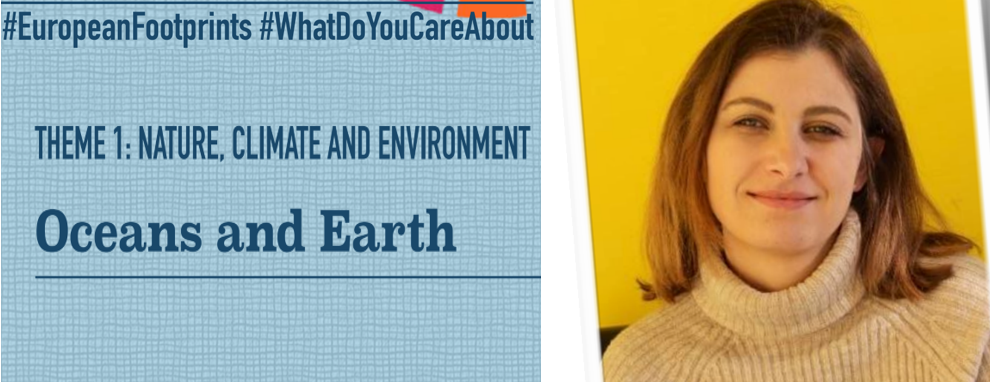
By Mirjana, Croatia 

Planet Earth is our home and features incredible biodiversity, both on land and in water. We rely on natural resources for food, energy and water, but our careless exploitation of them is causing severe damage to the world’s ecosystem, in the form of deforestation, floods, desertification and global warming. It is crucial to reverse these negative effects, and we must act quickly by promoting education, innovation and common efforts towards a sustainable and respectful use of our natural resources. Failing that, not only the planet, but also our economy and everyday life will be increasingly affected.

Croatia, the land of a thousand islands, is the third richest country in Europe in terms of natural water resources, and it boasts a well-preserved ecological environment, with hundreds of native plant and animal species. National and nature parks cover a total surface area of 5,151 km², corresponding to 9.1% of the country. A total of 11 nature parks, 8 national parks and 2 strict nature reserves are protected natural areas, showing that Croatia is a country of exceptional and diverse natural beauty. In 2017, Croatia was faced with coastal fires and floods that seriously impacted Croatian tourism and the country’s economy. These natural disasters were caused by the inefficient and unsustainable maintenance of river flows, forest areas, and sea coasts. 

“Collective action on climate change is required. People need to act and react, and drive changes themselves”.

According to future projections, Croatia is threatened by dramatic climate changes. By 2070, the air temperature could rise by 2.2 degrees Celsius, and sea levels could rise by 40 centimeters. There will be more natural disasters like hail, storms, high winds, and even tornados. Climate change will also lead to shifts in the tourist season. Due to warmer summer months, the season will not be so enjoyable. The worse climate will also significantly affect agriculture, which is considered to be an important branch of the Croatian economy. The crucial thing is that the prevention of, and adaptation to, climate change needs to happen right now. It is possible, but only with political will and efforts to integrate climate action measures into national strategies. Furthermore, collective action is required. People need to act and react, and drive changes themselves. This is achievable in many ways, but certainly, the main one is adopting an eco-friendly attitude! 

Read more #WHATDOYOUCAREABOUT STORIES FOR A SUSTAINABLE FUTURE here.
E-course “Strengthening stakeholder engagement for the implementation and review of the 2030 Agenda”

By UN DESA – UNITAR 

UN DESA – UNITAR are delighted to announce that another edition of UN DESA – UNITAR e-course, “Strengthening stakeholder engagement for the implementation and review of the 2030 Agenda ” has been launched!

This massive open online course (MOOC) is designed to strengthen the capacities of government representatives and stakeholders to engage in an effective and meaningful way with major groups and other stakeholders in the implementation and review of progress towards the achievement of the Sustainable Development Goals (SDGs).

Participants can follow the course at their own pace free of charge and earn a UN certificate upon meeting certification requirements. The course will take place from 20 January till 1 May. 

WHAT IS THIS COURSE ABOUT?

  • Understanding the need for stakeholder engagement in the 2030 Agenda at the national level
  • Learning about approaches and tools for strengthening stakeholder engagement for the SDGs
  • Designing successful strategies for stakeholder engagement in national implementation and review processes for the 2030 Agenda

You can register for the course here:  http://bit.ly/MOOCSE2020a

Glocalising the SDGs – Moving Together in the Right Direction

By Ana Ivaschiv, Assembly of European Regions (AER)

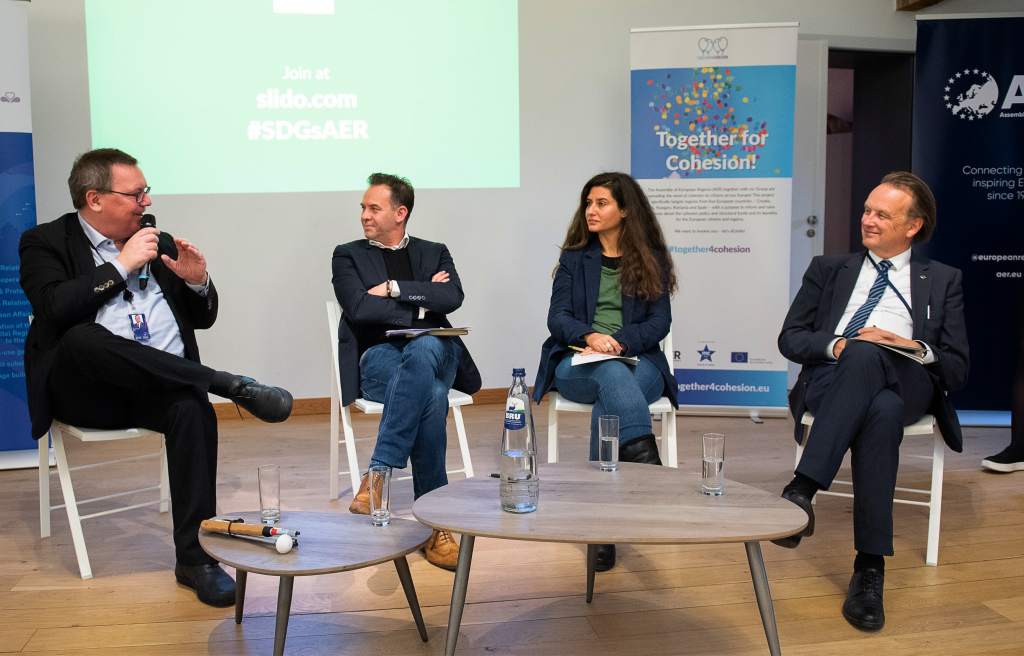
The AER Taskforce on the SDGs organised a panel debate ‘Glocalising the Sustainable Development Goals’ in the context of the AER Autumn Bureau Meeting which took place in Brussels on 5 December 2019. The debate was moderated by AER President Magnus Berntsson, who was joined by experts from the UNDP, European Parliament, Committee of the Regions, and the European Economic and Social Committee.

More than Climate Action

The discussion kicked off with a question to the audience, asking them to reflect on what first comes to mind when they hear the phrase “Sustainable Development Goals”. The words that emerged immediately were ‘Future, Social, Climate, Environment,’ and the uniformity of responses did not surprise our guests. Maria Nikolopoulou – Member of the Sustainable Development Observatory of the European Economic and Social Committee – remarked that it is quite common for people to associate the SDGs with Climate Change and Environment, however, it is important to bear in mind that the SDGs framework is based on 3 main pillars: economic, social and environmental and it is, therefore, necessary to work on all of them simultaneously, otherwise there will be an imbalance. 

Global Challenges tackled at the Local Level

The word cloud of responses led the debate to explore another topic embedded in the SDGs: citizens and their future. In this context, Erik Bergkvist – a former regional politician and now a Member of the European Parliament – was in a unique position to reflect on the role of Cohesion Policy in supporting regions, municipalities, and cities to achieve the SDGs. He stressed that everything happens locally and people have to perceive that they are part of the project and they are not left behind. Concluding his remarks, he stated ‘You have a really important job to do and most of it is still undone. I am encouraged by the quotation of Oscar Wilde: “We are all in the gutter, but some of us are looking at the stars”’. 

Following this, Juan Carlos Lopez Cecilia,Territorial Partnership Advisor at the United Nations Development Programme, further elaborated on what it means to “localise” the goals and gave advice to regions on how best to achieve this. A multi-level and multi-actor approach is needed to localise the agenda,as it will only be possible to implement the 2030 agenda.with the full participation of local and regional authorities.

Not Reachable until 2030?

As we approach the implementation decade, it was interesting to see one of the previous responses to the first question was ‘not reachable until 2030’. Participants were, therefore, asked to define the challenges that regions are facing in their view. Political willingness and financing immediately appeared among the biggest challenges and this was subsequently confirmed by Arnoldas Abramavicius, European Committee of the Regions Rapporteur on Sustainable Development Goals. Mr. Abramavicius presented a survey launched jointly by the CoR and the OECD on the contribution of cities and regions to sustainable development. A lack of support was identified by regions as a challenge for localising SDGs and insufficient resources were also cited at the heart of the matter. It is not surprising that the survey’s findings coincided with the answers from the audience. To help European regions and cities overcome these challenges, all stakeholders have to find a long-term EU strategy for a sustainable Europe by 2030 and organisations such as AER have a large role to play in implementing the Sustainable Development Goals. Maria Nikolopoulou stressed the importance of having different voices from different levels push from the bottom to implement the SDGs.

Because regions need to be more vocal on SDGs, AER has decided to organise a profile-raising conference ‘Agenda 2030: Transforming Regions, Changing the World’ which will take place at the European Parliament in Strasbourg, Région Grand Est, in June 2020.

Rubik’s Cubes & Lens

All the panellists agreed on the importance of the regions and the necessity of taking a holistic approach to implementing the goals. Inspirational metaphors came from both Maria Nikolopoulou and Eva Hallström, a strong advocate for the SDGs within the AER network. The former linked the SDGs to a Rubik’s cube: you have many pieces connected together and you can only manage to solve it if you have a strategy; you have to move the pieces in coordination without trying to fix just one part but the cube as a whole. The latter, Eva Halström, added that we need to use the SDGs like a pair of glasses, or as a lens, through which we see and elaborate our regional development strategies.

The debate confirmed the AER member regions’ commitment to implementing the 2030 agenda and AER invites all its members to take action together and cooperate for a more sustainable Europe.

Read more here.

European Footprints initiative & #WhatDoYouCareAbout”Storybook

By Young Europeans

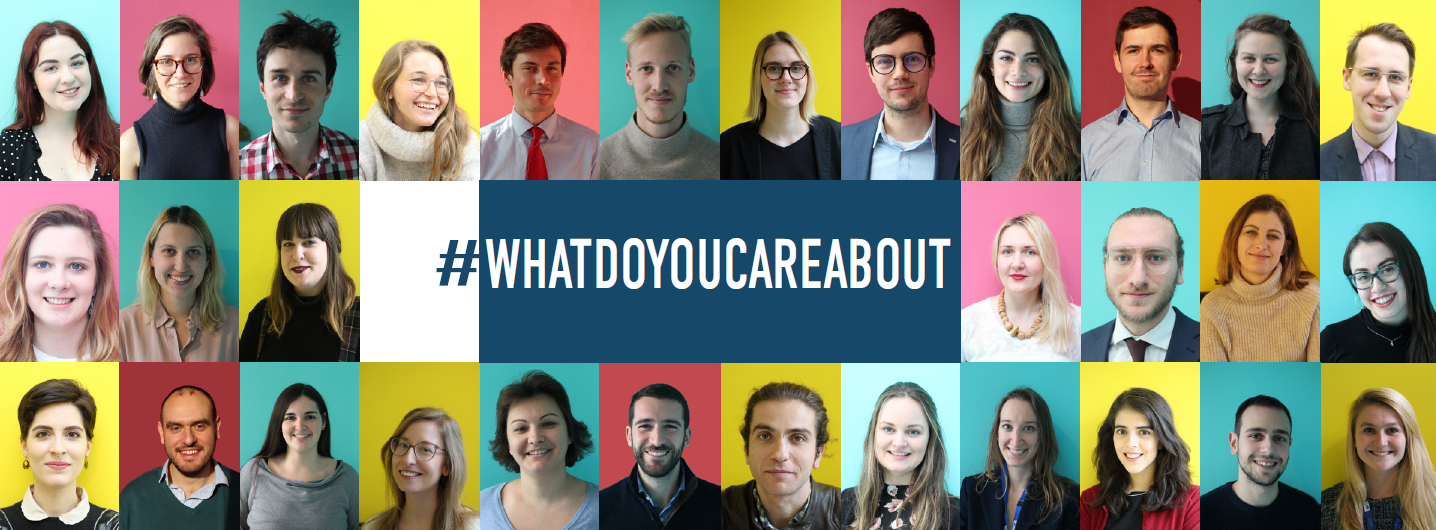
“European Footprints” is a multimedia project on the Sustainable Development Goals showing young Europeans’ viewpoints on sustainable development: what do young Europeans care about?

Mission

We strive to raise awareness among all who share European values about the footprints we leave behind and empower them to cultivate a more responsible and sustainable lifestyle – ecologically, socially and emotionally. We have 3 main pillars: Europe, Sustainability, and Stories.

We believe “European” is an attitude; not by taking a geographical or political stance, but by uniting diverse groups and striving towards common goals of stability, well-being, and community-building. We think the best way to live your life is to take only what you need, without causing any harm to your social and natural environment. We rely on storytelling as a medium to reach across borders and inspire identification with a common European cultural space.

Story

In October 2018, a group of trainees of the European Commission Blue Book traineeship started to produce a short educational video to raise awareness on the SDGs, under the mentorship of Director General of EAC, Themis Christophidou, and in collaboration with the World’s Largest Lesson – an NGO introducing the Sustainable Development Goals to school aged children.

They launched an open call to involve other participants and the outcome turned out to be unexpected: there were so many young Europeans out there caring about many different things concerning their future and sustainability. A short video simply wouldn’t have been enough to collect all their personal stories, amazing projects or grass-roots initiatives connected to the Goals. That is how the European Footprints initiative came to life.

The project covers perspectives from all 28 EU member states, involving former European Commission trainees who have come to share their stories both on camera and on paper. For example, Monika from Lithuania shares her experiences with gender equality, Diego from Spain is part of a music project striving to promote cultural inclusion, Stefanie from Austria shares her responsible nutrition choices, Giulia from Italy talks about her work as a chemical engineer, and many others.

The project’s title “European Footprints” summarizes it all: it is undeniable that we all leave some traces behind us, but we have the power to choose to leave a responsible footprint, one that takes into consideration the world we live in and one that perhaps others can follow!

THE PROJECT

The European Footprints project has rapidly grown into 2 complementary sub-projects: videos and storybook.

We have produced 3 videos, grouping the participants’ contributions into 3 main thematic clusters:

EDUCATION and WELL-BEING

NATURE CLIMATE and ENVIRONMENT

SOCIETY

The videos are available online in a dedicated Facebook page and YouTube channel.

The language of the videos is English, but subtitles are provided in 20 EU languages: English, Croatian, Czech, Italian, Spanish, German, French, Slovak, Slovene, Finnish, Swedish, Maltese, Greek, Dutch, Hungarian, Polish, Lithuanian, Romanian, Bulgarian and Irish. Our aim is to provide subtitles in all 24 EU languages and new subtitles will be directly uploaded on our YouTube channel.

The “#WhatDoYouCareAbout” storybook has been created as a teaching tool to be used in classrooms or educational workshops for students (13 – 18 yo). It combines the participants’ personal stories with additional teaching resources, such as facts and questions on sustainable development, the EU institutions and programmes.

The stories can be read all together as an introduction to sustainable development, but also function as independent examples of citizens’ initiatives.

Download the storybook HERE

WHAT’S NEXT

The European Footprints initiative started with the aim to produce a video showing young Europeans’ interest in SDGs. The project now wishes to connect young people all over Europe through the medium of personal narratives and provide them with accessible, inclusive and imaginative spaces to take their own steps towards more sustainable societies.

As of December 2019, we are sourcing funding and support in order to continue our work as a non-profit association and further develop the future basis for our project. This includes developing a visual identity, new materials (new videos, translation of the storybook into other EU languages) and a website. The latter will also function as a platform to disseminate the project’s resources.

CONTACTS

Email: european.footprints@gmail.com

Facebook: @European.Footprints

YouTube: European Footprints

New ‘Wardrobe Change’ campaign calls for radical textile industry transformation

By Emily Macintosh, EEB

More clothing is being produced, consumed, and thrown away than ever before, putting immense pressure on our planet and the industry’s 60 million-strong global workforce.

A new campaign, ‘Wardrobe Change,’ launched today by the European Environmental Bureau and 24 civil society groups from across the EU is calling for EU leaders to take urgent action to rein in the sector.

“The textile industry is one of the biggest polluters and is rife with exploitation. Our new Wardrobe Change campaign is calling for a radical transformation to how clothes are made, sold, worn – and reworn,” explained Patrizia Heidegger, Director of Global Policies and Sustainability at the EEB.

Heidegger continued: “This year, EU leaders have a chance to back an ambitious Textile Strategy based on fairness and sustainability. It’s time to move fashion away from the pursuit of ever-more economic growth which is incompatible with stopping further environmental and climate breakdown and reducing global inequalities.”

Ever shorter turnaround times mean that, globally, clothing production has doubled from 2000 to 2014, with more than 150 billion garments now produced annually, and 73% of all textiles ending up in landfill or incineration.

In December, new research from the European Environment Agency highlighted that after food, housing and transport, textiles are the fourth largest cause of environmental pressure. Textiles also cause the second highest pressure on land use and are the fifth largest contributor to carbon emissions from household consumption.

EU environment ministers have called on the European Commission to come up with a strategy to move the sector away from unsustainable production and consumption patterns, and the sector was flagged as a priority in Commission President Ursula von der Leyen’s flagship European Green Deal.

The Commission is also expected to put forward proposals for textiles in its New Circular Economy Action Plan, expected to be published on 4 March.

Stephane Arditi, Policy Manager for the Circular Economy at the EEB, said: “Today’s fashion system makes overconsumption far too easy which is generating huge levels of waste. But we can’t recycle our way out of the problem – products need to be used for longer and waste prevented in the first place. Just as they took action on single-use plastics, governments need to urgently take action to make options such as repairing, renting, sharing, and swapping more accessible. It’s essential to ensure better information is available about what our clothes are made of and develop design requirements for toxic-free materials that can be used again and again.”

The UN states that the textile sector is responsible for between 8 and 10% of the world’s greenhouse gas emissions and it estimates that, by 2050, fashion could be responsible for a quarter of all carbon emissions.

Arditi added: “Climate action is not just about decarbonising the energy we use, it’s also about changing how we produce and consume in the first place by rethinking how we make, use, and reuse products – and that includes textiles.”

In 2019, Sweden made headlines by cancelling fashion week, and from Buy Nothing Day to Second Hand September to Extinction Rebellion, people all over the world stood up for slower fashion.

But the year tragically ended with a fire in a New Delhi garment factory killing 40 workers.

Patrizia Heidegger said: “Those on the frontline of the textile industry’s waste and pollution are the millions of unrepresented workers who make the clothes sold around the world. Given that 193 governments have committed to achieving responsible consumption and production globally as part of the Sustainable Development Goals (SDGs), all companies must be required to take steps to prevent and mitigate human rights abuses and environmental destruction along their supply chains.”

In 2020, the organisations behind the Wardrobe Change campaign will carry out a host of awareness raising and advocacy activities across the EU. Information about the Wardrobe Change campaign activities will be updated here.

For more information, please contact emily.macintosh@eeb.org and follow the hashtag #WardrobeChange