Civil society vital to scrutinize governments’ progress on SDGs: NGOs develop new engagement mechanism for UNECE Regional Forum on Sustainable Development

By Patrizia Heidegger, EEB

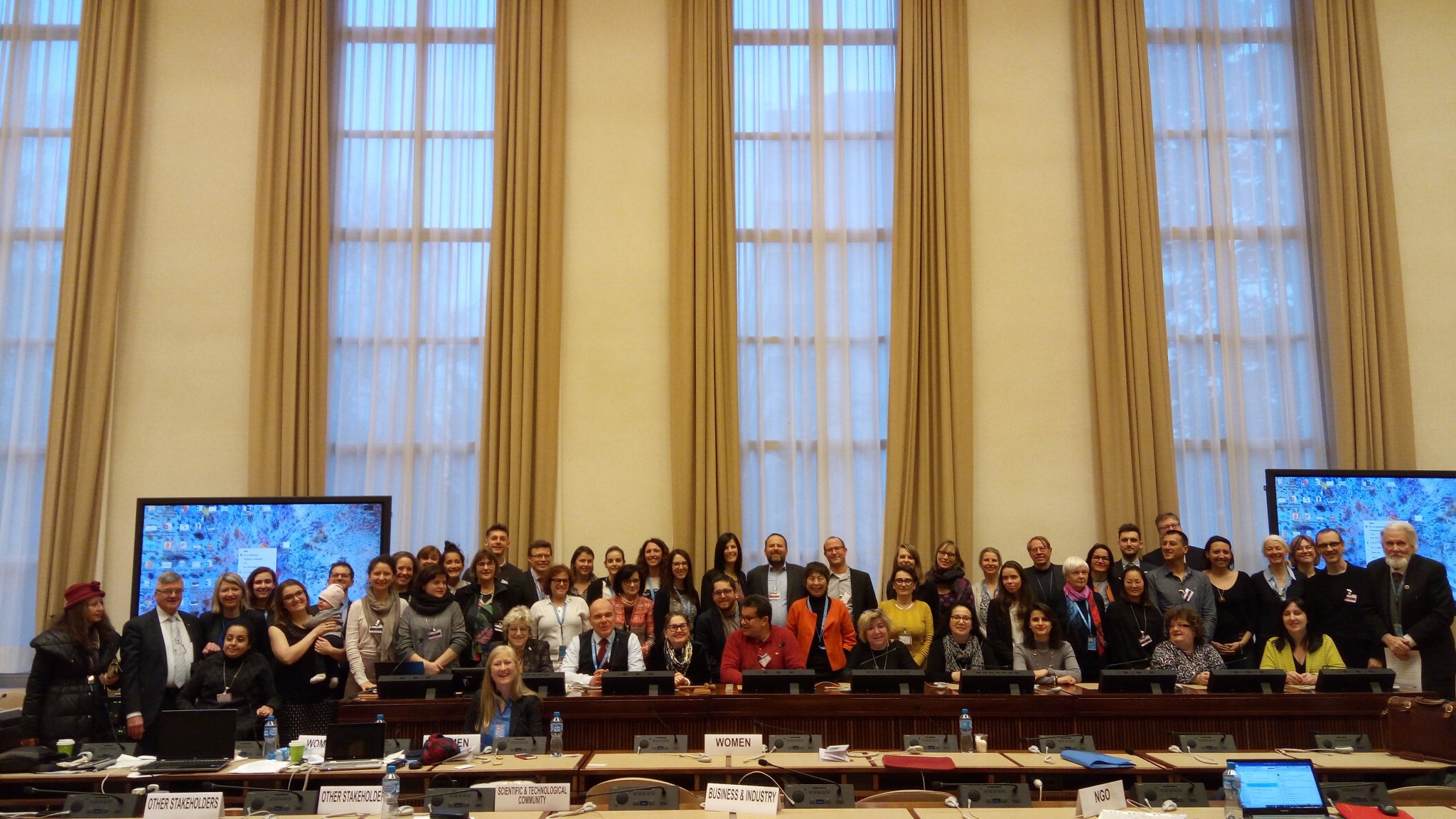
When governments from across Europe gathered in Geneva on 1 and 2 March to exchange about how they are progressing on the 2030 Agenda and its Sustainable Development Goals (SDGs), civil society was ready to scrutinize their performance. This year’s Regional Forum for Sustainable Development for the UNECE (RFSD) – shorthand for the United Nations Economic Commission for Europe which covers countries from both within the EU and beyond, including the Caucasus and Central Asia – focused on the goals on clean water and sanitation, affordable and clean energy, sustainable cities and communities, responsible consumption and production, and protecting the natural environment.

During the Forum, government representatives preferred talking about best practice examples rather than the measures they are taking to bring about the systemic change needed to achieve sustainable development. The role of public interest groups is crucial to ensure governments are properly taken to account, to provide an assessment of the gaps and shortcomings, and to present progressive solutions.

Since last year’s meeting, civil society organisations have developed a concept note on a Regional Civil Society Engagement Mechanism (RCEM) in order to institutionalise the participation of CSOs in all stages of the follow up and review of the SDGs at UNECE level. While the new mechanism is being set up, civil society representatives this year gathered during a full day preparatory meeting to bring together advocates for sustainable development from across the UNECE region as well as from different civil society sectors to agree on key messages and demands towards the assembled governments. Civil society seized the space offered by the Forum with a powerful opening speech, as panelists during various round table discussions and also in the closing session when Pat Clarke, SDG Watch Europe member from the EU Disability Forum, said in the joint CSO statement: “We strongly believe that the primacy of human rights & environmental protection must be reaffirmed over finance, trade & monetary rules!”.

The full participation of civil society organisations remains a challenge. First, governments in the region need to be supportive of meaningful civil society participation. On a more practical level, many CSOs lack the capacity and resources to get more involved in or even attend the Forum. But there are ways to engage: different networks such as the International Forum of National NGO Platforms and projects such as Make Europe Sustainable For All are working on training materials and webinars, while civil society is organised by a voluntary network through the Major Groups – including dedicated working groups. Subscribe to the mailing list by contacting our colleague Andreia Da Silva at WECF (andreia.dasilva@wecf.org). Join us and get active!
To Achieve Agenda 2030, We Must End Gender Discrimination

By Sascha Gabizon, WECF

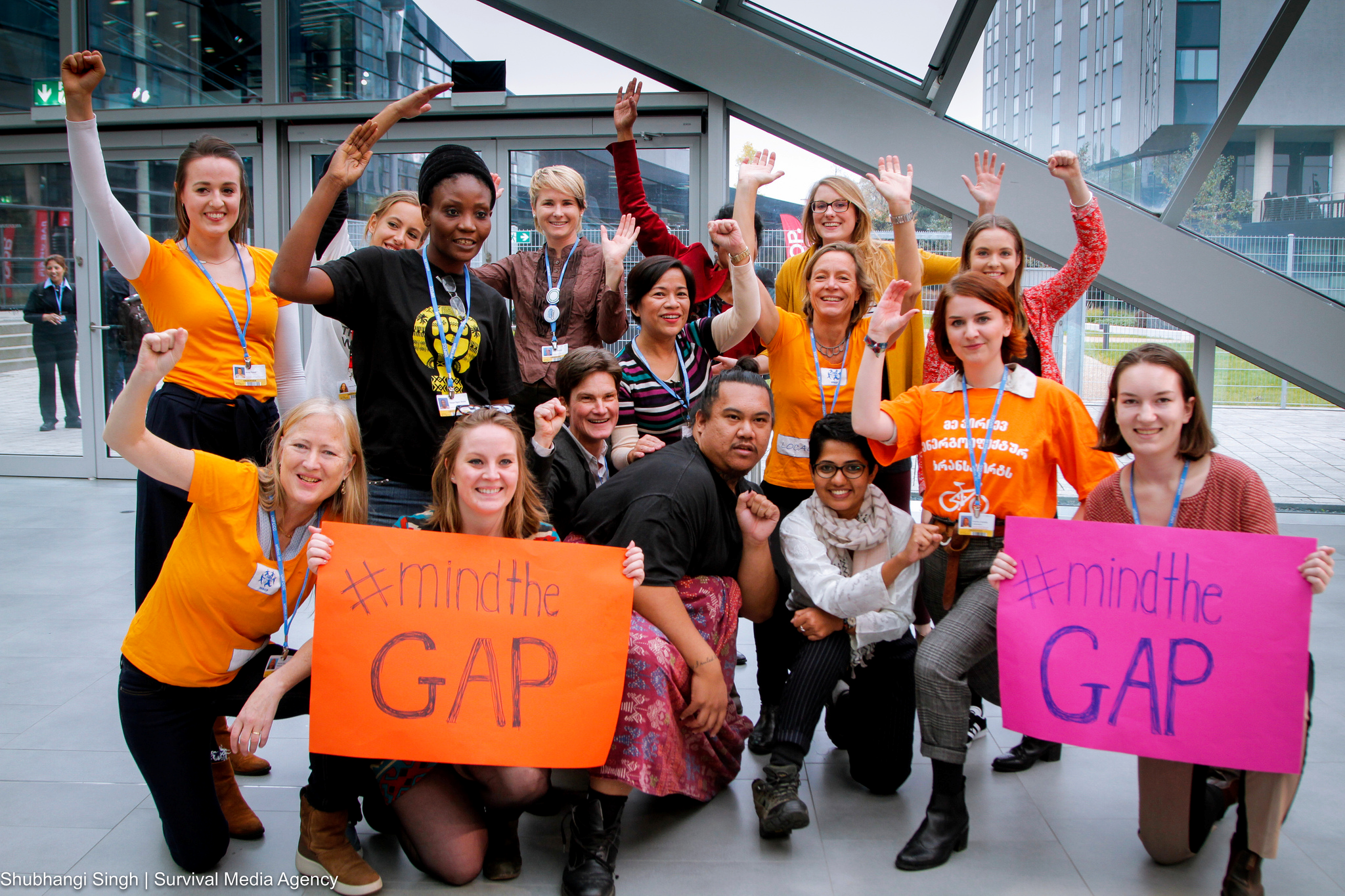
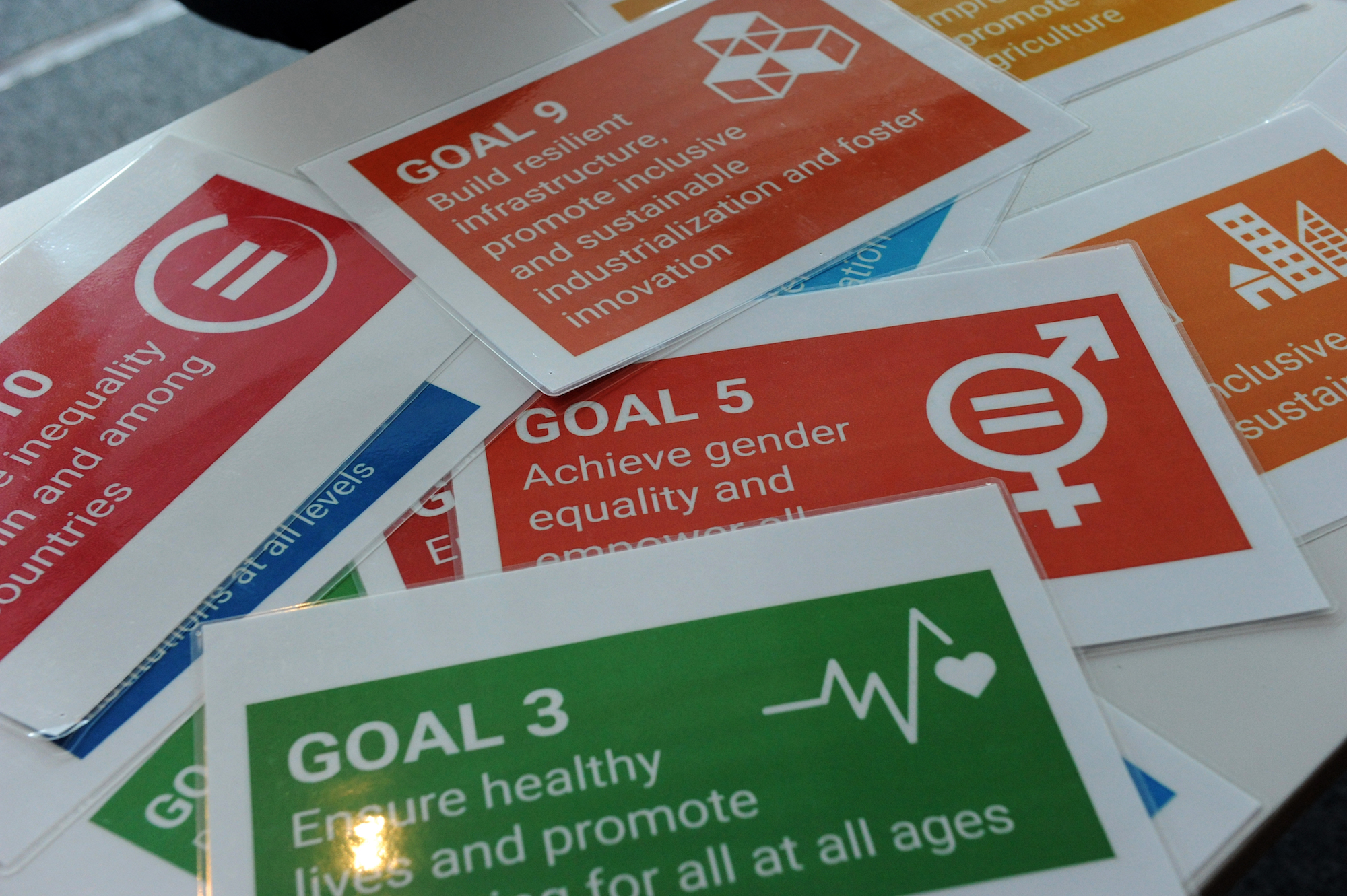
The Agenda 2030 calls for the universal achievement of the Sustainable Development Goals (SDGs) aiming at the well-being of all. In particular, the agenda focuses on “not leaving anyone behind” thus concentrating on the most marginalised and excluded. This requires strong policies to address inequalities in the European Union and globally, including to end gender-based discrimination and barriers.

The new SDG report “Turning Promises into Action” by UN WOMEN shows the gender-inequalities in Europe. The gender pay gap and the pension pay gap will persist for another 150+ years if we don’t take strong measures. One out of 6 women in the EU says she has experienced some form of sexual harassment or violence, at home, in public places and at work. The #MeToo movement has been able to show the widespread sexual harassment of women in their workplaces, including in the civil society sector.

The labour force participation rate among women of prime working age (aged 25-54) in Europe stands at 79% and is 12% lower than men of the same age group (91%). Globally, 23.7% of women hold parliamentary seats – in Europe, Iceland has the highest proportion of women at 47.6% in contrast to Hungary where only 10.1% of the parliamentary seats are held by women. Lower participation by women is partly due to their higher burden of unpaid care and domestic work – women in the EU work 2 times as many hours for unpaid care than men.

The dimensions of inequality are manifold. Imbalances also exist among women, due to intersecting structures of power such as racism, ableism, ageism, homophobia, transphobia etc. The need for SDG5 implementation is as high for Europe as it is globally. Ending gender-based discrimination and other forms of exclusion are at the core of achieving the Agenda 2030.

The EU’s Multi Stakeholder Platform on SDGs

By Deirdre de Burca (IFP) & Leida Rijnhout (Friends of the Earth Europe), SDG Watch Europe Steering Group Members

In late 2016, the European Commission announced its intention to establish a Multi-Stakeholder Platform (MSP) on SDGs linked to the EU’s implementation of Agenda 2030. SDG Watch Europe made a comprehensive submission to the Commission on the potential role that such a platform could play. In 2017, the Commission published the terms of reference of the MSP – its vision was much less ambitious than that advocated by SDG Watch Europe. In simple terms, the MSP will include a Political Committee to provide broader strategic advice to the Commission and a Management Committee to play a more technical and operational role.

In mid-2017, the Commission advertised a selection process for members of the Political and Management Committees and those selected were notified late last year. SDG Watch Europe will have a representative on each the Political and Management Committees – Leida Rijnhout and Ingeborg Niestroy respectively. The Management Committee met for the first time in December 2017 and agreed to establish a range of sub-groups to work on different areas, including (i) on the Multi Financial Framework and (ii) on an EU Sustainability Award. Stakeholders have stated their intention to establish a range of other sub-groups to work on important issues linked to the EU’s Agenda 2030 implementation.

The first meeting of the MSP Political Committee took place on 10 January with approximately 30 official stakeholders and by a number of official observers, including SDG Watch Europe’s Deirdre de Burca as a substitute for Leida Rijnhout. Overall the meeting was quite disappointing. Very little of substance was discussed or agreed, robust debate was not encouraged, and the scope of the committee’s work is also not fully clear. The main “deliverable” of the committee promoted by the Commission is a Commission’s Reflection Paper called “Towards a sustainable Europe by 2030”. This paper will be authored by First Vice President Timmermans and Vice President Katainen. Stakeholders of the MSP will have an opportunity to make submissions to the reflection paper by means of a targeted consultation. It appears that this Reflection Paper will set out implementation options for the next Commission to consider in 2019. The current Commission appears very reluctant to take any decisions on the Agenda 2030 implementation as it may “tie the hands” of the next Commission! This means that t having adopted the SDGs in 2015, the Commission will start thinking about how to implement them around 2020. This is a real shame, especially in light of the most recent Council Conclusions on Agenda 2030, where member states called for a rapid implementation.

The next meeting of the MSP will be in October 2018, after the publication of the Reflection Paper. This is an example of how little mandate this high level political group really has. The group will hardly have any say or opportunity to provide collective guidance where the reflection process is concerned.

Our role as civil society is to apply pressure for political change when necessary. We are doing European citizens or humanity in general no favours if we do not insist that First VP Timmermans increases the ambitions of this group, to ensure its involvement in effective and consultative policy making. This is absolutely necessary to develop an EU-wide 2030 Agenda strategy and plan of implementation as soon as possible.

EDITORIAL: Achieving the SDGs through Eco-sufficiency

By Leida Rijnhout, Friends of the Earth Europe

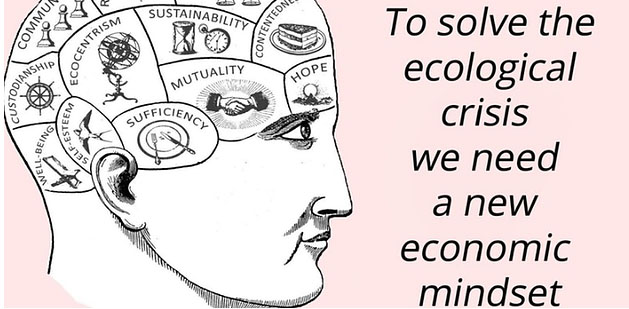
Our current level of overconsumption in Europe is plundering the Earth’s resources at a faster rate than they can be regenerated. As a result, environmental and social breakdowns are visible. The number of murdered environmental defenders is increasing every year. This is because the overexploitation of natural resources is affecting more local communities, especially in the global South. As a result, Friends of the Earth Europe organised the conference “Eco-sufficiency: moving beyond the gospel of eco-efficiency” to bring together EU policy makers, academics and activists to discuss how to transition the EU away from a consumption-driven economy.

This conference challenged the mainstream approach of economic growth as a solution for everything, including to tackle environmental and social challenges. We need to rethink fundamentally our economic and political system to have people, planet and human rights again at the core of our strategies.

The 2030 Agenda for Sustainable Development, if we interpret and implement it well, is a framework to achieve this paradigm shift towards a more fair and green economy. Tackling inequality also means closing the gap between the extremes of ecological overshoot and material poverty. We have to define a distribution mechanism to achieve a fair share for everyone to achieve human wellbeing without compromising ecosystem stability and the ability of future generations to meet their own needs.

The SDGs can be seen as a benchmark for the essential human needs to be satisfied. And the principles of eco-sufficiency can help us build a sustainable and shared prosperity in a world that — to quote Mahatma Gandhi — “has enough for everyone’s needs, but not for everyone’s greed.”

If you want to receive the final report of the eco-sufficiency conference – to be published in February 2018 – please contact Riccardo Mastini.