EU must seize opportunity to adopt new political vision and give global leadership on sustainable development

Says leading EU CSO coalition SDG Watch Europe in Open Letter to EU Leaders

Urgent need for a new political vision for EU

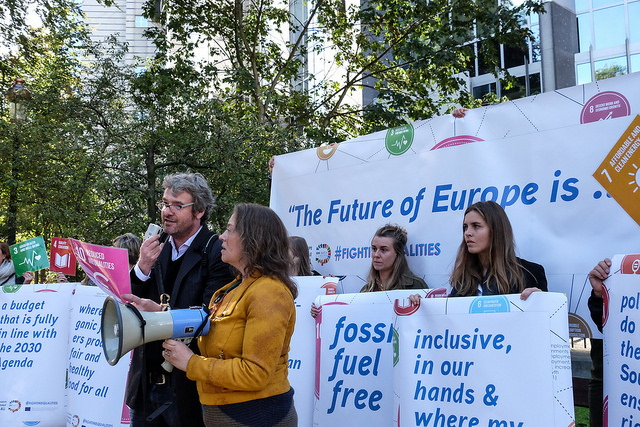
In advance of the planned European Council summit in December (14th & 15th), a leading European civil society network SDG Watch Europe  has issued an open letter to EU Leaders highlighting the urgent need for them to focus on the Union’s future by adopting a strong political vision and showing global leadership on sustainable development. The coalition claims that there are very real political risks linked to the current, almost exclusive, focus of EU leaders on the management of Brexit and associated political issues.

“There is a sense that just like Nero fiddling while Rome was burning, the EU is distracted with Brexit while political conditions are deteriorating across the Union,” says Deirdre de Burca, member of the SDG Watch Europe steering committee. “Our coalition’s broad membership calls on European political leaders to urgently adopt sustainable development as a core political mission of the Union. We believe this important mission could help unite Member States at this critical time, while allowing Europe to assume an important global leadership role.”

Slow pace of EU implementation of the SDGs

“The Agenda 2030 for Sustainable Development is an ambitious global agenda which includes 17 sustainable development goals (SDGs) that were adopted by all UN member states in September 2015, says Leida Rijnhout of Stakeholder Forum for a Sustainable Future and member of the SDG Watch Europe steering committee. “”The EU was an important player in the negotiation of this global agenda” she says. “There were high expectations that sustainable development would move to the top of the EU’s own political agenda and those of its member states. Unfortunately these expectations have not yet been met. NGOs are very concerned about the missed opportunity that this represents for Europe and its citizens.”

SDG Watch Europe and its members claim that the pace of implementation of this global sustainable development agenda by the EU has been “very disappointing”.  They point to the fact that a full three years after the adoption of the SDGs, the EU has not yet developed an overarching European Sustainable Development Strategy 2030 to implement the goals.

Poverty & hunger

“Ending poverty and hunger and reducing inequalities are core objectives of the SDGs – in Europe and globally” says Ingo Ritz, Director of the Global Campaign Against Poverty (GCAP) and member of the SDG Watch Europe steering committee. “EU policies often negatively affect the lives of people around the world: European agricultural policies directly impact on small farmers in Africa. EU trade agreements and tax policies can negatively affect entire economies and undermine the achievement of the SDGs in many countries. The SDGs are global – all countries including the EU have a responsibility to implement them.”

Climate change

“The key findings of the recently published IPCC report on climate change again remind us that humanity has moved beyond planetary boundaries,” says Klara Hajdu of CEEweb for Biodiversity, a Central and Eastern European environmental NGO network, and member of the SDG Watch Europe steering committee. “Climate change and the destruction of ecosystems pose serious risks to the survival of humanity. We now have a window of opportunity over the next decade to radically change how our economy and society works, or we will need to face the ever more devastating consequences of not acting in time.”

External impacts of unsustainable EU policies

“The EU has much work to do to provide a healthy, environmentally friendly and prosperous life for its citizens,” says Marie-Luise Abshagen of the German NGO Forum on Environment and Development and member of the SDG Watch Europe steering committee. “Similarly, the external impacts of unsustainable European policies can be felt all over the world. We believe that many of its current policy processes, the various bilateral trade agreements in plan, new plans for deregulation within environmental programs, or security policies in violation of human rights are actually carrying us further away from realizing the SDGs. The failure to address these common European challenges would risk further disillusionment of the people in the EU.”

Sustainability not yet a genuine European brand

“Civil society is keen to work with the Commission to accelerate the transition to a sustainable future,” says Patrizia Heidegger from the European Environmental Bureau and member of the SDG Watch Europe steering committee. “However, President Juncker’s complete lack of focus on sustainable development has prevented this Commission from delivering on the SDGs,” she says. “‘Sustainability is a European brand’ is a slogan frequently used by Commission Vice-President Timmermans. This slogan is empty rhetoric if the EU and its member states do not face up to their unsustainable use of energy and natural resources. These practices damage the environment, not just in Europe, but around the globe. We want the EU to agree on clear targets to substantially reduce its global environmental footprint.”

“SDG Watch Europe has issued this open letter to EU leaders at this critical point in time because we are concerned about the EU’s lack of responsible and timely action on sustainable  development,” says Barbara Caracciolo, member of the SDG Watch Europe steering committee. “We hope that the EU political leadership will hear our call and  work with our members and other stakeholders to ensure that the SDGs are fully implemented by the EU in its internal and external actions,”  she says.

Link to Open Letter: https://www.sdgwatcheurope.org/documents/2018/12/sdg-weu-letter-to-european-leaders-7-december-2018.pdf/

For further information please contact: sdgwatcheurope@gmail.com
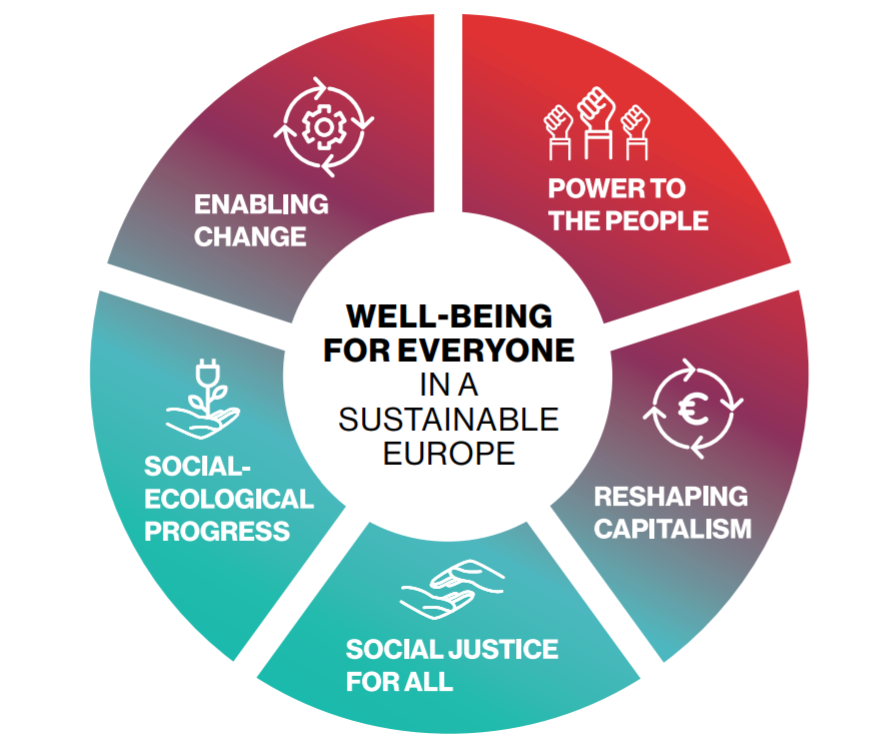
The unbearable burden of inequalities (or the 2030 Agenda as a roadmap to fight inequalities in Europe)

by Alissa Ghils and Barbara Caracciolo

[The views and opinions expressed in this article are those of the authors]

The 2030 Agenda relevance within EU domestic policies

Three years after its adoption, the 2030 Agenda for Sustainable Development has not yet been fully incorporated in EU domestic policies and it is still considered, largely, as a relevant framework for EU external relations policies and, namely, development cooperation policy. This is also demonstrated, among others, by the fact that the EU has not yet developed a comprehensive 2030 Agenda implementation strategy (even if repeatedly called for by the Council of Ministers and, recently, by the Contribution of the SDG Multi-Stakeholder Platform to the Reflection Paper “Towards a sustainable Europe by 2030” October 2018).

Nevertheless, the ongoing and interdependent social, environmental, economic and political crises that Europe is facing today, are a clear call for a radical transformation of the current economic development model.  Indeed, while in comparison to most other advanced economies, Europe is still often considered a shining example of relative social cohesion and fairness, inequality and the socioeconomic divide has been on the rise in Europe, and has intensified since the onset of the global financial crisis.  It is worth reminding some basic ‘inequalities facts’:

  • the 10% of wealthiest households hold 50% of total wealth;
  • there are still 1.4 million fewer jobs in the EU in 2015 compared with 2007;
  • low-skilled youth who are disconnected from both employment and learning represent 17% of 15-29 year-old in the EU, and risk being permanently left behind in the labour market;
  • women’s gross hourly earnings were on average 16.2 % below those of men in the EU;
  • more than one third of Europeans live in financial insecurity; and
  • children from an advantaged socioeconomic background will score on average 20% higher in mathematics than a child from a disadvantaged background, showing a gap in education outcomes among individuals with different parental socioeconomic backgrounds.  

Mounting evidence shows that unequal societies are dysfunctional: societies with larger income differences have, amongst other things, worse health, damaged social relationships and higher violence, lower trust among individuals, etc. Inequality can also lower social trust in institutions and fuel political and social instability. The higher the level of economic inequality, the higher will be the social barriers between groups and the less individuals will feel familiar with and connect to other people.

Possible ways forward

The idea that the 2030 Agenda can pave the way for a much needed radical, systemic, change of the current economic development model was debated at the recently-held SOLIDAR European Conference “The unsustainable burden of inequalities, and is at the centre of the Independent Commission on Sustainable Equality Report. The report, which has benefited of valuable input from a CSOs Task Force, states that “In the absence of profound change these crises will lead to democratic collapse, either because authoritarian populist and extremist forces will gain decisive power across Europe, or because these economic, social or environmental crises will have reached a destabilising stage for society”.

The Report of the Independent Commission for Sustainable Equality sets a series of concrete policy proposals which should be pursued to bring the fight against inequalities and, more broadly sustainability, at the core of European agenda and in the way decisions are taken. The main proposals are around the following issues:

  1. Reshape capitalism for people and planet making sure the business sector respects legitimate responsibilities towards society
  2. Take democracy back for everyone  
  3. A new and effective European anti-poverty plan to reduce the number of people at-risk-of-poverty or social exclusion  
  4. A new Social Europe of strong rights and protection for all through a comprehensive and ambitious implementation of all of the European Pillar of Social Rights’ principles and rights
  5. New fairness in incomes and wages
  6. A new “space-aware” and “bottom-up” approaches to territorial cohesion  
  7. A sustainable and technological transition that takes everyone along
  8. States must protect people against old and new risks building social-ecological welfare states and mitigating environmental inequality
  9. New solidarity through fair taxation
  10. A Sustainable Development Pact embedded in a new Sustainable Development Cycle, and based on complementary social and environmental indicators and targets – instead of the outdated European Semester

Our Europe, our choice

In a few months, we, European citizens, will have the chance to shape the future of Europe by deciding the composition of the next European Parliament and, hence probably, by casting our vote and deciding on the next European Commission’s President. This pre-election phase is considered a decisive moment to ask our candidates to take some concrete policy commitments to fight inequalities, promote sustainability and adopt a more participatory decision-making process.

The Report of the Independent Commission on Sustainable Equality, as well as the Manifesto for a Sustainable Europe for its Citizens contain concrete suggestions that should be taken into account by those asking for our trust. These should also be the backbone of our sustainability scoreboard to check and monitor that engagements are followed by actions.

Mobilizing across the globe to achieve the Agenda 2030 – #Act4SDGs

By Ingo Ritz, Global Call to Action Against Poverty (GCAP)

On 25 September, a million people in 1,248 cities & communities in 143 countries came together in 1,666 actions across the world for the Global Day of Action 2018 – Act4SDGs to mark the anniversary of the Sustainable Development Goals and the Agenda 2030.

Globally, the Global Call to Action Against Poverty (GCAP) organised this Global Day of Action in partnership with Action for Sustainable Development (A4SD) and the UN SDG Action Campaign.

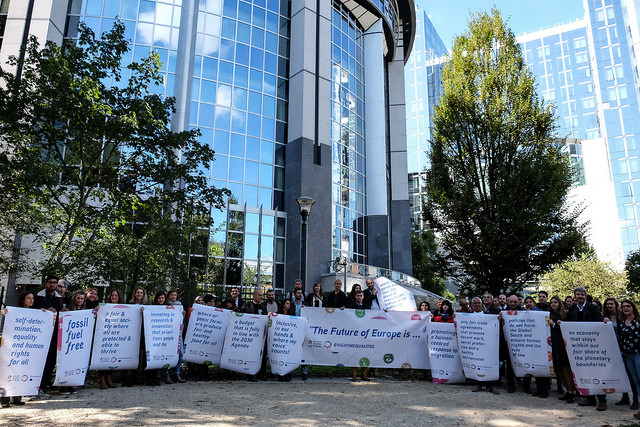
There were actions across Europe. In Brussels, SDG Watch Europe and a coalition of civil society organisations launched the Manifesto for a Sustainable Europe for its Citizens with core demands for the new political leadership of the EU and the candidates in the European Parliament Elections 2019. We believe the 2030 Agenda should be the compass for all European policies – and provides a positive vision for the people of Europe for a sustainable future.

In the past month, we’ve also mobilized together on 17 October 2018 – the International Day for the Eradication of Poverty. The number of people living in poverty remains very high – even while the percentage of people living in extreme poverty is decreasing. The latest numbers show that the target of SDG 1 to eradicate poverty by 2030 will not be achieved.

In the EU 23.5% or 118 million people are living at risk of poverty or social exclusion, according to the EAPN. The number of people suffering from hunger globally increased again in 2017 – to 821 million people says the FAO. The World Hunger Index notes that based on the current trends there will be hunger in 50 countries in 2030. All this represents a failure of our political and economic systems

The Agenda 2030 for Sustainable Development is meant to reverse these trends and create the transformation to end poverty, hunger and inequalities within the planetary boundaries by 2030. The first target of SDG 10 (Reduced Inequalities) states that the 40% poorest shall have a higher share of the growth than the national average. Yet 82% of the wealth created last year went to the richest 1%, where only 1% of wealth went to the poorest 20%. The gap is widening and not closing.

To create the needed just transition, governments must end the neoliberal policies of the last decades including the focus on economic growth rather than human well-being. This includes tax justice – by creating progressive tax systems including for wealth and closing the loopholes allowing tax avoidance, decent work – including a living wage as minimum wage and equal pay and labour rights for women, social protection, health and education for all – and the end of the use of fossil fuels, plastic as well as pesticides and harmful chemicals.

These policies are possible and successfully implemented in a number of countries – for example Spain just announced the closure of most coal mines by the end of the year agreed in a deal with the trade unions.  Unfortunately the reality is different. While all governments have officially committed to the 2030 Agenda, and a number talk about them (at least), many are hesitant to implement these transformative policies. The European Commission hasn’t even developed an implementation plan for the Agenda 2030. This is a shame – three years after the adaption of the agenda.

Many decision makers are influenced by well financed and powerful private sector lobbyists, by decades of free markets and growth ideology as well as more recently by right-wing populism. In a number of countries, authoritarian rulers came into power pursuing policies for the rich and violating human rights of activists, trade unions, media and marginalised people. The results of the elections are Brazil are extremely worrying.

What can we do to change this trend? The call must come from the people – in communities and different constituency groups, such as women’s groups, youth, trade unions, environmental activists and intellectuals. We believe that only people’s power will create the needed pressure for transformative change.

The good news is: There are social movements of people fighting for their rights – from the Women’s Marches and the #metoo movement globally, to the fight against privatisation of water in El Salvador to the protests against coal mining in Germany. On 25 September 2018, we proved again with the Global Day of Action – Act4SDGs that many people around the world want to be part of the change to transform the world into the vision of the Agenda 2030.

Together, as part of the global movement for justice and rights, we can end poverty and achieve the Agenda 2030!

Global Call to Action Against Poverty (GCAP) is a network of over 11,000 civil society organisations (CSOs) organized in 58 National Coalitions and in constituency groups of women, youth and socially-excluded people, among others. GCAP supports people in their struggles for justice and brings individuals and organisations together to challenge the institutions and processes that perpetuate poverty and inequalities. Together, we defend and promote human rights, gender justice, social justice, climate justice and the security needed for the dignity and peace of all.

Manifesto for a Sustainable Europe for its Citizens

By the SDG Watch Europe and a broader coalition of CSOs

The foundation of the European Union is one of the most impressive peace projects in modern history. A region was created proclaiming human dignity, respect for human rights, freedom, democracy, equality and the rule of law as its core values.

Along with maintaining lasting peace among its members, the EU also brought cleaner rivers, protection against chemical pollution, parental leave, quality education and free movement within the Schengen region.

Despite the European Union’s great legacy and mission, European decision makers’ response to the financial crisis, to combating climate change and environmental degradation, to halting growing inequality and the undermining women’s rights, to scandals such as those in our food system and Dieselgate, and to increased migration by closing our borders to those in need, have not only run contrary to the core values of the EU but also rolled back some of the historical gains we have fought for.

People feel that the economic and financial interests of the wealthy are prioritised over the common good. We are confronted with the impacts of austerity – growing poverty and inequalities, deteriorating access to healthcare and especially youth unemployment – while large companies are allowed to circumvent paying fair taxes. Urgent issues go unsolved, such as the climate crisis and air pollution, which kill hundreds of thousands of people. In short, people in Europe are being left behind and not everyone shares in the benefits of the Union.

Furthermore, in the European Union we have so far been unable to develop a common and human response to migrants and refugees. We do not ensure respect for their human rights. In addition, the space for civil society and trade unions to act in defence of fundamental rights, freedoms and environmental protection is shrinking in many countries across Europe.

In this context, many Europeans feel frustrated and have lost trust in the capacity of EU institutions to respond to their needs. The growing support for nationalist and xenophobic political forces across Europe is a worrying indicator of this discontent and a severe threat to democracy and our core values.

Recognising the challenges of the current situation in Europe, we, as citizens, should not limit ourselves in debating the Future of Europe to ‘Do you want more or less Europe?’, rather the focus must be on our future needs and our rights and ‘What kind of Europe do we want?’.

That is why 200+ civil society organisations all around Europe have united to bring people together to discuss the “Europe we want”, and to put this on the agenda of the forthcoming European Parliament elections. We strongly believe in a European project based on Europe’s core ethical values and sustainable development: democracy and transparency, social and environmental justice, human rights, the rule of law, equality, and solidarity. These values must be at the heart of all policies. This means fundamental changes from today. We want European policies, rules and standards that do what they were intended for: protect and safeguard well-being and health, ensure safety and freedom for people and protection of the climate and the environment. We want policies that support and serve present and future generations in and outside Europe.

Read the whole manifesto here: https://www.sdgwatcheurope.org/wp-content/uploads/2018/10/Manifesto-for-a-Sustainable-Europe-for-its-Citizens.pdf

How the SDGs are being highjacked and what to do about it

By Marie-Luise Abshagen, German NGO Forum on Environment and Development

The use of the SDGs as a reference in the political discourse has more or less become quite a mainstream thing to do. We can see this in domestic policies, on the EU level as well as in international processes. This can be a good thing. It means we can have a discussion on this global plan of action, without having to spent time to convince our political counterpart of the validity of this framework.

Nevertheless, after three years of the 2030 agenda, we still see little willingness to go about it and actually start doing what is written in the SDGs. We see lots and lots of talk. And, what might be even worse, we see that the SDGs are increasingly being misused for inherently unsustainable structures and processes, and that they are being captured by those who are not the least interested in changing the current status quo.

The SDGs, for example, have become a justification for agribusiness worldwide. Even though it has been proven false that highly-productive agricultural systems through resource intensive, GMO-based industrial farming can achieve the objectives of decreasing hunger, malnutrition and poverty – these have also been the cause of the worldwide destruction of ecosystems and livelihoods. Yet, corporations, governments and international institutions argue big agribiz will help implement the SDGs.

We also find the goals as a rationale behind the push to mine the oceans’ mineral resources. In this deceptive logic, deep sea mining is being framed as a sustainable form of resource extraction necessary to achieve a renewable, fossil free energy system – and thus necessary for the better of humanity. Conveniently, its supporters, among them many governments as well as UN bodies, leave out the fact that there cannot be any sustainable mining in the oceans. Every intrusion will inevitably destroy biodiversity, the relevance of which for the earth’s systems, the food chain and eventually for humans we cannot even begin to fathom.

Banks, monetary institutions, economists, development agencies, governments – all of them link the SDGs to economic empowerment and sustainable growth. Yet, we know that the global economy is not working for the vast majority of people. The gap between rich and poor, between and within countries continues to grow at a worrisome trend. Even in the richer countries, many are beginning to feel this gap. Those in the Global South have lived with this reality for decades and centuries. How is it that hardly anyone dares to challenge the logic of implementing the SDGs through economic growth with yet again the same development tools? Isn’t it absurd to believe that in order to end poverty we need to install the same kind of economy we know to actually be the main driver for poverty. Or is one only a proper citizen of the world if you are a digitally connected entrepreneur?

Finally, speaking of corporations – four in ten of the world’s largest companies already reference the SDGs in their corporate reporting. Does this really make them more sustainable? Should we trust in partnerships with these multinationals, simply because they have understood the modern sustainability narrative and included some form of SDG reference into their business plans, reporting or PR campaigns? I would argue not, if this does not change business practices as a whole – which means opting out of their consumption driven business model based on ever more resources and cheap labor and as little regulation as possible.

The 2030 agenda has become a sort of endorsement for some of the most problematic processes in our current economic system. Just slap on the SDGs, and people won’t be suspicious of the validity of what you are doing.

In some ways, this is the fault of the SDGs themselves. They are not by nature a progressive text but highly subjective to interpretation, full of contradictions. If you believe in the current economic model, the SDGs can be your go-to guidelines. Similarly, if you want to achieve progressive change, they are a projection screen for almost any political strategy you might be following.

It is so very important to understand this properly and to actively act against it. The logic of big singular and mainly economically driven solutions has again and again proven to be false, and only leading to more profits for the already rich elites. This cannot be what we agree to when we call for the implementation of the SDGs.

For all of us, the leading question has to be: What kind of development and sustainability model am I actually (maybe involuntarily) promoting? We have to be careful using the goals the right way and not to fall into a system reassuring role. All to happily governments use NGOs and other civil society actors to support their own policies. And while it is good in some cases and necessary in others for us to play the cooperative part, we must be careful not to lose our power of opposition and to apply pressure where change is so urgently needed.

If we don’t refuse the debt-driven economic model with its one-size-fits-all solution, if we don’t defy the idea that the key to protecting nature lies in a more efficient use of ever new resources, and if we don’t reject the notion that technologies will save us from ourselves simply because humans will be smart enough to finally invent that one thing to solve our crises – the story of the SDGs will not be a happy one.

We must be aware of the flaws of the SDGs, the way they are being used and by whom. We must carefully and continuously set the narrative around them. We must constantly challenge our partnerships with other stakeholders. This also means to reflect on our own communication strategies and political practices.

The good news: In order to reduce inequalities and protect the planet, most of the steps are clear to all of us. Whether we argue within the capitalist norm or not. Solutions range from alternative money systems to a financial transaction tax, from cooperative economies to binding regulations on multinational companies, from establishing protected areas with the help of indigenous communities to cradle-to-grave resource usage and production systems.

It is our responsibility to link real change to the SDGs and challenge anything that only pretends to be.

The urgent need for reform of the UN’s HLPF

By Deirdre de Burca – SDG Watch Europe Steering Group member

*This article reflects the personal views of the author on HLPF reform. SDG Watch Europe members will be consulted for their views on the issue in early autumn 2018.

For those SDG Watch Europe members who attended the UN’s High Level Political Forum (HLPF) in New York this year (9-18 July), there was a growing sense of urgency about the need to reform the way in which it is constituted and functions.

47 UN member states volunteered this year to present their Voluntary National Reviews (VNRs) at the HLPF. As in previous years, the CSOs who were present in New York spent much of their time meeting on the margins of the HLPF, as part of unofficial side events or in other gatherings organized by and for civil society.

Because many of the CSOs attending the HLPF this year were present on several previous occasions, it was easier to identify recurring issues and ongoing concerns linked to the current mandate and functioning of the Forum.

A common critique of the HLPF by civil society is that it is a very state-led and state-centered process. The role played by civil society and other key stakeholders in the HLPF is currently very limited, despite the clear commitment of the Agenda 2030 to a multi-stakeholder approach to monitoring and implementation.

Most national HLPF delegations do not include CSO representatives. When they do involve CSO representatives, these individuals are allowed approximately two minutes to comment publicly on the VNRs produced by governments. The growing number of high-quality CSO Shadow Reports produced in parallel to the VNRs are given no official status of any kind as part of the HLPF and cannot be uploaded to the UN website.

A major outcome of the annual HLPF is the publication of an official “Inter- Ministerial Declaration” that reflects some of the current issues and priorities identified by the Member States linked to the monitoring and implementation of the Agenda 2030 for Sustainable Development. Unfortunately, civil society and other stakeholders are not given the opportunity to provide input into this Declaration and generally react to its publication by issuing their own official response.

Fortunately, UN Member States have committed themselves to carrying out an official review of the HLPF in September 2019. Over the coming year, SDG Watch Europe members and broader civil society must engage in intensive advocacy aimed at governments and other key actors They must ensure that this planned review goes well beyond a superficial reflection process and that a range of fundamental and necessary HLPF reform proposals and policy changes are generated that will be implemented over the next few years.

When UN Member States review the HLPF in September 2018, the focus of the review should be multi-level and include the national, regional and global levels of the HLPF cycle. This will mean that Member States should review: 1) the Voluntary National Review processes, 2) the regional level peer review processes which take place through the UN’s Regional Sustainable Development Forums, and 3) the global level HLPF annual peer review system that takes place in New York every July.

Although all levels of the HLPF cycle are equally important, particular attention should be paid to the VNR process in order to ensure that it becomes a national- and locally-owned process. With this objective in mind, governments should be required to present draft VNRs for debate and approval by national parliaments and by the official multi-stakeholder Sustainable Development Forum before it is submitted at a global level to the HLPF.

At the regional level, civil society should be properly resourced to organize itself across national and sub-regional boundaries. Multi-annual funding should be provided to resource permanent secretariats for the new Regional Civil Society Engagement Mechanisms (RCEMs) being established in each region. Resources should also be provided under Goal 17 of the Agenda 2030 to engage in CSO capacity development the regional level. Regional exchanges and learning hubs should be established involving diverse stakeholders to promote more effective Agenda 2030 monitoring and implementation across each region.

At a global level, the HLPF should create a “Civil Society Forum” similar to the existing “Business Forum” where CSOs can come together to debate issues and agree on positions linked to the monitoring and implementation of the Agenda 2030. CSO Shadow Reports linked to VNRs should be given the same formal status by the UN, and a dedicated website linked directly to the UN website should be provided where these parallel reports can be uploaded.

The draft Ministerial Declaration adopted at the end of each HLPF should be much more action-oriented and it should be shared with other stakeholders in advance of its publication. These stakeholders should have the right to request that certain elements of the Declaration be amended or re-written before final adoption.

There should be a clear focus each year during the HLPF on involving all stakeholders in fulfilling its mandate to review progress by implementing Goal 17 (Means of Implementation) of the Agenda 2030. This should particularly include issues of financing for sustainable development, multi-stakeholder partnerships and the capacity development of stakeholders. Spaces should be created within the HLPF for mutual exchange and learning to take place amongst and between governments and other stakeholders including civil society, the private sector, trade unions, academia, etc.

The official review of the HLPF by UN Member States will take place during the 2019 UNGA from 23-24 September. In the meantime, civil society must be extremely proactive to carry out necessary advocacy with national governments and other key actors, including the EU. The focus of this advocacy must be to ensure that the review results in a reformed HLPF which will allow for much more meaningful and effective participation by civil society in the monitoring and implementation of the Agenda 2030 globally.

Citizens and sustainable development are big losers in EU’s next research programme

By Jill McArdle, Global Health Advocates

The European Commission has released its proposal for the next EU research framework programme, Horizon Europe, set to begin in 2020.

The proposal comes at a critical moment for the EU. Democracy across the EU is in a state of transformation. Shaken by recent electoral shocks, leaders are paying closer attention to the voices of citizens, and experiments in democratic innovation are taking hold in the public sphere.

Meanwhile, the Paris Climate Agreement and the Sustainable Development Goals have pushed global challenges to the top of the political agenda. This is thanks in no small part to civil society groups, who have campaigned tirelessly for decades on the need to radically transform our societies and set ourselves on a path to sustainable development within the planet’s boundaries.

Publicly funded research and innovation has a foundational role to play in addressing these challenges. It can offer an understanding of their nature, research alternatives to current models and support deliberation about possible conflicts and trade-offs. But to be effective, we must pay close attention to how the research agenda is set.

To ensure a needs-driven agenda, citizens must be at the centre of the process, both to reinvigorate democracy and harness the insights of those most affected by societal challenges. Civil society has an invaluable contribution to make here too, bringing its wealth of expertise and experience in areas like health and the environment, sustainable food and farming, climate and energy, and peace and democracy.

With this in mind, what has the EU proposed to do with the research budget? Zooming in first to the commitments on societal engagement, we see that engaging citizens and civil society in setting the research and innovation agenda is singled out as an objective of the programme. This is a positive move, though there are reasons to be cautious.

The concrete ways in which citizens will be engaged are left vague and undefined. And references to civil society are worryingly absent in the section supposedly dedicated to science and society.

Take a step back though, and the picture becomes even more concerning. The current proposal for Horizon Europe makes critical structural changes that could have catastrophic implications for democracy and sustainable development.

The current programme Horizon 2020 contains three pillars, focused on three distinct objectives: excellent science, industrial leadership and societal challenges (for example in health, food and climate). This coherent structure has been praised and reaffirmed at the political level and by numerous evaluations of the programme.

For Horizon Europe, the European Commission proposes to merge the second and third pillars of the previous programme under the heading “Global Challenges and Industrial Competitiveness”. This is a reckless move that puts research into real global challenges at risk.

What Horizon 2020 got right is that industry operates on a specific and distinct logic: profit and competitiveness. Societal challenges, on the other hand, focus on societal impact and therefore reflect the logic and interests of citizens and civil society.

We are told, of course, that these agendas naturally align. That these solutions to societal challenges are driven by the innovations of European industry. This may, in some cases, be true. But it is by no means a given that competitiveness will always be compatible with sustainable development.

And recognising that industry has a role to play is not the same as shoehorning the goal of competitiveness into a pillar meant to focus on the challenges faced by citizens and society. The key question here is, which goal will dominate? In the event of a conflict, what takes priority?

It is not hard to imagine how this will play out. Industry stakeholders are well-established within the programme. They know the programme well and how it works. They are well-equipped, well-resourced and well-organised. In comparison, citizens and civil society are not traditional actors in research and innovation.

They lack the insider knowledge and experience to effectively engage with the programme, as well as the resources needed to make themselves heard.

What chance has a needs-driven citizens’ agenda got against the might of industry? In this context, vague commitments on engaging society seem hollow and insufficient. At the level of societal engagement, a concrete roadmap to overcome barriers and boost engagement must be set out before the beginning of the next programme.

Structurally, a solution also presents itself. Horizon Europe will include a dedicated pillar for the European Innovation Council. Given that the EIC already integrates several elements of the Industrial Leadership pillar, and that their objectives are already closely aligned, this seems an appropriate place to house the remaining parts of Industrial Leadership.

This one move would preserve a dedicated pillar for independent research on urgent societal issues. We cannot afford to allow private interests to hijack a public research agenda intended to address citizens needs and deliver a just, equitable and truly sustainable future.

Global Health Advocates is a non-governmental organization that focuses on engaging all sections of society to fight diseases that disproportionately affect people living in poverty, and are also the leading causes of people living in poverty. In particular, Global Health Advocates works towards the formulation and implementation of effective public policies to fight disease and ill health.  Established in 2001 as the Massive Effort Campaign, Global Health Advocates works in France and in India.

Fight Inequalities campaign gets underway

By Solidar, World Vision and the EEB

Last week on 6 June, the global Fight Inequalities campaign was launched at the European Development Days.

The campaign was organised by civil society organisations from 15 EU countries who are working to increase awareness and push for the policy and social change needed to tackle inequality and poverty in Europe and beyond.

Inequality cuts across all of the Sustainable Development Goals. Tackling inequality should therefore be a priority, as none of the Sustainable Development Goals can be achieved.  

The campaign calls for societies to be more inclusive for women, children, different ethnic groups, marginalised people, and for EU citizens to become agents of change in their own communities.

Representatives from EU institutions took part in the campaign launch that took place at the ‘Make Europe Sustainable For All’ stand at the EDD event.

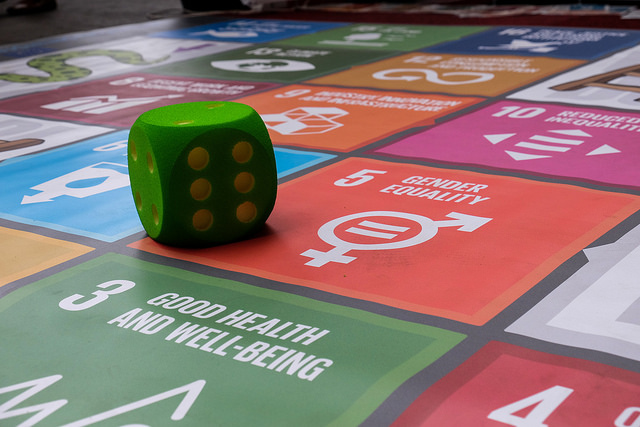
The #FightInequalities stand at the EDDs created an interactive and enriching experience. The 17 steps towards equality game, depicted all of the 17 Sustainable Development Goals (SDGs). The player would walk through various stories of inequalities happening to people in their everyday lives, both from Europe and beyond. This way, the player would learn about the different forms that inequality can take. After, the visitor had the opportunity to contribute to the inequalities mosaic with a picture and a quote reflecting the outcomes of the interaction.

More information at: http://makeeuropesustainableforall.org/campaigns/

Integrate sustainability pledges into the future EU budget

By People’s Budget campaign

European decision-makers, civil society organisations, academics and other stakeholders from all over Europe call on the European Parliament, the Council and the Commission to integrate sustainability into the next Multiannual Financial Framework (MFF) of the EU.

The EU budget is not an accounting tool, but a means to achieve common political goals. The EU aims for sustainable development as enshrined in the Treaty, and it is also committed to implement the 2030 Agenda for Sustainable Development, including the Sustainable Development Goals. This is the decisive moment when the EU can demonstrate its commitment to coherently mainstream sustainability principles, goals and objectives into funding decisions for the next decade.

We therefore call on the European Parliament, the Council and the European Commission to embed the “Think Sustainability First” principle when planning and implementing the next MFF and depending policies, which is also in line with the recommendations of the High Level Expert Group on Sustainable Finance. Sustainability does not only increase policy coherence, but also supports the efficient use of EU funds delivering results.

We also call on the European Parliament, the Council and the Commission to show their political commitment to sustainable development and the implementation of the 2030 Agenda for Sustainable Development in a joint declaration attached to the MFF regulation.

We are committed to work together with all European, national and regional decision-makers and stakeholders for a sustainable, strong and democratic future of Europe that benefits all people.

ECONOMIC GROWTH IS NOT COMPATIBLE WITH ENVIRONMENTAL SUSTAINABILITY

By Federico Demaria

“Growth for the sake of growth” remains the credo of all governments and international institutions, including the European Commission.

Economic growth is presented as the panacea that can solve any of the world problems: poverty, inequality, sustainability, etc. You name it. Left wing and right wing policies only differ on how to achieve it. However, there is an uncomfortable scientific truth that has to be faced: Economic growth is environmentally unsustainable. Moreover, beyond a certain threshold already surpassed by EU countries, socially it is not necessary. The central question then becomes: How can we manage an economy without growth?

Economist Kenneth Boulding famously said that: “Anyone who believes that exponential growth can go on forever in a finite world is either a madman or an economist”. Ecological economists argue that the economy is physical, while mainstream economists seem to believe it is metaphysical. Social metabolism is the study of material and energy flows within the economy. On the input side of the economy, key material resources are limited, and many are peaking including oil and phosphorus. On the output side, humanity is trespassing planetary boundaries. Climate change is the evidence of the limited assimilative capacity of ecosystems. It is the planet saying: “Enough is enough!”.

Mainstream economists, finally convinced by the existence of biophysical limits, started to argue that economic growth can be decoupled from the consumption of energy and materials (or from environmental impacts, that is the same thing). Historical data series (like Material Flow Accounting from EUROSTAT) demonstrates that this, up to now, has not happened. At most, there is relative decoupling (a decrease in resource use per unit of GDP). But, there is no absolute decoupling, that is what matters for sustainability: an absolute decrease of environmental resources consumption. The only periods of absolute dematerialisation coincide with economic recession. Trade should also be taken into account, to avoid externalization of pollution intensive activities outside the EU (the so called pollution heaven hypothesis).

The current economy cannot be circular. The main reason being that energy cannot be recycled, and materials only up to a certain extent. The global economy recycles less than 10% of materials; about 50% of processed materials are used to provide energy and are thus not available for recycling (it is basically fossil fuels). It is simple: Economic growth is not compatible with environmental sustainability. The list of nice oxymorons is long (from sustainable development to its reincarnations like green economy or green growth), but wishful thinking does not solve real problems. Increase in GDP leads to increase in material and energy use, and therefore to environmental unsustainability.

Technology and market based solutions are not magic bullets. Faith in technology has become religious: scientific evidence shows that, based on past trends in technological improvement, these are coming way too slowly to avoid irreversible climate change. For instance, efficiency improvements lead to rebound effects, in the context of economic growth (the more efficient you are, the more you consume; e.g. cars and consumption of gasoline). Renewable energy produces less net energy, because it has a lower EROI (Energy Return on Investement) than fossil fuels. For this, and other reasons, it cannot satisfy current levels of energy consumptions, which therefore needs to be reduced. Most of the world’s fossil fuel reserves must be left in the ground, unburned, to keep global temperature rise to no more than 2°C. In fact, fossil fuels should be called unburnable fuels.

Science sometimes bring bad news. An article recently published in Nature Sustainability argues that: “No country in the world meets the basic needs of its citizens at a globally sustainable level of resource use.” The question then is: How can the conditions for a good life for all within planetary boundaries be generated?

The uncomfortable truth to be faced by policy makers is the following:

  1. Economic growth is ecologically unsustainable. The total consumption of materials and energy needs to be reduced, starting from developed countries.
  2. Economic growth might also not be socially desirable. Inequalities are on the rise, poverty has not been eliminated and life satisfaction is stagnant.
  3. Economic growth is fueled by debt (e.g. quantitative easing), which corresponds to a colonization of the future. This debt cannot be paid, and the financial system is prone to instability (despite Basilea III).

For instance, scientifically is not clear how the European Union will achieve a low-carbon economy in a context of economic growth, since it implies a reduction of greenhouse gas emissions to 80% below 1990 levels by 2050. In fact, climatologists Kevin Anderson and Alice Bows have argued convincingly that: “for a reasonable probability of avoiding the 2°C characterization of dangerous climate change, the wealthier  nations need, temporarily, to adopt a de-growth strategy.”

Obviously, a transition from a growth society to a degrowth (or post-growth) one poses several challenges. However, the emerging field of ecological macroeconomics is starting to addresses them convincingly. Happiness and economics literature shows that GDP growth is not needed for well-being, because there are other important determinants (See Easterlin paradox). High life expectancy is compatible with low carbon emissions, but high incomes are not. Moreover, lack of growth may increase inequalities unless there is redistribution.

In any case, the issue is not whether we shall abandon economic growth. The question is how. Scientific debates around it are on the rise, but I am afraid policy making is behind. There are good signs: critiques of GDP as an indicator of well-being are common, there are policy proposals and degrowth is entering into the parliaments. This is not new. For example, in 1972 Sicco Mansholt, a Dutch social-democrat who was then EU Commissioner for agriculture, wrote a letter to the President of EU Comission Franco Maria Malfatti, urging him to seriously take into account limits to growth in the EU economic policy. Mansholt himself became President of the European Commission after only two months, but for a too short term to push a zero (or below) growth agenda. The time is ripe not only for a scientific degrowth research agenda, but also for a political one. As ecological economists Tim Jackson and Peter Victor argued in The New York Times: “Imagining a world without growth is among the most vital and urgent tasks for society to engage in.”

Federico Demaria is an ecological economist at Environmental Science and Technology Institute, Universitat Autònoma de Barcelona – which belongs to the world top ten research institutes on environmental studies. He is the co-editor of Degrowth: A Vocabulary for a New Era (Routledge, 2015), a book translated into ten languages, and of the forthcoming “Pluriverse: A Post-Development Dictionary“. He is a founding member of Research & Degrowth. Currently, he coordinates the research project EnvJustice, funded by the European Research Council.

This article was recently featured on META by the EEB.