SDG Forum 2019: Quo vadis Austria?

By Lisa Maria Weinberger, SDG Watch Austria/OEKOBUERO – Alliance of the Environmental Movement

On 29 November 2019, leading representatives of the political and private sector, academia and civil society came together at the 2nd Austrian SDG Forum 2019 to discuss the progress of the national implementation of the 2030 Agenda. The event was hosted by the civil society platform SDG Watch Austria. With more than 230 participants, the event demonstrated a strong commitment to local and global challenges, and clearly called for more consistent political action to reach the Sustainable Development Goals (SDGs) by 2030.

Joint responsibility for a sustainable future

Thomas Alge, Director of OEKOBUERO – Alliance of the Environmental Movement and member of SDG Watch Austria’s Steering Committee, pointed out key global issues targeted by the 2030 Agenda and how Austria should use the opportunity offered by the 2030 Agenda framework to tackle these: “The climate crisis, the extinction of species, global poverty and social inequalities are highly connected. The new government has to address these challenges as soon as possible and make the 2030 Agenda a top priority. This is a possibility to ensure policy coherence in the future.”

In her opening speech, Federal Minister for Sustainability and Tourism Maria Patek also stressed the importance of cooperation across different sectors: “The implementation of the SDGs is a joint responsibility towards future generations.”

Keynotes: SDG action from different perspectives

Despite a lack of political leadership regarding the implementation of the 2030 Agenda, there are a number of highly active and well-organized stakeholders in Austria. One of them is the Alliance of Sustainable Universities, an informal network of 16 universities, who developed a project called UniNEtZ (“Universities and Sustainable Development Goals”). Their chairman, Franz Fehr, presented the project at the SDG Forum 2019. At its centre is the development of options to support the government in implementing the 2030 Agenda. The proposed options would be based on the SDGs and would take into account possible synergies as well as trade-offs. 

Another important keynote was delivered by Sami Pirkkala from the General Secretariat on Sustainable Development of Finland. Finland has served as a good practice example in the implementation of the 2030 Agenda for years and has created favourable conditions for an effective and ambitious implementation of the 2030 Agenda. These include the establishment of a Development Policy Committee at the highest political level, an extensive gap analysis in 2016, passing a national implementation plan in 2017, including the parliament through annual reports and including young people, establishing a civil society panel comprised of 500 citizens, and a follow-up and review system as well as passing an SDG-compatible national budget in  2018.

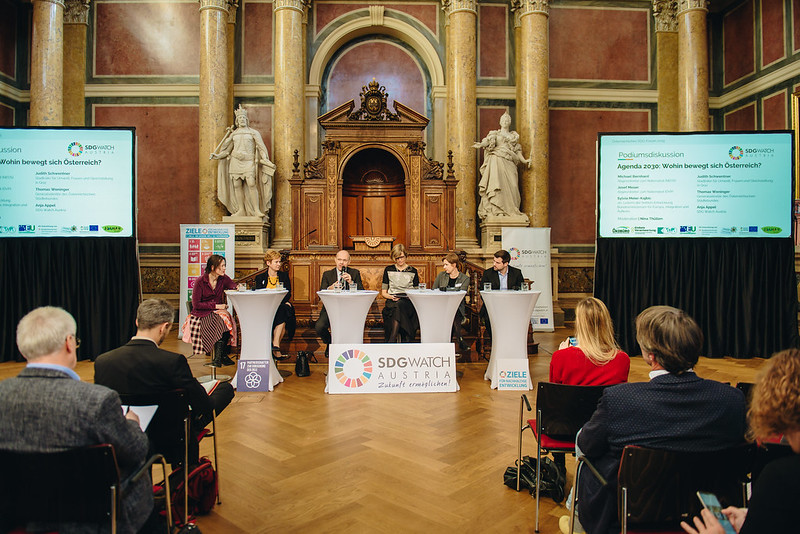
Panel Discussion: Agenda 2030 – Quo Vadis Austria?

The political panel discussion circulated around questions such as “What do we want Austria to look like in 10 to 20 years?” and made it clear that time is running out to achieve the SDGs by 2030. One key factor, which was raised multiple times, is that Austria lacks a strong vision and tangible, future-orientated policies and measures in many fields. While one of the panellists argued that existing structures work well and should be adapted to the changing circumstances, other panellists and civil society representatives in the audience pointed to decision maker’s inconsistent action and an exaggerated focus on the upcoming VNR report. In this context, politics was identified as a crucial factor for shaping the country’s path to a sustainable and good future for all. One panellist summed up the current dilemma: “As long as environmental pollution is free of charge and economic growth the premise for political action, Austria is far from having a consistent plan for the future.”

Panellists:

Anja Appel (SDG Watch Austria/Coordination Office of the Austrian Bishops’ Conference)

Michael Bernhard (Member of Parliament, NEOS – The new Austria and Liberal Forum)

Ambassador Sylvia Meier-Kajbic (Austrian Federal Ministry for European and International Affairs)

Judith Schwenter (City council, Graz)

Thomas Weninger (General Secretary, Austrian Association of Cities and Towns)

Workshops on cross-cutting issues

In the afternoon, four parallel workshops on sustainable agriculture, inclusive education, rural areas, and sustainable resources shed light onto several aspects of the SDGs and created an open space for discussions and ideas. The workshops were organized by SDG Watch Austria members: Coordination Office of the Austrian Bishop’s Conference (KOO), WUS Austria, OIKODROM, and Repanet.

Links and further information

Objectives, positions and activities of SDG Watch Austria

Photos: SDG Forum 2019

Presentation by Franz Fehr, UniNEtZ (German)

Presentation by Sami Pirkkala, General Secretariat on Sustainable Development, Prime Minister’s Office, Finland  (English)

Contact: Lisa Weinberger

ÖKOBÜRO – Alliance of the Environmental Movement

SDG Watch Austria, info@sdgwatch.at, sdgwatch.at  
Spotted: SDGs in the city!

By Südwind Niederösterreich

How is my life related to the 2030 Agenda and its 17 Sustainable Development Goals? Where can we find best practice examples in the city of Wiener Neustadt in Lower Austria? These questions were the starting point for a project funded by a sub-grant from the European Union’s “Make Europe Sustainable for All” and developed and implemented by the Austrian NGO Südwind.

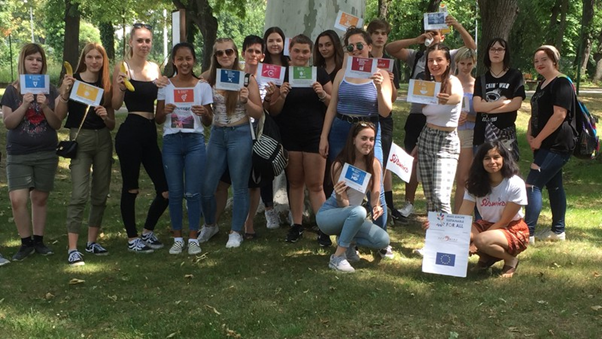
The project “SDGs finden Stadt” aimed at introducing the Sustainable Development Goals (SDGs) to a wider public in the city of Wiener Neustadt. Südwind works closely with schools and other entities to inform and educate pupils and the public about sustainability and global issues. Südwind has already worked in the area of global citizenship education for 40 years. The EU project targeted young participants. Through organised “SDG city walks” in Wiener Neustadt, several interesting initiatives were spotted. The youth enjoyed joining the sustainable city tour while creating their own digital stories.

By doing guided city walks through the city centre of Wiener Neustadt, the participants gained theoretical knowledge about the 17 SDGs and could discover linkages between them and their local surroundings. The project increased awareness for global connections and interdependencies between different SDGs. The main target group were young people between 14 to 18 years who attend secondary school in Wiener Neustadt. The workshops started either in the classroom or in the Südwind office with a theoretical overview about the 2030 Agenda. The students were explained content about sustainability and development using methods of global citizenship education.

SDG ambassadors via storytelling

On the search for how sustainable development goals were achieved in the city centre of Wiener Neustadt, the students became ambassadors for the SDGs themselves. Part of their journey was not only to discuss topics like poverty, education or sustainable production and consumption patterns – among others – but also to shoot short video sequences and explain the importance of the SDGs for society. Storytelling can be used as a tool or strategy to inform people about abstract issues on a very personal level by sharing their own story, e.g. how their life was affected by climate change. The students visited best practice examples like the zero waste shop “Schmeckerei” which uses plastic free products from local farmers that produce organic food (SDG 12: responsible consumption & production), the first and only vegan & vegetarian restaurant in Wiener Neustadt “Papa’s Kitchen” (SDG 13 climate action), a shop with fair trade products “Weltladen” (SDG 8 decent work and economic growth) and an urban gardening project “Obststadt” (SDG 15: life on land). This format allowed for discovering unfamiliar places that have found innovative ways to contribute to sustainability and to discuss responsible solutions for problems in the town right at the spot, like the drinking fountain and the public sanitary facilities in the city centre (SDG 6: clean water & sanitation) or the reflection on street names like “Frauengasse”/“Herrengasse” (“women’s street” vs. “men’s street”) in relation to equal rights and possibilities (SDG 5: gender equality). It opened up the opportunity to discuss and question alternatives and to meet people who are actively involved in local projects. Furthermore, the city tours had the positive side effect of including other pedestrians in the city centre as observers and even participants in discussions.

Make Europe Sustainable for All!

The youngsters were inspired by the variety of options for how to contribute to a more sustainable and fairer world. The idea of getting involved through active citizenship in their own region, in particular, was a fruitful thought and spurred interesting discussion for the participants. In order to create a fairer and more sustainable world for future generations, enhancing the participation of the younger generations is a key element for the success of the SDGs.

The participants’ conclusion was clear: Make Europe Sustainable for All!

Youtube: https://youtu.be/7l1vzmzvfSo

Facebook: https://www.facebook.com/suedwindnoesued/posts/1474698475988420?notif_id=1565243188496782&notif_t=like

The original article in German can be found here on the SDG Watch Austria website: https://www.sdgwatch.at/de/was-wir-tun/blog/2019/11/sdgs-finden-stadt/

Considerations on linking Urban Agendas and the SDGs

By René Hartinger, Ökosoziales Forum Wien

The 2030 Agenda for Sustainable Development with it’s 17 Sustainable Development Goals is the most important and most widely known agenda for a sustainable transformation of our societies and our global system. Explained in the shortest possible way (that I can think of), it leads a way into a better future of well-being and decent living conditions for everyone, while societal and economic well-being no longer depends on the exploitation of others – be it the people working in the production or supply chain or the marine systems that are overfished. The forests that are cut down and the species extinct for short-term interest, or the tax payers and workers that uphold the common goods while others shift billions to tax morasses. And, of course: the future generations, that will simply not have the same chances, as their forefathers and foremothers who pumped the atmosphere so full of greenhouse gases that the climate finally collapsed. To give this a name, it is, as the Austrian-German Scientist Uli Brand calls the “imperial way of living” – a lifestyle of some, that is based on unsustainable and unethical exploitation, and simply can not be generalised. The main challenge is to overcome the lock-ins of unsustainability.

To overcome these, the SDGs prompt asking the right questions and consider the right criteria to move towards a liveable world for all. The 17 Goals highlight the cornerstones identified on the way towards the 2030 Vision – which is a world in balance. These goals are highly usable on different political levels: first, they remind us of the 17 main aspects that the world community found important to be considered in political decisions, policies, strategies and measures. Second, they are “down to earth” enough to start conversations about the world we want to live in 2030 with the majority of the people, even with those not visiting our panel discussions or sharing our enthusiasm for terms such as “sustainable development”, “eco-social market economy” or “social-ecological transformation”. Nevertheless, and despite the low barriers, the systemic approach behind the SDGs is leading deep and deeper, once you bear them in mind and consider them in your thoughts and actions.

With a focus on urban areas and cities, a few things can be assumed, thinking about the role and responsibility, the potential and starting points of cities in contributing to reach these 17 Goals (and the liveable and sustainable societies and cities they’re aiming for). Over 50% of the world’s population already lives in cities, and in a few decades,  it will be 70% or more- which underlines the weight of what is happening in the centres. (Centres because cities – small ones as well as metropolitan regions – are always of high importance for the rural areas around them). Cities are also often incubators for the cultural, intellectual and spiritual life of a nation, which is important for two reasons: first, culture is what lies underneath our lifestyles, therefore transformation needs to begin there, rooted in our culture and values. Second, many ideas, which could lead the way towards a liveable 2030, are born, incubated, negotiated or tried out in the centres. And last, not least, many sustainable solutions (such as a well-developed public transport system, universal health services and social security programmes, long distance energy, etc) are based on innovation and infrastructure investments that only make sense in cities, because of the financial meaningfulness – which is why you generally find subways, operas and hospitals in centres.

Therefore, one can think about the Agenda 2030 and it’s 17 Goals in an urban context in two different ways. The first way is that the SDGs are a political compass and communications tool, which enables cities (and their mayors, politicians, administrations, etc) to connect with their citizens and different stakeholders in order to discuss the living conditions and surroundings we want in 2030, and to develop proper strategies and measures within these processes. The more we use the Goals in these dialogues, the more well understood and familiar it will be to work with them, which is a huge benefit. It makes political processes more inclusive and integrative, and it is efficient, as you do not always need to then explain terms such as “social-ecological transformation”, “smart city” or the like. The SDGs are bringing these bulky terms down to earth in a low barrier manner – which is very important, because urban agendas and many people simply ARE down to earth. To summarise: this first way therefore suggest to us to focus on the benefits and chances of the SDGs in the political and societal process and dialogue.

The second way to think about the SDGs in an urban context is the “other way round” – not to start with the SDGs as such, but with issues of concrete urban relevance. Housing, traffic, water and energy supply, air quality, social cohesion, education and health system, poverty prevention and reduction – all of these and many more topics are core urban agendas. Therefore, it could be a promising approach to promote the SDGs with urban actors without starting with “Have you heard there is a new set of goals by the United Nations that…”. But, for example, as housing is a big topic and highly relevant for mayors, start with a differently approach – “We know that housing is a big topic in your city that you are working on. You know, there is this new set of goals for a good future for all by the United Nations, which can be very useful in dealing with such complex issues. You can use these set of goals – the “SDGs” – for your city to find the best possible ways to develop your housing policies in the next years by getting in touch with your own citizens as well as other actors worldwide (other cities, scientists, civil society organisations or businesses) to learn more about what it is important and possible, or to promote what you do here within the worldwide SDG-community.” Such conversations could not only lower the barrier, but also enable new potentials, as working with the SDGs always opens the view and allows an organised, well-reflected approach on the complexity of sustainable development issues.

Combining and using these two views and approaches is promising and productive from our point of view, setting free the urban areas’ potential in sustainability transformation (or the inverse, for breaking out of unsustainable lock-ins). With a focus on housing, for example here in Vienna, the SDGs have helped us to understand that with the 100 year old successful “Vienna Model” of social housing, we do not only have a leverage in providing affordable housing, but also in emission reduction and protection of ecological niches in our city, providing spots of local recreation for the people right outside their door, and much more. But the 17 Goals also help us to understand and to communicate that affordable housing is not a solution unless there is no high quality of public services, social stability and healthy and sound natural environment provided too. And, of course, this also implicates our duty to take care of the future– e.g. through broad education and widespread nature and climate protection measures. We, therefore, consider the SDGs and the Agenda 2030 highly relevant with great potential, and we use them willingly and gladly. But they also remind us, that these set of goals and icons are only a new name for what we and our forefathers and foremothers have been working on long before 2015 – a good city to live in for generations to come. This understanding can be leveraging – as it connects our own efforts and history with a promising new approach and common language leading into a liveable and good future for all.

Rene Hartinger, born 1984, was involved in establishing SDG Watch Austria in 2017 and 2018 and is today Secretary General of the Vienna Ecosocial Forum. The core topics of his organisation are food consumption and production, urban agriculture, nature in cities, and a broader approach on sustainable cities and liveability through the lens of the Agenda 2030’s 17 SDGs. www.oekosozial.at/wien

SDG-Watch Austria: A vibrant CSO platform challenging an inactive political system

Austria’s former federal president Heinz Fischer assured “Austria’s full commitment to the seventeen specific goals” (1), at a speech to the UN’s general Assembly on September the 27th in 2015. It could have been a historic moment – day 1 of an active Austrian role in the global sustainability transition.

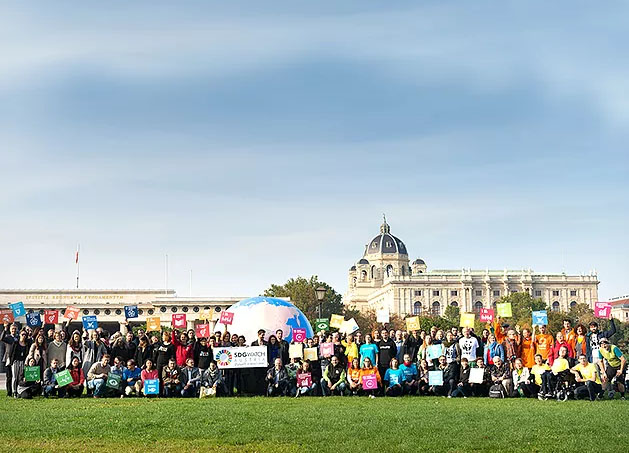
But the Austrian government has done little to walk the talk since then, and a first report to the UN’s High Level Political Forum (HLPF) is only announced for 2020. It doesn’t surprise that CSOs don’t stand aside while they see a hopeful chance for a better future pass by, but take action in their hands. Exactly two years later, on September the 27th in 2017, around 100 organisations from all parts of civil society launched SDG Watch Austria  – a broad CSO platform to stand up for an ambitious and consequent implementation. You can tell their passion for the SDGs from these pictures.

Austria’s government by now only delegated the responsibility for the implementation to the administration level. The „mainstreaming approach“ might sound good at the first moment, but it’s an approach on an administration level, and it has turned out to be quickly stretched to it’s limits. High level political commitment to boost SDG implementation is lacking.

The organisations of SDG Watch Austria consider the 17 goals integrated and indivisible, and an important chance for a better future, which needs an approach that is really meeting the „unprecedented scope and significance“ (2) of the 2030 Agenda. Founding the platform is a consequent step towards progress with the national contributions to the SDGs. It is a strong and positive sign as well as an offer to the government, to take this chance to work with this coalition and make a better future possible.

Learn more on http://www.sdgwatch.at or by following #SDGsumsetzen on facebook and twitter.

(1) https://sustainabledevelopment.un.org/content/documents/20803austria.pdf

(2) http://www.un.org/ga/search/view_doc.asp?symbol=A/RES/70/1&Lang=E