Alliance 4 Europe

By Omri Preiss

We would like to introduce you to a new initiative set up to facilitate coordination and collaboration among civil society, which may be of interest to you.

Alliance 4 Europe is a newly founded organisation that set out to be a service-provider and capacity-building platform for pro-European campaigns. Ahead of the European elections on 23-26 May, we aim to facilitate coordination as well as provide access to campaign tools, materials and information among pro-European campaigns and civil society groups in order to increase pro-European voter turnout. Please find more information in the link above.  We have a developed a series of platforms and tools we would like to share with interested organisations.

Alliance 4 Europe has set up a tool and content sharing platform for civil society partners to use, the EU Wiki. The platform enables partners to access campaign tools, content, and material uploaded by like-minded partners. This may be useful apps, toolkits, visuals, data and research, and a common calendar across a variety of different themes.

This would allow partners to extend their message and amplify their reach ahead of the elections, leading to a more democratic pro-European outcome in the elections, and greater civil society coordination and collaboration beyond. It would also allow activists to access tool and material they could use in their own activities. Material is shared based on a Creative Commons 3.0 framework,

For more information, and to request to join the Wiki, please get in touch and send an email to wiki@alliance4europe.eu with a brief outline of your activities and your plans ahead of the elections.

Feminists at UNEA-4 Continue the Call for the Right to a Healthy and Sustainable Environment

By Women’s Major Group

Reflecting on the outcomes of the 4th Meeting of the United Nations Environment

Assembly in Nairobi, Kenya (UNEA-4), the Women’s Major Group offered the following

Statement: Feminists at UNEA-4 Continue the Call for the Right to a Healthy and Sustainable Environment.

Nairobi, Kenya. The conclusion of UNEA-4 saw a landmark resolution to promote gender equality and the human rights and empowerment of women and girls in environmental governance. The Women’s Major Group welcomes the commitment to strengthen the gender dimension of environmental policy and the resolution’s recognition of the importance of protecting human rights. We are particularly pleased that the resolution specifically invites member states to establish gender criteria for national environmental projects and programs, to recognize gender equality and the role of women and girls as sustainability change agents, and to support capacity-building to enhance women’s active and meaningful participation in decision-making.

We welcome the mobilization of data requested of the UNEA Executive Director, but caution that this work must include access to information and participation by civil society and the Women’s Major Group, which is not currently stipulated in the text. As countries report back on their progress at the next UNEA meeting in 2021, we expect to see meaningful progress and accountability for their commitments made at UNEA-4.

We regret that member states could not agree on the importance of protecting women human rights and environmental defenders, despite this having been articulated throughout the negotiations. This formal recognition is long overdue. States must seize every opportunity, in UNEA and in other UN fora, including the Human Rights Council, Framework Convention on Climate Change, and the High-Level Political Forum, as a matter of urgency to protect environmental human rights defenders – including those who are women and indigenous peoples – and the right to a healthy environment. The persistent absence of this recognition undermines the vision and commitments otherwise agreed upon by member states, and UNEP’s 2018 environmental defender policy. We listened with extreme concern to the United States, in its closing remarks, as it refused to acknowledge any reference to the Convention on the Elimination of All Forms of Discrimination against Women (CEDAW) in the adopted resolution. The CEDAW is ratified by almost 190 UN Member States, with the exception of a few including the USA. Even Saudi Arabia and South-Sudan have ratified. This is a stain on the USA.

Unfortunately, in the resolutions concerning deforestation, geoengineering, and plastic pollution, issues that negatively and disproportionately affect local communities and women, member states largely maintained business as usual with weak or no meaningful commitments. We are dismayed at other resolutions that would have called attention to the harmful practices that affect women’s health, livelihoods, and planet. We strongly appreciate the draft resolution put forward by the EU on deforestation and agricultural supply chains. The US and Brazil undermined the spirit of this effort throughout until the moment it was withdrawn. It is past time to acknowledge that agricultural expansion is responsible for around 80% of deforestation, of which one-third is internationally traded. A strong resolution on that topic would have demonstrated political will and leadership in halting deforestation by 2020 – a target which has already been agreed under the 2030 Agenda and Aichi Target 5. We are thus deeply disappointed by the lack of ambition and obstruction in the negotiations on this issue, and the resolution’s ultimate withdrawal. If we don’t commit and take actions to halt deforestation and forest degradation today, we will not be able to ensure food security because healthy ecosystems are the basis for sustainable agriculture.

We are dismayed that due to strong resistance from a few high-emitting fossil producing countries, like the US and Saudi Arabia, UNEA-4 also lost a vital opportunity to reinforce precautionary global governance of geoengineering at the UN, building on existing moratoria in the Convention on Biological Diversity and London Convention/Protocol.

A resolution on marine plastic litter proposed by Norway, Japan, and Sri Lanka proposed ambitious language to halt the plastic crisis by strengthening international governance, including the consideration of a new legally binding agreement. However, strong opposition led by the US delayed progress at the scale and urgency that the plastic pollution crisis requires. Similarly, a resolution on single-use plastics proposed by India was weakened. We join vocal proponents – like the Pacific Islands States, Philippines, and Malaysia – in urging countries to take meaningful action to address plastic pollution between now and UNEA-5.

Women and people all over the world continue to suffer from the impacts of failed policies and lack of action in effectively tackling climate change, air, soil, and water pollution, and unsustainable consumption and production. At UNEA-4, we saw a continuation of business as usual. As feminists, we continue to advocate and interject our analysis for women and the planet.

We will continue to call for the Right to a Healthy and Sustainable Environment.
COMBATTING DISCRIMINATION AND HATE SPEECH IN ELECTION CAMPAIGNS

By Equinet

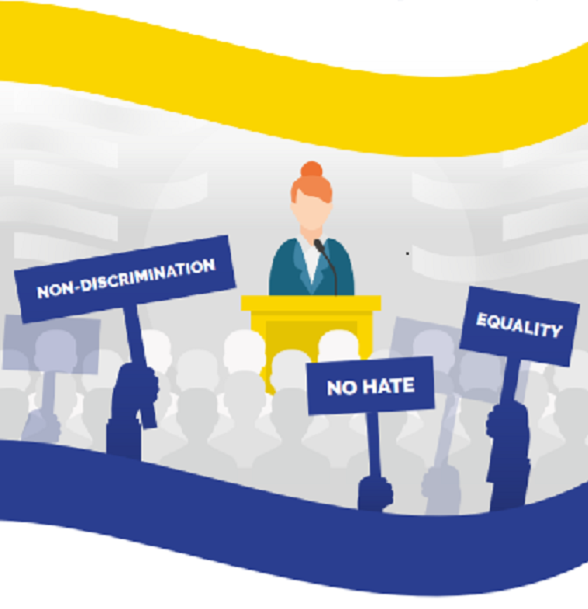
Ahead of European Parliament elections in 2019, as well as continuous elections happening at local, regional and national level around Europe, Equinet has developed a recommendation to be considered by political parties, candidates and media outlets (including social media) which focuses on the general principle of equality, prohibition of discrimination, tackling hate speech, addressing sensitive topics and promoting equal representation on electoral lists.

Feel free to share it far and wide.

Non-discrimination and equality are cornerstones of European democracies. Election campaigns are crucial testing grounds for commitment to these values, so it is worrying to see so many of them being increasingly marred by scapegoating, discriminatory language and hate speech across Europe. This causes harm to ordinary people, affecting their dignity and respect at the very least, if they are not also alienated or even attacked. It is clear that discriminatory language and hate speech can also damage the cohesion of society and lead to a downward spiral of intolerance and insecurity.

Politicians have a particular responsibility in this regard because of their capacity to exercise influence over a wide audience. Political rhetoric is a powerful tool for change and strongly protected by provisions for freedom of expression as an essential democratic right. However, if used in a hateful and discriminatory manner, it can cause widespread intolerance and even hate crimes. Politicians should therefore use their right to free speech responsibly, and promote their electoral programme fairly and respectfully.

The media, including social media, also has an important role to play to avoid amplifying discriminatory messages, especially when reporting on language that amounts to hate speech. With due explanation and critical reflection, the media can ensure a healthy and inclusive public debate during election campaigns.

Every individual has the right to equality and freedom from discrimination. Equality bodies are independent state institutions which offer support to any individual who has experienced discrimination, as well as promote equality and counter discrimination and harassment more generally. As the European Network of Equality Bodies mandated to act as the expert voice of equality bodies to advance equality in Europe, Equinet has developed this Recommendation to promote election campaigns which are free from discrimination and hate speech.

Our recommendation is to be considered by political parties, candidates and media outlets (including social media), and focuses on the general principle of equality, prohibition of discrimination, tackling hate speech, addressing sensitive topics and promoting equal representation on electoral lists. It is an ode to the importance of equality as a common European value, demands respecting equal treatment and non-discrimination at all times, and calls upon the aforementioned to respect the founding values of our democracies and our common constitutional traditions.

Download Equinet Election Recommendation: (ENG), (HR), (RS), (TR), (HU), (ES)

The “Good Leadership” Campaign

Together with the Recommendation, Equinet launched a social media campaign on 20 March on what it means to be a good leader under the hashtags #GoodLeadership and #ElectHope. This campaign aims to highlight core values that equality bodies promote in their daily work to make the world more equal such as respect, solidarity and justice.

What can you do?

Participate in the campaign that we will launch on our Twitter and Facebook accounts (@EquinetEurope) by:

  • Printing the ‘’A good leader…’’ image and filling in the empty space with a description that reflects the values you believe in.
  • Taking a photo of yourself with your sign and sharing it on your social media accounts, referencing the campaign hashtags and asking your friends and colleagues to do the same.
  • Bring it to the attention of allies and friends online by tagging their accounts and retweeting the pictures they publish.

FOR A HUMANIST EUROPE – 2019 EU ELECTIONS CAMPAIGN

By the European Humanist Federation

Between 23 and 26 May, European citizens will be called to vote in the European elections.

In many countries, these elections are considered inferior elections and campaigns often focus on national politics or on expressing discontent towards the government. However, the outcomes of European elections are fundamental as they will shape the composition and the work of the European Parliament, thereby shaping EU policies for the next 5 years to come. Furthermore, while the Member States nominate the European Commissioners, the European Parliament has its say via the consent procedure foreseen in the treaties.

Memorandum for the European elections

As humanists, we feel that the question is not the scope of European competences per se, but rather how our values can remain the basic drivers of European integration. This memorandum proposes a vision of a more humane EU that finds solutions to overcome the growing gap between its values and the policies it pursues. A Europe that is truly based on freedom, equality, solidarity and human dignity.

Because the EU is one of our main partners and because we want its action to fully embrace its fundamental values and principles – which, as expressed in article 2 of the treaty establishing the EU, are very much humanist values, we produced a humanist Memorandum for the European elections making a number of proposals in the following 6 key policy domains:

  1. Rule of law and democracy
  2. Civil society
  3. Fundamental rights and freedoms
  4. Equality and social justice
  5. Academic freedom and technology control
  6. Solidarity with the world

Our memorandum is available in English and in French

Manifesto for a humanist Europe

We also drafted a shorter document: our humanist manifesto for a Europe that truly Respects Freedom, Equality, Solidarity and Human Dignity.

This manifesto sums up the 14 key priorities where our memorandum proposes EU action:

  1. Preserving the rule of law and democracy
  2. Civil society as a counter-power and key promoter of European values
  3. Protect a secular vision of Europe
  4. Defend freedom of thought for everyone
  5. Defend freedom of expression
  6. Free and pluralist media as a backbone of citizen emancipation
  7. Freedom of choice, a building block of human dignity
  8. A society that values all people for who they are
  9. No human dignity without social justice and fairness
  10. Secular and public education as a condition for equality
  11. Scientific research and technology assessment
  12. A common immigration policy, based on solidarity and responsibility
  13. A strong Europe promoting peace and human rights on the world stage
  14. Solidarity with future generations: climate change and sustainable development

The manifesto is available in English and other languages.

HELP SPREAD THE MESSAGE!

Are you interested in helping us spread our messages and push humanist values into debates leading to the European elections?

Follow our campaign #HumanistEurope and spread our 14 animations on Facebook and Twitter. Should you want to translate these visuals, get in touch!

BABY STEPS TO SAVE THE PLANET: WHAT I LEARNT AT THE UNITED NATIONS ENVIRONMENT ASSEMBLY

By Patrizia Heidegger, EEB

I joined thousands of international delegates and national ministers in Nairobi calling for solutions to save the planet. Here’s what happened.

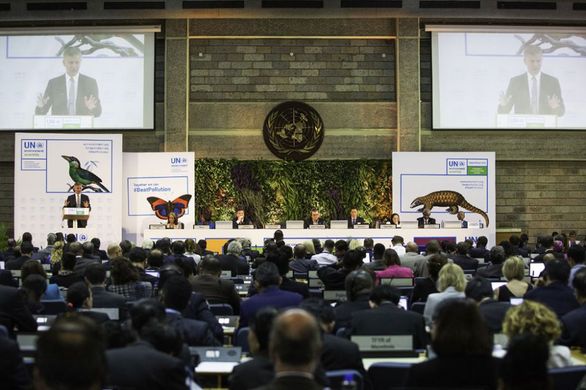
Just imagine the crowd at the 4th UN Environment Assembly last week in Nairobi: over 4,000 delegates, 100 environment ministers and selected heads of state, including French President Emmanuel Macron.

The Assembly, also known as UNEA, is the world’s highest decision-making body ever established to solve the most pressing environmental challenges.

Governments had tabled 27 resolutions to address a broad range of burning issues from tackling plastic pollution to managing chemicals, from recognising the role of women in solving environmental challenges to halting deforestation.

The negotiators were confined in small, hot meeting rooms from morning till late in the evening as they dealt with controversies and heavy push backs by some states.

As part of the frenzy, environmental activists and NGOs from around the world were trying to get a hold of delegates in the coffee breaks, in the hallways, in the queue to lunch, or wherever there was an opportunity to press for real change and convince a government to support ambitious solutions.

In the end, the governments adopted 25 resolutions – many of which were hard fought for. To the great disappointment of advocates and activists working to preserve the world’s forests, the resolution on deforestation had to be withdrawn after tensions with countries such as Brazil and Indonesia.

A resolution tabled by the European Union on the circular economy found agreement after the text only seemed to consist of bracketed – unagreed, that is – text for many days. However, the wording was heavily watered down. It soon appeared clear that certain governments at the assembly – amongst them the US – are against the transition to a circular economy, which is really about reducing resource waste in absolute terms.

Unfortunately, some governments also deleted any reference to getting rid of hazardous chemicals in everyday products. The resolution also failed to mention that the planet has ecological limits – and that we need to live and thrive within these limits. Despite momentum around the globe to tackle plastic pollution, the states assembled at UNEA missed the opportunity to agree on a big step forward to curb the production of plastics. Some governments were ready for it, but they were eventually persuaded to take baby steps instead, which will not be enough to save the planet from drowning in plastic.

On a positive note, civil society celebrated the adoption of a resolution that recognises the role of women in finding solutions to environmental challenges. However, Arab states in particular watered down the language in the text and deleted any reference to women defending environmental rights.

To sum it up, after a week, I was glad to see civil society’s growing presence at UNEA, as activists did all they could to make an impact on the negotiations. Among these, I was impressed by the women’s rights’ activists who staged a stunt on the main stairway leading to the conference rooms on International Women’s Day – the same stairs which Macron would walk down just shortly after. I was also happy to see youth activists from Nairobi and other countries organising a march for the climate. All this helped restore a genuine sense of diversity and inclusion, which we desperately need.

We have worked hard to make small steps forward – on global chemicals management, on gender justice, on solving the plastics crisis, on promoting a circular economy. However, these baby steps are much too small to tackle the challenges that humankind is facing. The fight is not over yet, and we all need to make sure that at the next UNEA global leaders feel the political heat and deliver real solutions.