#Act4SDGs – Italy: Mobilizations across Italy, Agenda 2030 monitoring report & video on the SDGs

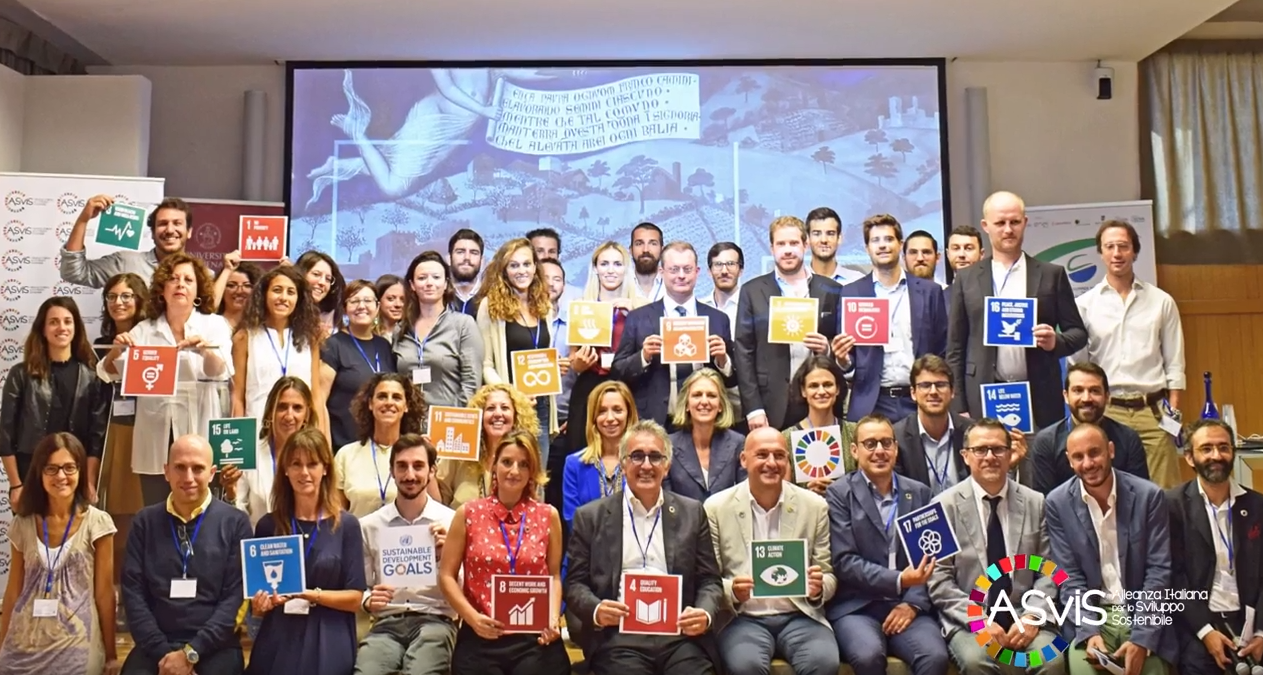
For the 3rd anniversary of the 2030 Agenda on 25 September 2018, the Italian Alliance for Sustainable Development (ASviS) has put together a video on the mobilization of many people and organizations for the #ACT4SDGs campaign.

In addition, Asvis have put together a fantastic video on all 17 SDGs.

You can also read GCAP Italia’s comprehensive Agenda 2030 monitoring report – Sustainable development: for whom? A critical vision for coherence of Italian and European policies. The report focuses on the analysis of certain topics and cases in which the connections between the SDGs are evident: the interdependencies between the local and global spheres, between the internal and external dimension, seeking to apply a systematic interpretation and identifying dilemmas and contradictions that limit the pursuit of sustainable development. On the basis of this analysis they have put forward proposals for the Italian government and Europe, and more generally to give civil society a stronger role not only in the “implementation of the 2030 Agenda” but also in its interpretation and development in a transformational sense.

#Act4SDGs – Netherlands – “The Netherlands in the next gear – Adopt an SDG live”

By Chantal Van den Bossche, WECF

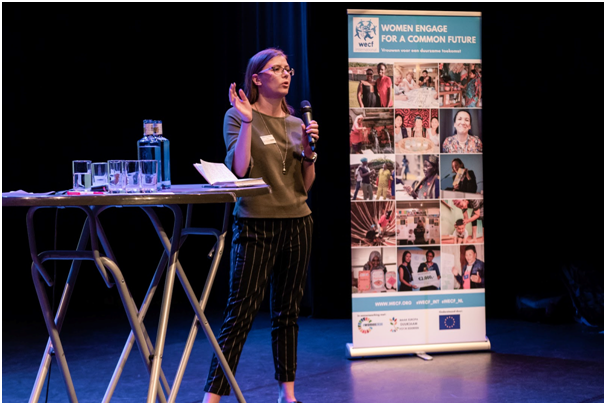
WECF and Building Change organised the event “The Netherlands in the next gear – Adopt an SDG live” on 27 September in the Koorenhuis in The Hague.

The purpose was to answer “How can we bring the Netherlands into the next gear to achieve the Sustainable Development Goals?”. These were discussed by representatives of the youth organisations affiliated with the major Dutch political parties, and with MPs Michel Rog (CDA), Isabelle Diks (GroenLinks), Corrie van Brenk (50Plus), Anne Kuik (CDA), Chris Stoffer ( SGP), and Kirsten van den Hul (PvdA). The speakers also talked about what they had done with their SDGs in the past year and how are they going to commit to their SDGs in the near future.

In addition, Ida Bakhturidze, a champion of women’s rights in Georgia and gender coordinator of WECF’s Caucasus office, spoke about her work. CSOs ActionAid and Both Ends organised in depth sub-sessions on fair taxes, equality, and shrinking social space for CSOs. Recommendations of these sessions were give to the MPs present.  

The conference was opened by Kirsten Meijer, WECF The Netherlands director. (see photo), the other photo is Sanne van de Voort (WECF) presenting the outcome of the women human rights defenders session.

Women Engage for a Common Future (WECF) safeguards our children’s future by creating a healthy environment and sustainable development for all. We strive for balancing environment, health and economy. We enable women and men to participate at local and global level in policy processes for sustainable development. Our network’s activities are based on our partners’ own visions and needs.

#Act4SDGs – Dublin: Rally hears calls for greater progress by Ireland on UN goals

By Caitriona Rogerson, Irish Environmental Network

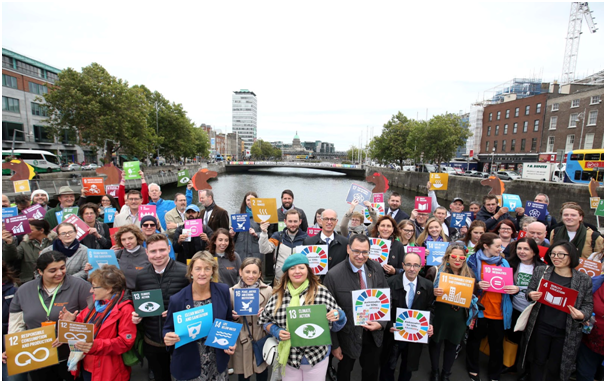
In Dublin, campaigner rallied together on the Global Day of Action, 25 September, in the city centre to highlight the Sustainable Development Goals and Ireland’s efforts to implement them. The event was organised by All Together in Dignity Ireland, in conjunction with members of the DEAR project Make Europe Sustainable for All and Coalition 2030 and focused on the ‘Leave No One Behind’ promise.

An enormous banner reading ’17 Global Goals and a Promise: To Leave No One behind’ was hung from the Rosie Hacket bridge in Dublin City Centre from 7am – 7pm, and throughout the day, a team of volunteers talked to passersby about the goals. In addition, the public was invited to participate in a ‘Humans of Dublin for the Global Goals’ photo challenge, and the result is a photo montage of over 200 citizens holding an SDG.

At 1.17pm (to symbolise the 17 Goals and 1 Promise) over 100 members of the Coalition, alongside government representatives and ambassadors from 7 EU countries gathered for a group photograph on O’Connell Bridge. The whole group then walked to the Garden of Remembrance to hear messages of support from the President of Ireland and the Belgian Ambassador, as well as statements connecting the ‘Leave No One Behind’ promise to each of the 5 P’s – People, Planet, Prosperity, Peace and Partnership. Finally two young asylum seekers living in Direct Provision in Ireland gave a spoken word performance.

The day was a great success with #ACT4SDGs and #Ireland4SDGs trending on twitter in Ireland, and in addition it was covered by the Irish Times:  https://www.irishtimes.com/news/politics/rally-hears-calls-for-greater-progress-by-ireland-on-un-goals-1.3640993

The Irish Environmental Network is an umbrella network that works to support environmental NGOs through access to funding and services. It consists of environmental NGOs that carry out their work through practical conservation work, campaigning, lobbying and raising public awareness of environmental and conservation needs.

Let’s Make Romania and Europe Sustainable for All

By Loredana Giuglea, World Vision Romania

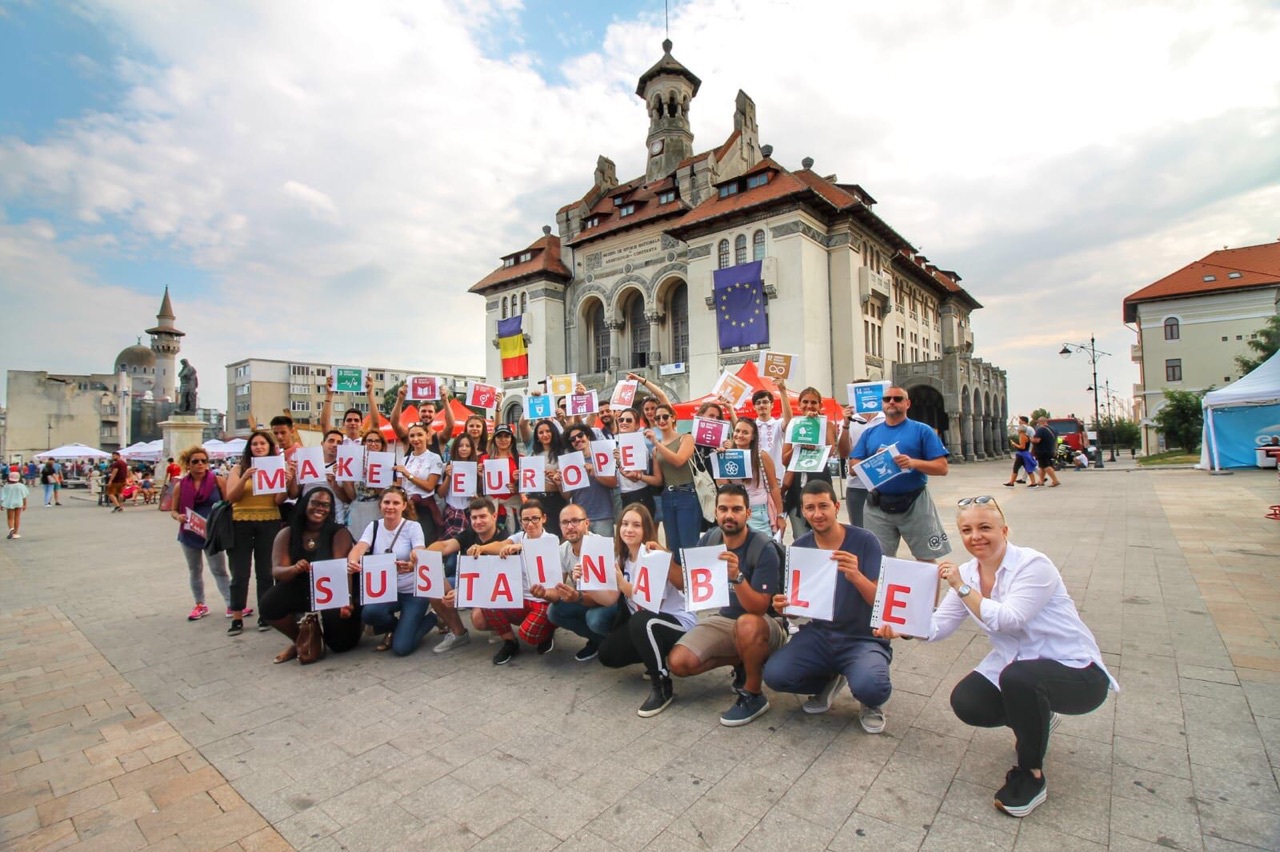
World Vision Romania and the Romanian NGDO Platform organised a National Seminar to celebrate the 3rd anniversary of the adoption of Agenda 2030.

The Photovoice Album of children from World Vision Romania Consultative Councils was launched on this occasion. The Photovoice includes photos which portray children’s perspective on the 17 SDGs, and their messages for other children, communities, local, regional and national authorities, so that Agenda 2030 becomes a reality. There were more than 30 participants, including from the Environment Ministry, the Department for Sustainable Development and various local and national level NGOs.

Other various public events were developed in September by the 3 associations which received sub-grants through the Make Europe Sustainable for All project.

The Youth Equality Promotion Association – ADAPTO, organized „MobiQuest 2018” – a treasure hunt for wheelchair and non-wheelchair users to advocate for equality of chances for persons with disabilities.

The local community in Siminoc village, Constanta County was mobilized to act to improve the environment for their children, for a safe and violence-free school and for increased participation of children and young people to reduce social inequalities.

Youth from the Youth Vision Association promoted the Sustainable Development Objectives through workshops and awareness campaigns and analyzed each SDG in the Romanian context.

World Vision Romania is a child-focussed overseas aid agency. Active in Romania since 1990 and part of World Vision International, it is the largest privately funded NGO in the world. World Vision provides short and long-term assistance to 100 million people worldwide and has over 40,000 staff members working in 100 countries. For six decades, World Vision has been engaging people to work towards eliminating global poverty and its causes and most importantly engaging people to serve and to attend the needs of the children of the world. We believe every child has the right to a safe environment, access to clean water and food, healthcare and education to build a brighter future. Committed to the most vulnerable, World Vision work with people of all cultures, faiths, ages and genders to achieve transformation. They do this through three main pillars: Relief and Development, policy advocacy and change, and partnerships with a variety of actors.

What would the world be like if we had no prejudice of each other based on where we were born and what we looked like?

By Asociación La Bolina

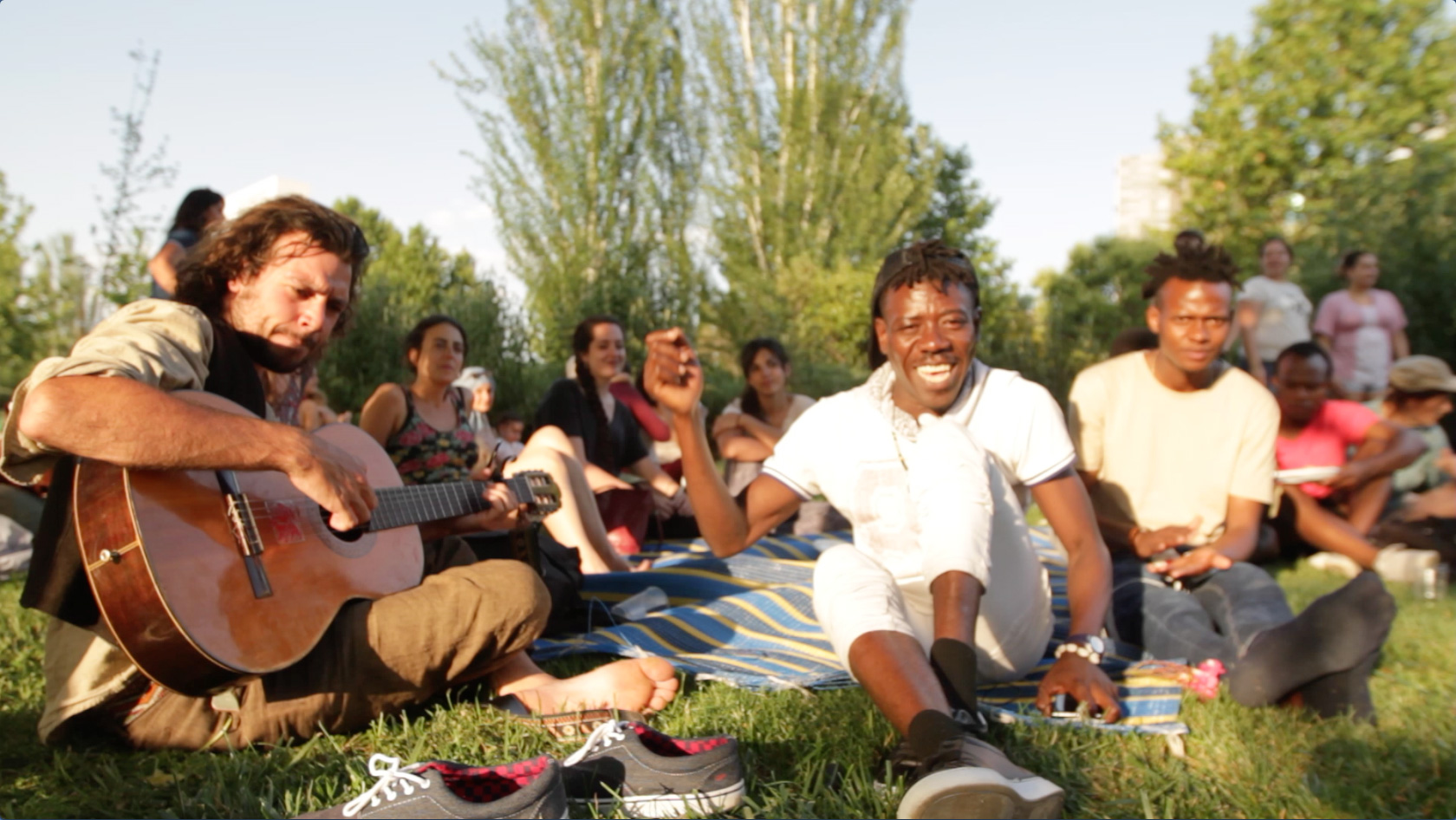
Ibriham Sow, asylum seeker from Guinea Conakry, asked this question during a video co-creation workshop on SDG #10 Reduced Inequalities; which inspired 20 migrants, refugees and locals to make a film on fighting prejudice and celebrating diversity in Granada, Spain.

This was one of the 12 activities in Refugee Week Granada June 2018 – designed to raise awareness and inspire action around the Sustainable Development Goals through activities such as theatre, sports, a symposium and a giant picnic with ecological food grown and prepared by refugees. The week was enjoyed by more than 400 people across the city, newcomers and locals alike and proved that refugees and migrants are contributing positively to the city and to the SDGs.

Refugee Week was supported by the EU funded project Make Europe Sustainable for All and coordinated by Association La Bolina who integrate refugees, migrants and locals, regenerate land, lives and cultures and create sustainable livelihoods, economies and communities.

On top of the many friendships that grew during Refugee Week, a partnership formed between La Bolina, Granada University, NGOs and Vamos Granada the regional government thanks to ColaborAcion a day where migrants, refugees, public and private sector and civil society shared perspectives on how to ‘create dignified and sustainable livelihoods for migrants and refugees in Granada’ resulting in the development of a pilot entrepreneurship scheme for sustainable collective-enterprising between migrants and locals.

Association La Bolina’s vision is a dynamic and thriving multicultural and ecological revolution in the rural area where we live, which creates new sustainable livelihoods for locals and newcomers (particularly refugees and migrants), regenerates the ecosystem and celebrates cultural diversity. Find out more: www.labolina.org

Breaking the human rights gridlock by embracing the Sustainable Development Goals

By Ted Piccone

April 17, 2018

The dangers of a growing global divergence on human rights, with the rise of authoritarian powers, might be avoided by embracing the global consensus of rights-based development encompassed in the SDGs.

On balance, the international agenda for human rights is in deep trouble. From a geopolitical standpoint, the United States has slid further away from leading the post-World War II international liberal order, accelerating a great contest for regional and global influence, with China and Russia leading the pack. The UN Sustainable Development Goals and Agenda 2030, which represent a rare global consensus in favor of rights-based development, offer a path out of this morass.

China is becoming more assertive in undermining universal human rights norms at the United Nations. This includes a new effort to champion the perennially controversial right to development and to introduce concepts like “mutually beneficial cooperation” as a way to undermine country-specific scrutiny.

Russia is playing the troublemaker role in both traditional fora like the UN Security Council, where it continues to veto resolutions on Syria and its use of banned chemical weapons, and in its use of cyberwarfare and propaganda campaigns.

Democratic middle powers, meanwhile, are unable or unwilling to mount an effective and coordinated strategy of their own to keep the international order on track.

Amid these growing divergences on the global level, the Sustainable Development Goals and Agenda 2030 offer a ray of hope. Agenda 2030 has significant buy-in from all states, North and South. Instead of favoring traditional state-led development projects, it puts human development first by comprehensively integrating principles of gender equality (Goal 5), nondiscrimination, access to justice and accountable institutions (Goal 16), along with targets to eliminate hunger and ensure universal access to clean water and sanitation. Under the banner of “leave no one behind,” it bridges the longstanding gap between the economic and social demands of the global South, and the civil and political rights priorities of the established democracies.

These conceptual synergies are important for breaking down the longstanding silos that have hampered the international community’s ability to make a difference on the ground. As public clamor grows louder for fighting gross corruption, which directly undermines delivery of basic public services like education and health care, we may enter a virtuous cycle where the politics of sustainable development, the rule of law, and human rights reinforce each other in new ways and with new resources.

While the SDGs provide a healthy starting point for integrating the development and human rights missions of the United Nations, they remain aspirational with inadequate resources for implementation, and weak follow-up and monitoring mechanisms for measuring progress. Moreover, due to political objections from both East and West (but for different reasons), the adoption of a genuine rights-based approach to development is still lacking. Many governments still shy away from language that characterizes access to adequate health, water, food and housing as fundamental human rights, despite treaty obligations in that regard.

Agenda 2030, however, does underscore the importance of tackling political issues like citizen participation, transparency and accountability in order to achieve better development outcomes. Most development aid agencies, in fact, began adopting strategies for supporting transparent and accountable institutions and strong civil societies many years ago. Even the World Bank devoted its annual flagship report in 2017 to the issues of reforming political power dynamics, governance and rule of law, despite China’s objections to any use of the word “democracy.” This coupling is now sanctioned by the SDGs at the global level.

To build on this opportunity, the development and human rights communities are slowly breaking out of their silos and finding synergies to enhance each other’s main priorities. The SDGs, for example, give anti-poverty and women’s groups in more repressive societies, such as Egypt, a foothold for activism that civil and political rights groups generally do not have. They also open a new path to addressing economic and social rights in advanced economies like the United States, as the UN Special Rapporteur on extreme poverty, has explored. Further, the international human rights system and national human rights institutions can use mechanisms like the treaty bodies and Universal Periodic Review to shore up the weak reporting mechanism for SDGs.

Unfortunately, the advanced economies of the global North have been slow to embrace both the calls for national action plans to implement the SDGs and the demands for substantial increases in resources to help other countries meet them. This is a mistake. As China and other non-democratic countries make further progress toward improving standards of living for their own populations, they will have even more influence in projecting their authoritarian governance models to countries of the global South.

Recipients of Chinese largesse may learn over time that the bargain is not so favorable when China starts demanding higher returns (diplomatic and economic) on their investments, and continues to deny reciprocal access to its own domestic market. To counter this China-centric approach, the community of democracies should rapidly build on the North-South consensus that led to the SDGs by redirecting and increasing resources and public diplomacy efforts to help states meet them.

The US approach to sustainable development, and development aid more generally, is hobbled by the current fashion of zero-sum concepts of sovereignty. Trump’s threat to cut development aid to states that do not comply with US demands like recognizing Jerusalem as Israel’s capital is counterproductive, to say the least. To their credit, the authors of the most recent US National Security Strategy did an admirable job of mainstreaming concepts of accountable governance, inclusive development, and human dignity in the final document. But a search of the strategy for the term “sustainable development” came up empty.  

In sum, the growing competition for international leadership in the decades ahead will revolve largely around which political and economic system is better at delivering sustainable human development for its citizens. The prosperous and democratic West has led that battle for the last seven decades. Now China has arrived, with compelling development results at home, despite its closed one-party system, and deep pockets to spread its model to the developing world. The United States and its partners should wholeheartedly embrace the SDGs in all its dimensions as a holistic, win-win approach to development.

Ted Piccone is Senior Fellow and Charles W. Robinson Chair, Foreign Policy at the Brookings Institution. He has written extensively on the foreign policy dimensions of human rights and democracy. He is the author of “Five Rising Democracies and the Fate of the International Liberal Order,” and “Catalysts for Change: How the UN’s Independent Experts Promote Human Rights.”
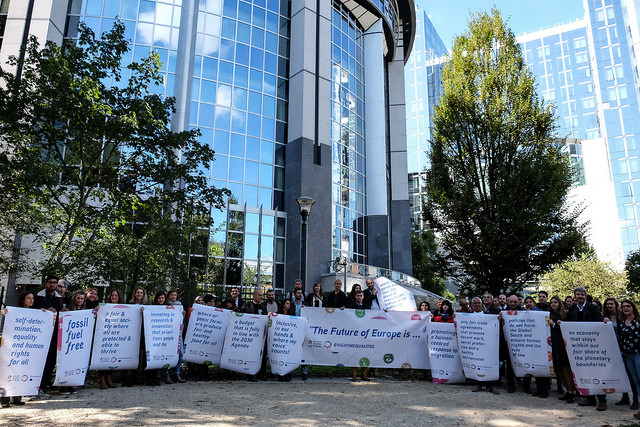
Manifesto for a Sustainable Europe for its Citizens

By the SDG Watch Europe and a broader coalition of CSOs

The foundation of the European Union is one of the most impressive peace projects in modern history. A region was created proclaiming human dignity, respect for human rights, freedom, democracy, equality and the rule of law as its core values.

Along with maintaining lasting peace among its members, the EU also brought cleaner rivers, protection against chemical pollution, parental leave, quality education and free movement within the Schengen region.

Despite the European Union’s great legacy and mission, European decision makers’ response to the financial crisis, to combating climate change and environmental degradation, to halting growing inequality and the undermining women’s rights, to scandals such as those in our food system and Dieselgate, and to increased migration by closing our borders to those in need, have not only run contrary to the core values of the EU but also rolled back some of the historical gains we have fought for.

People feel that the economic and financial interests of the wealthy are prioritised over the common good. We are confronted with the impacts of austerity – growing poverty and inequalities, deteriorating access to healthcare and especially youth unemployment – while large companies are allowed to circumvent paying fair taxes. Urgent issues go unsolved, such as the climate crisis and air pollution, which kill hundreds of thousands of people. In short, people in Europe are being left behind and not everyone shares in the benefits of the Union.

Furthermore, in the European Union we have so far been unable to develop a common and human response to migrants and refugees. We do not ensure respect for their human rights. In addition, the space for civil society and trade unions to act in defence of fundamental rights, freedoms and environmental protection is shrinking in many countries across Europe.

In this context, many Europeans feel frustrated and have lost trust in the capacity of EU institutions to respond to their needs. The growing support for nationalist and xenophobic political forces across Europe is a worrying indicator of this discontent and a severe threat to democracy and our core values.

Recognising the challenges of the current situation in Europe, we, as citizens, should not limit ourselves in debating the Future of Europe to ‘Do you want more or less Europe?’, rather the focus must be on our future needs and our rights and ‘What kind of Europe do we want?’.

That is why 200+ civil society organisations all around Europe have united to bring people together to discuss the “Europe we want”, and to put this on the agenda of the forthcoming European Parliament elections. We strongly believe in a European project based on Europe’s core ethical values and sustainable development: democracy and transparency, social and environmental justice, human rights, the rule of law, equality, and solidarity. These values must be at the heart of all policies. This means fundamental changes from today. We want European policies, rules and standards that do what they were intended for: protect and safeguard well-being and health, ensure safety and freedom for people and protection of the climate and the environment. We want policies that support and serve present and future generations in and outside Europe.

Read the whole manifesto here: https://www.sdgwatcheurope.org/wp-content/uploads/2018/10/Manifesto-for-a-Sustainable-Europe-for-its-Citizens.pdf

Photo exhibition “African Friends” in Greece

By Vanessa Agapie, Hellenic Platform for Development

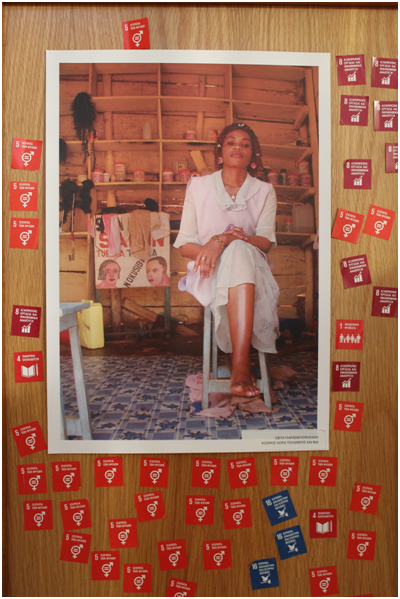
International Organization “World Without Wars and Violence” presented the photo exhibition “African Friends” at the Cosmopolis 2018 cultural festival in Kavala (19-22/7), with photos from the missions of members in Africa.

Members of the “World Without Wars and Violence” realized missions to Africa from 2001 to 2008. They created networks of volunteers to prevent and treat illnesses such as malaria, dysentery, and HIV, access to clean, drinking water as well as the promotion of active non-violence, as a methodology for tackling inequalities and poverty.

The exhibition consists of 40 color photographs, capturing the energy and environment of people living in Africa. Participating with their photos: Olga Pateraki, Angeliki Fragaki, Fai Giannarou, Nikos Stergiou and Evita Paraskevopoulou. More than 1000 people, both minors and adults, visited the exhibition and took part in the interactive game.

The goal was to gain insight into the reality of the African continent through snapshots of their everyday life, linked to the SDGs. The interactive game that helped familiarize visitors with SDGs, asked them to place a sticker with one of the 8 selected SDGs in their preferred photo and link each photo with at least one Sustainable Development Goal. This action will help in a next step understanding any relationships that SDGs have with the realities of the country, by comparing images that we may already see in our own urban centers. This action was linked to the SDGs: 1, 2, 3, 4, 5, 6, 8 and 16.

Greece is committed to promoting the 17 Global Goals and has recently officially presented the progress report on their implementation at the HLPF in New York. The Organization “World Without Wars and Violence”, as well as all the members of the Hellenic Platform for Development, are following developments to intervene, where necessary, for to ensure their better and more effective implementation.

The action is being implemented in co-operation with the Hellenic Platform for Development under the project “Make Europe Sustainable for All” with the financial support of the EU.

Hellenic Platform for Development coordinates Greek Non-governmental Organisations performing in the fields of international development cooperation, humanitarian aid and development education. It currently represents different NGOs supported by a large segment of the Greek society and with a significant activity nationwide and in many developing countries.

Thinking outside the box to spark interest in the SDGs

By Elisabeth Staudt, German NGO Forum on Environment and Development

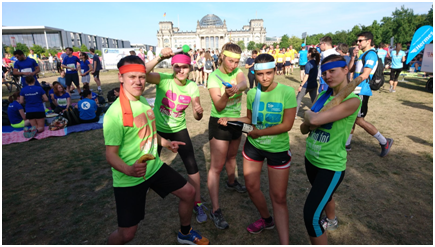
In June, Forum Umwelt und Entwicklung (FUE)/German NGO Forum on Environment and Development took advantage of the wonderful weather and the upcoming football world championship to try out new creative approaches to engage citizens on the Sustainable Development Goals. On June 8th the team of FUE was part of a charity run in Berlin. The run is a tradition for many Berlin based companies, but also for government officials. Over 5.000 teams participate in the event. FUE designed and printed different running jersey (themed as “SDG Ninja Turtles), raising awareness for different sustainability challenges in Germany and around the world. Another format that tried to get the public more interested in the topic of SDGs and sustainability was a pub quiz, which focused on the role of Germany as a perceived sustainability champion. With questions like “Which beverage consumes more water in its productions: Beer or wine?” the quiz aimed at highlighting our responsibility in unsustainable practices and political decision-making. Both activities were very well received and hopefully be repeated in the next months.

For more information please contact: Elisabeth Staudt, Forum Umwelt und Entwicklung Germany, staudt@forumue.de

The German Forum on Environment & Development was founded on December 12th 1992 after the UN conference on Environment and Development (“Rio“). Its purpose is to coordinate German NGOs in international political processes on sustainable development. The NGO Forum on Environment and Development maintains contacts with organizations from developing countries and organizes with international organizations for joint actions. It supervises the international work that continues to run at UN level after on environment and development. One of its main purposes is to make the German public aware of the connection between environment and development and to insist on a change of the current wasteful economy and lifestyle of industrial countries since they deprive millions of people, especially in southern countries, of the basis of their existence.