MY World 360°

By Digital Promise Global

Recognising the experiential storytelling potential of immersive technologies like virtual reality, Digital Promise Global, the United Nations SDG Action Campaign, and Oculus have launched MY World 360°, supporting youth worldwide to create 360° media as a way to share their perspectives and advance positive action toward the Sustainable Development Goals (SDGs).

The program aims to drive youth engagement and agency, improve youth understanding about global issues impacting communities around the world, build young people’s technical production skills with new media, and spur public awareness and action.

MY World 360° includes a Program Guide and FAQ to help participants learn about the SDGs, and to develop the skills needed to capture, edit, and share 360° media to represent their perspectives and their communities in an immersive and compelling way.

Watch the films from the first MY World 360° playlist on Facebook (also available on YouTube) screened at the United Nations General Assembly.

Get Involved!

Sign up below to receive updates, resources, and information on how to participate in the MY World 360° Global Challenge.

Spread the word by sharing the MY World 360° flyer and logo with your networks.

Submit your 360° media via the MY World 360° Submission Form by April 1, 2019 to be considered for the next United Nations showcase opportunities.

Follow us on social media:

Tag us in posts related to MY World 360° and use hashtags #myworld360, #SDGs, #Act4SDGs, and #Youth4SDGs.

Invitation to contribute to ECOSOC thematic report on the long-term impact of current trends in the economic, social and environmental areas on the realization of the SDGs

By DESA/OISC

Held on an annual basis, the High-level Segment of ECOSOC represents the culmination of ECOSOC’s annual cycle of work and convenes a diverse group of high-level representatives from Government, the private sector, civil society and academia for policy dialogue, review, and recommendations on the 2030 Agenda for Sustainable Development and other internationally agreed development goals. In particular, the HLS of ECOSOC is mandated to focus on future trends and scenarios and the long-term impacts of current trends on the realisation of the SDGs. It also aims at enhancing knowledge-sharing and regional and international cooperation.

The 2019 High-level Segment of ECOSOC will be held 16-19 July 2019 at UN Headquarters in New York and will be informed in part by the ECOSOC Thematic Focus Report “Long-term impact of current trends in the economic, social and environmental areas on the realization of the Sustainable Development Goals.”

Major Groups and other Stakeholders are invited to submit inputs to this ECOSOC Thematic Report. If you would like to contribute, we ask that you kindly submit an executive summary of your inputs (500 words max.) in order to facilitate integration into the final report.

Please send all contributions to Anastasia Kefalidou at kefalidoua@un.org

The deadline to receive submissions is 15 March 2019.

2019 ECOSOC Thematic Focus Report

“Long-term impact of current trends in the economic, social and environmental areas on the realization of the Sustainable Development Goals: Report of the Secretary-General”


DRAFT OUTLINE

  1. Introduction (1.5 pages)

It will briefly mention the theme of the 2019 High-level Segment, explain the new focus of the high-level segment of ECOSOC and the need to discuss future oriented trends and scenarios, and present the focus and content of the report.

  1. Future global trends and scenarios (5 pages)

This section will elaborate on a few prominent future scenarios and trends with the highest probability to have a significant impact on the global efforts to realise the 2030 Agenda and the 17 SDGs. It will bring out the fact that it is often difficult for long term scenarios, projections and analysis to look at the multiple and integrated dimensions of sustainable development and such works often pertain to a particular sector or discipline. The section will highlight any holistic projections and scenarios but also projections and scenarios related to specific aspects such as economic growth, climate change, food security, population, water etc.

Sources for this chapter: work conducted within the UN system on future trends, scenarios and foresight (including work conducted by DESA for the first GSDR, EAPD, DSDG, Population Division etc.); future trends and scenarios developed by specialised agencies such as FAO, WB, IMF etc.; IPCC; work of OECD, IIASA, SDSN, and various think tanks and researchers. UN system organisations and DESA divisions are invited to help identify such major scenarios and projections and their key findings, as well as to provide short analytical inputs.

III. Key implications for the implementation of the 2030 Agenda (5 pages)

This section will discuss the negative and positive implications of the previously identified trends

and scenarios, and how it is anticipated that they could shape policies and actions geared towards the implementation of the 2030 Agenda. The section will also discuss the potential effects of inaction. It will

highlight the fact that many countries focus on short term planning rather than develop a long-term

vision, but also give examples of countries having developed a long-term vision.

Sources for this chapter: analysis associated with the above projections and scenarios, research of the

literature, related reports of international organisations and think tanks. A search of the VNR reports and

literature such as OECD publication on this topic could be used to analyse the extent to which countries

use long term planning. DESA Divisions and UN system organizations are invited to provide analytical

inputs or references to important analysis.

  1. Recommendations for the way forward (2 pages)

This section will present broad directions for policies and strategies to tackle, halt or harness the effect

of the main trends and scenarios and highlight the potential role of ECOSOC.

Sources for this chapter: This chapter will build on the above analysis. UN system organizations and

DESA divisions are invited to provide bullet point recommendations and ideas.

  1. Conclusion (1.5 pages)

It will summarise the main messages of the report.

Our homes are where Europe’s future starts. Housing Europe Manifesto for the European Elections 2019

By Housing Europe

Why investing in public, cooperative and social housing is the best return on investment for Europe. The scope of Europe’s housing challenge, the housing providers’ offer, the needs in the post-2020 EU and Housing Europe’s proposals. Stay tuned with our campaign all the way up until May when the European Elections will take place.

I. Europe’s Housing Challenge

Although growth has returned to big parts of our continent, it is leaving many behind and our societies are increasingly unequal. Similarly, the recent ‘recovery’ in housing markets is far from benefiting everyone.

The current state of housing markets can be summarised as followed:  

  1. Housing has become the highest expenditure for Europeans and overburden rates remain stable at high level, hitting disproportionally harder the poor. 4 out of 10 Europeans below the poverty line are overburdened by housing costs.
  2. House prices are growing faster than income levels in most Member States, while inequality and housing exclusion are mutually reinforcing. Broad target groups lack the possibility to enter the housing market like youth and migrants. Meanwhile mobility is limited due to high housing prices, which affect the opportunity to move for workers and families.   
  3. Territorial divide is alarming, as finding adequate and affordable housing in places with job opportunities is increasingly hard. Shrinking cities and regions are quickly becoming a priority on the agenda of local and regional authorities.
  4. As the level of housing construction is still low, especially major cities face a structural housing shortage reinforced by recent waves of migration.
  5. Political response to Europe’s housing challenge remains poor, a fact reflected in increasing levels of homelessness and overall housing exclusion.
  6. Climate change is alarming. The housing sector is a major user of energy and materials. Penetration of energy efficiency measures and renewable energy in the housing sector should be facilitated while maintaining affordability for all. Building and construction materials make out a large proportion of Europe’s waste: waste handling for recycling and circular business models is needed.

II. What we offer | Why social, cooperative and cooperative housing matters?

1/ Growth for all

Social, cooperative and public housing providers do promote a variety of housing options for various target groups and housing needs (Housing First, social, affordable housing, targeted offer for elderly, young, migrants, etc., social mix). Affordable housing favours labour mobility too, which has an impact on local unemployment rate.

2/ Communities for all

Social, cooperative and public housing providers are partners for cities, urban and rural communities that can help deal with the most pressing challenges like urban sprawl and socio-spatial segregation.

3/ Not only a roof

Social, cooperative and public housing organisations provide social innovation, employment services, health services, digital inclusion to the residents, in order to improve their quality of life

4/ Leaders for a fair energy transition

Social, cooperative and public housing providers build nearly zero energy homes, renovate existing dwellings and promote the production of renewable energy, thus contributing to reduce CO2 emissions, energy bills and increase comfort and living conditions. Good handling of construction and renovation waste for recycling and circular business models is also on the agenda of housing providers. Thus, they contribute to achieve a fair energy transition and promote circular and decarbonised energy in the European Union.

III. What is needed?

1/ Stability for Evolution

Social, cooperative and public housing organisations need public investment and supportive legislations to build affordable and decent homes for those whose housing needs cannot be met by market providers.

2/ Cohesion for Fairness

EU funding programmes have to support social and territorial cohesion through better housing and adapted housing solutions, in particular by ensuring equal access to affordable housing between territories.

3/ Flexibility for Progress

EU tax, competition and internal market rules have to be supportive of the investment efforts made by social, cooperative and public housing organisations.

4/ Action for Fair Energy Transition

Climate objectives can only be achieved through a mix between energy savings and production of renewable energy (in particular in a decentralised approach); social, cooperative and public housing organisations should be further supported in leading the way forward.

5/ Support for Circular Economy

Using recycled material as inputs for new construction and renovation, improve information regarding the health impact of building materials are essential to move towards a sustainable and decarbonised economy.

Although housing policies are primarily a matter of national and local governments, the European Union has a role to play.

To be able to further support affordable housing and liveable communities in the EU, Housing Europe members call for…

  • …download our detailed proposals below & support us #housingeu
  • Stay tuned, our campaign will be unfolding with a lot of material for each of the above points over the course of the next months. Watch our video.

See more here : http://www.housingeurope.eu/resource-530/our-homes-are-where-europe-s-future-starts

Housing Europe is the European Federation of Public, Cooperative & Social Housing. Since 1988 it is a network of 45 national & regional federations gathering 43.000 housing providers in 24 countries. Together they manage over 26 million homes, about 11% of existing dwellings in Europe.

WILL THE GLOBAL PACT FOR THE ENVIRONMENT SAVE THE PLANET?

By Patrizia Heidegger, EEB

“Every person has the right to live in an ecologically sound environment adequate for their health, well-being, dignity, culture and fulfilment”. That is the first article of a draft ‘Global Pact for the Environment presented by French President Macron in 2017. You would be forgiven for thinking that this right already exists. But unbelievably, in 2019 we have no globally recognised human right to a healthy environment. Governments from around the globe are now discussing the content of a future Global Pact for the Environment and the principles it should turn into rights for people and obligations for states.

The lack of a human right to a healthy environment and numerous other gaps and inconsistencies in international environmental law are what the Global Pact for the Environment seeks to address – with the ultimate aim of helping us save the planet and tackle the various urgent ecological and social crises humankind faces.

From the Rio Declaration on Environment and Development brokered back in 1992 to the current 2030 Agenda for Sustainable Development signed by world leaders in 2015, numerous principles of environmental protection and environmental democracy have been established. It is a tempting prospect to imagine bringing them together into one harmonised and legally binding international treaty that courts could use to enforce environmental law around the globe.

All countries bar five (the Philippines, Russia, Syria, Turkey, and the United States) gave the green light to start work on the Pact in 2018. Now, in 2019, diplomats are meeting to make progress on the text. However, environmental organisations warn that the process of agreeing on the Pact could actually risk weakening hard fought for principles of environmental law.

It remains to be seen whether enough governments have the political will to take big steps forward in creating new environmental rights and obligations and whether they can agree on the principles they want to strengthen. While some of the emerging economic powers seek to emphasise their national sovereignty by deciding how to use up their natural resources, other governments want to advance environmental democracy – much to the displeasure of authoritarian regimes. Some Latin American countries demand enshrining the rights of nature itself, an idea not yet reflected in the Western legal tradition. Has the process already stalled before it has really started?

Another challenge is the question of whether the time is ripe. Governments around the globe already struggle to put the hundreds of existing environmental agreements they have signed up to into reality. Some critics ask whether it would not be more fruitful to focus on stepping up implementation, identifying the funds necessary to put in place what has already been decided, working with governments to build up their capacity and expertise on environmental issues, and developing new environmental rules for the most pressing issues such as plastic pollution. They are afraid that another international process will not change things on the ground while tying up governments in another round of negotiations.

And where is civil society in all of this? For most of us, the Pact is both a risk and an opportunity. In the current political climate, I am afraid that long fought for principles are watered down rather than strengthened. Progressive governments may not be strong enough to argue against Trump, Putin, Erdogan, Maduro, Assad and – most recently – Bolsonaro. And yet, there is hope that a Global Pact for the Environment may ultimately help those who suffer from environmental harm and strengthen environmental defenders whose lives are under threat. We hope that it may help us to hold polluters accountable and to create new obligations for governments and businesses.  We hope it may strengthen environmental democracy around the globe. As Marcos Orellana from Human Rights Watch argues, the pact “will give those exposed to mercury in artisanal gold mines in the Philippines, those poisoned by soot in Piquiá de Baixo in northeastern Brazil, those contaminated by lead in Kosovo, and activists attacked for protecting their environment and lands, the tools and political leverage they need to defend their rights”.

So, of course, we will advocate for a Global Pact for the Environment that can bring the legal framework for environmental protection and environmental democracy to a whole new level. I welcome the words of those political leaders who have called for the inclusion of civil society into the process. The process will only be a legitimate one with strong and meaningful civil society participation. But NGOs also need supporters who are willing to fund such work.

If the process is successful, the Global Pact for the Environment could underscore the importance of legally binding instruments in environmental protection. It could close gaps and inconsistencies in international environmental law. It could turn important principles into rights, including climate justice and intergenerational equity, the rights of nature, the duty of care for the environment, the precautionary and the polluter pays principle, environmental democracy – and, last but not least, the right to a healthy environment.

YEiV Youth Summit – Young Europe is voting

By Nyt Europa

APPLY HERE

Nyt Europa is pleased to present and invite Young Europeans all over Europe, to the Youth Summit in Denmark: Young Europe is Voting.

200 young people will meet in Denmark, working together to strengthen the voice of youth in the upcoming European election.

  •    Dates: A Youth Summit taking place in Denmark on the 6th – 12th of May 2019.
  •    Participants: 100 young people from all over Europe and 100 Danish folk high school students will meet and join forces around the issues concerning youth in Europe.
  •    Themes in focus: Youth under pressure, Culture & Identity, Climate, Refugees & Migration and EU in the World.
  •    Facilitation: A group of enthusiastic professionals emphasising both the vocational training and education as well as the social aspects.
  •    Purpose: To give young people a voice in the election and at the same time raise awareness of the importance of voting amongst the youth of Europe.

What do they get: Vocational training and education, as well as great fun with new friends.

What do we expect: We expect that the participants will help us raise awareness of the elections among other young Europeans.  

Nice to know:

  • We cover up to 265 Euros for transportation to Denmark. Meals, accommodation and transportation in Denmark will be covered as well.
  • Applicants must be between 18-25 years old at the time of applying.
  •    Do not hesitate to contact us if you have any questions at yeiv@nyteuropa.dk               

Please share the event on social media!

What moves you when it comes to sustainability?

Theresa Frank, Global Survey Project Manager, Schlange & Co. GmbH

Worldwide survey launched – everyone can participate

  • Survey “Global Survey on Sustainability and the SDGs” launched.
  • Worldwide reach, unique coverage of different perspectives – everyone can participate.

In 2015, the UN General Assembly adopted 17 Sustainable Development Goals (SDGs) as part of the 2030 Agenda for Sustainable Development. Since then a lot has happened. But how satisfied are people with the progress achieved? And what is important to them when it comes to sustainability?

For the first time, these questions are the focus of a worldwide survey called the “Global Survey on Sustainability and the SDGs” – and everyone can participate until the end of March 2019. The survey is available at www.globalsurvey-sdgs.com in 16 languages.

The objective of the Global Survey is to reach as many people in the world as possible in order to inquire about people’s personal and professional perspective on the status of sustainability in their country, as well as their knowledge, acceptance and expectations of the SDGs. This includes assessing the perception and need for action in various sectors worldwide, e.g. politics, academia, business and civil society.

The findings are expected to be published in the 2nd quarter of 2019, and discussed with representatives of all sectors in order to raise awareness and initiate necessary decisions for sustainable development.

The Global Survey is carried out by Schlange and Co. (S&C), a German consultancy for sustainability, and Yale University’s Center for Business and the Environment. The project is financed by the German Federal Ministry for the Environmental, Nature Conservation and Nuclear Safety.

Joachim Schlange, Managing Director of Schlange & Co. comments on the project stating, “The Global Survey has a global reach and covers both the individual view of the people, as well as the most diverse professional perspectives – this has never been done before.”

The next European Parliament must commit to making Europe Poverty Free

By Leo Williams Director European Anti-Poverty Network (EAPN) and Carlos Susias President EAPN

On 9 May 1950, Robert Schuman, one of the founders of the European Union, set out his vision for a future of Europe – a vision in which war between France and Germany would be “not merely unthinkable, but materially impossible”. Almost 70 years later, the next European Parliament will inherit huge challenges of its own – including the fact that Europe’s moral, political and economic systems have led to 113 million people, 22.5% of our population, living at risk of poverty and social exclusion.

This month, the European Anti-Poverty Network (made up of 31 national networks and 13 European Organisations, representing thousands of NGOs throughout Europe) launched a campaign for the European Parliamentary Elections, asking candidates to recognise these challenges and commit to ‘Make Europe Poverty Free’. We recognise that our moral, political and economic systems need to be radically reprogrammed in order to make poverty unthinkable and impossible on our continent. This reprogramming would also be the engine of economic and social development in Europe, providing wellbeing to European citizenship, including poorer and socially excluded people. That is not only fair, it is smart and beneficial for all.

Here’s how this reprogramming could work:

  1.       Rebalance our systems so that the economy promotes human rights, tackles inequality and poverty and guarantees well-being, serves people and the environment. As the now infamous Davos panel focusing on inequality highlighted, this involves re-imagining our tax systems to increase tax on wealth, capital and profits of the richest companies and individuals, implementing progressive tax systems, and tackling tax secrecy, tax havens and illicit financial flows.
  2.       Truly become a Europe which protects – its people rather than its businesses and borders. A poverty-free Europe must guarantee strong social protection systems for all who need it, for as long as they need it. And as one participant in ATD 4th World’s ‘People’s University’ at the European Parliament last week highlighted, people shouldn’t be forced to sell assets like their houses in order to access these social protection systems.
  3.    Follow through on existing political commitments. European Heads of State have already signed off on potentially transformative political agreements, notably the Sustainable Development Goals and the European Pillar of Social Rights. Implementing these commitments would go a long way to bringing about a poverty-free Europe and must be a focus of the new parliament.
  4.    Become a Europe of its people – because ‘we are Europe’. Europe isn’t about our banks, our industry, our business – it is about our people, it is about us. To truly become a Europe of and for its people, the European Parliament must meaningfully ensure the participation of people experiencing poverty, and the organisations representing them, in decisions which impact their lives, at every level.

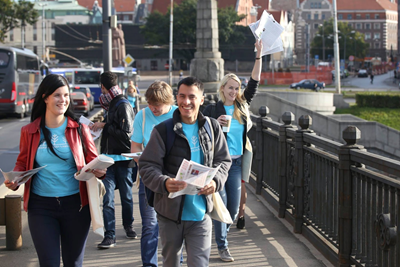
These Parliamentary Elections represent an opportunity for leaders and decision makers to show moral courage by committing to make Europe Poverty Free. From 12 February – 26 May, EAPN will be campaigning for a poverty-free Europe. In Austria, we will have a flash mob on 9 May. In Cyprus, we will focus on mobilising women and youth to vote to Make Europe Poverty Free. In France, we are part of a national civil society campaign with a shared manifesto. In Greece, we are asking candidates to the elections directly to sign our pledge. On 9 May, Europe Day, we will be organising a collective day of action in as many European countries as possible – all this is to focus on the urgent need to make Europe Poverty Free, to make poverty in Europe unthinkable and impossible, much as Robert Schuman did some 70 years ago.

See details of our campaign here: https://www.eupovertyfree.eu

MEP candidates can sign our pledges here: here.

Citizens can take part in our campaign using the hashtag: #EUPovertyFree

Commission must use sustainability ‘reflection’ paper as stepping stone to strategy with real teeth

By the European Environmental Bureau

A long-awaited European Commission ‘reflection paper’ on how to make the UN Sustainable Development Goals (SDGs) a reality has finally seen the light of day – over three years since EU governments committed to the goals.

The European Environmental Bureau (EEB) welcomed the paper as a useful input to a debate on preparing an implementation plan for the SDGs but criticised the European Commission for falling short of actually producing such a plan.

Alongside other civil society groups that sit on the Commission’s Multi-Stakeholder Platform on the Sustainable Development Goals, the EEB has repeatedly called for an implementation plan for the SDGs.

The European Environmental Bureau (EEB) is Europe’s largest network of environmental citizens’ organisations with 150 members in more than 30 countries.

The SDGs are widely viewed as the world’s ‘crisis plan’ to end poverty and protect the planet.

Patrizia Heidegger, Director of Global Policies and Sustainability at the European Environmental Bureau (EEB), said:

“It is disappointing that it took the Commission over three years to come up with a reflection paper on the Sustainable Development Goals when what we urgently need is a plan on how to implement them. The time for reflection was in 2015, when the EU and its Member States signed up to the SDGs. Now is the time for ambitious commitments to action. We also expect more honest stock-taking: on average, the EU has one of the world’s worst environmental footprint per capita, with our unsustainable lifestyles based on resource and labour exploitation in other parts of the world. The economy of the future needs to take into account the environmental and social impact beyond our borders rather than living in the illusion of a low-carbon, resource efficient Europe that exports resource-intensive production to other parts of the world.”

Jeremy Wates, EEB Secretary General, said:

“The SDGs must provide the overarching policy framework for the EU, guiding and shaping the priorities of the next Commission when it takes up office in the autumn. This reflection paper, even if regrettably lacking in specific commitments, provides some pointers to what needs to be done and must be a key point of reference for European leaders and the new Commission President when developing those priorities.”

Today’s ‘A Sustainable Europe Towards 2030’ reflection paper is meant to set the tone for EU governments meeting for a high-level summit on the future of the European project in Sibiu in May.

As regards the three scenarios presented in the paper, the EEB believes that while the overarching role of the SDGs for the EU and its Member States as envisaged under the first scenario is paramount, mainstreaming sustainability into all European Commission policies in line with the second scenario is also of key importance. However, the paper’s claim that the Juncker Commission has mainstreamed sustainable development priorities across its policies since the start of its mandate is particularly unconvincing.

“The new Commission will need to go into a higher gear,” added Wates. “The level of mainstreaming of sustainability into current policies has been pitifully inadequate, whether it be in relation to transforming the Common Agriculture Policy into a sustainable food and farming policy or making the new Multi-Annual Financial Framework truly sustainability-proof. Continuing with business-as-usual is not an option.”

The third scenario with its emphasis on spreading the EU’s standards to the rest of the world downplays the urgency for the EU to reduce its own disproportionate impact on the world environment, though having been a leader in terms of creating environmental damage, the EU does have much to offer in terms of solutions. Therefore, there are elements of all three scenarios that are needed.

Civil society groups have repeatedly denounced the European Commission’s failure to put the goals at the heart of all EU policies, with President Juncker making virtually no mention of them in the State of the Union addresses he gives to the European Parliament each September where he sets out his priorities for the coming months.

REACTION OF SDG WATCH EUROPE TO THE EUROPEAN COMMISSION REFLECTION PAPER: TOWARDS A SUSTAINABLE EUROPE BY 2030

By the SDG Watch Europe

In the best case:

4 years after the adoption of the UN 2030 Agenda for Sustainable Development, the EU considers this agenda as the overarching strategy for the Future of Europe.

In general:

In 2015 the European Commission and member states committed themselves to achieve the 2030 Agenda, including the 17 SDGs in 2030. Since then a lot is said, less is done. SDG Watch Europe and many civil society groups with us, asked for a concrete Plan of Implementation to achieve those goals. This week, 3.5 years later, shortly before the mandate of this Commission ends, a long awaited reflection paper on the Sustainable Development Goals was published.

We deeply regret that the paper stays very vague and does not contain any concrete plan, targets or timeline. Five years after the adoption of the 2030 Agenda for Sustainable Development, the EU is still in the phase of “Reflection”, without having a plan of implementation on the SDGs, which are quite concrete in targets.  

Claiming that sustainability is in the” DNA” of Europe and that we are global frontrunners in sustainable development, is not only self-congratulatory but factually wrong. On too many SDGs, the EU and its Members States can demonstrate only insufficient success or even regression.

In reality, the EU has one of the world’s worst ecological footprints and CO2 emissions per capita. The unsustainable lifestyles of Europeans are based on over-consumption of natural resources and labour exploitation in other parts of the world. A sustainable Europe needs to take into account the environmental and social impact beyond our borders rather than creating our own low-carbon, resource efficient and inclusive Europe, while exporting resource-intensive production, poverty and environmental damage to other parts of the world. The EU has to understand and take seriously its role and impact on a global level. We have built our region through the accumulation of historical, social and environmental debt towards peoples in the Global South and future generations.

Even within our own borders, the EU is not on track to achieve environmental sustainability. Biodiversity loss within EU borders is one of the areas in which the EU is failing to meet the goals. 90% of European citizens are exposed to polluted air that poses a risk to their health while the EU is slow in banning dangerous chemicals circulating in products. Too many rivers and lakes are polluted and unsustainable farming leads to groundwater pollution and soil degradation across the EU.

The SDGs are also about people and the achievement of wellbeing for all within the boundaries of our planet. However, with 22.5% of the EU population at risk of poverty and social exclusion, Europe is not reaching its Europe 2020 target of lifting at least 20 million people out of poverty and this is a clear sign that our moral, political and economic systems need to be redesigned. Child poverty rates are at 25% in the EU. Growing up in poverty can negatively affect children’s opportunities for the rest of their lives, including their education, health, participation in the labour market and society. More than 11% of Europeans are struggling to keep their homes adequately warm. Housing exclusion has been exacerbated by the crisis and policies are failing to provide an adequate response in most countries. Evidence points to an alarming situation with increasing homelessness. And 9.6% of all workers experience poverty, which is a worrying and growing trend.

Cuts in social protection measures, underfunded healthcare services, insufficient and/or inadequate investment in the health workforce and infrastructure, unaffordability of healthcare, financial hardship, increased health inequalities and persistent multi-dimensional barriers to healthcare access are all challenges faced by patients in the EU. These are detrimental to timely access to quality care, good health outcomes and sustainable healthcare systems. The sustainability transition requires investment in effective and integrated social protection systems, including quality services such as health and long-term care. Research shows that investment in education and healthcare have long lasting positive effect on social mobility, however Member states keep reducing investment in both areas.

Austerity-driven deterioration of social conditions and the dismantling of welfare states in the aftermath of the financial crisis has not only resulted in not having solved the poverty in Europe, but also in a deep lack of trust in the European project. Despite the commitment of the EU to lead the fight against inequalities, EU policies and programmes still do not include specific measures to ensure that no one is left behind. This has an impact in the lives of elderly people, migrants, children or persons with disabilities among other communities, who face multiple challenges to be fully included in the society. This defies the UN SDGs pledge to leave no one behind.

The EU must do more in order to improve people’s lives, building on social fairness, inclusion and equal opportunities for all.

Implementing the SDGs requires both public and private finance. However, by mainly addressing the latter, the reflection paper fails to recognise the importance of public investments needed to co-finance public goods and the provision of social and ecosystem services.

As SDG Watch Europe, we find Scenario 1 as the only acceptable way forward and we greatly criticise that the European Commission has wasted more time in the other scenarios. Scenario 2’s focus on the mainstreaming of the SDGs will probably result in  “away-streaming”, as has already happened three years of not acting already along this scenario. Under the second scenario, we believe 10 with environmental issues within the “Better Regulation process”. Scenario 3 which proposes: limiting the EU’s action to promoting the implementation of the SDGs in developing countries through its external policies is completely unacceptable. This approach would fundamentally undermine the core principle of universality of the 2030 Agenda which requires that every country adopting the agenda commits to implementing it within their territories while supporting its implementation outside of its borders.

Scenario 3 appears to reflect an outdated and colonialist mentality whereby the European Union would strongly encourage developing countries, through the use of various instruments of EU external action, to implement policies which it is not prepared to implement itself. The EU should not make the mistake of thinking that it can teach “the rest of the world” how to do sustainability better. Instead the European Union must become a working example for the rest of the world  and to illustrate how embracing real sustainability can promote social cohesion, stable economic development, ecological well-being and inclusive governance, within its Member States as well as across the region.

Moving towards a sustainable Europe by 2030:

We welcome the ambition of the EU to create a situation in which all are “living well within the limits of our planet” and in which the economy serves our health and well-being rather than other objectives. However, the Reflection Paper does not question our dependency on economic growth and an economic system that only functions if it constantly expands. We are concerned, that if current trends continue, the environmental and social challenges in Europe will increase. We disagree with the current approach that growth needs to be fueled by issuing more debt, watering down environmental regulation, extracting more raw materials, extending working hours, and cutting social protection. Steps need to be taken to decouple our economy in absolute amounts from resource use and pollution at the scale required.

3.1.1: From linear to circular economy

We applaud the ideas behind the circular economy, nevertheless we are also convinced that much more is needed to stay within the fair share of the use of natural resources. At the moment less than 12% of materials are used in a circular way, which means a progress that is too slow to reach our goals by 2030. The main focus of this paper is still economic growth, and that cannot be compatible with the ambition to achieve an absolute decrease in resource use. For that we also need policies that lead to sufficiency.

3.1.2 Sustainability from farm to fork

The Commission presents the future Common Agricultural Policy (CAP) as delivery model for the SDGs. Given that the CAP sticks to the heavily criticised 2-pillar structure with inefficient and unsustainable direct payments and disproportionately cuts the more effective 2nd pillar, SDG Watch cannot agree to this assessment. In addition, the mentioned environmental delivery model (with anyhow non-binding eco-schemes and conditionalities) is even not yet agreed by Member States.

The European Commission implicitly assumes that the current CAP has initiated the transition towards a sustainable agricultural sector and that the Future CAP will continue. However, the current CAP, as shown by countless scientific evidences, has failed to deliver any environmental goods and the legislative proposal for the Future CAP does not guarantee higher environmental ambitions and as acknowledged by the European Court of Auditor, is likely to fall short.

While farmers are impacted by climate change and environmental challenges, the report does not acknowledge that our current food production system is fueling our environmental issues instead of being part of the solution. The report put emphasis on “reaping the benefit” of an export-oriented European agricultural model, but it’s because of the pursuit of ever growing production export that the EU has heavily intensified its agricultural production. Therefore we are spreading more and more agrochemicals pesticides, we are keeping animals in cramped conditions, losing more and more biodiversity and polluting our environment. Yet our subsidised and often export-oriented intensive agricultural system does not contribute to sustain neither a healthy environment nor a sustainable farmers income.

While the paper recognises the need for a shift to healthier and more sustainable diets, including a “more sustainable consumption of animal-based products”, the proposed reliance on education and consumer information to advance such transition is wholly inadequate. It represents a denial of decades of policy and consumer research and the evidence-based policy recommendations adopted by EU Member States in the framework of the World Health Organisation (see WHO ‘Best Buys’). The evidence behind those policies have once more been confirmed in a recent EU-funded literature review on the effectiveness of nutrition policies.

3.1.4 Ensuring a socially fair transition

The coalition deeply regrets that the European Commission seems to consider the social aspects of the SDGs more as side effects, instead of recognising them as being fully part of the creation of a more sustainable society. Furthermore, under the heading of social policies, there is a strong focus on the labour market and the importance of quality jobs. While we welcome the emphasis put on the quality of jobs, it needs to be stressed that protection from poverty and reduction of inequality will not only be achieved through jobs.

The EU’s social welfare model is not delivering for everyone anymore. Changes to our societies and our workplace are not somewhere in the future but happening right now. At the same time, efforts to reduce costs are leading to cuts in social protection in many Member States and are hampering the process of adaptation to new challenges. Adequate social protection systems, including minimum income schemes, high quality and inclusive social services and support structures that can support everyone at every stage of life are as important.   

The European Pillar of Social Rights, signed onto to by all EU heads of state, is a step in the right direction to strengthen the social dimension and bring the EU closer to its people. The role it can play in ensuring a socially just and inclusive transition to a clean and carbon-neutral future is rightly emphasised in the reflection paper. However, there is a lack of more concrete steps, increased investments in early intervention, prevention and social protection schemes, new legislations and forward looking measures and integrated strategies to ensure that the Pillar is fully adequate in support of sustainable development.

Horizontal enablers for the sustainable transition

3.2.1 Education, science, technology, research, innovation and digitisation

In general the reflection paper neglects the role of education for active citizenship, informed choices, individual and communities’ well-being’. It also exemplifies the EU’s misguided understanding of the role of research and innovation in meeting the SDGs. The focus on commercialisation and uptake of technological innovation ignores the much more basic and urgent need to set out a roadmap on fully aligning the EU research agenda with the SDGs. This purely economic lens also ignores issues of access to and affordability of the results of research, while the narrow focus on techno fixes sidelines the potential of R&I to look at alternative solutions to global societal challenges, supporting for example decoupling in absolute amounts our economic model with resource use and carbon emissions. Most disturbing, while the role of industry is foregrounded, there is no mention of the importance of engaging with citizens and civil society, despite the fact that civil society has been instrumental in driving the sustainable development agenda, also using a lot societal innovation. R&I is a public good serving the public interest and its contribution to sustainable development must not be reduced to private interest, growth and competitiveness. Therefore we should never put the – by the private sector invented –  “innovation principle” above the precautionary principle.

3.2.2 Finance, pricing, taxation and competition

We welcome most parts of this chapter, although we do not always see the connection with the rest of the paper, where a more conservative approach is felt. For making a transition towards a sustainable Europe, market instrument can play a role (if together with social adjustments, legal frameworks, regulations and social innovation, ..). Putting the polluter pays principle at the forefront is effective, and should be done at the source (industry).

3.2.3. Responsible business conduct, corporate social responsibility and new business models

While many businesses have adopted SDG-language, recent research shows that companies tend to cherry-pick the goals on which it is easy for them to perform rather than assessing their potential impact on all of the goals. Mainstream business is only interested in the SDGs as long as they promise growth and profit – but achieving the SDGs is not always a business case. We need legally binding rules for human rights and environmental due diligence and corporate accountability and cannot rely on voluntary CSR commitments only. We would like to see the EU endorsing the proposed UN Treaty on Business and Human Rights. While the EU has developed due diligence legislation for certain sectors including conflict minerals and timber imports, there is no powerful instrument to hold European companies accountable for human rights violation or environmental degradation throughout their value chain.

The recent announcement by the Commission of a communication on stepping up EU action against deforestation and forest degradation opens up the possibility to introduce legislative measures to fight deforestation in forest-sensitive supply chains, such as cocoa or soya. However, the future communication must be associated with an ambitious action plan with clear milestones, to ensure a follow up.

3.2.4 Rule-based trade

We welcome the commitment to rules-based trade. However, the sustainability chapter under current trade agreement lack teeth and is hard to enforce. Trade and sustainable development must be key in EU trade policy, for example by introducing a formal complaint procedure for civil society organisations and trade unions when violations to the sustainability commitments of trade agreements occur.

Moreover, we need to question the objectives behind the trade agreement: is the primary objective to boost trade volumes (which usually comes at the price of higher resource use, transport emissions etc.) or is the key objective human well-being within planetary boundaries?

3.2.5 Governance and ensuring policy coherence at all levels

This chapter stays far too little concrete. Besides having the SDGs as overarching Commission’s priorities, the corresponding law-making rules need to be adjusted to better address SDGs mainstreaming (better regulation guidelines, impact assessments, stronger enforcement). Monitoring better and reducing the spillovers of our domestic policies.

The EU Semester as the main governance framework operates in policy silos and puts fiscal over social and environmental concerns. It is ill-suited to support a transition to a sustainable Europe. We should urgently reconsider the EU Semester cycle to make it in line with the SDGs and put policy coherence for sustainable development into practice.

Scenarios for the future

It would be intelligent to put some priorities in our general ambitions for the future scenarios. A clean environment, well being for the citizens are main goals, whilst the economy should be the instrument to achieve this. Not the other way around.

We also cannot agree with the idea that: “For the EU to continue to thrive as a prosperous continent, significant parts of the developing world need support to catch up economically and socially”.  As already mentioned earlier, our economic model is based on extraction of natural resources, cheap labour and possibility to dump our waste on the Global South. It is impossible for developing countries to catch up in a same way as we created our wealth, as we did this on the account of third countries. For the developing world this way of creating wealth is not an option, so the only way is that EU is willing to redistribute wealth and pay a fair price for the natural resources and labour.

Scenario 1:

This scenario is indeed asked for by the MSP and the only desired one. SDG Watch Europe would like to see 2030 Agenda Strategies on all levels (EU, national, subnational and local), but also accompanied with a concrete plan of implementation, based on all goals and targets, with a timeline and a monitoring scheme. There is an urgent need to stop talking and start acting. Putting the 2030 Agenda principles at the heart of the debates for the Future of Europe, will also be supportive to create a positive narrative and project for the decades to come. We strongly urge the European institutions and Member States to commit to this scenario. SDG Watch welcomes and highly encourages the creation of the post of a Commissioner for sustainability, but recommends to have a Vice President in charge of the issue.

Scenario 2

Using the SDGs for a new EU-growth strategy is against the main idea of Sustainable Development. The economic dimension cannot be put higher on the priority list than the other challenges (social and environment). On the contrary, there is no economic growth on a dead planet! This scenario is a part of scenario 1, namely mainstreaming SDG policies into all Commissions. Sustainable development is already a principle enshrined in the Treaty, but it has been proved far too often that the available mainstreaming approaches and mechanisms fail to deliver. Thus a scenario like this would not mean any real progress towards the 2030 Agenda and sustainability.  

Scenario 3:

This scenario is a “no-go” for us: It goes against the universality principle of Agenda 2030. It is based on a fake belief holding that “the EU is already a frontrunner with the SDGs so it should help others catch up”. This is a false and inappropriate analysis of current economic and ecological realities. In fact, while there is a considerable degree of academic and technical “expertise” about sustainability within the European Union, its dominant economic model and the lifestyles of European societies are extremely unsustainable.
REACTION OF SDG WATCH EUROPE on EUROPEAN COMMISSION REFLECTION PAPER “TOWARDS A SUSTAINABLE EUROPE BY 2030”

In 2015 the European Commission and member states committed themselves to achieve the 2030 Agenda, including the 17 SDGs in 2030. Since then a lot is said, less is done. SDG Watch Europe and many civil society groups with us, asked for a concrete Plan of Implementation to achieve those goals. This week, 3,5 years later, shortly before the mandate of this Commission ends, a long awaited reflection paper on the Sustainable Development Goals was published.

We deeply regret that the paper stays very vague and does not contain any concrete plan, targets or timeline. Five years after the adoption of the 2030 Agenda for Sustainable Development, the EU is still in the phase of “Reflection”, without have a plan of implementation on the SDGs, which are quite concrete in targets.

Claiming that sustainability is in the” DNA” of Europe and that we are global frontrunners in sustainable development, is not only self-congratulatory but factually wrong. On too many SDGs, the EU and its Members States can demonstrate only insufficient success or even regression.

In reality, the EU has one of the world’s worst ecological footprints and CO2 emissions per capita.

Read the full reaction from SDG Watch Europe here:

https://www.sdgwatcheurope.org/wp-content/uploads/2019/02/reaction-on-Reflection-paper-SDGs.pdf