Announcement: Kicking-off the pan-European campaign for EU2019 elections

By European Civic Forum

On 19 February from 14:00-17:30 European Civic Forum will launch our #MEGAcampaign – Make Europe Great for All at the EESC, Brussels in advance of the EU 2019 elections.

Between risk of disintegration and proposals for reform, Europe today is navigating through murky waters. Democratic representation is confronted to a crisis of legitimacy and a claim for accountability. Civil freedoms and Human rights are downsized in the name of security, as if the later implies sacrificing the formers. Regressive policies in terms of democracy and social cohesion strengthen regressive forces. European founding values are threatened by lack of ambitious policies, while nationalist and xenophobic rhetoric strikes back as a boomerang.

To break this vicious circle, the EU must answer some crucial questions: What means equality and solidarity for a quarter of Europeans facing poverty and social exclusion? What means inclusive societies when addressing the consequences of migrations from countries hit by war, poverty and dictatorship? How to build a more democratic Europe where social and environmental rights come before the economic interests of a few? How to combine political will, legal instruments and action through civil society to safeguard democratic values and translate them into concrete policies?

This kick-off event paves the way to our #MEGA campaign in the run up to the European elections, aimed to feed the public debate and address those questions with political leaders and institutions responsible for tracing Europe’s future. Putting democracy and civic participation at the core of the debate on Europe’s future, we will engage with civic actors all across Europe empowering them to speak better and louder to promote openness and tolerance, transmit the democratic values that guide their work, combat Euroscepticism and demystify xenophobic and nationalist narratives.

We are deeply concerned that the space for civil society to voice criticism and hold ruling authorities to account in shrinking all across Europe, alongside legislative acts meant to silence down NGOs seen as opponents or ‘foreign agents’, government control over distribution of funds, cuts in public funding for NGOs or disproportionate anti-terrorist or money laundering measures affecting the freedoms of assembly and association.

After the launch of Civic Space Watch, a collaborative tool to monitor and share resources on civic space in Europe, our #MEGA campaign will engage civic actors across Europe to stand better and louder for democratic values, openness and tolerance, empowering citizens to become politically aware, active and responsible, undertaking actions of solidarity and contributing to building a democratic political culture to withstand the anti-European, xenophobic, nationalistic and authoritarian trends.

Check out the complete programme and the list of speakers here:
http://bit.ly/MEGAstart
The EU’s Multi Stakeholder Platform on SDGs

By Deirdre de Burca (IFP) & Leida Rijnhout (Friends of the Earth Europe), SDG Watch Europe Steering Group Members

In late 2016, the European Commission announced its intention to establish a Multi-Stakeholder Platform (MSP) on SDGs linked to the EU’s implementation of Agenda 2030. SDG Watch Europe made a comprehensive submission to the Commission on the potential role that such a platform could play. In 2017, the Commission published the terms of reference of the MSP – its vision was much less ambitious than that advocated by SDG Watch Europe. In simple terms, the MSP will include a Political Committee to provide broader strategic advice to the Commission and a Management Committee to play a more technical and operational role.

In mid-2017, the Commission advertised a selection process for members of the Political and Management Committees and those selected were notified late last year. SDG Watch Europe will have a representative on each the Political and Management Committees – Leida Rijnhout and Ingeborg Niestroy respectively. The Management Committee met for the first time in December 2017 and agreed to establish a range of sub-groups to work on different areas, including (i) on the Multi Financial Framework and (ii) on an EU Sustainability Award. Stakeholders have stated their intention to establish a range of other sub-groups to work on important issues linked to the EU’s Agenda 2030 implementation.

The first meeting of the MSP Political Committee took place on 10 January with approximately 30 official stakeholders and by a number of official observers, including SDG Watch Europe’s Deirdre de Burca as a substitute for Leida Rijnhout. Overall the meeting was quite disappointing. Very little of substance was discussed or agreed, robust debate was not encouraged, and the scope of the committee’s work is also not fully clear. The main “deliverable” of the committee promoted by the Commission is a Commission’s Reflection Paper called “Towards a sustainable Europe by 2030”. This paper will be authored by First Vice President Timmermans and Vice President Katainen. Stakeholders of the MSP will have an opportunity to make submissions to the reflection paper by means of a targeted consultation. It appears that this Reflection Paper will set out implementation options for the next Commission to consider in 2019. The current Commission appears very reluctant to take any decisions on the Agenda 2030 implementation as it may “tie the hands” of the next Commission! This means that t having adopted the SDGs in 2015, the Commission will start thinking about how to implement them around 2020. This is a real shame, especially in light of the most recent Council Conclusions on Agenda 2030, where member states called for a rapid implementation.

The next meeting of the MSP will be in October 2018, after the publication of the Reflection Paper. This is an example of how little mandate this high level political group really has. The group will hardly have any say or opportunity to provide collective guidance where the reflection process is concerned.

Our role as civil society is to apply pressure for political change when necessary. We are doing European citizens or humanity in general no favours if we do not insist that First VP Timmermans increases the ambitions of this group, to ensure its involvement in effective and consultative policy making. This is absolutely necessary to develop an EU-wide 2030 Agenda strategy and plan of implementation as soon as possible.

Proyecta Valencia – Hacia el 2030 initiative

By Irene Vivas, Proyecta Valencia – Hacia el 2030

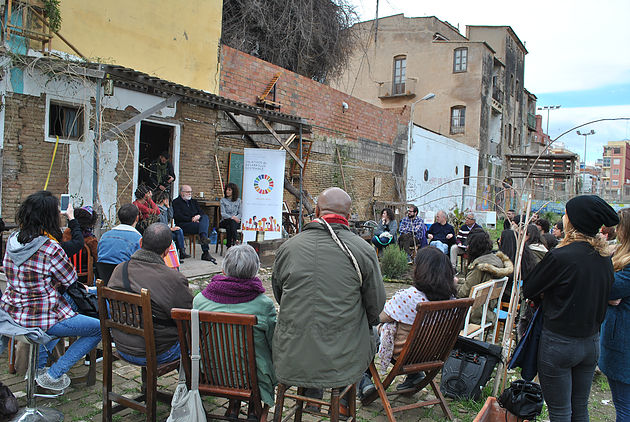
Proyecta Valencia – Hacia el 2030 is an awareness raising initiative promoted by five young people in the city of Valencia (Spain). Emilio – an oceanographer and founder of Bioagradables; Rocío – an architect; Julia – a graphic designer and social entrepreneur; Jesus – an architect and Irene – a jurist and Master on Public Policy. The project was born in the framework of the Asociation Bioagradables, an observer organization of SDG Watch Europe.

Our main aim was to capitalize on the synergies created by the Sustainable Development Goals and to collect proposals in order to make our city more sustainable. Several different activities took place from September 2016 to March 2017, from workshops to debates, as well as visits to key ecosystems in the region and a beach cleaning. We contacted local experts on each field who shared their knowledge and expertise in our activities.

In March 2018, we will publish the report of this initiative, which contains 92 specific proposals from the 250 participants, and our new website. The event will take place in Valencia where we will publicise the results with local authorities and experts. We intend to attract more people to implement the proposals. If you want to receive the report or be part of our initiative, please write to proyectavalencia2030@gmail.com.

If you’d like to know more:

Mediterranean SOS Network & Cosmote United for 2030 Agenda for Sustainable Development

By Christina Kontaxi, MEDITERRANEAN SOS Network (MedSOS)

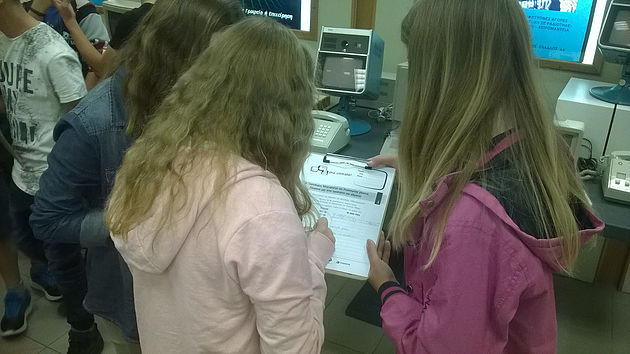
MEDITERRANEAN SOS Network (MedSOS) along with COSMOTE, member of OTE Group, leading telecommunication & pay TV provider in Greece, have initiated and are implementing a pioneer educational programme entitled “Ctrl Shift Save the Climate – Information and Communication Technologies as allies in climate protection”, an initiative which supports Indicator 13.3.1 of the SDG Goal 13. The educational package is licensed by the Greek Ministry of Education, Research and Religious Affairs. Under the UN Global Compact, in which COSMOTE participates, the aim is to mobilise a global movement of sustainable companies and stakeholders in order to create the world we want.

The programme’s objective is to educate and train students and educators, respectively, on the ways in which ICTs could contribute to energy saving and climate change mitigation and adaptation. The programme consists of interactive environmental education presentations to primary and secondary education students and training seminars to educators, aiming at familiarising them with climate change and effective methods and techniques for environmental education programmes. Moreover, awareness raising activities are organised for COSMOTE employees and families and the programme is disseminated in student festivals and related events and workshops. Future actions to be implemented under this cooperation include the identification of SDG Target 13 related actors and development of synergies at national and European level and promotion of the programme through participation in SDG Target 13 good practices events.

MEDITERRANEAN SOS Network (MedSOS) is a Greek non-profit, non-governmental organization active since 1990, that comprises of 120 Full Members who form its annual General Assembly and approximately 3000 Supporting Members. It aims are: 1) Public awareness raising and encouraging changes in citizens’ -especially youth- everyday behavior that impact on the environment, 2) Advocating, lobbying and promoting cooperation among social partners, stakeholders and policy-makers at local, national, regional level, 3) Promoting active public participation in sustainable development strategies and demonstrating alternative solutions in local communities, and 4) Promoting intercultural exchanges and balanced international cooperation among European – Mediterranean partners.

Raising Awareness on the SDGs in Prague

By Stáňa Tomková – Campaign coordinator Czechia Against Poverty

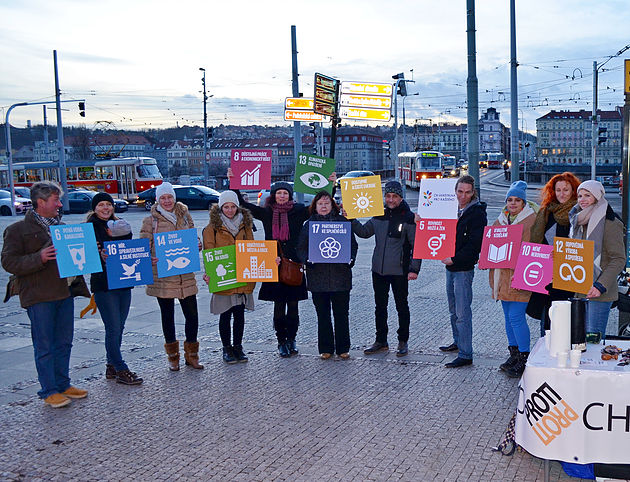
The public awareness about the Sustainable Development Goals is generally weak in the Czech Republic and is not largely supported by politicians or public leaders. Therefore, Czechia Against Poverty, a member of SDG Watch Europe & GCAP, decided to organise a SDGs event in the capital to provide information and materials about the SDGs and Agenda 2030 to the people of Prague.

This event gave the wider public an opportunity to increase their knowledge of the Agenda 2030 and particular SDGs as well as to learn more about the progress on Agenda 2030 in the Czech Republic. Volunteers from Czechia Against Poverty offered fair-trade coffee and tea for free to the public and distributed leaflets and materials on sustainable development and other activities. The goal was also to encourage people to live more sustainable by changing consumption patterns, getting familiar with the fair-trade process and by buying local food and products.

An exhibition called “Hungry Planet: What the World Eats” with 12 large-format photographs by Peter Menzel was also part of the event, which compares food consumption and eating habits in different countries all around the world. Visitors were given an overview of the different living conditions in other parts of the planet and the chance to compare the large inequalities. For example, the exhibition highlights extremes such as the consumption of a very poor Sudanese family in a Chad refugee camp with the large food consumption of the middle-class American family. Families were photographed in their natural environments in their homes, with all the food they usually consume in a week. The exhibition also included a photo of a Czech family in addition to Peter Menzel’s other posters so that the visitors could compare the Czech context too.

The event took place at the centre of Prague and was supported by Ivan Bartoš, the Czech Pirate Party Leader, a popular young politician who recently entered the Czech Parliament. The Czech Pirate Party is currently the third largest party in the country and its programme is in line with SDGs Agenda and is generally promoting greater transparency in the public administration and for reducing inequalities. They are also conducting important steps to raise the issue of the Law on Social Housing which was rejected by the previous government. The Czech Republic remains one of the very few countries in the world which does not have any sort of social or affordable housing program.

Czechia Against Poverty is a campaign of Czech humanitarian and development NGOs founded in 2005 in Czech capital Prague. Czechia Against Poverty is a member of GCAP.

Greener Cities = Healthy Cities

By Chantal Van den Bossche – WECF Communications & Advocacy

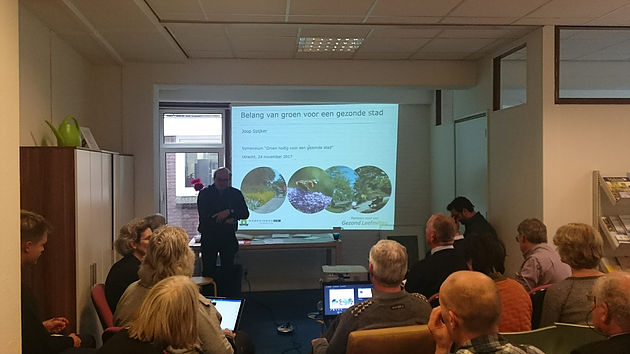
On the 24 November 2017, WECF (Women Engage for a Common Future), in collaboration with Partners voor een Gezond Leefmilieu (PGL – Partners for a Healthy Living Environment) organized a small seminar in Utrecht, Netherlands with the theme “green in the city”. The event highlighted that a greener city has many advantages. Not only does it improve the quality of life and health of the citizens, but a city also becomes less vulnerable to climate change. For example, water can be absorbed better when there are more green areas, and heat is reflected less. On another important note, plants and trees filter air pollution, and thereby help towards better air quality.

Several presentations were given by experts in the field, including PGL’s Annemarie van de Vusse. Joop Spijker and Dr. Jana Verboom-Vasiljev from Wageningen University Environmental Research discussed the importance of green in a city for a healthy living environment. Joris Voeten of Urban Roofscapes (urbanroofscapes.com) noted now using roofs can improve usage of space and contribute to the ecosystem of a city. WECF’s Chantal Van den Bossche also talked about the need of green areas for children and health. Multiple recommendations were formulated as a result of the discussions.

This activity aimed to educate and raise awareness on SDG 11, sustainable cities and communities.

More information can be found here: http://www.wecf.eu/nederland/nieuws/2018/GroenInStad.php.

Women Engage for a Common Future (WECF) is an international network of over 150 women’s and civil society organisations implementing projects in 50 countries and advocating globally to shape a just and sustainable world; our Common Future.

Announcement: launch event of Social Justice Ireland’s Sustainable Progress Index (20 Feb 2018)

By Sara Bourke – Social Justice Ireland

On 20 February, Social Justice Ireland will launch the 2018 Sustainable Progress Index, measuring Ireland’s progress on Economy, Society and the Environment.  As in previous years, we are interested in measuring real progress by marking the UN World Day of Social Justice with this free seminar looking at Ireland’s progress to date in meeting its responsibilities under the Global (Sustainable Development) Goals. The event will take place from 9:30-13:00 at the Carmelite Centre, Aungier Street, Dublin 2, Ireland.

The Index will be presented by Professor Charles MA Clark of St John’s University, New York and Dr Catherine Kavanagh of University College Cork.  Responding to the paper will be Michael Taft, Economic Analyst and Trades Unionist and Niamh Garvey, Head of Policy at Trocaire, a leading global development agency.

Further information on the index will be available on the website www.socialjustice.ie following the launch.

Social Justice Ireland is an independent think tank and justice advocacy organisation that advances the lives of people and communities through providing independent social analysis and effective policy development to create a sustainable future for every member of society and for societies as a whole.